Under the surface, coursing deep within The passages and chambers of one’s heart, Is what pulses through, leads them by the nose, Causing stumbling, bumbling, fool hardy ways.
If humans move to the things they admire, Walking to the beat of what sets their fire, Never stopping to seek something higher, The better of us, will be lost—gotten.
Under the surface, coursing deep within The passages and chambers of one’s heart, Is what pulses through, leads them to good will, Causing careful, kind, faithful, loving ways.
If humans move to things worth admiring, Walking to the beat of great communion, Pausing often to seek something higher, The best of us, will be rediscovered.
If there is any encouragement in Christ, any solace in love, any participation in the Spirit, any compassion and mercy, complete my joy by being of the same mind, with the same love, united in heart, thinking one thing. Do nothing out of selfishness or out of vainglory; rather, humbly regard others as more important than yourselves, each looking out not for his own interests, but also for those of others. Have in you the same attitude that is also in Christ Jesus. – Philippians 2:1-5
We are His, the Lord’s, people, the sheep of His flock. The One we belong to, so much better than great, Carries all without blame, no excuses, no lies, Just a care that runs deep and a heart of pure Love.
While one pretends, leading others astray and awry, The Lord, ever-present, makes clear to the willing, What’s honest and true, compared to what’s opposite. Eyes open or not, the Lord is faithful to all.
Know that the Lord is God, he made us, we belong to him, we are his people, the flock he shepherds. – Psalm 100:3
The readings for the Solemnity of Pentecost offer an opportunity to contemplate faith from the perspective of both personal experience and communal experience. In the First Reading (Acts 2:1-11), it is written:
Then there appeared to them tongues as of fire, which parted and came to rest on each one of them. And they were all filled with the Holy Spirit and began to speak in different tongues, as the Spirit enabled them to proclaim.
The Spirit not only rested upon each one, but penetrated them, and more than filled them up. The apostles were given what they needed, the ability to communicate effectively with those whose languages were different than theirs.
In what area(s) of your life do you desire the Holy Spirit to assist or inspire you?
The reading continues with the people shocked at what they are hearing and trying to understand what is going on:
We are Parthians, Medes, and Elamites, inhabitants of Mesopotamia, Judea and Cappadocia, Pontus and Asia, Phrygia and Pamphylia, Egypt and the districts of Libya near Cyrene, as well as travelers from Rome, both Jews and converts to Judaism, Cretans and Arabs, yet we hear them speaking in our own tongues of the mighty acts of God.
Recall how you have been taken by surprise, experiencing or witnessing the mighty acts of God.
The Psalm response is from Psalm 104:
Lord, send out your Spirit, and renew the face of the earth. (cf. 30)
Inspired by the mighty acts of the Lord, take some time to pray for the things that your heart longs for the Lord to bring His peace, love, healing, wisdom, and/or unity to.
After naming and praying for each thing, repeat the response from Psalm 104. As you pray, be aware of how your heart and mind are stirred. Allow yourself time to communicate your thoughts and feelings about both personal matters and those regarding your brothers and sisters in your community and around the world.
In the Second Reading (1 Corinthians 12:3b-7, 12-13), St. Paul gives voice to the fact that, yes, we are different (not all have the same gifts, or are called to serve, or to be the same), but that underneath those differences, we are born of the same God. And furthermore, he writes:
To each individual the manifestation of the Spirit is given for some benefit. As a body is one though it has many parts, and all the parts of the body, though many, are one body, so also Christ. For in one Spirit we were all baptized into one body, whether Jews or Greeks, slaves or free persons, and we were all given to drink of one Spirit.
What’s it like to consider that the Holy Spirit can work in each, and every, person, no matter who they are or what they have done, to bring forth the good that God has in mind? How does, or how might, this notion influence you in your words, actions, and thoughts and prayers?
In the Gospel reading (John 20:19-23), it is written:
On the evening of that first day of the week, when the doors were locked, where the disciples were, for fear of the Jews, Jesus came and stood in their midst and said to them, “Peace be with you.” When he had said this, he showed them his hands and his side. The disciples rejoiced when they saw the Lord. Jesus said to them again, “Peace be with you. As the Father has sent me, so I send you.” And when he had said this, he breathed on them and said to them, “Receive the Holy Spirit. Whose sins you forgive are forgiven them, and whose sins you retain are retained.”
Reflecting on this Gospel passage and the fifty days since Easter, what catches your attention? What have you carried forward for yourself, and regarding others? What, if anything, might be interfering with your ability to be guided by and to cooperate more fully with the Holy Spirit? What do you sense the Lord wants you to know at this moment?
Come, Holy Spirit, fill the hearts of your faithful and kindle in them the fire of your love. – Gospel Acclamation
In the First Reading for the Seventh Sunday of Easter, after Jesus ascends into heaven, it is written of the apostles:
When they entered the city they went to the upper room where they were staying, Peter and John and James and Andrew, Philip and Thomas, Bartholomew and Matthew, James son of Alphaeus, Simon the Zealot, and Judas son of James. All these devoted themselves with one accord to prayer, together with some women, and Mary the mother of Jesus, and his brothers. – Acts 1:13-14
Envision yourself in the upper room with those who are close to you. You’ve just witnessed Jesus ascending into heaven, and have experienced the living word of God, individually and collectively. What is in your heart and on your mind, and what is your prayer regarding it?
The response for the Psalm is, “I believe that I shall see the good things of the Lord in the land of the living.” (Psalm 27:13).
The verses of the Psalm for this Sunday, begin with:
The Lord is my light and my salvation; whom should I fear? The Lord is my life’s refuge; of whom should I be afraid? – Psalm 27:1
Take some time to consider, one by one, anything that has been on your mind and makes you feel concerned, anxious, afraid, or troubled. Imagine yourself bringing each thing that comes to mind to the Lord and, as you do, picture the Lord gently receiving each care and taking it from you, as you say:
“I have seen the good things of the Lord in the land of the living.”
Allow yourself to be present to whatever thoughts and feelings arise. Converse with the Lord about them and listen to the Lord to get a deeper sense of the message or sentiment that is awaiting you amid your earthly cares.
In the verses of the Second Reading it is written:
But rejoice to the extent that you share in the sufferings of Christ, so that when his glory is revealed you may also rejoice exultantly. If you are insulted for the name of Christ, blessed are you, for the Spirit of glory and of God rests upon you. But let no one among you be made to suffer as a murderer, a thief, an evildoer, or as an intriguer. But whoever is made to suffer as a Christian should not be ashamed but glorify God because of the name. – 1 Peter 4:13-16
What phrase or part of these verses sticks out to you most, as if jumping off the page?
In the verse that comes before the ones in the Second Reading, it is written:
Beloved, do not be surprised that a trial by fire is occurring among you, as if something strange were happening to you. – 1 Peter 4:12
What comes to mind as you consider both what stood out to you in verses 13-16 and this verse? What would you like to say to the Lord about it? What do imagine the Lord wants to say to you in reply?
In the Gospel passage, it is written:
Jesus raised his eyes to heaven and said, “Father, the hour has come. Give glory to your son, so that your son may glorify you, just as you gave him authority over all people, so that your son may give eternal life to all you gave him. Now this is eternal life, that they should know you, the only true God, and the one whom you sent, Jesus Christ. I glorified you on earth by accomplishing the work that you gave me to do. Now glorify me, Father, with you, with the glory that I had with you before the world began. “I revealed your name to those whom you gave me out of the world. They belonged to you, and you gave them to me, and they have kept your word. Now they know that everything you gave me is from you, because the words you gave to me I have given to them, and they accepted them and truly understood that I came from you, and they have believed that you sent me. I pray for them. I do not pray for the world but for the ones you have given me, because they are yours, and everything of mine is yours and everything of yours is mine, and I have been glorified in them. And now I will no longer be in the world, but they are in the world, while I am coming to you.” – John 17:1-11a
What happens when you reflect on Jesus giving glory and honor to God by his love, prayers, devotion, and dedication to the well-being of those placed in his care?
Jesus says in the verses above, “I pray for them.” How might his prayer be applied to today’s world? And how do you desire to be devoted “with one accord” (united with others) thru that prayer?
Today is the Second Sunday of Easter, or in the Catholic Church, Divine Mercy Sunday, as it was designated in the year 2000 by Pope John Paul II. When you think of mercy, what does it look like? What characteristics come to mind?
On the night that Jesus was arrested, he said to the disciples gathered around the table,
“This night all of you will have your faith in me shaken, for it is written: ‘I will strike the shepherd, and the sheep of the flock will be dispersed’; but after I have been raised up, I shall go before you to Galilee.” – Matthew 26:31-32
In today’s Gospel (John 20:19-31), the disciples, although afraid from all that transpired and what it might mean for them, have reconnected and come back together. They did not allow what might be labeled as their failures (e.g. fleeing the scene, Peter’s denials) to override the example of Jesus and to tear them apart. Instead, they chose to embrace what was instilled in them by the grace of God and imparted to them by the mercy of God, extending both to each other.
Rather than looking to place blame or find fault with each other and giving rise to in-fighting and division, the disciples, still afraid and likely unsure, gathered together, and in their unity, Jesus appears to them, not upset at them for scattering or holding a grudge, but wishing them peace and extending grace to them.
Jesus came and stood in their midst and said to them, “Peace be with you.” When he had said this, he showed them his hands and his side. The disciples rejoiced when they saw the Lord. Jesus said to them again, “Peace be with you. As the Father has sent me, so I send you.” And when he had said this, he breathed on them and said to them, “Receive the Holy Spirit. Whose sins you forgive are forgiven them, and whose sins you retain are retained.” – John 20:19-23
How do Jesus’s words above speak to you today? Share with Jesus what’s in your heart and on your mind as you consider these verses. Ask Jesus for his perspective.
Now, Thomas who was absent when Jesus appeared to the disciples doesn’t believe what is reported to him by the disciples who were there. Or, perhaps the thing that Thomas doesn’t believe without seeing for himself, is not the words of his fellow disciples, but the words of the Lord.
In other words, maybe the point is not that Thomas was expected to blindly take the words of his fellow disciples as truth, but rather that Thomas’s faith was so shaken by the experience of the crucifixion that it led him to some level of mistrust in the words that Jesus had spoken before his death.
Next, consider Jesus’s response. True to His nature, Jesus, again, doesn’t hold a grudge and doesn’t lose faith in Thomas, but as always, responds with understanding. In his mercy, Jesus appears again to the disciples at a time when Thomas is present. Jesus gives Thomas what he needs in order to be strengthened in his fatih, and at a time when he is able to best receive it.
Now a week later his disciples were again inside and Thomas was with them. Jesus came, although the doors were locked, and stood in their midst and said, “Peace be with you.” Then he said to Thomas, “Put your finger here and see my hands, and bring your hand and put it into my side, and do not be unbelieving, but believe.” Thomas answered and said to him, “My Lord and my God!” Jesus said to him, “Have you come to believe because you have seen me? Blessed are those who have not seen and have believed.” – John 20:24-29
What do you imagine the week between being told about Jesus’s appearance and his reappearance was like for Thomas? What might the week between the two appearances have been like for the rest of the disciples?
Reflect on your experience of moments of uncertainty or times when your faith has been shaken. What was it like? And how did you face it? In what ways was Jesus present to you, and how might you need that same presence today?
Now, Jesus did many other signs in the presence of his disciples that are not written in this book. But these are written that you may come to believe that Jesus is the Christ, the Son of God, and that through this belief you may have life in his name. – John 20:30-31
In his poem, The Universal Prayer, Alexander Pope wrote, “Teach me to feel another’s woe, to hide the fault I see, that mercy I to others show, that mercy show to me.” How has your heart been touched by mercy? And how you have extended mercy to others?
The Universal Prayer by Alexander Pope Father of all! In every age, In every clime adored, By saint, by savage, and by sage, Jehovah, Jove, or Lord! Thou great First Cause, least understood! Who all my sense confined To know but this, that thou art good, And that myself am blind; Yet gave me, in this dark estate, To see the good from ill; And binding nature fast in fate, Left free the human will. What conscience dictates to be done, Or warns me not to do, This, teach me more than hell to shun, That, more than heaven pursue. What blessings thy free bounty gives, Let me not cast away; For God is paid when man receives, To enjoy is to obey. Yet not to earth’s contracted span Thy goodness let me bound, Or think thee Lord alone of man, When thousand worlds are round: Let not this weak, unknowing hand Presume thy bolts to throw, And deal damnation round the land On each I judge thy foe. If I am right, thy grace impart Still in the right to stay; If I am wrong, oh teach my heart To find that better way. Save me alike from foolish pride, Or impious discontent, At aught thy wisdom has denied, Or aught thy goodness lent. Teach me to feel another’s woe, To hide the fault I see; That mercy I to others show, That mercy show to me. Mean though I am, not wholly so, Since quickened by thy breath; Oh lead me whereso’er I go, Through this day’s life or death. This day be bread and peace my lot: All else beneath the sun, Thou know’st if best bestowed or not; And let thy will be done. To thee, whose temple is all space, Whose altar, earth, sea, skies, One chorus let all being raise; All nature’s incense rise!
Throughout the night, shadows make their way, And by the light of day, they cast doubt. Sad, sorry, tragic! They think they know. They slink, they slide, they lie, steal, and cheat.
Snuffing out light and stomping on hope, Making little of all the deceit. They rely on breaking down goodness, Splitting up what once stood together.
They view resistance, a futile thing, Failing to recognize the power, The strength and speed, of Light that’s within. Feed the poor, care for the downtrodden.
Light travels and bends, it radiates, generously spreads out across time. Some wills have shadows that can’t stand truth. Only Thine will to be done through Christ.
I am the light of the world, says the Lord; whoever follows me will have the light of life. – John 8:12
It’s human nature to try to assign meaning to the things that happen in life. We all have experiences that can leave us wondering, “What was that all about?”. They are situations or encounters that may or may not eventually become more fully known or revealed. However, oftentimes, instead of waiting for that moment to come, where everything comes together and starts to make sense, we rush ahead making our own sense of it.
In those times of “What was that all about?”, temptation seeks to make the situation neatly fit into our own understanding or way of looking at things. That is, the temptation is to see what one wants to see through the lens through which one chooses to see it, rather than allowing time for the grace of God to open the eyes of one’s heart.
In the Second Reading for the Third Sunday in Ordinary Time (1 Corinthians 1:10-13, 17), St. Paul writes:
“For Christ did not send me to baptize but to preach the gospel, and not with the wisdom of human eloquence, so that the cross of Christ might not be emptied of its meaning.” – 1 Corinthians 1:17
What words or images come to mind when you consider the meaning of the cross of Christ, and what values do they imply?
How are you influenced by, and how do you remain mindful of, the meaning and those values as you go about each day?
In what ways do you leave room for the possibility that there’s more that you need to consider regarding a situation? How might you rely upon the grace of God more fully?
In the verses that proceed the one above, St. Paul appeals to the church of God—the people—in Corinth not to succumb to temptation, which seeks to separate them and pit them against each other. He starts off by imploring them to be united:
“I urge you, brothers and sisters, in the name of our Lord Jesus Christ, that all of you agree in what you say, and that there be no divisions among you, but that you be united in the same mind and in the same purpose.” – 1 Corinthians 1:10-11
St. Paul’s audience is the early Christian community in Corinth. Surely, they had more than just a few disagreements! Don’t people almost always though? Despite this, people always also have much in common.
Take some time to contemplate areas of disagreement that you may have with family, friends, and/or others. After naming the point(s) of contention, think about at least one thing you have in common and that you both value. How might that become, or continue to be, a source of unity? Pray with the desire that enters your heart as you consider this.
In the Gospel passage for this Sunday (Matthew 4:12-23), in part, it is written:
As he was walking by the Sea of Galilee, he saw two brothers, Simon who is called Peter, and his brother Andrew, casting a net into the sea; they were fishermen. He said to them, “Come after me, and I will make you fishers of men.” At once they left their nets and followed him. He walked along from there and saw two other brothers, James, the son of Zebedee, and his brother John. They were in a boat, with their father Zebedee, mending their nets. He called them, and immediately they left their boat and their father and followed him. He went around all of Galilee, teaching in their synagogues, proclaiming the gospel of the kingdom, and curing every disease and illness among the people. – v. 18-23.
Notice how Jesus called two sets of brothers. Chances are that within each set as well as taken all together, the brothers, didn’t see eye to eye on everything. However, they were all called, and they all left something behind or had to let go of something.
Simon (Peter) and his brother, Andrew, James and his brother, John, certainly must have had their differences, but they all made the individual choice to place their focus on following Jesus, who taught in the synagogues, proclaimed the Gospel, and “cured every disease and illness among the people.” They embraced the Way. And in doing so, they were able to draw closer to God, they were strengthened through their differences, and they stayed united rather than becoming divided.
The Lord is my light and my salvation; whom should I fear? The Lord is my life’s refuge; of whom should I be afraid? – Psalm 27:1
The Baptism of the Lord in the Gospel according to Matthew describes an interaction between Jesus and John the Baptist. John is a prophet who has his own disciples, and of whom it is written, “At that time Jerusalem, all Judea, and the whole region around the Jordan were going out to him and were being baptized by him in the Jordan River as they acknowledged their sins.” (Matthew 3:5-6). And Jesus is the Christ, the Anointed one, of whom John said, “the one who is coming after me is mightier than I. I am not worthy to carry his sandals. He will baptize you with the holy Spirit and fire.” (Matthew 3:11). Yet, as it is written, they meet and engage with each other without pretense or posturing.
Read and reflect on the Gospel passage for the Baptism of the Lord (below), receiving it as an invitation to prayerfully consider human interactions, both your own and those that you witness. Ask the Lord for insight and wisdom as you do so.
Jesus came from Galilee to John at the Jordan to be baptized by him. John tried to prevent him, saying, “I need to be baptized by you, and yet you are coming to me?” Jesus said to him in reply, “Allow it now, for thus it is fitting for us to fulfill all righteousness.” Then he allowed him. After Jesus was baptized, he came up from the water and behold, the heavens were opened for him, and he saw the Spirit of God descending like a dove and coming upon him. And a voice came from the heavens, saying, “This is my beloved Son, with whom I am well pleased.” – Matthew 3:13-17
What divine qualities do the words and actions of John the Baptist and Jesus exemplify in this exchange? What strikes you most?
Next, put yourself in John’s shoes as the prophet of whom it is written, “A voice proclaims: In the wilderness prepare the way of the Lord! Make straight in the wasteland a highway for our God!” (Isaiah 40:3). What’s it like to encounter Jesus, knowing that He is the one of whom you’ve been preaching and waiting for? and knowing that it is time for you to step back while He steps forward? What thoughts and feelings arise when you envision saying to Jesus, “I need to be baptized by you” and he replies, “Allow it now. For thus it is fitting for us to fulfill all righteousness”?
Now, ask Jesus to help you to envision His experience in this passage. In what ways might His perspective enlighten your interactions and/or assessments of interactions to which you have been a witness?
How might you be inspired by the example of Jesus and John the Baptist in interactions and when you encounter something or someone known, new, or different?
“You are sent into this world to believe in yourself as God’s chosen one and then to help your brothers and sisters know that they are also beloved sons and daughters of God who belong together. You’re sent into this world to be a people of reconciliation. You are sent to heal, to break down the walls between you and your neighbors, locally, nationally, and globally. Before all distinctions, the separations, and the walls built on foundations of fear, there was a unity in the mind and heart of God. Out of that unity, you are sent into this world for a little while to claim that you and every other human being belongs to the same God of Love who lives from eternity to eternity.” – Henri Nouwen
Trees straight ahead standing tall, Making way for what may come, What was, and what is beyond. So willing to share the scene With the bright and countless leaves.
Together in their welcome To fellow lives passing through, Trees and leaves hold each other, One another, as Love holds them too.
The Lord is a God of justice, who knows no favorites. – Sirach 35:12
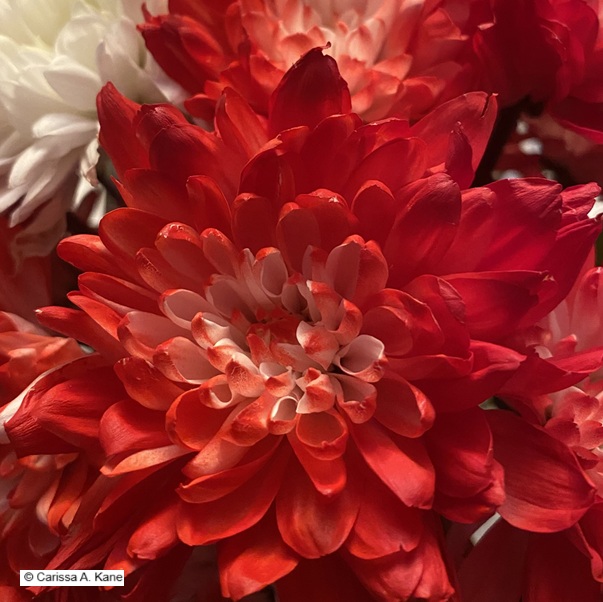
As the days passed by, the flowers, still bright, holding onto life, begin to show the length of days and nights, separate, away from the source of life.
Leaves dropping from stems, petals shriveling, on the outside first. Time ticks, closing in. Hold on as they may, away from their roots, they limp as they linger.
In the First Reading for the Seventh Sunday in Ordinary Time (1 Samuel 26:2, 7-9, 12-13, 22-23), David and Abishai find themselves in a position of advantage, having the opportunity to kill Saul, who, along with his soldiers are in a deep sleep. However, despite Saul having grown distant from who he was at the beginning of his rule, and having become David’s enemy, David restrains himself and shows mercy. He says to Abishai, “Do not harm him, for who can lay a hand on the Lord’s anointed and remain innocent?” (v. 9).
Spend some time with the first reading and consider that as beings created in God’s image, in a sense, we are all anointed.
The response for the Psalm is, “The Lord is kind and merciful.” (Psalm 103:8). Reflect on the ways that the Lord has been kind and merciful to you. How does your experience inspire you in terms of the way you view situations and people? In what ways do you feel compelled to be kind and merciful to others? Are there areas where the Lord might want to work with you on expanding upon or reassessing this?
Turning to the Second Reading (1 Corinthians 15:45-49), St. Paul writes of Adam and Jesus, but he is also writing about the call to conversion and discipleship.
As was the earthly one, so also are the earthly, and as is the heavenly one, so also are the heavenly. Just as we have borne the image of the earthly one, we shall also bear the image of the heavenly one. – verses 48-49
Envisioning your life as one line and the events/happenings during your life as another line on a continuum, think about the major events/happenings that have had a direct impact on you. What’s the difference between the times when you have maintained a sense of inner strength (or know-how) and peace, and the times you haven’t?
In the Gospel Reading (Luke 6:27-38), Jesus reminds us that Love is what sustains us. Not embracing cynicism, seeking or plotting revenge, settling or keeping scores. Rather, those are the things that tear us away from Love and the root of goodness and life—God.
How might you draw closer to Love in the challenges you face today? And how might the Lord desire to join you in an area of challenge?
The Lord is kind and merciful, slow to anger, abounding in mercy. – Psalm 103:8














You must be logged in to post a comment.