Blessed are we, created in the image of the Lord, Who comes down from the mountain, To stand with us on level ground. Bestower of grace on all, Willing spirits will receive Him. Words of Wisdom and Hope He speaks, Bringing Light and Life to the soul.
Care for the poor, Feed the hungry, Comfort those in need. Way of ways, it is not easy.
Hold fast to only One—the Lord. Falling not for hollow banter, Careful of the ruse; it’s not True. Look not to glorify others, Rather, seek Wisdom from the Source. Big and bold isn’t always best, and Stay awake is what the Lord commanded.
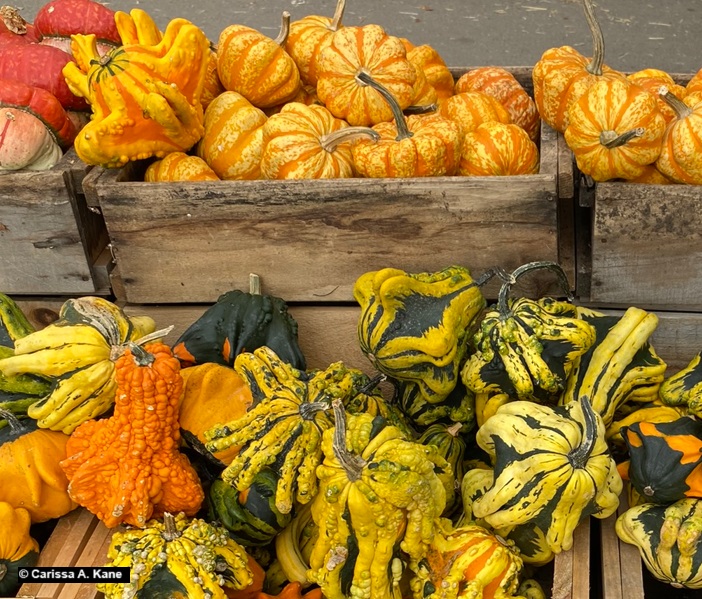
Walking past crates of pumpkins and gourds at a local farm, the different colors and shapes are stunning. It’s interesting to think that such variety can grow out of the seemingly blah ground. Yet, when examined more closely, the soil, although drab compared to its yield, is actually quite diverse and multidimensional, holding various nutrients necessary to growth.
Turning to the readings for the Twenty-eighth Sunday in Ordinary Time, we are provided with an invitation to contemplate the relationship and impact of prayer, openness to Wisdom, and placing hope in God on environment and yield.
First, in the Book of Wisdom, we are encouraged to seek Wisdom above all else. It is written:
I prayed, and prudence was given me; I pleaded, and the spirit of wisdom came to me. I preferred her to scepter and throne, and deemed riches nothing in comparison with her, nor did I liken any priceless gem to her; because all gold, in view of her, is a little sand, and before her, silver is to be accounted mire. Beyond health and comeliness I loved her, and I chose to have her rather than the light, because the splendor of her never yields to sleep. Yet all good things together came to me in her company, and countless riches at her hands. – Wisdom (7:7-11
Notice how the passage begins with praying and pleading, or in other words a humble posture. Not only that, but there is also the choice to seek Wisdom as well as to abide by it; this is further described throughout the passage. However, to be open to Wisdom, one must be open to the possibility that things are not what they seem or that there might be a better way. In addition, one must also be willing to loosen the grip, or let go of other notions, even if just temporarily, so as to allow Wisdom to shine the Light and make things clear.
In Psalm 90, the Psalmist also writes of Wisdom, reminding us of its source—God’s kindness (love)—and characteristics as well as its impact—prosperity through God’s grace.
Teach us to number our days aright, that we may gain wisdom of heart. Return, O Lord! How long? Have pity on your servants! Fill us at daybreak with your kindness, that we may shout for joy and gladness all our days. Make us glad, for the days when you afflicted us, for the years when we saw evil. Let your work be seen by your servants and your glory by their children; and may the gracious care of the Lord our God be ours; prosper the work of our hands for us! Prosper the work of our hands! – Psalm 90:12-17
Although we cannot control the timing and placement of Wisdom, we can pray and plead for it, be aware of its characteristics, and open ourselves to it, and the graces it holds. In the Letter of St. Paul to the Hebrews, we are reminded of the power of God’s word.
Brothers and sisters: Indeed the word of God is living and effective, sharper than any two-edged sword, penetrating even between soul and spirit, joints and marrow, and able to discern reflections and thoughts of the heart. No creature is concealed from him, but everything is naked and exposed to the eyes of him to whom we must render an account. – Hebrews 4:12-13
As human beings, our natural tendency is to fall into wanting to possess (control) or to fall into being possessed (controlled) by or too attached to things. However, God is not subject to this Achilles heel of ours. God, and God’s word, is “living and effective” because God is not bound, tied up, or confused, like we can be. Rather, God is all-knowing and constantly evolving, adjusting, and adapting to meet us where we are. This is not to inflict punishment or take away freedom, but to lift us up and fill us with an abundance of love and mercy, making the way for Wisdom to help us see clearly, and to use our free will to operate and navigate this world with love and mercy.
Looking at the Gospel passage for this week, we are reminded that faith and faithfulness to God not only extends beyond oneself, but that they also require flexibility and an openness to change, which is hindered when attachments to people, places, or things, outside of God exist.
As Jesus was setting out on a journey, a man ran up, knelt down before him, and asked him, “Good teacher, what must I do to inherit eternal life?” Jesus answered him, “Why do you call me good? No one is good but God alone. You know the commandments: You shall not kill; you shall not commit adultery; you shall not steal; you shall not bear false witness; you shall not defraud; honor your father and your mother.” He replied and said to him, “Teacher, all of these I have observed from my youth.” Jesus, looking at him, loved him and said to him, “You are lacking in one thing. Go, sell what you have, and give to the poor and you will have treasure in heaven; then come, follow me.” At that statement his face fell, and he went away sad, for he had many possessions.
Jesus looked around and said to his disciples, “How hard it is for those who have wealth to enter the kingdom of God!” The disciples were amazed at his words. So Jesus again said to them in reply, “Children, how hard it is to enter the kingdom of God! It is easier for a camel to pass through the eye of a needle than for one who is rich to enter the kingdom of God.” They were exceedingly astonished and said among themselves, “Then who can be saved?” Jesus looked at them and said, “For human beings it is impossible, but not for God. All things are possible for God.” – Mark 10:17-27
In the passage above, the man who approaches Jesus likely finds a great deal of security and comfort through his possessions, so much so that he walks away. In what ways can you understand how the man’s attachment prevents him from talking more with Jesus, or even asking Jesus for help? Notice how Jesus acknowledges that what he asked the man to do is not easy. Take some time to share with Jesus any challenges you may be facing with sharing the wealth—whether it is in the form of making a sacrifice to actively show care and concern for those in need, sharing something that you’re carrying all on your own and is weighing you down, or something else you’ve refrained from bringing to Jesus. Envision yourself as the man who walked away, and then, turn back around and bring yourself and your concerns back to Jesus.
We all have struggles, challenges, and hardships, yet at the same time, life and prosperity, and so many signs of it, also occur. It’s not an all or nothing, one way or the other, too late kind of world, but rather, it’s a world created by a God who is broadminded, far-reaching, for whom nothing is impossible, showing care and concern for everything and everyone, who tells us, place your hope in me, because, with me, anything is possible.
What’s known, And what is not. Calculating possibilities.
Looking then leaping, A snapshot in time. Measuring risk, and seeking reward.
Guarantees, Warranties, Yet, nothing is certain.
The seeker being sought, The Sought, searching seekers. Meeting up, teeing up, And, finding what is lost.
“…to live in a manner worthy of the call you have received, with all humility and gentleness, with patience, bearing with one another through love, striving to preserve the unity of the spirit through the bond of peace…” – Ephesians 4:1-3
On the Solemnity of the Most Holy Body and Blood of Christ also known as Corpus Christi, the Collect (opening prayer) is: “O God, who in this wonderful Sacrament have left us a memorial of your Passion, grant us, we pray, so to revere the sacred mysteries of your Body and Blood that we may always experience in ourselves the fruits of your redemption.”
Spend some time reflecting on this prayer and on the Sacrament of the Eucharist. What does it mean to you and how has it impacted you? Remember how you have experienced the fruits of the Lord’s redemption. What wonders has the Lord worked in your life? Take a few moments to express gratitude for these experiences and the awareness of them.
In the hymn One Bread, One Body, the lyrics direct us to mindfulness of our call, one and all, to unity as God’s people (the church):
One bread, one body, one Lord of all One cup of blessing which we bless And we, though many, throughout the Earth We are one body in this one Lord – John Foley, SJ (excerpt from One Bread, One Body)
Recall a time(s) when you have experienced unity and the fruits of the Lord’s redemption with others? In what ways have you witnessed the hand of the Lord? Give thanks for these times of common ground and the remembrance of them.
What hopes and desires do you have at this moment for awareness and unity in your life? your community? your country? and the world? Share these with the Lord. Ask the Lord for the grace to further appreciate and be inspired by experiences of the outpouring of His love.
Pray for one and all to have an open heart and mind to the well-being of all creation, and above all, to draw closer to God so as to embody (to speak and act in accord with) God’s desires as expressed through the example of Jesus.
How shall I make a return to the Lord for all the good he has done for me? The cup of salvation I will take up, and I will call upon the name of the Lord. – Psalm 116:12-13
In the First Reading for the Solemnity of the Holy Trinity (Deuteronomy 4:32-34, 39-40), Moses reminds the people of how God has been present to them in Egypt and the magnitude of what God has done for them. He then implores them to use these experiences to remain focused on God as well as God’s ways thru adherence to God’s statutes and commandments. There can be a tendency to think of statutes and commandments as confining, but when taken into consideration along with the bigger picture of God’s dedication and love for all of creation, they can be seen as providing concrete ways to create unity and exercise respect and dignity with a goal of freedom and protection for one and all.
With God there is always more than one side. The relationship is mutual and considers all parties. There are statutes and commandments, but there are also God’s actions, not just telling humanity how to be, but also leading the way and showing us by example. The verses in the Psalm (Ps 33:4-5, 6, 9, 18-19, 20, 22) describe the Lord’s words, actions, and persona as: upright, trustworthy, just, right, kind, effective, protective, and helpful. These attributes are also infused in the statutes and commandments. They are extended to us by God and in turn we are to extend them to each other.
In the Second Reading (Romans 8:14-17), St. Paul reminds us of our part in the Trinity. As “children of God” and “Joint heirs with Christ” we are not to be enslaved by fear, but rather to live in and be led by the Spirit of God. The passage begins with a salutation of “Brothers and Sisters.” This is not an uncommon greeting. Readings from the letters of St. Paul often begin with a salutation of “Brothers and Sisters,” perhaps to continually express the overall desire and focus on the goal of unity with the Lord and one and another. Imagine starting all your communications with “Brothers and Sisters” or adding “Brothers and Sisters” to communications you receive. How might that shape what you write/say and how you receive what is written/said to you?
Moving on to the Gospel passage known as the Commissioning of the Disciples (Matthew 28:16-20), the disciples, who have gone to Galilee as instructed by Jesus, encounter the risen Jesus. It is written, “they worshipped, but they doubted.” (verse 17). What’s it like to think that despite the existence of doubt, they were still seen as worthy, encountered Jesus, and were given the opportunity to serve as Jesus’ disciples? When situations arise, it can be tempting to give rise to doubt or to fall into a one thing or another, or all or nothing mindset. However, with the Lord, all are worthy, there are often many ways and different degrees to serve, and faith always triumphs over doubt.
Overall, the Solemnity of the Most Holy Trinity presents an opportunity to acknowledge, contemplate, and celebrate how one experiences the Father and the Son and the Holy Spirit. When you consider each aspect of the Trinity, what characteristics or attributes come to mind? How have you experienced these in your life and how has your prayer been influenced by them? In what ways are you inspired by the Holy Trinity individually and in your relationships? How might the Trinity influence you to overcome uncertainty or division and work toward unity, to better communicate or deepen relationships, or in any related discernment?
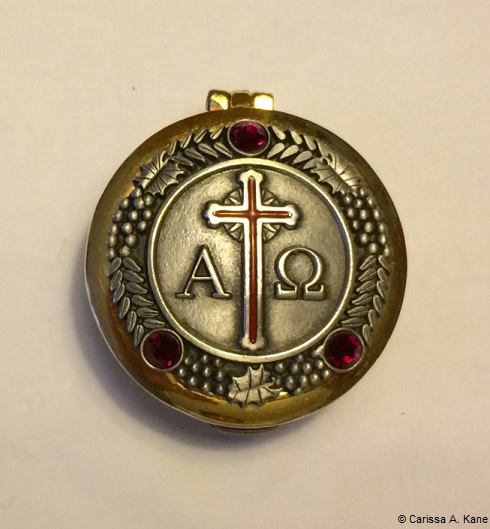
“I am the Alpha and the Omega,” says the Lord God, “the one who is and who was and who is to come, the almighty.” – Revelation 1:8
In a year where the Fourth Sunday of Advent falls on the same day as Christmas Eve (with the Christmas Vigil Mass), and in a world where it seems that there is a constant push toward an absolute one way or the other, but rarely a celebration of a little here, a little there, or somewhere in between, there lies a reminder of a better way.
Each year the Season of Advent is thought of as a period of waiting and Christmas as a period of celebrating the arrival of Jesus Christ, our Savior. And while we remember and participate in rituals each year, it can be easy to overlook the essence of these practices and to get lost in the ways in which we have come to proceed through them. With this, the opportunity to fully receive what is Divinely offered can become less.
Oftentimes, the greatest desire that many of us hold is the desire for peace (inner peace, peace within families/communities, world peace, etc.). And it is not uncommon to move, knowingly or not, toward external things or activities and attach a sense of peace to them, rather than to the joy they might bring to us as well as the real source of that joy and the peace that accompanies it—the Spirit of God.
Keeping in mind that peace is not possible without an openness to coexistence and unity, in what ways is your heart and mind open to peace? What strengths/challenges do you experience with regards to coexistence and unity in various situations? Where does this come up in your prayer life, and how is your sense of peace affected?
In a few days, when the Fourth Sunday of Advent and Christmas Eve (with the celebration of the Christmas Vigil Mass) share the day, envision it as an invitation to unity and, through it, peace. Take some time to reflect on the notion that what you desire is what you need, and what you are waiting for is already, in a sense, here. Then take some time to celebrate the goodness of the Lord.
Forever I will sing the goodness of the Lord. – Psalm 89:2A
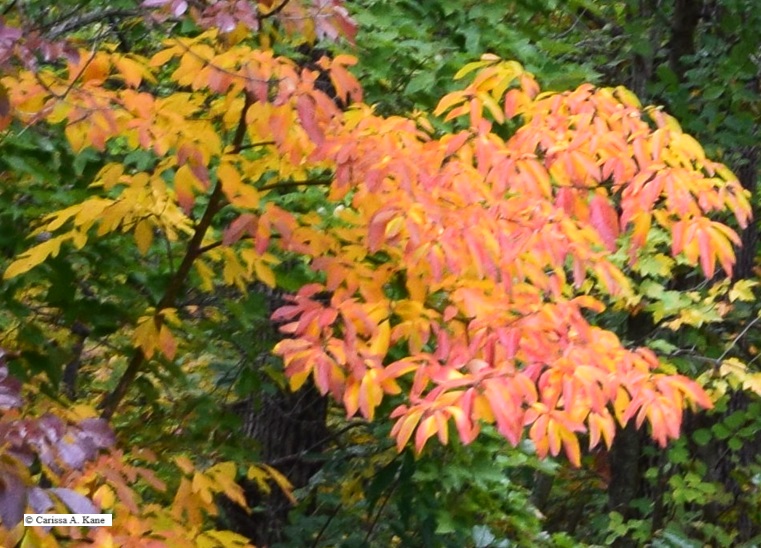
Leaning into Fall, the trees embrace the Essence of their nature. Season after season, year after year, who’s to say on time, or in time? Either way, waiting without edge, trusting in the beauty of Your time as you gently reveal the colors, so many colors, of Your way.
Beacon calling out to one and all alike, remember: life is but a spectrum, at its fullest and shining bright, when casting out the shadows, fears, and doubts. Your light so much stronger than the decay, rising up and out from far below.
It’s time to recognize again who we really are. So much alike, created to be different, but not with indifference or carrying any shades of hate. Loved into existence, the vision of Your eye. Side by side, each and every one of us are vessels of Your grace, and we all have a place.
Holy God, Most High Creator, hold us all together, unite us in Your heart… in our hearts.
Shine like lights in the world as you hold on to the word of life. – Phil 2:15d, 16a
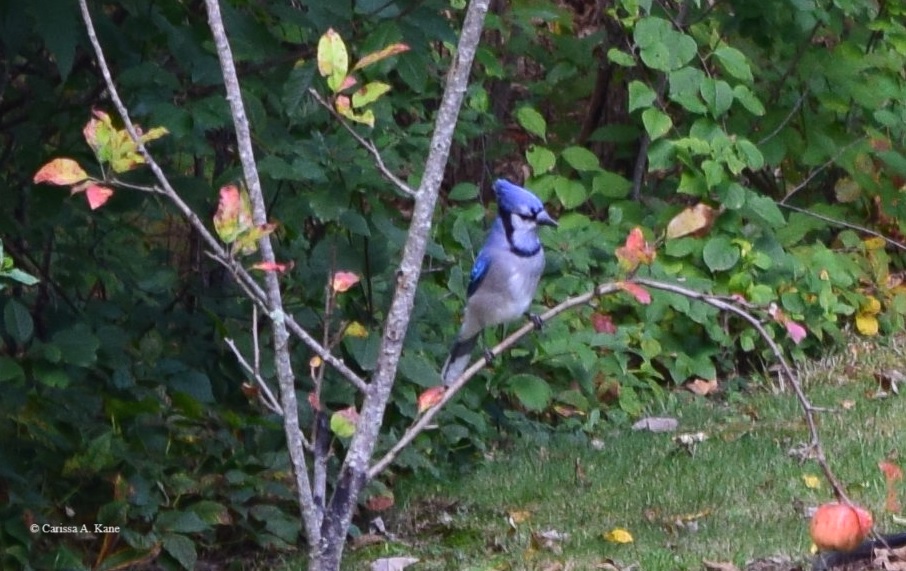
Questions upon questions. Sitting still, or idly sitting? With, or at, each other? Whether picking, picked, or chosen, The answer is the same. Apples of God’s eye. Desire of desires.
Fruit bearing fruit, Fruit bearing with fruit. A breath of fresh air, A dose of patience, Perseverance too. From the heart of One To another, then another.
All searching for some peace, While time is fast escaping. All in One, One in all, History that is shared, Spirits called together. Even when far apart, Destiny is waiting.
It was not you who chose me, but I who chose you and appointed you to go and bear fruit that will remain, so that whatever you ask the Father in my name he may give you. This I command you: love one another. – John 15:16-17
Do you recall being in a group of people, partaking in an experience, whatever it might have been, and having anything that might normally serve to create a wedge or cause a disturbance, fade away? What was that like?
Oftentimes, when such experiences occur, it’s because there is a shared focus and desire that outweighs all the things that might otherwise interfere and distract individuals away from being influenced by the Spirit that moves them toward embracing what is mutually beneficial to all. In other words, it happens when one lets go and detaches from being driven by what is more immediately self-serving or earthly. This then leaves room to be led by the Spirit.
In chapter 2 of the Acts of the Apostle’s, it is written,
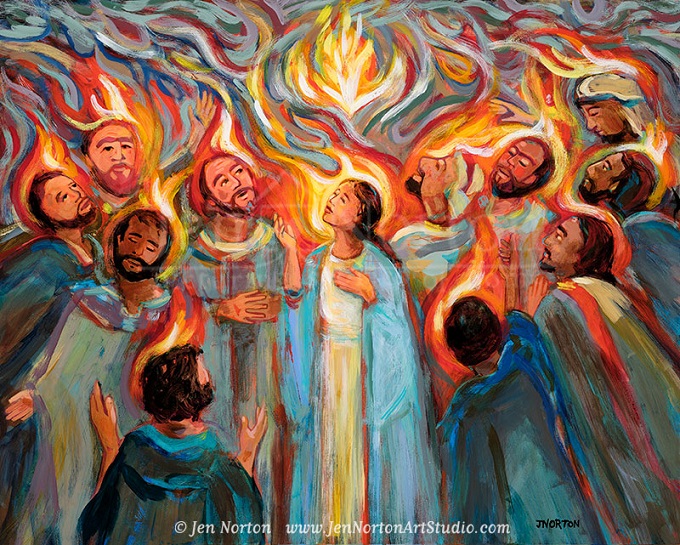
And they were all filled with the Holy Spirit and began to speak in different tongues, as the Spirit enabled them to proclaim.
Now there were devout Jews from every nation under heaven staying in Jerusalem. At this sound, they gathered in a large crowd, but they were confused because each one heard them speaking in his own language. They were astounded, and in amazement they asked, “Are not all these people who are speaking Galileans? Then how does each of us hear them in his native language?” – Acts 2:4-8
This is an example of the Spirit breaking down barriers that would seek to prevent the Good News from being shared, lived, and spread across the face of the earth. Reading on, we learn more about the many different places from which the crowd came. Undoubtedly, they also had different ideas on how to live and how to go about doing things.
We are Parthians, Medes, and Elamites, inhabitants of Mesopotamia, Judea and Cappadocia, Pontus and Asia, Phrygia and Pamphylia, Egypt and the districts of Libya near Cyrene, as well as travelers from Rome, both Jews and converts to Judaism, Cretans and Arabs, yet we hear them speaking in our own tongues of the mighty acts of God.” – Acts 2:9-11
What’s it like to contemplate the way that the Spirit enabled the disciples of Jesus, who were, for all intents and purposes, more alike than not, to communicate with those who spoke different languages and were foreign to them?
Notice how the Spirit enabled the disciples, and further defined the notion of discipleship, to become more diverse while at the same time bringing about greater unity. Also consider the posture of the disciples. In chapter 1 of the Acts of the Apostles, we read that they, “devoted themselves with one accord to prayer” and we see that play out in the choice of Matthias to join them (v. 15-26) as well as in their choices going forward. Again, they are united in prayer with hearts that desire to be led to “do the right thing” (what is good and just) more so than choosing based on personal preference or bias. This is what happens when there is a genuine striving to do what is best.
On this Pentecost, in a world that continues to face such great division and strife, the words of Thomas Merton seem so appropriate, “My dear brothers and sisters, we are already one. But we imagine we are not. And what we have to recover is our original unity. What we have to be, is what we are.”
Take some time to meditate on these words. Pray with what comes to mind and how your heart is moved. What does the Spirit want to show you?
When you send forth your spirit, they are created, and you renew the face of the earth. – Ps 104:30









You must be logged in to post a comment.