His Warmth…

Although the colder air that accompanies this time of year in the Northeast can be quite refreshing, after some time, it can leave one wanting for the warmth of shelter, a soft blanket, or hot beverage to offset the chill.

In the Gospel passage for the Fourth Sunday of Advent (Matthew 1:18-24), we learn about the warmth of St. Joseph’s response to his betrothed, with whom he had not yet lived or had relations with, being pregnant. Imagine the response, gossip, or chill in the air, created by those around Mary and Joseph. Yet, even before his dream in which the Lord appeared, reassuring him of Mary’s faithfulness, Joseph had decided to respond in a way that was filled with warmth, gentleness, and mercy:

This is how the birth of Jesus Christ came about.
When his mother Mary was betrothed to Joseph,
but before they lived together,
she was found with child through the Holy Spirit.
Joseph her husband, since he was a righteous man,
yet unwilling to expose her to shame,
decided to divorce her quietly. –
v. 18-19

Envision yourself in Joseph’s shoes. He is described here as being righteous. What do you make of his initial decision to quietly divorce?

Reflecting on situations that are on your mind and in your heart, how do you seek righteousness? What does it look like? And what qualities does it manifest?

As the Gospel passage continues, Joseph has a dream in which the Lord visits him.

“Joseph, son of David,
do not be afraid to take Mary your wife into your home.
For it is through the Holy Spirit
that this child has been conceived in her.
She will bear a son and you are to name him Jesus,
because he will save his people from their sins.” –
v. 20-21

Recall a time when you had made a decision and then something occurred that reaffirmed your decision or created a new sense of the situation. What happened? What were you praying for, and how did things turn out? How were you saved or blessed? What was the warmth of God like?

Invite the Lord to revisit this with you. What grace from this experience awaits you today?

Spend some time contemplating the verses below and noticing what word, phrase, or image speaks to your heart most:

All this took place to fulfill what the Lord had said through the prophet:
Behold, the virgin shall conceive and bear a son,
and they shall name him Emmanuel,
which means “God is with us.” –
v. 22-23

Continuing to pray with what caught your attention, ask the Lord to grant you insight so that you may see, or have a greater sense of, “God is with us.”

Before ending this prayer time, return to the image of St. Joseph.

When Joseph awoke,
he did as the angel of the Lord had commanded him
and took his wife into his home. –
v. 24

As you strive to be faithful to God, what inspires you? What do you need from the Lord to draw comfort and strength from Him, as you journey through your days, while also reflecting the warmth of His presence.

Let the Lord enter; he is king of glory. – Psalm 24:7c,10b

Sun

Inseparable…

Healing rays are cast in all directions,
driving away the shadows’ ill intent,
while drawing in the heart of willing souls.

Quilt of Truth, pure gold, rising from within,
revealing wisdom and granting vision
to what is otherwise beyond, unknown.

Resounding praise giving Glory its due,
You are everything! All that’s good and true.
God of mercy, God of justice, shine through.

Sun

“It is by the path of love, which is charity, that God draws near to man and man to God.” — St. Albert the Great

Saving Power…

Taking the plunge, one by one,
each day breaks through, something new;
Your wisdom and grace abound.

You come to us, work through us,
dignify our worth, our place.
How great when we allow it!

Kindness, compassion, mercy,
Your word, all within our reach,
to embrace, not turn around.

Brute force is never Your way.
Choice upon choice, you give us,
filled with hope, to seek what’s best.

Guiding light softly spoken,
gentle nudging, Love of loves,
Always with us, through and through,
Saving Power seeking heart.

Heart with a cross in the center

The Lord has revealed to the nations his saving power. – (cf. Psalm 98: 2b)

Fence with its shadow on a sidewalk

On the Wings of Mercy…

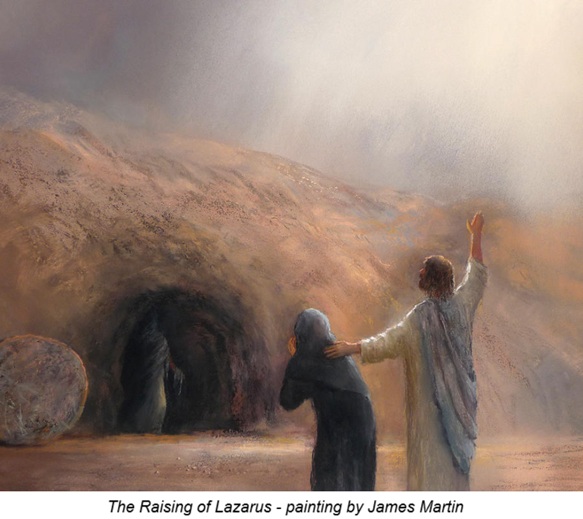
As Lazarus lay with outstretched arm,
the rich man, held all within his grip;
pursuing his designs, above All,
making no matter of Lazarus.

Living well, thinking well of himself,
dwelling in the lap of luxury,
the rich man, held up by many things,
could not see the Beat within his heart.

Rich man? We all do what we will do.
Lazarus? Raised up, received his due,
dignity and comfort came his way,
Abraham by his side in Heaven.

And while things can still be bought and sold,
the most important and precious ones,
worth their weight in gold, are born of Grace,
arriving on the wings of mercy.

Fence with its shadow on a sidewalk

Blessed is he who keeps faith forever,
secures justice for the oppressed,
gives food to the hungry.
The Lord sets captives free.

The Lord gives sight to the blind;
the Lord raises up those who were bowed down.
The Lord loves the just;
the Lord protects strangers.

The fatherless and the widow he sustains,
but the way of the wicked he thwarts.
The Lord shall reign forever;
your God, O Zion, through all generations. Alleluia.
– Psalm 146:7-10

A tree and it's shadow, among many trees

What is Cast, Cascades…

September 21 is the feast day of St. Matthew, the tax collector turned disciple. It is Matthew’s home at which Jesus and his disciples are having dinner, among, “many tax collectors and sinners” (Mt 9:10), when the following exchange occurs:

The Pharisees saw this and said to his disciples, “Why does your teacher eat with tax collectors and sinners?”
He heard this and said, “Those who are well do not need a physician, but the sick do.
Go and learn the meaning of the words, ‘I desire mercy, not sacrifice.’ I did not come to call the righteous but sinners.” – Matthew 9:11-13

If you were Matthew or a dinner guest at his house and witnessed this exchange between Jesus and the Pharisees, how would you feel, and what would you make of Jesus’s words? How about if you were a Pharisee? A disciple? Envision yourself in the shoes of the different people present or groups represented.

While there can be a wide range of perspectives and experiences in earthly regards, looking beyond that, what do you see or sense as a common bond or thread between them all?

Next, take some time to remember and pray with some of your experiences of compassion, forgiveness, and kindness. What’s it like to reflect on instances in which you received mercy, as well as the ones where you exhibited mercy toward another, as originating from the heart of God, for whom nothing is impossible? Not only that, but also to consider that these instances involved your cooperation with God, through whom anything is possible?

Share with the Lord what’s on your mind and in your heart as you contemplate his words.

In the Gospel for the Twenty-fifth Sunday in Ordinary Time, St. Luke writes:

Jesus said to his disciples:
“The person who is trustworthy in very small matters
is also trustworthy in great ones;
and the person who is dishonest in very small matters
is also dishonest in great ones.
If, therefore, you are not trustworthy with dishonest wealth,
who will trust you with true wealth?
If you are not trustworthy with what belongs to another,
who will give you what is yours?
No servant can serve two masters.
He will either hate one and love the other,
or be devoted to one and despise the other.
You cannot serve both God and mammon.”
– Luke 16:10-13

Continuing to pray with your experiences of mercy, reflect on God’s grace and the extent to which honesty, trust, and trustworthiness, have helped or aided you toward receiving and extending compassion, kindness, and the benefit of the doubt to yourself and others. Ask the Lord to help you to see clearly your areas of growth, and to gently acknowledge, and commit to cooperation with Grace in, areas in need of conversion.

What wisdom is waiting on you today?

A tree and it's shadow, among many trees

Closing prayer:
Hallelujah!
Praise, you servants of the Lord,
praise the name of the Lord.
Blessed be the name of the Lord
both now and forever.
From the rising of the sun to its setting
let the name of the Lord be praised.
High above all nations is the Lord;
above the heavens his glory.
Who is like the Lord our God,
enthroned on high,
looking down on heaven and earth?
He raises the needy from the dust,
lifts the poor from the ash heap,
Seats them with princes,
the princes of the people,
Gives the childless wife a home,
the joyful mother of children.
Hallelujah!
– Psalm 113:1-9

Celtic Healing Cross

You, have redeemed the world…

“The Holy Scriptures were not given to us that we should enclose them in books, but that we should engrave them upon our hearts.” ― St. John Chrysostom

Praying with the scripture readings for the Feast of the Exaltation of the Holy Cross (Numbers 21:4b-9; Psalm 78:1b-2, 34-38; Philippians 2:6-11; and John 3:3-17), contemplate what it means to engrave them upon your heart.

In the First Reading, we hear of the Israelites, at wit’s end, upset by their situation in the desert, and making it known to Moses. We also learn of the punishing arrival of saraph serpents, leading to the surmise of many, and the subsequent realization of sin and prayer for relief. Following this, Moses prays for the people to be spared from the serpents, and the Lord replies, “Make a saraph and mount it on a pole, and if any who have been bitten look at it, they will live.” (Numbers 21:8).

What do you make of the notion that to be cured, or to overcome the serpent’s bite, requires looking at the bronze serpent mounted on the pole?

Take some time to consider a situation or area in which your patience is worn thin, or where you have been bitten. What has your reaction or response been? And how might you ask for, and receive, God’s grace to move toward peace and healing—a better way?

The response for the Psalm (Psalm 78:1b-2, 34-38) is, “Do not forget the works of the Lord!” (Ps 78:7b). Like it was in the desert for the Israelites and Moses, it can be tempting for anyone to react or respond out of feelings of discontent or anger, when it feels like needs are not being met or answers are nowhere to be found. This psalm invites us to recall what is true. None of us are without mistakes and missteps along the way. Still though, God is merciful and forgiving. This psalm encourages us to recall and remember the ways that God has been, and is, steadfast toward us.

Think about your experience of God turning something bad into something good?

Throughout the week, in moments with or without concern or upset, pause to acknowledge and give praise to God for God’s faithfulness to you. Allow yourself the space and invite God into it, to help you to see the entire picture, and to remember what is true.

In the Letter of St. Paul to the Philippians (Philippians 2:6-11), it is written:

Christ Jesus, though he was in the form of God,
did not regard equality with God something to be grasped.
Rather, he emptied himself,
taking the form of a slave,
coming in human likeness;
and found human in appearance,
he humbled himself,
becoming obedient to death,
even death on a cross.
Because of this, God greatly exalted him
and bestowed on him the name
that is above every name,
that at the name of Jesus
every knee should bend,
of those in heaven and on earth and under the earth,
and every tongue confess that
Jesus Christ is Lord,
to the glory of God the Father.

Continuing to pray with the thoughts, feelings, and situations that have come to mind and heart thus far, where might the words emptied, humbled, exalted, and bestowed—the past tense verbs used by St. Paul to describe actions of Jesus and God—be applicable or come into play? Ask the Lord to help you to identify ways that these words operate in your life, and what purpose they might be serving.

Turning to the Gospel passage (John 3:13-17), Jesus is mid-conversation with Nicodemus, a Pharisee who has come to see Jesus in the darkness of night. Nicodemus is trying to understand what Jesus means by, “no one can see the kingdom of God without being born from above.” (Jn 3:3).

What does being born from above mean to you?

For the Feast of the Exaltation of the Holy Cross, we are reminded of where, and who, we currently are—our place as well as our call—eternal life through Jesus.

In the Gospel passage, Jesus refers to Moses lifting up the bronze serpent in the desert and says, “so must the Son of Man be lifted up, so that everyone who believes in him may have eternal life.” (Jn 3:14-15). He knows that Nicodemus will be familiar with and understand what has been written in Scripture. However, an earmark of Jesus is to elevate and help us along toward living Scripture. This is what he is trying to do, when he follows up with:

“For God so loved the world that he gave his only Son, so that everyone who believes in him might not perish but might have eternal life. For God did not send his Son into the world to condemn the world, but that the world might be saved through him.” (Jn 3:16-17).

Enter into conversation with Jesus about these two verses, inviting him to elevate and help you along in your journey toward living Scripture, or living it more fully. When your prayer time comes to a close, add the following:

We adore you, O Christ, and we bless you,
because by your Cross you have redeemed the world. – St. Francis of Assisi

Celtic Healing Cross

Lilypads

In the Image of its Creator…

Leaves upon leaves,
Earth, sky, and ground,
Different shapes,
Shades, and sizes,
Come together.

Growing along,
Getting along,
Going along,
Hosting along,
Stay together.

Like the lily
In that One pond,
Live in service,
Remain faithful
To creation.

Lilypads

Put on then, as God’s chosen ones, holy and beloved, heartfelt compassion, kindness, humility, gentleness, and patience, bearing with one another and forgiving one another, if one has a grievance against another; as the Lord has forgiven you, so must you also do. And over all these put on love, that is, the bond of perfection. – Colossians 3:12-14

The Final Test…

Victory, that is, true happiness—joy—can never be had in isolation, or at the expense of another’s wellbeing.

The readings for the Seventeenth Sunday in Ordinary Time call attention not only to the degree of God’s mercy and compassion, but also to the Lord’s openness to dialogue and mutual respect, as well as calling attention to the degree that living through and embracing the way of love, mercy, and compassion on behalf of others makes all the difference, playing part in salvation—individual and collective.

In the first reading (Genesis 18:20-32), there is discussion between the Lord and Abraham about Sodom and Gomorrah, the twin sin cities. The Lord can surely do whatever, whenever. However, that is not God’s way. In this passage, we see another example of God engaging with humanity, in response to seeing what’s going on in the two cities.

What do you make of the Lord desiring to bring Abraham along as he looks more closely?

The Lord not only listens to what Abraham has to say, but also receives it without offense, and honestly considers it with great openness and humility.

What’s it like to put yourself in Abraham’s shoes? Envision yourself in the setting and saying to the Lord:

“Will you really sweep away the righteous with the wicked?
Suppose there were fifty righteous people in the city; would you really sweep away and not spare the place for the sake of the fifty righteous people within it?
Far be it from you to do such a thing, to kill the righteous with the wicked, so that the righteous and the wicked are treated alike! Far be it from you! Should not the judge of all the world do what is just?” (v. 23-25).

In the verses that follow, Abraham continues to question the Lord. He asks 5 more times, referring to equally less quantities of righteous among the unrighteous. This back and forth ends with the following:

“But he persisted: ‘Please, do not let my Lord be angry if I speak up this last time. What if ten are found there?’ For the sake of the ten, he replied, I will not destroy it.” (v. 32).

Throughout this passage, one can see that the Lord does not grow impatient with Abraham, nor does he shut down the conversation, berate or demean him.

What strikes you most about the exchange between the Lord and Abraham?

The passage in the first reading can be referred to as “Abraham intercedes for Sodom.”

Think of a situation that you’re aware of and that is of concern to you. Pray for grace to receive the Lord’s view with openness and humility, without taking offense or turning away from questions and challenges but instead facing them with patience and a focus on what is truly right and just.

In the Responsorial Psalm (Psalm 138:1-3,6-8), the response is, “Lord, on the day I called for help, you answered me.” (v. 3a). The entirety of verse 3 is,

“On the day I cried out, you answered; you strengthened my spirit.”

Reflecting on what you intercede for, spend some time crying out to the Lord, and expressing a desire for your spirit to be strengthened in the Lord. Invite the Lord to help you to see the places where you and He are on the same page, and the places where you may vary.

In verses 12-14 of chapter 2 of the Letter of St. Paul to the Colossians, the second reading, we are reminded of the life-giving power of being baptized in the Lord. Nothing is insurmountable to spiritual wellbeing in and through the Lord. St. Paul writes in part,

“And even when you were dead in transgressions and the uncircumcision of your flesh, he brought you to life along with him, having forgiven us all our transgressions;” (v. 13).

Notice which phrase in the verse above grabs your attention. Considering this phrase amid earthly cares, how might the Lord be inviting you to greater peace and harmony? And how might you extend greater peace and harmony to others?

In the Gospel (Luke 11:1-13), Jesus’s response to a disciple’s request of, “Lord, teach us to pray just as John taught his disciples.” (v. 1) is:

“When you pray, say:
Father, hallowed be your name,
your kingdom come.
Give us each day our daily bread
and forgive us our sins
for we ourselves forgive everyone in debt to us,
and do not subject us to the final test.” (v. 2-4)

It’s important to remember that to live authentically and to truly overcome obstacles, one must consider who is being lifted up from words/actions. How is something giving glory to God? Who is benefiting and to what extent? And, in what ways does it fit in with the Lord’s example of love, mercy, and compassion to oneself and others?

Going back to the concern you were praying about, ask the Lord to help you to see (or to reaffirm for you) what’s most important, or what the final test is, in the situation. Take time to share and rest in the Lord with your thoughts and feelings on this, and to receive and desire to carry forward His.

The Gospel passage continues with Jesus giving an example of two friends, one asking the other for loaves of bread in the middle of the night. Jesus says,

“I tell you, if he does not get up to give him the loaves because of their friendship, he will get up to give him whatever he needs because of his persistence.” (v. 8)

Returning to your prayer, where, or with whom, does the bulk of your concern lie? Is it with yourself, others, a mix, or something else? Ask the Lord to reveal to you, from moment to moment throughout each day, the spot(s) to invest your time and energy. Where is greater persistence needed? How might you need the Lord’s help in this area?

“And I tell you, ask and you will receive;
seek and you will find;
knock and the door will be opened to you.
For everyone who asks, receives;
and the one who seeks, finds;
and to the one who knocks, the door will be opened.
What father among you would hand his son a snake
when he asks for a fish?
Or hand him a scorpion when he asks for an egg?
If you then, who are wicked,
know how to give good gifts to your children,
how much more will the Father in heaven
give the Holy Spirit to those who ask him?” – Luke 11:9-13

Hearts being lifted up by a butterfly.

Begin with Love…

The readings for the Fifth Sunday of Easter can be seen as encouragement toward, and an opportunity to reflect throughout the week on perseverance, praise, promise, and practice, but most of all, Love.

In the First Reading (Acts 14:21-27), Paul and Barnabas continue their travels, preaching to and teaching the Gentiles about the Way. In this scripture passage, it is written:

“They strengthened the spirits of the disciples and exhorted them to persevere in the faith, saying, ‘It is necessary for us to undergo many hardships to enter the kingdom of God.’” (v. 22).

Think about some of the hardships you have encountered or are currently experiencing. Where have you found strength to persevere? What about moments of peace? How do you desire God to be present to you regarding these challenges? Take some time to bring these areas to prayer and express what is in your heart as you do.

The First Reading ends with the following verses:

“From there they sailed to Antioch, where they had been commended to the grace of God for the work they had now accomplished. And when they arrived, they called the church together and reported what God had done with them and how he had opened the door of faith to the Gentiles.” (v.26-27).

Continuing to reflect on the questions above, your prayer, and these closing verses, what insight or inspiration comes to you?

——————–

In the Responsorial Psalm (Psalm 145:8-13), the response comes from verse 1 of the Psalm which is, “I will extol you, my God and king; I will bless your name forever and ever.” While it expresses the psalmist’s deep sense of gratitude to God, the verses that follow it speak to characteristics of God:

“The Lord is gracious and merciful,
slow to anger and of great kindness.
The Lord is good to all
and compassionate toward all his works.” (v. 8-9)
.

In what ways have you encountered, and do you continue to encounter, grace, mercy, patience, and kindness through God, both directly and indirectly? In what ways do you embody and promote these characteristics to others?

The verses of the Psalm continue:

“Let all your works give you thanks, O Lord,
and let your faithful ones bless you.
Let them discourse of the glory of your kingdom
and speak of your might.” (v. 10-11)
.

“Let them make known your might to the children of Adam,
and the glorious splendor of your kingdom.
Your kingdom is a kingdom for all ages,
and your dominion endures through all generations.” (v. 12-13).

What strikes you most about the above verses, in terms of the reception of the Creator and the response of the created? As you contemplate this, what events or circumstances come to mind and what feelings do they give rise to? Where and how do praise and gratitude come into play? Pray with this, sharing your thoughts and feelings with the Lord, and allowing yourself to listen to or get a sense of the Lord’s response.

——————–

The Second Reading comes from the Book of Revelation (Revelation 21:1-5a):

“Then I, John, saw a new heaven and a new earth.
The former heaven and the former earth had passed away,
and the sea was no more.
I also saw the holy city, a new Jerusalem,
coming down out of heaven from God,
prepared as a bride adorned for her husband.
I heard a loud voice from the throne saying,
‘Behold, God’s dwelling is with the human race.
He will dwell with them and they will be his people
and God himself will always be with them as their God.
He will wipe every tear from their eyes,
and there shall be no more death or mourning, wailing or pain,
for the old order has passed away.’
The One who sat on the throne said,
‘Behold, I make all things new.’”

After reading the above passage, when you read, “God’s dwelling is with the human race.”, what comes to mind, and what feelings accompany it?

As you continue to reflect, envision yourself, arm in arm with the Lord, walking along a path, in a place of your choosing. Share the thoughts and feelings that are stirring within you and allow the Lord to respond. Notice the way you receive or embrace each other as you communicate? What characteristics of the Lord do you experience and what ones do you exude to the Lord?

Recalling the last verse in this passage, “The One who sat on the throne said, ‘Behold, I make all things new.’”, what is your current level of trust in these words? Taking to heart God’s words as God’s promise, and your current reality, what happens? Share what’s going on inside you with the Lord including the areas that pose a challenge to your belief?

As your prayer time comes to its closing, what desire is in your heart? And what is the Lord’s desire for you?

——————–

The Gospel passage for the Fifth Sunday of Easter (John 13:31-33a, 34-35) takes us back to the Last Supper, after Jesus has washed the feet of the disciples and Judas has taken leave of Jesus and the others present.

“When he had left, Jesus said,
‘Now is the Son of Man glorified, and God is glorified in him.
If God is glorified in him,
God will also glorify him in himself,
and God will glorify him at once.
My children, I will be with you only a little while longer.
I give you a new commandment: love one another.
As I have loved you, so you also should love one another.
This is how all will know that you are my disciples,
if you have love for one another.’”

What’s it like to sit with the notion of the glory of God being in you? In what ways does, and can, being mindful of this truth enrich and/or enlighten your words and actions? In practice, how does it inspire a cooperative spirit with the flow of God’s love in and through you?

Where do we begin? Begin with the heart.” – Julian of Norwich

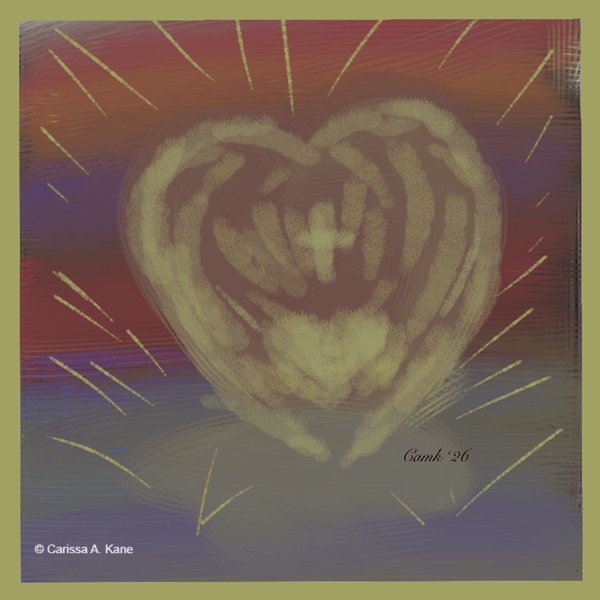
Cross inside a heart, creating bursts of light.

An Even Greater Love…

Working my way around,
whether by chance or fate,
again, once more, I hear,
reverberations of,
not stern warnings, but of
wise voices of the past.

Just as justice for one,
affects justice for all,
mercy and compassion
make the way to goodwill;
offspring of love, made by,
an even greater Love.

Cross inside a heart, creating bursts of light.

“From my point of view, God is the light that illuminates the darkness, even if it does not dissolve it, and a spark of divine light is within each of us.” – Pope Francis