Beating still, beating quietly, beating nonetheless, Attention becomes the disciple of intention. A stir within, roars within, formation from within. Look and listen closely as true passion is revealed.
Following the leader? Where? To what good do they lead? Igniting hearts? Uniting hearts? On whose behalf? All hearts can and must choose for whom and for what they burn. Discern! Discern! Deception has so many voices.
Does the message uplift all of us, like the true one Who gracefully overcomes the small, in all of us, Helping the steadfast to be ready, set, and to ask, How does this represent the good teacher serving all?
The Lord keeps faith forever, secures justice for the oppressed, gives food to the hungry. The Lord sets captives free. The Lord gives sight to the blind; the Lord raises up those who were bowed down. The Lord loves the just; the Lord protects strangers. The fatherless and the widow the Lord sustains, but the way of the wicked he thwarts. The Lord shall reign forever; your God, O Zion, through all generations. Alleluia. – Psalm 146:6-10
The Baptism of the Lord in the Gospel according to Matthew describes an interaction between Jesus and John the Baptist. John is a prophet who has his own disciples, and of whom it is written, “At that time Jerusalem, all Judea, and the whole region around the Jordan were going out to him and were being baptized by him in the Jordan River as they acknowledged their sins.” (Matthew 3:5-6). And Jesus is the Christ, the Anointed one, of whom John said, “the one who is coming after me is mightier than I. I am not worthy to carry his sandals. He will baptize you with the holy Spirit and fire.” (Matthew 3:11). Yet, as it is written, they meet and engage with each other without pretense or posturing.
Read and reflect on the Gospel passage for the Baptism of the Lord (below), receiving it as an invitation to prayerfully consider human interactions, both your own and those that you witness. Ask the Lord for insight and wisdom as you do so.
Jesus came from Galilee to John at the Jordan to be baptized by him. John tried to prevent him, saying, “I need to be baptized by you, and yet you are coming to me?” Jesus said to him in reply, “Allow it now, for thus it is fitting for us to fulfill all righteousness.” Then he allowed him. After Jesus was baptized, he came up from the water and behold, the heavens were opened for him, and he saw the Spirit of God descending like a dove and coming upon him. And a voice came from the heavens, saying, “This is my beloved Son, with whom I am well pleased.” – Matthew 3:13-17
What divine qualities do the words and actions of John the Baptist and Jesus exemplify in this exchange? What strikes you most?
Next, put yourself in John’s shoes as the prophet of whom it is written, “A voice proclaims: In the wilderness prepare the way of the Lord! Make straight in the wasteland a highway for our God!” (Isaiah 40:3). What’s it like to encounter Jesus, knowing that He is the one of whom you’ve been preaching and waiting for? and knowing that it is time for you to step back while He steps forward? What thoughts and feelings arise when you envision saying to Jesus, “I need to be baptized by you” and he replies, “Allow it now. For thus it is fitting for us to fulfill all righteousness”?
Now, ask Jesus to help you to envision His experience in this passage. In what ways might His perspective enlighten your interactions and/or assessments of interactions to which you have been a witness?
How might you be inspired by the example of Jesus and John the Baptist in interactions and when you encounter something or someone known, new, or different?
“You are sent into this world to believe in yourself as God’s chosen one and then to help your brothers and sisters know that they are also beloved sons and daughters of God who belong together. You’re sent into this world to be a people of reconciliation. You are sent to heal, to break down the walls between you and your neighbors, locally, nationally, and globally. Before all distinctions, the separations, and the walls built on foundations of fear, there was a unity in the mind and heart of God. Out of that unity, you are sent into this world for a little while to claim that you and every other human being belongs to the same God of Love who lives from eternity to eternity.” – Henri Nouwen
Trees straight ahead standing tall, Making way for what may come, What was, and what is beyond. So willing to share the scene With the bright and countless leaves.
Together in their welcome To fellow lives passing through, Trees and leaves hold each other, One another, as Love holds them too.
The Lord is a God of justice, who knows no favorites. – Sirach 35:12
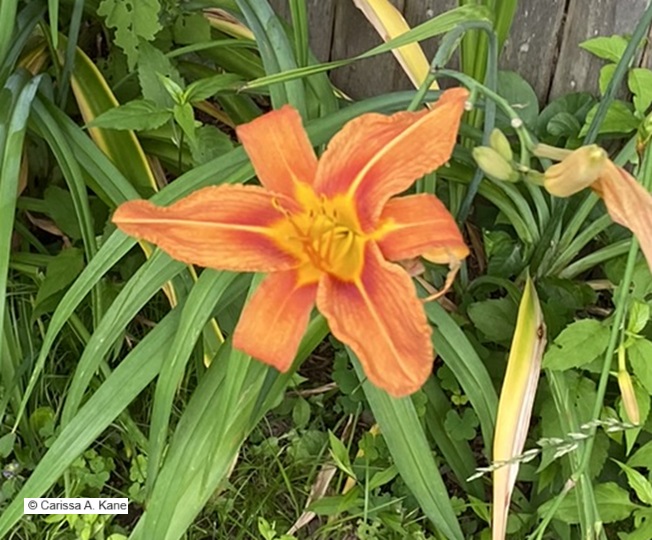
Like the lily In that One pond, Live in service, Remain faithful To creation.
Put on then, as God’s chosen ones, holy and beloved, heartfelt compassion, kindness, humility, gentleness, and patience, bearing with one another and forgiving one another, if one has a grievance against another; as the Lord has forgiven you, so must you also do. And over all these put on love, that is, the bond of perfection. – Colossians 3:12-14
As the days passed by, the flowers, still bright, holding onto life, begin to show the length of days and nights, separate, away from the source of life.
Leaves dropping from stems, petals shriveling, on the outside first. Time ticks, closing in. Hold on as they may, away from their roots, they limp as they linger.
In the First Reading for the Seventh Sunday in Ordinary Time (1 Samuel 26:2, 7-9, 12-13, 22-23), David and Abishai find themselves in a position of advantage, having the opportunity to kill Saul, who, along with his soldiers are in a deep sleep. However, despite Saul having grown distant from who he was at the beginning of his rule, and having become David’s enemy, David restrains himself and shows mercy. He says to Abishai, “Do not harm him, for who can lay a hand on the Lord’s anointed and remain innocent?” (v. 9).
Spend some time with the first reading and consider that as beings created in God’s image, in a sense, we are all anointed.
The response for the Psalm is, “The Lord is kind and merciful.” (Psalm 103:8). Reflect on the ways that the Lord has been kind and merciful to you. How does your experience inspire you in terms of the way you view situations and people? In what ways do you feel compelled to be kind and merciful to others? Are there areas where the Lord might want to work with you on expanding upon or reassessing this?
Turning to the Second Reading (1 Corinthians 15:45-49), St. Paul writes of Adam and Jesus, but he is also writing about the call to conversion and discipleship.
As was the earthly one, so also are the earthly, and as is the heavenly one, so also are the heavenly. Just as we have borne the image of the earthly one, we shall also bear the image of the heavenly one. – verses 48-49
Envisioning your life as one line and the events/happenings during your life as another line on a continuum, think about the major events/happenings that have had a direct impact on you. What’s the difference between the times when you have maintained a sense of inner strength (or know-how) and peace, and the times you haven’t?
In the Gospel Reading (Luke 6:27-38), Jesus reminds us that Love is what sustains us. Not embracing cynicism, seeking or plotting revenge, settling or keeping scores. Rather, those are the things that tear us away from Love and the root of goodness and life—God.
How might you draw closer to Love in the challenges you face today? And how might the Lord desire to join you in an area of challenge?
The Lord is kind and merciful, slow to anger, abounding in mercy. – Psalm 103:8
Blessed are we, created in the image of the Lord, Who comes down from the mountain, To stand with us on level ground. Bestower of grace on all, Willing spirits will receive Him. Words of Wisdom and Hope He speaks, Bringing Light and Life to the soul.
Care for the poor, Feed the hungry, Comfort those in need. Way of ways, it is not easy.
Hold fast to only One—the Lord. Falling not for hollow banter, Careful of the ruse; it’s not True. Look not to glorify others, Rather, seek Wisdom from the Source. Big and bold isn’t always best, and Stay awake is what the Lord commanded.
In the Gospel passage for the 10th Sunday in Ordinary Time (Mark 3:20-35), Jesus says to his disciples and the crowd, “If a kingdom is divided against itself, that kingdom cannot stand.” (verse 24). This is in response to the scribes claim that Jesus is driving out demons by or through the prince of demons. Jesus’s words make sense. After all, one cannot bring peace and healing by or through chaotic means. With so much division and vitriol circulating throughout the world, it’s worth considering the heart in the matter.
In the days leading up to this Sunday, the Solemnity of the Most Sacred Heart of Jesus and the Memorial of the Immaculate Heart of the Blessed Virgin Mary are celebrated. When you consider the heart of Jesus, what qualities come to mind? How about when you think about Mary’s immaculate heart?
Based on Scripture, what are some concrete ways that their words and actions reflect these qualities? How does Mary receive unexpected news or events such as the Annunciation, at the Presentation in the temple, and Jesus’s arrest and crucifixion? How does Mary react and respond to the young Jesus when she finds him in the temple after 3 days apart? What does Mary do, and how does she do it, when the wine runs out at the wedding feast in Cana?
What kinds of words does Jesus use and what is his attitude in his encounters with the pharisees and scribes, his disciples, and the crowds? What do Jesus’s actions express? And how does Jesus respond and react during the Passion?
Contemplating the heart of Jesus and the heart of Mary in the happenings of today’s world, how or where do you see the qualities of their hearts coming to life through words and actions? Take time this week to notice the heart behind your words and actions as well as those in the happenings directly around you, in your country, and in the world.
Prayer: Immaculate heart of Mary, intercede on our behalf, so that lies, deception, and all who seek to distort what is true, just, and honorable may be revealed. Sacred heart of Jesus, help us to see through your eyes, and to speak, act, and love, with your heart. Amen.
With the Lord there is mercy, and fullness of redemption. – Psalm 130:7bc
On the Solemnity of the Most Holy Body and Blood of Christ also known as Corpus Christi, the Collect (opening prayer) is: “O God, who in this wonderful Sacrament have left us a memorial of your Passion, grant us, we pray, so to revere the sacred mysteries of your Body and Blood that we may always experience in ourselves the fruits of your redemption.”
Spend some time reflecting on this prayer and on the Sacrament of the Eucharist. What does it mean to you and how has it impacted you? Remember how you have experienced the fruits of the Lord’s redemption. What wonders has the Lord worked in your life? Take a few moments to express gratitude for these experiences and the awareness of them.
In the hymn One Bread, One Body, the lyrics direct us to mindfulness of our call, one and all, to unity as God’s people (the church):
One bread, one body, one Lord of all One cup of blessing which we bless And we, though many, throughout the Earth We are one body in this one Lord – John Foley, SJ (excerpt from One Bread, One Body)
Recall a time(s) when you have experienced unity and the fruits of the Lord’s redemption with others? In what ways have you witnessed the hand of the Lord? Give thanks for these times of common ground and the remembrance of them.
What hopes and desires do you have at this moment for awareness and unity in your life? your community? your country? and the world? Share these with the Lord. Ask the Lord for the grace to further appreciate and be inspired by experiences of the outpouring of His love.
Pray for one and all to have an open heart and mind to the well-being of all creation, and above all, to draw closer to God so as to embody (to speak and act in accord with) God’s desires as expressed through the example of Jesus.
How shall I make a return to the Lord for all the good he has done for me? The cup of salvation I will take up, and I will call upon the name of the Lord. – Psalm 116:12-13
In the First Reading for the Solemnity of the Holy Trinity (Deuteronomy 4:32-34, 39-40), Moses reminds the people of how God has been present to them in Egypt and the magnitude of what God has done for them. He then implores them to use these experiences to remain focused on God as well as God’s ways thru adherence to God’s statutes and commandments. There can be a tendency to think of statutes and commandments as confining, but when taken into consideration along with the bigger picture of God’s dedication and love for all of creation, they can be seen as providing concrete ways to create unity and exercise respect and dignity with a goal of freedom and protection for one and all.
With God there is always more than one side. The relationship is mutual and considers all parties. There are statutes and commandments, but there are also God’s actions, not just telling humanity how to be, but also leading the way and showing us by example. The verses in the Psalm (Ps 33:4-5, 6, 9, 18-19, 20, 22) describe the Lord’s words, actions, and persona as: upright, trustworthy, just, right, kind, effective, protective, and helpful. These attributes are also infused in the statutes and commandments. They are extended to us by God and in turn we are to extend them to each other.
In the Second Reading (Romans 8:14-17), St. Paul reminds us of our part in the Trinity. As “children of God” and “Joint heirs with Christ” we are not to be enslaved by fear, but rather to live in and be led by the Spirit of God. The passage begins with a salutation of “Brothers and Sisters.” This is not an uncommon greeting. Readings from the letters of St. Paul often begin with a salutation of “Brothers and Sisters,” perhaps to continually express the overall desire and focus on the goal of unity with the Lord and one and another. Imagine starting all your communications with “Brothers and Sisters” or adding “Brothers and Sisters” to communications you receive. How might that shape what you write/say and how you receive what is written/said to you?
Moving on to the Gospel passage known as the Commissioning of the Disciples (Matthew 28:16-20), the disciples, who have gone to Galilee as instructed by Jesus, encounter the risen Jesus. It is written, “they worshipped, but they doubted.” (verse 17). What’s it like to think that despite the existence of doubt, they were still seen as worthy, encountered Jesus, and were given the opportunity to serve as Jesus’ disciples? When situations arise, it can be tempting to give rise to doubt or to fall into a one thing or another, or all or nothing mindset. However, with the Lord, all are worthy, there are often many ways and different degrees to serve, and faith always triumphs over doubt.
Overall, the Solemnity of the Most Holy Trinity presents an opportunity to acknowledge, contemplate, and celebrate how one experiences the Father and the Son and the Holy Spirit. When you consider each aspect of the Trinity, what characteristics or attributes come to mind? How have you experienced these in your life and how has your prayer been influenced by them? In what ways are you inspired by the Holy Trinity individually and in your relationships? How might the Trinity influence you to overcome uncertainty or division and work toward unity, to better communicate or deepen relationships, or in any related discernment?
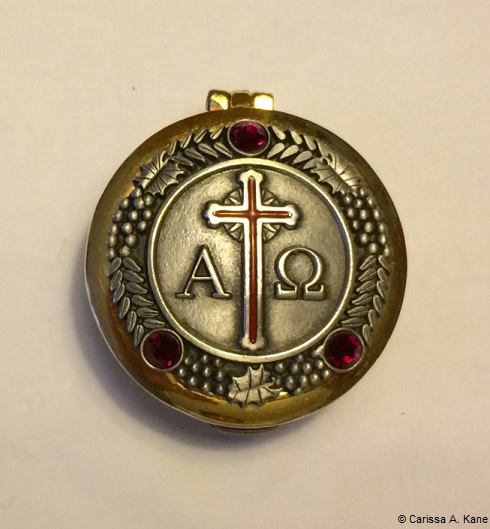
“I am the Alpha and the Omega,” says the Lord God, “the one who is and who was and who is to come, the almighty.” – Revelation 1:8












 HopeThatFloats
You must be logged in to post a comment.