Be Opened…

In the Gospel passage for the Twenty-third Sunday in Ordinary Time (Mk 7:31-37), the people of a village bring a man who is deaf and has a speech impediment to Jesus and plead with him to lay his hand on him. What do you think made the people of the village do this? The deaf man could see, after all, and he could have found his own way to Jesus and asked for himself. What do imagine caused the people to get involved on the deaf man’s behalf? What are some things that lead you to get involved on the behalf of others?

We also read in this passage that Jesus “took him [the deaf man] off by himself away from the crowd.” (v. 33). Perhaps to remove the noise and distractions? Perhaps to engage in a more personal way with the man? Or maybe it was something else.

In the Scripture passage prior to this one, Jesus is trying to step away from the crowds when he is approached by the Syrophoenician woman asking for her daughter to be healed (Mk 7:24-30). This occurs after he has responded to the Pharisees questioning his disciples’ behavior; where Jesus replied in part, “Nothing that enters one from outside can defile that person; but the things that come out from within are what defile.” (Mk 7:15). Considering this teaching and carrying it forward into Jesus’s interactions with the Syrophoenician woman and the deaf man, reflect on the way he receives and responds to people, situations, and what’s going on around him.

How do you receive people, situations, and what’s going on around you? What inner attitudes or dispositions do you carry into interactions? What’s going on in your heart, and how does it affect your response?

Coming back to today’s Gospel Jesus says, “Ephphatha!” (“Be opened!”), and as a result, the deaf man can hear, and his speech impediment is gone. He is healed from his affliction through Jesus’s command, or call, to openness. So why then, does Jesus tell the man not to tell anyone? And how might this fit in with the idea of evangelization?

Maybe Jesus is calling us to be open to what’s going on around us and what God is trying to tell us as individuals, to further open and transform one’s own heart toward greater understanding and compassion. And with that, reminding us that evangelization comes through the grace of God and at times is aided, or complemented, by kind and loving hearts that are both fluid with and fixated on God.

Say to those whose hearts are frightened:
Be strong, fear not!
Here is your God,
he comes with vindication;
with divine recompense
he comes to save you. – Isaiah 35:4

First Things First…

The readings for the Seventeenth Sunday in Ordinary Time offer an opportunity to consider priorities and the values that elevate some over others.

In the first reading (1 Kgs 3:5, 7-12), we can see that Solomon acknowledges that although he is king, he needs God’s grace if his desire to rule wisely is going to be fulfilled. He knows that to do right requires more than his own knowledge, perception, and opinions. He understands that he needs to be able to have a sense of more than what he can surmise, and this is why he asks God for a discerning heart (and mind) when he could’ve asked for anything else at all. His top priority is not solely for himself, but for the benefit of all whom he serves as king.

In the psalm, we read the response, “Lord, I love your commands.” (Ps 119:97a). Again, we see reliance on God, as well as value and priority placed on God’s words as providing what is necessary. The psalmist tells of how God’s words are precious, carrying kindness and compassion, and expresses a desire to honor God’s words by living them (“For in all your precepts I go forward; every false way I hate” – Ps 119:128). Then the psalmist says, “The revelation of your words sheds light, gives understanding to the simple.” (Ps 119:130). Again, we see evidence of fulfillment of a desire for truth and understanding as well as a continued desire to be led by God. It’s important to remember that the psalmist has experienced the grace of God directly, just like Solomon. It is in the words of God through intimate, personal exchanges that Solomon and the psalmist come to know in a particular moment what is good and right and wise in God’s eyes.

When we read further, in the second reading, St. Paul stresses relationship with God. In essence, he is saying that when priorities and values are centered in and through God, we become like the Love who created us.

“We know that all things work for good for those who love God,
who are called according to his purpose.
For those he foreknew he also predestined
to be conformed to the image of his Son,
so that he might be the firstborn
among many brothers and sisters.
And those he predestined he also called;
and those he called he also justified;
and those he justified he also glorified.” – Rom 8:28-30

This brings us to the Gospel reading (Mt 13:44-52) and an invitation to prayer and reflection on priorities and values.

Jesus said to his disciples:
“The kingdom of heaven is like a treasure buried in a field,
which a person finds and hides again,
and out of joy goes and sells all that he has and buys that field.
Again, the kingdom of heaven is like a merchant
searching for fine pearls.
When he finds a pearl of great price,
he goes and sells all that he has and buys it.
Again, the kingdom of heaven is like a net thrown into the sea,
which collects fish of every kind.
When it is full they haul it ashore
and sit down to put what is good into buckets.
What is bad they throw away.
Thus it will be at the end of the age.
The angels will go out and separate the wicked from the righteous
and throw them into the fiery furnace,
where there will be wailing and grinding of teeth.

“Do you understand all these things?”
They answered, “Yes.”
And he replied,
“Then every scribe who has been instructed in the kingdom of heaven
is like the head of a household
who brings from his storeroom both the new and the old.” – Mt 13:44-52

The word of God is the revelation of God, and through our graced experiences, we participate in the living word of God. Take some time to pray and reflect on your life through the lens of being a participant in the word of God? What comes to mind? What feelings arise from within? And in what ways do you feel inspired by the word of God, yesterday… today… as you think about the future?

In Plain Sight…

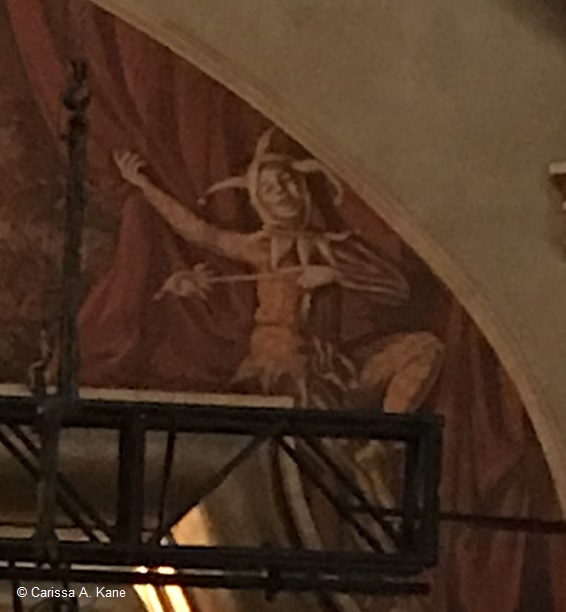
Waiting for the show to begin,
But maybe it never stopped.
Still, wondering what the next scene may hold,
And noticing how the stage is set.
Then, up high and to the right,
Along the border,
Sidelined and on the corner,
A character, in all honesty,
Sitting there, also waiting,
To tell the story,
And to make it known,
Whether funny or not,
The truth behind and around,
As well as within it.

God made Truth with many doors to welcome every believer who knocks on them. – Kahlil Gibran

Coming Up Roses…

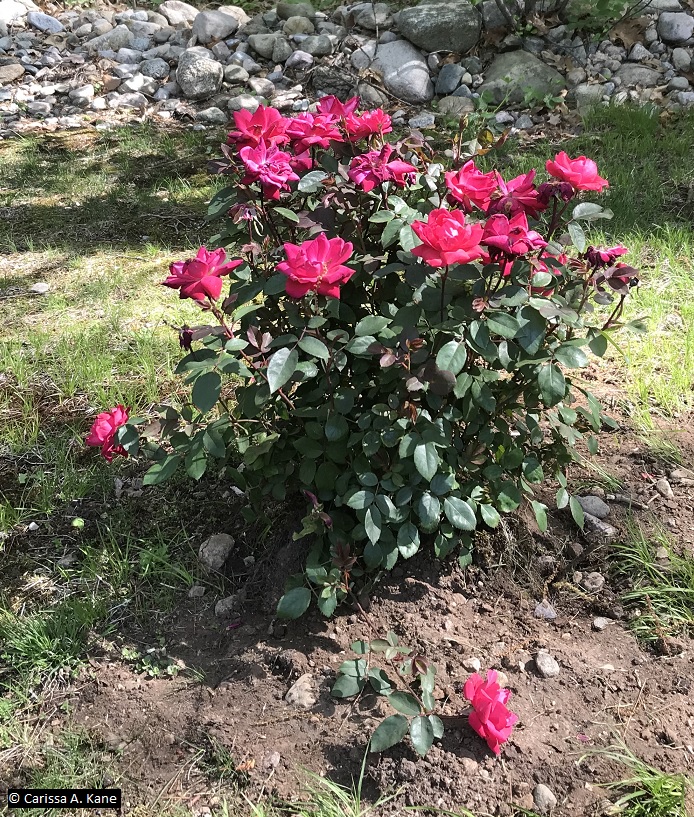
So simple… love one another… not so simple.

Impossible? At times, it may seem so.

Yet, no, not impossible,

but rather challenging,

and only truly possible through the grace of God.

No one has ever seen God. Yet, if we love one another, God remains in us,
and his love is brought to perfection in us. – 1 John 4:12

More than a recipe…

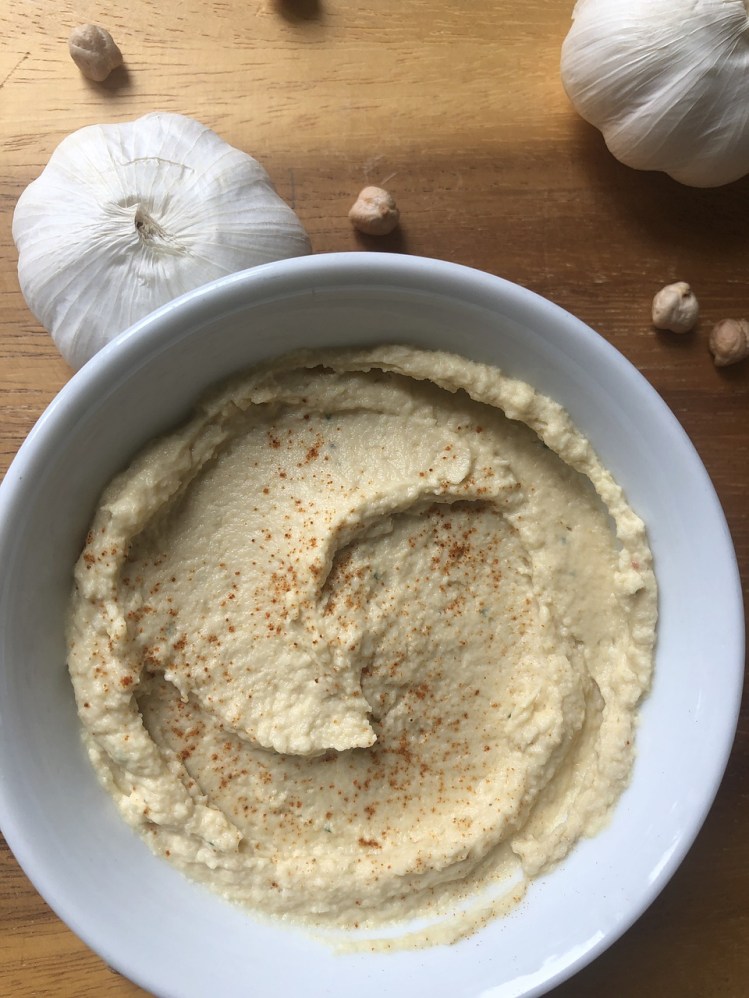
I did not learn to make hummus, with just the “right” amount of fresh garlic, salt, and lemon juice by eating it, reading a recipe, or watching my mother make it over, and over again. Rather, I learned by taking what I saw, remembering what I had tasted, and trying to make it myself, over, and over again. After all, the most helpful way to learn is by ongoing, active observance, repetition, participation, reflection, and openness to growth.

While experience is key, it is interesting that oftentimes as experience increases, awareness to room for improvement can lessen, or even disappear. With that, it may be more than tempting to take moments and situations for granted, rote, or with a “nothing new here” spirit. However, even the process of washing, rinsing, and repeating, holds newness and opportunity with each turn.

In the Gospel according to John, a week later, when the disciples were still locked in the room, Jesus appeared again (Jn 20:26). What was it like for the disciples who had seen the risen Jesus the first time he had appeared? Was it just a been there, done that, repeat for them, or were they able to experience the second appearance in a new or deeper way?

What was the attitude in the room? Were the disciples who had previously seen Jesus able to receive this visitation as being as much for them as it was for Thomas? To whom was Jesus speaking when he said to Thomas, “Have you come to believe because you have seen me?”

In the Gospel according to Mark, chapter 16, verse 11, it is written that when Mary Magdalene told the disciples that the risen Jesus had appeared to her outside the tomb, they did not believe without seeing either. Did the disciples remember this, when Thomas said, “Unless I see the mark of the nails in his hands and put my finger into the nailmarks and put my hand into his side, I will not believe.”(Jn 20:27)?

What did Thomas think, when Jesus said to him, “Have you come to believe because you have seen me? Blessed are those who have not seen and have believed.” (John 20:29)? What did he feel? Perhaps, he felt bad that he did not believe what he had been told by the other disciples. Or, perhaps Thomas felt joy that Jesus heard his need, and responded to it, allowing him to experience the risen Jesus himself.

After all, whether making hummus , dealing with faith, or anything else for which there may be “recipes” or popular thought, there is always more than what is on the page, for “Experience is the teacher of all things” (attributed to Julius Ceasar).

In all times, but most especially in those that are challenging, we must consider experience, both our own and that of others. What has it been like? Do we remember the times and places where we have doubted, questioned, or disagreed, and, do we extend the same courtesy, patience, peace, and understanding that Jesus extends to us, to others?

On the evening of that first day of the week,
when the doors were locked, where the disciples were,
for fear of the Jews,
Jesus came and stood in their midst
and said to them, “Peace be with you.”
When he had said this, he showed them his hands and his side.
The disciples rejoiced when they saw the Lord.
Jesus said to them again, “Peace be with you.
As the Father has sent me, so I send you.”
And when he had said this, he breathed on them and said to them,
“Receive the Holy Spirit.
Whose sins you forgive are forgiven them,
and whose sins you retain are retained.”
Thomas, called Didymus, one of the Twelve,
was not with them when Jesus came.
So the other disciples said to him, “We have seen the Lord.”
But he said to them,
“Unless I see the mark of the nails in his hands
and put my finger into the nailmarks
and put my hand into his side, I will not believe.”
Now a week later his disciples were again inside
and Thomas was with them.
Jesus came, although the doors were locked,
and stood in their midst and said, “Peace be with you.”
Then he said to Thomas, “Put your finger here and see my hands,
and bring your hand and put it into my side,
and do not be unbelieving, but believe.”
Thomas answered and said to him, “My Lord and my God!”
Jesus said to him, “Have you come to believe because you have seen me?
Blessed are those who have not seen and have believed.”
Now Jesus did many other signs in the presence of his disciples
that are not written in this book.
But these are written that you may come to believe
that Jesus is the Christ, the Son of God,
and that through this belief you may have life in his name. – John 20:19-31

Taken Altogether…

Stepping out and looking up, the night time sky awakens me. Alongside the darkness, the clouds, visible above and behind the tree tops, create a contrast that draws me in. Between them and the sky that is speckled with the light of stars from far away, the scene is even more compelling. There are so many dimensions, and on this night, as opposed to one where the clouds leave no room for the stars, all seem to bring something to the picture in a way that works together and makes it whole.

So much of what’s good and honorable in the world, is not unlike this scene. That is, the parts not only brought together, but also taking care to make room at the table, and in our hearts, for each other. Coming back to the night time sky on this evening, taking in its different parts once more, I imagine each of them embodying, “Here am I, Lord; I come to do your will” (Psalm 40). For although we are different, we are very much the same. And, our well-being and the picture that we make is collective—always tied together.

As Martin Luther King, Jr. Day approaches, thank you Rev. Dr. Martin Luther King, Jr. for standing up and speaking out, for your words and the actions that flowed with them, and most of all, for the spirit with which you shared them with the world.

“In a real sense all life is inter-related. All men are caught in an inescapable network of mutuality, tied in a single garment of destiny. Whatever affects one directly, affects all indirectly. I can never be what I ought to be until you are what you ought to be, and you can never be what you ought to be until I am what I ought to be… This is the inter-related structure of reality.” – Rev. Dr. Martin Luther King, Jr.

Catch It…

The love and mercy of God in all its brilliance,

Shines through to the heart that seeks it,

Captivating and enfolding it in all its glory,

Sending it forth with more than a shimmer,

Of the beauty that is Truth.

CatchIt

“For God delivered all to disobedience, that God might have mercy upon all.” – Romans 11:32

Museum Days…

In ordinary times, it seems many things fly by, or slip away, unnoticed or forgotten. This week, thinking about summer fast approaching and revisiting memories of summer days gone by, a visit to a university art museum came to mind. When going to a museum there is often a feeling of enthusiasm and openness to seeing many different types and styles of art from various cultures and periods throughout history, all in the same place at the same time.

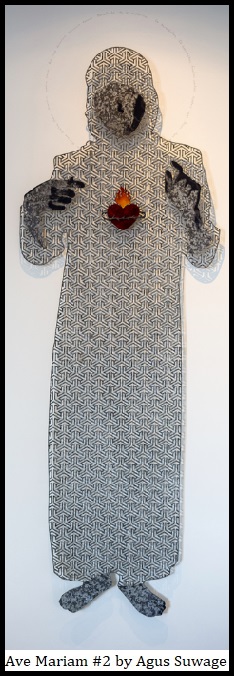
When reminiscing about this museum visit, what rose to the surface was a piece of art titled, Ave Mariam #2, by the artist Agus Suwage. I remember being struck by how different it was than any other rendering I had seen before. I also recall seeing it from a far, not knowing who it was supposed to be or who the artist might have been. What stood out, and drew me in closer, was the heart.  As I moved forward, it was as if my heart, the heart of the subject, and the heart of the artist joined together, becoming one.

The past few months have been very different than many could have ever dreamed. For many, plans, hopes, or dreams erased as lessons gone by, removed from a board.  Yet, in what can feel like a long, strange flow of time, where division, deceit, and animosity are overflowing, among all the grief, it seems much has been, and remains, to be gained. It is as if the Universe is screaming… pleading, “Unity!”

While most schools around here are finished with, or finishing up, the academic year, it seems we are back in school. These are “Museum days.” If only the spirit that permeates the inside of the museum encountered such willing participants outside as well. There is so much to take in. There is still so much to learn, so much diversity to appreciate, and so many hearts to come together, to be uplifted and inspired toward the peace that greater awareness and authenticity create.

Lord, help us, Your body, to be moved by the Holy Spirit to partake in Your goodness in all our encounters and endeavors, for the glory of God. Mary, Mother of God, pray for us.

AveMariam2

Something new… something old…

With all the volatility throughout the world right now, it can be difficult to wade through differences of opinion and the debates, sometimes heated, that come from them. Socrates said, “True wisdom comes to each of us when we realize how little we understand about life, ourselves, and the world around us.”  

Oftentimes, in situations that engender competing factions, the best way to proceed is by laying aside one’s own point of view, at least temporarily, and trying to understand the experience of others.

Earlier this week, I received an email that contained statistics that were not the most recent statistics available. However, beyond the numbers, the message contained some examples of social injustice in areas that I am not sure I had previously considered. What shined through loud and clear was that it can be easy to become isolated or insulated from the experience of others. More often than not, there is a greater tendency to try to find the place where one fits in, and then, to comfortably live and stay there. Inevitably, by doing so, diversity and openness become lost more easily, and learning lessens. The voices and the experience of others… those on the edges or completely outside of the place where we have come to reside, become invisible or simply “not my experience,” so they may be dismissed, without much consideration.

This is the crux of the matter… of many matters. When there is little or no room for consideration, or an unwillingness to separate from what is comfortable, preferred, presumed, or seen as “known,” there is also usually little or no room for true dialogue or change—something more than superficial. Without open and honest listening and sharing, without coming together, how can we possibly come to understand?

The grace of the Lord Jesus Christ and the love of God and the fellowship of the Holy Spirit be with all of you. – 2 Cor 13:13      

SomethingNewSomethingOld

On the Other Side…

Waiting and thinking, I looked around and then straight ahead. Just beyond the sidewalk there was a chain looped through poles in the ground, creating an understanding to refrain from treading across the grass. Then, beyond that, there was a robin. It was also on pause and taking in things. Although both planted on ground… on earth, from the pavement, the robin was on the other side.

So many situations in life can involve, or evolve into, being on one side or the other. Yet faith calls us to strive to show compassion, mercy, and understanding to all. Faith calls us to unity despite any differences we may have.  Yet, so often, the human experience creeps toward unrest and disharmony rather than one of recognizing, appreciating, or celebrating the many different faces through which our Oneness remains.

Jesus said to the Pharisees and scribes, “Let the one among you who is without sin be the first to throw a stone at her.” We are reminded as we read or listen to this passage about the woman caught in adultery (John 8:1-11), it is not for us to judge and condemn others. We are shown Jesus correcting the leaders of that time who are abusing their authority. Alongside this, we also see Jesus’ mercy in how he responds to the woman.

As we proceed through life, none of us get it “right” all the time. We trip… we fall… we stumble at times. That is what humans do. It is not what is important though. What matters is whether we are open to the invitation, and able to consider the possibility that in some situations we may not be so different from what is on the other side. In doing so, we can see common ground, and through the grace of God, it leads to mercy, compassion, and understanding.

When looking to the other side, what do you see? How do you see the other side in yourself, and yourself in the other side?

Robin

Jesus went to the Mount of Olives.
But early in the morning he arrived again in the temple area,
and all the people started coming to him,
and he sat down and taught them.
Then the scribes and the Pharisees brought a woman
who had been caught in adultery
and made her stand in the middle.
They said to him,
“Teacher, this woman was caught
in the very act of committing adultery.
Now in the law, Moses commanded us to stone such women.
So what do you say?”
They said this to test him,
so that they could have some charge to bring against him.
Jesus bent down and began to write on the ground with his finger.
But when they continued asking him,
he straightened up and said to them,
“Let the one among you who is without sin
be the first to throw a stone at her.”
Again he bent down and wrote on the ground.
And in response, they went away one by one,
beginning with the elders.
So he was left alone with the woman before him.
Then Jesus straightened up and said to her,
“Woman, where are they?
Has no one condemned you?”
She replied, “No one, sir.”
Then Jesus said, “Neither do I condemn you.
Go, and from now on do not sin any more.” – John 8:1-11