Blessed are we, created in the image of the Lord, Who comes down from the mountain, To stand with us on level ground. Bestower of grace on all, Willing spirits will receive Him. Words of Wisdom and Hope He speaks, Bringing Light and Life to the soul.
Care for the poor, Feed the hungry, Comfort those in need. Way of ways, it is not easy.
Hold fast to only One—the Lord. Falling not for hollow banter, Careful of the ruse; it’s not True. Look not to glorify others, Rather, seek Wisdom from the Source. Big and bold isn’t always best, and Stay awake is what the Lord commanded.
In the second reading for this Sunday, the Baptism of the Lord, Peter says to those gathered before him, “In truth, I see that God shows no partiality. Rather, in every nation whoever fears him and acts uprightly is acceptable to him.” (Acts 10:34-35).
Fear (or reverence) of the Lord can be a challenging concept. In fact, it can be tempting to mistake reverence as only being evidenced in what one can see. It can also be tempting to shrink it down to a fixed notion of what reverence looks like.
However, our faith calls us to remember, that we do not have the mind, or the insight of God. It is important to keep in mind that in our humanity, we can get hung up in appearances or distracted in what we think ought to be, and in the process, lose sight of the heart of any matter. It is only God who can truly judge, and help us to know, when and what to say or do in response to a situation(s).
And God, as we learn in the Scripture verses leading up to this Sunday’s second reading (Acts 10:9-33), does exactly this for Peter. God helps Peter to see that the faith that he holds so dear, is not just for those like him, but also for the gentiles. His experience on a rooftop during his midday prayer reveals the following:
He was hungry and wished to eat, and while they were making preparations he fell into a trance. He saw heaven opened and something resembling a large sheet coming down, lowered to the ground by its four corners. In it were all the earth’s four-legged animals and reptiles and the birds of the sky. A voice said to him, “Get up, Peter. Slaughter and eat.” But Peter said, “Certainly not, sir. For never have I eaten anything profane and unclean.” The voice spoke to him again, a second time, “What God has made clean, you are not to call profane.” This happened three times, and then the object was taken up into the sky. – verses 10-16
As Peter was pondering the vision, the Spirit said [to him], “There are three men here looking for you. So get up, go downstairs, and accompany them without hesitation, because I have sent them.” – verses 19-20
When Peter entered, Cornelius met him and, falling at his feet, paid him homage. Peter, however, raised him up, saying, “Get up. I myself am also a human being.” While he conversed with him, he went in and found many people gathered together and said to them, “You know that it is unlawful for a Jewish man to associate with, or visit, a Gentile, but God has shown me that I should not call any person profane or unclean. – verses 25-28
However, there’s more than that. God also helps Cornelius. Who like Peter, is not tethered to his own notions, and therefore is able to be open to being guided by the Spirit of God. It is written that Cornelius responds to Peter’s inquiry as to why he called him:
“Four days ago at this hour, three o’clock in the afternoon, I was at prayer in my house when suddenly a man in dazzling robes stood before me and said, ‘Cornelius, your prayer has been heard and your almsgiving remembered before God. Send therefore to Joppa and summon Simon, who is called Peter. He is a guest in the house of Simon, a tanner, by the sea.’ So I sent for you immediately, and you were kind enough to come. Now therefore we are all here in the presence of God to listen to all that you have been commanded by the Lord.” – verses 30-33
During the midday and afternoon hours of prayer, Peter and Cornelius had experiences of God that were different, but the same in Spirit. God gave them both direction, and despite it being an unusual or unexpected ask (for a Jew and a gentile, given practices, tradition, and cultural norms), both men in their fear or reverence of God, allowed themselves to cling to God and this new or different way, rather than a choice rooted in their worldly understanding—one that would have kept them separated… continuing with a wedge in place.
What wedges do you desire God to help humankind overcome today? Knowing that God’s grace flows in many directions on both small and large scales at the same time, what personal wedges would you like to overcome?
Take some time to reflect on this Scripture and how it relates to your experiences, both personal and more community or world-wide.
What happens when you think about God as placing emphasis on internal disposition or drive and how it motivates, informs, and influences one’s actions?
Envision the peace of God embracing you, calling your name, and saying, “You are my beloved; with you I am well pleased.” (Luke 3:22). Rest in the Lord and listen to what God desires for you.
When the kindness and generous love of God our savior appeared, not because of any righteous deeds we had done but because of his mercy, He saved us through the bath of rebirth and renewal by the Holy Spirit, whom he richly poured out on us through Jesus Christ our savior, so that we might be justified by his grace and become heirs in hope of eternal life. – Titus 3:4-7
In the First Reading for the Feast of the Holy Innocents (1John 1:5-2:2), it is written:
“Now this is the message that we have heard from him [Jesus] and proclaim to you: God is light, and in him there is no darkness at all.” (verse 5)
In the past week(s), how have you experienced God’s light? In what ways do you desire for the light of God to shine through you, inspiring and leading you?
A few days ago, the celebration of Christmas, the birth of Jesus Christ, began. The days leading up to Christmas can often be filled with anticipation and perhaps a rush, or a last-minute push, as if trying to cross the finish line in first place. Even in less busy years, this time of year can be as if there is something in the air, leading to reaching and stretching or a feeling of pressure and tension.
Similarly, some of the Scripture readings in the days after Christmas can change the feeling in the air as we read about stoning of St. Stephen and the Holy Innocents.
However, when and where there is darkness, there is also Light to be found.
In the Gospel for the Feast of the Holy Innocents, we are told of the Holy Family’s Flight to Egypt:
“When the magi had departed, behold, the angel of the Lord appeared to Joseph in a dream and said, “Rise, take the child and his mother, flee to Egypt, and stay there until I tell you. Herod is going to search for the child to destroy him.” Joseph rose and took the child and his mother by night and departed for Egypt. He stayed there until the death of Herod, that what the Lord had said through the prophet might be fulfilled, ‘Out of Egypt I called my son.’
When Herod realized that he had been deceived by the magi, he became furious. He ordered the massacre of all the boys in Bethlehem and its vicinity two years old and under, in accordance with the time he had ascertained from the magi. Then was fulfilled what had been said through Jeremiah the prophet: ‘A voice was heard in Ramah, sobbing and loud lamentation; Rachel weeping for her children, and she would not be consoled, since they were no more.’” – Matthew 2:13-18
What do you imagine the experiences mentioned in this passage were like for Rachel, Herod, and Joseph? As you contemplate this along with your own experiences, what captures your attention most?
In the Gospel passage for the Feast of the Holy Family (Luke 2:41-52), Jesus at 12 years old is separated from his parents. After celebrating the Feast of Passover, Mary and Joseph are traveling as part of a caravan of relatives and others they know, heading back home from Jerusalem. They are more than a little way into the journey when they realize that Jesus is not with the group.
We read:
“After three days they found him in the temple, sitting in the midst of the teachers, listening to them and asking them questions, and all who heard him were astounded at his understanding and his answers. When his parents saw him, they were astonished, and his mother said to him, “Son, why have you done this to us? Your father and I have been looking for you with great anxiety.” And he said to them, “Why were you looking for me? Did you not know that I must be in my Father’s house?” But they did not understand what he said to them. He went down with them and came to Nazareth, and was obedient to them; and his mother kept all these things in her heart. And Jesus advanced in wisdom and age and favor before God and man.” – Luke 2:46-52
Picture what it was like for Mary and Joseph as they retraced their steps back to Jerusalem trying to find their son. What do you think the experience was like for the others in their caravan? Who, if any, searched with and returned to Jerusalem with Mary and Joseph? And, how about what it might have been like for Jesus and the teachers in the temple?
Sometimes, when going through an experience, it can be easy for the scope of consideration to shrink, becoming narrower and leading one to consider fewer perspectives. However, faith calls us to be both focused (on God, Jesus, and the Way) and broad (open to different perspectives and willing to be guided and led by the Holy Spirit) in our approach and our endeavors.
What do you notice about God’s light and Divine intervention through the Flight into Egypt and the Finding of Jesus in the Temple? Pray with whatever insights you have. Talk with and listen to Jesus, as you share what you notice and any needs and desires that arise from within you as you continue to contemplate these passages and your own encounters and experiences.
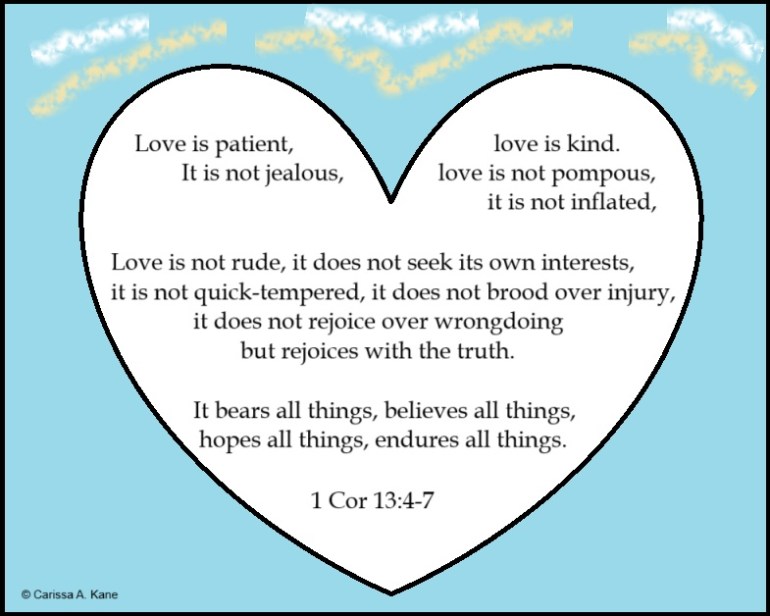
Put on, as God’s chosen ones, holy and beloved, heartfelt compassion, kindness, humility, gentleness, and patience, bearing with one another and forgiving one another, if one has a grievance against another; as the Lord has forgiven you, so must you also do. And over all these put on love, that is, the bond of perfection. And let the peace of Christ control your hearts, the peace into which you were also called in one body. And be thankful. – Colossians 3:12-15
The Gospel passage for the Third Sunday of Advent (Luke 3:10-18) begins with the question, “What then should we do?” What to do is a question that is asked of John the Baptist three times in this passage. And through his replies, John essentially instructs those who have what we might call an upper hand or an edge over others—a crowd, the tax collectors, and the soldiers who are seemingly among the first to make their way to the desert to be baptized—to share with those who are without, to refrain from over taxing others, and to stop abusing their position by using it to take advantage of others.
How do John’s instructions strike you?
It’s interesting that just prior to this passage, John had said to the first group of people mentioned (the crowd),
“You brood of vipers! Who warned you to flee from the coming wrath? Produce good fruits as evidence of your repentance; and do not begin to say to yourselves, ‘We have Abraham as our father,’ for I tell you, God can raise up children to Abraham from these stones. Even now the ax lies at the root of the trees. Therefore every tree that does not produce good fruit will be cut down and thrown into the fire.” – Luke 3:8-9.
What do you think caused the crowd to respond with, “What then should we do?”
Envisioning yourself in this crowd, and labeled by John the Baptist as “a brood of vipers,” are you surprised or shocked? What would you do at these words? What response or question would you have?
When presented with a situation that is unexpected, how do you decide what to do? What does your prayer process look like in terms of manner, taking time and a step back, desire and/or openness to new or different ways forward? How about when it comes to situations that are expected? How does your prayer process stay the same or fluctuate?
Spend some time in prayer, sharing with Jesus that which arises into your awareness, and seeking wisdom, guidance, and whatever else you feel you need at this moment. As your prayer comes to a close, express your desire as you go forward, and ask for the grace to receive, whole-heartedly, God’s love for you, and the desire Jesus has for you at this moment.
Then, on this Gaudete Sunday, rejoice in the Lord!
You do not need to know precisely what is happening, or exactly where it is all going. What you need is to recognize the possibilities and challenges offered by the present moment, and to embrace them with courage, faith and hope. – Thomas Merton
Today is the Solemnity of our Lord Jesus Christ, King of the Universe. The response for the Psalm is, “The Lord is King; he is robed in majesty.” (Psalm 93:1a). Take some time to reflect on this. What is this King like?
As you continue to envision the Lord as King, think about what you have learned about Jesus through both Scripture and experience. How has his majesty impacted your life, and influenced your choices?
In today’s Gospel (John 18:33b-37), Jesus is being interrogated by Pilate. This is after Peter has denied knowing Jesus for the third time and the cock has crowed.
In response to Pilate asking, “Then you are a king?”, Jesus replies,
“You say I am a king. For this I was born and for this I came into the world, to testify to the truth. Everyone who belongs to the truth listens to my voice.” – John 13:37
Think about how Jesus testifies to the truth—to God—in his life, through his words and actions, and the choices he makes. What do you admire most about Jesus? And how does he inspire you?
Mindful of being someone who belongs to the truth, robed in majesty, and continuing to hold onto the qualities of Jesus that you admire and are inspired by, consider how you are listening to Jesus’s voice in today’s world, by entering into a conversation with Jesus. Invite him to show you the ways in which you are listening to his voice. Ask him to reveal any blind spots that may be interfering with your ability to listen and/or creating misunderstanding of his voice and to what it testifies.
After a sufficient period of time, when the conversation has run its course, what is your prayer to Jesus as you prepare to go forth?
Now, giving Jesus the last word, what is his prayer for you?
The Lord is king; he is robed in majesty. – Psalm 93:1a
In the Gospel passage for the Thirty-third Sunday in Ordinary Time (Mark 13:24-32), Jesus says, “Learn a lesson from the fig tree. When its branch becomes tender and sprouts leaves, you know that summer is near.” (v. 24). These words are part of his response to a question asked of him by the disciples, Peter, James, John, and Andrew.
Away from the others, and just after Jesus commented to his disciples on the destruction of the temple, they had asked him, “Tell us, when will this happen, and what sign will there be when all these things are about to come to an end?” (Mark 13:4). The first thing that Jesus says to them is, “See that no one deceives you.” (Mk 13:5). As he continues to tell them the signs and what will happen (trials and tribulations such as war, persecutions, etc.), he also continues to give them instructions as to how to handle themselves and the situations they will face. He says:
“… do not be alarmed” (v. 7)
“Watch out for yourselves.” or be aware (v. 9)
“… do not worry beforehand about what you are to say. But say whatever will be given to you at that hour. For it will not be you who are speaking but the holy Spirit.” (v. 11)
“Be watchful!” (v. 23)
Then he says these words that are part of the Gospel for today, “Learn a lesson from the fig tree. When its branch becomes tender and sprouts leaves, you know that summer is near.” (v. 28). And although Jesus says this as he continues to tell Peter, James, John, and Andrew about the signs that will occur at the end times, the gospel passage ends with Jesus saying, “But of that day or hour, no one knows, neither the angels in heaven, nor the Son, but only the Father.” (v. 32). In other words, perhaps Jesus is reminding us not to focus on the signs, but rather to focus on his instructions.
His last instruction, “Learn a lesson from the fig tree,” is intriguing. In chapter 11 of Mark’s Gospel, Jesus curses a fig tree for being fruitless:
“The next day as they were leaving Bethany he was hungry. Seeing from a distance a fig tree in leaf, he went over to see if he could find anything on it. When he reached it he found nothing but leaves; it was not the time for figs. And he said to it in reply, ‘May no one ever eat of your fruit again!’ And his disciples heard it.” (Mark 11:12-14).
In this earlier passage, there is a mention of time, “… it was not the time for figs.” And now, when Jesus is telling some of his disciples about the signs of the end times and instructing them on how to be prepared, he again, refers to figs and time (and not knowing the exact time of the end).
A few interesting things about figs and time… Fig trees, like other fruit trees, have leaves, but unlike other fruit trees, their fruit flowers internally. Also, each fig contains a collection of many flowers and seeds. And while one may think of a fig as a piece of fruit, they are actually an infructescence—a multiple fruit—that in a sense, is always in the process of blooming.
So, in both times of uncertainty and times of comfort, see that no one deceives you, do not worry, and learn from the fig tree, continuing to grow from within, knowing that the fruit will come at the time that is appointed.
“Lord, my allotted portion and my cup, you have made my destiny secure.” – Psalm 16:5
In The Return of the Prodigal Son, Henri Nouwen wrote, “Both trust and gratitude require the courage to take risks because distrust and resentment, in their need to keep their claim on me, keep warning me how dangerous it is to let go of my careful calculations and guarded predictions. At many points I have to make a leap of faith to let trust and gratitude have a chance. The leap of faith always means loving without expecting to be loved in return, giving without wanting to receive, inviting without hoping to be invited, holding without asking to be held. And every time I make a little leap, I catch a glimpse of the One who runs out to me and invites me into his joy, the joy in which I can find not only myself, but also my brothers and sisters.”
Take a moment now to reflect on where you’ve experienced the Lord this past week and to what degree trust was involved. How did or does your experience help you to trust or to have faith, placing hope in the Lord with regards to a situation(s)? What happens when you bring areas in which your trust has possibly shifted away, back into prayer and back to the Lord?
Continuing to contemplate your experience, what qualities or characteristics that you associate with the Lord, are most noticeable? And how do these same qualities inform, influence, and inspire you and your choices?
The Gospel for the Thirtieth Sunday in Ordinary Time (Mark 10:46-52) begins in a sea of people, from within which, Bartimaeus, the blind man, is calling out to the Lord. And despite others around him telling him to stop and to keep quiet, he keeps calling out, “Son of David, have pity on me!” (v. 48).
Imagine what Bartimaeus might be holding in his heart as he’s trying to get Jesus’ attention? How about Jesus? What might be in his heart as he navigates through the crowd? What qualities do they each seem to have that might be informing, influencing, and inspiring them? What do each of them seem to be focused on?
Next, notice how Jesus receives and responds to Bartimaeus, the blind man who has let his guard down and opened himself up to both chance and Grace.
Jesus stopped and said, “Call him.” So they called the blind man, saying to him, “Take courage; get up, Jesus is calling you.” He threw aside his cloak, sprang up, and came to Jesus. Jesus said to him in reply, “What do you want me to do for you?” The blind man replied to him, “Master, I want to see.” Jesus told him, “Go your way; your faith has saved you.” Immediately he received his sight and followed him on the way. – Mk 10:49-52
Jesus is essentially saying: I’m here and I’m listening… I see you… I hear you… Come closer… Tell me more. And Bartimaeus, by coming closer and sharing more with Jesus, is able to receive peace, healing, and greater faith.
Take whatever you are focused on, to Jesus, the One who is, who was, and who will ever be—here for you, listening to you, seeing and hearing you, and always saying, come closer, tell me more.
Then, after a period of sharing and listening, envision Jesus saying the same to you as he did to Bartimaeus, “Go your way; your faith has saved you.”
The Lord has done great things for us; we are filled with joy. – Psalm 126:3
The Gospel acclamation for the Twenty-Seventh Sunday in Ordinary Time is, “If we love one another, God remains in us and his love is brought to perfection in us.” (1 John 4:12). Take some time to consider this verse.
What are the things that you heard and saw this past week that caught your attention? What values, notions, and ideas did they express?
It can be tempting to rush toward opinions and judgments based on listening to and watching what others are doing, what they have to say about situations, and about what’s happening in society and throughout the world. Not only that, but also to not really take time to honestly consider, reflect on, and discern the values being represented.
It can also be easy to be drawn in by a thing or two that may seem of the utmost importance, only to be swept up and moved along without recognizing movement away from values, expressed notions, and ideas that truly align with and promote the sentiments of Love.
In the coming days try to notice the words and actions to which not only your ears and eyes are exposed or drawn, but also your heart. What is stirred inside of you? and how are these things a reflection of Love?
Continuing to take these things to prayer, seek to see them as God sees them.
No one has ever seen God. Yet, if we love one another, God remains in us, and his love is brought to perfection in us. – 1 John 4:12
In the Gospel passage for the Twenty-third Sunday in Ordinary Time (Mk 7:31-37), the people of a village bring a man who is deaf and has a speech impediment to Jesus and plead with him to lay his hand on him. What do you think made the people of the village do this? The deaf man could see, after all, and he could have found his own way to Jesus and asked for himself. What do imagine caused the people to get involved on the deaf man’s behalf? What are some things that lead you to get involved on the behalf of others?
We also read in this passage that Jesus “took him [the deaf man] off by himself away from the crowd.” (v. 33). Perhaps to remove the noise and distractions? Perhaps to engage in a more personal way with the man? Or maybe it was something else.
In the Scripture passage prior to this one, Jesus is trying to step away from the crowds when he is approached by the Syrophoenician woman asking for her daughter to be healed (Mk 7:24-30). This occurs after he has responded to the Pharisees questioning his disciples’ behavior; where Jesus replied in part, “Nothing that enters one from outside can defile that person; but the things that come out from within are what defile.” (Mk 7:15). Considering this teaching and carrying it forward into Jesus’s interactions with the Syrophoenician woman and the deaf man, reflect on the way he receives and responds to people, situations, and what’s going on around him.
How do you receive people, situations, and what’s going on around you? What inner attitudes or dispositions do you carry into interactions? What’s going on in your heart, and how does it affect your response?
Coming back to today’s Gospel Jesus says, “Ephphatha!” (“Be opened!”), and as a result, the deaf man can hear, and his speech impediment is gone. He is healed from his affliction through Jesus’s command, or call, to openness. So why then, does Jesus tell the man not to tell anyone? And how might this fit in with the idea of evangelization?
Maybe Jesus is calling us to be open to what’s going on around us and what God is trying to tell us as individuals, to further open and transform one’s own heart toward greater understanding and compassion. And with that, reminding us that evangelization comes through the grace of God and at times is aided, or complemented, by kind and loving hearts that are both fluid with and fixated on God.
Say to those whose hearts are frightened: Be strong, fear not! Here is your God, he comes with vindication; with divine recompense he comes to save you. – Isaiah 35:4
In the Gospel passage for the Twelfth Sunday in Ordinary Time, Jesus’s disciples reach out to him as the boat they are in is taking on water in the middle of a storm. Jesus says to the wind and the raging sea, “Quiet! Be Still!” and just like that, the storm settles down. This is something he could have done without saying any words, but Jesus, always the teacher, gives his disciples, and us, both an example to follow and words to ponder.
After quieting the storm, Jesus asks his disciples, “Why are you terrified? Do you not yet have faith?” He is not reprimanding them or trying to make them feel bad, but rather he is asking them to reflect on the situation, and trying to help them to know, and to remember, that he is there with them and for them, and so, there is nothing to fear. Without Jesus, the storm can rage on, whether loud and brash or quiet and discreet. It is Jesus’s presence that both quells the storm and brings peace into the quiet and stillness.
On that day, as evening drew on, Jesus said to his disciples: “Let us cross to the other side.” Leaving the crowd, they took Jesus with them in the boat just as he was. And other boats were with him. A violent squall came up and waves were breaking over the boat, so that it was already filling up. Jesus was in the stern, asleep on a cushion. They woke him and said to him, “Teacher, do you not care that we are perishing?” He woke up, rebuked the wind, and said to the sea, “Quiet! Be still!” The wind ceased and there was great calm. Then he asked them, “Why are you terrified? Do you not yet have faith?” They were filled with great awe and said to one another, “Who then is this whom even wind and sea obey?” – Mark 4:35-41














You must be logged in to post a comment.