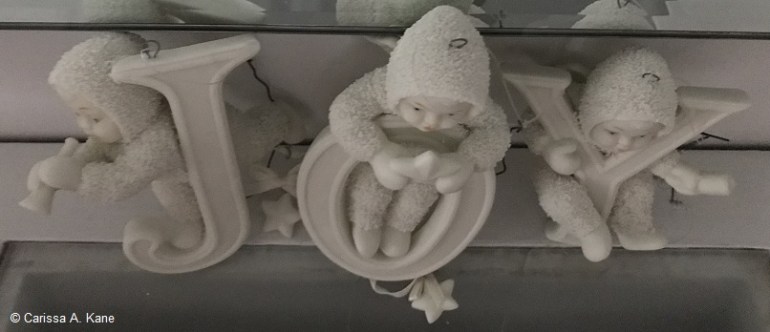
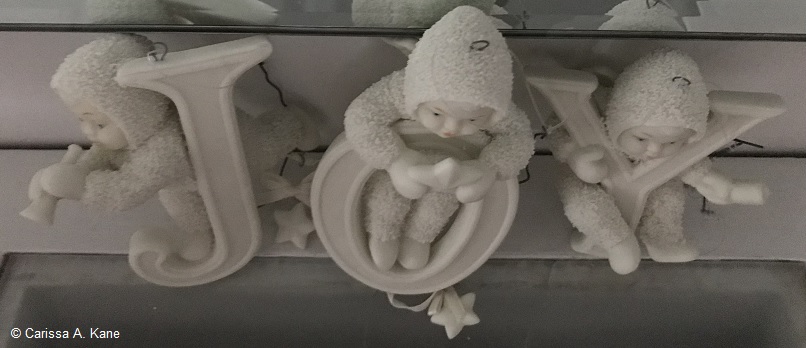
Solemn Joy…

“Among the tales of sorrow and of ruin that came down to us from the darkness of those days there are yet some in which amid weeping there is joy and under the shadow of death light that endures.” – J.R.R. Tolkien

The above quote seems so apropos for the world of today despite it being written many decades ago. Interesting how in every age there are things about which one can say, what’s old is new, and what’s new is old, or in other words some things are timeless.

Entering the 3rd week of Advent, the readings invite us to avail ourselves of God’s promise,

The Lord, your God, is in your midst,
a mighty savior;
he will rejoice over you with gladness,
and renew you in his love,
he will sing joyfully because of you,
as one sings at festivals.
– Zep 3:17-18a

To step over the darkness of our times,

God indeed is my savior;
I am confident and unafraid.
My strength and my courage is the Lord,
and he has been my savior.
– Is 12:2

And into the ever-present joy and light of the Lord.

Brothers and sisters:
Rejoice in the Lord always.
I shall say it again: rejoice!
Your kindness should be known to all.
The Lord is near.
Have no anxiety at all, but in everything,
by prayer and petition, with thanksgiving,
make your requests known to God.
Then the peace of God that surpasses all understanding
will guard your hearts and minds in Christ Jesus.
– Phil 4:4-7

As we wait in hope for the coming of the Lord, in what ways does the wisdom of God’s word resonate? How is the Spirit of the Lord present in these moments of waiting? In what ways do they create inspiration? And where do they spark peace and love… joy and light?
The crowds asked John the Baptist,
“What should we do?”
He said to them in reply,
“Whoever has two cloaks
should share with the person who has none.
And whoever has food should do likewise.”
Even tax collectors came to be baptized and they said to him,
“Teacher, what should we do?”
He answered them,
“Stop collecting more than what is prescribed.”
Soldiers also asked him,
“And what is it that we should do?”
He told them,
“Do not practice extortion,
do not falsely accuse anyone,
and be satisfied with your wages.”

Now the people were filled with expectation,
and all were asking in their hearts
whether John might be the Christ.
John answered them all, saying,
“I am baptizing you with water,
but one mightier than I is coming.
I am not worthy to loosen the thongs of his sandals.
He will baptize you with the Holy Spirit and fire.
His winnowing fan is in his hand to clear his threshing floor
and to gather the wheat into his barn,
but the chaff he will burn with unquenchable fire.”
Exhorting them in many other ways,
he preached good news to the people.
– Luke 3:10-18

Work of Our Hands…

It’s said that the owl’s wisdom lies in its waiting, watching, and listening. In its patient, persistent process, its senses are fine-tuned, making it easier to recognize and distinguish between and among things. The owl’s very own nature leads and nurtures the animal, teaching it to tap more deeply into what it genuinely needs to survive and thrive.

This in-born nature that helps the owl to be at its best, also resides within all living things. And when tuned into, exercised, and held onto, it helps all living things to operate at their best, most authentic self. For human beings especially, the task at hand is to sort through and root out all that interferes with this natural, God-given ability.

In the Book of Wisdom, King Solomon shares:

“I prayed, and prudence was given me; I pleaded, and the spirit of wisdom came to me” – Wisdom 7:7.

While this is a great example of “ask and you shall receive,” it is also an example of the gift of humility. Oftentimes, it is humility that opens the door to wisdom. King Solomon humbled himself, he “prayed” and “pleaded” for wisdom, a gift that no amount of money in the world could buy. Throughout the Bible, and throughout history, there is no wisdom, without humility. For it is a gift that can only be received at the time and place where an open, willing, and humble heart meets the humility of God—unconditional love.

So how does one move toward this place? For starters, perhaps by praying for the grace to become more aware. Kahlil Gibran wrote, “Wisdom stands at the turn in the road and calls upon us publicly, but we consider it false and despise its adherents.”

Thinking about current day events, where do you see wisdom? In what places do you meet unconditional love… truth and peace together?      

Looking back to history, Psalm 90 begins:

“A prayer of Moses, the man of God. Lord, you have been our refuge through all generations. Before the mountains were born, the earth and the world brought forth, from eternity to eternity you are God” (verses 1-2).

Wisdom draws Moses’ heart to give voice to God’s faithfulness, and seek God’s help, “Teach us to count our days aright, that we may gain wisdom of heart,” (verse 12), mercy, “Make us glad as many days as you humbled us, for as many years as we have seen trouble,” (verse 15), and grace, “May the favor of the Lord our God be ours. Prosper the work of our hands! Prosper the work of our hands!” (verse 17).     

When you reflect on the work of your hands, what aspects of God (loving, patient, gentle, kind, honest, peaceful, faithful, life-giving, etc.) resonate in them? When you look at the world around you and the things in which you choose to participate, which ones bring you closer to the image of God, Love, in which you were created? In what ways do you feel inspired by the humility and generative nature of God, for whom all things are possible?

Establish the Work of Our Hands – https://youtu.be/5V2_cs8gTIw?t=9 – the Porter’s Gate (feat. Aaron Keyes and Urban Doxology)

If You don’t build it, we labor in vain,
Without Your Spirit, we stand with no strength.
I know my life is passing away,
but the works of Your hands
are what will remain.
Let the favor of the Lord rest upon us…

O Lord, establish the work of our hands!

Teach us to number the length of our days,
Pour out Your power, we’ll pour out Your praise.
Teach us to run, to finish the race,
for only what’s done in love will remain.
Let the favor of the Lord
rest upon us…

O Lord, establish the work of our hands!

Al – le – lu – ia, al – le – luia, al – le – luia

© 2017 Hymns From the Porter's Gate (ASCAP) and Porter's Gate
Publications (SESAC). All rights reserved and administered by
Fair Trade Music Publishing c/o essentialmusicpublishing.com.

But for the Light…

With the vast array of devastation caused by wildfires on the left side of the United States and hurricane Ida and resulting treacherous weather throughout the right side of the United States, not to mention ongoing multi-faceted struggles around the entire world, it can be easy to fall prey to a sense of doom, regardless of whether one is experiencing dire need, a direct impact, on the fringes of such impact, or farther removed.

On what is a dreary day, on the feast of St. Teresa of Calcutta, it is good to remember that despite the darkness, God is with us amid all these trials and tribulations. Leading the way, before one might even know it. Providing light and love. Lifting spirits, opening minds, increasing the will to help, and strengthening the bond of human hearts toward one another.

Say to the fearful of heart:
Be strong, do not fear!
Here is your God,
he comes with vindication;
With divine recompense
he comes to save you.

– Isaiah 35:4

“There is a light in this world, a healing spirit more powerful than any darkness we may encounter. We sometimes lose sight of this force when there is suffering, too much pain. Then suddenly, the spirit will emerge through the lives of ordinary people who hear a call and answer in extraordinary ways.”

– St. Teresa of Calcutta

Serve Love…

I remember as a young student feeling fascinated as I learned all about the human heart, its functions and their importance. I was most amazed by the strength of the heart and its capacity, pumping 2,000 gallons of blood each day throughout the body. It wouldn’t be until years later that my amazement would become even greater in coming to understand the heart’s greatest asset—the rhythm, steady and strong, seeking to draw one closer, revealing God, and yearning not only to keep the connection of love, peace, and healing going, but also to help it to thrive without bounds. As the 13th century Persian poet, Rumi, wrote, “Love is the bridge between you and everything.”

In chapter 7 of the Gospel according to Mark, Jesus says to the Pharisees,

“Well did Isaiah prophesy about you hypocrites, as it is written:

    This people honors me with their lips,

        but their hearts are far from me;

    in vain do they worship me,

        teaching as doctrines human precepts.

You disregard God’s commandment but cling to human tradition.” (Mk 7:6-8)

Jesus is calling on them to be honest… to look more closely and to see that their hearts are not leading them in union with God. Their love has become misplaced. It is self-serving and focused on what is earthly rather than what is truly, right and just. Their words and actions do not come together to reflect the beauty of God’s goodness—the law that is placed in every heart—dignity, care, and love of all who are placed alongside us whether in location, heart, or mind.  

This same love is what the author of the Letter of James is calling people to when he writes,

“Know this, my dear brothers: everyone should be quick to hear, slow to speak, slow to wrath,

for the wrath of a man does not accomplish the righteousness of God.

Therefore, put away all filth and evil excess and humbly welcome the word that has been planted in you and is able to save your souls.

Be doers of the word and not hearers only, deluding yourselves.” – Jas 1:19-22

No matter where one might be, or the circumstances that exist, Love is the only true hope there is. And while there may be many things that seem beyond reach, or out of control, Love is the anchor that holds us altogether, moves us into action, and brings peace, or peace of mind, strength, truth and justice, never growing cold.

Beyond the Fray…

Looking into the world of nature, it can be very easy to come across what makes for a beautiful picture. Whether one’s eye is caught by a single object or multiple ones combining to create a scene that captivates and captures attention, it all starts with posture.

The picture below was taken at the base of a road on the way back down, after having traveled it to the top of a mountain. The way that everything came together and seemed to fall into place in the moments we happened upon it, was rather striking. As we were returning from the summit on a sunny, gorgeous day, the sun was quickly overtaken by fast moving clouds, and as we drove, we moved in and out of brief periods of rain. However, once we reached the base, things looked much brighter. Then, not much further along, we entered the scene. It was like stepping into a painted landscape.

Again, everything—road, rock wall, water, building, sand, trees, and sky—seemed to come together, bringing out the best of what that day and time could offer, and it was perfect. Unity and peace within rising above and beyond turbulence. Not only a pretty sight or precious thought, but also at the heart of faith and faithfulness—the way in which one works, lives, and cooperates with the grace of God, who resides within us, and in whose image, we are all created.

What one carries or holds onto as they journey, quite literally, impacts everything—reception, perception, reaction, response, etc.

Brothers and sisters:
I, a prisoner for the Lord,
urge you to live in a manner worthy of the call you have received,
with all humility and gentleness, with patience,
bearing with one another through love,
striving to preserve the unity of the spirit through the bond of peace:
one body and one Spirit,
as you were also called to the one hope of your call;
one Lord, one faith, one baptism;
one God and Father of all,
who is over all and through all and in all. – Eph 4:1-6

Resetting the Pace…

After what seemed like quite a lot of time walking and winding our way, up, down, around, and through the wooded area embracing the large pond, we arrived at what appeared to be the center of our journey—the resting place. As we moved closer to the main building, designed for respite and a bite to eat, we were greeted by a wooden barrel holding purple and yellow flowers beckoning us to keep the journey going. Bright and beautiful flowers, they drew us—tired, hungry, weary travelers—in and lifted us up, raising the smile in our hearts to our lips and bringing the twinkle back to our eyes.

No matter the circumstances, the conditions along the way, or how far one travels, Peace is always reaching out, working from within, and waiting upon us.

Faith is the road, but communion with Jesus is the well from which the pilgrim drinks. ― Charles Haddon Spurgeon

Anima Christi

Soul of Christ, sanctify me.
Body of Christ, save me.
Blood of Christ, inebriate me.
Water from the side of Christ, wash me.
Passion of Christ, strengthen me.
O good Jesus, hear me.
Within Thy wounds hide me.
Separated from Thee let me never be.
From the malignant enemy, defend me.
At the hour of death, call me.
And close to Thee bid me.
That with Thy saints I may be Praising Thee, forever and ever.
Amen.

What The World Needs Now…

In chapter 5 of the Gospel according to Mark, the saving power of Jesus is revealed in the healing of the man with unclean spirits (the Gerasene demoniac), the woman who had been hemorrhaging for 12 years, and the daughter of Jairus, a synagogue official. In all three cases, Jesus acts differently than what is expected, in that he is not afraid to meet and embrace those who have met misfortune, and are viewed as less than, and he does not treat anyone or anything as a lost cause or beyond repair. Because of this, even though what he has to offer is beneficial, to those who are married to one way of being he is seen as someone to be weary of and who is dangerous.

When Jesus heals the demoniac, sending the unclean spirits into a herd of swine who then head over the bank and into the sea where they meet their demise, folks become afraid. They cannot see the miracle in the healing that has taken place and ask him to leave. He does get in the boat and depart back to the other side. However, he also remains. The man he healed takes heed in Jesus’s instructions to him. In staying behind, Jesus is with him, and the man gives witness to what the Lord has done for him.

When the hemorrhaging woman touches his cloak, Jesus, who is on the way to heal the synagogue official’s daughter, stops, and takes time not only to seek and find the woman he has just healed, but also to engage with her. Despite fear, the woman comes forward to own, or to claim, the truth. In doing so, she is met, not with a critical, harsh, or condescending response, but rather with affirmation. She believed in Jesus and was willing to take a leap and trust in the healing that she sensed he could bring, when she dared to reached out to touch his garment as he passed by. With Jesus, there is no such thing as too little, too late, not worthwhile, or not enough time.

When it is announced that the synagogue official’s daughter is dead, and that he is no longer needed, Jesus does not turn away. He tells the girl’s father, “Do not be afraid. Just have faith.” (v. 36). Despite the news and being ridiculed by others, Jesus proceeds to their house and wakes the girl up. With Jesus, nothing is impossible.

As a Christian, one is called to follow Jesus, embracing the Way, and striving, through the grace of God, to live it. As challenging, uncomfortable, or unpopular as it may be, oftentimes, this requires change and evolution. Sometimes it may mean the opposite or a variation of the new ways and examples happening in the world, and at other times, it may mean the opposite or a variation of the old ways. Either way, the constant is Love, and the question is whether we trust God enough to let Love be the author.

It’s an incredible mystery of God’s love that the more you know how deeply you are loved, the more you will see how deeply your sisters and your brothers in the human family are loved. – Henri Nouwen

More than a recipe…

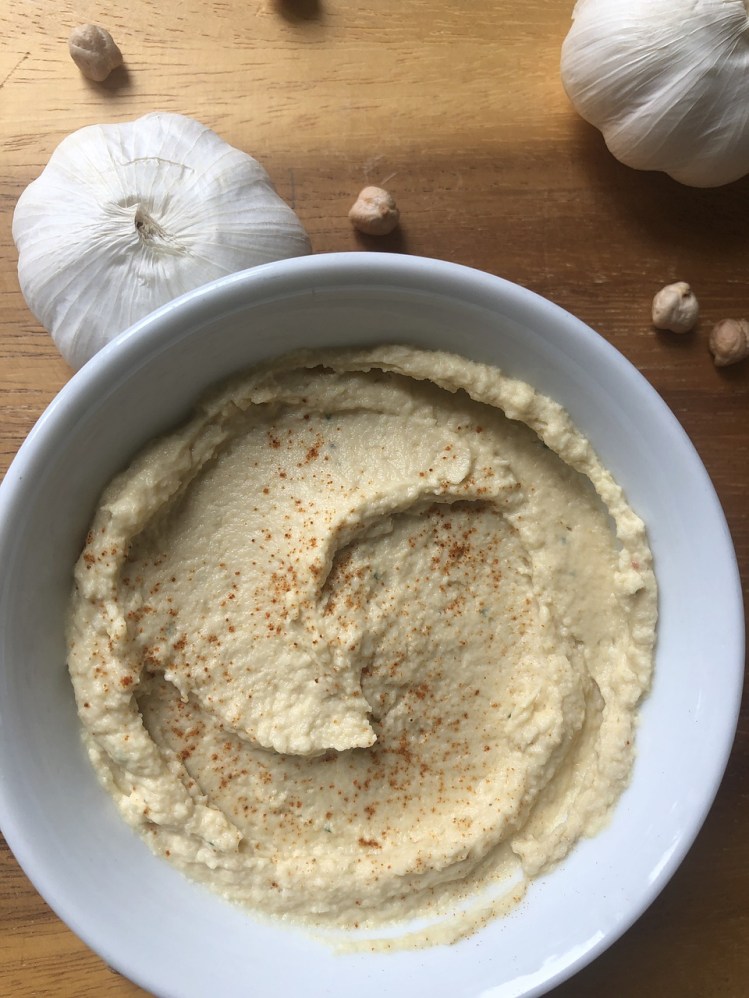
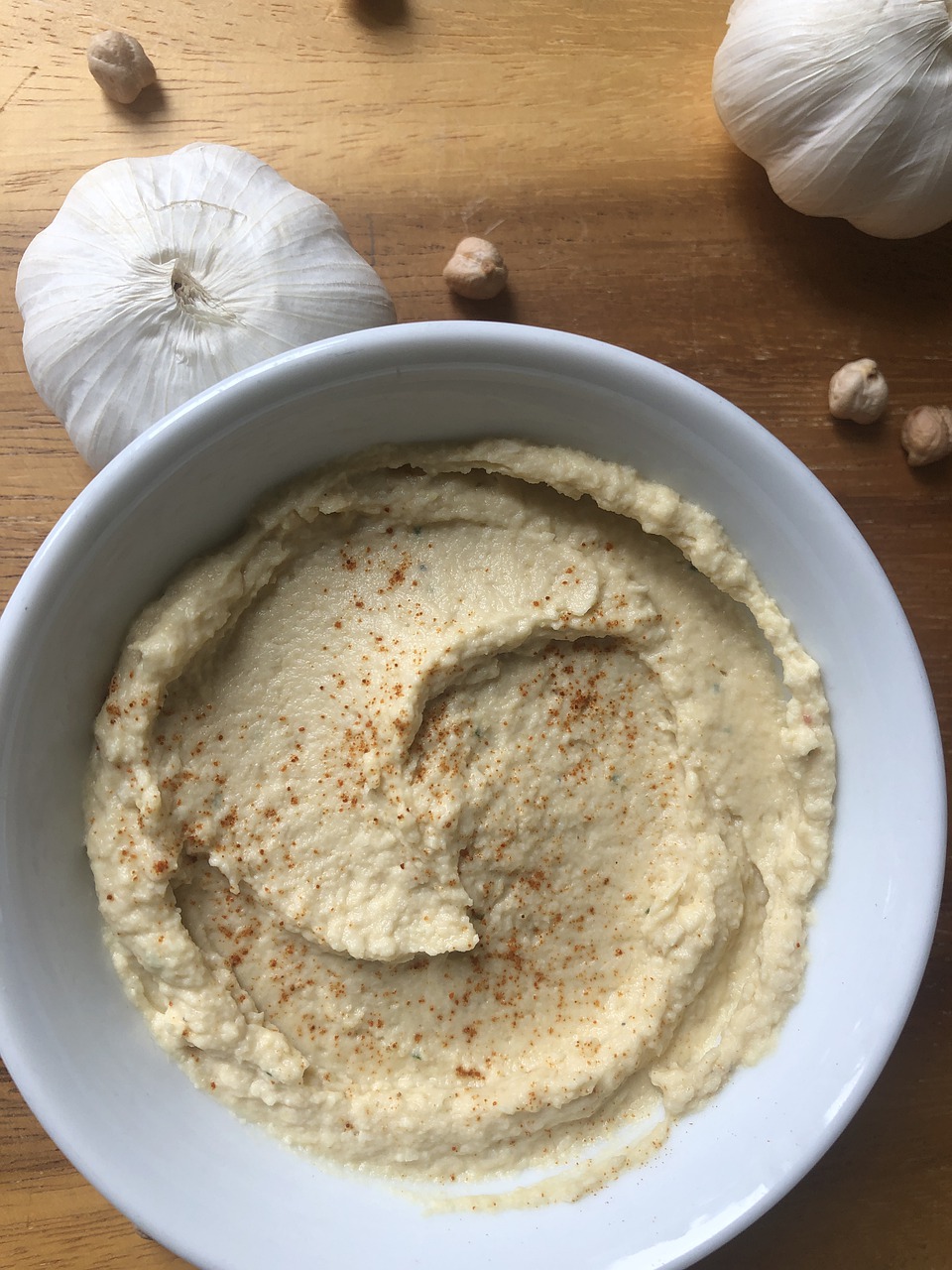
I did not learn to make hummus, with just the “right” amount of fresh garlic, salt, and lemon juice by eating it, reading a recipe, or watching my mother make it over, and over again. Rather, I learned by taking what I saw, remembering what I had tasted, and trying to make it myself, over, and over again. After all, the most helpful way to learn is by ongoing, active observance, repetition, participation, reflection, and openness to growth.

While experience is key, it is interesting that oftentimes as experience increases, awareness to room for improvement can lessen, or even disappear. With that, it may be more than tempting to take moments and situations for granted, rote, or with a “nothing new here” spirit. However, even the process of washing, rinsing, and repeating, holds newness and opportunity with each turn.

In the Gospel according to John, a week later, when the disciples were still locked in the room, Jesus appeared again (Jn 20:26). What was it like for the disciples who had seen the risen Jesus the first time he had appeared? Was it just a been there, done that, repeat for them, or were they able to experience the second appearance in a new or deeper way?

What was the attitude in the room? Were the disciples who had previously seen Jesus able to receive this visitation as being as much for them as it was for Thomas? To whom was Jesus speaking when he said to Thomas, “Have you come to believe because you have seen me?”

In the Gospel according to Mark, chapter 16, verse 11, it is written that when Mary Magdalene told the disciples that the risen Jesus had appeared to her outside the tomb, they did not believe without seeing either. Did the disciples remember this, when Thomas said, “Unless I see the mark of the nails in his hands and put my finger into the nailmarks and put my hand into his side, I will not believe.”(Jn 20:27)?

What did Thomas think, when Jesus said to him, “Have you come to believe because you have seen me? Blessed are those who have not seen and have believed.” (John 20:29)? What did he feel? Perhaps, he felt bad that he did not believe what he had been told by the other disciples. Or, perhaps Thomas felt joy that Jesus heard his need, and responded to it, allowing him to experience the risen Jesus himself.

After all, whether making hummus , dealing with faith, or anything else for which there may be “recipes” or popular thought, there is always more than what is on the page, for “Experience is the teacher of all things” (attributed to Julius Ceasar).

In all times, but most especially in those that are challenging, we must consider experience, both our own and that of others. What has it been like? Do we remember the times and places where we have doubted, questioned, or disagreed, and, do we extend the same courtesy, patience, peace, and understanding that Jesus extends to us, to others?

On the evening of that first day of the week,
when the doors were locked, where the disciples were,
for fear of the Jews,
Jesus came and stood in their midst
and said to them, “Peace be with you.”
When he had said this, he showed them his hands and his side.
The disciples rejoiced when they saw the Lord.
Jesus said to them again, “Peace be with you.
As the Father has sent me, so I send you.”
And when he had said this, he breathed on them and said to them,
“Receive the Holy Spirit.
Whose sins you forgive are forgiven them,
and whose sins you retain are retained.”
Thomas, called Didymus, one of the Twelve,
was not with them when Jesus came.
So the other disciples said to him, “We have seen the Lord.”
But he said to them,
“Unless I see the mark of the nails in his hands
and put my finger into the nailmarks
and put my hand into his side, I will not believe.”
Now a week later his disciples were again inside
and Thomas was with them.
Jesus came, although the doors were locked,
and stood in their midst and said, “Peace be with you.”
Then he said to Thomas, “Put your finger here and see my hands,
and bring your hand and put it into my side,
and do not be unbelieving, but believe.”
Thomas answered and said to him, “My Lord and my God!”
Jesus said to him, “Have you come to believe because you have seen me?
Blessed are those who have not seen and have believed.”
Now Jesus did many other signs in the presence of his disciples
that are not written in this book.
But these are written that you may come to believe
that Jesus is the Christ, the Son of God,
and that through this belief you may have life in his name. – John 20:19-31

Bright, Shining One…

In each moment of challenge, there is the Light, bright and shining.

A couple of days ago, I learned of the passing of a friend. Eileen… the meaning of her name, “bright, shining one,” so true to life. Yet, not in a way that one might think upon reading the words “bright” and “shining,” as if showy or seeking the center of attention. No, far different, in a quiet, and much more powerful way, “bright, and shining one” as in a welcoming, steady glow. A ray of light—exuding warmth and love… a faith-filled, calming presence.

Sometimes, maybe more often than we know, there is the blessing of those around us who reflect life in all its essence—persevering… trusting that in each moment, whether it is challenging or not, there is the Light, bright and shining. Unassuming… not intruding… patiently… peacefully… simply, beautifully present.

Great is our Lord and mighty in power;
to his wisdom there is no limit.
The Lord sustains the lowly;
the wicked he casts to the ground. – Psalm 147:6

The Next Chapter…

So what happened to Jonah? What did he do after delivering the message to “shape up” to the Ninevites?

First, he witnessed them take heed and repent. Next, he witnessed God shower them with mercy (Jonah 3:1-10). And then, in the next chapter, chapter 4, Jonah walked away, angry at God’s forgiveness and understanding of those “wicked” people of Nineveh. Why?

Jonah’s mind had already been made up about the Ninevites. That’s why he initially tried to run away from the mission God gave him (Jonah, chapter 2). Unsuccessful, though, and after being spewed from the belly of the fish, he ended up going to Nineveh to deliver God’s message to the people. And, exactly as Jonah expects, God ends up forgiving the Ninevites.

It’s interesting how God accepts the actions of the people of Nineveh as acknowledgement of their wrong doing, while Jonah, who had already determined the Ninevites did not deserve another chance, hardened his heart toward them and could not see or receive the spirit of their actions as a desire to make amends. That’s okay though, because as the story continues, we see more about God’s ways. Despite his lack of understanding or missing desire for mercy to extend to the Ninevites, God does not abandon Jonah either. Rather, God continues the conversation and keeps seeking to reach Jonah and his heart, the same as with the Ninevites.

The Book of Jonah reveals the story of a prophet whose name means “dove” in Hebrew. In a time when a desire for peace seems so great, for so many, it is important to remember that God’s embrace, and longing for ongoing, personal relationship with all creation, extends to all.  Yes, all!

God accepts those who accept and receive God, even when human beings can’t or won’t. Thank God! There are no exceptions, and only God can ever truly know what is in someone else’s heart.

But this greatly displeased Jonah, and he became angry.

He prayed to the Lord, “O Lord, is this not what I said while I was still in my own country? This is why I fled at first toward Tarshish. I knew that you are a gracious and merciful God, slow to anger, abounding in kindness, repenting of punishment.

So now, Lord, please take my life from me; for it is better for me to die than to live.”

But the Lord asked, “Are you right to be angry?”

Jonah then left the city for a place to the east of it, where he built himself a hut and waited under it in the shade, to see what would happen to the city.

Then the Lord God provided a gourd plant. And when it grew up over Jonah’s head, giving shade that relieved him of any discomfort, Jonah was greatly delighted with the plant.

But the next morning at dawn God provided a worm that attacked the plant, so that it withered.

And when the sun arose, God provided a scorching east wind; and the sun beat upon Jonah’s head till he became faint. Then he wished for death, saying, “It is better for me to die than to live.”

But God said to Jonah, “Do you have a right to be angry over the gourd plant?” Jonah answered, “I have a right to be angry—angry enough to die.”

Then the Lord said, “You are concerned over the gourd plant which cost you no effort and which you did not grow; it came up in one night and in one night it perished.

And should I not be concerned over the great city of Nineveh, in which there are more than a hundred and twenty thousand persons who cannot know their right hand from their left, not to mention all the animals?”

– Jonah 4:1-11