Moonlight through clouds

Light Giving Glory…

Looking up at the nighttime sky,
Your artistry on full display.
Shades of hope… brighter, better times,
Memories reckoning what was,
Speculation of what will be,
But then light, your glorious light,
Bringing me back to my senses.
Troubled, wretched waters may be,
Times for standing up together,
Praying that this beat finds its end.
Looking up at the nighttime sky,
Your artistry on full display.
The stones are crying out for all.
Forsaken? No, nor shall any be.

Moonlight through clouds

Wood and Nails by The Porter’s Gate

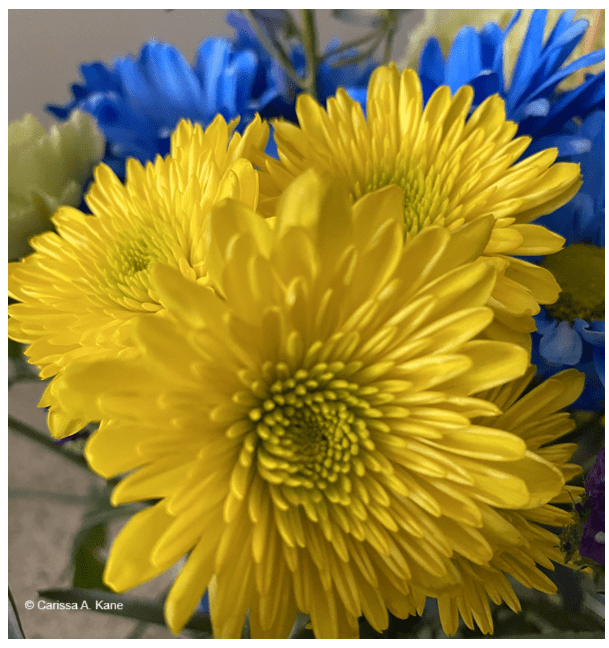
Yellow flowers representing hope

Rooted in What?

The Gospel for the Fifth Sunday of Lent (John 8:1-11) can be seen as providing an opportunity to consider what’s at the root of one’s reactions and the ensuing responses or decisions to the situations or news that arises from day to day.

Read the passage below to familiarize yourself with the situation described.

Jesus went to the Mount of Olives.
But early in the morning he arrived again in the temple area,
and all the people started coming to him,
and he sat down and taught them.
Then the scribes and the Pharisees brought a woman
who had been caught in adultery
and made her stand in the middle.
They said to him,
“Teacher, this woman was caught
in the very act of committing adultery.
Now in the law, Moses commanded us to stone such women.
So what do you say?”
They said this to test him,
so that they could have some charge to bring against him.
Jesus bent down and began to write on the ground with his finger.
But when they continued asking him,
he straightened up and said to them,
“Let the one among you who is without sin
be the first to throw a stone at her.”
Again he bent down and wrote on the ground.
And in response, they went away one by one,
beginning with the elders.
So he was left alone with the woman before him.
Then Jesus straightened up and said to her,
“Woman, where are they?
Has no one condemned you?”
She replied, “No one, sir.”
Then Jesus said, “Neither do I condemn you.
Go, and from now on do not sin any more.”
– John 8:1-11

Next, take some time to revisit this reading from different perspectives.

First, put yourself in the shoes of the crowd. You’ve come to see and listen to this new teacher. What has drawn you to him?

Envision yourself listening to Jesus preach when suddenly, there’s an interruption. A group of men push there way through the crowd, pulling along and forcibly putting a woman into the middle of the gathering. Then they publicly call her out and ask the new teacher what he has to say about the impending doom called for by the law. What’s your first thought or feeling? What do you imagine the expression on Jesus’s face is as this is happening?

Allow yourself time to process and discuss with Jesus what it’s like to be in the crowd, witnessing this occurrence.

Next, put yourself in the shoes of the scribes and Pharisees. What do you imagine led them to essentially drag the woman, not only to where Jesus was, but also to where there was a crowd around him? The passage tells us they wanted to test Jesus. What about consideration of the woman?

Invite Jesus into the thoughts and feelings that come up as you contemplate this perspective. Ask Jesus to show you if there are areas where you might be prioritizing something to the extent that it causes a blind eye toward side effects, such as disregard for the circumstances and/or well-being of others.

Now, put yourself in the shoes of the woman caught in adultery. What’s it like to envision being forcibly taken from one place to another, put in the middle of a crowd, having your transgressions publicized, and being used as a pawn, as you await your fate, which doesn’t look good according to Mosaic law, and may or may not be determined by this new teacher?

Again, share your thoughts and feelings with Jesus. Ask him to impart wisdom and grace to you in whatever challenges you face. Also ask him to reveal anything that might be detracting from your ability to be at your best and/or to choose what is best in His eyes.

Finally, put yourself in Jesus’s shoes. You’re preaching to a crowd that has gathered around you. You see and sense the need in each person’s face. Your heart, full of peace, love, and purpose, is moved with compassion. As you’re speaking, the scribes and Pharisees arrive with the woman in tow. What do you notice most as this interruption is occurring? What’s happening internally, and from where does your response come?

Allow yourself time to pray and reflect on this experience with Jesus. What insight does Jesus want you to prioritize at this moment in your life? In what ways, and toward what, is your heart, full of peace, love, and purpose, moved with compassion?

Where can Divinity meet, and raise, your humanity for the greater glory of God?

Yellow flowers representing hope

Hope rooted in the Lord, is well placed; with the Lord, nothing is impossible.

Flowers

Rooted in Love…

As the days passed by,
the flowers, still bright,
holding onto life,
begin to show the
length of days and nights,
separate, away
from the source of life.

Leaves dropping from stems,
petals shriveling,
on the outside first.
Time ticks, closing in.
Hold on as they may,
away from their roots,
they limp as they linger.

In the First Reading for the Seventh Sunday in Ordinary Time (1 Samuel 26:2, 7-9, 12-13, 22-23), David and Abishai find themselves in a position of advantage, having the opportunity to kill Saul, who, along with his soldiers are in a deep sleep. However, despite Saul having grown distant from who he was at the beginning of his rule, and having become David’s enemy, David restrains himself and shows mercy. He says to Abishai, “Do not harm him, for who can lay a hand on the Lord’s anointed and remain innocent?” (v. 9).

Spend some time with the first reading and consider that as beings created in God’s image, in a sense, we are all anointed.

The response for the Psalm is, “The Lord is kind and merciful.” (Psalm 103:8). Reflect on the ways that the Lord has been kind and merciful to you. How does your experience inspire you in terms of the way you view situations and people? In what ways do you feel compelled to be kind and merciful to others? Are there areas where the Lord might want to work with you on expanding upon or reassessing this?

Turning to the Second Reading (1 Corinthians 15:45-49), St. Paul writes of Adam and Jesus, but he is also writing about the call to conversion and discipleship.

As was the earthly one, so also are the earthly,
and as is the heavenly one, so also are the heavenly.
Just as we have borne the image of the earthly one,
we shall also bear the image of the heavenly one. – verses 48-49

Envisioning your life as one line and the events/happenings during your life as another line on a continuum, think about the major events/happenings that have had a direct impact on you. What’s the difference between the times when you have maintained a sense of inner strength (or know-how) and peace, and the times you haven’t?

In the Gospel Reading (Luke 6:27-38), Jesus reminds us that Love is what sustains us. Not embracing cynicism, seeking or plotting revenge, settling or keeping scores. Rather, those are the things that tear us away from Love and the root of goodness and life—God.

How might you draw closer to Love in the challenges you face today? And how might the Lord desire to join you in an area of challenge?

The Lord is kind and merciful, slow to anger, abounding in mercy. – Psalm 103:8

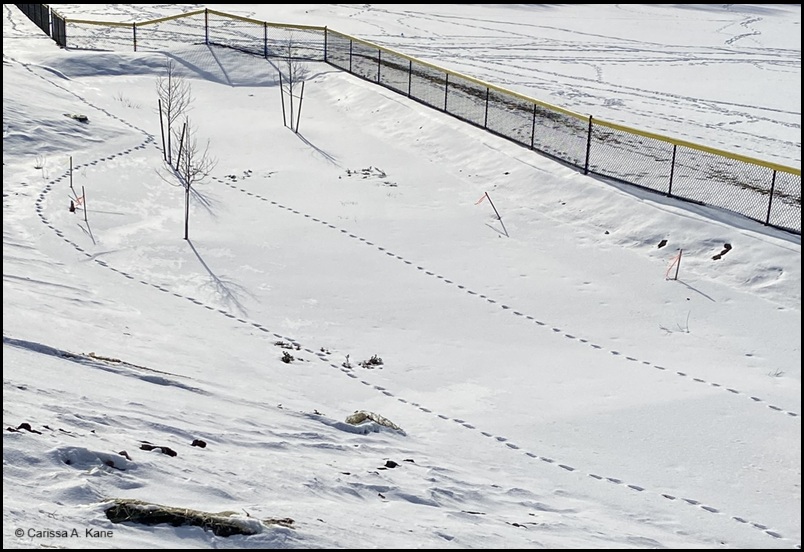
Various tracks in the snow

Presentation…

Your entrance, O Lord, glorious more than grand,
Humble, intimate, and so graceful too.

Your presence, O Lord, not pervasive, but kind,
merciful, compassionate… most fair too.

Your path, O Lord, filled with guidance and Love,
gentle and strong, for the good of all too.

Your way, O Lord, considering all things,
small and big, taking all into Your heart.

Your Wisdom, O Lord, makes clear how to be:
Inspired by Love to seek Peace and Good Will.

Various tracks in the snow

Because he himself was tested through what he suffered, he is able to help those who are being tested. – Hebrews 2:18

Receive Each Moment…

Driving on the highway on a clear but overcast winter morning one moment. Aimlessly sliding across lanes in the next. But through the grace of God, control was regained and the trip continued. In an instant, never mind a day or more, all sorts of things such as situations, environments, etc. can change drastically.

We can know that something is coming and do our best to prepare for it. For example, cold weather can bring icy conditions. Yet even being aware and extra careful, one can’t make any, and all, ice on a road or highway visible to the naked eye. And sometimes, like it or not, there is ice that’s both invisible and inescapable, extending across a road.

So, what’s one to do in these kinds of unavoidable situations? Shrink away from them? Or face them?

The fact of the matter is that there isn’t any one way or one answer for most things. However, there is always a best way to meet the moment. And oftentimes, arriving at it requires relinquishing the notion of control. Whether sliding across the highway in the cold, or steering the wheel on a warm, sunny day, it is the grace and love of God that sustains us.

We all have experiences that can shake us, literally and in other ways. Ones that can create anxiety, fear, uncertainty, and more. Yet, in all of them, we may not be in control, but we always have a choice(s). We can always strive to focus on what is best, what is possible, and most especially the spirit in which we proceed.

Last week’s Gospel was about the Wedding feast at Cana (John 2:1-11). When Mary tells Jesus that the wine has run out, he responds in part, “My hour has not yet come.” Yet, Mary still tells the waiters to do as Jesus tells them. Jesus instructs the waiters. They follow his instructions—essentially becoming part of the miracle—and through the grace of God, the problem is resolved. It wasn’t time… but it was. The time for the goodness of God—love, mercy, compassion, etc.—is always.

In the Gospel for the Third Sunday in Ordinary Time (Luke 1:1-4; 4:14-21), we start by going back to the beginning of Luke’s Gospel. We are reminded of Luke’s motivation. In his own words, he is striving to preserve an accurate account of Jesus life and ministry. And part of that account follows as we read about Jesus in the time after his baptism and temptation in the desert.

Jesus returned to Galilee in the power of the Spirit,
and news of him spread throughout the whole region.
He taught in their synagogues and was praised by all. – Luke 4:14-15

What do you imagine Jesus, “in the power of the Spirit,” was like? What characteristics would you use to describe someone in the power of the Holy Spirit?

As the Gospel continues, Jesus enters the temple in Nazareth and proceeds to read from the scroll handed to him—the scroll of the prophet Isaiah.

He unrolled the scroll and found the passage where it was written:
The Spirit of the Lord is upon me,
because he has anointed me
to bring glad tidings to the poor.
He has sent me to proclaim liberty to captives
and recovery of sight to the blind,
to let the oppressed go free,
and to proclaim a year acceptable to the Lord.
Rolling up the scroll, he handed it back to the attendant and sat down,
and the eyes of all in the synagogue looked intently at him.
He said to them,
“Today this Scripture passage is fulfilled in your hearing.” – Luke 4:17-21

Take some time to think about what you have learned and come to know about Jesus’s life and ministry. In what ways did Jesus’s words and actions fulfill this passage? How have you experienced these and other qualities of Jesus?

Whether it was at the wedding feast in Cana, in the temple in Nazareth, or elsewhere, and no matter what time it was, the Spirit in which Jesus lived and ministered was consistent and unwavering. And at the same time, he was fluid in meeting the moment with love and mercy, lifting all up as the glory of God, rather than making it his own.

Jesus’s life and teachings show us that the moment is always upon us, and the times is always right, to reflect the goodness of God. And more than that, our time is ours only thru the grace of God, and as such, it is always ripe with opportunity to be an expression of love and mercy in the world.

Take, Lord, and receive all my liberty,
my memory, my understanding,
and my entire will,
All I have and call my own.

You have given all to me.
To you, Lord, I return it.

Everything is yours; do with it what you will.
Give me only your love and your grace,
that is enough for me. – St. Ignatius, Suscipe

Reverence…

In the second reading for this Sunday, the Baptism of the Lord, Peter says to those gathered before him, “In truth, I see that God shows no partiality. Rather, in every nation whoever fears him and acts uprightly is acceptable to him.” (Acts 10:34-35).

Fear (or reverence) of the Lord can be a challenging concept. In fact, it can be tempting to mistake reverence as only being evidenced in what one can see. It can also be tempting to shrink it down to a fixed notion of what reverence looks like.

However, our faith calls us to remember, that we do not have the mind, or the insight of God. It is important to keep in mind that in our humanity, we can get hung up in appearances or distracted in what we think ought to be, and in the process, lose sight of the heart of any matter. It is only God who can truly judge, and help us to know, when and what to say or do in response to a situation(s).

And God, as we learn in the Scripture verses leading up to this Sunday’s second reading (Acts 10:9-33), does exactly this for Peter. God helps Peter to see that the faith that he holds so dear, is not just for those like him, but also for the gentiles. His experience on a rooftop during his midday prayer reveals the following:

He was hungry and wished to eat, and while they were making preparations he fell into a trance. He saw heaven opened and something resembling a large sheet coming down, lowered to the ground by its four corners. In it were all the earth’s four-legged animals and reptiles and the birds of the sky. A voice said to him, “Get up, Peter. Slaughter and eat.” But Peter said, “Certainly not, sir. For never have I eaten anything profane and unclean.” The voice spoke to him again, a second time, “What God has made clean, you are not to call profane.” This happened three times, and then the object was taken up into the sky. – verses 10-16

As Peter was pondering the vision, the Spirit said [to him], “There are three men here looking for you. So get up, go downstairs, and accompany them without hesitation, because I have sent them.” – verses 19-20

When Peter entered, Cornelius met him and, falling at his feet, paid him homage. Peter, however, raised him up, saying, “Get up. I myself am also a human being.” While he conversed with him, he went in and found many people gathered together and said to them, “You know that it is unlawful for a Jewish man to associate with, or visit, a Gentile, but God has shown me that I should not call any person profane or unclean. – verses 25-28

However, there’s more than that. God also helps Cornelius. Who like Peter, is not tethered to his own notions, and therefore is able to be open to being guided by the Spirit of God. It is written that Cornelius responds to Peter’s inquiry as to why he called him:

“Four days ago at this hour, three o’clock in the afternoon, I was at prayer in my house when suddenly a man in dazzling robes stood before me and said, ‘Cornelius, your prayer has been heard and your almsgiving remembered before God. Send therefore to Joppa and summon Simon, who is called Peter. He is a guest in the house of Simon, a tanner, by the sea.’ So I sent for you immediately, and you were kind enough to come. Now therefore we are all here in the presence of God to listen to all that you have been commanded by the Lord.” – verses 30-33

During the midday and afternoon hours of prayer, Peter and Cornelius had experiences of God that were different, but the same in Spirit. God gave them both direction, and despite it being an unusual or unexpected ask (for a Jew and a gentile, given practices, tradition, and cultural norms), both men in their fear or reverence of God, allowed themselves to cling to God and this new or different way, rather than a choice rooted in their worldly understanding—one that would have kept them separated… continuing with a wedge in place.

What wedges do you desire God to help humankind overcome today? Knowing that God’s grace flows in many directions on both small and large scales at the same time, what personal wedges would you like to overcome?

Take some time to reflect on this Scripture and how it relates to your experiences, both personal and more community or world-wide.

What happens when you think about God as placing emphasis on internal disposition or drive and how it motivates, informs, and influences one’s actions?

Envision the peace of God embracing you, calling your name, and saying, “You are my beloved; with you I am well pleased.” (Luke 3:22). Rest in the Lord and listen to what God desires for you.

When the kindness and generous love of God our savior appeared, not because of any righteous deeds we had done but because of his mercy, He saved us through the bath of rebirth and renewal by the Holy Spirit, whom he richly poured out on us through Jesus Christ our savior, so that we might be justified by his grace and become heirs in hope of eternal life. – Titus 3:4-7

From where…

From where chaos comes,
Base passion and design,
Stirring ill will, division,
Seeds sowing lies.
Looking, always looking,
To seep and settle in.

From where chaos spreads,
Human passions and designs,
From what we, as masters, embrace,
What we give into,
And what we withstand.

From where peace comes,
Divine passion and design.
Love weaving in and out,
Through time and space.
Ushering good tidings,
Encouraging good will.

From where peace spreads,
Human passions and designs,
From what we, as servants, embrace,
What we give into,
And what we withstand.

“Until he extends his circle of compassion to include all living things,
man will not himself find peace.” – Albert Schweitzer

For where jealousy and selfish ambition exist,
there is disorder and every foul practice.
But the wisdom from above is first of all pure,
then peaceable, gentle, compliant,
full of mercy and good fruits,
without inconstancy or insincerity.
And the fruit of righteousness is sown in peace
for those who cultivate peace. – James 3:16-18

With God, It’s All For Good…

It is written in the Book of Wisdom, “God did not make death, nor does he rejoice in the destruction of the living.” (Wisdom 1:13). As ones created in the image of God, we are to live and behave as such. And while an eye for an eye or “getting even” may be tempting at times, it can lead to the destruction of another of God’s creation and can create a false sense of satisfaction, neither of which are in line with the image of God, or life giving.

In the second reading for the Thirteenth Sunday in Ordinary Time, St. Paul reminds the Corinthians that there is much more to discipleship than what one believes, what one knows, says, and does, and one’s conviction. It is the spirit in which one lives, and that guides one.

St. Paul writes, “For you know the gracious act of our Lord Jesus Christ, that though he was rich, for your sake he became poor, so that by his poverty you might become rich. Not that others should have relief while you are burdened, but that as a matter of equality your abundance at the present time should supply their needs, so that their abundance may also supply your needs, that there may be equality.” (2 Corinthians 8:9, 13-14).

It is only fitting that those created in God’s image be mindful of disparity and strive to recognize and honor the image of God in others, and therefore work toward, encourage, and support equality. The mindset that St. Paul is encouraging is not new. In fact, he writes, “As it is written: ‘Whoever had much did not have more, and whoever had little did not have less.'” (2 Corinthians 8:15). He is referring to the Book of Exodus (Ex 16:18) and how the Manna (the nourishment that God provided for Moses and Israelites) was allotted. It did not matter how much or how little one person gathered, there was enough for everyone to have what they needed. Not only that, but also there was great awareness that it was all provided through the goodness—love and mercy—of God.

One could not think of what they collected as belonging to oneself, but rather as being provided by God, and as one created in the image of God, it was to be shared and for everyone to partake of. There was to be equality, or equity, in terms of everyone having what they needed to not only survive, but to keep moving along the journey.

Turning to the Gospel passage (Mark 5:21-43), again we can see that it’s all about equity. A synagogue official’s daughter is on her death bed, and he begs Jesus to heal her, “Please, come lay your hands on her that she may get well and live.” Jesus begins to follow Jairus. They are moving through the heavy crowd when a woman who also needs Jesus’s help touches his cloak saying, “If I but touch his clothes, I shall be cured.”

One can imagine, especially given that period of time in history, that as a man and a synagogue official, Jairus would be able to gain Jesus’s attention and position himself to have access to Jesus more easily than the woman. Both Jairus (or his daughter) and the woman need healing, but each needs to approach the situation differently because of their circumstances. To Jesus, it doesn’t matter who got to him first or last, or who has more or less (power, possessions, status, etc.). As with God’s grace, Jesus’s healing is equitable and those who approach in faith get what they need—the woman’s hemorrhaging comes to an end and Jairus’s daughter is raised by Jesus. How do you relate to Jairus and/or the woman with a hemorrhage in terms of approach and asking in prayer?

Oftentimes, when thinking about faith and asking for something, it can be can easy to only think in terms asking God or Jesus for what one needs or wants. However, being created in the image of God, we are called to also look at the other side of this. Take some time to pray and reflect on the spirit in which you respond when it comes the needs and wants of others. In what ways does Jesus’s sense of equality and equity increase your faith and inspire you?

Sing praise to the Lord, you faithful;
give thanks to his holy memory.
For his anger lasts but a moment;
his favor a lifetime.
At dusk weeping comes for the night;
but at dawn there is rejoicing. – Psalm 30:5-6

Heart

Putting Heart into the matter…

In the Gospel passage for the 10th Sunday in Ordinary Time (Mark 3:20-35), Jesus says to his disciples and the crowd, “If a kingdom is divided against itself, that kingdom cannot stand.” (verse 24). This is in response to the scribes claim that Jesus is driving out demons by or through the prince of demons. Jesus’s words make sense. After all, one cannot bring peace and healing by or through chaotic means. With so much division and vitriol circulating throughout the world, it’s worth considering the heart in the matter.

In the days leading up to this Sunday, the Solemnity of the Most Sacred Heart of Jesus and the Memorial of the Immaculate Heart of the Blessed Virgin Mary are celebrated. When you consider the heart of Jesus, what qualities come to mind? How about when you think about Mary’s immaculate heart?

Based on Scripture, what are some concrete ways that their words and actions reflect these qualities? How does Mary receive unexpected news or events such as the Annunciation, at the Presentation in the temple, and Jesus’s arrest and crucifixion? How does Mary react and respond to the young Jesus when she finds him in the temple after 3 days apart? What does Mary do, and how does she do it, when the wine runs out at the wedding feast in Cana?

What kinds of words does Jesus use and what is his attitude in his encounters with the pharisees and scribes, his disciples, and the crowds? What do Jesus’s actions express? And how does Jesus respond and react during the Passion?

Contemplating the heart of Jesus and the heart of Mary in the happenings of today’s world, how or where do you see the qualities of their hearts coming to life through words and actions? Take time this week to notice the heart behind your words and actions as well as those in the happenings directly around you, in your country, and in the world.

Prayer: Immaculate heart of Mary, intercede on our behalf, so that lies, deception, and all who seek to distort what is true, just, and honorable may be revealed. Sacred heart of Jesus, help us to see through your eyes, and to speak, act, and love, with your heart. Amen.

Heart

With the Lord there is mercy, and fullness of redemption. – Psalm 130:7bc

The Pilot…

To get somewhere, one needs to know where they are in relation to where they want to be and then to come up with a travel plan. However, oftentimes the path or trajectory shifts or ends up being different due to changing circumstances such as weather, terrain, and/or other unexpected issues. And while there are rules of navigation, the ability to adapt and adjust is crucial just as much as precision is.

One way to consider the readings for the Fifth Sunday of Lent is not only as tools, but precision tools for navigation. In the first reading (Jeremiah 31:31-34), the prophet reveals that God is making some adjustments. This is not a change in commitment level or objective, but rather a change in approach.

I will place my law within them, and write it upon their hearts; I will be their God, and they shall be my people. They will no longer teach their friends and relatives, “Know the Lord!” Everyone, from least to greatest, shall know me—oracle of the Lord—for I will forgive their iniquity and no longer remember their sin.” (verses 33-34)

God’s communication is going to be directed straight to God’s people (not requiring a “go-between” or a 3rd person account), making it more personal and approachable as well as accepting and forgiving—all hallmarks of a healthy relationship.

In the responsorial psalm (Psalm 51:3-4, 12-13, 14-15), the psalmist expresses a desire for God to wash away their wrongdoing and states:

“A clean heart create for me, O God, and a steadfast spirit renew within me. Cast me not out from your presence, and your Holy Spirit take not from me.” (verses 12-13)

Since a heart cannot be clean or pure when it’s holding onto transgressions, resentments, or cold feelings toward oneself or others, the psalmist first asks for God’s mercy (for these things holding them back to be lifted from them). Once the obstacle(s) is removed, the way toward a heart that is unwavering in faithfulness to God is opened because the heart is better able to receive the wisdom and guidance of the Holy Spirit.   

In the Letter to the Hebrews, St. Paul uses two words, in the passage for the second reading (Hebrews 5:7-9), that are sometimes received less enthusiastically than words like mercy and compassion. They are “reverence” and “obedience.” St. Paul writes of Jesus: “…he was heard because of his reverence” and “…he learned obedience from what he suffered”. Jesus’s relationship with God was open and honest; it was sacred. Jesus walked this earth, rooted in a desire to do God’s will and always seeking God as his source of strength and wisdom to face what he needed to face. When taken in the light of Jesus’ example, these words, “reverence” and “obedience”, when chosen with one’s free will express an attitude of humility and faithfulness to God, and of God to us.

Coming to the Gospel (John 12:20-33), Jesus’s words here strike at the heart of navigating. That is, holding onto or maintaining focus on the end goal despite the challenges that arise along the way.

It is written:

“Jesus answered them, “The hour has come for the Son of Man to be glorified. Amen, amen, I say to you, unless a grain of wheat falls to the ground and dies, it remains just a grain of wheat; but if it dies, it produces much fruit.” (verse 23-24).

If one is going to get to their destination, they can’t stay in one place or state of being. A change, shift or movement toward what one desires is necessary.

“I am troubled now. Yet what should I say? ‘Father, save me from this hour’? But it was for this purpose that I came to this hour.” (verse 27)

Jesus knows his purpose or mission through his relationship with God. What are you and God aiming for as you navigate? (If unsure, consider what is fulfilling or rings true with the soul, bringing a sense of peace.)

“Father, glorify your name.” Then a voice came from heaven, “I have glorified it and will glorify it again.” (verse 28)

When two wills move together, there is resonance in words and actions. However, there can only be one pilot.

“Now is the time of judgment on this world; now the ruler of this world will be driven out.” (verse 31)

Jesus knows who’s leading the way and encourages us toward awareness as well.

May the strength of God pilot us,
may the wisdom of God instruct us,
may the hand of God protect us,
may the word of God direct us.
Be always ours this day and for evermore. – St. Patrick