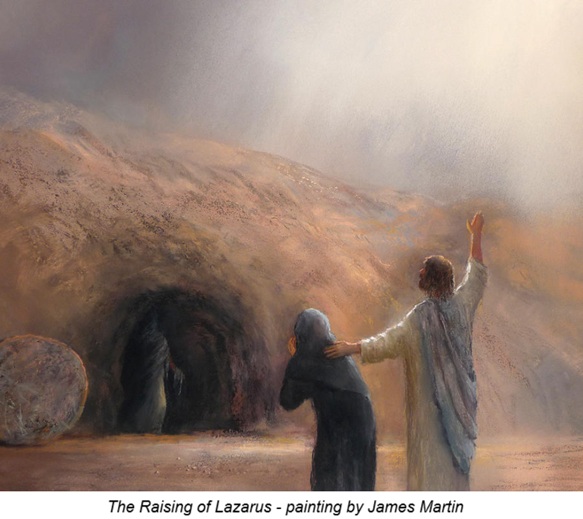
As Lazarus lay with outstretched arm, the rich man, held all within his grip; pursuing his designs, above All, making no matter of Lazarus.
Living well, thinking well of himself, dwelling in the lap of luxury, the rich man, held up by many things, could not see the Beat within his heart.
Rich man? We all do what we will do. Lazarus? Raised up, received his due, dignity and comfort came his way, Abraham by his side in Heaven.
And while things can still be bought and sold, the most important and precious ones, worth their weight in gold, are born of Grace, arriving on the wings of mercy.
Blessed is he who keeps faith forever, secures justice for the oppressed, gives food to the hungry. The Lord sets captives free.
The Lord gives sight to the blind; the Lord raises up those who were bowed down. The Lord loves the just; the Lord protects strangers.
The fatherless and the widow he sustains, but the way of the wicked he thwarts. The Lord shall reign forever; your God, O Zion, through all generations. Alleluia. – Psalm 146:7-10
“The Holy Scriptures were not given to us that we should enclose them in books, but that we should engrave them upon our hearts.” ― St. John Chrysostom
Praying with the scripture readings for the Feast of the Exaltation of the Holy Cross (Numbers 21:4b-9; Psalm 78:1b-2, 34-38; Philippians 2:6-11; and John 3:3-17), contemplate what it means to engrave them upon your heart.
In the First Reading, we hear of the Israelites, at wit’s end, upset by their situation in the desert, and making it known to Moses. We also learn of the punishing arrival of saraph serpents, leading to the surmise of many, and the subsequent realization of sin and prayer for relief. Following this, Moses prays for the people to be spared from the serpents, and the Lord replies, “Make a saraph and mount it on a pole, and if any who have been bitten look at it, they will live.” (Numbers 21:8).
What do you make of the notion that to be cured, or to overcome the serpent’s bite, requires looking at the bronze serpent mounted on the pole?
Take some time to consider a situation or area in which your patience is worn thin, or where you have been bitten. What has your reaction or response been? And how might you ask for, and receive, God’s grace to move toward peace and healing—a better way?
The response for the Psalm (Psalm 78:1b-2, 34-38) is, “Do not forget the works of the Lord!” (Ps 78:7b). Like it was in the desert for the Israelites and Moses, it can be tempting for anyone to react or respond out of feelings of discontent or anger, when it feels like needs are not being met or answers are nowhere to be found. This psalm invites us to recall what is true. None of us are without mistakes and missteps along the way. Still though, God is merciful and forgiving. This psalm encourages us to recall and remember the ways that God has been, and is, steadfast toward us.
Think about your experience of God turning something bad into something good?
Throughout the week, in moments with or without concern or upset, pause to acknowledge and give praise to God for God’s faithfulness to you. Allow yourself the space and invite God into it, to help you to see the entire picture, and to remember what is true.
In the Letter of St. Paul to the Philippians (Philippians 2:6-11), it is written:
Christ Jesus, though he was in the form of God, did not regard equality with God something to be grasped. Rather, he emptied himself, taking the form of a slave, coming in human likeness; and found human in appearance, he humbled himself, becoming obedient to death, even death on a cross. Because of this, God greatly exalted him and bestowed on him the name that is above every name, that at the name of Jesus every knee should bend, of those in heaven and on earth and under the earth, and every tongue confess that Jesus Christ is Lord, to the glory of God the Father.
Continuing to pray with the thoughts, feelings, and situations that have come to mind and heart thus far, where might the words emptied, humbled, exalted, and bestowed—the past tense verbs used by St. Paul to describe actions of Jesus and God—be applicable or come into play? Ask the Lord to help you to identify ways that these words operate in your life, and what purpose they might be serving.
Turning to the Gospel passage (John 3:13-17), Jesus is mid-conversation with Nicodemus, a Pharisee who has come to see Jesus in the darkness of night. Nicodemus is trying to understand what Jesus means by, “no one can see the kingdom of God without being born from above.” (Jn 3:3).
What does being born from above mean to you?
For the Feast of the Exaltation of the Holy Cross, we are reminded of where, and who, we currently are—our place as well as our call—eternal life through Jesus.
In the Gospel passage, Jesus refers to Moses lifting up the bronze serpent in the desert and says, “so must the Son of Man be lifted up, so that everyone who believes in him may have eternal life.” (Jn 3:14-15). He knows that Nicodemus will be familiar with and understand what has been written in Scripture. However, an earmark of Jesus is to elevate and help us along toward living Scripture. This is what he is trying to do, when he follows up with:
“For God so loved the world that he gave his only Son, so that everyone who believes in him might not perish but might have eternal life. For God did not send his Son into the world to condemn the world, but that the world might be saved through him.” (Jn 3:16-17).
Enter into conversation with Jesus about these two verses, inviting him to elevate and help you along in your journey toward living Scripture, or living it more fully. When your prayer time comes to a close, add the following:
We adore you, O Christ, and we bless you, because by your Cross you have redeemed the world. – St. Francis of Assisi
Dependent on one’s point of view, and from one end of the spectrum, to the long, far away other, the distance between here and there, holds no relevance to the Heart.
For everyone who exalts himself will be humbled, but the one who humbles himself will be exalted. – Luke 14:11
The readings for the Fifteenth Sunday in Ordinary Time present food for thought and prayer about what’s written, how it’s read, and what is brought to life from it. In the first reading (Deuteronomy 30:10-14), Moses urges the people to heed God’s voice and the commandments and statutes passed on to them and written in “this book of law”. He points out that God’s voice and words are not out of reach, but instead, he says, “No, it is something very near to you, already in your mouths and in your hearts; you have only to carry it out.” (v. 14).
Spend a few minutes with this verse. Then, think about this past week, an ongoing situation that is before you, or something that you have coming up. Invite the Lord to help you parse through all the thoughts and feelings of which you become aware as you ponder.
For the responsorial psalm, there are two from which to choose (Psalm 69:14, 17, 30-31, 33-34, 36, 37 or Psalm 19:8, 9, 10, 11). Read each of the responses listed below in silence.
Turn to the Lord in your need, and you will live. (cf. Ps 69:33)
Your words, Lord, are Spirit and life. (Ps 19:9a)
Next, read each response aloud. Notice if one response draws you in, or catches your attention, more than the other.
Bring into your prayer a Psalm response(s) and ask the Lord to guide you and lead you to greater awareness as you continue your contemplation from above. [Allow yourself to go with whichever response you land on first or feel more drawn to. It might be both, or even another verse that comes to mind.]
In the second reading (Colossians 1:15-20), St. Paul writes:
Christ Jesus is the image of the invisible God, the firstborn of all creation. For in him were created all things in heaven and on earth, the visible and the invisible, whether thrones or dominions or principalities or powers; all things were created through him and for him. He is before all things, and in him all things hold together. He is the head of the body, the church. He is the beginning, the firstborn from the dead, that in all things he himself might be preeminent. For in him all the fullness was pleased to dwell, and through him to reconcile all things for him, making peace by the blood of his cross through him, whether those on earth or those in heaven.
Sometimes it can be tricky, and trying, to face big and small choices every day among relationships, dilemmas, situations, etc. Think about how you have been managing. What brings you comfort? And, from where do you draw strength?
Pause to hold the words St. Paul writes of Jesus and remember that “Christ Jesus is the image of the invisible God”, and that you are created in the image of the invisible, and indivisible, God. What happens when you let that reality saturate your heart? Bring to prayer the thoughts and feelings that arise.
Turning to the Gospel passage (Luke 10:25-37), it begins:
There was a scholar of the law who stood up to test Jesus and said, “Teacher, what must I do to inherit eternal life?” Jesus said to him, “What is written in the law? How do you read it?” He said in reply, “You shall love the Lord, your God, with all your heart, with all your being, with all your strength, and with all your mind, and your neighbor as yourself.” He replied to him, “You have answered correctly; do this and you will live.”
Notice how Jesus points the scholar, and us, to the Word of God (“What is written in the law”), how it is processed internally (“How do you read it?”), and how it is lived out (“do this and you will live.”).
Like the scholar, we can know what is written in the law, but if we skip over considering how we are reading it—heart, mind, and soul, how can we possibly live it out authentically, united with God in both Word and Spirit, as intended?
But because he wished to justify himself, he said to Jesus, “And who is my neighbor?” Jesus replied, “A man fell victim to robbers as he went down from Jerusalem to Jericho. They stripped and beat him and went off leaving him half-dead. A priest happened to be going down that road, but when he saw him, he passed by on the opposite side. Likewise a Levite came to the place, and when he saw him, he passed by on the opposite side. But a Samaritan traveler who came upon him was moved with compassion at the sight. He approached the victim, poured oil and wine over his wounds and bandaged them. Then he lifted him up on his own animal, took him to an inn, and cared for him. The next day he took out two silver coins and gave them to the innkeeper with the instruction, ‘Take care of him. If you spend more than what I have given you, I shall repay you on my way back.’ Which of these three, in your opinion, was neighbor to the robbers’ victim?” He answered, “The one who treated him with mercy.” Jesus said to him, “Go and do likewise.” – Luke 10:29-37
Thinking about this passage and the Scripture in the readings and psalm before it, what is most on your mind and in heart at this moment?
Continuing to pray. Ask the Lord to reveal to you whatever God wills, and to help you to bring together what is written, how to read it, and what “Go and do likewise” looks like or means for you today.
Our Father, who art in heaven, hallowed be thy name; thy kingdom come, thy will be done on earth as it is in heaven. Give us this day our daily bread, and forgive us our trespasses, as we forgive those who trespass against us; and lead us not into temptation, but deliver us from evil. Amen.
In the Gospel passage for the Solemnity of the Most Holy Body and Blood of Christ (Luke 9:11b-17), it is written that as the end of the day is drawing near, Jesus’s disciples go to him with their plan on how to proceed with regards to the crowds who have followed Jesus and his disciples to Bethsaida, a town near the Sea of Galilee, and have witnessed Jesus’s preaching and healing. The disciples say, “Dismiss the crowd so that they can go to the surrounding villages and farms and find lodging and provisions; for we are in a deserted place here.” However, Jesus seems to have other ideas. He responds, “Give them some food yourselves.”
Take a moment to consider how you might receive Jesus’s words in this situation. How might your response vary based on whether you are in a deserted place? What’s it like to consider yourself as part of the solution, no matter where you are?
Next, the disciples focus on what they might do, but recognize it’s not possible for them to do much with what they have:
“Five loaves and two fish are all we have, unless we ourselves go and buy food for all these people.”
Think of a situation where you feel that all you have is not enough to address it. Now, envision Jesus coming into the situation and inviting you to tell him more about it. Start with the words, “All I have is …” Notice what you include (things, people, thoughts, feelings, etc.).
What happens within you as you name what you bring to the situation? How does Jesus receive you and respond?
Now imagine Jesus instructing his disciples, and you, “Have them sit down in groups…”. Then Jesus, with abundant love and patience, turns to you, and tells you more. Pray and converse with Jesus about what this might mean for you and your situation. Share any, and all, thoughts and feelings that arise within you.
In the Gospel passage, after the disciples listened to Jesus and did as he asked, it is written:
“Then taking the five loaves and the two fish, and looking up to heaven, he said the blessing over them, broke them, and gave them to the disciples to set before the crowd. They all ate and were satisfied. And when the leftover fragments were picked up, they filled twelve wicker baskets.”
What’s it like to contemplate the fact that with Jesus, all you have is enough, and can even be more than enough?
Take time today, and throughout the week, to set down whatever is on your plate or is occupying your mind. Then pause and invite Jesus to say the blessing over you and your concerns. Next, allow the peace and wisdom of Jesus, the Bread of Life, to wash over you, and reveal how what you have can meet this moment and the moments ahead, and be more than enough.
I am the living bread that came down from heaven, says the Lord; whoever eats this bread will live forever. – John 6:51
The readings for the Fifth Sunday of Easter can be seen as encouragement toward, and an opportunity to reflect throughout the week on perseverance, praise, promise, and practice, but most of all, Love.
In the First Reading (Acts 14:21-27), Paul and Barnabas continue their travels, preaching to and teaching the Gentiles about the Way. In this scripture passage, it is written:
“They strengthened the spirits of the disciples and exhorted them to persevere in the faith, saying, ‘It is necessary for us to undergo many hardships to enter the kingdom of God.’” (v. 22).
Think about some of the hardships you have encountered or are currently experiencing. Where have you found strength to persevere? What about moments of peace? How do you desire God to be present to you regarding these challenges? Take some time to bring these areas to prayer and express what is in your heart as you do.
The First Reading ends with the following verses:
“From there they sailed to Antioch, where they had been commended to the grace of God for the work they had now accomplished. And when they arrived, they called the church together and reported what God had done with them and how he had opened the door of faith to the Gentiles.” (v.26-27).
Continuing to reflect on the questions above, your prayer, and these closing verses, what insight or inspiration comes to you?
——————–
In the Responsorial Psalm (Psalm 145:8-13), the response comes from verse 1 of the Psalm which is, “I will extol you, my God and king; I will bless your name forever and ever.” While it expresses the psalmist’s deep sense of gratitude to God, the verses that follow it speak to characteristics of God:
“The Lord is gracious and merciful, slow to anger and of great kindness. The Lord is good to all and compassionate toward all his works.” (v. 8-9).
In what ways have you encountered, and do you continue to encounter, grace, mercy, patience, and kindness through God, both directly and indirectly? In what ways do you embody and promote these characteristics to others?
The verses of the Psalm continue:
“Let all your works give you thanks, O Lord, and let your faithful ones bless you. Let them discourse of the glory of your kingdom and speak of your might.” (v. 10-11).
“Let them make known your might to the children of Adam, and the glorious splendor of your kingdom. Your kingdom is a kingdom for all ages, and your dominion endures through all generations.” (v. 12-13).
What strikes you most about the above verses, in terms of the reception of the Creator and the response of the created? As you contemplate this, what events or circumstances come to mind and what feelings do they give rise to? Where and how do praise and gratitude come into play? Pray with this, sharing your thoughts and feelings with the Lord, and allowing yourself to listen to or get a sense of the Lord’s response.
——————–
The Second Reading comes from the Book of Revelation (Revelation 21:1-5a):
“Then I, John, saw a new heaven and a new earth. The former heaven and the former earth had passed away, and the sea was no more. I also saw the holy city, a new Jerusalem, coming down out of heaven from God, prepared as a bride adorned for her husband. I heard a loud voice from the throne saying, ‘Behold, God’s dwelling is with the human race. He will dwell with them and they will be his people and God himself will always be with them as their God. He will wipe every tear from their eyes, and there shall be no more death or mourning, wailing or pain, for the old order has passed away.’ The One who sat on the throne said, ‘Behold, I make all things new.’”
After reading the above passage, when you read, “God’s dwelling is with the human race.”, what comes to mind, and what feelings accompany it?
As you continue to reflect, envision yourself, arm in arm with the Lord, walking along a path, in a place of your choosing. Share the thoughts and feelings that are stirring within you and allow the Lord to respond. Notice the way you receive or embrace each other as you communicate? What characteristics of the Lord do you experience and what ones do you exude to the Lord?
Recalling the last verse in this passage, “The One who sat on the throne said, ‘Behold, I make all things new.’”, what is your current level of trust in these words? Taking to heart God’s words as God’s promise, and your current reality, what happens? Share what’s going on inside you with the Lord including the areas that pose a challenge to your belief?
As your prayer time comes to its closing, what desire is in your heart? And what is the Lord’s desire for you?
——————–
The Gospel passage for the Fifth Sunday of Easter (John 13:31-33a, 34-35) takes us back to the Last Supper, after Jesus has washed the feet of the disciples and Judas has taken leave of Jesus and the others present.
“When he had left, Jesus said, ‘Now is the Son of Man glorified, and God is glorified in him. If God is glorified in him, God will also glorify him in himself, and God will glorify him at once. My children, I will be with you only a little while longer. I give you a new commandment: love one another. As I have loved you, so you also should love one another. This is how all will know that you are my disciples, if you have love for one another.’”
What’s it like to sit with the notion of the glory of God being in you? In what ways does, and can, being mindful of this truth enrich and/or enlighten your words and actions? In practice, how does it inspire a cooperative spirit with the flow of God’s love in and through you?
“Where do we begin? Begin with the heart.” – Julian of Norwich
In the Gospel passage for the Thirty-third Sunday in Ordinary Time (Mark 13:24-32), Jesus says, “Learn a lesson from the fig tree. When its branch becomes tender and sprouts leaves, you know that summer is near.” (v. 24). These words are part of his response to a question asked of him by the disciples, Peter, James, John, and Andrew.
Away from the others, and just after Jesus commented to his disciples on the destruction of the temple, they had asked him, “Tell us, when will this happen, and what sign will there be when all these things are about to come to an end?” (Mark 13:4). The first thing that Jesus says to them is, “See that no one deceives you.” (Mk 13:5). As he continues to tell them the signs and what will happen (trials and tribulations such as war, persecutions, etc.), he also continues to give them instructions as to how to handle themselves and the situations they will face. He says:
“… do not be alarmed” (v. 7)
“Watch out for yourselves.” or be aware (v. 9)
“… do not worry beforehand about what you are to say. But say whatever will be given to you at that hour. For it will not be you who are speaking but the holy Spirit.” (v. 11)
“Be watchful!” (v. 23)
Then he says these words that are part of the Gospel for today, “Learn a lesson from the fig tree. When its branch becomes tender and sprouts leaves, you know that summer is near.” (v. 28). And although Jesus says this as he continues to tell Peter, James, John, and Andrew about the signs that will occur at the end times, the gospel passage ends with Jesus saying, “But of that day or hour, no one knows, neither the angels in heaven, nor the Son, but only the Father.” (v. 32). In other words, perhaps Jesus is reminding us not to focus on the signs, but rather to focus on his instructions.
His last instruction, “Learn a lesson from the fig tree,” is intriguing. In chapter 11 of Mark’s Gospel, Jesus curses a fig tree for being fruitless:
“The next day as they were leaving Bethany he was hungry. Seeing from a distance a fig tree in leaf, he went over to see if he could find anything on it. When he reached it he found nothing but leaves; it was not the time for figs. And he said to it in reply, ‘May no one ever eat of your fruit again!’ And his disciples heard it.” (Mark 11:12-14).
In this earlier passage, there is a mention of time, “… it was not the time for figs.” And now, when Jesus is telling some of his disciples about the signs of the end times and instructing them on how to be prepared, he again, refers to figs and time (and not knowing the exact time of the end).
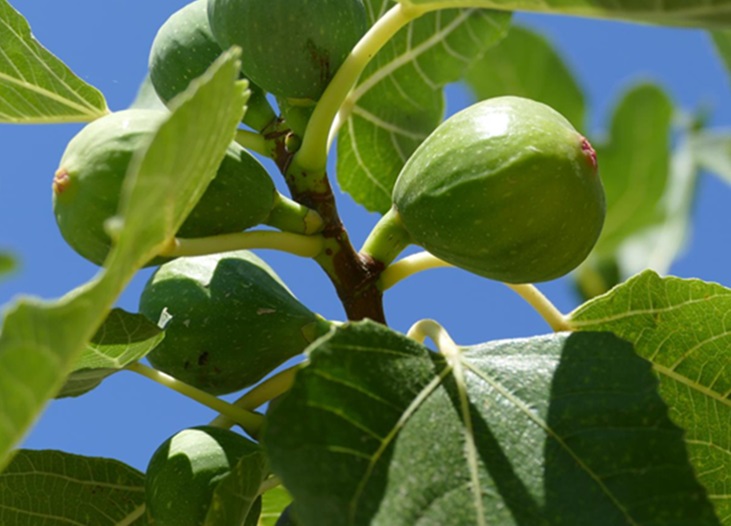
A few interesting things about figs and time… Fig trees, like other fruit trees, have leaves, but unlike other fruit trees, their fruit flowers internally. Also, each fig contains a collection of many flowers and seeds. And while one may think of a fig as a piece of fruit, they are actually an infructescence—a multiple fruit—that in a sense, is always in the process of blooming.
So, in both times of uncertainty and times of comfort, see that no one deceives you, do not worry, and learn from the fig tree, continuing to grow from within, knowing that the fruit will come at the time that is appointed.
“Lord, my allotted portion and my cup, you have made my destiny secure.” – Psalm 16:5
In The Return of the Prodigal Son, Henri Nouwen wrote, “Both trust and gratitude require the courage to take risks because distrust and resentment, in their need to keep their claim on me, keep warning me how dangerous it is to let go of my careful calculations and guarded predictions. At many points I have to make a leap of faith to let trust and gratitude have a chance. The leap of faith always means loving without expecting to be loved in return, giving without wanting to receive, inviting without hoping to be invited, holding without asking to be held. And every time I make a little leap, I catch a glimpse of the One who runs out to me and invites me into his joy, the joy in which I can find not only myself, but also my brothers and sisters.”
Take a moment now to reflect on where you’ve experienced the Lord this past week and to what degree trust was involved. How did or does your experience help you to trust or to have faith, placing hope in the Lord with regards to a situation(s)? What happens when you bring areas in which your trust has possibly shifted away, back into prayer and back to the Lord?
Continuing to contemplate your experience, what qualities or characteristics that you associate with the Lord, are most noticeable? And how do these same qualities inform, influence, and inspire you and your choices?
The Gospel for the Thirtieth Sunday in Ordinary Time (Mark 10:46-52) begins in a sea of people, from within which, Bartimaeus, the blind man, is calling out to the Lord. And despite others around him telling him to stop and to keep quiet, he keeps calling out, “Son of David, have pity on me!” (v. 48).
Imagine what Bartimaeus might be holding in his heart as he’s trying to get Jesus’ attention? How about Jesus? What might be in his heart as he navigates through the crowd? What qualities do they each seem to have that might be informing, influencing, and inspiring them? What do each of them seem to be focused on?
Next, notice how Jesus receives and responds to Bartimaeus, the blind man who has let his guard down and opened himself up to both chance and Grace.
Jesus stopped and said, “Call him.” So they called the blind man, saying to him, “Take courage; get up, Jesus is calling you.” He threw aside his cloak, sprang up, and came to Jesus. Jesus said to him in reply, “What do you want me to do for you?” The blind man replied to him, “Master, I want to see.” Jesus told him, “Go your way; your faith has saved you.” Immediately he received his sight and followed him on the way. – Mk 10:49-52
Jesus is essentially saying: I’m here and I’m listening… I see you… I hear you… Come closer… Tell me more. And Bartimaeus, by coming closer and sharing more with Jesus, is able to receive peace, healing, and greater faith.
Take whatever you are focused on, to Jesus, the One who is, who was, and who will ever be—here for you, listening to you, seeing and hearing you, and always saying, come closer, tell me more.
Then, after a period of sharing and listening, envision Jesus saying the same to you as he did to Bartimaeus, “Go your way; your faith has saved you.”
The Lord has done great things for us; we are filled with joy. – Psalm 126:3
It is written in the Book of Wisdom, “God did not make death, nor does he rejoice in the destruction of the living.” (Wisdom 1:13). As ones created in the image of God, we are to live and behave as such. And while an eye for an eye or “getting even” may be tempting at times, it can lead to the destruction of another of God’s creation and can create a false sense of satisfaction, neither of which are in line with the image of God, or life giving.
In the second reading for the Thirteenth Sunday in Ordinary Time, St. Paul reminds the Corinthians that there is much more to discipleship than what one believes, what one knows, says, and does, and one’s conviction. It is the spirit in which one lives, and that guides one.
St. Paul writes, “For you know the gracious act of our Lord Jesus Christ, that though he was rich, for your sake he became poor, so that by his poverty you might become rich. Not that others should have relief while you are burdened, but that as a matter of equality your abundance at the present time should supply their needs, so that their abundance may also supply your needs, that there may be equality.” (2 Corinthians 8:9, 13-14).
It is only fitting that those created in God’s image be mindful of disparity and strive to recognize and honor the image of God in others, and therefore work toward, encourage, and support equality. The mindset that St. Paul is encouraging is not new. In fact, he writes, “As it is written: ‘Whoever had much did not have more, and whoever had little did not have less.'” (2 Corinthians 8:15). He is referring to the Book of Exodus (Ex 16:18) and how the Manna (the nourishment that God provided for Moses and Israelites) was allotted. It did not matter how much or how little one person gathered, there was enough for everyone to have what they needed. Not only that, but also there was great awareness that it was all provided through the goodness—love and mercy—of God.
One could not think of what they collected as belonging to oneself, but rather as being provided by God, and as one created in the image of God, it was to be shared and for everyone to partake of. There was to be equality, or equity, in terms of everyone having what they needed to not only survive, but to keep moving along the journey.
Turning to the Gospel passage (Mark 5:21-43), again we can see that it’s all about equity. A synagogue official’s daughter is on her death bed, and he begs Jesus to heal her, “Please, come lay your hands on her that she may get well and live.” Jesus begins to follow Jairus. They are moving through the heavy crowd when a woman who also needs Jesus’s help touches his cloak saying, “If I but touch his clothes, I shall be cured.”
One can imagine, especially given that period of time in history, that as a man and a synagogue official, Jairus would be able to gain Jesus’s attention and position himself to have access to Jesus more easily than the woman. Both Jairus (or his daughter) and the woman need healing, but each needs to approach the situation differently because of their circumstances. To Jesus, it doesn’t matter who got to him first or last, or who has more or less (power, possessions, status, etc.). As with God’s grace, Jesus’s healing is equitable and those who approach in faith get what they need—the woman’s hemorrhaging comes to an end and Jairus’s daughter is raised by Jesus. How do you relate to Jairus and/or the woman with a hemorrhage in terms of approach and asking in prayer?
Oftentimes, when thinking about faith and asking for something, it can be can easy to only think in terms asking God or Jesus for what one needs or wants. However, being created in the image of God, we are called to also look at the other side of this. Take some time to pray and reflect on the spirit in which you respond when it comes the needs and wants of others. In what ways does Jesus’s sense of equality and equity increase your faith and inspire you?
Sing praise to the Lord, you faithful; give thanks to his holy memory. For his anger lasts but a moment; his favor a lifetime. At dusk weeping comes for the night; but at dawn there is rejoicing. – Psalm 30:5-6
Neither grave, nor the gravity, Could hold Him down. That cross, though heavy, Not heavy enough, Nor could it ever be. A temporary thing, A passage, passing with time, The Begotten not gone.
That stone, though big, Not big enough, Nor could it ever be. A temporary thing, A passage, passing with time. The Begotten hidden, Not seen, not heard, But certainly not gone.
Then, Easter. Arriving between the quiet, Entering amid the stillness, And everything changes. Everything becomes new again, In the remembering of what is. Nothing ever stronger than What was, What is, and What shall ever be.
Just as Light cannot be kept from shining, And Truth, refusing to remain hidden, There is no greater shield or power than that created by Creator. We are more than passengers on borrowed time. More than temporary things or passages, passing with time. And in Him, with Him, and thru Him, Neither grave, nor the gravity, Can hold us down.
You must be logged in to post a comment.