Forest

Standing Tall…

Looking straight ahead into a forest.

Trees straight ahead standing tall,
Making way for what may come,
What was, and what is beyond.
So willing to share the scene
With the bright and countless leaves.

Forest - looking up at leaves

Together in their welcome
To fellow lives passing through,
Trees and leaves hold each other,
One another, as Love holds them too.

Forest - looking up at a tree trunk and leaves.

The Lord is a God of justice, who knows no favorites. – Sirach 35:12

Celtic Healing Cross

You, have redeemed the world…

“The Holy Scriptures were not given to us that we should enclose them in books, but that we should engrave them upon our hearts.” ― St. John Chrysostom

Praying with the scripture readings for the Feast of the Exaltation of the Holy Cross (Numbers 21:4b-9; Psalm 78:1b-2, 34-38; Philippians 2:6-11; and John 3:3-17), contemplate what it means to engrave them upon your heart.

In the First Reading, we hear of the Israelites, at wit’s end, upset by their situation in the desert, and making it known to Moses. We also learn of the punishing arrival of saraph serpents, leading to the surmise of many, and the subsequent realization of sin and prayer for relief. Following this, Moses prays for the people to be spared from the serpents, and the Lord replies, “Make a saraph and mount it on a pole, and if any who have been bitten look at it, they will live.” (Numbers 21:8).

What do you make of the notion that to be cured, or to overcome the serpent’s bite, requires looking at the bronze serpent mounted on the pole?

Take some time to consider a situation or area in which your patience is worn thin, or where you have been bitten. What has your reaction or response been? And how might you ask for, and receive, God’s grace to move toward peace and healing—a better way?

The response for the Psalm (Psalm 78:1b-2, 34-38) is, “Do not forget the works of the Lord!” (Ps 78:7b). Like it was in the desert for the Israelites and Moses, it can be tempting for anyone to react or respond out of feelings of discontent or anger, when it feels like needs are not being met or answers are nowhere to be found. This psalm invites us to recall what is true. None of us are without mistakes and missteps along the way. Still though, God is merciful and forgiving. This psalm encourages us to recall and remember the ways that God has been, and is, steadfast toward us.

Think about your experience of God turning something bad into something good?

Throughout the week, in moments with or without concern or upset, pause to acknowledge and give praise to God for God’s faithfulness to you. Allow yourself the space and invite God into it, to help you to see the entire picture, and to remember what is true.

In the Letter of St. Paul to the Philippians (Philippians 2:6-11), it is written:

Christ Jesus, though he was in the form of God,
did not regard equality with God something to be grasped.
Rather, he emptied himself,
taking the form of a slave,
coming in human likeness;
and found human in appearance,
he humbled himself,
becoming obedient to death,
even death on a cross.
Because of this, God greatly exalted him
and bestowed on him the name
that is above every name,
that at the name of Jesus
every knee should bend,
of those in heaven and on earth and under the earth,
and every tongue confess that
Jesus Christ is Lord,
to the glory of God the Father.

Continuing to pray with the thoughts, feelings, and situations that have come to mind and heart thus far, where might the words emptied, humbled, exalted, and bestowed—the past tense verbs used by St. Paul to describe actions of Jesus and God—be applicable or come into play? Ask the Lord to help you to identify ways that these words operate in your life, and what purpose they might be serving.

Turning to the Gospel passage (John 3:13-17), Jesus is mid-conversation with Nicodemus, a Pharisee who has come to see Jesus in the darkness of night. Nicodemus is trying to understand what Jesus means by, “no one can see the kingdom of God without being born from above.” (Jn 3:3).

What does being born from above mean to you?

For the Feast of the Exaltation of the Holy Cross, we are reminded of where, and who, we currently are—our place as well as our call—eternal life through Jesus.

In the Gospel passage, Jesus refers to Moses lifting up the bronze serpent in the desert and says, “so must the Son of Man be lifted up, so that everyone who believes in him may have eternal life.” (Jn 3:14-15). He knows that Nicodemus will be familiar with and understand what has been written in Scripture. However, an earmark of Jesus is to elevate and help us along toward living Scripture. This is what he is trying to do, when he follows up with:

“For God so loved the world that he gave his only Son, so that everyone who believes in him might not perish but might have eternal life. For God did not send his Son into the world to condemn the world, but that the world might be saved through him.” (Jn 3:16-17).

Enter into conversation with Jesus about these two verses, inviting him to elevate and help you along in your journey toward living Scripture, or living it more fully. When your prayer time comes to a close, add the following:

We adore you, O Christ, and we bless you,
because by your Cross you have redeemed the world. – St. Francis of Assisi

Celtic Healing Cross

At the Banquet…

Dependent on one’s point of view,
and from one end of the spectrum,
to the long, far away other,
the distance between here and there,
holds no relevance to the Heart.

For everyone who exalts himself will be humbled,
but the one who humbles himself will be exalted. – Luke 14:11

It’s Not Always About a Leap…

In the Gospel passage for the Twentieth Sunday in Ordinary Time, Jesus says to his disciples,

“Do you think that I have come to establish peace on the earth?
No, I tell you, but rather division.” – Luke 12:51

It’s not that Jesus wants there to be division, but rather that he knows reality.

One cannot get to peace by holding fast to anything or anyone other than God. And peace, like love, when honest and true, flows through to us by the grace of God, continues with our cooperation, and connects one and all. There’s always an extension onto others.

However, when one looks to differentiate, judge, or draw hard lines, venturing or being led away from grace, the extension gets cut off. For the peace and love of God does not occur in strict isolation, or in a single caste. Similarly, it cannot be had where there is holding back, or where humility lacks.

Take some time to pray with and consider how you experience peace and love. Express to the Lord your thoughts and feelings about the experiences that come to mind.

Next, ask the Lord for guidance and insight as to the ways that what you say and do, and what you don’t say and don’t do, are or can be an extension of the peace and love that has been bestowed to you. Allow yourself time to reflect on this and to hold a conversation with Jesus.

Envision sitting together in a place of quiet solitude. Share with Jesus whatever it is that you need at this moment. Ask Jesus to reveal any blind spots that may be interfering or leading you away from cooperating with God’s grace. What holds you back?

When the conversation reaches its end, picture yourself looking into Jesus’s eyes and feeling his peace radiating throughout you. Your heart is on fire. Jesus smiles gently at you—living faith.

We are living faith, through the choices that we make.

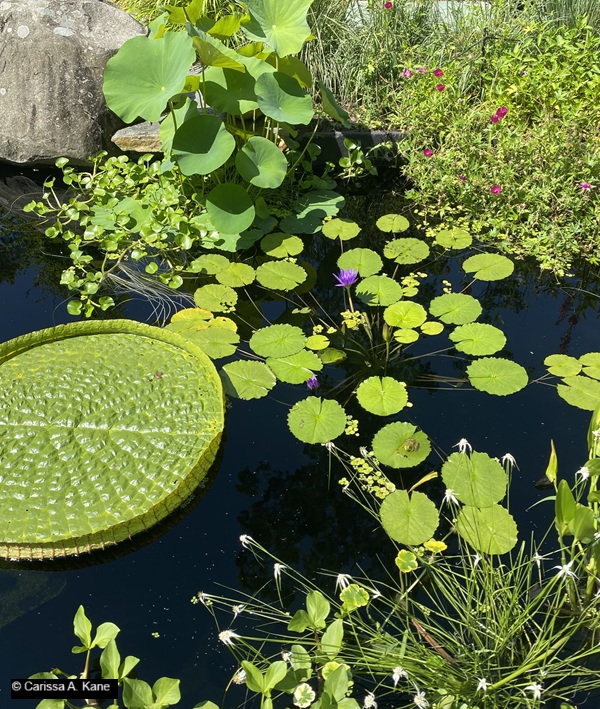
Lilypads

In the Image of its Creator…

Leaves upon leaves,
Earth, sky, and ground,
Different shapes,
Shades, and sizes,
Come together.

Growing along,
Getting along,
Going along,
Hosting along,
Stay together.

Like the lily
In that One pond,
Live in service,
Remain faithful
To creation.

Lilypads

Put on then, as God’s chosen ones, holy and beloved, heartfelt compassion, kindness, humility, gentleness, and patience, bearing with one another and forgiving one another, if one has a grievance against another; as the Lord has forgiven you, so must you also do. And over all these put on love, that is, the bond of perfection. – Colossians 3:12-14

The Final Test…

Victory, that is, true happiness—joy—can never be had in isolation, or at the expense of another’s wellbeing.

The readings for the Seventeenth Sunday in Ordinary Time call attention not only to the degree of God’s mercy and compassion, but also to the Lord’s openness to dialogue and mutual respect, as well as calling attention to the degree that living through and embracing the way of love, mercy, and compassion on behalf of others makes all the difference, playing part in salvation—individual and collective.

In the first reading (Genesis 18:20-32), there is discussion between the Lord and Abraham about Sodom and Gomorrah, the twin sin cities. The Lord can surely do whatever, whenever. However, that is not God’s way. In this passage, we see another example of God engaging with humanity, in response to seeing what’s going on in the two cities.

What do you make of the Lord desiring to bring Abraham along as he looks more closely?

The Lord not only listens to what Abraham has to say, but also receives it without offense, and honestly considers it with great openness and humility.

What’s it like to put yourself in Abraham’s shoes? Envision yourself in the setting and saying to the Lord:

“Will you really sweep away the righteous with the wicked?
Suppose there were fifty righteous people in the city; would you really sweep away and not spare the place for the sake of the fifty righteous people within it?
Far be it from you to do such a thing, to kill the righteous with the wicked, so that the righteous and the wicked are treated alike! Far be it from you! Should not the judge of all the world do what is just?” (v. 23-25).

In the verses that follow, Abraham continues to question the Lord. He asks 5 more times, referring to equally less quantities of righteous among the unrighteous. This back and forth ends with the following:

“But he persisted: ‘Please, do not let my Lord be angry if I speak up this last time. What if ten are found there?’ For the sake of the ten, he replied, I will not destroy it.” (v. 32).

Throughout this passage, one can see that the Lord does not grow impatient with Abraham, nor does he shut down the conversation, berate or demean him.

What strikes you most about the exchange between the Lord and Abraham?

The passage in the first reading can be referred to as “Abraham intercedes for Sodom.”

Think of a situation that you’re aware of and that is of concern to you. Pray for grace to receive the Lord’s view with openness and humility, without taking offense or turning away from questions and challenges but instead facing them with patience and a focus on what is truly right and just.

In the Responsorial Psalm (Psalm 138:1-3,6-8), the response is, “Lord, on the day I called for help, you answered me.” (v. 3a). The entirety of verse 3 is,

“On the day I cried out, you answered; you strengthened my spirit.”

Reflecting on what you intercede for, spend some time crying out to the Lord, and expressing a desire for your spirit to be strengthened in the Lord. Invite the Lord to help you to see the places where you and He are on the same page, and the places where you may vary.

In verses 12-14 of chapter 2 of the Letter of St. Paul to the Colossians, the second reading, we are reminded of the life-giving power of being baptized in the Lord. Nothing is insurmountable to spiritual wellbeing in and through the Lord. St. Paul writes in part,

“And even when you were dead in transgressions and the uncircumcision of your flesh, he brought you to life along with him, having forgiven us all our transgressions;” (v. 13).

Notice which phrase in the verse above grabs your attention. Considering this phrase amid earthly cares, how might the Lord be inviting you to greater peace and harmony? And how might you extend greater peace and harmony to others?

In the Gospel (Luke 11:1-13), Jesus’s response to a disciple’s request of, “Lord, teach us to pray just as John taught his disciples.” (v. 1) is:

“When you pray, say:
Father, hallowed be your name,
your kingdom come.
Give us each day our daily bread
and forgive us our sins
for we ourselves forgive everyone in debt to us,
and do not subject us to the final test.” (v. 2-4)

It’s important to remember that to live authentically and to truly overcome obstacles, one must consider who is being lifted up from words/actions. How is something giving glory to God? Who is benefiting and to what extent? And, in what ways does it fit in with the Lord’s example of love, mercy, and compassion to oneself and others?

Going back to the concern you were praying about, ask the Lord to help you to see (or to reaffirm for you) what’s most important, or what the final test is, in the situation. Take time to share and rest in the Lord with your thoughts and feelings on this, and to receive and desire to carry forward His.

The Gospel passage continues with Jesus giving an example of two friends, one asking the other for loaves of bread in the middle of the night. Jesus says,

“I tell you, if he does not get up to give him the loaves because of their friendship, he will get up to give him whatever he needs because of his persistence.” (v. 8)

Returning to your prayer, where, or with whom, does the bulk of your concern lie? Is it with yourself, others, a mix, or something else? Ask the Lord to reveal to you, from moment to moment throughout each day, the spot(s) to invest your time and energy. Where is greater persistence needed? How might you need the Lord’s help in this area?

“And I tell you, ask and you will receive;
seek and you will find;
knock and the door will be opened to you.
For everyone who asks, receives;
and the one who seeks, finds;
and to the one who knocks, the door will be opened.
What father among you would hand his son a snake
when he asks for a fish?
Or hand him a scorpion when he asks for an egg?
If you then, who are wicked,
know how to give good gifts to your children,
how much more will the Father in heaven
give the Holy Spirit to those who ask him?” – Luke 11:9-13

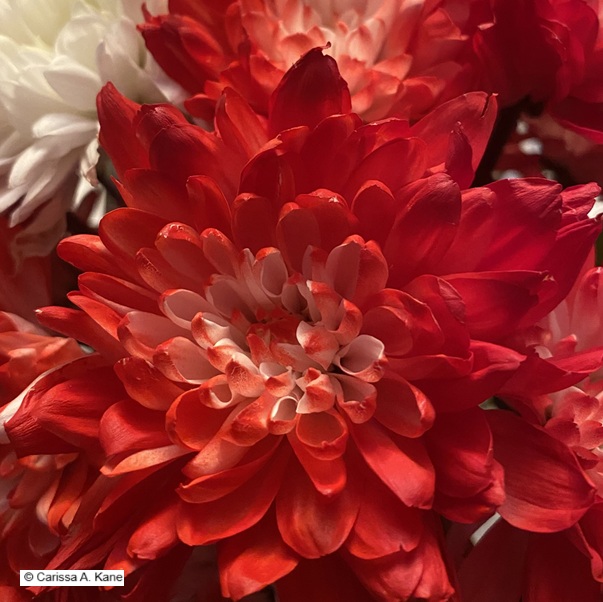
Flowers

Rooted in Love…

As the days passed by,
the flowers, still bright,
holding onto life,
begin to show the
length of days and nights,
separate, away
from the source of life.

Leaves dropping from stems,
petals shriveling,
on the outside first.
Time ticks, closing in.
Hold on as they may,
away from their roots,
they limp as they linger.

In the First Reading for the Seventh Sunday in Ordinary Time (1 Samuel 26:2, 7-9, 12-13, 22-23), David and Abishai find themselves in a position of advantage, having the opportunity to kill Saul, who, along with his soldiers are in a deep sleep. However, despite Saul having grown distant from who he was at the beginning of his rule, and having become David’s enemy, David restrains himself and shows mercy. He says to Abishai, “Do not harm him, for who can lay a hand on the Lord’s anointed and remain innocent?” (v. 9).

Spend some time with the first reading and consider that as beings created in God’s image, in a sense, we are all anointed.

The response for the Psalm is, “The Lord is kind and merciful.” (Psalm 103:8). Reflect on the ways that the Lord has been kind and merciful to you. How does your experience inspire you in terms of the way you view situations and people? In what ways do you feel compelled to be kind and merciful to others? Are there areas where the Lord might want to work with you on expanding upon or reassessing this?

Turning to the Second Reading (1 Corinthians 15:45-49), St. Paul writes of Adam and Jesus, but he is also writing about the call to conversion and discipleship.

As was the earthly one, so also are the earthly,
and as is the heavenly one, so also are the heavenly.
Just as we have borne the image of the earthly one,
we shall also bear the image of the heavenly one. – verses 48-49

Envisioning your life as one line and the events/happenings during your life as another line on a continuum, think about the major events/happenings that have had a direct impact on you. What’s the difference between the times when you have maintained a sense of inner strength (or know-how) and peace, and the times you haven’t?

In the Gospel Reading (Luke 6:27-38), Jesus reminds us that Love is what sustains us. Not embracing cynicism, seeking or plotting revenge, settling or keeping scores. Rather, those are the things that tear us away from Love and the root of goodness and life—God.

How might you draw closer to Love in the challenges you face today? And how might the Lord desire to join you in an area of challenge?

The Lord is kind and merciful, slow to anger, abounding in mercy. – Psalm 103:8

The Thing To Do…

The Gospel passage for the Third Sunday of Advent (Luke 3:10-18) begins with the question, “What then should we do?” What to do is a question that is asked of John the Baptist three times in this passage. And through his replies, John essentially instructs those who have what we might call an upper hand or an edge over others—a crowd, the tax collectors, and the soldiers who are seemingly among the first to make their way to the desert to be baptized—to share with those who are without, to refrain from over taxing others, and to stop abusing their position by using it to take advantage of others.

How do John’s instructions strike you?

It’s interesting that just prior to this passage, John had said to the first group of people mentioned (the crowd),

“You brood of vipers! Who warned you to flee from the coming wrath? Produce good fruits as evidence of your repentance; and do not begin to say to yourselves, ‘We have Abraham as our father,’ for I tell you, God can raise up children to Abraham from these stones. Even now the ax lies at the root of the trees. Therefore every tree that does not produce good fruit will be cut down and thrown into the fire.” – Luke 3:8-9.

What do you think caused the crowd to respond with, “What then should we do?”

Envisioning yourself in this crowd, and labeled by John the Baptist as “a brood of vipers,” are you surprised or shocked? What would you do at these words? What response or question would you have?

When presented with a situation that is unexpected, how do you decide what to do? What does your prayer process look like in terms of manner, taking time and a step back, desire and/or openness to new or different ways forward? How about when it comes to situations that are expected? How does your prayer process stay the same or fluctuate?

Spend some time in prayer, sharing with Jesus that which arises into your awareness, and seeking wisdom, guidance, and whatever else you feel you need at this moment. As your prayer comes to a close, express your desire as you go forward, and ask for the grace to receive, whole-heartedly, God’s love for you, and the desire Jesus has for you at this moment.

Then, on this Gaudete Sunday, rejoice in the Lord!

You do not need to know precisely what is happening, or exactly where it is all going. What you need is to recognize the possibilities and challenges offered by the present moment, and to embrace them with courage, faith and hope. – Thomas Merton

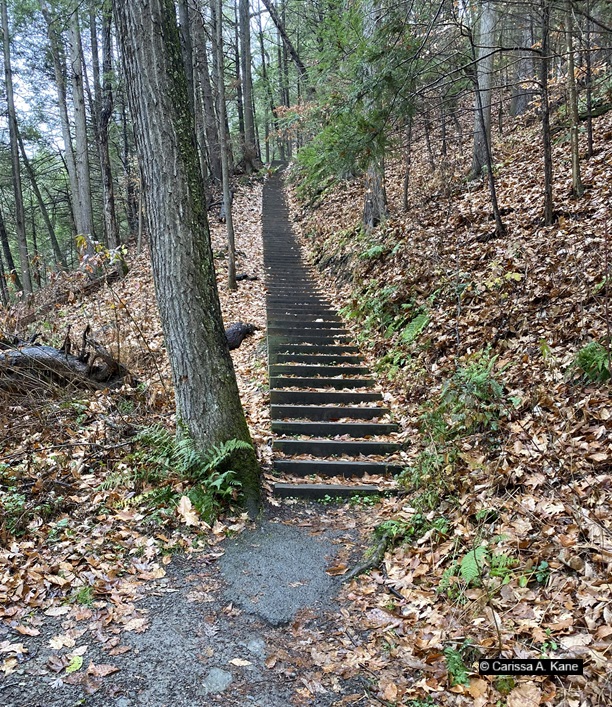
Stairs on a nature trial

Advent(ure)…

The Season of Advent and its related Scripture remind us of the twists and turns that life can take for anyone. They also provide an opportunity to see the faithfulness and goodness of God. In addition, they exemplify how being faithful to God involves being open to ways or paths that may differ, sometimes greatly, from the ones we may have planned or imagined for ourselves.

Take some time to think about what it has been like in the past for you to accept or make changes to the plans, ideas, and/or notions you have envisioned. What is it like in the present?

We all have things we would like to accomplish and look for ways, or paths, to do so. However, in proceeding in earnest and with good intentions as we strive, we can become mixed up when we don’t leave room for, can’t see, or are not open to the possibility of change(s) as being needed and for the better good. So when the twists and turns come, we can become even more attached to our own intentions and the ways we planned to accomplish them, instead of allowing the grace of God to help us to be open to making an adjustment or being open to a different way.

Sometimes, interference and the unexpected can push our buttons in ways that can make us behave as less than what we are… what we were created to be—beings in the image of God. When this happens, we can lose sight of the wideness of God, and the depth of God’s love, compassion, and mercy.

What are some memories you have of times when you met change, unexpected challenges, and/or uncertainty with a quiet calmness? How do those times compare to ones where, perhaps, quiet calmness and peace gave way to unrest?

Stand with the Lord at the threshold between the times of peace and the times of unrest that you’ve recalled. Ask Jesus to unveil the place(s) where maybe you couldn’t sense his presence or take direction, as well as the place(s) where you could. Express to the Lord your gratitude and your desire to remember whatever he wants you to hold onto from these instances as you enter the Advent Season and look to prepare for Christmas.

Make known to me your ways, Lord; teach me your paths. – Psalm 25:4

Radiant sun

Sustenance…

Planning,
And packing.
Considering all things.

What’s known,
And what is not.
Calculating possibilities.

Looking then leaping,
A snapshot in time.
Measuring risk, and seeking reward.

Guarantees,
Warranties,
Yet, nothing is certain.

The seeker being sought,
The Sought, searching seekers.
Meeting up, teeing up,
And, finding what is lost.

Radiant sun

to live in a manner worthy of the call you have received, with all humility and gentleness, with patience, bearing with one another through love, striving to preserve the unity of the spirit through the bond of peace – Ephesians 4:1-3