scenic pasture and sky

Always…

The Gospel for The Solemnity of Our Lord Jesus Christ, King of the Universe (Luke 23:35-43) gives witness to how honesty, and owning up to the truth, leads to the path of healing and salvation. And, as the days in the week ahead lead to the First Sunday of Advent, it can also be seen as an invitation for personal reflection and contemplation on areas of growth as well as places or spots that could benefit from greater attention through prayer and other practices throughout the journey toward Christmas. While the Gospel for this week has us at the crucifixion, as always, the focus is ultimately on salvation—Resurrection.

Turning to the Gospel for this Sunday, of the men on either side of Jesus at the crucifixion, one cast shade at him, while the other set the record straight, and then said, “Jesus, remember me when you come into your kingdom.” The first man seems unable to look beyond himself, and only lashes out at Jesus, and doubts him. It is written:

“Now one of the criminals hanging there reviled Jesus, saying,
“Are you not the Christ?
Save yourself and us.”

The man on the opposite side of Jesus, responds differently. He seems better able to look at the situation he is in with greater clarity. He recognizes and accepts (or owns up to) the truth. Not only that, but he also speaks it. Furthermore, he expresses to Jesus, his desire to be remembered by Him. The second man’s response is, in effect, an act of repentance. It is written:

The other, however, rebuking him, said in reply,
“Have you no fear of God,
for you are subject to the same condemnation?
And indeed, we have been condemned justly,
for the sentence we received corresponds to our crimes,
but this man has done nothing criminal.”
Then he said,
“Jesus, remember me when you come into your kingdom.”

Take some time to re-read and consider this Gospel passage more deeply.

What do you imagine is at the heart of each man’s response? How does your heart respond to them? Given your experience of Jesus, how do imagine his heart responds to each man?

During our lifetimes, there are various challenges of varying degrees that we all face. We all have ups and downs, and days that are better than others in terms of how we respond and react. However, our faith tells us we are not alone and encourages us to do our best, and to remember Jesus, and His example.

Think about honesty, healing, and salvation and what your experience has been. Bring whatever comes to mind and heart into conversation with Jesus, trusting that it will be received with sincerity, love, compassion, and mercy.

Acknowledge areas of improvement and growth and how that came about. How are your practices (words, actions, prayer, etc.) an example of honesty, healing, and salvation?

Invite Jesus to share insight on areas where you know you can do better and to reveal ones in which perhaps, you may not be aware.

When your prayer time is coming to its completion, envision yourself asking Jesus for whatever you feel you need at this moment, and then saying to Jesus, “Jesus, remember me when you come into your kingdom.” Close your eyes, take comfort, and trust that Jesus, who said to the criminal asking to be remembered, “Amen, I say to you, today you will be with me in Paradise.”, remembers you always.
scenic pasture and sky

He is before all things, and in him all things hold together. – Corinthians 1:17

Sun

Inseparable…

Healing rays are cast in all directions,
driving away the shadows’ ill intent,
while drawing in the heart of willing souls.

Quilt of Truth, pure gold, rising from within,
revealing wisdom and granting vision
to what is otherwise beyond, unknown.

Resounding praise giving Glory its due,
You are everything! All that’s good and true.
God of mercy, God of justice, shine through.

Sun

“It is by the path of love, which is charity, that God draws near to man and man to God.” — St. Albert the Great

With God, It’s All For Good…

It is written in the Book of Wisdom, “God did not make death, nor does he rejoice in the destruction of the living.” (Wisdom 1:13). As ones created in the image of God, we are to live and behave as such. And while an eye for an eye or “getting even” may be tempting at times, it can lead to the destruction of another of God’s creation and can create a false sense of satisfaction, neither of which are in line with the image of God, or life giving.

In the second reading for the Thirteenth Sunday in Ordinary Time, St. Paul reminds the Corinthians that there is much more to discipleship than what one believes, what one knows, says, and does, and one’s conviction. It is the spirit in which one lives, and that guides one.

St. Paul writes, “For you know the gracious act of our Lord Jesus Christ, that though he was rich, for your sake he became poor, so that by his poverty you might become rich. Not that others should have relief while you are burdened, but that as a matter of equality your abundance at the present time should supply their needs, so that their abundance may also supply your needs, that there may be equality.” (2 Corinthians 8:9, 13-14).

It is only fitting that those created in God’s image be mindful of disparity and strive to recognize and honor the image of God in others, and therefore work toward, encourage, and support equality. The mindset that St. Paul is encouraging is not new. In fact, he writes, “As it is written: ‘Whoever had much did not have more, and whoever had little did not have less.'” (2 Corinthians 8:15). He is referring to the Book of Exodus (Ex 16:18) and how the Manna (the nourishment that God provided for Moses and Israelites) was allotted. It did not matter how much or how little one person gathered, there was enough for everyone to have what they needed. Not only that, but also there was great awareness that it was all provided through the goodness—love and mercy—of God.

One could not think of what they collected as belonging to oneself, but rather as being provided by God, and as one created in the image of God, it was to be shared and for everyone to partake of. There was to be equality, or equity, in terms of everyone having what they needed to not only survive, but to keep moving along the journey.

Turning to the Gospel passage (Mark 5:21-43), again we can see that it’s all about equity. A synagogue official’s daughter is on her death bed, and he begs Jesus to heal her, “Please, come lay your hands on her that she may get well and live.” Jesus begins to follow Jairus. They are moving through the heavy crowd when a woman who also needs Jesus’s help touches his cloak saying, “If I but touch his clothes, I shall be cured.”

One can imagine, especially given that period of time in history, that as a man and a synagogue official, Jairus would be able to gain Jesus’s attention and position himself to have access to Jesus more easily than the woman. Both Jairus (or his daughter) and the woman need healing, but each needs to approach the situation differently because of their circumstances. To Jesus, it doesn’t matter who got to him first or last, or who has more or less (power, possessions, status, etc.). As with God’s grace, Jesus’s healing is equitable and those who approach in faith get what they need—the woman’s hemorrhaging comes to an end and Jairus’s daughter is raised by Jesus. How do you relate to Jairus and/or the woman with a hemorrhage in terms of approach and asking in prayer?

Oftentimes, when thinking about faith and asking for something, it can be can easy to only think in terms asking God or Jesus for what one needs or wants. However, being created in the image of God, we are called to also look at the other side of this. Take some time to pray and reflect on the spirit in which you respond when it comes the needs and wants of others. In what ways does Jesus’s sense of equality and equity increase your faith and inspire you?

Sing praise to the Lord, you faithful;
give thanks to his holy memory.
For his anger lasts but a moment;
his favor a lifetime.
At dusk weeping comes for the night;
but at dawn there is rejoicing. – Psalm 30:5-6

Your Grace…

Breaking, broke, broken,
Rescued, healed, awoken,
Ever taken with your Way.
For the sake of all,
It’s all the same.
No one more than the other,
Each onto its own,
But gathered in Your name.

Your grace O Lord,
The longing of our hearts.
Eloi, Eloi, lema sabachthani.
At times, perhaps,
We think we know,
Yet thinking doesn’t make it so.

Your grace O Lord,
The longing of our hearts.
We feel one way or another,
Sometimes many ways at once,
Yet feeling doesn’t make it so.

Your grace O Lord,
The longing of our hearts.
With us, within us,
Always within reach.

Your grace O Lord,
Makes known your Way,
The desire in our hearts,
Yours and ours together,
Rising up, makes it so.

From Kindness to Love…

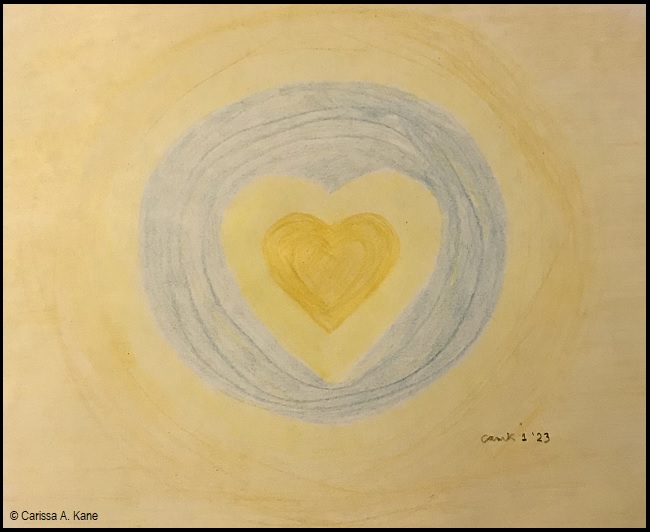
In a few days, it will be Valentine’s Day, the holiday synonymous with hearts and love. It will also be Ash Wednesday, the start of the Lenten season, known by its call for prayer, almsgiving and fasting, all aimed at drawing closer to Jesus, growing in awareness of falsities that hold one back, and trying to shed them. Both occasions, despite the differences in how they are celebrated, come down to love, whose source is God, and the ways in which it is expressed, received, nurtured within, and responded to.

While one might associate Valentine’s Day more with romantic love, there’s no denying that it, as true love in any variation, often extends and ripples outward in positive ways, affecting those beyond the initial recipient. With Ash Wednesday and during Lent, a more concerted effort is made to strive to recognize and overcome, through God’s grace, whatever may be interfering or holding back the love one has received from flowing more fully and freely so as to make them more Christlike in their way of being.

The Gospel passage for the Sixth Sunday in Ordinary Time provides an opportunity to reflect on what might be referred to as the beginning of love—kindness. If love is an open door to the heart, kindness is the door cracked open, just enough to check it out and consider the other, allowing the heart and soul to be moved into action that shows care.   

In the following Gospel passage, we read about Jesus curing a leper. Again, as in other passages where he heals and cures people, we see the kindness of Jesus, who is “moved with pity”.

A leper came to Jesus and kneeling down begged him and said,
“If you wish, you can make me clean.”
Moved with pity, he stretched out his hand,
touched him, and said to him,
“I do will it. Be made clean.”
The leprosy left him immediately, and he was made clean.
Then, warning him sternly, he dismissed him at once.

He said to him, “See that you tell no one anything,
but go, show yourself to the priest
and offer for your cleansing what Moses prescribed;
that will be proof for them.”

The man went away and began to publicize the whole matter.
He spread the report abroad
so that it was impossible for Jesus to enter a town openly.
He remained outside in deserted places,
and people kept coming to him from everywhere. – Mark 1:40-45  

Keep in mind that the man with leprosy would have been living away from others, perhaps as part of a leper colony. It seems he would have felt like and been treated as an outcast. What else do you think a leper or outcast might experience?

Upon being healed, the leper could once again join the fold. Imagine his thoughts and feelings over now being allowed to be part of and engage with a broader community. What would that be like? How would you feel and react, given a similar experience?

Spend some time reflecting on the kindness of Jesus. What would Jesus remember most about the leper, his condition, and the way He was approached by him? What do you imagine Jesus’ response or reaction would be to the leper telling everyone and anyone about Jesus healing him, leading to Jesus having to remain “outside in deserted places”?

As the days of Lent draw closer, are there areas in your life where you feel challenged when it comes to receiving or giving with a heart full of kindness rather than a sense of obligation, duty, etc.? When it comes to this, in what ways do you desire to experience the kindness of Jesus? How might your kindness, or inclination toward it, remain balanced while also continuing to evolve more fully into love?

Enabled by Grace

To be

Radically, yet gently,

Influenced by, and

Utterly, without doubt,

Moved to, and in, the light of

Peace, love, and

Healing

“…I will make you a light to the nations, that my salvation may reach to the ends of the earth.” – Is 49:6

On Earth…

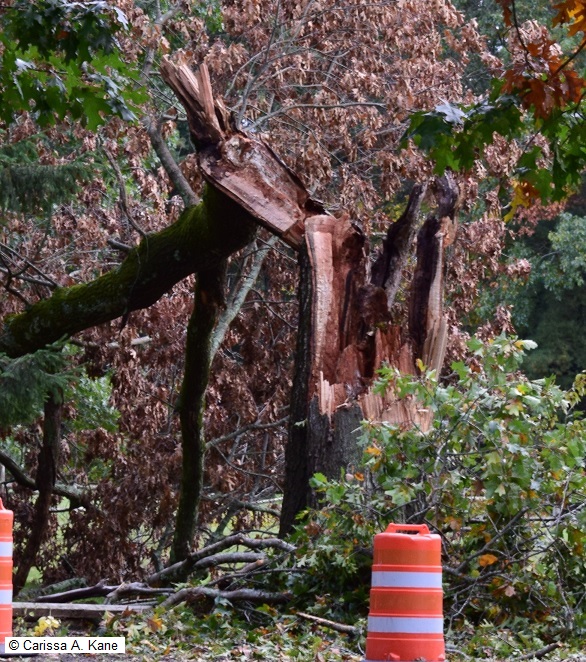
This week, during a rainy, windy evening, suddenly there was a loud and thunderous noise. Jumping up to look out the window, the street and lantern lights made visible a blur of branches and leaves on a large oak tree as it made its way down to the ground. Thankfully, despite the cars traveling in both directions on the road, at the time, no one was hurt. Traffic ended up being re-routed and within hours the Department of Public Works pushed all the debris off the road so that cars could once again travel freely up and down the street.

Now, this tree had a very large limb dry up during months of drought in the area and in the weeks prior to this one, it had partially fallen away from the trunk. From the street, one could see it was resting on the ground while still hanging on, as if by a thread. However, it wasn’t until the remainder of the tree fell to the ground, that one could see the dried-out limb not only hanging on still, but also looking like a giant pair of legs, perhaps trying to run by or break free from the rest of the tree.

Today, taking in the sight that lies beyond construction barrels put into place to forewarn or keep back passers-by, but seeming more like a beacon calling forth, it’s interesting how these legs and their trunk appear so much bigger than they seemed when the tree was standing tall. It seems there’s so much more to discover about them now that they are down to earth, unmasked in a sense. Their depth, their breadth, their character, shine brighter than before… legs posing as if in an athletic move of some kind or another. Are they coming? Are they going? Maybe they’re doing both. Or, perhaps, it’s a maneuver, careful to resist trampling the branches and leaves all around them.

Shifting focus, fallen branches spread about, pointing in many ways; some with shriveled, brown leaves holding on, and then others with green or yellow leaves, holding on as well. Common ground on the ground, connected at the core, together. Next, a splintered trunk displaying hearty, woody layers that, though broken, still look fresh and full of life.

Imagine now, all these things once hidden, or less likely to be noticed, now laying on or partly resting on the floor, as if drawing closer to one another, to reveal an image not of heaven, but of faith on earth.

My help comes from the Lord, the maker of heaven and earth. – Psalm 121:2

Vantage…

Facing the ocean from the walk above or the sand upon the beach it’s easy to stay in place and feel content, and to do so without anywhere near the effort taken to get there. Not only that, but also to slide toward becoming removed from reality—all the lives that exist in various states on and all around the beach and the city or town that encompasses it—and the opportunity to take a life-giving part in it. It’s interesting to think about how swiftly one can be transported to “a world without cares,” with the sound of each wave that breaks upon the shore or the refreshing feeling as each wave washes over everything in its path.

Now, what’s it like to imagine that perhaps this (being caught up in the surroundings) is what it was like for the rich man in the Gospel according to Luke (chapter 16, verses 19-31), before he died?

When we read the Gospel for the Twenty-sixth Sunday in Ordinary Time (below), we learn that a poor man named Lazarus was a constant fixture at the rich man’s door. However, we are not told anything about an interaction(s) between the rich man and Lazarus. This is likely because what matters more than whether the rich man was unaware of, ignored, was indifferent to, or held disdain for Lazarus, is the distance that his worldly aims and wealth put between his ability to help and his desire to do so.

While the rich man was alive, he experienced what is sold in today’s world as “the good life.” However, it led him to becoming insulated from a complete picture of reality (not everyone has it good). And without that, it’s understandable that it would be harder for him not only to choose more wisely, but also to recognize that his openness to, and desire for living in ways that are generative had become diminished.

Neither the rich man nor his brothers could learn from the past (Moses and the prophets), not because the knowledge and wisdom wasn’t available to them, but because their hearts were divided. This—the chasm—is what prevented them from receiving the grace they really needed and making choices for the greater good.

May we be more aware and set our hearts on God to strip away the falsehoods that lead us astray, and to close the chasm that pulls us apart.

Jesus said to the Pharisees:
“There was a rich man who dressed in purple garments and fine linen
and dined sumptuously each day.
And lying at his door was a poor man named Lazarus, covered with sores,
who would gladly have eaten his fill of the scraps
that fell from the rich man’s table.
Dogs even used to come and lick his sores.
When the poor man died,
he was carried away by angels to the bosom of Abraham.
The rich man also died and was buried,
and from the netherworld, where he was in torment,
he raised his eyes and saw Abraham far off
and Lazarus at his side.
And he cried out, ‘Father Abraham, have pity on me.
Send Lazarus to dip the tip of his finger in water and cool my tongue,
for I am suffering torment in these flames.’
Abraham replied,
‘My child, remember that you received
what was good during your lifetime
while Lazarus likewise received what was bad;
but now he is comforted here, whereas you are tormented.
Moreover, between us and you a great chasm is established
to prevent anyone from crossing who might wish to go
from our side to yours or from your side to ours.’
He said, ‘Then I beg you, father,
send him to my father’s house, for I have five brothers,
so that he may warn them,
lest they too come to this place of torment.’
But Abraham replied, ‘They have Moses and the prophets.
Let them listen to them.’
He said, ‘Oh no, father Abraham,
but if someone from the dead goes to them, they will repent.’
Then Abraham said, ‘If they will not listen to Moses and the prophets,
neither will they be persuaded if someone should rise from the dead.'” – Luke 16:19-31

Truth in the Midst…

According to the ancient Greek philosopher Plato, “No one is more hated than he who speaks the truth.” This certainly seems the case for Jesus in chapter 4, verses 21-30 of the Gospel according to Luke. In fact, Jesus expands upon this observation. Not only does the truth and those who speak it, tend to garner disdain or be less than popular, but this is kicked up a notch, often occurring with greater intensity and less receptivity, the closer to home one is.

In this passage, Jesus gives two examples for his fellow Nazoreans to ponder. First, there is the widow in Sidon. What is it that led Elijah to her and her son, saving them from a sure death during the great famine? Second, there is Naaman the Syrian, who was cleansed of leprosy. How is it that Elisha was sent to Naaman rather than one of his own people suffering from leprosy?

After taking great offense at Jesus’ words (“No prophet is accepted in his native place”) and examples, the crowd seeks to extinguish him. One can only wonder if anyone in the crowd was able to step back and further consider the situation and what had transpired. Were they able to remove themselves from the sting of the truth long enough to recognize that their anger was misdirected, and to move toward healing and greater peace?

In today’s volatile and often chaotic world, it can be easy to choose a side or make a judgment and cling to it. However, oftentimes, in doing so, it can also be easy to become rigid, and to lose sight and insight into what really matters. Not only that, but also to possibly overlook Grace, which is always revealing itself in ever-changing and evolving ways.

In chapter 4 of the Gospel according to Luke, Jesus was inviting the people of Nazareth toward greater faith and into a new way of being. He is calling us in the same way today, reminding us that we cannot receive God, who made the earth and all that inhabits it, if we are not willing to change and receive the grace of a still greater way.

For true life does not occur where the air is stale and stagnant, and where all cannot breathe, but rather where it is new, fresh, and flowing free.

Jesus began speaking in the synagogue, saying:
“Today this Scripture passage is fulfilled in your hearing.”
And all spoke highly of him
and were amazed at the gracious words that came from his mouth.
They also asked, “Isn’t this the son of Joseph?”
He said to them, “Surely you will quote me this proverb,
‘Physician, cure yourself,’ and say,
‘Do here in your native place
the things that we heard were done in Capernaum.’”
And he said, “Amen, I say to you,
no prophet is accepted in his own native place.
Indeed, I tell you,
there were many widows in Israel in the days of Elijah
when the sky was closed for three and a half years
and a severe famine spread over the entire land.
It was to none of these that Elijah was sent,
but only to a widow in Zarephath in the land of Sidon.
Again, there were many lepers in Israel
during the time of Elisha the prophet;
yet not one of them was cleansed, but only Naaman the Syrian.”
When the people in the synagogue heard this,
they were all filled with fury.
They rose up, drove him out of the town,
and led him to the brow of the hill
on which their town had been built,
to hurl him down headlong.
But Jesus passed through the midst of them and went away. – Luke 4:21-30

But for the Light…

With the vast array of devastation caused by wildfires on the left side of the United States and hurricane Ida and resulting treacherous weather throughout the right side of the United States, not to mention ongoing multi-faceted struggles around the entire world, it can be easy to fall prey to a sense of doom, regardless of whether one is experiencing dire need, a direct impact, on the fringes of such impact, or farther removed.

On what is a dreary day, on the feast of St. Teresa of Calcutta, it is good to remember that despite the darkness, God is with us amid all these trials and tribulations. Leading the way, before one might even know it. Providing light and love. Lifting spirits, opening minds, increasing the will to help, and strengthening the bond of human hearts toward one another.

Say to the fearful of heart:
Be strong, do not fear!
Here is your God,
he comes with vindication;
With divine recompense
he comes to save you.

– Isaiah 35:4

“There is a light in this world, a healing spirit more powerful than any darkness we may encounter. We sometimes lose sight of this force when there is suffering, too much pain. Then suddenly, the spirit will emerge through the lives of ordinary people who hear a call and answer in extraordinary ways.”

– St. Teresa of Calcutta