His Warmth…

Although the colder air that accompanies this time of year in the Northeast can be quite refreshing, after some time, it can leave one wanting for the warmth of shelter, a soft blanket, or hot beverage to offset the chill.

In the Gospel passage for the Fourth Sunday of Advent (Matthew 1:18-24), we learn about the warmth of St. Joseph’s response to his betrothed, with whom he had not yet lived or had relations with, being pregnant. Imagine the response, gossip, or chill in the air, created by those around Mary and Joseph. Yet, even before his dream in which the Lord appeared, reassuring him of Mary’s faithfulness, Joseph had decided to respond in a way that was filled with warmth, gentleness, and mercy:

This is how the birth of Jesus Christ came about.
When his mother Mary was betrothed to Joseph,
but before they lived together,
she was found with child through the Holy Spirit.
Joseph her husband, since he was a righteous man,
yet unwilling to expose her to shame,
decided to divorce her quietly. –
v. 18-19

Envision yourself in Joseph’s shoes. He is described here as being righteous. What do you make of his initial decision to quietly divorce?

Reflecting on situations that are on your mind and in your heart, how do you seek righteousness? What does it look like? And what qualities does it manifest?

As the Gospel passage continues, Joseph has a dream in which the Lord visits him.

“Joseph, son of David,
do not be afraid to take Mary your wife into your home.
For it is through the Holy Spirit
that this child has been conceived in her.
She will bear a son and you are to name him Jesus,
because he will save his people from their sins.” –
v. 20-21

Recall a time when you had made a decision and then something occurred that reaffirmed your decision or created a new sense of the situation. What happened? What were you praying for, and how did things turn out? How were you saved or blessed? What was the warmth of God like?

Invite the Lord to revisit this with you. What grace from this experience awaits you today?

Spend some time contemplating the verses below and noticing what word, phrase, or image speaks to your heart most:

All this took place to fulfill what the Lord had said through the prophet:
Behold, the virgin shall conceive and bear a son,
and they shall name him Emmanuel,
which means “God is with us.” –
v. 22-23

Continuing to pray with what caught your attention, ask the Lord to grant you insight so that you may see, or have a greater sense of, “God is with us.”

Before ending this prayer time, return to the image of St. Joseph.

When Joseph awoke,
he did as the angel of the Lord had commanded him
and took his wife into his home. –
v. 24

As you strive to be faithful to God, what inspires you? What do you need from the Lord to draw comfort and strength from Him, as you journey through your days, while also reflecting the warmth of His presence.

Let the Lord enter; he is king of glory. – Psalm 24:7c,10b

Hearts being lifted up by a butterfly.

Begin with Love…

The readings for the Fifth Sunday of Easter can be seen as encouragement toward, and an opportunity to reflect throughout the week on perseverance, praise, promise, and practice, but most of all, Love.

In the First Reading (Acts 14:21-27), Paul and Barnabas continue their travels, preaching to and teaching the Gentiles about the Way. In this scripture passage, it is written:

“They strengthened the spirits of the disciples and exhorted them to persevere in the faith, saying, ‘It is necessary for us to undergo many hardships to enter the kingdom of God.’” (v. 22).

Think about some of the hardships you have encountered or are currently experiencing. Where have you found strength to persevere? What about moments of peace? How do you desire God to be present to you regarding these challenges? Take some time to bring these areas to prayer and express what is in your heart as you do.

The First Reading ends with the following verses:

“From there they sailed to Antioch, where they had been commended to the grace of God for the work they had now accomplished. And when they arrived, they called the church together and reported what God had done with them and how he had opened the door of faith to the Gentiles.” (v.26-27).

Continuing to reflect on the questions above, your prayer, and these closing verses, what insight or inspiration comes to you?

——————–

In the Responsorial Psalm (Psalm 145:8-13), the response comes from verse 1 of the Psalm which is, “I will extol you, my God and king; I will bless your name forever and ever.” While it expresses the psalmist’s deep sense of gratitude to God, the verses that follow it speak to characteristics of God:

“The Lord is gracious and merciful,
slow to anger and of great kindness.
The Lord is good to all
and compassionate toward all his works.” (v. 8-9)
.

In what ways have you encountered, and do you continue to encounter, grace, mercy, patience, and kindness through God, both directly and indirectly? In what ways do you embody and promote these characteristics to others?

The verses of the Psalm continue:

“Let all your works give you thanks, O Lord,
and let your faithful ones bless you.
Let them discourse of the glory of your kingdom
and speak of your might.” (v. 10-11)
.

“Let them make known your might to the children of Adam,
and the glorious splendor of your kingdom.
Your kingdom is a kingdom for all ages,
and your dominion endures through all generations.” (v. 12-13).

What strikes you most about the above verses, in terms of the reception of the Creator and the response of the created? As you contemplate this, what events or circumstances come to mind and what feelings do they give rise to? Where and how do praise and gratitude come into play? Pray with this, sharing your thoughts and feelings with the Lord, and allowing yourself to listen to or get a sense of the Lord’s response.

——————–

The Second Reading comes from the Book of Revelation (Revelation 21:1-5a):

“Then I, John, saw a new heaven and a new earth.
The former heaven and the former earth had passed away,
and the sea was no more.
I also saw the holy city, a new Jerusalem,
coming down out of heaven from God,
prepared as a bride adorned for her husband.
I heard a loud voice from the throne saying,
‘Behold, God’s dwelling is with the human race.
He will dwell with them and they will be his people
and God himself will always be with them as their God.
He will wipe every tear from their eyes,
and there shall be no more death or mourning, wailing or pain,
for the old order has passed away.’
The One who sat on the throne said,
‘Behold, I make all things new.’”

After reading the above passage, when you read, “God’s dwelling is with the human race.”, what comes to mind, and what feelings accompany it?

As you continue to reflect, envision yourself, arm in arm with the Lord, walking along a path, in a place of your choosing. Share the thoughts and feelings that are stirring within you and allow the Lord to respond. Notice the way you receive or embrace each other as you communicate? What characteristics of the Lord do you experience and what ones do you exude to the Lord?

Recalling the last verse in this passage, “The One who sat on the throne said, ‘Behold, I make all things new.’”, what is your current level of trust in these words? Taking to heart God’s words as God’s promise, and your current reality, what happens? Share what’s going on inside you with the Lord including the areas that pose a challenge to your belief?

As your prayer time comes to its closing, what desire is in your heart? And what is the Lord’s desire for you?

——————–

The Gospel passage for the Fifth Sunday of Easter (John 13:31-33a, 34-35) takes us back to the Last Supper, after Jesus has washed the feet of the disciples and Judas has taken leave of Jesus and the others present.

“When he had left, Jesus said,
‘Now is the Son of Man glorified, and God is glorified in him.
If God is glorified in him,
God will also glorify him in himself,
and God will glorify him at once.
My children, I will be with you only a little while longer.
I give you a new commandment: love one another.
As I have loved you, so you also should love one another.
This is how all will know that you are my disciples,
if you have love for one another.’”

What’s it like to sit with the notion of the glory of God being in you? In what ways does, and can, being mindful of this truth enrich and/or enlighten your words and actions? In practice, how does it inspire a cooperative spirit with the flow of God’s love in and through you?

Where do we begin? Begin with the heart.” – Julian of Norwich

Moonlight through clouds

Light Giving Glory…

Looking up at the nighttime sky,
Your artistry on full display.
Shades of hope… brighter, better times,
Memories reckoning what was,
Speculation of what will be,
But then light, your glorious light,
Bringing me back to my senses.
Troubled, wretched waters may be,
Times for standing up together,
Praying that this beat finds its end.
Looking up at the nighttime sky,
Your artistry on full display.
The stones are crying out for all.
Forsaken? No, nor shall any be.

Moonlight through clouds

Wood and Nails by The Porter’s Gate

Solemn Joy…

“Among the tales of sorrow and of ruin that came down to us from the darkness of those days there are yet some in which amid weeping there is joy and under the shadow of death light that endures.” – J.R.R. Tolkien

The above quote seems so apropos for the world of today despite it being written many decades ago. Interesting how in every age there are things about which one can say, what’s old is new, and what’s new is old, or in other words some things are timeless.

Entering the 3rd week of Advent, the readings invite us to avail ourselves of God’s promise,

The Lord, your God, is in your midst,
a mighty savior;
he will rejoice over you with gladness,
and renew you in his love,
he will sing joyfully because of you,
as one sings at festivals.
– Zep 3:17-18a

To step over the darkness of our times,

God indeed is my savior;
I am confident and unafraid.
My strength and my courage is the Lord,
and he has been my savior.
– Is 12:2

And into the ever-present joy and light of the Lord.

Brothers and sisters:
Rejoice in the Lord always.
I shall say it again: rejoice!
Your kindness should be known to all.
The Lord is near.
Have no anxiety at all, but in everything,
by prayer and petition, with thanksgiving,
make your requests known to God.
Then the peace of God that surpasses all understanding
will guard your hearts and minds in Christ Jesus.
– Phil 4:4-7

As we wait in hope for the coming of the Lord, in what ways does the wisdom of God’s word resonate? How is the Spirit of the Lord present in these moments of waiting? In what ways do they create inspiration? And where do they spark peace and love… joy and light?

The crowds asked John the Baptist,
“What should we do?”
He said to them in reply,
“Whoever has two cloaks
should share with the person who has none.
And whoever has food should do likewise.”
Even tax collectors came to be baptized and they said to him,
“Teacher, what should we do?”
He answered them,
“Stop collecting more than what is prescribed.”
Soldiers also asked him,
“And what is it that we should do?”
He told them,
“Do not practice extortion,
do not falsely accuse anyone,
and be satisfied with your wages.”

Now the people were filled with expectation,
and all were asking in their hearts
whether John might be the Christ.
John answered them all, saying,
“I am baptizing you with water,
but one mightier than I is coming.
I am not worthy to loosen the thongs of his sandals.
He will baptize you with the Holy Spirit and fire.
His winnowing fan is in his hand to clear his threshing floor
and to gather the wheat into his barn,
but the chaff he will burn with unquenchable fire.”
Exhorting them in many other ways,
he preached good news to the people.
– Luke 3:10-18

Signs of Promise and Hope…

Many years ago, before GPS, I was on my way to a meeting, when I encountered road construction and a detour from the route I was supposed to take. Following the detour signs, I began an unexpected adventure through long and winding back roads, farmland, and forestry. However, along the way, I lost my way.

Suddenly there were no signs, and I was in utterly unfamiliar territory. Initially, it was as if my surroundings were closing in on me and I was shrinking in comparison. I started to feel anxious and stressed about being late or potentially missing the meeting. Then, slowing down, I stopped and began to take more notice. Surveying the landscape and elements in the sky more intently, I was able to find new signs and my bearings were restored, leading me more peacefully to the place I needed to be. I ended up being a little late, but it was okay; as always “better late than never.”

In current day times, it can seem as if society is in a construction zone that is in disarray. So many detours, roads without signs, confusion, violence, and chaos swirling all around. Yet, among it all, continuing to seek, searching within, and then looking back out, there are always signs pointing to the promise and hope of a better way.

The readings for the First Sunday of Advent (Jer 33:14-16; Ps 25:1b,4-5,8-9,10,14; 1 Thes 3:12-4:2, Lk 21:25-28,34-36) are a call to remember the promise, open oneself to God, to pay attention, and place hope in God as the way to restoration and redemption. Take time to reflect on what promise and hope in God means to you.

Who is this God?

How and where is God welcomed into the landscape of your life?

What do you desire as you look to journey with God this Advent? What might God desire for you?

Show us, Lord, your mercy; grant us your salvation. – Psalm 85:8

The Widow’s Might…

It can be easy to envision the poor widow putting her coins into the treasury, knowing the value to be considered far less than others had contributed. One might even draw a picture that perhaps includes elements representing shame, grief, loss, loneliness, and so on, overcome by giving all she had (“her whole livelihood”) and Jesus celebrating her for that. Then, from that picture, one might possibly be drawn toward a singular conclusion about verses 41-44 of chapter 12 in the Gospel according to Mark as a call to examine one’s level of charity.

It’s interesting though to reflect further on this passage. There are no words attributed to the widow, and no mention of a personal encounter between her and Jesus. The passage starts with an observation by Jesus that turns into a teaching directly to his disciples, not the poor widow, or anyone else who was putting money into the treasury. It is about more than coins and goes beyond levels of giving, extending to something greater.

Going back to the beginning of the Poor Widow’s Contribution, in verse 41, it is written, “Jesus sat down opposite the treasury and observed how the crowd put money into the treasury.” There are no interactions with those who are giving. Rather, Jesus takes in what is transpiring.

He sees the difference between the way the poor widow and the crowd, especially those with greater possessions (“Many rich people put in large sums.”), are carrying themselves. He then draws his disciples close, reveals what he sees, and tries to help them to see it as well. Jesus’s teaching, as always, is about showing the Way and helping those who follow him to become more aware, see more clearly, make better choices, and live more authentically.

Jesus wants the disciples, and us, to see that what the poor widow has given, she has given from “her whole livelihood”—her heart. This is the source of the widow’s might and is where our strength comes from as well. It is where the Lord resides.  

I will place my law within them, and write it upon their hearts; I will be their God, and they shall be my people. – Jeremiah 31:33

By giving the two coins, the widow is giving her heart to the Lord, not allowing herself to be defined by her possessions, the opinions of others, or worldly cares, but instead sacrificing and letting them go, and listening to the law within her—placing trust for her well-being, first and foremost, in the Lord.

How can we look past the coins, and do the same?

In the course of his teaching Jesus said to the crowds,
“Beware of the scribes, who like to go around in long robes
and accept greetings in the marketplaces,
seats of honor in synagogues,
and places of honor at banquets.
They devour the houses of widows and, as a pretext
recite lengthy prayers.
They will receive a very severe condemnation.”

Jesus sat down opposite the treasury
and observed how the crowd put money into the treasury.
Many rich people put in large sums.
A poor widow also came and put in two small coins worth a few cents.
Calling his disciples to himself, he said to them,
“Amen, I say to you, this poor widow put in more
than all the other contributors to the treasury.
For they have all contributed from their surplus wealth,
but she, from her poverty, has contributed all she had,
her whole livelihood.” – Mark 12:38-44

But for the Light…

With the vast array of devastation caused by wildfires on the left side of the United States and hurricane Ida and resulting treacherous weather throughout the right side of the United States, not to mention ongoing multi-faceted struggles around the entire world, it can be easy to fall prey to a sense of doom, regardless of whether one is experiencing dire need, a direct impact, on the fringes of such impact, or farther removed.

On what is a dreary day, on the feast of St. Teresa of Calcutta, it is good to remember that despite the darkness, God is with us amid all these trials and tribulations. Leading the way, before one might even know it. Providing light and love. Lifting spirits, opening minds, increasing the will to help, and strengthening the bond of human hearts toward one another.

Say to the fearful of heart:
Be strong, do not fear!
Here is your God,
he comes with vindication;
With divine recompense
he comes to save you.

– Isaiah 35:4

“There is a light in this world, a healing spirit more powerful than any darkness we may encounter. We sometimes lose sight of this force when there is suffering, too much pain. Then suddenly, the spirit will emerge through the lives of ordinary people who hear a call and answer in extraordinary ways.”

– St. Teresa of Calcutta

Waiting to be Found…

From childhood, the name Anthony has evoked two thoughts more prominently than others, spaghetti day and help in finding what has been lost— “St. Anthony, please come around: something is lost, and it cannot be found,” or the less formal, “Tony, Tony, look around. Something’s lost and must be found!”

Today, June 13th, is the feast day of St. Anthony of Padua whose life in words and actions is an inspiring example of participation in the Kingdom of God, here on earth, and everlasting. Anthony accepted the invitation, sought union with the Lord, and allowed himself to be led, leaving behind a path that guaranteed him earthly wealth and power. It seems so appropriate that the name Anthony means fortunate… blessed… praiseworthy… priceless. Words that create an image of abundance, and that one can also imagine applying to the Kingdom of God.

In the Book of the Prophet Ezekiel, it is written:

Thus says the Lord God:
I, too, will take from the crest of the cedar,
    from its topmost branches tear off a tender shoot,
and plant it on a high and lofty mountain;
    on the mountain heights of Israel I will plant it.
It shall put forth branches and bear fruit,
    and become a majestic cedar.
Birds of every kind shall dwell beneath it,
    every winged thing in the shade of its boughs.
And all the trees of the field shall know
    that I, the Lord,
bring low the high tree,
    lift high the lowly tree,
wither up the green tree,
    and make the withered tree bloom.
As I, the Lord, have spoken, so will I do. – Ez 17:22-24

Reading this passage, listening to the words and phrases within it, and considering the example of St. Anthony, one is reminded that just as the Lord stooped down, becoming one of, and with us, we also, are called to abandon lofty ideals, places, and practices. While the world, and all that is passing, might seek to grip and hold us down, God seeks to meet us on ground level, and elevate us to that which is eternal. In what ways, might this Divine invitation be accepted more fully?

“The creator of the heavens obeys a carpenter; the God of eternal glory listens to a poor virgin. Has anyone ever witnessed anything comparable to this? Let the philosopher no longer disdain from listening to the common laborer; the wise, to the simple; the educated, to the illiterate; a child of a prince, to a peasant.” – St. Anthony of Padua

At the Foot of the Mountain…

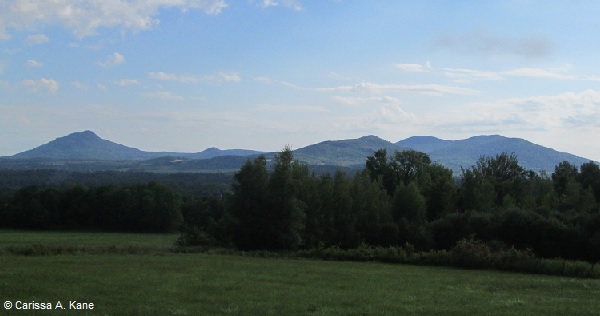
Driving through a countryside, a few years ago, on a quiet summer day, we started to come across farm after farm sprinkled with round bales of hay. Not seeing much activity, we continued the journey, enjoying being surrounded by the scenery and its peace.

Then, after some time, we came to a place where the farmland, still wide open and stretching far ahead, seemed to suddenly meet the mountains. It seemed both so out of place and so appropriate at the same time. A beautiful sight to behold and, having never traveled this road before, completely unexpected.

Taking in our surroundings, I started to wonder what it was like at the foot of that mountain that seemed so way off in the distance. What might be waiting there, or on the other side?

While I may have been tempted to stay where I was and speculate from afar, maybe even labeling what was there—obstacle or challenge… perfect match… gift unclaimed… perhaps, none, some, or all, of the above, it was the beauty that lies within, connecting to the beauty directly before my eyes, that drew me in, reaching into my soul, and calling to me… remember.

What lies behind us and what lies in front of us pales in comparison to what lies within us. – Ralph Waldo Emerson 

On the last and greatest day of the feast,
Jesus stood up and exclaimed,
“Let anyone who thirsts come to me and drink.
As Scripture says:

Rivers of living water will flow from within him who believes in me.”

He said this in reference to the Spirit
that those who came to believe in him were to receive.
There was, of course, no Spirit yet,
because Jesus had not yet been glorified. – John 7:37-39

Underneath it All…

After Jesus’ body was laid in the tomb, a large stone was placed in front of the opening to it, and life for those seemingly left behind, although altered, carried on.

Then, the third day…

They were saying to one another, “Who will roll back the stone for us from the entrance to the tomb?” – Mark 16:3

Envisioning the stone obstructing the way, brings me back to an instance from childhood.  I recall one year in particular when there was work being done in our backyard that required excavation. Things were going along smoothly until a large boulder, seemingly immovable, was unearthed.

As a result, everything came to a halt and it stayed that way for a number of days. The contractor’s equipment was insufficient to move such a large object. Eventually, though, special equipment was brought in to move the boulder to the perimeter of the backyard. Now out of the way, the work that had been started was able to be completed.

In the days and years that followed, when playing or hanging out with siblings or friends, or just looking out across the yard, there was the boulder. Thinking back, it’s interesting that while some things that seemed so large in size during childhood, seem to have shrunken in adulthood, the boulder remained unchanged. It was huge then, and it is huge now. Still an awesome reminder that every situation, even the unexpected or seemingly impossible, can be overcome.  

As the second Easter Sunday amidst Covid-19 times approaches, many thoughts and emotions surface around all that has transpired over the course of the past year, and more. In “normal” times, the experiences one encounters can be challenging enough, never mind a pandemic. Yet, despite the challenges and struggles, there is always help. That’s the promise.

When Mary Magdalene, Mary, the mother of James, and Salome, went to the tomb to anoint Jesus’ body, they expected the stone to be in the way, and they expected that they would need help. What they didn’t know, was that the stone had already been rolled back, and all that was left, was for them to arrive.

When the sabbath was over,
Mary Magdalene, Mary, the mother of James, and Salome
bought spices so that they might go and anoint him.
Very early when the sun had risen,
on the first day of the week, they came to the tomb.
They were saying to one another,
“Who will roll back the stone for us
from the entrance to the tomb?”
When they looked up,
they saw that the stone had been rolled back;
it was very large.
On entering the tomb they saw a young man
sitting on the right side, clothed in a white robe,
and they were utterly amazed.
He said to them, “Do not be amazed!
You seek Jesus of Nazareth, the crucified.
He has been raised; he is not here.
Behold the place where they laid him.
But go and tell his disciples and Peter,
‘He is going before you to Galilee;
there you will see him, as he told you.’” – Mark 16:1-7

Savior, he can move the mountains
My God is mighty to save
He is mighty to save
Forever author of Salvation
He rose and conquered the grave

Jesus conquered the grave – Ben Fielding/Reuben Morgan – Mighty to Save