Light Along the Way…

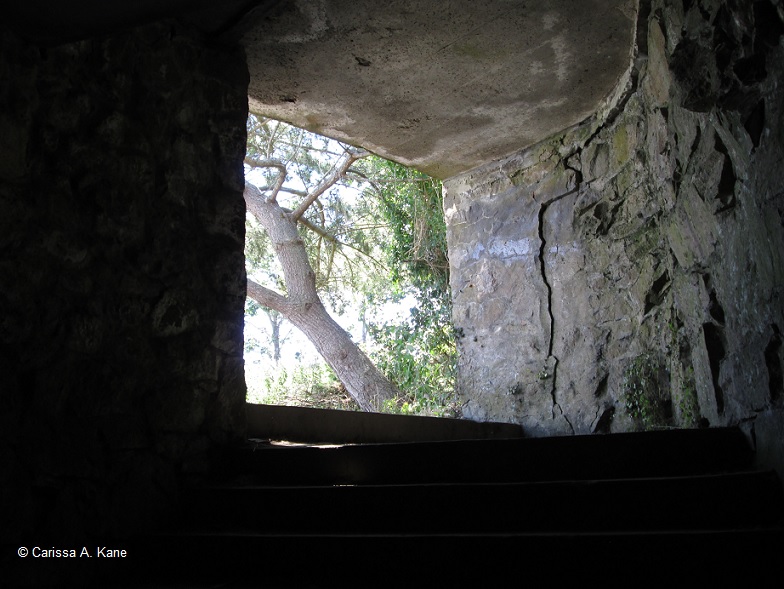
Heading out to somewhere that was new to us, we carried an excitement along the way. After quite some time on foot and feeling a little weary, we unexpectedly came to a tunnel. We had no idea how long it was or what was involved in getting through it. On top of that, all we could see was that it was pitch black inside. However, knowing it was part of the route and using one of the tools we had, a cellphone flashlight, we proceeded step by step, shining the light so we could see, and making our way through each curve until eventually we saw light coming from the opening on the other side.

However, if we didn’t have a flashlight, or a tool, to help us navigate through the darkness, I’m not sure we would have gone through that tunnel. Instead, we probably would’ve found a way around it or turned around and headed back to where we began. And, while finding a way around an obstacle or avoiding it, may be harmless in some cases, in others it is not. Sometimes the measures one may take to circumnavigate or escape a situation, may also lead to compromising, in one way or another, the well-being of oneself and/or others.  

Considering the readings for the Twenty-seventh Sunday in Ordinary Time, they provide advice, wisdom, and encouragement to strive to serve God, not man, and to trust in God’s plan and in God’s ways. This is important no matter the time or place, but most especially in troubling or challenging times and environments.

If the knowledge that there is light at the end of the tunnel, and a way to make it through darkness, was enough to sustain courage, integrity, and faithfulness on its own, humankind would not fall prey to the shortcuts, traps, and tricks along the way. Faith is the tool that holds the keys and keeps one and all together; hearts, souls, and minds. It enables one “to be more than,” infused with grace, driven by truth and trust to face challenges, and find and follow the way through darkness; oftentimes leading one to discover a depth they never knew existed within them.  

Take some time to read the Scripture passages from the Twenty-seventh Sunday in Ordinary Time (Hab 1:2-3; 2:2-4, Ps 95:1-2, 6-7, 8-9, 2 Tm 1:6-8, 13-14, and Lk 17:5-10 – shown below). Contemplate them in relation to today’s world. What are your concerns? What are some of the phrases or images that inspire you? Allow your heart and mind to draw together. Invite Jesus into the process and see what happens.
How long, O Lord?  I cry for help
but you do not listen!
I cry out to you, “Violence!”
but you do not intervene.
Why do you let me see ruin;
why must I look at misery?
Destruction and violence are before me;
there is strife, and clamorous discord.
Then the Lord answered me and said:
Write down the vision clearly upon the tablets,
so that one can read it readily.
For the vision still has its time,
presses on to fulfillment, and will not disappoint;
if it delays, wait for it,
it will surely come, it will not be late.
The rash one has no integrity;
but the just one, because of his faith, shall live. – Hab 1:2-3; 2:2-4

R. If today you hear his voice, harden not your hearts.
Come, let us sing joyfully to the Lord;
let us acclaim the Rock of our salvation.
Let us come into his presence with thanksgiving;
let us joyfully sing psalms to him.
R. If today you hear his voice, harden not your hearts.
Come, let us bow down in worship;
let us kneel before the Lord who made us.
For he is our God,
and we are the people he shepherds, the flock he guides.
R. If today you hear his voice, harden not your hearts.
Oh, that today you would hear his voice:
“Harden not your hearts as at Meribah,
as in the day of Massah in the desert,
Where your fathers tempted me;
they tested me though they had seen my works.”
R. If today you hear his voice, harden not your hearts.
– Ps 95:1-2, 6-7, 8-9

Beloved:
I remind you, to stir into flame
the gift of God that you have through the imposition of my hands.
For God did not give us a spirit of cowardice
but rather of power and love and self-control.
So do not be ashamed of your testimony to our Lord,
nor of me, a prisoner for his sake;
but bear your share of hardship for the gospel
with the strength that comes from God.
Take as your norm the sound words that you heard from me,
in the faith and love that are in Christ Jesus.
Guard this rich trust with the help of the Holy Spirit
that dwells within us. – 2 Tm 1:6-8, 13-14

The apostles said to the Lord, “Increase our faith.”
The Lord replied,
“If you have faith the size of a mustard seed,
you would say to this mulberry tree,
‘Be uprooted and planted in the sea,’ and it would obey you.
“Who among you would say to your servant
who has just come in from plowing or tending sheep in the field,
‘Come here immediately and take your place at table’?
Would he not rather say to him,
‘Prepare something for me to eat.
Put on your apron and wait on me while I eat and drink.
You may eat and drink when I am finished’?
Is he grateful to that servant because he did what was commanded?
So should it be with you.
When you have done all you have been commanded,
say, ‘We are unprofitable servants;
we have done what we were obliged to do.'” – Lk 17:5-10

Vantage…

Facing the ocean from the walk above or the sand upon the beach it’s easy to stay in place and feel content, and to do so without anywhere near the effort taken to get there. Not only that, but also to slide toward becoming removed from reality—all the lives that exist in various states on and all around the beach and the city or town that encompasses it—and the opportunity to take a life-giving part in it. It’s interesting to think about how swiftly one can be transported to “a world without cares,” with the sound of each wave that breaks upon the shore or the refreshing feeling as each wave washes over everything in its path.

Now, what’s it like to imagine that perhaps this (being caught up in the surroundings) is what it was like for the rich man in the Gospel according to Luke (chapter 16, verses 19-31), before he died?

When we read the Gospel for the Twenty-sixth Sunday in Ordinary Time (below), we learn that a poor man named Lazarus was a constant fixture at the rich man’s door. However, we are not told anything about an interaction(s) between the rich man and Lazarus. This is likely because what matters more than whether the rich man was unaware of, ignored, was indifferent to, or held disdain for Lazarus, is the distance that his worldly aims and wealth put between his ability to help and his desire to do so.

While the rich man was alive, he experienced what is sold in today’s world as “the good life.” However, it led him to becoming insulated from a complete picture of reality (not everyone has it good). And without that, it’s understandable that it would be harder for him not only to choose more wisely, but also to recognize that his openness to, and desire for living in ways that are generative had become diminished.

Neither the rich man nor his brothers could learn from the past (Moses and the prophets), not because the knowledge and wisdom wasn’t available to them, but because their hearts were divided. This—the chasm—is what prevented them from receiving the grace they really needed and making choices for the greater good.

May we be more aware and set our hearts on God to strip away the falsehoods that lead us astray, and to close the chasm that pulls us apart.

Jesus said to the Pharisees:
“There was a rich man who dressed in purple garments and fine linen
and dined sumptuously each day.
And lying at his door was a poor man named Lazarus, covered with sores,
who would gladly have eaten his fill of the scraps
that fell from the rich man’s table.
Dogs even used to come and lick his sores.
When the poor man died,
he was carried away by angels to the bosom of Abraham.
The rich man also died and was buried,
and from the netherworld, where he was in torment,
he raised his eyes and saw Abraham far off
and Lazarus at his side.
And he cried out, ‘Father Abraham, have pity on me.
Send Lazarus to dip the tip of his finger in water and cool my tongue,
for I am suffering torment in these flames.’
Abraham replied,
‘My child, remember that you received
what was good during your lifetime
while Lazarus likewise received what was bad;
but now he is comforted here, whereas you are tormented.
Moreover, between us and you a great chasm is established
to prevent anyone from crossing who might wish to go
from our side to yours or from your side to ours.’
He said, ‘Then I beg you, father,
send him to my father’s house, for I have five brothers,
so that he may warn them,
lest they too come to this place of torment.’
But Abraham replied, ‘They have Moses and the prophets.
Let them listen to them.’
He said, ‘Oh no, father Abraham,
but if someone from the dead goes to them, they will repent.’
Then Abraham said, ‘If they will not listen to Moses and the prophets,
neither will they be persuaded if someone should rise from the dead.'” – Luke 16:19-31

With Kindness…

Breaking hearts,
Breaking hope.
Acting without thought.
Wondering without feeling.
What kind of way is that?
What kind of life is that?

Dribbles and drabbles,
The weight of punches and kicks,
Bit by bit and day over day,
Knocking down,
Breathing threats,
And more than wrath.
What gives?
Who?… No, what is being satisfied?
How much? How many?
Will it ever be enough?
Even the mirror turns away.
Come on now,
Wake up and try to see.
That’s no kind of life.
That’s no kind of way.

Take a roundabout,
But stop somewhere in the middle.
Make a life, make a way.
Swim upstream for a change.
Make it new, make it better.
Ask for courage, take in grace,
Wash away the mud.
Stand next to, and up, for those in need.
That’s the way to travel,
Kind—that’s the Way to Life.

You cannot serve both God and mammon. – Luke 13:16

Unto the Ages…

Some days the clouds rise upward, an example of striving and reaching higher, as if believing in the best, for the best. Knowing better, doing better. On others though, they seem to drift across the sky, as if allowing themselves to be carried along in a somewhat orderly, but carefree kind of way. Maybe that’s good too.

There are also days when the clouds seem to sit in place, still as can be. Then there are ones where they seem to vanish entirely, leaving only a shade of blue or gray behind. Although perhaps tempting to toss these kinds of days, where the clouds seem less than what they can be, aside, they also hold a message or way of being that can be very much in need.

At the end of a week that saw the passing of Queen Elizabeth II, who signified an age and a large part of the history around the world, on the same day as the Feast of the Nativity of the Blessed Virgin Mary, and that leads into the anniversary of the September 11, 2001 attacks and tragic events, impacting so many around the world, the readings for the Twenty-fourth Sunday in Ordinary Time (Ex 32:7-11, 13-14; Ps 51:3-4, 12-13, 17, 19; 1 Tm 1:12-17; and Lk 15:1-32), remind us about the truth of how relevant and valued we are to God and each other.

With a heart and mind drawn to history, let’s focus on the first reading and the passage in the Book of Exodus in which Moses implores God to refrain from taking wrath against the Israelites who are falling away and have been worshipping false idols. We can see that Moses intercedes on their behalf by speaking the truth of their shared history with God and calling for that to take precedence. This is something he keeps returning to and keeps trying to remind others about, along the journey. Moses remembers aloud God’s promise of life—a long line of descendants—and a place to live—land as a perpetual heritage—to Abraham, Isaac, and Israel. This is not to say that the people who have gone astray can or should do whatever they want, but rather to highlight the importance and necessity of commitment to each other and God as well as for faithfulness to include interceding on behalf of others for what is truly good and just. It’s a real sense of “you are our God… we are your people… together, we belong to you and each other.”

God listens to Moses, considers what he has to say, and turns away from the wrath he had intended to do. Through it all, the key is that Moses holds onto the truth, we are all relevant and valued—and refuses to be separated from the Israelites or from God. It’s all about the attitude toward relationship and unity. A great example of how One can make a difference.

So, the question that repeats itself throughout the ages, regardless of what’s happening in the clouds or the landscape all around me is… Is my desire to be united with God and others greater than my desire for the things that ultimately serve mostly or only me? And, in what ways do I believe in and commit to the best, for the best?

The Lord said to Moses,
“Go down at once to your people,
whom you brought out of the land of Egypt,
for they have become depraved.
They have soon turned aside from the way I pointed out to them,
making for themselves a molten calf and worshiping it,
sacrificing to it and crying out,
‘This is your God, O Israel,
who brought you out of the land of Egypt!’
“I see how stiff-necked this people is, ” continued the Lord to Moses.
Let me alone, then,
that my wrath may blaze up against them to consume them.
Then I will make of you a great nation.”

But Moses implored the Lord, his God, saying,
“Why, O Lord, should your wrath blaze up against your own people,
whom you brought out of the land of Egypt
with such great power and with so strong a hand?
Remember your servants Abraham, Isaac, and Israel,
and how you swore to them by your own self, saying,
‘I will make your descendants as numerous as the stars in the sky;
and all this land that I promised,
I will give your descendants as their perpetual heritage.'”
So the Lord relented in the punishment
he had threatened to inflict on his people. – Ex 32:7-11, 13-14

In the Fabric…

It’s challenging, to say the least, to live in a world where tangible assets not only overwhelmingly drive motivation, but also speculation and modes of operation. And even more than that, status and materialism push humankind toward pursuits that are often so far removed from the stirrings and movements of grace that seek to connect and strengthen hearts.

St. Ignatius of Loyola wrote, “For it is not knowing much, but realizing and relishing things interiorly, that contents and satisfies the soul.” Yet, as suggested in Ecclesiastes, the human condition is such that we continue to toil under the sun to know more, do more, win more, and so on. But for what kind of gain? and at what cost?

Here is one who has labored with wisdom and knowledge and skill,
and yet to another who has not labored over it,
he must leave property.
This also is vanity and a great misfortune.
For what profit comes to man from all the toil and anxiety of heart
with which he has labored under the sun?
All his days sorrow and grief are his occupation;
even at night his mind is not at rest.
This also is vanity. – Ecc 2:21-23

Looking around, or tuning in to the pulse of society, one can only wonder, with that beat, what kind of “more” will ever be enough? And in the process, what happens to the hearts involved? There’s ebb and flow of course, but in what ways and to what degree do they drift? And at what point does the unfamiliar become all too familiar?

Turning to Psalm 95, the psalmist writes, “If today you hear God’s voice, harden not your hearts.” Before that, a call to turn back to the One who knows.

Teach us to number our days aright,
that we may gain wisdom of heart. – Ps 90:12

Remember, ask and you shall receive. However, as always, there’s choice in how one responds.

St. Paul urges us forward, let go of that which binds one to the earth and drags one down. Instead, be grounded to, as well as through, that which is elevated and fulfilling in a far greater way.

If then you were raised with Christ, seek what is above, where Christ is seated at the right hand of God.
Think of what is above, not of what is on earth. – Col 3:1-2

Be true… be not only baptized into Christ, but also put on Christ. Think about it. How does the heart and mind of Christ infuse your soul? How does it influence choices as you face challenges and navigate this world?

In the Gospel according to Luke (chapter 12:13-21), Jesus tells the parable of the rich man who had such a surplus at harvest that he replaced his barns with even bigger ones so he could essentially rest on his laurels and live off all that he had store up. While this parable can lead one to reflect on possessions and sharing or helping others from what one has, it can also be a catalyst to considering more closely how one’s pursuits affect the fabric of one’s being. Aside from the tangible, from what has one’s heart moved away? To what has one’s heart moved toward? And most importantly, where is God in all of that?

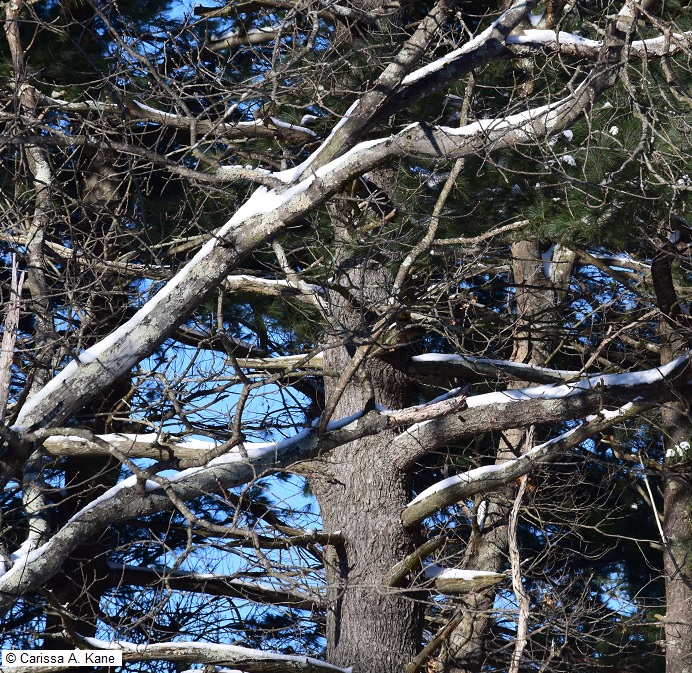
Victory

Looking out the window,
branches all around.
Open arms holding up the snow,
or the snow resting on open arms?
Both clinging to each other,
or one melting into the other?
Does it really matter?
Still, looking out the window.
Still, branches upon branches.
Some sturdier than others,
some swaying more than others.
Does it really matter?
More looking out the window,
at those branches and that snow.
Through it all, they just keep gently staying.
Perhaps, that’s all that really matters.

Shine like lights in the world as you hold on to the word of life. – Phil 2:15d,16a

Alternatively…

World’s breakneck pace,
Stop that race.
Put on the brakes.
Hungry, greedy sharks,
Stop the noise.
Stop the thunder.
Stop breeding misplaced hunger.
We are broken, and run down.
Lord, turn us around.

Step off that ladder.
Come down from that pedestal.
Look up from your work.
Sister, help your brother,
One and all, help each other.
Stand up now, and be fed.
Be true, and be led.
Lord, bring us around.

Wisdom, seeking Wisdom?
The time is right, as always.
Be moved to higher ground.
Turn it over, and then again.
For although we are many,
We are not. We are one.
So, why not come together?
Even better, be united.
Lay down sides,
Take up faith, not fate,
And cry out loud,
Lord, turn it around.

But as it is, there are many parts, yet one body. – 1 Cor 12:20

Rising From the Splinters…

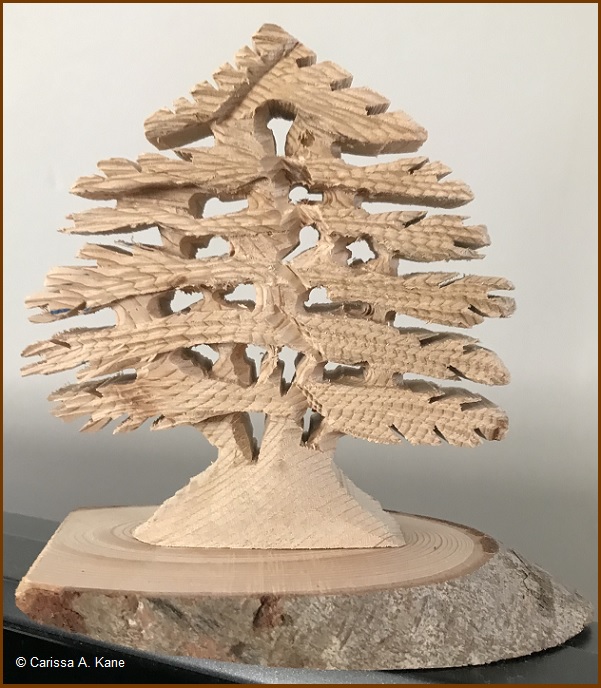
“The heart’s affections are divided like the branches of the cedar tree; if the tree loses one strong branch, it will suffer but it does not die. It will pour all its vitality into the next branch so that it will grow and fill the empty place.” – Khalil Gibran

The cedar trees of Lebanon are known for characteristics such as their strength, beauty, and fragrance. They are also named in various Bible passages. In Psalm 29, they are referred to amid verses that describe the voice of God. However, in these verses, they are not described in terms of their beauty, fragrance, or formidable strength, but rather in terms that focus on and describe the strength of God’s voice.

The voice of the Lord is over the waters;
the God of glory thunders,
the Lord, over the mighty waters.
The voice of the Lord is power;
the voice of the Lord is splendor.
The voice of the Lord cracks the cedars;
the Lord splinters the cedars of Lebanon… – Psalm 29:3-5

What’s striking here though, is that the nature of God’s voice, or God’s will, is much more than the power to crack and splinter the magnificent cedar tree. Not only does God break through and penetrate the tree, or whatever it may be, but as described in the verse that follows,

Makes Lebanon leap like a calf,
and Sirion like a young bull. – Psalm 29:6

God opens and escorts the way to joy and newness (or fullness) of life, making it possible for something greater and more meaningful to come to the surface. And in this process, although there may be suffering, there is not death, for what is born of God is eternal.

In this new year, on the Feast of the Baptism of the Lord, as God’s beloved, striving to listen to the voice of God in turbulent times, let us pray for the wisdom and strength to follow the example of Jesus, with a desire to be led by the grace of God, and to learn how to rise from the splinters of all that is broken.

When the kindness and generous love
of God our savior appeared,
not because of any righteous deeds we had done
but because of his mercy,
He saved us through the bath of rebirth
and renewal by the Holy Spirit,
whom he richly poured out on us
through Jesus Christ our savior,
so that we might be justified by his grace
and become heirs in hope of eternal life. – Titus 3:4-7

In the New Year, Who Makes All Things New…

Looking up into the darkness, preparing for the show that is about to begin, and “knowing” what is to come. Fireworks on New Year’s Eve or Day is a longstanding tradition around the world. Their origin is as a part of practices meant to ward off evil spirits, driving them away with loud booms and flashes of light. In our times, fireworks can be startling, but most often they bring a sense of both awe and knowing.

Passing from one year to the next, it seems so natural to think in terms of progression. Where have I been? Where am I going? And while human nature tends to lean toward the notion of being in control, it also often leans toward a kind of mapping and planning that can take one away from the heart and light of creation, and life’s true meaning.

Life like fireworks,
our expectations so great.
Hearing booms
followed by colors and rays of light.
Looking for a magnificent display
each time, each year,
bigger and better than before,
A man-made quest.

In the process,
we stretch and strive.
All caught up,
are we really rising above, going beyond,
settling down,
or drifting into the air,
as trails of smoke?

While soaring and shining,
what do we leave behind in the dust,
are we led, or are we leading,
and what do we carry with us?

Be humble for you are made of earth. Be noble for you are made of stars. – Serbian proverb

When Jesus was born in Bethlehem of Judea,
in the days of King Herod,
behold, magi from the east arrived in Jerusalem, saying,
“Where is the newborn king of the Jews?
We saw his star at its rising
and have come to do him homage.”
When King Herod heard this,
he was greatly troubled,
and all Jerusalem with him.
Assembling all the chief priests and the scribes of the people,
He inquired of them where the Christ was to be born.
They said to him, “In Bethlehem of Judea,
for thus it has been written through the prophet:
And you, Bethlehem, land of Judah,
are by no means least among the rulers of Judah;
since from you shall come a ruler,
who is to shepherd my people Israel.”
Then Herod called the magi secretly
and ascertained from them the time of the star’s appearance.
He sent them to Bethlehem and said,
“Go and search diligently for the child.
When you have found him, bring me word,
that I too may go and do him homage.”
After their audience with the king they set out.
And behold, the star that they had seen at its rising preceded them,
until it came and stopped over the place where the child was.
They were overjoyed at seeing the star,
and on entering the house
they saw the child with Mary his mother.
They prostrated themselves and did him homage.
Then they opened their treasures
and offered him gifts of gold, frankincense, and myrrh.
And having been warned in a dream not to return to Herod,
they departed for their country by another way. – Matthew 2:1-12

Serve Love…

I remember as a young student feeling fascinated as I learned all about the human heart, its functions and their importance. I was most amazed by the strength of the heart and its capacity, pumping 2,000 gallons of blood each day throughout the body. It wouldn’t be until years later that my amazement would become even greater in coming to understand the heart’s greatest asset—the rhythm, steady and strong, seeking to draw one closer, revealing God, and yearning not only to keep the connection of love, peace, and healing going, but also to help it to thrive without bounds. As the 13th century Persian poet, Rumi, wrote, “Love is the bridge between you and everything.”

In chapter 7 of the Gospel according to Mark, Jesus says to the Pharisees,

“Well did Isaiah prophesy about you hypocrites, as it is written:

    This people honors me with their lips,

        but their hearts are far from me;

    in vain do they worship me,

        teaching as doctrines human precepts.

You disregard God’s commandment but cling to human tradition.” (Mk 7:6-8)

Jesus is calling on them to be honest… to look more closely and to see that their hearts are not leading them in union with God. Their love has become misplaced. It is self-serving and focused on what is earthly rather than what is truly, right and just. Their words and actions do not come together to reflect the beauty of God’s goodness—the law that is placed in every heart—dignity, care, and love of all who are placed alongside us whether in location, heart, or mind.  

This same love is what the author of the Letter of James is calling people to when he writes,

“Know this, my dear brothers: everyone should be quick to hear, slow to speak, slow to wrath,

for the wrath of a man does not accomplish the righteousness of God.

Therefore, put away all filth and evil excess and humbly welcome the word that has been planted in you and is able to save your souls.

Be doers of the word and not hearers only, deluding yourselves.” – Jas 1:19-22

No matter where one might be, or the circumstances that exist, Love is the only true hope there is. And while there may be many things that seem beyond reach, or out of control, Love is the anchor that holds us altogether, moves us into action, and brings peace, or peace of mind, strength, truth and justice, never growing cold.