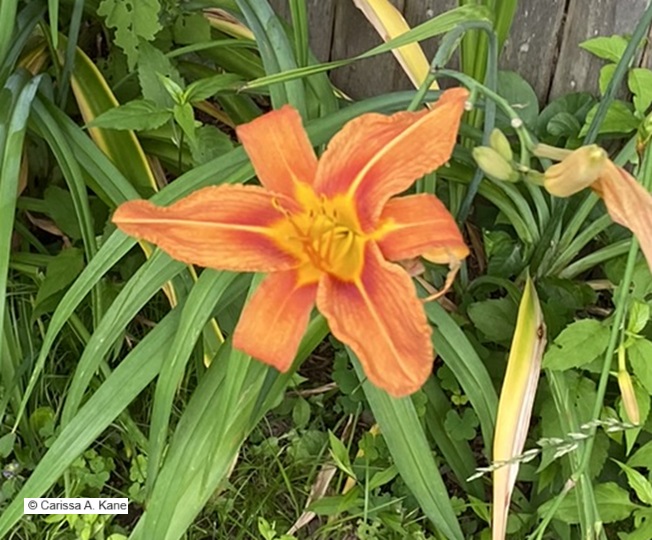
Like the lily In that One pond, Live in service, Remain faithful To creation.
Put on then, as God’s chosen ones, holy and beloved, heartfelt compassion, kindness, humility, gentleness, and patience, bearing with one another and forgiving one another, if one has a grievance against another; as the Lord has forgiven you, so must you also do. And over all these put on love, that is, the bond of perfection. – Colossians 3:12-14
Eastertide through days and nights, forty… fifty… ever more. It is truly right and just, here, above, and all around. Presence of mind, truthful heart; the soul of goodness triumphs.
Genuine faith, obeying, not tyrant, nor king—Savior. Wanting good for goodness sake, bearing with things, not grasping, nor pulling apart, as if at odds, and fighting within.
In a boat fishing around, who’s there? What sides are you on? Is it right, or something else? Casting nets, or casting stones? From where does your wisdom come? What sentiments control you?
When they had finished breakfast, Jesus said to Simon Peter, “Simon, son of John, do you love me more than these?” Simon Peter answered him, “Yes, Lord, you know that I love you.” Jesus said to him, “Feed my lambs.”
He then said to Simon Peter a second time, “Simon, son of John, do you love me?” Simon Peter answered him, “Yes, Lord, you know that I love you.” Jesus said to him, “Tend my sheep.”
Jesus said to him the third time, “Simon, son of John, do you love me?” Peter was distressed that Jesus had said to him a third time, “Do you love me?” and he said to him, “Lord, you know everything; you know that I love you.” Jesus said to him, “Feed my sheep. – John 21:15-17
“Christ is risen from the dead, and by His death He has trampled upon death, and has given live to those, who are in the tombs.” – the Troparion of Pascha
Taking it on the level, as only You, Lord, can do. Giving what humanity, can only aspire to grasp.
Falling down, then getting up, pushed time upon time again. Light of Life into darkness, You brought life—heart, mind, and soul.
Impostors come, and they go, but Your Spirit, Lord, remains. Waiting our reception, Lord, not for one, but for the many.
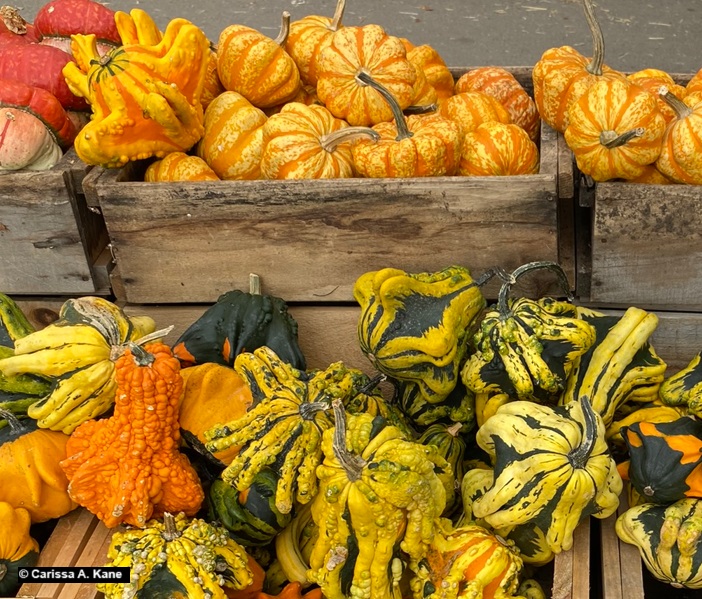
Walking past crates of pumpkins and gourds at a local farm, the different colors and shapes are stunning. It’s interesting to think that such variety can grow out of the seemingly blah ground. Yet, when examined more closely, the soil, although drab compared to its yield, is actually quite diverse and multidimensional, holding various nutrients necessary to growth.
Turning to the readings for the Twenty-eighth Sunday in Ordinary Time, we are provided with an invitation to contemplate the relationship and impact of prayer, openness to Wisdom, and placing hope in God on environment and yield.
First, in the Book of Wisdom, we are encouraged to seek Wisdom above all else. It is written:
I prayed, and prudence was given me; I pleaded, and the spirit of wisdom came to me. I preferred her to scepter and throne, and deemed riches nothing in comparison with her, nor did I liken any priceless gem to her; because all gold, in view of her, is a little sand, and before her, silver is to be accounted mire. Beyond health and comeliness I loved her, and I chose to have her rather than the light, because the splendor of her never yields to sleep. Yet all good things together came to me in her company, and countless riches at her hands. – Wisdom (7:7-11
Notice how the passage begins with praying and pleading, or in other words a humble posture. Not only that, but there is also the choice to seek Wisdom as well as to abide by it; this is further described throughout the passage. However, to be open to Wisdom, one must be open to the possibility that things are not what they seem or that there might be a better way. In addition, one must also be willing to loosen the grip, or let go of other notions, even if just temporarily, so as to allow Wisdom to shine the Light and make things clear.
In Psalm 90, the Psalmist also writes of Wisdom, reminding us of its source—God’s kindness (love)—and characteristics as well as its impact—prosperity through God’s grace.
Teach us to number our days aright, that we may gain wisdom of heart. Return, O Lord! How long? Have pity on your servants! Fill us at daybreak with your kindness, that we may shout for joy and gladness all our days. Make us glad, for the days when you afflicted us, for the years when we saw evil. Let your work be seen by your servants and your glory by their children; and may the gracious care of the Lord our God be ours; prosper the work of our hands for us! Prosper the work of our hands! – Psalm 90:12-17
Although we cannot control the timing and placement of Wisdom, we can pray and plead for it, be aware of its characteristics, and open ourselves to it, and the graces it holds. In the Letter of St. Paul to the Hebrews, we are reminded of the power of God’s word.
Brothers and sisters: Indeed the word of God is living and effective, sharper than any two-edged sword, penetrating even between soul and spirit, joints and marrow, and able to discern reflections and thoughts of the heart. No creature is concealed from him, but everything is naked and exposed to the eyes of him to whom we must render an account. – Hebrews 4:12-13
As human beings, our natural tendency is to fall into wanting to possess (control) or to fall into being possessed (controlled) by or too attached to things. However, God is not subject to this Achilles heel of ours. God, and God’s word, is “living and effective” because God is not bound, tied up, or confused, like we can be. Rather, God is all-knowing and constantly evolving, adjusting, and adapting to meet us where we are. This is not to inflict punishment or take away freedom, but to lift us up and fill us with an abundance of love and mercy, making the way for Wisdom to help us see clearly, and to use our free will to operate and navigate this world with love and mercy.
Looking at the Gospel passage for this week, we are reminded that faith and faithfulness to God not only extends beyond oneself, but that they also require flexibility and an openness to change, which is hindered when attachments to people, places, or things, outside of God exist.
As Jesus was setting out on a journey, a man ran up, knelt down before him, and asked him, “Good teacher, what must I do to inherit eternal life?” Jesus answered him, “Why do you call me good? No one is good but God alone. You know the commandments: You shall not kill; you shall not commit adultery; you shall not steal; you shall not bear false witness; you shall not defraud; honor your father and your mother.” He replied and said to him, “Teacher, all of these I have observed from my youth.” Jesus, looking at him, loved him and said to him, “You are lacking in one thing. Go, sell what you have, and give to the poor and you will have treasure in heaven; then come, follow me.” At that statement his face fell, and he went away sad, for he had many possessions.
Jesus looked around and said to his disciples, “How hard it is for those who have wealth to enter the kingdom of God!” The disciples were amazed at his words. So Jesus again said to them in reply, “Children, how hard it is to enter the kingdom of God! It is easier for a camel to pass through the eye of a needle than for one who is rich to enter the kingdom of God.” They were exceedingly astonished and said among themselves, “Then who can be saved?” Jesus looked at them and said, “For human beings it is impossible, but not for God. All things are possible for God.” – Mark 10:17-27
In the passage above, the man who approaches Jesus likely finds a great deal of security and comfort through his possessions, so much so that he walks away. In what ways can you understand how the man’s attachment prevents him from talking more with Jesus, or even asking Jesus for help? Notice how Jesus acknowledges that what he asked the man to do is not easy. Take some time to share with Jesus any challenges you may be facing with sharing the wealth—whether it is in the form of making a sacrifice to actively show care and concern for those in need, sharing something that you’re carrying all on your own and is weighing you down, or something else you’ve refrained from bringing to Jesus. Envision yourself as the man who walked away, and then, turn back around and bring yourself and your concerns back to Jesus.
We all have struggles, challenges, and hardships, yet at the same time, life and prosperity, and so many signs of it, also occur. It’s not an all or nothing, one way or the other, too late kind of world, but rather, it’s a world created by a God who is broadminded, far-reaching, for whom nothing is impossible, showing care and concern for everything and everyone, who tells us, place your hope in me, because, with me, anything is possible.
What’s known, And what is not. Calculating possibilities.
Looking then leaping, A snapshot in time. Measuring risk, and seeking reward.
Guarantees, Warranties, Yet, nothing is certain.
The seeker being sought, The Sought, searching seekers. Meeting up, teeing up, And, finding what is lost.
“…to live in a manner worthy of the call you have received, with all humility and gentleness, with patience, bearing with one another through love, striving to preserve the unity of the spirit through the bond of peace…” – Ephesians 4:1-3
So strong, so brave, so full of Life, So strong, so brave, so full of Light. Each day a treasure to behold, Some sweet, and some that smart, Some unlike any of the others. So many days along the way, Melting one into the other. As you fell, we fell, always together, Like flowers dropping off their stems, Holding onto shape and color, Faithful always, and to the end. So strong, so brave, still so full of Life. So strong, so brave, still so full of Light.
For we walk by faith, not by sight. – 2 Corinthians 5:7
To get somewhere, one needs to know where they are in relation to where they want to be and then to come up with a travel plan. However, oftentimes the path or trajectory shifts or ends up being different due to changing circumstances such as weather, terrain, and/or other unexpected issues. And while there are rules of navigation, the ability to adapt and adjust is crucial just as much as precision is.
One way to consider the readings for the Fifth Sunday of Lent is not only as tools, but precision tools for navigation. In the first reading (Jeremiah 31:31-34), the prophet reveals that God is making some adjustments. This is not a change in commitment level or objective, but rather a change in approach.
“I will place my law within them, and write it upon their hearts; I will be their God, and they shall be my people. They will no longer teach their friends and relatives, “Know the Lord!” Everyone, from least to greatest, shall know me—oracle of the Lord—for I will forgive their iniquity and no longer remember their sin.” (verses 33-34)
God’s communication is going to be directed straight to God’s people (not requiring a “go-between” or a 3rd person account), making it more personal and approachable as well as accepting and forgiving—all hallmarks of a healthy relationship.
In the responsorial psalm (Psalm 51:3-4, 12-13, 14-15), the psalmist expresses a desire for God to wash away their wrongdoing and states:
“A clean heart create for me, O God, and a steadfast spirit renew within me. Cast me not out from your presence, and your Holy Spirit take not from me.” (verses 12-13)
Since a heart cannot be clean or pure when it’s holding onto transgressions, resentments, or cold feelings toward oneself or others, the psalmist first asks for God’s mercy (for these things holding them back to be lifted from them). Once the obstacle(s) is removed, the way toward a heart that is unwavering in faithfulness to God is opened because the heart is better able to receive the wisdom and guidance of the Holy Spirit.
In the Letter to the Hebrews, St. Paul uses two words, in the passage for the second reading (Hebrews 5:7-9), that are sometimes received less enthusiastically than words like mercy and compassion. They are “reverence” and “obedience.” St. Paul writes of Jesus: “…he was heard because of his reverence” and “…he learned obedience from what he suffered”. Jesus’s relationship with God was open and honest; it was sacred. Jesus walked this earth, rooted in a desire to do God’s will and always seeking God as his source of strength and wisdom to face what he needed to face. When taken in the light of Jesus’ example, these words, “reverence” and “obedience”, when chosen with one’s free will express an attitude of humility and faithfulness to God, and of God to us.
Coming to the Gospel (John 12:20-33), Jesus’s words here strike at the heart of navigating. That is, holding onto or maintaining focus on the end goal despite the challenges that arise along the way.
It is written:
“Jesus answered them, “The hour has come for the Son of Man to be glorified. Amen, amen, I say to you, unless a grain of wheat falls to the ground and dies, it remains just a grain of wheat; but if it dies, it produces much fruit.” (verse 23-24).
If one is going to get to their destination, they can’t stay in one place or state of being. A change, shift or movement toward what one desires is necessary.
“I am troubled now. Yet what should I say? ‘Father, save me from this hour’? But it was for this purpose that I came to this hour.” (verse 27)
Jesus knows his purpose or mission through his relationship with God. What are you and God aiming for as you navigate? (If unsure, consider what is fulfilling or rings true with the soul, bringing a sense of peace.)
“Father, glorify your name.” Then a voice came from heaven, “I have glorified it and will glorify it again.” (verse 28)
When two wills move together, there is resonance in words and actions. However, there can only be one pilot.
“Now is the time of judgment on this world; now the ruler of this world will be driven out.” (verse 31)
Jesus knows who’s leading the way and encourages us toward awareness as well.
May the strength of God pilot us, may the wisdom of God instruct us, may the hand of God protect us, may the word of God direct us. Be always ours this day and for evermore. – St. Patrick
According to the Oxford English Dictionary there are around 170,000 words currently used in the English language. In addition, there are around 47,000 words that are now considered outdated or obsolete. In preparing for, and during Lent, there is often a great focus on actions and what one will do or perhaps not do over the course of these forty days. However, Lent is also a great time to consider the importance and weight or impact of words, and how they are used.
The Gospel Acclamation for the First Sunday of Lent is “One does not live on bread alone, but on every word that comes forth from the mouth of God.” (Matthew 4:4b).
Consider things you have heard over the past week or so. How did you receive them? What words impacted you most? Now consider things you have said over the past week or so. What effects do you imagine your words have had? Invite the Lord into this process of remembering and discerning.
Whether in words heard or spoken over the past week, how did you experience God or characteristics of God’s word through the exchanges you had, words involved. and/or information received or given out?
In the Gospel for the First Sunday of Lent, it is written:
The Spirit drove Jesus out into the desert, and he remained in the desert for forty days, tempted by Satan. He was among wild beasts, and the angels ministered to him.
After John had been arrested, Jesus came to Galilee proclaiming the gospel of God: “This is the time of fulfillment. The kingdom of God is at hand. Repent, and believe in the gospel.” – Mark 1:12-15
In what ways would you like the Lord to help you when it comes to the word of God as you go about each day?
Your ways, O Lord, are love and truth to those who keep your covenant. – cf. Psalm 25:10
Sometimes due to the weather or one’s location, for example in the snow, on the sand at a beach, or stepping out of a pool, the impact of where one has traveled can be clearly seen. Most often though, we tread without leaving any physical indications at all.
The response for today’s Psalm is derived from Psalm 86, verse 11ab: Teach me your way, O Lord, that I may walk in your truth.
The text for the complete verse is as follows:
Teach me, Lord, your way that I may walk in your truth, single-hearted and revering your name. – Psalm 86:11
Reflect on the places to which you have traveled and/or spent time over the past few days, or the past week. As you remember where you have been, what comes to mind?
In what ways would you say that you experienced walking in God’s truth, single-hearted and revering God’s name? Were there places or situations where you were more grounded and fully present to the moment?
As you allow yourself to imagine revisiting these places, take time to notice or re-notice things.
Next, have a conversation with the Lord and share whatever thoughts and feelings arise within you. Ask to be shown what the Lord sees in these experiences and wants you to see as you continue striving in discipleship.
When your conversation is completed, pray:
Teach me, Lord, your way that I may walk in your truth, single-hearted and revering your name. – Ps 86:11













 HopeThatFloats
You must be logged in to post a comment.