Miniature minds flexing muscles, Washing brains, and rinsing guts out. Little things taking time, making strife, Acting big, or bigger than life. Right is right, except when it is not. Heart of God, heart of gold, not cold. Small hearts growing smaller all the time, Lost and losing, no way, no sight.
Walking, listening, thirsty to learn, Simon Peter wanted to see. Hungry to serve God, searching for Truth, Simon Peter humbled himself. Then came binding, loosing… holding keys. Simon Peter—rock—he could see.
When Jesus went into the region of Caesarea Philippi he asked his disciples, “Who do people say that the Son of Man is?” They replied, “Some say John the Baptist, others Elijah, still others Jeremiah or one of the prophets.” He said to them, “But who do you say that I am?” Simon Peter said in reply, “You are the Christ, the Son of the living God.” Jesus said to him in reply, “Blessed are you, Simon son of Jonah. For flesh and blood has not revealed this to you, but my heavenly Father. And so I say to you, you are Peter, and upon this rock I will build my Church, and the gates of the netherworld shall not prevail against it. I will give you the keys to the Kingdom of heaven. Whatever you bind on earth shall be bound in heaven; and whatever you loose on earth shall be loosed in heaven.” – Matthew 16:13-19
At times it can be very tempting to want to come to an understanding and then to make that understanding into something, or to hold it, as fixed or set in stone. Yet, time and again, Scripture repeatedly points to change. In Isaiah 43, it is written:
“See, I am doing something new! Now it springs forth, do you not perceive it? In the wilderness I make a way, in the wasteland, rivers.” (v. 19).
In other words, in places where the human tendency is to see something as set or stagnant, or to write it off, in, through and with the Father, the Son, and the Holy Spirit, there is movement and possibility in everything, even that which appears to be static. In fact, the only true constant, as faith teaches, is the unwavering presence of the Holy Trinity.
Take a few moments to consider this further. Notice what comes to mind, and to what your heart is drawn as you contemplate this notion, and your personal experience.
In the Gospel passage for the Solemnity of the Most Holy Trinity it is written:
Jesus said to his disciples: “I have much more to tell you, but you cannot bear it now. But when he comes, the Spirit of truth, he will guide you to all truth. He will not speak on his own, but he will speak what he hears, and will declare to you the things that are coming. He will glorify me, because he will take from what is mine and declare it to you. Everything that the Father has is mine; for this reason I told you that he will take from what is mine and declare it to you.” – John 16:12-15
Notice that Jesus uses the present tense when he says the Spirit of truth “will speak what he hears.” Jesus did not say, “will speak what he has heard.” What do you make of that?
Coming back to the notion of the Holy Trinity embracing and aiding movement and possibility, in what ways are you open to hearing more as you go about each day? In what areas might you be thoroughly convinced that there is no need to hear more, or to hear differently? How much room is being left for the Holy Spirit?
How does your level or sense of hope come into play and in whom or what is it placed? What is your overall stance, and how is the glory of God being honored or manifested in or through it?
Invite Jesus into conversation. Share with him what you’re noticing. Tell him about what it’s like for you when presented with something new or more, whether it relates to something you have already heard about, or something entirely different or novel. Allow Jesus to hear you out. Then ask Jesus for the grace to hear him out, and to be open to what he wants to reveal to you.
Glory be to the Father, and to the Son, and to the Holy Spirit, as it was in the beginning, is now, and ever shall be, world without end. Amen.
Eastertide through days and nights, forty… fifty… ever more. It is truly right and just, here, above, and all around. Presence of mind, truthful heart; the soul of goodness triumphs.
Genuine faith, obeying, not tyrant, nor king—Savior. Wanting good for goodness sake, bearing with things, not grasping, nor pulling apart, as if at odds, and fighting within.
In a boat fishing around, who’s there? What sides are you on? Is it right, or something else? Casting nets, or casting stones? From where does your wisdom come? What sentiments control you?
When they had finished breakfast, Jesus said to Simon Peter, “Simon, son of John, do you love me more than these?” Simon Peter answered him, “Yes, Lord, you know that I love you.” Jesus said to him, “Feed my lambs.”
He then said to Simon Peter a second time, “Simon, son of John, do you love me?” Simon Peter answered him, “Yes, Lord, you know that I love you.” Jesus said to him, “Tend my sheep.”
Jesus said to him the third time, “Simon, son of John, do you love me?” Peter was distressed that Jesus had said to him a third time, “Do you love me?” and he said to him, “Lord, you know everything; you know that I love you.” Jesus said to him, “Feed my sheep. – John 21:15-17
Working my way around, whether by chance or fate, again, once more, I hear, reverberations of, not stern warnings, but of wise voices of the past.
Just as justice for one, affects justice for all, mercy and compassion make the way to goodwill; offspring of love, made by, an even greater Love.
“From my point of view, God is the light that illuminates the darkness, even if it does not dissolve it, and a spark of divine light is within each of us.” – Pope Francis
“Christ is risen from the dead, and by His death He has trampled upon death, and has given live to those, who are in the tombs.” – the Troparion of Pascha
Taking it on the level, as only You, Lord, can do. Giving what humanity, can only aspire to grasp.
Falling down, then getting up, pushed time upon time again. Light of Life into darkness, You brought life—heart, mind, and soul.
Impostors come, and they go, but Your Spirit, Lord, remains. Waiting our reception, Lord, not for one, but for the many.
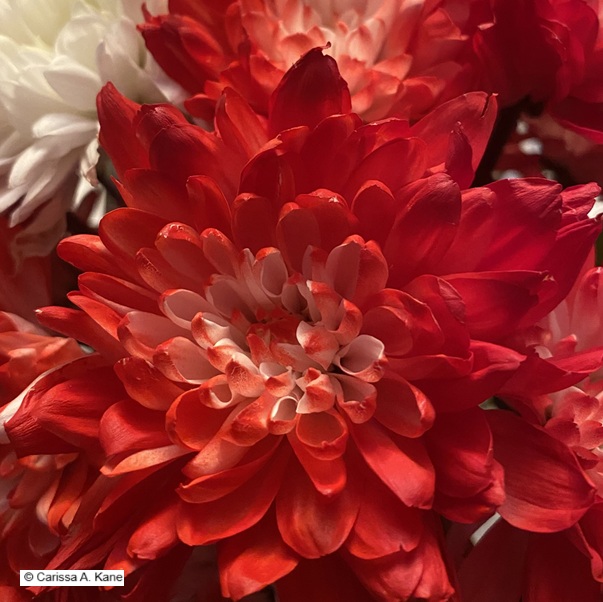
As the days passed by, the flowers, still bright, holding onto life, begin to show the length of days and nights, separate, away from the source of life.
Leaves dropping from stems, petals shriveling, on the outside first. Time ticks, closing in. Hold on as they may, away from their roots, they limp as they linger.
In the First Reading for the Seventh Sunday in Ordinary Time (1 Samuel 26:2, 7-9, 12-13, 22-23), David and Abishai find themselves in a position of advantage, having the opportunity to kill Saul, who, along with his soldiers are in a deep sleep. However, despite Saul having grown distant from who he was at the beginning of his rule, and having become David’s enemy, David restrains himself and shows mercy. He says to Abishai, “Do not harm him, for who can lay a hand on the Lord’s anointed and remain innocent?” (v. 9).
Spend some time with the first reading and consider that as beings created in God’s image, in a sense, we are all anointed.
The response for the Psalm is, “The Lord is kind and merciful.” (Psalm 103:8). Reflect on the ways that the Lord has been kind and merciful to you. How does your experience inspire you in terms of the way you view situations and people? In what ways do you feel compelled to be kind and merciful to others? Are there areas where the Lord might want to work with you on expanding upon or reassessing this?
Turning to the Second Reading (1 Corinthians 15:45-49), St. Paul writes of Adam and Jesus, but he is also writing about the call to conversion and discipleship.
As was the earthly one, so also are the earthly, and as is the heavenly one, so also are the heavenly. Just as we have borne the image of the earthly one, we shall also bear the image of the heavenly one. – verses 48-49
Envisioning your life as one line and the events/happenings during your life as another line on a continuum, think about the major events/happenings that have had a direct impact on you. What’s the difference between the times when you have maintained a sense of inner strength (or know-how) and peace, and the times you haven’t?
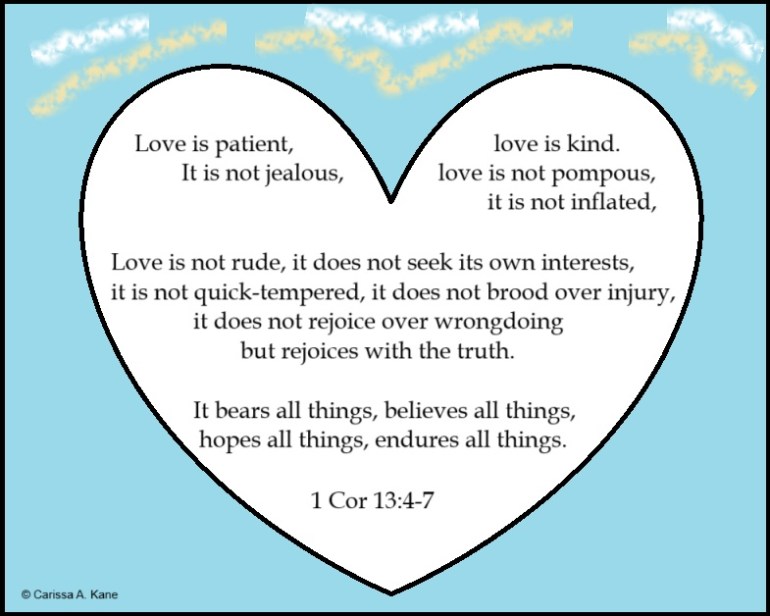
In the Gospel Reading (Luke 6:27-38), Jesus reminds us that Love is what sustains us. Not embracing cynicism, seeking or plotting revenge, settling or keeping scores. Rather, those are the things that tear us away from Love and the root of goodness and life—God.
How might you draw closer to Love in the challenges you face today? And how might the Lord desire to join you in an area of challenge?
The Lord is kind and merciful, slow to anger, abounding in mercy. – Psalm 103:8
Blessed are we, created in the image of the Lord, Who comes down from the mountain, To stand with us on level ground. Bestower of grace on all, Willing spirits will receive Him. Words of Wisdom and Hope He speaks, Bringing Light and Life to the soul.
Care for the poor, Feed the hungry, Comfort those in need. Way of ways, it is not easy.
Hold fast to only One—the Lord. Falling not for hollow banter, Careful of the ruse; it’s not True. Look not to glorify others, Rather, seek Wisdom from the Source. Big and bold isn’t always best, and Stay awake is what the Lord commanded.
From where chaos comes, Base passion and design, Stirring ill will, division, Seeds sowing lies. Looking, always looking, To seep and settle in.
From where chaos spreads, Human passions and designs, From what we, as masters, embrace, What we give into, And what we withstand.
From where peace comes, Divine passion and design. Love weaving in and out, Through time and space. Ushering good tidings, Encouraging good will.
From where peace spreads, Human passions and designs, From what we, as servants, embrace, What we give into, And what we withstand.
“Until he extends his circle of compassion to include all living things, man will not himself find peace.” – Albert Schweitzer
For where jealousy and selfish ambition exist, there is disorder and every foul practice. But the wisdom from above is first of all pure, then peaceable, gentle, compliant, full of mercy and good fruits, without inconstancy or insincerity. And the fruit of righteousness is sown in peace for those who cultivate peace. – James 3:16-18
It is written in the Book of Wisdom, “God did not make death, nor does he rejoice in the destruction of the living.” (Wisdom 1:13). As ones created in the image of God, we are to live and behave as such. And while an eye for an eye or “getting even” may be tempting at times, it can lead to the destruction of another of God’s creation and can create a false sense of satisfaction, neither of which are in line with the image of God, or life giving.
In the second reading for the Thirteenth Sunday in Ordinary Time, St. Paul reminds the Corinthians that there is much more to discipleship than what one believes, what one knows, says, and does, and one’s conviction. It is the spirit in which one lives, and that guides one.
St. Paul writes, “For you know the gracious act of our Lord Jesus Christ, that though he was rich, for your sake he became poor, so that by his poverty you might become rich. Not that others should have relief while you are burdened, but that as a matter of equality your abundance at the present time should supply their needs, so that their abundance may also supply your needs, that there may be equality.” (2 Corinthians 8:9, 13-14).
It is only fitting that those created in God’s image be mindful of disparity and strive to recognize and honor the image of God in others, and therefore work toward, encourage, and support equality. The mindset that St. Paul is encouraging is not new. In fact, he writes, “As it is written: ‘Whoever had much did not have more, and whoever had little did not have less.'” (2 Corinthians 8:15). He is referring to the Book of Exodus (Ex 16:18) and how the Manna (the nourishment that God provided for Moses and Israelites) was allotted. It did not matter how much or how little one person gathered, there was enough for everyone to have what they needed. Not only that, but also there was great awareness that it was all provided through the goodness—love and mercy—of God.
One could not think of what they collected as belonging to oneself, but rather as being provided by God, and as one created in the image of God, it was to be shared and for everyone to partake of. There was to be equality, or equity, in terms of everyone having what they needed to not only survive, but to keep moving along the journey.
Turning to the Gospel passage (Mark 5:21-43), again we can see that it’s all about equity. A synagogue official’s daughter is on her death bed, and he begs Jesus to heal her, “Please, come lay your hands on her that she may get well and live.” Jesus begins to follow Jairus. They are moving through the heavy crowd when a woman who also needs Jesus’s help touches his cloak saying, “If I but touch his clothes, I shall be cured.”
One can imagine, especially given that period of time in history, that as a man and a synagogue official, Jairus would be able to gain Jesus’s attention and position himself to have access to Jesus more easily than the woman. Both Jairus (or his daughter) and the woman need healing, but each needs to approach the situation differently because of their circumstances. To Jesus, it doesn’t matter who got to him first or last, or who has more or less (power, possessions, status, etc.). As with God’s grace, Jesus’s healing is equitable and those who approach in faith get what they need—the woman’s hemorrhaging comes to an end and Jairus’s daughter is raised by Jesus. How do you relate to Jairus and/or the woman with a hemorrhage in terms of approach and asking in prayer?
Oftentimes, when thinking about faith and asking for something, it can be can easy to only think in terms asking God or Jesus for what one needs or wants. However, being created in the image of God, we are called to also look at the other side of this. Take some time to pray and reflect on the spirit in which you respond when it comes the needs and wants of others. In what ways does Jesus’s sense of equality and equity increase your faith and inspire you?
Sing praise to the Lord, you faithful; give thanks to his holy memory. For his anger lasts but a moment; his favor a lifetime. At dusk weeping comes for the night; but at dawn there is rejoicing. – Psalm 30:5-6
The readings for the Third Sunday of Lent can be seen as a call to pay attention to the nature of relationships and what they lead or point to. In the First Reading (Exodus 20:1-17), God delivers the commandments, which are seemingly clear instructions, and by adhering to them, the people will prosper. Notice how God’s mercy far outweighs any punishment.
For I, the Lord, your God, am a jealous God, inflicting punishment for their ancestors’ wickedness on the children of those who hate me, down to the third and fourth generation; but showing love down to the thousandth generation of those who love me and keep my commandments. (Ex 20:5-6)
Also, notice that punishment is reserved for “those who hate me,” and their children. Hate is a pretty strong word and one can imagine some sort of pattern or learned behavior to reach that point or designation. In that light, perhaps this passage can be viewed as a Lenten invitation to be mindful of one’s actions, the sentiments from which they come, and what they might teach.
Looking at the Responsorial Psalm (Psalm 19:8-11), the response is “Lord, you have the words of everlasting life.” (Jn 6:68c). Again, drawing us to God’s words as priceless and wrapping up by trying to convey just how valuable they are: They are more precious than gold, than a heap of purest gold; sweeter also than syrup or honey from the comb. (Ps 19:11).
As for verses 8-10 of the Psalm, the first part of each line refers to the Lord’s “rules”—laws, decrees, precepts, commands, reverence, and ordinances. The second part of each phrase or sentence provides guidance by giving indicators that one can use to try to determine if they are obeying and honoring the Lord. How? By evaluating the situation and answering the question: Do I experience or have a sense of a refreshed soul/peace, wisdom, a rejoicing heart, enlightenment, endurance/inner strength, truth, or justice?
The law of the Lord is perfect, refreshing the soul; The decree of the Lord is trustworthy, giving wisdom to the simple.
The precepts of the Lord are right, rejoicing the heart; the command of the Lord is clear, enlightening the eye.
The fear of the Lord is pure, enduring forever; the ordinances of the Lord are true, all of them just.
In the Second Reading (1 Corinthians 1:22-25), St. Paul is encouraging the Corinthians, and us, to be careful about the way we go about seeking signs and wisdom. God certainly uses people, situations, and things to accomplish tasks and impart wisdom, however, as St. Paul says, “we proclaim Christ crucified.” That means, there is no substituting human thoughts, ideas, goals, etc. for God’s will and wisdom as the source or root that one allows to resonate with and guide their soul. Ultimately, things come down to what happens between each person and God, and one is not to blindly follow others thus giving what belongs to or originates with God (one’s soul and will) to another human being and/or their agenda.
In what ways do you take each situation to prayer with an openness to the fact that what is right and just in one situation may not be right and just or the best way in another situation? What’s it like to consider that the “rules” and their application are shaped by God’s love and mercy, and that this is by God’s design? In what ways do you leave room for love and mercy in situations and decisions?
Turning to the Gospel passage referred to as the Cleansing of the Temple (John 2:13-25), we can see Jesus’ disavowal of the perversion of the Temple and the rules and practices around and within it. The focus has become all about transactions and status. Jesus drives everyone out, saying to those profiting at the expense of the poor—those selling doves, “Take these out of here, and stop making my Father’s house a marketplace.” (Jn 2:16). In the verses that follow, Jesus refers to his body as the temple and foreshadows his crucifixion and resurrection. The passage ends with:
But Jesus would not trust himself to them because he knew them all, and did not need anyone to testify about human nature. He himself understood it well. (Jn 2:24-25)
Envision Jesus, who is the source of salvation and redemption, entering the temple area of your life—your heart. Imagine yourself receiving the peace, inner strength, and wisdom of Jesus as you sit together. What would you share? And, what would He who understands human nature well, impart to you in terms of what to drive out and what to keep?















 HopeThatFloats
You must be logged in to post a comment.