Eastertide through days and nights, forty… fifty… ever more. It is truly right and just, here, above, and all around. Presence of mind, truthful heart; the soul of goodness triumphs.
Genuine faith, obeying, not tyrant, nor king—Savior. Wanting good for goodness sake, bearing with things, not grasping, nor pulling apart, as if at odds, and fighting within.
In a boat fishing around, who’s there? What sides are you on? Is it right, or something else? Casting nets, or casting stones? From where does your wisdom come? What sentiments control you?
When they had finished breakfast, Jesus said to Simon Peter, “Simon, son of John, do you love me more than these?” Simon Peter answered him, “Yes, Lord, you know that I love you.” Jesus said to him, “Feed my lambs.”
He then said to Simon Peter a second time, “Simon, son of John, do you love me?” Simon Peter answered him, “Yes, Lord, you know that I love you.” Jesus said to him, “Tend my sheep.”
Jesus said to him the third time, “Simon, son of John, do you love me?” Peter was distressed that Jesus had said to him a third time, “Do you love me?” and he said to him, “Lord, you know everything; you know that I love you.” Jesus said to him, “Feed my sheep. – John 21:15-17
Working my way around, whether by chance or fate, again, once more, I hear, reverberations of, not stern warnings, but of wise voices of the past.
Just as justice for one, affects justice for all, mercy and compassion make the way to goodwill; offspring of love, made by, an even greater Love.
“From my point of view, God is the light that illuminates the darkness, even if it does not dissolve it, and a spark of divine light is within each of us.” – Pope Francis
“Christ is risen from the dead, and by His death He has trampled upon death, and has given live to those, who are in the tombs.” – the Troparion of Pascha
Taking it on the level, as only You, Lord, can do. Giving what humanity, can only aspire to grasp.
Falling down, then getting up, pushed time upon time again. Light of Life into darkness, You brought life—heart, mind, and soul.
Impostors come, and they go, but Your Spirit, Lord, remains. Waiting our reception, Lord, not for one, but for the many.
Looking up at the nighttime sky, Your artistry on full display. Shades of hope… brighter, better times, Memories reckoning what was, Speculation of what will be, But then light, your glorious light, Bringing me back to my senses. Troubled, wretched waters may be, Times for standing up together, Praying that this beat finds its end. Looking up at the nighttime sky, Your artistry on full display. The stones are crying out for all. Forsaken? No, nor shall any be.
The Gospel for the Fifth Sunday of Lent (John 8:1-11) can be seen as providing an opportunity to consider what’s at the root of one’s reactions and the ensuing responses or decisions to the situations or news that arises from day to day.
Read the passage below to familiarize yourself with the situation described.
Jesus went to the Mount of Olives. But early in the morning he arrived again in the temple area, and all the people started coming to him, and he sat down and taught them. Then the scribes and the Pharisees brought a woman who had been caught in adultery and made her stand in the middle. They said to him, “Teacher, this woman was caught in the very act of committing adultery. Now in the law, Moses commanded us to stone such women. So what do you say?” They said this to test him, so that they could have some charge to bring against him. Jesus bent down and began to write on the ground with his finger. But when they continued asking him, he straightened up and said to them, “Let the one among you who is without sin be the first to throw a stone at her.” Again he bent down and wrote on the ground. And in response, they went away one by one, beginning with the elders. So he was left alone with the woman before him. Then Jesus straightened up and said to her, “Woman, where are they? Has no one condemned you?” She replied, “No one, sir.” Then Jesus said, “Neither do I condemn you. Go, and from now on do not sin any more.” – John 8:1-11
Next, take some time to revisit this reading from different perspectives.
First, put yourself in the shoes of the crowd. You’ve come to see and listen to this new teacher. What has drawn you to him?
Envision yourself listening to Jesus preach when suddenly, there’s an interruption. A group of men push there way through the crowd, pulling along and forcibly putting a woman into the middle of the gathering. Then they publicly call her out and ask the new teacher what he has to say about the impending doom called for by the law. What’s your first thought or feeling? What do you imagine the expression on Jesus’s face is as this is happening?
Allow yourself time to process and discuss with Jesus what it’s like to be in the crowd, witnessing this occurrence.
Next, put yourself in the shoes of the scribes and Pharisees. What do you imagine led them to essentially drag the woman, not only to where Jesus was, but also to where there was a crowd around him? The passage tells us they wanted to test Jesus. What about consideration of the woman?
Invite Jesus into the thoughts and feelings that come up as you contemplate this perspective. Ask Jesus to show you if there are areas where you might be prioritizing something to the extent that it causes a blind eye toward side effects, such as disregard for the circumstances and/or well-being of others.
Now, put yourself in the shoes of the woman caught in adultery. What’s it like to envision being forcibly taken from one place to another, put in the middle of a crowd, having your transgressions publicized, and being used as a pawn, as you await your fate, which doesn’t look good according to Mosaic law, and may or may not be determined by this new teacher?
Again, share your thoughts and feelings with Jesus. Ask him to impart wisdom and grace to you in whatever challenges you face. Also ask him to reveal anything that might be detracting from your ability to be at your best and/or to choose what is best in His eyes.
Finally, put yourself in Jesus’s shoes. You’re preaching to a crowd that has gathered around you. You see and sense the need in each person’s face. Your heart, full of peace, love, and purpose, is moved with compassion. As you’re speaking, the scribes and Pharisees arrive with the woman in tow. What do you notice most as this interruption is occurring? What’s happening internally, and from where does your response come?
Allow yourself time to pray and reflect on this experience with Jesus. What insight does Jesus want you to prioritize at this moment in your life? In what ways, and toward what, is your heart, full of peace, love, and purpose, moved with compassion?
Where can Divinity meet, and raise, your humanity for the greater glory of God?
Hope rooted in the Lord, is well placed; with the Lord, nothing is impossible.
For a time, many things are only for a time. Some things forever gone, others, on hiatus. Sometimes returning, welcome on arrival, Sometimes returning, unwanted and in dread, Sometimes slithering, seeping in, seeping out, Creating a stir, unease or great unrest. But Light, the Great Protector, shines thru, Revealing all, shedding lies in time, And casting out, what Time ordains as passed.
The Gospel passage for the First Sunday of Lent (Luke 4:1-13) is referred to as the Temptation of Jesus. After his baptism, Jesus is led into the desert by the Holy Spirit for forty days. And after these days of fasting, he is tempted by the devil in three ways:
First, to use his status as the Son of God to relieve himself of his situation of hunger.
“If you are the Son of God, command this stone to become bread.” (verse 3)
Second, to exalt himself by paying homage, or worshipping, the devil to receive earthly power and glory.
“I shall give to you all this power and their glory; for it has been handed over to me, and I may give it to whomever I wish. All this will be yours, if you worship me.” (verses 6-7)
And third, to show doubt in God, by throwing himself from the parapet of the temple, and thereby testing Scripture:
“If you are the Son of God, throw yourself down from here, for it is written: ‘He will command his angels concerning you, to guard you, and: ‘With their hands they will support you, lest you dash your foot against a stone.’” (verses 9-11)
Jesus responds to these temptations as follows:
“It is written, ‘One does not live on bread alone.’” (verse 4)
“It is written ‘You shall worship the Lord, your God, and him alone shall you serve.’” (verse 8)
And lastly, when the devil tries to zero in on and twist Scripture verses to tempt Jesus away from the truth of who God is calling him to be, Jesus, again focuses on God—a higher purpose—responding:
“It also says, ‘You shall not put the Lord, your God, to the test.’” (verse 12)
The “Temptation of Jesus” Gospel passage ends with, “When the devil had finished every temptation, he departed from him for a time.” (verse 13)
Oftentimes, after going through a challenging situation or event, it is common to be grateful for that time to be over. It can also be tempting to walk away with a notion of achievement or learning from it in a way that we see as being complete. Yet, whether good or bad, there are times when the same, or a similar challenge returns, offering an opportunity to draw even closer to God, and to see or learn even more.
Take some time to consider how open you are to remembering what you’ve learned as well as to learning something new when repeat or similar situations of challenge occur?
Reflecting on Jesus’s words in response to each of the temptations he faced in the desert, what invitation(s) are there for you and Jesus to explore? Allow your prayer to extend into these areas. Express your wants, needs, fears, etc. to Jesus, and allow Jesus to express His thoughts and wisdom to you.
You who dwell in the shelter of the Most High, who abide in the shadow of the Almighty, say to the Lord, “My refuge and fortress, my God in whom I trust.” – Psalm 91:1-2
The eyes through which you see, The ears through which you hear, The mind through which you pull it altogether, Can lead you here and there, Sometimes, everywhere but straight. But the heart through which you care, Cries out, drawing you close, To the Heart that lies within.
In the Gospel passage for the Eighth Sunday in Ordinary Time, it is written:
Jesus told his disciples a parable, “Can a blind person guide a blind person? Will not both fall into a pit? No disciple is superior to the teacher; but when fully trained, every disciple will be like his teacher. Why do you notice the splinter in your brother’s eye, but do not perceive the wooden beam in your own? How can you say to your brother, ‘Brother, let me remove that splinter in your eye,’ when you do not even notice the wooden beam in your own eye? You hypocrite! Remove the wooden beam from your eye first; then you will see clearly to remove the splinter in your brother’s eye.
“A good tree does not bear rotten fruit, nor does a rotten tree bear good fruit. For every tree is known by its own fruit. For people do not pick figs from thornbushes, nor do they gather grapes from brambles. A good person out of the store of goodness in his heart produces good, but an evil person out of a store of evil produces evil; for from the fullness of the heart the mouth speaks.” – Luke 6:39-45
Contemplate the qualities you look for and tend to gravitate toward as you go about each day. Pray with what you notice. Express your desire to be united with Jesus throughout each day.
In the light of the Lenten season, consider how you have experienced the Scripture verse, “See, I am doing something new! Now it springs forth, do you not perceive it? In the wilderness I make a way, in the wasteland, rivers.” (Isaiah 43:19). Then take some time to reflect on the ways you are open to seeing God in what is new or different. As you pray, ask Jesus to help in discerning what your heart desires and how to distinguish between good fruit and rotten fruit.
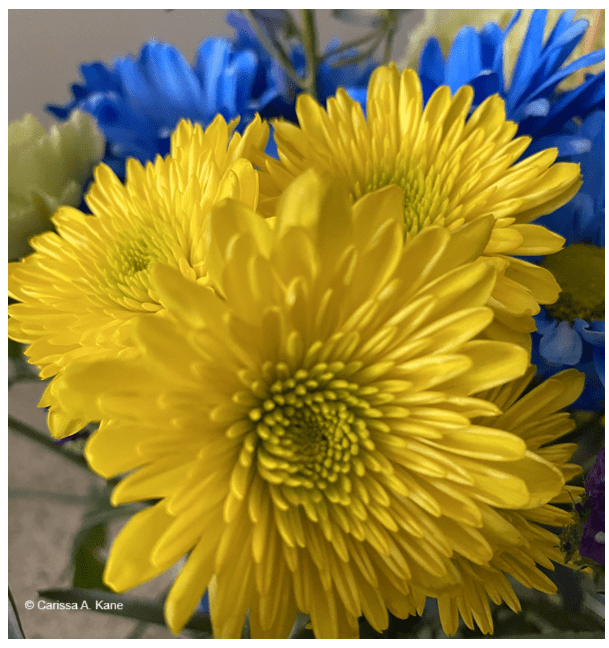
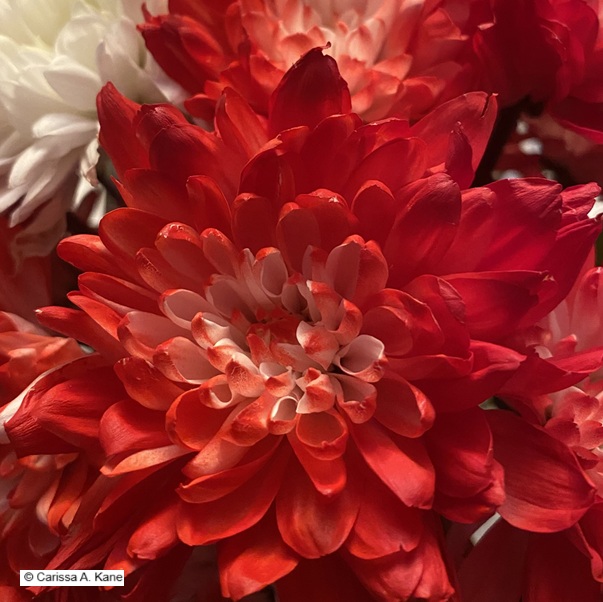
As the days passed by, the flowers, still bright, holding onto life, begin to show the length of days and nights, separate, away from the source of life.
Leaves dropping from stems, petals shriveling, on the outside first. Time ticks, closing in. Hold on as they may, away from their roots, they limp as they linger.
In the First Reading for the Seventh Sunday in Ordinary Time (1 Samuel 26:2, 7-9, 12-13, 22-23), David and Abishai find themselves in a position of advantage, having the opportunity to kill Saul, who, along with his soldiers are in a deep sleep. However, despite Saul having grown distant from who he was at the beginning of his rule, and having become David’s enemy, David restrains himself and shows mercy. He says to Abishai, “Do not harm him, for who can lay a hand on the Lord’s anointed and remain innocent?” (v. 9).
Spend some time with the first reading and consider that as beings created in God’s image, in a sense, we are all anointed.
The response for the Psalm is, “The Lord is kind and merciful.” (Psalm 103:8). Reflect on the ways that the Lord has been kind and merciful to you. How does your experience inspire you in terms of the way you view situations and people? In what ways do you feel compelled to be kind and merciful to others? Are there areas where the Lord might want to work with you on expanding upon or reassessing this?
Turning to the Second Reading (1 Corinthians 15:45-49), St. Paul writes of Adam and Jesus, but he is also writing about the call to conversion and discipleship.
As was the earthly one, so also are the earthly, and as is the heavenly one, so also are the heavenly. Just as we have borne the image of the earthly one, we shall also bear the image of the heavenly one. – verses 48-49
Envisioning your life as one line and the events/happenings during your life as another line on a continuum, think about the major events/happenings that have had a direct impact on you. What’s the difference between the times when you have maintained a sense of inner strength (or know-how) and peace, and the times you haven’t?
In the Gospel Reading (Luke 6:27-38), Jesus reminds us that Love is what sustains us. Not embracing cynicism, seeking or plotting revenge, settling or keeping scores. Rather, those are the things that tear us away from Love and the root of goodness and life—God.
How might you draw closer to Love in the challenges you face today? And how might the Lord desire to join you in an area of challenge?
The Lord is kind and merciful, slow to anger, abounding in mercy. – Psalm 103:8
After ministering to many people in Capernaum, Jesus sets out for a deserted place, yet the crowds search for, and find him. They don’t want him to leave. However, he explains that he must go because his ministry and proclamation of the Kingdom of God must extend to other villages and towns. After witnessing and hearing his preaching, and all the healings, how do you imagine the people of Capernaum took this news? Do you think they were skeptical or upset at the idea of other people, from a different village or town, and who perhaps they considered as outsiders, being the recipients of Jesus’s preaching and healing, too?
What’s it like when you consider Jesus’s mission as one that extends to all people, regardless of who they are or from where they come?
The Gospel for the Fifth Sunday in Ordinary Time (Luke 5:1-11), begins with Jesus having moved on to Judea and then Lake Gennesaret. It is written:
“While the crowd was pressing in on Jesus and listening to the word of God, he was standing by the Lake of Gennesaret.” – Luke 5:1.
Take some time to put yourself in the crowd. As you draw in toward Jesus and listen to the word of God, what comes into your mind, and how is your heart stirred? What prayer arises within you?
As the Gospel passage continues, Jesus gets into Simon’s boat and asks him to push away from the shore. This is not so that he can leave the crowd that has been closing in on him. Rather, it is so that he can continue to minister, teaching them from the boat.
Envision yourself on the shore with Jesus and then in the boat a short distance from the shore. What’s different when you’re in the crowd versus when you’re in the boat? What might Jesus want you to learn from his actions in this situation? What words does Jesus have for you and the crowd?
When Jesus’s preaching to the crowd ends, it is written:
“…he said to Simon, ‘Put out into deep water and lower your nets for a catch.’ Simon said in reply, ‘Master, we have worked hard all night and have caught nothing, but at your command I will lower the nets.’ When they had done this, they caught a great number of fish and their nets were tearing. They signaled to their partners in the other boat to come to help them. They came and filled both boats so that the boats were in danger of sinking. When Simon Peter saw this, he fell at the knees of Jesus and said, ‘Depart from me, Lord, for I am a sinful man.’ For astonishment at the catch of fish they had made seized him and all those with him, and likewise James and John, the sons of Zebedee, who were partners of Simon. Jesus said to Simon, ‘Do not be afraid; from now on you will be catching men.’ When they brought their boats to the shore, they left everything and followed him.” – Luke 5:4-11
After working hard all night to no avail, Peter does as Jesus asks. He goes back out into the deep part of the sea, and with Jesus by his side, where there was nothing, now there is an abundance, so much so that his nets and the boats can hardly hold it. However, for this to be possible, Peter had to first leave behind and let go of what he had already come to know—he was out all night and there were no fish to be caught—and rather than holding onto defeat or being discouraged, he had to put his hope, faith, and trust in Jesus.
Recall a time when you experienced a challenge, difficulty, or drought of some kind and how faith and Jesus’s presence helped you? What were your prayers like during that time? In what ways did you avail yourself, or help yourself, to be open to listening to and being present to Jesus? Thinking of that time, how can you relate to Peter in this Gospel passage?
Turning to today, think about a situation you’re currently facing. How are you inspired as you continue to seek and draw nearer to Jesus?
“On the day I cried out, you answered; you strengthened my spirit.” – Psalm 138:3













 HopeThatFloats
You must be logged in to post a comment.