Tomorrow, March 20, 2022, is the vernal equinox, giving those of us in the Northern Hemisphere an even split between day and night and marking the beginning of spring. It’s not often we experience such balance in a day. In fact, it only happens twice a year on the vernal and autumnal equinoxes, and given the pace of life, the light of these days likely slips by without much notice.
The thing that’s interesting though, is as with many happenings in the natural world around us, there’s a message or lesson they hold. The vernal equinox can serve as a concrete example to not only bring equity and balance to heart and mind, but also perhaps to provide an experience we can all relate to, no matter where we are, and in doing so, on some level, restore a sense of harmony.
Take some time to absorb what is often the background as we go about each day—nature. Bring it to the forefront. Next, as you look around, consider your life. Where do you find balance and harmony? In what ways do you experience the Lord as kind and merciful in the hours of both the day and night? How are you inspired?
Bless the Lord, my soul; all my being, bless his holy name! Bless the Lord, my soul; and do not forget all his gifts, Who pardons all your sins, and heals all your ills, Who redeems your life from the pit, and crowns you with mercy and compassion, Who fills your days with good things, so your youth is renewed like the eagle’s. The Lord does righteous deeds, brings justice to all the oppressed. He made known his ways to Moses, to the Israelites his deeds. Merciful and gracious is the Lord, slow to anger, abounding in mercy. He will not always accuse, and nurses no lasting anger; He has not dealt with us as our sins merit, nor requited us as our wrongs deserve. – Psalm 103: 1-10
Sitting with the readings for the second Sunday of Lent, like an old friend, the word “Trust” enters the room with a warm smile and as if to say, “Remember me… remember when…” So much of life is about trust and so often, it seems to come down to whom or what one trusts, to what degree, how that trust is received, and the impact or consequences of its handling.
As human beings, we share in a perfectly, imperfect nature, as we navigate life in, and surrounded by, a competitive, material world. It can be tempting to think or feel, even if subconsciously, that there is something we can do about anything happening around us at any time; that a level of control is always within our grasp. We may even look to capture the things that we, as human beings, think will help us to have that control. Yet, the only control we ever really have, and the only victory ever really won, is in choices that we make to trust in God’s ways and to let go, or shed the impulse or notion that any one interest outranks everyone’s interest.
In the ninth chapter of the Gospel according to Luke, Peter, John, and James ascend the mountain with Jesus and share in the experience of his transfiguration. In the passage prior to this one, while explaining what it means to be a disciple, Jesus says, “What profit is there for one to gain the whole world yet lose or forfeit himself?” (Lk 9:25). Looking at the circumstances in the world today, one can clearly see that there is no profit in profiteering, only loss for everyone.
Think about what it must have been like for Peter, John, and James to hear Jesus’ words about discipleship and then to witness his transfiguration seeing him stand alongside the prophets, Moses and Elijah.
Looking to today’s world, when it seems there is nothing to do, or there is no good way to stop what is already in motion, perhaps the best place to start is to forget control, then pause to go back and remember the beginning. Jesus took Peter, James, and John up the mountain to pray. One can only wonder, what was in their hearts as they placed their trust in Jesus and followed him up that mountain. One can only wonder how they received what happened and what they carried in their hearts on the way down, and thereafter.
How does your trust in Jesus shape your choices, create unity, express love, and spread goodwill? Connecting with Jesus as an old friend greeting you with a warm smile, how would you proceed from the phrase, “Remember me… remember when…?”
Share with Jesus what you carry in your heart as you reflect on the world we live in, and the journey you are on within it.
Jesus took Peter, John, and James and went up the mountain to pray. While he was praying his face changed in appearance and his clothing became dazzling white. And behold, two men were conversing with him, Moses and Elijah, who appeared in glory and spoke of his exodus that he was going to accomplish in Jerusalem. Peter and his companions had been overcome by sleep, but becoming fully awake, they saw his glory and the two men standing with him. As they were about to part from him, Peter said to Jesus, “Master, it is good that we are here; let us make three tents, one for you, one for Moses, and one for Elijah.” But he did not know what he was saying. While he was still speaking, a cloud came and cast a shadow over them, and they became frightened when they entered the cloud. Then from the cloud came a voice that said, “This is my chosen Son; listen to him.” After the voice had spoken, Jesus was found alone. They fell silent and did not at that time tell anyone what they had seen. – Lk 9:28b-36
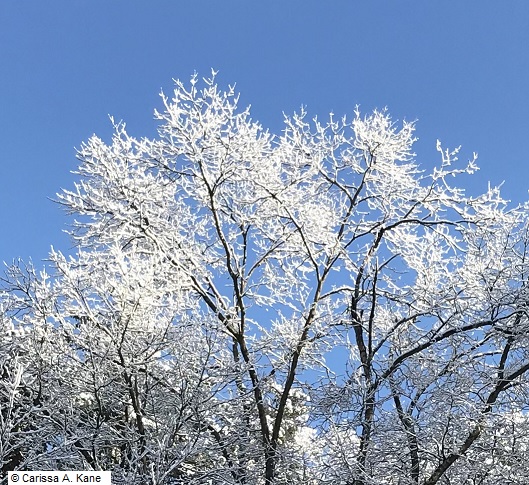
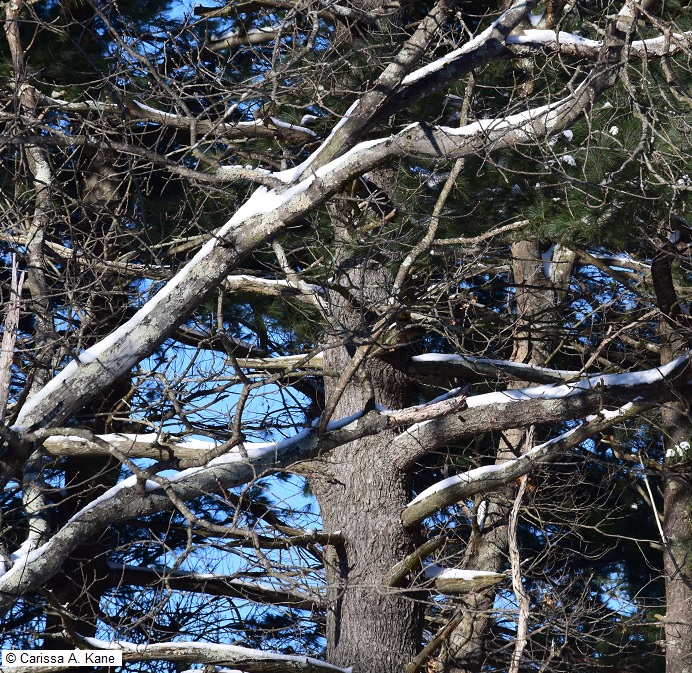
Looking out the window, branches all around. Open arms holding up the snow, or the snow resting on open arms? Both clinging to each other, or one melting into the other? Does it really matter? Still, looking out the window. Still, branches upon branches. Some sturdier than others, some swaying more than others. Does it really matter? More looking out the window, at those branches and that snow. Through it all, they just keep gently staying. Perhaps, that’s all that really matters.
Shine like lights in the world as you hold on to the word of life. – Phil 2:15d,16a
Mind over matter, What difference does it make? The set of one’s mind, May toggle or break, Or yet even worse, Get stuck in one place.
Heart in the matter, What difference does it make? The set of one’s heart, When inspired by God, Finds purpose, builds faith, Sings praises, gives faith.
One cried out to the other: “Holy, holy, holy is the Lord of hosts! All the earth is filled with God’s glory!” – Isaiah 6:3
According to the ancient Greek philosopher Plato, “No one is more hated than he who speaks the truth.” This certainly seems the case for Jesus in chapter 4, verses 21-30 of the Gospel according to Luke. In fact, Jesus expands upon this observation. Not only does the truth and those who speak it, tend to garner disdain or be less than popular, but this is kicked up a notch, often occurring with greater intensity and less receptivity, the closer to home one is.
In this passage, Jesus gives two examples for his fellow Nazoreans to ponder. First, there is the widow in Sidon. What is it that led Elijah to her and her son, saving them from a sure death during the great famine? Second, there is Naaman the Syrian, who was cleansed of leprosy. How is it that Elisha was sent to Naaman rather than one of his own people suffering from leprosy?
After taking great offense at Jesus’ words (“No prophet is accepted in his native place”) and examples, the crowd seeks to extinguish him. One can only wonder if anyone in the crowd was able to step back and further consider the situation and what had transpired. Were they able to remove themselves from the sting of the truth long enough to recognize that their anger was misdirected, and to move toward healing and greater peace?
In today’s volatile and often chaotic world, it can be easy to choose a side or make a judgment and cling to it. However, oftentimes, in doing so, it can also be easy to become rigid, and to lose sight and insight into what really matters. Not only that, but also to possibly overlook Grace, which is always revealing itself in ever-changing and evolving ways.
In chapter 4 of the Gospel according to Luke, Jesus was inviting the people of Nazareth toward greater faith and into a new way of being. He is calling us in the same way today, reminding us that we cannot receive God, who made the earth and all that inhabits it, if we are not willing to change and receive the grace of a still greater way.
For true life does not occur where the air is stale and stagnant, and where all cannot breathe, but rather where it is new, fresh, and flowing free.
Jesus began speaking in the synagogue, saying: “Today this Scripture passage is fulfilled in your hearing.” And all spoke highly of him and were amazed at the gracious words that came from his mouth. They also asked, “Isn’t this the son of Joseph?” He said to them, “Surely you will quote me this proverb, ‘Physician, cure yourself,’ and say, ‘Do here in your native place the things that we heard were done in Capernaum.’” And he said, “Amen, I say to you, no prophet is accepted in his own native place. Indeed, I tell you, there were many widows in Israel in the days of Elijah when the sky was closed for three and a half years and a severe famine spread over the entire land. It was to none of these that Elijah was sent, but only to a widow in Zarephath in the land of Sidon. Again, there were many lepers in Israel during the time of Elisha the prophet; yet not one of them was cleansed, but only Naaman the Syrian.” When the people in the synagogue heard this, they were all filled with fury. They rose up, drove him out of the town, and led him to the brow of the hill on which their town had been built, to hurl him down headlong. But Jesus passed through the midst of them and went away. – Luke 4:21-30
While the outside world has so much to offer, sometimes it can feel like too much, making the idea of hiding away in the seclusion of a hermitage or something similar of greater appeal than it might be otherwise. Today, January 15th, is the feast of St. Paul the Hermit who was born and lived in Egypt until he died around the age of 112. Referred to as the “First Hermit,” little information is known of him.
However, what seems of most importance is known. That is, how St. Paul the Hermit became a hermit and how humankind came to know about him. Originally, at the age of 15 and an orphan, he went into a cave seeking refuge during the persecution of Christians, in the year 250 A.D., by Roman Emperor Decius. His intention was to come out of hiding and return home once the persecutions ended.
But, over the course of his time away from humankind, St. Paul found peace as well as a calling to remain in the desert living a solitary life of prayer as a hermit. So how did this information about St. Paul the Hermit come to be known? St. Anthony of Egypt is said to have come across St. Paul along his own journey toward Truth and self-discovery.
It’s interesting how St. Paul the Hermit was called to a life of seclusion, yet still, God called another, St. Anthony, to give witness to his life and death as holy. It’s also intriguing that St. Anthony was led to St. Paul the Hermit in the process of entertaining thoughts of himself as the most enduring hermit in existence… until he met St. Paul.
In the First Letter of St. Paul to the Corinthians, chapter 12, verses 4-11, St. Paul the Apostle writes about different kinds of spiritual gifts, different forms of service, and different workings that are dispersed to all, individually, but by the same God who creates them, and the same Spirit who brings them to fruition. With God, no one gift, or creation, is above the other, differentiation is by design, all are loved into existence, all are created for unity, and all are equally important.
So, while St. Paul the Hermit and St. Anthony of Egypt had similar callings and different paths, like us, humility is what leads them to a better place.
In everything, it is only through the grace of God that we can lay down human notions; truly understand, appreciate, take care of, and celebrate one another; and thus, partake in the unity—the heart of God– that is Creation.
Looking up into the darkness, preparing for the show that is about to begin, and “knowing” what is to come. Fireworks on New Year’s Eve or Day is a longstanding tradition around the world. Their origin is as a part of practices meant to ward off evil spirits, driving them away with loud booms and flashes of light. In our times, fireworks can be startling, but most often they bring a sense of both awe and knowing.
Passing from one year to the next, it seems so natural to think in terms of progression. Where have I been? Where am I going? And while human nature tends to lean toward the notion of being in control, it also often leans toward a kind of mapping and planning that can take one away from the heart and light of creation, and life’s true meaning.
Life like fireworks, our expectations so great. Hearing booms followed by colors and rays of light. Looking for a magnificent display each time, each year, bigger and better than before, A man-made quest.
In the process, we stretch and strive. All caught up, are we really rising above, going beyond, settling down, or drifting into the air, as trails of smoke?
While soaring and shining, what do we leave behind in the dust, are we led, or are we leading, and what do we carry with us?
Be humble for you are made of earth. Be noble for you are made of stars. – Serbian proverb
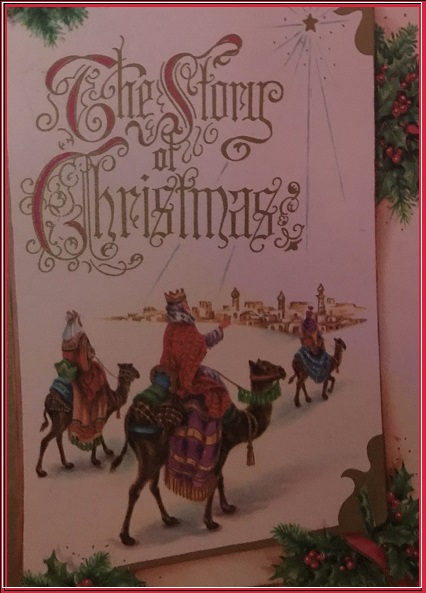
When Jesus was born in Bethlehem of Judea, in the days of King Herod, behold, magi from the east arrived in Jerusalem, saying, “Where is the newborn king of the Jews? We saw his star at its rising and have come to do him homage.” When King Herod heard this, he was greatly troubled, and all Jerusalem with him. Assembling all the chief priests and the scribes of the people, He inquired of them where the Christ was to be born. They said to him, “In Bethlehem of Judea, for thus it has been written through the prophet: And you, Bethlehem, land of Judah, are by no means least among the rulers of Judah; since from you shall come a ruler, who is to shepherd my people Israel.” Then Herod called the magi secretly and ascertained from them the time of the star’s appearance. He sent them to Bethlehem and said, “Go and search diligently for the child. When you have found him, bring me word, that I too may go and do him homage.” After their audience with the king they set out. And behold, the star that they had seen at its rising preceded them, until it came and stopped over the place where the child was. They were overjoyed at seeing the star, and on entering the house they saw the child with Mary his mother. They prostrated themselves and did him homage. Then they opened their treasures and offered him gifts of gold, frankincense, and myrrh. And having been warned in a dream not to return to Herod, they departed for their country by another way. – Matthew 2:1-12
For many Christians the crescendo of what it means to be Christian is celebrated with great veracity around Christmas, and then again around Easter. Preparing to celebrate Christmas, we read and listen to Gospel passages, finding inspiration, hope, solace, and more, as we envision the journey of Mary and Joseph, and the birth of Jesus. Yet, with every liturgy or service throughout the year, we celebrate and are reminded of God’s love for us, the example of Jesus, and the call to discipleship. And all year long, we profess our belief that throughout the ages, from the beginning of time, there is one Word, one God, one Way, and one People.
At Christmastime, may the heightened awareness of Love (God) in our hearts bring us together to a place where we become blind to all that separates and pulls us apart. Instead, may we see one Light, one Truth, one Story as we celebrate the birth of our Lord. And, as God’s generosity comes alive for us, may we welcome it to the inn, allowing it to abound within and all around, melting the ties that otherwise bind us to “other,” away from God and one another.
In those days a decree went out from Caesar Augustus that the whole world should be enrolled. This was the first enrollment, when Quirinius was governor of Syria. And Joseph too went up from Galilee from the town of Nazareth to Judea, to the city of David that is called Bethlehem, because he was of the house and family of David, to be enrolled with Mary, his betrothed, who was with child. While they were there, the time came for her to have her child, and she gave birth to her firstborn son. She wrapped him in swaddling clothes and laid him in a manger, because there was no room for them in the inn.
Now there were shepherds in that region living in the fields and keeping the night watch over their flock. The angel of the Lord appeared to them and the glory of the Lord shone around them, and they were struck with great fear. The angel said to them, “Do not be afraid; for behold, I proclaim to you good news of great joy that will be for all the people. For today in the city of David a savior has been born for you who is Christ and Lord. And this will be a sign for you: you will find an infant wrapped in swaddling clothes and lying in a manger.” And suddenly there was a multitude of the heavenly host with the angel, praising God and saying: “Glory to God in the highest and on earth peace to those on whom his favor rests.” – Luke 2:1-14
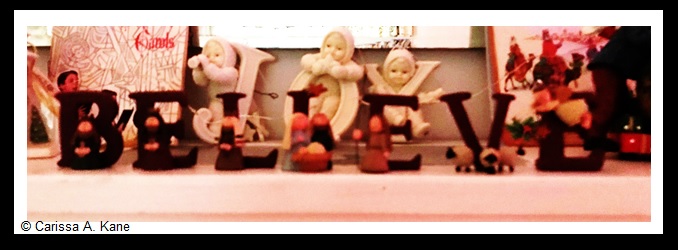
“Blessed are you who believed that what was spoken to you by the Lord would be fulfilled.” – Luke 1:45
As the minutes of daylight continue to decline and the shortest day of the year in the Northern Hemisphere approaches, life in December 2021 does not seem anywhere close to normal. However, it is at these times that opportunity abounds, if only we can meet the challenge of seeking the wisdom of balance and the choices of Light that reside between the stark contrast of opposites. And, while at times, it can seem bigger than life, and the odds improbable, looking to Mary, the Queen of Peace, one can trust it’s not impossible to experience the quiet strength of peace in troubling times.
Mary chooses to embrace the spirit of God, surrender her will and be led by God (Luke 1:26-38). Joseph, her betrothed, makes a similar choice (Matthew 1:18-24). In the eyes of the world, these choices can seem unimaginable. Why would anyone say yes to a choice that is bound to bring such harsh scrutiny, create gossip and skepticism, possible death in those times, and disgrace? Perhaps that’s why it’s never wise to judge a book by its cover. Only God can ever really know the truth of all that’s happening, and only God can ever truly influence choices that are genuinely for the greater good, even when others cannot understand them.
Mary’s “yes” and Joseph’s “yes” are certainly pivotal moments. What led them to being able to discern such choices? How did they know what to do? Sitting with their “yes’s,” the inspiration that can be drawn from them is tremendous, but it is also just the beginning.
In reflecting on what happened in those moments and in all the ones that followed, what is it like to imagine that even though the road did not get any easier, Mary and Joseph made it through not because of their own determination, but because God was with them, and they were led by the light of God?
“Among the tales of sorrow and of ruin that came down to us from the darkness of those days there are yet some in which amid weeping there is joy and under the shadow of death light that endures.” – J.R.R. Tolkien
The above quote seems so apropos for the world of today despite it being written many decades ago. Interesting how in every age there are things about which one can say, what’s old is new, and what’s new is old, or in other words some things are timeless.
Entering the 3rd week of Advent, the readings invite us to avail ourselves of God’s promise,
The Lord, your God, is in your midst, a mighty savior; he will rejoice over you with gladness, and renew you in his love, he will sing joyfully because of you, as one sings at festivals. – Zep 3:17-18a
To step over the darkness of our times,
God indeed is my savior; I am confident and unafraid. My strength and my courage is the Lord, and he has been my savior. – Is 12:2
And into the ever-present joy and light of the Lord.
Brothers and sisters: Rejoice in the Lord always. I shall say it again: rejoice! Your kindness should be known to all. The Lord is near. Have no anxiety at all, but in everything, by prayer and petition, with thanksgiving, make your requests known to God. Then the peace of God that surpasses all understanding will guard your hearts and minds in Christ Jesus. – Phil 4:4-7
As we wait in hope for the coming of the Lord, in what ways does the wisdom of God’s word resonate? How is the Spirit of the Lord present in these moments of waiting? In what ways do they create inspiration? And where do they spark peace and love… joy and light?
The crowds asked John the Baptist, “What should we do?” He said to them in reply, “Whoever has two cloaks should share with the person who has none. And whoever has food should do likewise.” Even tax collectors came to be baptized and they said to him, “Teacher, what should we do?” He answered them, “Stop collecting more than what is prescribed.” Soldiers also asked him, “And what is it that we should do?” He told them, “Do not practice extortion, do not falsely accuse anyone, and be satisfied with your wages.”
Now the people were filled with expectation, and all were asking in their hearts whether John might be the Christ. John answered them all, saying, “I am baptizing you with water, but one mightier than I is coming. I am not worthy to loosen the thongs of his sandals. He will baptize you with the Holy Spirit and fire. His winnowing fan is in his hand to clear his threshing floor and to gather the wheat into his barn, but the chaff he will burn with unquenchable fire.” Exhorting them in many other ways, he preached good news to the people. – Luke 3:10-18









 HopeThatFloats
You must be logged in to post a comment.