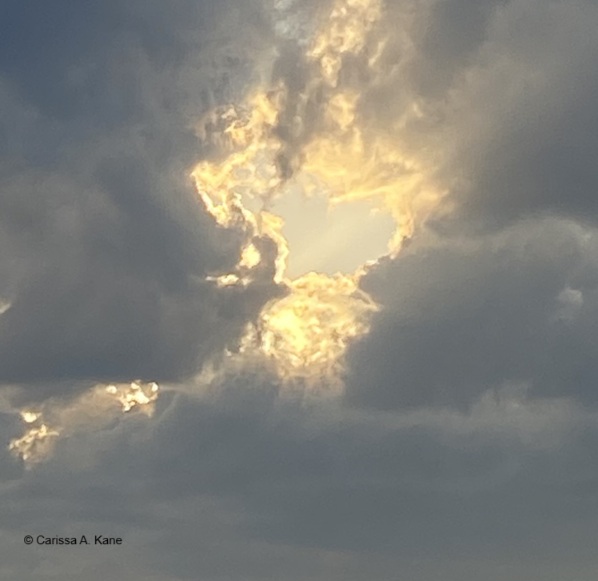
Throughout the night, shadows make their way, And by the light of day, they cast doubt. Sad, sorry, tragic! They think they know. They slink, they slide, they lie, steal, and cheat.
Snuffing out light and stomping on hope, Making little of all the deceit. They rely on breaking down goodness, Splitting up what once stood together.
They view resistance, a futile thing, Failing to recognize the power, The strength and speed, of Light that’s within. Feed the poor, care for the downtrodden.
Light travels and bends, it radiates, generously spreads out across time. Some wills have shadows that can’t stand truth. Only Thine will to be done through Christ.
I am the light of the world, says the Lord; whoever follows me will have the light of life. – John 8:12
In the Gospel passage for the Second Sunday in Ordinary Time, John the Baptist gives witness, or testimony, to Jesus being the Son of God.
John the Baptist saw Jesus coming toward him and said, “Behold, the Lamb of God, who takes away the sin of the world. He is the one of whom I said, ‘A man is coming after me who ranks ahead of me because he existed before me.’ I did not know him, but the reason why I came baptizing with water was that he might be made known to Israel.” John testified further, saying, “I saw the Spirit come down like a dove from heaven and remain upon him. I did not know him, but the one who sent me to baptize with water told me, ‘On whomever you see the Spirit come down and remain, he is the one who will baptize with the Holy Spirit.’ Now I have seen and testified that he is the Son of God.” – John 1:29-34
Notice how the passage starts with Jesus coming toward John and John, seeing Him, stating what he has come to know—Jesus is the Son of God. John doesn’t just make this statement or claim, out of thin air. The day before, as written in the previous verses of this Gospel, he was asked who he is, to which he responds, “I am ‘the voice of one crying out in the desert, ‘Make straight the way of the Lord,’ as Isaiah the prophet said.” (John 1:23). He continues, explaining to the priests, Levites, and Pharisees sent to question him that he is not the Messiah. John knows his God-given role and accepts it.
Praying with and reflecting on this passage, what have you come to know about your God-given role, and how does the grace of God reaffirm you in it, and help you to accept and live it out?
Contemplating John’s explanation of how he has come to know that Jesus is the Messiah, what do you make of John saying twice in this passage, “I did not know him”? What strikes you about the words that follow each, “I did not know him”?
I did not know him, but the reason why I came baptizing with water was that he might be made known to Israel.” John testified further, saying, “I saw the Spirit come down like a dove from heaven and remain upon him. I did not know him, but the one who sent me to baptize with water told me, ‘On whomever you see the Spirit come down and remain, he is the one who will baptize with the Holy Spirit.’
When you find yourself in a situation of not knowing, how do your instincts and what you know come together with, and make room for, God’s wisdom? How about when you find yourself in a situation where you think, or are sure, that you know?
The Gospel passage ends with John saying, “Now I have seen and testified that he is the Son of God.” Recount whatever comes to mind about what you have seen or experienced that is of God, and how you have come to know.
What is your testimony to God? (Keep in mind that there are many ways in which testimony can be given to God.) How do you desire to give witness to what you have come to know?
Here am I, Lord; I come to do your will. – Psalm 40: 8a, 9a
“The Holy Scriptures were not given to us that we should enclose them in books, but that we should engrave them upon our hearts.” ― St. John Chrysostom
Praying with the scripture readings for the Feast of the Exaltation of the Holy Cross (Numbers 21:4b-9; Psalm 78:1b-2, 34-38; Philippians 2:6-11; and John 3:3-17), contemplate what it means to engrave them upon your heart.
In the First Reading, we hear of the Israelites, at wit’s end, upset by their situation in the desert, and making it known to Moses. We also learn of the punishing arrival of saraph serpents, leading to the surmise of many, and the subsequent realization of sin and prayer for relief. Following this, Moses prays for the people to be spared from the serpents, and the Lord replies, “Make a saraph and mount it on a pole, and if any who have been bitten look at it, they will live.” (Numbers 21:8).
What do you make of the notion that to be cured, or to overcome the serpent’s bite, requires looking at the bronze serpent mounted on the pole?
Take some time to consider a situation or area in which your patience is worn thin, or where you have been bitten. What has your reaction or response been? And how might you ask for, and receive, God’s grace to move toward peace and healing—a better way?
The response for the Psalm (Psalm 78:1b-2, 34-38) is, “Do not forget the works of the Lord!” (Ps 78:7b). Like it was in the desert for the Israelites and Moses, it can be tempting for anyone to react or respond out of feelings of discontent or anger, when it feels like needs are not being met or answers are nowhere to be found. This psalm invites us to recall what is true. None of us are without mistakes and missteps along the way. Still though, God is merciful and forgiving. This psalm encourages us to recall and remember the ways that God has been, and is, steadfast toward us.
Think about your experience of God turning something bad into something good?
Throughout the week, in moments with or without concern or upset, pause to acknowledge and give praise to God for God’s faithfulness to you. Allow yourself the space and invite God into it, to help you to see the entire picture, and to remember what is true.
In the Letter of St. Paul to the Philippians (Philippians 2:6-11), it is written:
Christ Jesus, though he was in the form of God, did not regard equality with God something to be grasped. Rather, he emptied himself, taking the form of a slave, coming in human likeness; and found human in appearance, he humbled himself, becoming obedient to death, even death on a cross. Because of this, God greatly exalted him and bestowed on him the name that is above every name, that at the name of Jesus every knee should bend, of those in heaven and on earth and under the earth, and every tongue confess that Jesus Christ is Lord, to the glory of God the Father.
Continuing to pray with the thoughts, feelings, and situations that have come to mind and heart thus far, where might the words emptied, humbled, exalted, and bestowed—the past tense verbs used by St. Paul to describe actions of Jesus and God—be applicable or come into play? Ask the Lord to help you to identify ways that these words operate in your life, and what purpose they might be serving.
Turning to the Gospel passage (John 3:13-17), Jesus is mid-conversation with Nicodemus, a Pharisee who has come to see Jesus in the darkness of night. Nicodemus is trying to understand what Jesus means by, “no one can see the kingdom of God without being born from above.” (Jn 3:3).
What does being born from above mean to you?
For the Feast of the Exaltation of the Holy Cross, we are reminded of where, and who, we currently are—our place as well as our call—eternal life through Jesus.
In the Gospel passage, Jesus refers to Moses lifting up the bronze serpent in the desert and says, “so must the Son of Man be lifted up, so that everyone who believes in him may have eternal life.” (Jn 3:14-15). He knows that Nicodemus will be familiar with and understand what has been written in Scripture. However, an earmark of Jesus is to elevate and help us along toward living Scripture. This is what he is trying to do, when he follows up with:
“For God so loved the world that he gave his only Son, so that everyone who believes in him might not perish but might have eternal life. For God did not send his Son into the world to condemn the world, but that the world might be saved through him.” (Jn 3:16-17).
Enter into conversation with Jesus about these two verses, inviting him to elevate and help you along in your journey toward living Scripture, or living it more fully. When your prayer time comes to a close, add the following:
We adore you, O Christ, and we bless you, because by your Cross you have redeemed the world. – St. Francis of Assisi
Dependent on one’s point of view, and from one end of the spectrum, to the long, far away other, the distance between here and there, holds no relevance to the Heart.
For everyone who exalts himself will be humbled, but the one who humbles himself will be exalted. – Luke 14:11
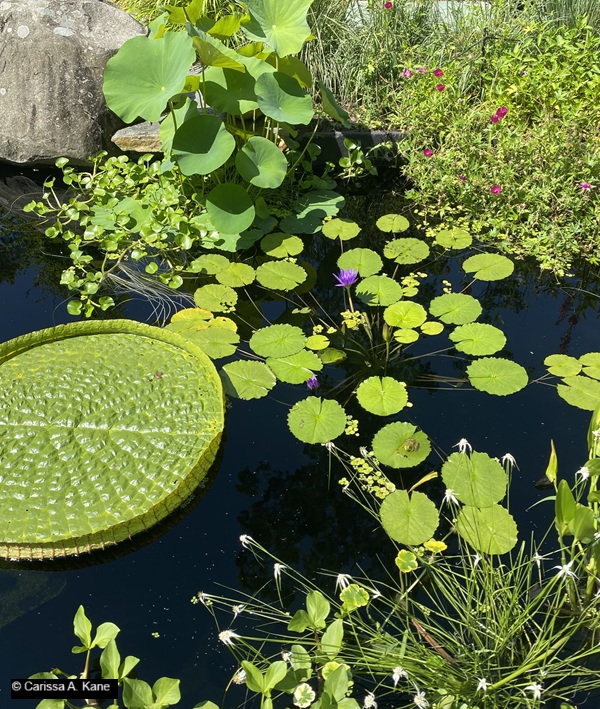
Like the lily In that One pond, Live in service, Remain faithful To creation.
Put on then, as God’s chosen ones, holy and beloved, heartfelt compassion, kindness, humility, gentleness, and patience, bearing with one another and forgiving one another, if one has a grievance against another; as the Lord has forgiven you, so must you also do. And over all these put on love, that is, the bond of perfection. – Colossians 3:12-14
Miniature minds flexing muscles, Washing brains, and rinsing guts out. Little things taking time, making strife, Acting big, or bigger than life. Right is right, except when it is not. Heart of God, heart of gold, not cold. Small hearts growing smaller all the time, Lost and losing, no way, no sight.
Walking, listening, thirsty to learn, Simon Peter wanted to see. Hungry to serve God, searching for Truth, Simon Peter humbled himself. Then came binding, loosing… holding keys. Simon Peter—rock—he could see.
When Jesus went into the region of Caesarea Philippi he asked his disciples, “Who do people say that the Son of Man is?” They replied, “Some say John the Baptist, others Elijah, still others Jeremiah or one of the prophets.” He said to them, “But who do you say that I am?” Simon Peter said in reply, “You are the Christ, the Son of the living God.” Jesus said to him in reply, “Blessed are you, Simon son of Jonah. For flesh and blood has not revealed this to you, but my heavenly Father. And so I say to you, you are Peter, and upon this rock I will build my Church, and the gates of the netherworld shall not prevail against it. I will give you the keys to the Kingdom of heaven. Whatever you bind on earth shall be bound in heaven; and whatever you loose on earth shall be loosed in heaven.” – Matthew 16:13-19
Eastertide through days and nights, forty… fifty… ever more. It is truly right and just, here, above, and all around. Presence of mind, truthful heart; the soul of goodness triumphs.
Genuine faith, obeying, not tyrant, nor king—Savior. Wanting good for goodness sake, bearing with things, not grasping, nor pulling apart, as if at odds, and fighting within.
In a boat fishing around, who’s there? What sides are you on? Is it right, or something else? Casting nets, or casting stones? From where does your wisdom come? What sentiments control you?
When they had finished breakfast, Jesus said to Simon Peter, “Simon, son of John, do you love me more than these?” Simon Peter answered him, “Yes, Lord, you know that I love you.” Jesus said to him, “Feed my lambs.”
He then said to Simon Peter a second time, “Simon, son of John, do you love me?” Simon Peter answered him, “Yes, Lord, you know that I love you.” Jesus said to him, “Tend my sheep.”
Jesus said to him the third time, “Simon, son of John, do you love me?” Peter was distressed that Jesus had said to him a third time, “Do you love me?” and he said to him, “Lord, you know everything; you know that I love you.” Jesus said to him, “Feed my sheep. – John 21:15-17
Working my way around, whether by chance or fate, again, once more, I hear, reverberations of, not stern warnings, but of wise voices of the past.
Just as justice for one, affects justice for all, mercy and compassion make the way to goodwill; offspring of love, made by, an even greater Love.
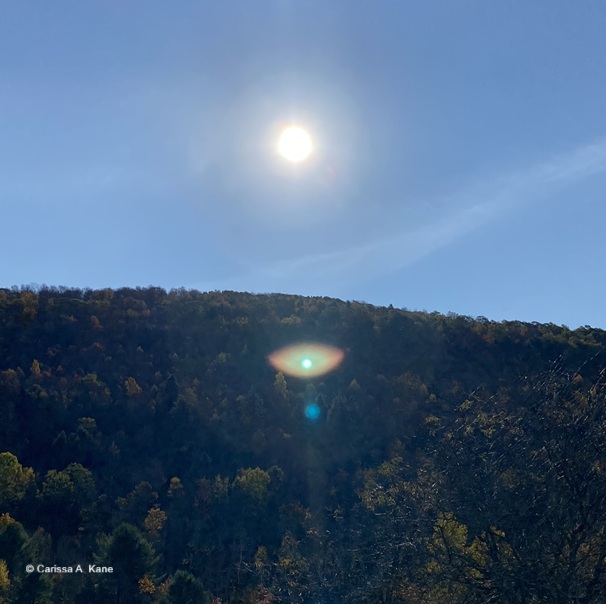
“From my point of view, God is the light that illuminates the darkness, even if it does not dissolve it, and a spark of divine light is within each of us.” – Pope Francis







 HopeThatFloats
You must be logged in to post a comment.