In a year where the Fourth Sunday of Advent falls on the same day as Christmas Eve (with the Christmas Vigil Mass), and in a world where it seems that there is a constant push toward an absolute one way or the other, but rarely a celebration of a little here, a little there, or somewhere in between, there lies a reminder of a better way.
Each year the Season of Advent is thought of as a period of waiting and Christmas as a period of celebrating the arrival of Jesus Christ, our Savior. And while we remember and participate in rituals each year, it can be easy to overlook the essence of these practices and to get lost in the ways in which we have come to proceed through them. With this, the opportunity to fully receive what is Divinely offered can become less.
Oftentimes, the greatest desire that many of us hold is the desire for peace (inner peace, peace within families/communities, world peace, etc.). And it is not uncommon to move, knowingly or not, toward external things or activities and attach a sense of peace to them, rather than to the joy they might bring to us as well as the real source of that joy and the peace that accompanies it—the Spirit of God.
Keeping in mind that peace is not possible without an openness to coexistence and unity, in what ways is your heart and mind open to peace? What strengths/challenges do you experience with regards to coexistence and unity in various situations? Where does this come up in your prayer life, and how is your sense of peace affected?
In a few days, when the Fourth Sunday of Advent and Christmas Eve (with the celebration of the Christmas Vigil Mass) share the day, envision it as an invitation to unity and, through it, peace. Take some time to reflect on the notion that what you desire is what you need, and what you are waiting for is already, in a sense, here. Then take some time to celebrate the goodness of the Lord.
Forever I will sing the goodness of the Lord. – Psalm 89:2A
The readings for the Seventeenth Sunday in Ordinary Time offer an opportunity to consider priorities and the values that elevate some over others.
In the first reading (1 Kgs 3:5, 7-12), we can see that Solomon acknowledges that although he is king, he needs God’s grace if his desire to rule wisely is going to be fulfilled. He knows that to do right requires more than his own knowledge, perception, and opinions. He understands that he needs to be able to have a sense of more than what he can surmise, and this is why he asks God for a discerning heart (and mind) when he could’ve asked for anything else at all. His top priority is not solely for himself, but for the benefit of all whom he serves as king.
In the psalm, we read the response, “Lord, I love your commands.” (Ps 119:97a). Again, we see reliance on God, as well as value and priority placed on God’s words as providing what is necessary. The psalmist tells of how God’s words are precious, carrying kindness and compassion, and expresses a desire to honor God’s words by living them (“For in all your precepts I go forward; every false way I hate” – Ps 119:128). Then the psalmist says, “The revelation of your words sheds light, gives understanding to the simple.” (Ps 119:130). Again, we see evidence of fulfillment of a desire for truth and understanding as well as a continued desire to be led by God. It’s important to remember that the psalmist has experienced the grace of God directly, just like Solomon. It is in the words of God through intimate, personal exchanges that Solomon and the psalmist come to know in a particular moment what is good and right and wise in God’s eyes.
When we read further, in the second reading, St. Paul stresses relationship with God. In essence, he is saying that when priorities and values are centered in and through God, we become like the Love who created us.
“We know that all things work for good for those who love God, who are called according to his purpose. For those he foreknew he also predestined to be conformed to the image of his Son, so that he might be the firstborn among many brothers and sisters. And those he predestined he also called; and those he called he also justified; and those he justified he also glorified.” – Rom 8:28-30
This brings us to the Gospel reading (Mt 13:44-52) and an invitation to prayer and reflection on priorities and values.
Jesus said to his disciples: “The kingdom of heaven is like a treasure buried in a field, which a person finds and hides again, and out of joy goes and sells all that he has and buys that field. Again, the kingdom of heaven is like a merchant searching for fine pearls. When he finds a pearl of great price, he goes and sells all that he has and buys it. Again, the kingdom of heaven is like a net thrown into the sea, which collects fish of every kind. When it is full they haul it ashore and sit down to put what is good into buckets. What is bad they throw away. Thus it will be at the end of the age. The angels will go out and separate the wicked from the righteous and throw them into the fiery furnace, where there will be wailing and grinding of teeth.
“Do you understand all these things?” They answered, “Yes.” And he replied, “Then every scribe who has been instructed in the kingdom of heaven is like the head of a household who brings from his storeroom both the new and the old.” – Mt 13:44-52
The word of God is the revelation of God, and through our graced experiences, we participate in the living word of God. Take some time to pray and reflect on your life through the lens of being a participant in the word of God? What comes to mind? What feelings arise from within? And in what ways do you feel inspired by the word of God, yesterday… today… as you think about the future?
The readings for the Thirty-third Sunday in Ordinary Time extend an opportunity to think about one’s relationship with Jesus and reflect on how justice and perseverance come into play. In the first reading (Mal 3:19-20a), we read the phrase, “the sun of justice with its healing rays.” How have you experienced the healing rays of justice? In what ways do you impart the fruits of that healing in your daily life?
In the responsorial psalm (Ps 98:5-6, 7-8, 9), we read:
Let the rivers clap their hands, the mountains shout with them for joy, Before the Lord who comes, who comes to govern the earth, To govern the world with justice and the peoples with fairness. – Psalm 98:8-9
Envision something that recently brought you joy and excitement. How did it impact the people and the environment around you? Was everyone happy? Was anyone affected in a way that was not beneficial? Where do sense Jesus was in this situation?
Now, let’s take a step back. Consider this: What is your understanding and experience of justice and fairness? Can you think of some examples of the two? Do they include situations where there may be no personal benefit involved? How is your understanding and application of justice and fairness influenced by the example of Jesus’s life, death, and resurrection, and the many parables he told?
In the second reading (2Thes 3:7-12), St. Paul reminds the Thessalonians of how he, Silvanus, and Timothy have behaved and urges them to do likewise.
Brothers and sisters: You know how one must imitate us. For we did not act in a disorderly way among you, nor did we eat food received free from anyone. On the contrary, in toil and drudgery, night and day we worked, so as not to burden any of you. Not that we do not have the right. Rather, we wanted to present ourselves as a model for you, so that you might imitate us. In fact, when we were with you, we instructed you that if anyone was unwilling to work, neither should that one eat. We hear that some are conducting themselves among you in a disorderly way, by not keeping busy but minding the business of others. Such people we instruct and urge in the Lord Jesus Christ to work quietly and to eat their own food. – 2Thes 3:7-12
As you contemplate St. Paul’s words to the Thessalonians calling on them to focus on their work and to persevere in faith so as not to become idle and then “disorderly,” by getting caught up or interfering in the business of others, what strikes you most? With the current state of many things in the world, what insight(s) can you draw from this passage? In what ways do you experience Jesus in the places that have been capturing your focus these days?
Looking to the Gospel passage (Lk 21:5-19 included below), Jesus speaks of what’s to come, understood as the end of days. He essentially tells those who are listening, do not fall prey to being distracted by the signs and chaos around you, and do not be worried about how to respond or react, but rather, stay focused on me, and I will help you to know what to say… what to do. The passage closes with Jesus saying, “By your perseverance you will secure your lives.” How do you know the difference between being driven by the perseverance of faith in Jesus and being driven by your own sheer will masked as perseverance of faith in Jesus?
The Gospel verses taken together, tell us that the answers are not predetermined or black and white, but are all encompassing, pure, and speak to the uniqueness of each moment that can often escape the human mind and heart. Jesus, through his abundant love and wisdom, knows the importance, and all the implications of each moment, far better than anyone else could ever know. So, when we stay focused on Jesus with a desire to follow him, we can overcome any obstacles in ways that imitate the example of Jesus and honor the glory of God. And in doing so, we receive the grace we need to meet each moment.
What’s it like to envision justice and perseverance of faith in Jesus as a call of discipleship to surrender to Jesus in each moment, remembering his example, no matter what the moment holds, with a willingness to evolve, allowing room for movement? How might this influence the things you celebrate, and the things you don’t?
“Power at its best is love implementing the demands of justice, and justice at its best is power correcting everything that stands against love.” – Martin Luther King, Jr.
While some people were speaking about how the temple was adorned with costly stones and votive offerings, Jesus said, “All that you see here– the days will come when there will not be left a stone upon another stone that will not be thrown down.”
Then they asked him, “Teacher, when will this happen? And what sign will there be when all these things are about to happen?” He answered, “See that you not be deceived, for many will come in my name, saying, ‘I am he,’ and ‘The time has come.’ Do not follow them! When you hear of wars and insurrections, do not be terrified; for such things must happen first, but it will not immediately be the end.” Then he said to them, “Nation will rise against nation, and kingdom against kingdom. There will be powerful earthquakes, famines, and plagues from place to place; and awesome sights and mighty signs will come from the sky.
“Before all this happens, however, they will seize and persecute you, they will hand you over to the synagogues and to prisons, and they will have you led before kings and governors because of my name. It will lead to your giving testimony. Remember, you are not to prepare your defense beforehand, for I myself shall give you a wisdom in speaking that all your adversaries will be powerless to resist or refute. You will even be handed over by parents, brothers, relatives, and friends, and they will put some of you to death. You will be hated by all because of my name, but not a hair on your head will be destroyed. By your perseverance you will secure your lives.” – Lk 21:5-19
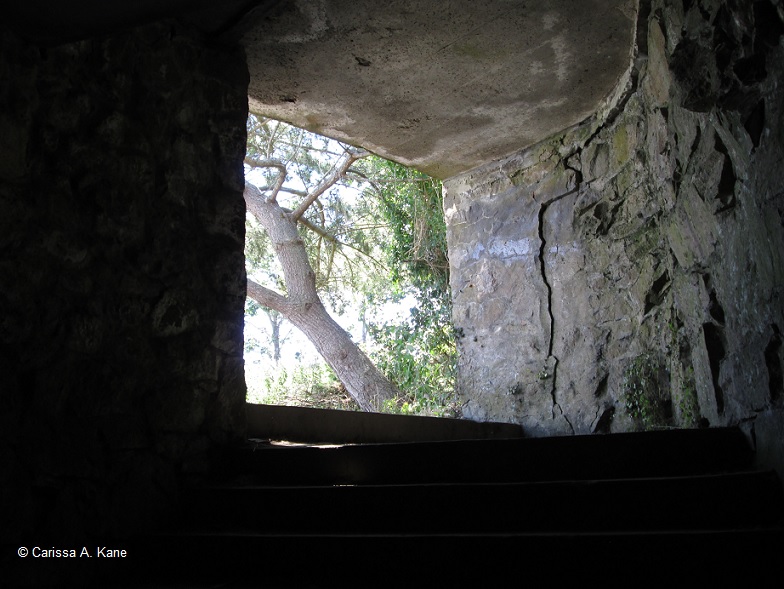
Heading out to somewhere that was new to us, we carried an excitement along the way. After quite some time on foot and feeling a little weary, we unexpectedly came to a tunnel. We had no idea how long it was or what was involved in getting through it. On top of that, all we could see was that it was pitch black inside. However, knowing it was part of the route and using one of the tools we had, a cellphone flashlight, we proceeded step by step, shining the light so we could see, and making our way through each curve until eventually we saw light coming from the opening on the other side.
However, if we didn’t have a flashlight, or a tool, to help us navigate through the darkness, I’m not sure we would have gone through that tunnel. Instead, we probably would’ve found a way around it or turned around and headed back to where we began. And, while finding a way around an obstacle or avoiding it, may be harmless in some cases, in others it is not. Sometimes the measures one may take to circumnavigate or escape a situation, may also lead to compromising, in one way or another, the well-being of oneself and/or others.
Considering the readings for the Twenty-seventh Sunday in Ordinary Time, they provide advice, wisdom, and encouragement to strive to serve God, not man, and to trust in God’s plan and in God’s ways. This is important no matter the time or place, but most especially in troubling or challenging times and environments.
If the knowledge that there is light at the end of the tunnel, and a way to make it through darkness, was enough to sustain courage, integrity, and faithfulness on its own, humankind would not fall prey to the shortcuts, traps, and tricks along the way. Faith is the tool that holds the keys and keeps one and all together; hearts, souls, and minds. It enables one “to be more than,” infused with grace, driven by truth and trust to face challenges, and find and follow the way through darkness; oftentimes leading one to discover a depth they never knew existed within them.
Take some time to read the Scripture passages from the Twenty-seventh Sunday in Ordinary Time (Hab 1:2-3; 2:2-4, Ps 95:1-2, 6-7, 8-9, 2 Tm 1:6-8, 13-14, and Lk 17:5-10 – shown below). Contemplate them in relation to today’s world. What are your concerns? What are some of the phrases or images that inspire you? Allow your heart and mind to draw together. Invite Jesus into the process and see what happens.
How long, O Lord? I cry for help but you do not listen! I cry out to you, “Violence!” but you do not intervene. Why do you let me see ruin; why must I look at misery? Destruction and violence are before me; there is strife, and clamorous discord. Then the Lord answered me and said: Write down the vision clearly upon the tablets, so that one can read it readily. For the vision still has its time, presses on to fulfillment, and will not disappoint; if it delays, wait for it, it will surely come, it will not be late. The rash one has no integrity; but the just one, because of his faith, shall live. – Hab 1:2-3; 2:2-4
R. If today you hear his voice, harden not your hearts. Come, let us sing joyfully to the Lord; let us acclaim the Rock of our salvation. Let us come into his presence with thanksgiving; let us joyfully sing psalms to him. R. If today you hear his voice, harden not your hearts. Come, let us bow down in worship; let us kneel before the Lord who made us. For he is our God, and we are the people he shepherds, the flock he guides. R. If today you hear his voice, harden not your hearts. Oh, that today you would hear his voice: “Harden not your hearts as at Meribah, as in the day of Massah in the desert, Where your fathers tempted me; they tested me though they had seen my works.” R. If today you hear his voice, harden not your hearts. – Ps 95:1-2, 6-7, 8-9
Beloved: I remind you, to stir into flame the gift of God that you have through the imposition of my hands. For God did not give us a spirit of cowardice but rather of power and love and self-control. So do not be ashamed of your testimony to our Lord, nor of me, a prisoner for his sake; but bear your share of hardship for the gospel with the strength that comes from God. Take as your norm the sound words that you heard from me, in the faith and love that are in Christ Jesus. Guard this rich trust with the help of the Holy Spirit that dwells within us. – 2 Tm 1:6-8, 13-14
The apostles said to the Lord, “Increase our faith.” The Lord replied, “If you have faith the size of a mustard seed, you would say to this mulberry tree, ‘Be uprooted and planted in the sea,’ and it would obey you. “Who among you would say to your servant who has just come in from plowing or tending sheep in the field, ‘Come here immediately and take your place at table’? Would he not rather say to him, ‘Prepare something for me to eat. Put on your apron and wait on me while I eat and drink. You may eat and drink when I am finished’? Is he grateful to that servant because he did what was commanded? So should it be with you. When you have done all you have been commanded, say, ‘We are unprofitable servants; we have done what we were obliged to do.'” – Lk 17:5-10
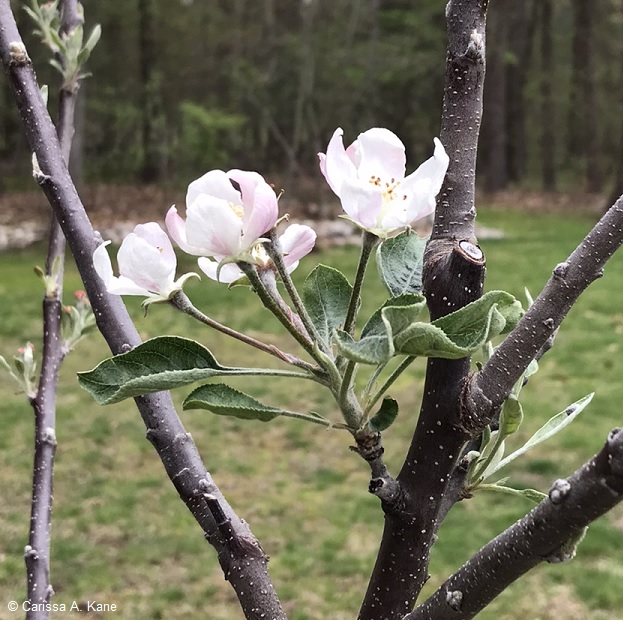
Watching as the branches fill in, flowers blossom, pollen wafts through the air, and Spring burgeons and unfolds, there is a sense of awe. In the Book of Revelation, it is written, “The One who sat on the throne said, ‘Behold, I make all things new.’” (Rev 21:5a). Not some things, or only certain things, but all things. Thinking about this, I cannot help but consider this concept further and ask, “Am I open to all things being made new by God?”
The flowers grow and open, pretty much wherever they are planted. And certainly, there are some conditions necessary for their maturity and well-being—light, water, nutrients, and some level of protection from harsher elements and realities. However, the things vital to their growth can be found or seep in even in unexpected places, and overall, flowers grow where they will.
In chapter 14, verses 21-27, of the Acts of the Apostles, we continue to learn of the experiences of Paul and Barnabas as they travel on, inspired by their discipleship desire. Their journey leads them back to Antioch, the place of resistance from where they were expelled in chapter 13.
It is written:
“From there they sailed to Antioch, where they had been commended to the grace of God for the work they had now accomplished. And when they arrived, they called the church together and reported what God had done with them and how he had opened the door of faith to the Gentiles.” – (verses 26-27)
Imagine. God called them to something more, launching something new from the very place that was not open to receiving them at the time. It turns out God had somewhere else in mind for them. How did they react or respond?
Paul and Barnabas were willing to let go of their notions and allow themselves to be led to other territories where they not only experienced what God had in mind, but also deepened their faith. Eventually, they were led back to Antioch, where, because of God who makes all things new, they were able to meet resistance with something more, something stronger, faithful witness to the Glory of God.
So just as flowers grow where they will, so too Paul and Barnabas… so too us. If we are open to it.
The Prophet Isaiah foretold of John the Baptist, the voice crying out in the desert, urging people to make themselves ready to receive the Lord. And while it is true that earthly life can be viewed as a process of preparing for eternal life, it is so much more than a checklist based upon human understanding. So, while it may be tempting to repeat the sounding joy by clinging to what one knows during the season of Advent, no preparation would be complete without moving beyond our own ideas about it and allowing ourselves some time to steep in the love of God more deeply, and then to be led by it.
The way of the Lord has already been prepared. Not just for the Lord, but also for all those who wish to claim and proclaim their inheritance as God’s people. We must remember that we’re not called to be like John the Baptist. We’re called to be like Jesus. How does, and how can, God help our individual ways to greater reflect the beauty and goodness of the Way? And are we willing to go there?
In the fifteenth year of the reign of Tiberius Caesar, when Pontius Pilate was governor of Judea, and Herod was tetrarch of Galilee, and his brother Philip tetrarch of the region of Ituraea and Trachonitis, and Lysanias was tetrarch of Abilene, during the high priesthood of Annas and Caiaphas, the word of God came to John the son of Zechariah in the desert. John went throughout the whole region of the Jordan, proclaiming a baptism of repentance for the forgiveness of sins, as it is written in the book of the words of the prophet Isaiah: A voice of one crying out in the desert: “Prepare the way of the Lord, make straight his paths. Every valley shall be filled and every mountain and hill shall be made low. The winding roads shall be made straight, and the rough ways made smooth, and all flesh shall see the salvation of God.” – Luke 3:1-6
Henri Nouwen wrote, “Self-knowledge and self-love are the fruit of knowing and loving God. You can see better then what is intended by the great commandment to “love the Lord your God with all your heart, with all your soul, and with all your mind, and to love your neighbor as yourself.” Laying our hearts totally open to God leads to a love of ourselves that enables us to give wholehearted love to our fellow human beings. In the seclusion of our hearts we learn to know the hidden presence of God; and with that spiritual knowledge we can lead a loving life.”
In other words, authentic love starts within, builds and grows through self-discovery and conscious connection to God. It is by this process that hearts are moved toward love in the way they exist and what they exude to the outside world.
In chapter 12 of the Gospel according to Mark, we see an example of interactions similar to those that are so prevalent these days. It is very clear that there are two sides with two very different objectives. What’s going on in the hearts and minds of each side? What’s the priority?
The chapter starts with Jesus telling the Parable of the Tenants—tenant farmers who refuse to pay the owner of the vineyard and beat and/or kill the people sent to collect the owner’s due. They even kill the vineyard owner’s son—they do not recognize him. Knowing that Jesus is calling them out in the telling of this parable, the Pharisees, scribes, and elders want to arrest him.
What makes them so quick to become so defensive? Did they stop to look inside and invite God into the process before labeling Jesus as the enemy and beginning to determine a course of action? What makes them so offended by Jesus’ words and actions?
As the chapter continues, Pharisees and Herodians, and then Sadducees are sent to question Jesus about taxes (should they pay Caesar or not? – verses 13-17) and about resurrection (how is the law of marriage applied for the widower of seven brothers and with no descendants? – verses 18-27). And Jesus’ nature continues to shine through as he continues to speak truth, conveying and citing the Word of God in his replies. He does not get rattled or fall for the attempts to manipulate him.
“Repay to Caesar what belongs to Caesar and to God what belongs to God” (verse 17).
“When they rise from the dead, they neither marry nor are given in marriage, but they are like the angels in heaven. As for the dead being raised, have you not read in the Book of Moses, in the passage about the bush, how God told him, ‘I am the God of Abraham, [the] God of Isaac, and [the] God of Jacob’? He is not God of the dead but of the living. You are greatly misled” (verses 25-27).
Despite knowing, not speculating, but actually knowing what they are trying to do, Jesus does not become defensive or aggressive, or try to avoid them and their questions—he has nothing to hide. He simply answers the questions truthfully, shedding light and putting focus on the real issue—the motives behind behavior. This leads to the question always worth asking, “In all honesty, who or what is being served, and how?” In this case, and in any day and age, lack of integrity and inability to recognize, and live in, truth is not of service to God, or anyone for that matter.
This brings us to the verses of chapter 12 referred to as “The Greatest Commandment”:
One of the scribes came to Jesus and asked him, “Which is the first of all the commandments?” Jesus replied, “The first is this: Hear, O Israel! The Lord our God is Lord alone! You shall love the Lord your God with all your heart, with all your soul, with all your mind, and with all your strength. The second is this: You shall love your neighbor as yourself. There is no other commandment greater than these.” The scribe said to him, “Well said, teacher. You are right in saying, ‘He is One and there is no other than he.’ And ‘to love him with all your heart, with all your understanding, with all your strength, and to love your neighbor as yourself’ is worth more than all burnt offerings and sacrifices.” And when Jesus saw that he answered with understanding, he said to him, “You are not far from the kingdom of God.” And no one dared to ask him any more questions. – Mark 12:28-34
Loving God with all of one’s being followed by loving one’s neighbor as oneself is to be the object of one’s striving day in and day out. As any human being can attest, this can be challenging and sometimes a downright struggle, and when left to our own devices it’s impossible. However, when we look at chapter 12 of the Gospel according to Mark, we can see in Jesus’ example of facing adversity with peace, honesty, and integrity, how a close relationship with God broadens the horizon, opening hearts and minds to the true meaning of Scripture, influencing speech and action, and revealing truth to all who are willing to embrace and engage in it over everything else (ambitions, possessions, self-interest, etc.).
With Jesus, the invitation is always open, and it doesn’t matter what you bring to the table, so much as a desire for what is true, what you are willing to let go of in order to learn, and the spirit with which you carry it out into the world.
I remember as a young student feeling fascinated as I learned all about the human heart, its functions and their importance. I was most amazed by the strength of the heart and its capacity, pumping 2,000 gallons of blood each day throughout the body. It wouldn’t be until years later that my amazement would become even greater in coming to understand the heart’s greatest asset—the rhythm, steady and strong, seeking to draw one closer, revealing God, and yearning not only to keep the connection of love, peace, and healing going, but also to help it to thrive without bounds. As the 13th century Persian poet, Rumi, wrote, “Love is the bridge between you and everything.”
In chapter 7 of the Gospel according to Mark, Jesus says to the Pharisees,
“Well did Isaiah prophesy about you hypocrites, as it is written:
This people honors me with their lips,
but their hearts are far from me;
in vain do they worship me,
teaching as doctrines human precepts.
You disregard God’s commandment but cling to human tradition.” (Mk 7:6-8)
Jesus is calling on them to be honest… to look more closely and to see that their hearts are not leading them in union with God. Their love has become misplaced. It is self-serving and focused on what is earthly rather than what is truly, right and just. Their words and actions do not come together to reflect the beauty of God’s goodness—the law that is placed in every heart—dignity, care, and love of all who are placed alongside us whether in location, heart, or mind.
This same love is what the author of the Letter of James is calling people to when he writes,
“Know this, my dear brothers: everyone should be quick to hear, slow to speak, slow to wrath,
for the wrath of a man does not accomplish the righteousness of God.
Therefore, put away all filth and evil excess and humbly welcome the word that has been planted in you and is able to save your souls.
Be doers of the word and not hearers only, deluding yourselves.” – Jas 1:19-22
No matter where one might be, or the circumstances that exist, Love is the only true hope there is. And while there may be many things that seem beyond reach, or out of control, Love is the anchor that holds us altogether, moves us into action, and brings peace, or peace of mind, strength, truth and justice, never growing cold.
Looking into the world of nature, it can be very easy to come across what makes for a beautiful picture. Whether one’s eye is caught by a single object or multiple ones combining to create a scene that captivates and captures attention, it all starts with posture.
The picture below was taken at the base of a road on the way back down, after having traveled it to the top of a mountain. The way that everything came together and seemed to fall into place in the moments we happened upon it, was rather striking. As we were returning from the summit on a sunny, gorgeous day, the sun was quickly overtaken by fast moving clouds, and as we drove, we moved in and out of brief periods of rain. However, once we reached the base, things looked much brighter. Then, not much further along, we entered the scene. It was like stepping into a painted landscape.
Again, everything—road, rock wall, water, building, sand, trees, and sky—seemed to come together, bringing out the best of what that day and time could offer, and it was perfect. Unity and peace within rising above and beyond turbulence. Not only a pretty sight or precious thought, but also at the heart of faith and faithfulness—the way in which one works, lives, and cooperates with the grace of God, who resides within us, and in whose image, we are all created.
What one carries or holds onto as they journey, quite literally, impacts everything—reception, perception, reaction, response, etc.
Brothers and sisters: I, a prisoner for the Lord, urge you to live in a manner worthy of the call you have received, with all humility and gentleness, with patience, bearing with one another through love, striving to preserve the unity of the spirit through the bond of peace: one body and one Spirit, as you were also called to the one hope of your call; one Lord, one faith, one baptism; one God and Father of all, who is over all and through all and in all. – Eph 4:1-6
In chapter 5 of the Gospel according to Mark, the saving power of Jesus is revealed in the healing of the man with unclean spirits (the Gerasene demoniac), the woman who had been hemorrhaging for 12 years, and the daughter of Jairus, a synagogue official. In all three cases, Jesus acts differently than what is expected, in that he is not afraid to meet and embrace those who have met misfortune, and are viewed as less than, and he does not treat anyone or anything as a lost cause or beyond repair. Because of this, even though what he has to offer is beneficial, to those who are married to one way of being he is seen as someone to be weary of and who is dangerous.
When Jesus heals the demoniac, sending the unclean spirits into a herd of swine who then head over the bank and into the sea where they meet their demise, folks become afraid. They cannot see the miracle in the healing that has taken place and ask him to leave. He does get in the boat and depart back to the other side. However, he also remains. The man he healed takes heed in Jesus’s instructions to him. In staying behind, Jesus is with him, and the man gives witness to what the Lord has done for him.
When the hemorrhaging woman touches his cloak, Jesus, who is on the way to heal the synagogue official’s daughter, stops, and takes time not only to seek and find the woman he has just healed, but also to engage with her. Despite fear, the woman comes forward to own, or to claim, the truth. In doing so, she is met, not with a critical, harsh, or condescending response, but rather with affirmation. She believed in Jesus and was willing to take a leap and trust in the healing that she sensed he could bring, when she dared to reached out to touch his garment as he passed by. With Jesus, there is no such thing as too little, too late, not worthwhile, or not enough time.
When it is announced that the synagogue official’s daughter is dead, and that he is no longer needed, Jesus does not turn away. He tells the girl’s father, “Do not be afraid. Just have faith.” (v. 36). Despite the news and being ridiculed by others, Jesus proceeds to their house and wakes the girl up. With Jesus, nothing is impossible.
As a Christian, one is called to follow Jesus, embracing the Way, and striving, through the grace of God, to live it. As challenging, uncomfortable, or unpopular as it may be, oftentimes, this requires change and evolution. Sometimes it may mean the opposite or a variation of the new ways and examples happening in the world, and at other times, it may mean the opposite or a variation of the old ways. Either way, the constant is Love, and the question is whether we trust God enough to let Love be the author.
It’s an incredible mystery of God’s love that the more you know how deeply you are loved, the more you will see how deeply your sisters and your brothers in the human family are loved. – Henri Nouwen














 HopeThatFloats
You must be logged in to post a comment.