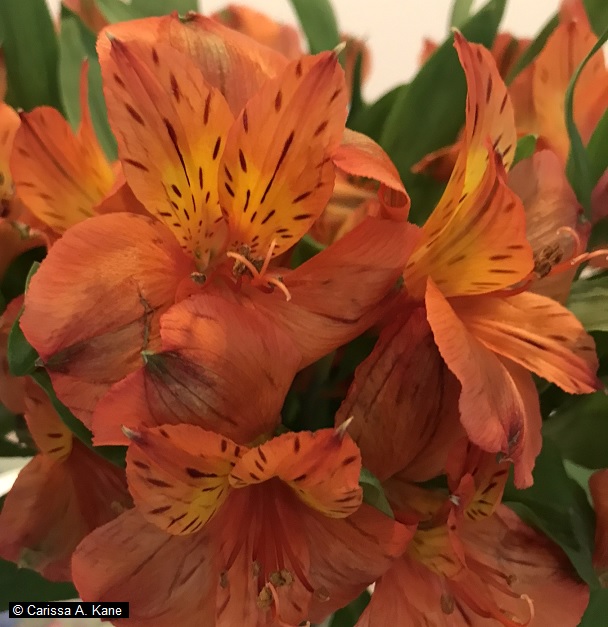
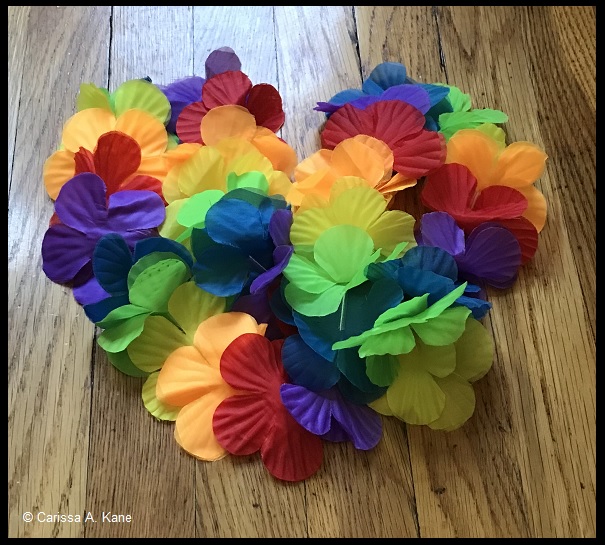
Listen to the flowers As they huddle together. From one petal to another, Be attentive they say, Perhaps in various states of array, All rising from one stem, but in their own way. Looking around, what do they see? What’s happening? What’s that, you say? Cacophony must not dissuade. Take heart and persevere, Regardless of whatever, either, or any way. From one petal to another, Life goes on, and Eternity prevails In taking great care And consideration of each other. Listen to the flowers, From one petal to another, They are one, though many, As they “humble” together.
“Your neighbor is your other self dwelling behind a wall. In understanding, all walls shall fall down. Who knows but that your neighbor is your better self wearing another body? See that you love him as you would yourself. He too is a manifestation of the Most High, whom you do not know.” – Kahlil Gibran
Breaking hearts, Breaking hope. Acting without thought. Wondering without feeling. What kind of way is that? What kind of life is that?
Dribbles and drabbles, The weight of punches and kicks, Bit by bit and day over day, Knocking down, Breathing threats, And more than wrath. What gives? Who?… No, what is being satisfied? How much? How many? Will it ever be enough? Even the mirror turns away. Come on now, Wake up and try to see. That’s no kind of life. That’s no kind of way.
Take a roundabout, But stop somewhere in the middle. Make a life, make a way. Swim upstream for a change. Make it new, make it better. Ask for courage, take in grace, Wash away the mud. Stand next to, and up, for those in need. That’s the way to travel, Kind—that’s the Way to Life.
You cannot serve both God and mammon. – Luke 13:16
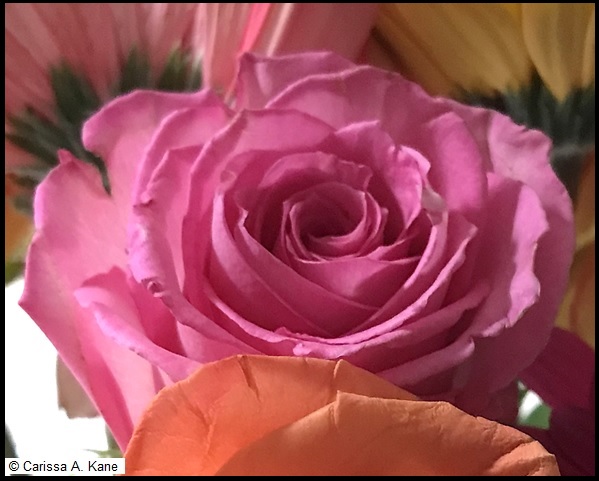
Kahlil Gibran wrote, “The optimist sees the rose and not its thorns; the pessimist stares at the thorns, oblivious of the rose.” Looking at the circumstances occurring around the world today, one might wonder how on earth it is possible to not see thorns and weeds run amok. However, also happening around the world at the same time as all these daunting occurrences are ones that inspire and give cause to celebrate.
Perhaps within these days, too, there is opportunity to hold a broader view and to seek the hope that is awaiting in each moment, in each act of love, kindness, mercy, and compassion. But first, a pause. Maybe there is a letting go or taking up that needs some space to allow it to unfold. These kinds of times are also often great for working through unrest and moving closer, if not to the side of peace.
Imagine a rose without thorns. Is it perfect? Is it incomplete? Either way, honesty urges taking in the entire picture, whether of something familiar or something unknown. For that is when truth comes into view, and with it, a return to what is real. Yet, all along the way, Wisdom softly calls, although we may evolve, sometimes resist, or dig in, there is always something greater happening here. In fact, there is always something greater happening everywhere. Yes, and it is worthwhile to behold.
Lord, you have been our refuge through all generations. – Psalm 90:1
Walking along the pace is brisk in some places and much slower and methodical at others. The path so concrete, laid out as clear as day, but then seemingly disappearing, leaving those travelling it to take stock… to figure the way forward that safely, or maybe wisely, fits them best. Yet, sometimes the “where I am” and “where I want to be” do not meet, or maybe just not yet.
A process that makes time, and the taking of it, not only a good thing, but also a necessary thing. Overall, a journey building upon itself before coming to the end of the trek, or this one, on this plane, at least, and landing on stable ground, or rather learning to be steady on whatever the ground may be.
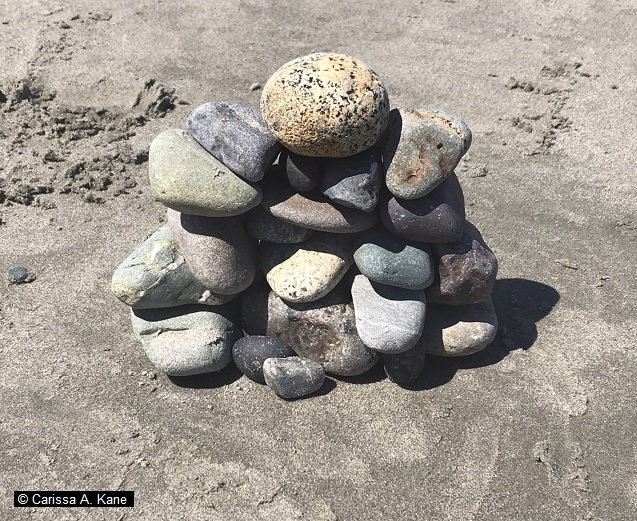
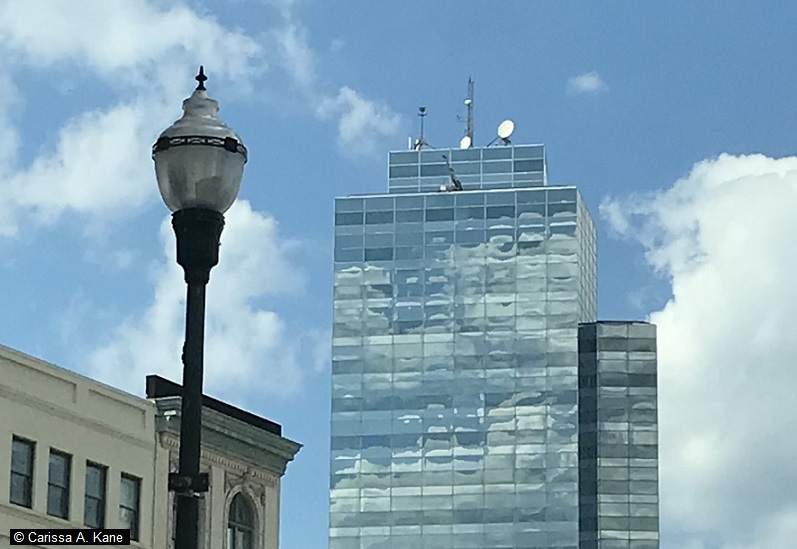
While some building may call for a single column as if marking the way, some calls are for branching out, and lending support. Still rising, tall and strong, a new look on a familiar way, always moving, continuing the journey, sometimes quick, slower at others, maybe even coming to a pause, but ultimately, always moving toward, if not with, greater depth.
Make straight paths for your feet, that what is lame may not be dislocated but healed. – Heb 12:13
With current day events, we hear and see a great deal about witnesses and influence or power. Yet, oftentimes, information can be skewed or lacking in merit, but still repeated and passed along as fact. This isn’t a new problem, though. Perhaps it is more rampant, but nonetheless it has always been the case that for any situation, it is best when sifted through more than once and held in context, but also alongside openness to truth, no matter what, and a desire to earnestly look at the entire picture. This cannot be done with a battlefield attitude or a mindset of “me against you” or “us against them.”
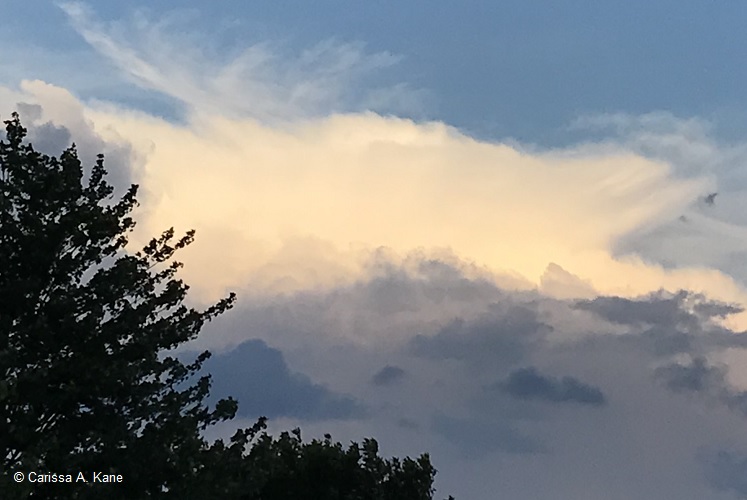
In chapter twelve of the letter to the Hebrews, St. Paul encourages the people as brothers and sisters, which is the way that he usually refers to the intended recipients of his letters and preaching, to let go of the things that hold them back, and to take comfort, draw strength, and be inspired by the example and sacrifice of Jesus Christ, as Lord and Savior. He starts out this passage reminding his audience of who they really are—brothers and sisters. Then, another reminder when he writes, “Since we are surrounded by so great a cloud of witnesses…” It’s interesting to pause there and not only sit with that image, but also reflect upon it in a personal way. Who is in your cloud of witnesses? How have they influenced you? And you them? Also, what is behind that influence?
Brothers and sisters: Since we are surrounded by so great a cloud of witnesses, let us rid ourselves of every burden and sin that clings to us and persevere in running the race that lies before us while keeping our eyes fixed on Jesus, the leader and perfecter of faith. – Hebrews 12:1-2
It’s challenging, to say the least, to live in a world where tangible assets not only overwhelmingly drive motivation, but also speculation and modes of operation. And even more than that, status and materialism push humankind toward pursuits that are often so far removed from the stirrings and movements of grace that seek to connect and strengthen hearts.
St. Ignatius of Loyola wrote, “For it is not knowing much, but realizing and relishing things interiorly, that contents and satisfies the soul.” Yet, as suggested in Ecclesiastes, the human condition is such that we continue to toil under the sun to know more, do more, win more, and so on. But for what kind of gain? and at what cost?
Here is one who has labored with wisdom and knowledge and skill, and yet to another who has not labored over it, he must leave property. This also is vanity and a great misfortune. For what profit comes to man from all the toil and anxiety of heart with which he has labored under the sun? All his days sorrow and grief are his occupation; even at night his mind is not at rest. This also is vanity. – Ecc 2:21-23
Looking around, or tuning in to the pulse of society, one can only wonder, with that beat, what kind of “more” will ever be enough? And in the process, what happens to the hearts involved? There’s ebb and flow of course, but in what ways and to what degree do they drift? And at what point does the unfamiliar become all too familiar?
Turning to Psalm 95, the psalmist writes, “If today you hear God’s voice, harden not your hearts.” Before that, a call to turn back to the One who knows.
Teach us to number our days aright, that we may gain wisdom of heart. – Ps 90:12
Remember, ask and you shall receive. However, as always, there’s choice in how one responds.
St. Paul urges us forward, let go of that which binds one to the earth and drags one down. Instead, be grounded to, as well as through, that which is elevated and fulfilling in a far greater way.
If then you were raised with Christ, seek what is above, where Christ is seated at the right hand of God. Think of what is above, not of what is on earth. – Col 3:1-2
Be true… be not only baptized into Christ, but also put on Christ. Think about it. How does the heart and mind of Christ infuse your soul? How does it influence choices as you face challenges and navigate this world?
In the Gospel according to Luke (chapter 12:13-21), Jesus tells the parable of the rich man who had such a surplus at harvest that he replaced his barns with even bigger ones so he could essentially rest on his laurels and live off all that he had store up. While this parable can lead one to reflect on possessions and sharing or helping others from what one has, it can also be a catalyst to considering more closely how one’s pursuits affect the fabric of one’s being. Aside from the tangible, from what has one’s heart moved away? To what has one’s heart moved toward? And most importantly, where is God in all of that?
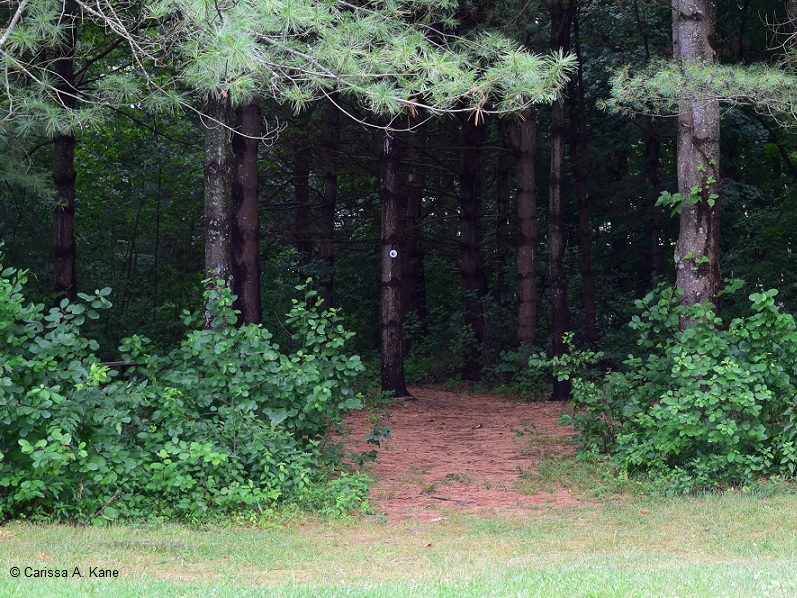
Scanning the area around me, I come across a sign. It marks a trail that cuts through, or rather that is cut through by a lot for parking cars. Noticing how small the trail marker is, I walk closer to see it more clearly. It’s interesting how sometimes signs just seem to pop up, or not. Yet, I am reminded that whether it has been noticed or not, this sign has been here for quite some time. Somehow though, perhaps depending on what one comes looking for and with what type of disposition or intention, it’s understandable how it might go unnoticed. Yet, not to worry, there are other signs too. More places along the path, sprinkled all throughout. Quietly waiting… and waiting, until the moment is ripe, then drawing in what once was looking, but now is seeking, and ready to be guided.
Yes, it is true, “What you seek is seeking you.” –Rumi. However, it can be missed when one is persistent in a fruitless direction. Sometimes one must learn to let go of what they’re holding onto, to find that which awaits them. Thank goodness, there’s more than one marker.
“And I tell you, ask and you will receive; seek and you will find; knock and the door will be opened to you. For everyone who asks, receives; and the one who seeks, finds; and to the one who knocks, the door will be opened.” – Luke 11:9-10
Spending the better part of the week surrounded by a plethora of books and various other media, it’s interesting to think about the variety of characteristics held within, as well as characters passing through, a public library.
Looking at the rows upon rows of books that are all around, it’s hard not to be fascinated by the fact that there’s always more to learn. This is not as in a conquest, but rather as in an opportunity, if one is open to it. And even more than that, no matter how vast, neatly ordered, and organized the books and other media may be, the contents of them serve everyone best, only when contemplated and taken into consideration with the range of human experience and love, and the knowledge it imparts into one’s heart.
Frequently viewed as a destination for those searching knowledge, know-how, a place to work, or a group of one sort or another, the library is also a place for those seeking shelter from outside. However, regardless of the time of day or reason for entering, when the library is open, none are turned away. Instead, they are welcome to come in as they are, and become a unique part of the inviting, peaceful environment. Imagine that in a place full of books!
Sometimes we think we know, but until we seek to look beyond the distortions, we honestly cannot.
Recently, I took a trip to roam. Yet, I found myself surrounded by lots of moving pieces and it was hard not to get caught up in the pace around me. In a crowded space, quick not being quick enough, too many I’s to dot, too many T’s to cross, and seemingly no time or place for pause. But then, oftentimes there isn’t, until the room for it is made.
“The inspiration you seek is already within you. Be silent and listen.” – Rumi
How tempting it can be sometimes to fall into place and do as others do, or conversely, step out of line and walk away. However, what often gets lost is the balance that allows for the ground that is known as middle. It is the place where things are less extreme, grips and grasps are loosened, and real freedom is experienced. Not beholden to what is less than, the middle is the place that gives permission for mind and heart to meet, and for the soul to connect. And only then, in action there is peace.
“…it is something very near to you, already in your mouths and in your hearts; you have only to carry it out.” – Dt 30:14
I believe that sometimes society seems to be hanging by a thread, but that’s not all I believe…
I believe that God creates similarities, differences, and various dimensions intentionally, rather than carbon copies, or only one kind or way of being.
I believe freedom resides within and is a gift from God entrusted to each, to do with as one wills—as in free will.
I believe that it’s up to each to choose for themselves that which affects, most especially, oneself.
I believe and, also trust, that God has more wisdom than all of us together, seeing things we cannot see and understanding in ways which humans simply cannot.
I believe that to love like Jesus is to love like God—with great depth and breadth, yet personal and unique onto each of us as if we were the only one.
I believe that where hearts and minds are open to the Spirit that is Holy, unity and diversity not only live, but also thrive.
I believe that true victory does not rob others from choosing for themselves, and that what some may celebrate as a “win,” God does not.
I believe the compassion and mercy of God is all encompassing, and that clearly humankind’s is often not.
Most of all, I believe that the greater glory belongs to God, all of “this” will fade away, and that ultimately, through the hearts that are willing, God’s unifying way of love, compassion, and mercy prevails.
I believe that sometimes society seems to be hanging by a thread, but maybe sometimes that’s what we need to be.
And Mary kept all these things, reflecting on them in her heart. – Luke 2:19






 HopeThatFloats
You must be logged in to post a comment.