Alternatively…

World’s breakneck pace,
Stop that race.
Put on the brakes.
Hungry, greedy sharks,
Stop the noise.
Stop the thunder.
Stop breeding misplaced hunger.
We are broken, and run down.
Lord, turn us around.

Step off that ladder.
Come down from that pedestal.
Look up from your work.
Sister, help your brother,
One and all, help each other.
Stand up now, and be fed.
Be true, and be led.
Lord, bring us around.

Wisdom, seeking Wisdom?
The time is right, as always.
Be moved to higher ground.
Turn it over, and then again.
For although we are many,
We are not. We are one.
So, why not come together?
Even better, be united.
Lay down sides,
Take up faith, not fate,
And cry out loud,
Lord, turn it around.

But as it is, there are many parts, yet one body. – 1 Cor 12:20

The Widow’s Might…

It can be easy to envision the poor widow putting her coins into the treasury, knowing the value to be considered far less than others had contributed. One might even draw a picture that perhaps includes elements representing shame, grief, loss, loneliness, and so on, overcome by giving all she had (“her whole livelihood”) and Jesus celebrating her for that. Then, from that picture, one might possibly be drawn toward a singular conclusion about verses 41-44 of chapter 12 in the Gospel according to Mark as a call to examine one’s level of charity.

It’s interesting though to reflect further on this passage. There are no words attributed to the widow, and no mention of a personal encounter between her and Jesus. The passage starts with an observation by Jesus that turns into a teaching directly to his disciples, not the poor widow, or anyone else who was putting money into the treasury. It is about more than coins and goes beyond levels of giving, extending to something greater.

Going back to the beginning of the Poor Widow’s Contribution, in verse 41, it is written, “Jesus sat down opposite the treasury and observed how the crowd put money into the treasury.” There are no interactions with those who are giving. Rather, Jesus takes in what is transpiring.

He sees the difference between the way the poor widow and the crowd, especially those with greater possessions (“Many rich people put in large sums.”), are carrying themselves. He then draws his disciples close, reveals what he sees, and tries to help them to see it as well. Jesus’s teaching, as always, is about showing the Way and helping those who follow him to become more aware, see more clearly, make better choices, and live more authentically.

Jesus wants the disciples, and us, to see that what the poor widow has given, she has given from “her whole livelihood”—her heart. This is the source of the widow’s might and is where our strength comes from as well. It is where the Lord resides.  

I will place my law within them, and write it upon their hearts; I will be their God, and they shall be my people. – Jeremiah 31:33

By giving the two coins, the widow is giving her heart to the Lord, not allowing herself to be defined by her possessions, the opinions of others, or worldly cares, but instead sacrificing and letting them go, and listening to the law within her—placing trust for her well-being, first and foremost, in the Lord.

How can we look past the coins, and do the same?

In the course of his teaching Jesus said to the crowds,
“Beware of the scribes, who like to go around in long robes
and accept greetings in the marketplaces,
seats of honor in synagogues,
and places of honor at banquets.
They devour the houses of widows and, as a pretext
recite lengthy prayers.
They will receive a very severe condemnation.”

Jesus sat down opposite the treasury
and observed how the crowd put money into the treasury.
Many rich people put in large sums.
A poor widow also came and put in two small coins worth a few cents.
Calling his disciples to himself, he said to them,
“Amen, I say to you, this poor widow put in more
than all the other contributors to the treasury.
For they have all contributed from their surplus wealth,
but she, from her poverty, has contributed all she had,
her whole livelihood.” – Mark 12:38-44

Work of Our Hands…

It’s said that the owl’s wisdom lies in its waiting, watching, and listening. In its patient, persistent process, its senses are fine-tuned, making it easier to recognize and distinguish between and among things. The owl’s very own nature leads and nurtures the animal, teaching it to tap more deeply into what it genuinely needs to survive and thrive.

This in-born nature that helps the owl to be at its best, also resides within all living things. And when tuned into, exercised, and held onto, it helps all living things to operate at their best, most authentic self. For human beings especially, the task at hand is to sort through and root out all that interferes with this natural, God-given ability.

In the Book of Wisdom, King Solomon shares:

“I prayed, and prudence was given me; I pleaded, and the spirit of wisdom came to me” – Wisdom 7:7.

While this is a great example of “ask and you shall receive,” it is also an example of the gift of humility. Oftentimes, it is humility that opens the door to wisdom. King Solomon humbled himself, he “prayed” and “pleaded” for wisdom, a gift that no amount of money in the world could buy. Throughout the Bible, and throughout history, there is no wisdom, without humility. For it is a gift that can only be received at the time and place where an open, willing, and humble heart meets the humility of God—unconditional love.

So how does one move toward this place? For starters, perhaps by praying for the grace to become more aware. Kahlil Gibran wrote, “Wisdom stands at the turn in the road and calls upon us publicly, but we consider it false and despise its adherents.”

Thinking about current day events, where do you see wisdom? In what places do you meet unconditional love… truth and peace together?      

Looking back to history, Psalm 90 begins:

“A prayer of Moses, the man of God. Lord, you have been our refuge through all generations. Before the mountains were born, the earth and the world brought forth, from eternity to eternity you are God” (verses 1-2).

Wisdom draws Moses’ heart to give voice to God’s faithfulness, and seek God’s help, “Teach us to count our days aright, that we may gain wisdom of heart,” (verse 12), mercy, “Make us glad as many days as you humbled us, for as many years as we have seen trouble,” (verse 15), and grace, “May the favor of the Lord our God be ours. Prosper the work of our hands! Prosper the work of our hands!” (verse 17).     

When you reflect on the work of your hands, what aspects of God (loving, patient, gentle, kind, honest, peaceful, faithful, life-giving, etc.) resonate in them? When you look at the world around you and the things in which you choose to participate, which ones bring you closer to the image of God, Love, in which you were created? In what ways do you feel inspired by the humility and generative nature of God, for whom all things are possible?

Establish the Work of Our Hands – https://youtu.be/5V2_cs8gTIw?t=9 – the Porter’s Gate (feat. Aaron Keyes and Urban Doxology)

If You don’t build it, we labor in vain,
Without Your Spirit, we stand with no strength.
I know my life is passing away,
but the works of Your hands
are what will remain.
Let the favor of the Lord rest upon us…

O Lord, establish the work of our hands!

Teach us to number the length of our days,
Pour out Your power, we’ll pour out Your praise.
Teach us to run, to finish the race,
for only what’s done in love will remain.
Let the favor of the Lord
rest upon us…

O Lord, establish the work of our hands!

Al – le – lu – ia, al – le – luia, al – le – luia

© 2017 Hymns From the Porter's Gate (ASCAP) and Porter's Gate
Publications (SESAC). All rights reserved and administered by
Fair Trade Music Publishing c/o essentialmusicpublishing.com.

If Today You Hear…

Looking across the room and then glancing down, I see ridges all around—like a welling up of paths. Whether taken in patches or one by one, they give the appearance of being well-traveled in some spots and lightly, or not at all in others. It is not unlike the journey of coming and going throughout the years.

So many paths not only along the way, but also sometimes in it. Then, in the ways we travel, we often weave, and as we do, some paths seem steadier, tried and true, and we visit them with greater frequency. While other paths, are traversed less often, sometimes only at a gentle coaxing from within or a push from expectations on the outside pressing in. And finally, there are the paths that are perhaps averted altogether. For good, or not?

There are a great number of ways as we go. Each has its own enticements. However, to stay on a track worth trekking, one needs the help of inspiration. Shifting gears and tuning into motivation, influence has a multitude of sources. They are, more or less, good or bad, better or worse, and more, but it’s always wise to explore them, to discover what’s really at the core.  

In looking underneath the surface, discernment is waiting to be used. While hope is the light that moves us, discernment, when it’s true, is earnest, and looks to help us as we choose. We slip and slide when we lose focus, and quite often, wisdom escapes us. But motivation stores the details of one’s heart and is always within reach. It brings forth words and actions, and influences replies. It’s where God is calling to us to love, but often gets denied.  

This is what John the Baptist proclaimed:
“One mightier than I is coming after me.
I am not worthy to stoop and loosen the thongs of his sandals.
I have baptized you with water;
he will baptize you with the Holy Spirit.”

It happened in those days that Jesus came from Nazareth of Galilee
and was baptized in the Jordan by John.
On coming up out of the water he saw the heavens being torn open
and the Spirit, like a dove, descending upon him.
And a voice came from the heavens,
“You are my beloved Son; with you I am well pleased.” – Mk 1:7-11

In the Leaves…

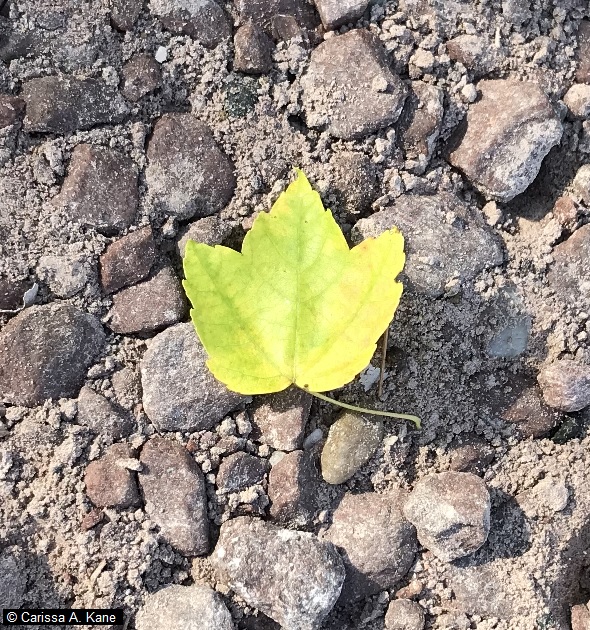
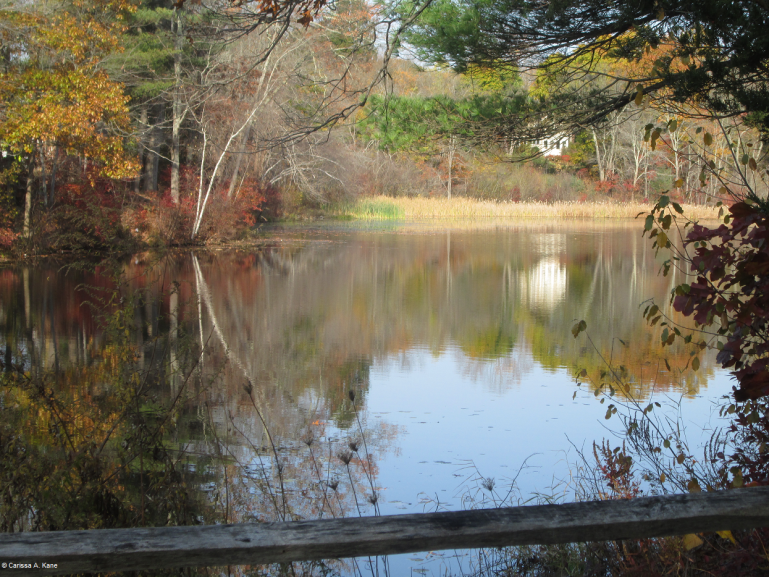
On a beautiful November day, unexpected warmth saturates the air alongside the noise of rustling leaves, as they are gathered and removed from around the yard. While it is far more idyllic to sit in a much quieter way, with an image… a nearby scene that captures fall inching its way to winter, there is work to be done. 

Taking a breath and looking at the leaves, they spread across the lawn, front, side, and back. Another breath, then, at last, the process begins a mess. Making something out of what appears to be nothing or perhaps better said, gathering what is separate and bringing it together. What starts as commotion with each swing of the rake, gradually, slowly turns around. Still leaves… still motion… but nestled now in the stillness of devotion.

A great reminder, the dreams for which one hopes do not fade away. Though the pursuit of them may be on pause, it is often in our patient seeking, Wisdom makes her way, work increases, and True desires deepen.

“Respect your ideals. Dare to dream, but be not an idle dreamer.
Dare to do what you dream. Search your heart to know what you most desire to do; then do it, for you can become, by your perseverance, what you long to be.” – Samuel Silas Curry

More than the Frame…

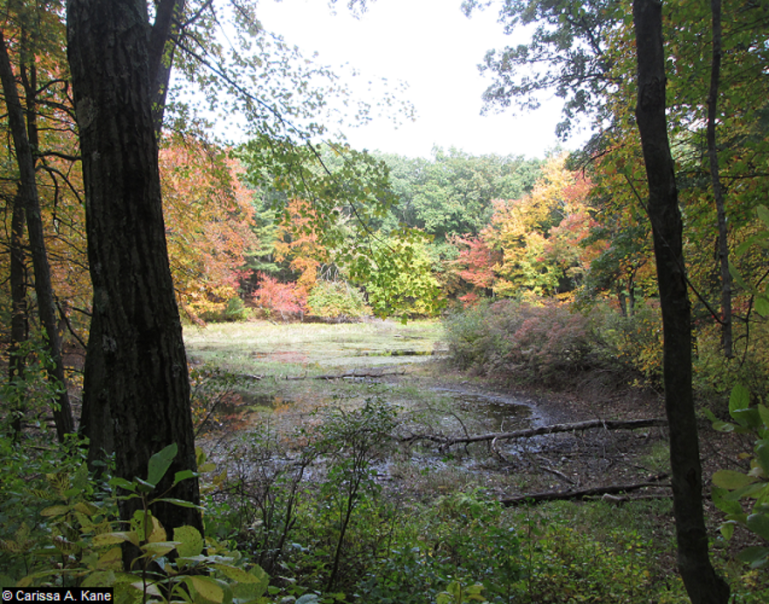
Walking along a path in a local town forest, I stop as I approach a swampy stretch and see a beautiful mix of colors on the land across the way. The trees and brush on either side in front of me seem to provide a frame. Depending on the angle, or perhaps the time of day, or maybe even, the mood drifting through the air, they are a welcome addition gradually drawing me in to the beauty just beyond. Or, are they a distraction… a tangled mess standing in the way?

It’s interesting the way that so much in life seems to do with frames. Thinking literally of frames, I recall the first time I had to pick a frame for a pair of eyeglasses. I was 12 at the time, and desperately not wanting to need eyeglasses. But the fact was that I did need them.

So, after an eye exam and trying on a number of frames, different styles, colors, and types, I came upon “the one.” It was unmistakable within seconds of placing them on my face. From there, the transition was smooth; I could see clearly. Since that time, I have gone through a number of frames, of different styles, colors, and types, throughout the years. And, in all that time, the single most important thing about my glasses has been, not the frame, but the lenses. Without them, everything is blurry.

When the Pharisees heard that Jesus had silenced the Sadducees,
they gathered together, and one of them,
a scholar of the law tested him by asking,
“Teacher, which commandment in the law is the greatest?”
He said to him,
“You shall love the Lord, your God,
with all your heart,
with all your soul,
and with all your mind.
This is the greatest and the first commandment.
The second is like it:
You shall love your neighbor as yourself.
The whole law and the prophets depend on these two commandments.”

– Matthew 22:34-40

Act Naturally…

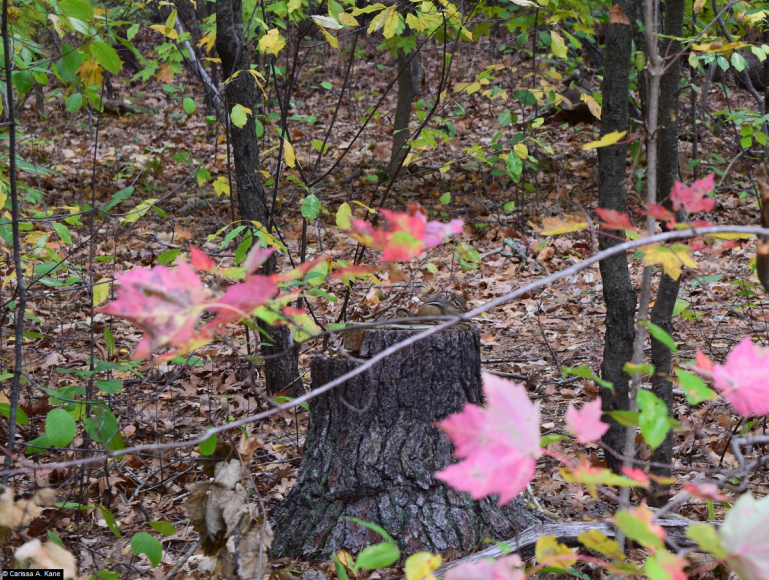
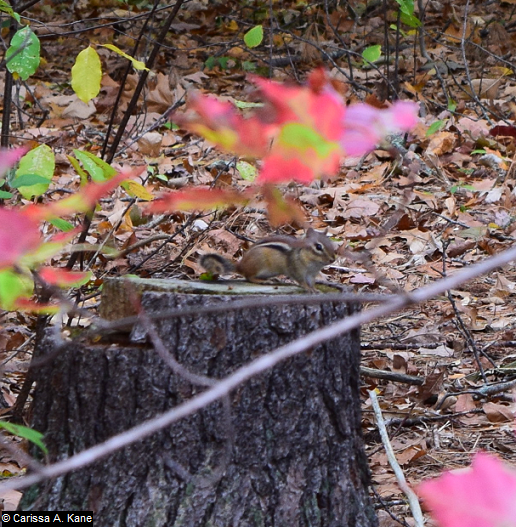
John Muir shared the thought that in every walk with nature, one receives far more than one seeks. Pausing to look at some of the changing leaves and noticing the contrast between them and those already on the ground, I came across another scene. A chipmunk, also pausing, long enough to possibly be considered a companion in an otherwise seemingly empty stretch of woods. A brief, but amusing and uplifting experience, perhaps captured best, for both creatures on this day, in the words of another naturalist, Henry David Thoreau, who wrote, “I took a walk in the woods and came out taller than the trees.”   

Reading chapter 22 in the Gospel according to Matthew, the section that contains verses 15-22 starts with, “Then the Pharisees went off and plotted…” The words and the image they conjure, are such a stark contrast to that of my experience in nature, earlier in the day. What a difference a spirit of inclusion, acceptance, respect, and mutual existence might have made back then. What a difference it might make now.

Nature is all around us, and we are part of it. Yet, all this time gone by, still, we fight it. All these years later, still, we resist joining together. Perhaps, one by one, we might learn to be companions to each other, and the plotting will end. Then, maybe… we might see, how foolish we have been.

If we surrendered to earth’s intelligence, we could rise up rooted like trees.
– Rainer Maria Rilke

The Pharisees went off
and plotted how they might entrap Jesus in speech.
They sent their disciples to him, with the Herodians, saying,
“Teacher, we know that you are a truthful man
and that you teach the way of God in accordance with the truth.
And you are not concerned with anyone’s opinion,
for you do not regard a person’s status.
Tell us, then, what is your opinion:
Is it lawful to pay the census tax to Caesar or not?”
Knowing their malice, Jesus said,
“Why are you testing me, you hypocrites?
Show me the coin that pays the census tax.”
Then they handed him the Roman coin.
He said to them, “Whose image is this and whose inscription?”
They replied, “Caesar’s.”
At that he said to them,
“Then repay to Caesar what belongs to Caesar
and to God what belongs to God.” – Matthew 22:15-22

Musical inspiration: The King of Love My Shepherd Is

To the Limit…

Under the best of circumstances there are moments that can stretch one to what feels like the end of the line or heading into an abyss. Over the past several months enduring all that has come with the COVID-19 pandemic, on top of the more typical challenges of life, has added entirely new layers to our existence. In many ways, one might say that we are often being pushed to our limits.

When the prophet, Elijah, stepped out from the safety of the cave, he did so trusting the voice of God that called upon him to do so. Prior to reaching Horeb and the cave within it, Elijah, his life in danger for being a vessel of Truth, had fled Samaria and was “on the run” for 40 days and nights. In the First Book of Kings, chapter 19, verse 4, when he says, “Enough, Lord! Take my life, for I am no better than my ancestors.” it certainly seems he has reached his breaking point or been pushed to the brink of what he can tolerate.

However, it is exactly at this point, that Elijah finds respite, laying down, or taking a break. What looks like the end, as is often the case, becomes a new or different beginning, a new leg of the journey. After some sleep, a messenger of the Lord wakes Elijah up and prompts him to eat and drink, and then keep moving on. Under the direction of God, eventually, he arrives at the place, another place, where he meets God once again.

This many thousands of years later, trying as well as unimaginable days still exist, and they are experienced by one and all, in various ways, across the world…across the universe. Yet, at the very same time, there is God, in the urgent fleeing of Elijah, the messenger along the way, in each and every step toward the mountain and into the cave. There is God, constant… continuing presence, through great winds, the quaking of the earth, and in the burning of the fire.

And, also, there is God in the whisperings of the day, beckoning to all who might listen… endless opportunities to recognize, and face, the limits of our patience or understanding. There are so many ways to discover the essence of who we are called to be, and to seek the courage to stand up, come forward to the entrance of the cave, and be true to the Vision.

ToTheLimit

At the mountain of God, Horeb,
Elijah came to a cave where he took shelter.
Then the LORD said to him,
“Go outside and stand on the mountain before the LORD;
the LORD will be passing by.”
A strong and heavy wind was rending the mountains
and crushing rocks before the LORD—
but the LORD was not in the wind.
After the wind there was an earthquake—
but the LORD was not in the earthquake.
After the earthquake there was fire—
but the LORD was not in the fire.
After the fire there was a tiny whispering sound.
When he heard this,
Elijah hid his face in his cloak
and went and stood at the entrance of the cave. – 1 Kings 19:9A, 11-13A

Drawing Wise…

Drawing, in its various forms, is something that all people tend to do. Although not necessarily the kind of drawing that is by hand, certainly the kind of drawing that informs or leads to conclusions, maybe even actions.

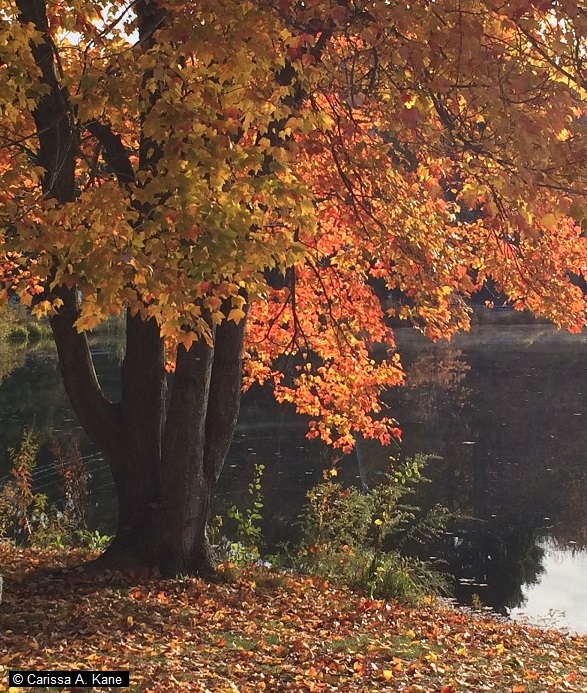
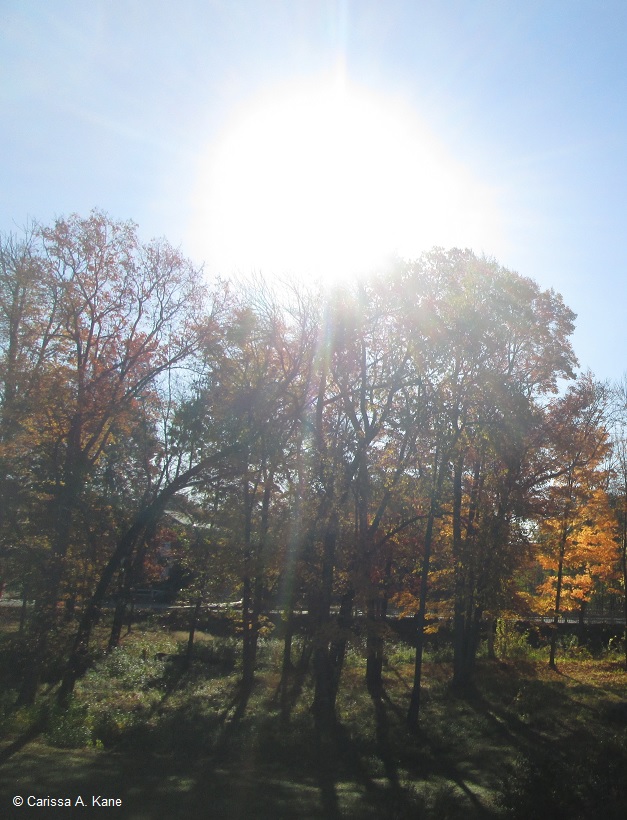
Stepping outside, I am drawn to the beauty of the trees and the composition spread across the sky. After a period of pause, I am moved to capture, or at least try, and then to share the scene.

Throughout each day, there are moments of drawing, being drawn in, and opportunities to take notice. In those moments and following them, what happens?

In the Book of Sirach, it is written:

With all your soul draw close to Wisdom;
and with all your strength keep her ways.
Inquire and search, seek and find;
when you get hold of her, do not let her go.
Thus at last you will find rest in her,
and she will become your joy. – Sirach 6:26-28

In a world so steeped in competition, mastering the art of out-preparing, and getting “there” first, Wisdom can seem so elusive. And sometimes, to wait for it, may seem a strategy for those who are passive, or even worse, it may seem like forfeiture or a giving up. Yet, Wisdom knows all too well, waiting is not for the faint of heart.

Saint Augustine wrote, “Patience is the companion of wisdom.” In current times, patience seems to wear thin, and in moving about, it can seem as if all are strangers in a strange land. There are so many twists and turns, and maneuvering and holding on among competing interests, can easily find its way toward the never lasting.

To this, Wisdom says:

Look around for all that is worthwhile;
“faithful in words and holy in works” (Psalm 145:13).
Be drawn into each experience,
and from it, draw,
but only that which is worthwhile;
“faithful in words and holy in works.”

Wisdom is all around, but, oh, how often, one misses this, while going after “that.”

Wisdom

We never know how high we are
Till we are called to rise;
And then, if we are true to plan,
Our statures touch the skies.

The heroism we recite
Would be a daily thing,
Did not ourselves the cubits warp
For fear to be a king.  – Emily Dickinson, We Never Know How High We Are (1176)

The Ways of Wisdom…

Typically, the shortest route, or what seems like the most direct one, is a heavy favorite. Often making a straight line more appealing or desirable from the outset. In the Bible, straight paths are referred to on a number of occasions.

Over time, these examples of paths being made straight (or clear) by the grace of God, have often been reworded and turned into moral directives, such as “follow the straight and narrow.”

What is “the straight and narrow”? From whom does it come? And, why follow it?

Turning back to scripture, perhaps Wisdom is the straight and narrow (no nonsense) from God, calling and moving us, with a desire to make the way clear and lead us closer to God, by way of the Holy Spirit.

Who can know God’s counsel,
or who can conceive what the Lord intends?
For the deliberations of mortals are timid,
and unsure are our plans.
For the corruptible body burdens the soul
and the earthen shelter weighs down the mind that has many concerns.
And scarce do we guess the things on earth,
and what is within our grasp we find with difficulty;
but when things are in heaven, who can search them out?
Or who ever knew your counsel, except you had given wisdom
and sent your holy spirit from on high?
And thus were the paths of those on earth made straight,
And people learned what pleases you,
And were saved by Wisdom. – Wisdom 9:13-18

In the Gospel according to Luke, chapter 14, verses 25-33, there is wisdom in Jesus’ words about discipleship, however unconventional his initial words may be. When Jesus uses a form of the word, “hate,” in conjunction with one’s closest of relatives and oneself, certainly, this would be unexpected as well as shocking to those who were with him. So much for wisdom being refined or in a pretty package.

Next, Jesus explains further. Discipleship comes with trials and tribulations. Not only that, but it also requires an awareness and desire as well as a resolve to faithfulness and commitment to God, above all. Jesus calls us to be “all in.”

What does this mean from a practical standpoint? What does being “all in” look like? More often than not, it is what it feels like, more than what it looks like.

Wisdom, if heeded, carries one in various directions at various times (often unexpected or unconventional), while creating and sustaining a sense of following the straight and narrow. Just as God is infinite and ever-present, so are the ways of being a good and faithful disciple.

Wisdom

Great crowds were traveling with Jesus,
and he turned and addressed them,
“If anyone comes to me without hating his father and mother,
wife and children, brothers and sisters,
and even his own life,
he cannot be my disciple.
Whoever does not carry his own cross and come after me
cannot be my disciple.
Which of you wishing to construct a tower
does not first sit down and calculate the cost
to see if there is enough for its completion?
Otherwise, after laying the foundation
and finding himself unable to finish the work
the onlookers should laugh at him and say,
‘This one began to build but did not have the resources to finish.’
Or what king marching into battle would not first sit down
and decide whether with ten thousand troops
he can successfully oppose another king
advancing upon him with twenty thousand troops?
But if not, while he is still far away,
he will send a delegation to ask for peace terms.
In the same way,
anyone of you who does not renounce all his possessions
cannot be my disciple.” – Luke 14:25-33