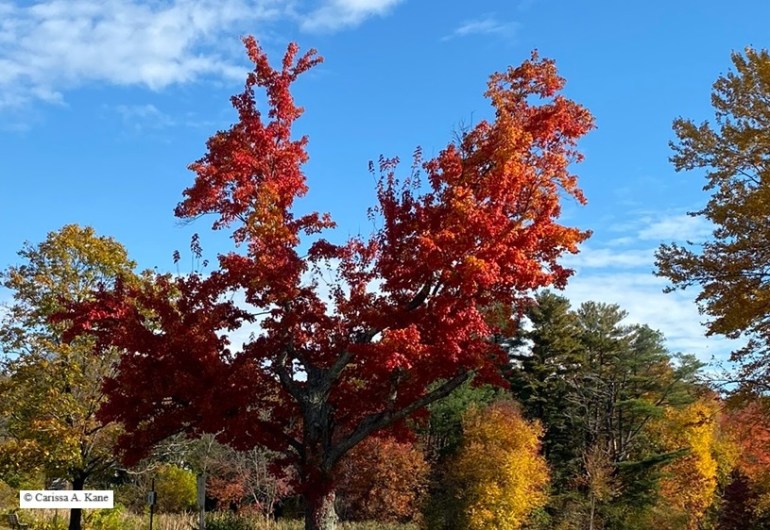
Taken by the contrasting colors of the leaves against the soothing blue backdrop of the sky, it’s interesting how well they get along.
In the Gospel passage for the Thirtieth Sunday in Ordinary Time, the heart of Jesus’ response can be seen as an invitation to consider love, and how it is revealed through, and in, relationships. Jesus reminds us that being faithful to God is more than striving to love and serve God. It also involves striving to love or to take care of oneself as well as one’s neighbor.
When the Pharisees heard that Jesus had silenced the Sadducees, they gathered together, and one of them, a scholar of the law tested him by asking, “Teacher, which commandment in the law is the greatest?” He said to him, “You shall love the Lord, your God, with all your heart, with all your soul, and with all your mind. This is the greatest and the first commandment. The second is like it: You shall love your neighbor as yourself. The whole law and the prophets depend on these two commandments.” – Mt 22:34-40
Reflecting upon the past week, in what ways did you strive to love and serve God? What thoughts and feelings surface as you recall the situations where the love of God was most present to you? Allow yourself to envision God’s response to a heart, your heart, operating in love and service.
Continuing to stay with the moments of the past week, are there ways you took care of yourself through them? Take some time to consider more fully how each experience came about. What might God want you to know about them? How might you pray in response?
What moments come to mind as ones where the love you have received extended beyond yourself whether in thought or deed?
Still reviewing the past week, who or what would you include as your neighbors (family, community members, any fellow human being, animals, nature, etc.)? What did you appreciate in them? For each way that you might have struggled to appreciate them or that you felt more than a little challenged by them, try to return to naming something you appreciated.
How do you feel inspired by the things that you have contemplated during this time? And what do you desire to carry forward?
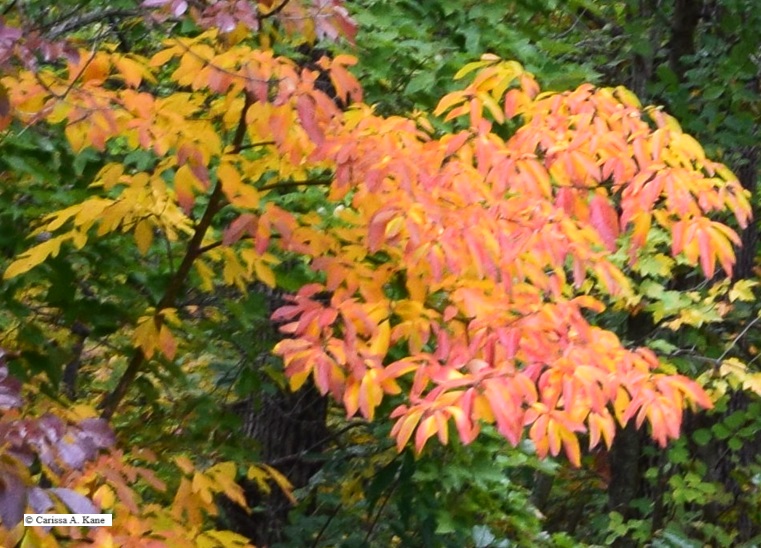
Leaning into Fall, the trees embrace the Essence of their nature. Season after season, year after year, who’s to say on time, or in time? Either way, waiting without edge, trusting in the beauty of Your time as you gently reveal the colors, so many colors, of Your way.
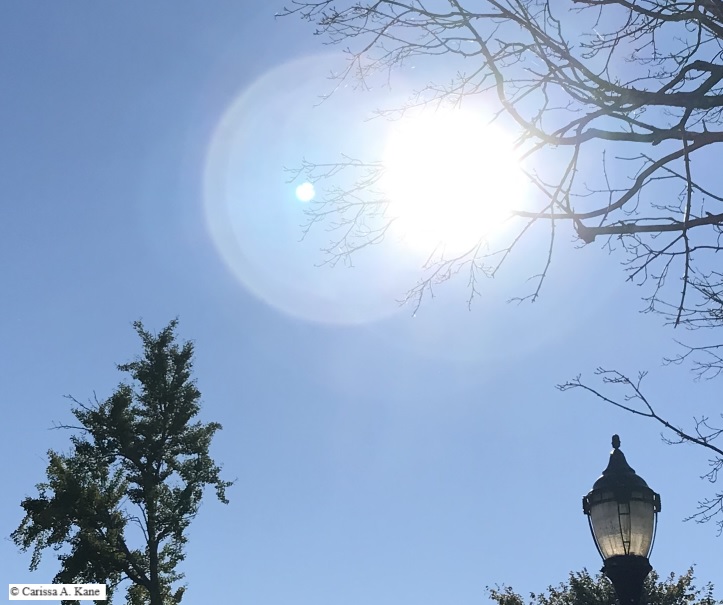
Beacon calling out to one and all alike, remember: life is but a spectrum, at its fullest and shining bright, when casting out the shadows, fears, and doubts. Your light so much stronger than the decay, rising up and out from far below.
It’s time to recognize again who we really are. So much alike, created to be different, but not with indifference or carrying any shades of hate. Loved into existence, the vision of Your eye. Side by side, each and every one of us are vessels of Your grace, and we all have a place.
Holy God, Most High Creator, hold us all together, unite us in Your heart… in our hearts.
Shine like lights in the world as you hold on to the word of life. – Phil 2:15d, 16a
From one thing to another A shade, or some truth survives. Perhaps hidden from plain view, But nonetheless existing, If only to be seen, picked, From underneath the rubble, Intertwined and wrapped around, Trying to conceal or blur, The hard lines and soft edges, Leading one to discovery. Aiming, always aiming high, To the place where feelings go To wash away thoughts unkind. Resting in the heart of One, Meeting up, then stepping out, Similar but not the same. Grateful for Your peace and love, Amazing, so amazing, What can happen thru Your eyes. Though the winds may shift and change, The soul carries on its way, Steady in One who remains.
The Lord is my shepherd; I shall not want. – Psalm 23:1
As summer heads toward a close, schools reopen, and traffic picks up in the Northern Hemisphere, time can be more challenging to come by as busyness seeks to prevail. Like “a thief in the night” it can swiftly sneak away the quiet, still moments that seem to come more easily during the days of summer. Yet, despite a likely fuller schedule and a quicker pace all around, peace within remains, patiently waiting to connect… waiting to be heard.
In the Twenty-third Sunday of Ordinary Time, the Responsorial Psalm is “If today you hear God’s voice, harden not your hearts.” (Psalm 95:8). What does that really mean? While it can be difficult to think of oneself as having a heart that is hardened, maybe there’s another way to consider this.
St. Thomas of Villanova said, “I cannot see without light: yet if I shut my eyes in the midst of the noon-day light, the fault is in me, not in the sun.” Although today’s world tends toward pointing fingers, and finding fault may be tempting, perhaps the key here is in exploring what one sees.
What are the situations and places where one is more prone to looking past what’s in plain sight, readily drawing a conclusion, or closing one’s eyes, rather than opening them wider and acknowledging all there is to see or consider? These are the places that hold an invitation to prayer and discovery. These are the places where a heart might be less open to God (hardened) and God’s ways of love, mercy, compassion, peace, hope, integrity, and more. These are the places where one can grow closer to God, living more fully in a way that encompasses a desire for goodness for all and operates to extend love and the flow of God’s grace.
“For where two or three are gathered together in my name, there am I in the midst of them.” – Mt 18:20
In the Letter to the Romans, St. Paul writes, “Do not conform yourselves to this age but be transformed by the renewal of your mind, that you may discern what is the will of God, what is good and pleasing and perfect.” (Romans 12:2). Although he was writing to people of a different time than us, how appropriate this instruction or advice is for any age. After all, looking around and considering all of creation, there’s not only a broad spectrum of living things, but also cycles or seasons of change that occur across each category, and all created in the image of the Creator. With all of this, it’s not too hard to imagine God as being far more dynamic than any one generation, society, or age might deem.
Still though, it can be easy to move through a task, a day, or more with “a place for everything and everything in its place” mindset, whether as an individual or within a group or an organization. Perhaps St. Paul is reminding us not to get hung up on making things fit into our existing notions, to the extent that we leave no room to perceive the new things that God is doing or trying to teach us (Is 43:19). After all, how can God reveal to us, even a portion of insight to God’s will or a shimmer of the expanse and depth of God’s love, if one has already made up their mind and is so fixed and unwilling to consider something other?
This is not to say that one should never hold fast to a value or notion, but rather to be cautious of excluding possibilities outside of the ones already recognized or held.
In the Gospel for the Twenty-second Sunday in Ordinary Time, Jesus says to Peter, “Get behind me, Satan! You are an obstacle to me. You are thinking not as God does, but as human beings do.” (Matthew 16:23). He says this because Peter’s response comes out of his own understanding and is not based on listening to and considering what was said or communicating with Jesus.
When Jesus reveals that he will be killed, it does not fit the narrative of Peter’s notion of what’s to come of the Anointed One. The influence of Peter’s response is not of God. It is rigid, does not consider what the Anointed One has said, and leaves no room for possibilities outside of what Peter “knows”.
Again, looking around and considering all of creation, there is change, there is fluidity. God is not rigid. And, having been created in God’s image, humankind is not meant to be rigid either. To hold fast? Yes, but first and foremost to God. This is so that everything else not only falls into place in a way that is most fitting, but also in a way that is blessed and does not serve to block the flow of God’s grace from extending in ways beyond our own understanding.
Jesus began to show his disciples that he must go to Jerusalem and suffer greatly from the elders, the chief priests, and the scribes, and be killed and on the third day be raised. Then Peter took Jesus aside and began to rebuke him, “God forbid, Lord! No such thing shall ever happen to you.” He turned and said to Peter, “Get behind me, Satan! You are an obstacle to me. You are thinking not as God does, but as human beings do.”
Then Jesus said to his disciples, “Whoever wishes to come after me must deny himself, take up his cross, and follow me. For whoever wishes to save his life will lose it, but whoever loses his life for my sake will find it. What profit would there be for one to gain the whole world and forfeit his life? Or what can one give in exchange for his life? For the Son of Man will come with his angels in his Father’s glory, and then he will repay all according to his conduct.” – Matthew 16:21-27
Having stood next to the falls of Niagara and experiencing with awe the rainbows and mists as well as their thunderous rage, even in a controlled setting, the words of Dr. Seuss, “So be sure when you step, Step with care and great tact. And remember that life’s A Great Balancing Act…”, came to mind upon seeing the painting below.
Imagining the amount of focus, control, and awareness crossing the falls step by step on a wire, once again the word “awe” best captures the impression.
Sitting with the readings for the Twentieth Sunday in Ordinary Time, these same words “focus”, “control”, and “awareness” provide an opportunity for further reflection on relationship with God. In the first reading (Is 56:1, 6-7), we are reminded of what one can control—“Observe what is right, do what is just;” (v. 1)—one’s own actions; what one’s focus ought to be—joining, ministering, loving, serving the Lord (v. 6); and an awareness through which we ought to live—”For my house shall be called a house of prayer for all peoples.” (v. 7)—striving toward the same kind of faithfulness to love and equity with which God bestows upon us.
In the responsorial Psalm (Ps 67:2-3,5,6,8), the psalmist cries out, “O God, let all the nations praise you!” (v. 4). The verses resonate or echo the desire to live up to and embrace what the Lord has said through the Prophet Isaiah in the first reading. They call for inclusivity and equity among God’s people—all those who observe what is right and do what is just, join, minister, love, and serve.
With the Letter of St. Paul to the Romans, St. Paul reminds us that love and mercy go hand in hand. This is especially important to consider when forming opinions and discerning choices.
Brothers and sisters: I am speaking to you Gentiles. Inasmuch as I am the apostle to the Gentiles, I glory in my ministry in order to make my race jealous and thus save some of them. For if their rejection is the reconciliation of the world, what will their acceptance be but life from the dead?
For the gifts and the call of God are irrevocable. Just as you once disobeyed God but have now received mercy because of their disobedience, so they have now disobeyed in order that, by virtue of the mercy shown to you, they too may now receive mercy. For God delivered all to disobedience, that he might have mercy upon all. – Rom 11:13-15, 29-32
It is the grace of mercy that calls one to exercise an understanding heart, and the grace of love and mercy together that move one toward what is just.
In the Gospel according to Matthew (Mt 15:21-28), the story of the Canaanite woman, provides an example of the grace of God in response to an authentic desire for what is good and just. The Canaanite woman believes that Jesus can heal her daughter and does not allow the fact that she is not Jewish or that Jesus initially seems to turn her away, to dissuade her from seeking that healing and engaging in dialogue not only to ask for what her faith has led her to believe, but also to ask a question that ends up revealing Jesus ministry as being for all people. The woman and Jesus, like God the Father throughout many Bible passages, show an openness to dialogue, propensity toward flexibility with a fixed focus on love and mercy, self-control through respect and consideration in truly listening to each other, and an awareness that flows from a relationship or interactions where all parties have an authentic desire for what is good and just.
Looking again to the tightrope walker, how do they keep their balance? The one pictured above is holding a pole with both hands and using it to maintain their center of gravity, and therefore their balance. At this time in your life, how are you holding onto God, and God onto you? In what ways is God your center of gravity, helping you to focus, exhibit self-control, and have awareness for what is good and just? In what areas do you need God more as your center of gravity? What are some of the ways in which faith has helped you maintain your balance in terms of living and striving to live in a way that exemplifies mercy and love of God, neighbor, and self?
“Thus understanding and love, that is, the knowledge of and delight in the truth, are, as it were, the two arms of the soul, with which it embraces and comprehends with all the saints the length and breath, the height and depth, that is the eternity, the love, the goodness, and the wisdom of God.” – St. Bernard of Clairvaux
At that time, Jesus withdrew to the region of Tyre and Sidon. And behold, a Canaanite woman of that district came and called out, “Have pity on me, Lord, Son of David! My daughter is tormented by a demon.” But Jesus did not say a word in answer to her. Jesus’ disciples came and asked him, “Send her away, for she keeps calling out after us.” He said in reply, “I was sent only to the lost sheep of the house of Israel.” But the woman came and did Jesus homage, saying, “Lord, help me.” He said in reply, “It is not right to take the food of the children and throw it to the dogs.” She said, “Please, Lord, for even the dogs eat the scraps that fall from the table of their masters.” Then Jesus said to her in reply, “O woman, great is your faith! Let it be done for you as you wish.” And the woman’s daughter was healed from that hour. – Mt 15:21-28
There’s something about climbing a mountain, of any kind, that lends itself to leaning in. Stepping ahead, slowing down, gaining traction, sometimes even resting. Hints here and there—leading, reaching, stretching—all progress in this journey.
There’s something about climbing a mountain, of any kind, that lends itself to letting go. Noticing moments filled with movement; movement filled with moments. Some are silent and others not. Some are focused more than others. A mix of sorts, obstacles slowly falling away, leaving room for air as well as airing.
There’s something about climbing a mountain, of any kind, that lends itself to learning. Exploring ups and downs, reflecting on what’s over, up ahead, or coming around. Changing ever changing, discovering what’s important and tossing what is not.
Jesus took Peter, James, and his brother, John, and led them up a high mountain by themselves. And he was transfigured before them; his face shone like the sun and his clothes became white as light. And behold, Moses and Elijah appeared to them, conversing with him. Then Peter said to Jesus in reply, “Lord, it is good that we are here. If you wish, I will make three tents here, one for you, one for Moses, and one for Elijah.” While he was still speaking, behold, a bright cloud cast a shadow over them, then from the cloud came a voice that said, “This is my beloved Son, with whom I am well pleased; listen to him.” When the disciples heard this, they fell prostrate and were very much afraid. But Jesus came and touched them, saying, “Rise, and do not be afraid.” And when the disciples raised their eyes, they saw no one else but Jesus alone.
As they were coming down from the mountain, Jesus charged them, “Do not tell the vision to anyone until the Son of Man has been raised from the dead.” – Mt 17:1-9
The readings for the Seventeenth Sunday in Ordinary Time offer an opportunity to consider priorities and the values that elevate some over others.
In the first reading (1 Kgs 3:5, 7-12), we can see that Solomon acknowledges that although he is king, he needs God’s grace if his desire to rule wisely is going to be fulfilled. He knows that to do right requires more than his own knowledge, perception, and opinions. He understands that he needs to be able to have a sense of more than what he can surmise, and this is why he asks God for a discerning heart (and mind) when he could’ve asked for anything else at all. His top priority is not solely for himself, but for the benefit of all whom he serves as king.
In the psalm, we read the response, “Lord, I love your commands.” (Ps 119:97a). Again, we see reliance on God, as well as value and priority placed on God’s words as providing what is necessary. The psalmist tells of how God’s words are precious, carrying kindness and compassion, and expresses a desire to honor God’s words by living them (“For in all your precepts I go forward; every false way I hate” – Ps 119:128). Then the psalmist says, “The revelation of your words sheds light, gives understanding to the simple.” (Ps 119:130). Again, we see evidence of fulfillment of a desire for truth and understanding as well as a continued desire to be led by God. It’s important to remember that the psalmist has experienced the grace of God directly, just like Solomon. It is in the words of God through intimate, personal exchanges that Solomon and the psalmist come to know in a particular moment what is good and right and wise in God’s eyes.
When we read further, in the second reading, St. Paul stresses relationship with God. In essence, he is saying that when priorities and values are centered in and through God, we become like the Love who created us.
“We know that all things work for good for those who love God, who are called according to his purpose. For those he foreknew he also predestined to be conformed to the image of his Son, so that he might be the firstborn among many brothers and sisters. And those he predestined he also called; and those he called he also justified; and those he justified he also glorified.” – Rom 8:28-30
This brings us to the Gospel reading (Mt 13:44-52) and an invitation to prayer and reflection on priorities and values.
Jesus said to his disciples: “The kingdom of heaven is like a treasure buried in a field, which a person finds and hides again, and out of joy goes and sells all that he has and buys that field. Again, the kingdom of heaven is like a merchant searching for fine pearls. When he finds a pearl of great price, he goes and sells all that he has and buys it. Again, the kingdom of heaven is like a net thrown into the sea, which collects fish of every kind. When it is full they haul it ashore and sit down to put what is good into buckets. What is bad they throw away. Thus it will be at the end of the age. The angels will go out and separate the wicked from the righteous and throw them into the fiery furnace, where there will be wailing and grinding of teeth.
“Do you understand all these things?” They answered, “Yes.” And he replied, “Then every scribe who has been instructed in the kingdom of heaven is like the head of a household who brings from his storeroom both the new and the old.” – Mt 13:44-52
The word of God is the revelation of God, and through our graced experiences, we participate in the living word of God. Take some time to pray and reflect on your life through the lens of being a participant in the word of God? What comes to mind? What feelings arise from within? And in what ways do you feel inspired by the word of God, yesterday… today… as you think about the future?
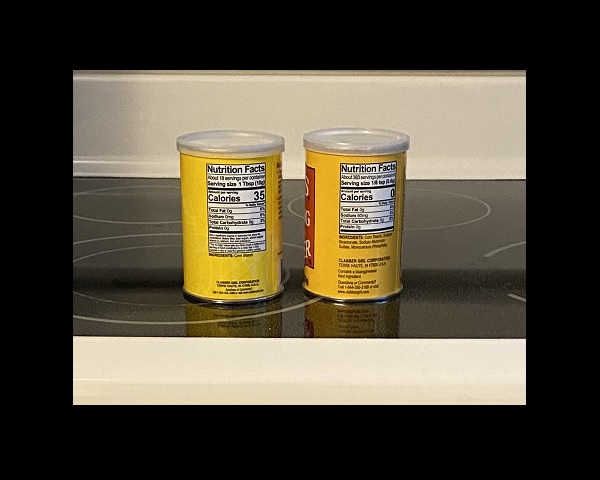
Opening the oven door as the kitchen timer worked its way toward zero seconds, an unanticipated outcome awaited. The bread inside, although cooked through, was not quite what was expected. Shocked at its stature and the rather dense outcome, and wondering what happened, I revisited all that went into its making. First, I envisioned all the steps, and then opened cabinet doors to look again at some of the baking ingredients, but nothing stood out.
Upon thinking some more, and feeling certain that baking powder was added, I thought perhaps it was expired and had lost its potency. Then, there it was. In the process of re-examining, the problem was revealed. It wasn’t baking powder after all that was used. The canister had the same shape, height, color, and text, but rather than containing baking powder, it held cornstarch. And although the bread tasted almost the same as any other banana bread that was made, its consistency and body was not at all the same.
Contemplating the Gospel passage for the Sixteenth Sunday in Ordinary Time (Matthew 13:24-43) and reflecting on Jesus’ words as he tells the parables of weeds among wheat, the mustard seed, and the yeast, one is reminded of the importance of what goes into things. Or, in other words, what makes them up or influences them. Are there hidden ingredients? What’s the intent, the source, or motivation, and what, ultimately, is being sought?
So how does one really know what’s what with so much that is conflicting and competing in the midst of what can be confusing and misleading times? How does one distinguish between what things look like and what they really are, and decipher what’s happening around them and how it might be influencing them?
Prior to the Gospel, in this week’s readings, we read:
“The Spirit comes to the aid of our weakness; for we do not know how to pray as we ought, but the Spirit himself intercedes with inexpressible groanings. And the one who searches hearts knows what is the intention of the Spirit, because he intercedes for the holy ones according to God’s will.”—Romans 8:26-27
To discover what’s real, or what’s true, one must not only be willing to take a good look inside and out, but also be willing to look again, and then some more, searching with a heart that is sincere and an openness to the possibility that what looked like baking powder might not have ever been baking powder at all.
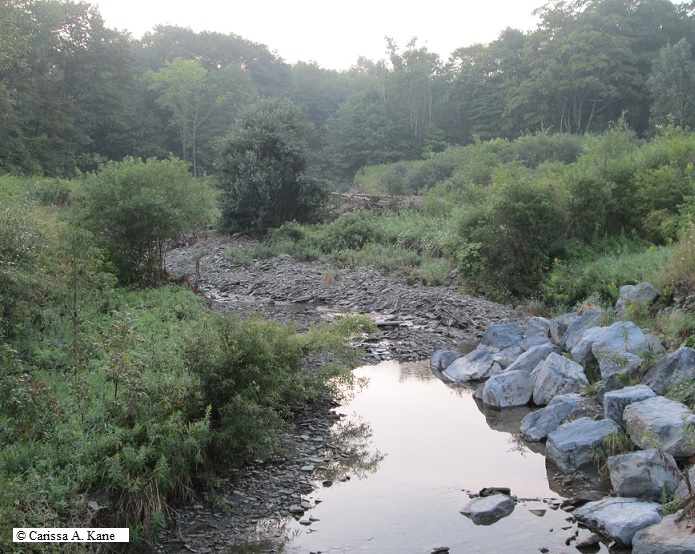
In the course of a day, One might experience Many kinds of ground, Here and there, Or maybe none at all. Yet, whatever it may be, Peace and inner strength await, While Guidance subtly leads the way, Where many paths abound. Willing accompanists through the hours, Perhaps hidden, under cover, But always working, nonetheless. Never kicking back, Or losing sight.
Whether to relax, Or continue striving, Never a question, Or even a passing thought. Constant presence, patient… Never rushing through On the way to something, Somewhere or someone else.
Always within reach, Or better yet, within. Whether running ahead Falling back, Or not too far behind, Keeping pace, Or simply being still. No matter how, What, where, or when, Everlasting Love, Constant Source, Holding all in deep affection.
Thus says the LORD: Just as from the heavens the rain and snow come down and do not return there till they have watered the earth, making it fertile and fruitful, giving seed to the one who sows and bread to the one who eats, so shall my word be that goes forth from my mouth; my word shall not return to me void, but shall do my will, achieving the end for which I sent it. – Isaiah 55:10-11











 HopeThatFloats
You must be logged in to post a comment.