Everything In Between

Everything In Between…

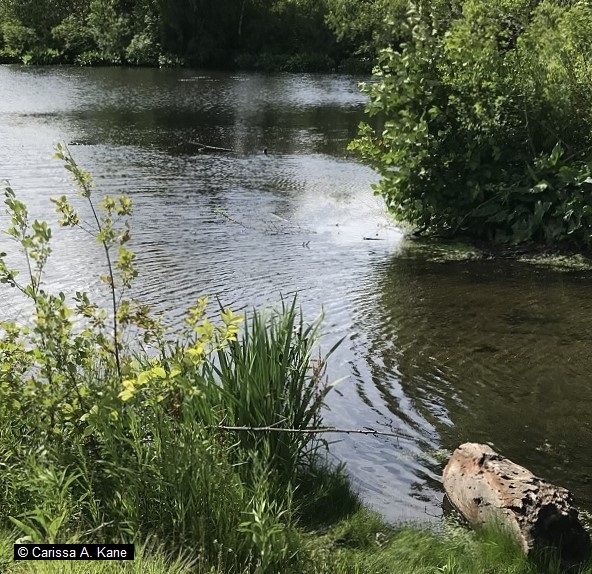
As a young person, August was synonymous with some last hurrahs and the winding down of what we considered summer; the passage of time between the ending of one school year and the beginning of another. The readings for the 18th Sunday in Ordinary Time offer an opportunity to consider more deeply, where God is in the in-between moments.

In the First Reading (Ex 16:2-4, 12-15), the Israelites are in between leaving Egypt and arriving to the Promised Land. They express feeling even more destitute than they did as slaves, complaining about the lack of provisions.

“Would that we had died at the Lord’s hand in the land of Egypt,
as we sat by our fleshpots and ate our fill of bread!
But you had to lead us into this desert
to make the whole community die of famine!” – The Israelites to Moses and Aaron, Ex 16:3  

Oftentimes, the in-between moments can feel worse than the known moments that precede or follow them. God is aware of the complaints of the people as well as the position that Moses and Aaron are in, and God responds by meeting all of their needs (those of the people as well as Moses and Aaron), and thus helping them to hang on and continue the journey. How do you express your needs in prayer? And how has God provided for you in times when perhaps you felt like you couldn’t take more of whatever you may have been experiencing or felt stuck in between?

Looking to the Psalm (Ps 78:3-4, 23-24, 25, 54), we are called to remember and to share the stories of God’s faithfulness.

What we have heard and know,
and what our fathers have declared to us,
We will declare to the generation to come
the glorious deeds of the Lord and his strength
and the wonders that he wrought. – v. 3-4

It is our belief in God and our experiences of the Divine which strengthen and increase our faith. By recalling and sharing these experiences, we not only help to pass along faith and tradition, but also to build awareness and gratitude in ourselves and of those who journey alongside us, in terms of the personal ways in which God works, and the depth of God’s care and love for creation.

The response for the psalm is, “The Lord gave them bread from heaven.” (v. 24b). The people did not know what manna was and it is described as “fine flakes on the ground” (Ex 16:15). Take some time to reflect on what has been your bread from heaven—ways in which God has provided for you that perhaps you didn’t initially recognize, or were unexpected and/or different from what you thought you needed.  

In the Second Reading (Eph 4:17,20-24), St. Paul exhorts the people:

“you must no longer live as the Gentiles do,
in the futility of their minds;” – v. 17    

This is a key component to faith. That is the fact that, along the way in seeking to find and fulfill one’s purpose, human reasoning alone is not enough. For the human mind alone, cannot fully comprehend or discern what is best. The only way, as St. Paul says is to be renewed in Christ:

“…be renewed in the spirit of your minds,
and put on the new self, created in God’s way in righteousness and holiness of truth.” (v. 23-24)

Recall a time when you felt stuck or challenged by a situation. What happened and how did your faith come into play? How might you be renewed in Christ regarding a situation you’re facing now?

Turning to the Gospel for the 18th Week in Ordinary Time (Jn 6:24-35), we are told about the crowds going out to find Jesus when they realize he is no longer in their midst. They end up finding him across the sea, and Jesus says to them:

“Amen, amen, I say to you,
you are looking for me not because you saw signs
but because you ate the loaves and were filled.
Do not work for food that perishes
but for the food that endures for eternal life,
which the Son of Man will give you.
For on him the Father, God, has set his seal.” – v. 26-27  

Jesus is referring to the crowd’s experience of eating their fill when he multiplied the loaves of bread and fish (Jn 6:1-15) and calling them, and us, to consider, or examine, what satisfies us, what is it that we are seeking, and to what lengths or degree do we go (or have we gone) to find or obtain it. Take some time to consider this in the light of what is currently going on in your life and in the world. What are you seeking and to what extent? How does this differ from or fit in with the past? How is God present to you in this process, and what comes to mind when thinking about it as an in-between moment?
Everything In Between

Love is the bridge between you and everything. – Rumi
Growth mindset

Thursday after Ash Wednesday…

In the Book of Deuteronomy, chapter 30, verses 15-20, after having presented God’s commandments to the people, Moses exhorts them to choose life over death by embracing and living by God’s “commandments, statutes and decrees”. This brings up an interesting question. Outside of obvious situations where the distinction is clear between a choice that is life giving and one that is not, how does one determine what they are really choosing, and perhaps more importantly, why?

There are few things in life that are clear cut and without the possibility for change. Yet, the human tendency leans toward wanting things to be one way or the other, to fit comfortably into categories or boxes, and to be “known for all time”. However, this leaves little to no room for new information or consideration of different circumstances.

Sometimes it can be helpful to flip things around, contemplating them from another angle or two and considering different points of view. Oftentimes, what is thought to be wrong, so different, or out of line, underneath the surface or layers upon first look, can be not so wrong, different, or out of line, at all.

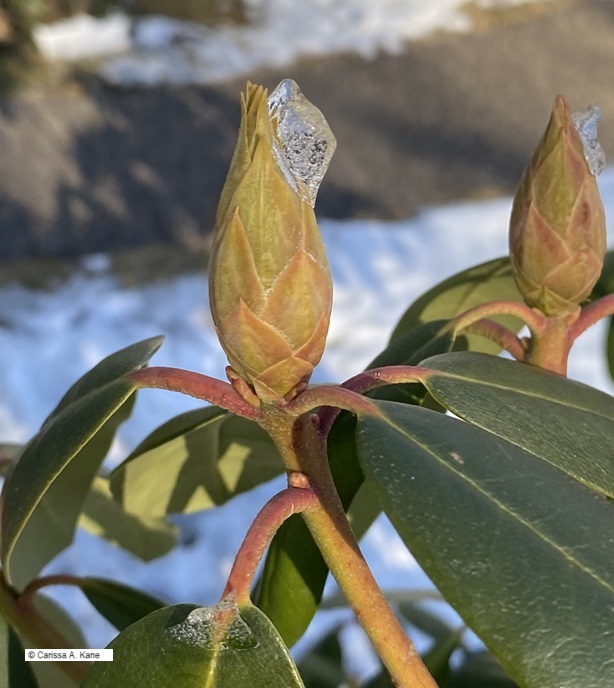
During Lent, we try to renew or refresh our spirit and growth mindset. We open our hearts and minds to seeing and being anew and strengthening our faith and discipleship ways. We are reminded of what it is we profess to believe and why, as well as the desire to choose what is life giving so that even in death, we experience Life.

Take some time to contemplate Moses’ words about choosing life or death alongside the following poem from the Persian poet Rumi.

“I died as mineral and became a plant,
I died as plant and rose to animal,
I died as animal and I was human,
Why should I fear? When was I less by dying?
Yet once more I shall die human,
To soar with angels blessed above.
And when I sacrifice my angel soul
I shall become what no mind ever conceived.
As a human, I will die once more,
Reborn, I will with the angels soar.
And when I let my angel body go,
I shall be more than mortal mind can know.”
– Rumi

What influences your choices? How do you draw inspiration from the example of Jesus in making them? What grace(s) do you desire in this area? Invite Jesus into this conversation, taking time to listen and asking to be open to and to notice whatever insights might be revealed.

Blessed are those who trust in the Lord; the Lord will be their trust. – Jeremiah 17:7

Along the Trail…

Scanning the area around me, I come across a sign. It marks a trail that cuts through, or rather that is cut through by a lot for parking cars. Noticing how small the trail marker is, I walk closer to see it more clearly. It’s interesting how sometimes signs just seem to pop up, or not. Yet, I am reminded that whether it has been noticed or not, this sign has been here for quite some time. Somehow though, perhaps depending on what one comes looking for and with what type of disposition or intention, it’s understandable how it might go unnoticed. Yet, not to worry, there are other signs too. More places along the path, sprinkled all throughout. Quietly waiting… and waiting, until the moment is ripe, then drawing in what once was looking, but now is seeking, and ready to be guided.

Yes, it is true, “What you seek is seeking you.” –Rumi. However, it can be missed when one is persistent in a fruitless direction. Sometimes one must learn to let go of what they’re holding onto, to find that which awaits them. Thank goodness, there’s more than one marker.     

“And I tell you, ask and you will receive;
seek and you will find;
knock and the door will be opened to you.
For everyone who asks, receives;
and the one who seeks, finds;
and to the one who knocks, the door will be opened.” – Luke 11:9-10

When in Rome…

Recently, I took a trip to roam. Yet, I found myself surrounded by lots of moving pieces and it was hard not to get caught up in the pace around me. In a crowded space, quick not being quick enough, too many I’s to dot, too many T’s to cross, and seemingly no time or place for pause. But then, oftentimes there isn’t, until the room for it is made.

“The inspiration you seek is already within you. Be silent and listen.” – Rumi

How tempting it can be sometimes to fall into place and do as others do, or conversely, step out of line and walk away. However, what often gets lost is the balance that allows for the ground that is known as middle. It is the place where things are less extreme, grips and grasps are loosened, and real freedom is experienced. Not beholden to what is less than, the middle is the place that gives permission for mind and heart to meet, and for the soul to connect. And only then, in action there is peace.  

“…it is something very near to you, already in your mouths and in your hearts; you have only to carry it out.” – Dt 30:14

Continuing Education…

“I have been a seeker and I still am, but I stopped asking the books and the stars. I started listening to the teaching of my soul.” –Rumi

Recently I attended a show where one of the scenes had a song about parents and teachers who were not listening to the voices of the children. It was as if in trying to teach and steer their children, they had become closed off to the fact that maybe there were things that they needed to learn too. The show and that scene were striking, calling to mind this Rumi quote and making me think about teaching, learning, and the role of prayer.

After having retreated to spend the night on the mountain, praying to God (Luke 6:12), Jesus returned. It was then, and only then, after prayer, that Jesus took action. Perhaps the most appealing qualities of Jesus are that his words and actions match, and that he teaches with a motivation that comes from wisdom and nourishment received through prayer.

While his disciples and countless others seek to listen to his words, to see what he is all about, and to receive healing from him, Jesus, in his ministry, never seeks to elevate, separate, or cut himself off from others, outside of retreating to pray. In the Sermon on the Plain (Luke 6:20-26), Jesus stands on level ground as he teaches… as he ministers.

Throughout Scripture, and throughout the ages, Jesus is always in the midst of those who seek him. As we strive, struggle, and overcome, Jesus is one with us. And we are to be one with each other.

However, just as in Scripture, in order for this to occur, we must be honest, having within our hearts and minds an openness to healing, a resistance to complacency, and a desire to keep learning and to grow closer to God each and every day. Doing so allows for a life that is not only just and honorable, but also faithful.

And he came down with them
and stood on a stretch of level ground.
A great crowd of his disciples
and a large number of the people
from all Judea and Jerusalem
and the coastal region of Tyre and Sidon
came to hear him
and to be healed of their diseases;
and even those who were tormented by unclean spirits were cured.
Everyone in the crowd sought to touch him
because power came forth from him and healed them all.

And raising his eyes toward his disciples he said:

“Blessed are you who are poor,
for the kingdom of God is yours.

Blessed are you who are now hungry,
for you will be satisfied.

Blessed are you who are now weeping,
for you will laugh.

Blessed are you when people hate you,
and when they exclude and insult you,
and denounce your name as evil
on account of the Son of Man.

Rejoice and leap for joy on that day! Behold, your reward will be great in heaven. For their ancestors treated the prophets in the same way.

But woe to you who are rich,
for you have received your consolation.

But woe to you who are filled now,
for you will be hungry.

Woe to you who laugh now,
for you will grieve and weep.

Woe to you when all speak well of you,
for their ancestors treated the false prophets in this way.

– Luke 6:17-26

This Alone…

As a child, I remember being struck by the great change in Moses’ appearance at one point when he came down from the mountain. Moses, as portrayed by the actor Charlton Heston in The Ten Commandments, now had a face that was aglow and silver streaked hair. I recall watching intently and listening, wanting to know more about what had happened between him and God. It was clear that Moses’ experience was a pretty big deal, changing not only his appearance, but also seemingly strengthening his resolve and helping him to journey onward once more.

In the Book of Numbers (chapter 11, verses 25-29), it is written that the Lord imparted some of the spirit that had been given to Moses unto a number of others, seventy elders to be exact. Just verses before that, Moses had asked and questioned the Lord about the current situation. He also expressed his thoughts and feelings regarding the struggle to lead the people through the wilderness while trying to deal with their growing unhappiness. In verse 11, Moses said to the Lord, “I cannot carry all this people by myself, for they are too heavy for me.”

The Lord hears Moses and responds, lessening the weight Moses feels upon his shoulders, reminding him that he is not alone, and providing what he needs to continue his part in carrying out God’s will. Eldad and Medad, who we are told were on the list of the seventy elders, but who were not in the group that had gathered to receive the spirit, also began prophesying. When this is reported to Moses, Joshua, his “assistant,” is of the mind that Eldad and Medad must be stopped at once. However, Moses, his heart fixed on God’s will and his desire to cooperate with it steady and strong, is not only able to see the truth, but also to speak it.

We are all God’s people… all called to be prophets… all called to participate in carrying out, and cooperating with, God’s will.

Moses believed and bought into God’s grace, placing it, rightfully, above human judgment and understanding. He took the leap. Do we?

Knock, and He’ll open the door
Vanish, and He’ll make you shine like the sun
Fall, and He’ll raise you to the heavens
Become nothing, and He’ll turn you into everything. – Rumi

ThisAlone

The LORD came down in the cloud and spoke to Moses.
Taking some of the spirit that was on Moses,
the LORD bestowed it on the seventy elders;
and as the spirit came to rest on them, they prophesied.

Now two men, one named Eldad and the other Medad,
were not in the gathering but had been left in the camp.
They too had been on the list, but had not gone out to the tent;
yet the spirit came to rest on them also,
and they prophesied in the camp.
So, when a young man quickly told Moses,
“Eldad and Medad are prophesying in the camp, “
Joshua, son of Nun, who from his youth had been Moses’ aide, said,
“Moses, my lord, stop them.”
But Moses answered him,
“Are you jealous for my sake?
Would that all the people of the LORD were prophets!
Would that the LORD might bestow his spirit on them all!” – Numbers 11:25-29