First there was one deer, nibbling on a nearby plant. Then surveying the yard, another on the other side. Finally, there appeared two more, subtly joining in from the woods behind. Gently they made their way around the yard, pausing at the slightest of noises to look around and assess their surroundings, their sense of being too. Discerning between the sights and sounds their eyes and ears receive, responding in ways both wise and worthy. Standing still in the face of sounds both soft and firm, but kind, while retreating from those loud and harsh, and well, unbridled. Their awareness so keen, their dignity unwavering, and their presence so peaceful. Life listening and living Life at its fullest—Spirit meeting spirit, Spirit leading spirit.
How do you receive and listen to the noises around you and across the world? How or by what are your reactions and responses inspired?
Samuel was sleeping in the temple of the Lord where the ark of God was. The Lord called to Samuel, who answered, “Here I am.” Samuel ran to Eli and said, “Here I am. You called me.” “I did not call you,” Eli said. “Go back to sleep.” So he went back to sleep. Again the Lord called Samuel, who rose and went to Eli. “Here I am,” he said. “You called me.” But Eli answered, “I did not call you, my son. Go back to sleep.”
At that time Samuel was not familiar with the Lord, because the Lord had not revealed anything to him as yet. The Lord called Samuel again, for the third time. Getting up and going to Eli, he said, “Here I am. You called me.” Then Eli understood that the Lord was calling the youth. So he said to Samuel, “Go to sleep, and if you are called, reply, Speak, Lord, for your servant is listening.” When Samuel went to sleep in his place, the Lord came and revealed his presence, calling out as before, “Samuel, Samuel!” Samuel answered, “Speak, for your servant is listening.”
Samuel grew up, and the Lord was with him, not permitting any word of his to be without effect. – 1 Samuel 3:3b-10, 19
In a year where the Fourth Sunday of Advent falls on the same day as Christmas Eve (with the Christmas Vigil Mass), and in a world where it seems that there is a constant push toward an absolute one way or the other, but rarely a celebration of a little here, a little there, or somewhere in between, there lies a reminder of a better way.
Each year the Season of Advent is thought of as a period of waiting and Christmas as a period of celebrating the arrival of Jesus Christ, our Savior. And while we remember and participate in rituals each year, it can be easy to overlook the essence of these practices and to get lost in the ways in which we have come to proceed through them. With this, the opportunity to fully receive what is Divinely offered can become less.
Oftentimes, the greatest desire that many of us hold is the desire for peace (inner peace, peace within families/communities, world peace, etc.). And it is not uncommon to move, knowingly or not, toward external things or activities and attach a sense of peace to them, rather than to the joy they might bring to us as well as the real source of that joy and the peace that accompanies it—the Spirit of God.
Keeping in mind that peace is not possible without an openness to coexistence and unity, in what ways is your heart and mind open to peace? What strengths/challenges do you experience with regards to coexistence and unity in various situations? Where does this come up in your prayer life, and how is your sense of peace affected?
In a few days, when the Fourth Sunday of Advent and Christmas Eve (with the celebration of the Christmas Vigil Mass) share the day, envision it as an invitation to unity and, through it, peace. Take some time to reflect on the notion that what you desire is what you need, and what you are waiting for is already, in a sense, here. Then take some time to celebrate the goodness of the Lord.
Forever I will sing the goodness of the Lord. – Psalm 89:2A
A star found residing where it was placed. Holding still and quiet.
Its edges beveled, dimensions on display, highlighting different shades, color throughout the various times of day.
Sometimes crystal clear, what’s behind showing through. And other times, transforming as a show of what’s reflected on it.
A voice of one crying out in the desert: ‘Prepare the way of the Lord, make straight his paths.’” – Mark 1:3
In what situations do you sense facets of your faith more strongly? In what areas do you desire to deepen or to be more in touch with your faith? In what ways is your faith multidimensional?
“The proof is in the pudding” is a familiar phrase when looking at or trying to assess a situation. Originally, this proverb was “The proof of the pudding is in the eating,” but over time words were dropped and it morphed into “The proof is in the pudding.” Either way, the intended meaning is that judgment is best based on one’s experience. This is not to say that the experiences of others should not matter, but rather that one’s own experience is a necessary component.
In the Gospel for the Twenty-sixth Sunday in Ordinary Time (Matthew 21:28-32), Jesus tells the story of two sons and their response to their father’s request, “go out and work in the vineyard today.” There is the son who says yes, but then does not follow through and the son who says no, but then changes his mind and does as his father requests. One of the ways we can look at this parable is to see it as a reminder that it’s never too late to change one’s mind or attitude and for one’s actions to follow suit. Going a little deeper, there is always an invitation to pay closer attention to our words and actions, and what goes into them. Oftentimes, we can miss or ignore God’s will, but with openness to something different than our initial response, we can overcome missteps.
Thinking about the two sons, in addition to sharing a father who made the same request of each of them, they are in the same place, at the same time. They share history and their words and actions, their choices, are adding or detracting in the present. Part of what they have in common is that they share space and, whether knowingly or not, they are helping to shape the direction of the future.
What is influencing their choices? And how does time affect them and their ability to be in tune with their internal influences?
In times where opinions are more widely and loudly expressed than ever and thrown out into the universe by all kinds of media, it can be easy to defer taking time to consider all things and to form fully informed personal opinions. However, fully informed personal opinions that include some sort of firsthand experience are perhaps more important than ever. And while impatience seems to rule the world and jam-packed schedules can make it more and more tempting to move through daily life on sound bites and to rush to judgment on fragmented information, that often opens the doors for outside influences to hold more weight than they deserve, and for one to be distracted and swayed in a direction that is less than.
To fully taste or experience the pudding requires taking time to ingest, and digest, it. It’s interesting that Jesus starts the parable of the two sons with the question, “What is your opinion?” What’s it like to consider Jesus as wanting to know your opinion? Not just in a surface kind of way, but deep down and in the nitty-gritty details.
How are you inspired by the thought that Jesus values both you and your fellow human beings in terms of thoughts, feelings, and experiences? In what ways do you ask Jesus for his opinion?
Jesus said to the chief priests and elders of the people: “What is your opinion? A man had two sons. He came to the first and said, ‘Son, go out and work in the vineyard today.’ He said in reply, ‘I will not,’ but afterwards changed his mind and went. The man came to the other son and gave the same order. He said in reply, ‘Yes, sir, ‘but did not go. Which of the two did his father’s will?” They answered, “The first.” Jesus said to them, “Amen, I say to you, tax collectors and prostitutes are entering the kingdom of God before you. When John came to you in the way of righteousness, you did not believe him; but tax collectors and prostitutes did. Yet even when you saw that, you did not later change your minds and believe him.” – Matthew 21:28-32
On a recent trip into the city, memories of daily travel into the office by commuter rail came to mind. In particular, the schedules and the frequency of trains, or lack thereof, depending on what the workday had to offer and when it ended up being time to go home. During that time, there were a number of trains between 4:45pm and around 6:30pm on the line that I needed to take, so if I missed one, I could just hop on the next without much of a wait. However, if I was delayed at work past 6:15, and not able to run fast enough to make it to the platform and onto the 6:30 train before it started pulling out, the wait for the next train was substantial.
Thinking back on those times, I remember running for that last rush hour train and seeing other people do the same, sometimes making it, and sometimes times not. Then there were those occasional times of choosing not to make a mad dash for it, but rather to slow down, letting go of any notion of getting onto the train in those last moments before it pulled away. On those days, it was interesting how the station gradually transformed from being so crowded and noisy to a quieter, more spacious, easy-going place as it moved past the hours known for their rush. It was also easier to appreciate, once foregoing the push to move quickly, hop on, grab a seat, and get outbound.
It seems like a lot of life can be focused on being outbound and moving on to the next thing. Society just keeps pushing for more and more, and with greater speed, seemingly unaware of what is being lost or left behind. This constant hustle often leads to losing sight of what’s personal and meaningful, diminishing the time and patience that allows for potential to be seen and nurtured, and forgetting that “best” is most often brought out in one another by that which is rooted in a higher purpose—that which is mutually beneficial.
In the First Reading of the Twenty-fifth Sunday in Ordinary Time it is written,
“Seek the Lord while he may be found, call upon him while he is near.” – Isaiah 55:6
In this busy, challenging world in which we live, what’s it like to turn this verse around and to contemplate the Lord seeking you, and calling your name with a desire to draw near to you? Where are the places that you invite or allow the Lord to find you and to be close to you? Where are the places where perhaps you don’t?
In verse 18 of Psalm 145, we read, “The Lord is near to all who call upon him, to all who call upon him in truth.” And in the Second Reading, we read part of St. Paul’s letter to the Philippians, where he relates his desire to be Christ-centered (“Christ will be magnified in my body, whether by life or by death.” – Phil 1:20c). For it is in the Lord, and in living out the ways of the Lord, that he not only finds purpose and meaning, but also becomes an extension of God’s grace to others, encouraging them to also strive toward that which is greater than.
How are you inspired in relationships? Where do you find purpose, meaning, and mutual, generative benefit? In what ways do you desire to deepen your relationship with God, and others?
In the Gospel reading, Jesus shares the parable of the workers in the vineyard (Matthew 20:1-16) where the focus is on the desire and willingness to join in and work in the vineyard, rather than who got there first, who worked the longest, or any other credentials. This passage is a great reminder that with God, it’s never too late, nor too early, patience is abundant, potential is appreciated, and there’s always room for those who desire a place in the vineyard and come willing to do the work. With God, you can’t miss, not just because the time is always right, but also because the schedule is flexible, as well as forgiving.
Jesus told his disciples this parable: “The kingdom of heaven is like a landowner who went out at dawn to hire laborers for his vineyard. After agreeing with them for the usual daily wage, he sent them into his vineyard. Going out about nine o’clock, the landowner saw others standing idle in the marketplace, and he said to them, ‘You too go into my vineyard, and I will give you what is just.’ So they went off. And he went out again around noon, and around three o’clock, and did likewise. Going out about five o’clock, the landowner found others standing around, and said to them, ‘Why do you stand here idle all day?’ They answered, ‘Because no one has hired us.’ He said to them, ‘You too go into my vineyard.’ When it was evening the owner of the vineyard said to his foreman, ‘Summon the laborers and give them their pay, beginning with the last and ending with the first.’ When those who had started about five o’clock came, each received the usual daily wage. So when the first came, they thought that they would receive more, but each of them also got the usual wage. And on receiving it they grumbled against the landowner, saying, ‘These last ones worked only one hour, and you have made them equal to us, who bore the day’s burden and the heat.’ He said to one of them in reply, ‘My friend, I am not cheating you. Did you not agree with me for the usual daily wage? Take what is yours and go. What if I wish to give this last one the same as you? Or am I not free to do as I wish with my own money? Are you envious because I am generous?’ Thus, the last will be first, and the first will be last.” – Matthew 20:1-16
As summer heads toward a close, schools reopen, and traffic picks up in the Northern Hemisphere, time can be more challenging to come by as busyness seeks to prevail. Like “a thief in the night” it can swiftly sneak away the quiet, still moments that seem to come more easily during the days of summer. Yet, despite a likely fuller schedule and a quicker pace all around, peace within remains, patiently waiting to connect… waiting to be heard.
In the Twenty-third Sunday of Ordinary Time, the Responsorial Psalm is “If today you hear God’s voice, harden not your hearts.” (Psalm 95:8). What does that really mean? While it can be difficult to think of oneself as having a heart that is hardened, maybe there’s another way to consider this.
St. Thomas of Villanova said, “I cannot see without light: yet if I shut my eyes in the midst of the noon-day light, the fault is in me, not in the sun.” Although today’s world tends toward pointing fingers, and finding fault may be tempting, perhaps the key here is in exploring what one sees.
What are the situations and places where one is more prone to looking past what’s in plain sight, readily drawing a conclusion, or closing one’s eyes, rather than opening them wider and acknowledging all there is to see or consider? These are the places that hold an invitation to prayer and discovery. These are the places where a heart might be less open to God (hardened) and God’s ways of love, mercy, compassion, peace, hope, integrity, and more. These are the places where one can grow closer to God, living more fully in a way that encompasses a desire for goodness for all and operates to extend love and the flow of God’s grace.
“For where two or three are gathered together in my name, there am I in the midst of them.” – Mt 18:20
There’s something about climbing a mountain, of any kind, that lends itself to leaning in. Stepping ahead, slowing down, gaining traction, sometimes even resting. Hints here and there—leading, reaching, stretching—all progress in this journey.
There’s something about climbing a mountain, of any kind, that lends itself to letting go. Noticing moments filled with movement; movement filled with moments. Some are silent and others not. Some are focused more than others. A mix of sorts, obstacles slowly falling away, leaving room for air as well as airing.
There’s something about climbing a mountain, of any kind, that lends itself to learning. Exploring ups and downs, reflecting on what’s over, up ahead, or coming around. Changing ever changing, discovering what’s important and tossing what is not.
Jesus took Peter, James, and his brother, John, and led them up a high mountain by themselves. And he was transfigured before them; his face shone like the sun and his clothes became white as light. And behold, Moses and Elijah appeared to them, conversing with him. Then Peter said to Jesus in reply, “Lord, it is good that we are here. If you wish, I will make three tents here, one for you, one for Moses, and one for Elijah.” While he was still speaking, behold, a bright cloud cast a shadow over them, then from the cloud came a voice that said, “This is my beloved Son, with whom I am well pleased; listen to him.” When the disciples heard this, they fell prostrate and were very much afraid. But Jesus came and touched them, saying, “Rise, and do not be afraid.” And when the disciples raised their eyes, they saw no one else but Jesus alone.
As they were coming down from the mountain, Jesus charged them, “Do not tell the vision to anyone until the Son of Man has been raised from the dead.” – Mt 17:1-9
Opening the oven door as the kitchen timer worked its way toward zero seconds, an unanticipated outcome awaited. The bread inside, although cooked through, was not quite what was expected. Shocked at its stature and the rather dense outcome, and wondering what happened, I revisited all that went into its making. First, I envisioned all the steps, and then opened cabinet doors to look again at some of the baking ingredients, but nothing stood out.
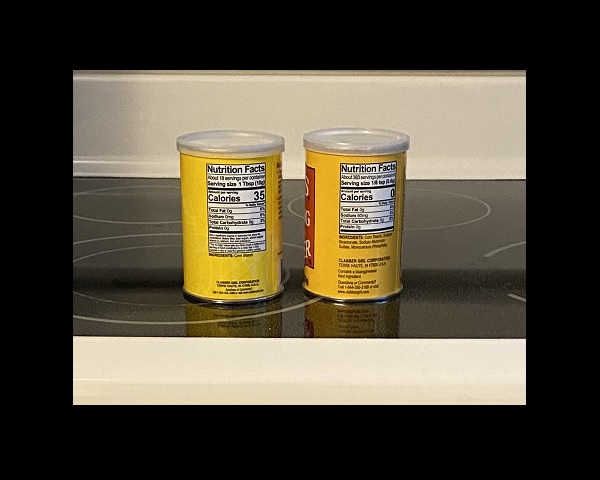
Upon thinking some more, and feeling certain that baking powder was added, I thought perhaps it was expired and had lost its potency. Then, there it was. In the process of re-examining, the problem was revealed. It wasn’t baking powder after all that was used. The canister had the same shape, height, color, and text, but rather than containing baking powder, it held cornstarch. And although the bread tasted almost the same as any other banana bread that was made, its consistency and body was not at all the same.
Contemplating the Gospel passage for the Sixteenth Sunday in Ordinary Time (Matthew 13:24-43) and reflecting on Jesus’ words as he tells the parables of weeds among wheat, the mustard seed, and the yeast, one is reminded of the importance of what goes into things. Or, in other words, what makes them up or influences them. Are there hidden ingredients? What’s the intent, the source, or motivation, and what, ultimately, is being sought?
So how does one really know what’s what with so much that is conflicting and competing in the midst of what can be confusing and misleading times? How does one distinguish between what things look like and what they really are, and decipher what’s happening around them and how it might be influencing them?
Prior to the Gospel, in this week’s readings, we read:
“The Spirit comes to the aid of our weakness; for we do not know how to pray as we ought, but the Spirit himself intercedes with inexpressible groanings. And the one who searches hearts knows what is the intention of the Spirit, because he intercedes for the holy ones according to God’s will.”—Romans 8:26-27
To discover what’s real, or what’s true, one must not only be willing to take a good look inside and out, but also be willing to look again, and then some more, searching with a heart that is sincere and an openness to the possibility that what looked like baking powder might not have ever been baking powder at all.
Breaking free of all that is clutter, To step away can be a struggle. More than noise and expectations, Theories and persuasion. Competing, always competing, Ever disguising might as right. What is it with this clutter, Going round both day and night?
It can be hard and very trying, To move beyond its reach, Or to strive to rise above it.
Yet, sometimes a willing heart, Into the wide and open air, Is all it really takes.
Then, leaning back, to catch a glimpse, And take a breath so deep, It carries inner strength and peace. Filled with hope and gentle wisdom, It’s time to return to what was left behind. Somehow, it’s all the same, But also, very different.
Because the loaf of bread is one, we, though many, are one body, for we all partake of the one loaf. – 1 Cor 10:17















You must be logged in to post a comment.