Like the lily In that One pond, Live in service, Remain faithful To creation.
Put on then, as God’s chosen ones, holy and beloved, heartfelt compassion, kindness, humility, gentleness, and patience, bearing with one another and forgiving one another, if one has a grievance against another; as the Lord has forgiven you, so must you also do. And over all these put on love, that is, the bond of perfection. – Colossians 3:12-14
The readings for the Fifth Sunday of Easter can be seen as encouragement toward, and an opportunity to reflect throughout the week on perseverance, praise, promise, and practice, but most of all, Love.
In the First Reading (Acts 14:21-27), Paul and Barnabas continue their travels, preaching to and teaching the Gentiles about the Way. In this scripture passage, it is written:
“They strengthened the spirits of the disciples and exhorted them to persevere in the faith, saying, ‘It is necessary for us to undergo many hardships to enter the kingdom of God.’” (v. 22).
Think about some of the hardships you have encountered or are currently experiencing. Where have you found strength to persevere? What about moments of peace? How do you desire God to be present to you regarding these challenges? Take some time to bring these areas to prayer and express what is in your heart as you do.
The First Reading ends with the following verses:
“From there they sailed to Antioch, where they had been commended to the grace of God for the work they had now accomplished. And when they arrived, they called the church together and reported what God had done with them and how he had opened the door of faith to the Gentiles.” (v.26-27).
Continuing to reflect on the questions above, your prayer, and these closing verses, what insight or inspiration comes to you?
——————–
In the Responsorial Psalm (Psalm 145:8-13), the response comes from verse 1 of the Psalm which is, “I will extol you, my God and king; I will bless your name forever and ever.” While it expresses the psalmist’s deep sense of gratitude to God, the verses that follow it speak to characteristics of God:
“The Lord is gracious and merciful, slow to anger and of great kindness. The Lord is good to all and compassionate toward all his works.” (v. 8-9).
In what ways have you encountered, and do you continue to encounter, grace, mercy, patience, and kindness through God, both directly and indirectly? In what ways do you embody and promote these characteristics to others?
The verses of the Psalm continue:
“Let all your works give you thanks, O Lord, and let your faithful ones bless you. Let them discourse of the glory of your kingdom and speak of your might.” (v. 10-11).
“Let them make known your might to the children of Adam, and the glorious splendor of your kingdom. Your kingdom is a kingdom for all ages, and your dominion endures through all generations.” (v. 12-13).
What strikes you most about the above verses, in terms of the reception of the Creator and the response of the created? As you contemplate this, what events or circumstances come to mind and what feelings do they give rise to? Where and how do praise and gratitude come into play? Pray with this, sharing your thoughts and feelings with the Lord, and allowing yourself to listen to or get a sense of the Lord’s response.
——————–
The Second Reading comes from the Book of Revelation (Revelation 21:1-5a):
“Then I, John, saw a new heaven and a new earth. The former heaven and the former earth had passed away, and the sea was no more. I also saw the holy city, a new Jerusalem, coming down out of heaven from God, prepared as a bride adorned for her husband. I heard a loud voice from the throne saying, ‘Behold, God’s dwelling is with the human race. He will dwell with them and they will be his people and God himself will always be with them as their God. He will wipe every tear from their eyes, and there shall be no more death or mourning, wailing or pain, for the old order has passed away.’ The One who sat on the throne said, ‘Behold, I make all things new.’”
After reading the above passage, when you read, “God’s dwelling is with the human race.”, what comes to mind, and what feelings accompany it?
As you continue to reflect, envision yourself, arm in arm with the Lord, walking along a path, in a place of your choosing. Share the thoughts and feelings that are stirring within you and allow the Lord to respond. Notice the way you receive or embrace each other as you communicate? What characteristics of the Lord do you experience and what ones do you exude to the Lord?
Recalling the last verse in this passage, “The One who sat on the throne said, ‘Behold, I make all things new.’”, what is your current level of trust in these words? Taking to heart God’s words as God’s promise, and your current reality, what happens? Share what’s going on inside you with the Lord including the areas that pose a challenge to your belief?
As your prayer time comes to its closing, what desire is in your heart? And what is the Lord’s desire for you?
——————–
The Gospel passage for the Fifth Sunday of Easter (John 13:31-33a, 34-35) takes us back to the Last Supper, after Jesus has washed the feet of the disciples and Judas has taken leave of Jesus and the others present.
“When he had left, Jesus said, ‘Now is the Son of Man glorified, and God is glorified in him. If God is glorified in him, God will also glorify him in himself, and God will glorify him at once. My children, I will be with you only a little while longer. I give you a new commandment: love one another. As I have loved you, so you also should love one another. This is how all will know that you are my disciples, if you have love for one another.’”
What’s it like to sit with the notion of the glory of God being in you? In what ways does, and can, being mindful of this truth enrich and/or enlighten your words and actions? In practice, how does it inspire a cooperative spirit with the flow of God’s love in and through you?
“Where do we begin? Begin with the heart.” – Julian of Norwich
Eastertide through days and nights, forty… fifty… ever more. It is truly right and just, here, above, and all around. Presence of mind, truthful heart; the soul of goodness triumphs.
Genuine faith, obeying, not tyrant, nor king—Savior. Wanting good for goodness sake, bearing with things, not grasping, nor pulling apart, as if at odds, and fighting within.
In a boat fishing around, who’s there? What sides are you on? Is it right, or something else? Casting nets, or casting stones? From where does your wisdom come? What sentiments control you?
When they had finished breakfast, Jesus said to Simon Peter, “Simon, son of John, do you love me more than these?” Simon Peter answered him, “Yes, Lord, you know that I love you.” Jesus said to him, “Feed my lambs.”
He then said to Simon Peter a second time, “Simon, son of John, do you love me?” Simon Peter answered him, “Yes, Lord, you know that I love you.” Jesus said to him, “Tend my sheep.”
Jesus said to him the third time, “Simon, son of John, do you love me?” Peter was distressed that Jesus had said to him a third time, “Do you love me?” and he said to him, “Lord, you know everything; you know that I love you.” Jesus said to him, “Feed my sheep. – John 21:15-17
“Christ is risen from the dead, and by His death He has trampled upon death, and has given live to those, who are in the tombs.” – the Troparion of Pascha
Taking it on the level, as only You, Lord, can do. Giving what humanity, can only aspire to grasp.
Falling down, then getting up, pushed time upon time again. Light of Life into darkness, You brought life—heart, mind, and soul.
Impostors come, and they go, but Your Spirit, Lord, remains. Waiting our reception, Lord, not for one, but for the many.
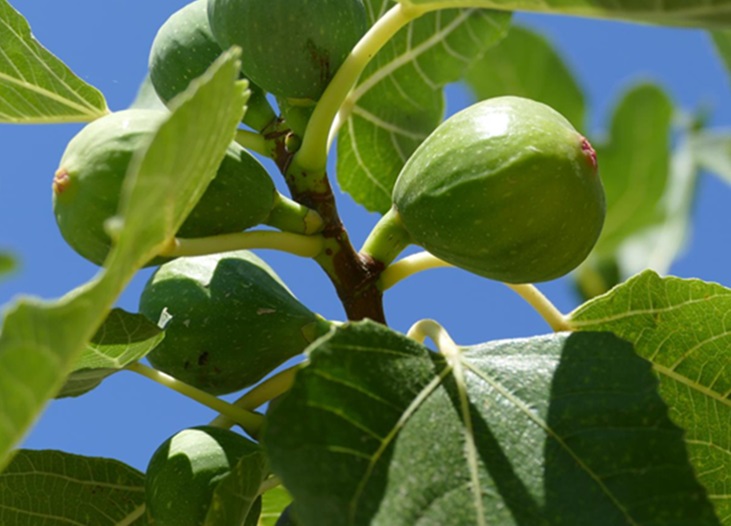
In the Gospel passage for the Thirty-third Sunday in Ordinary Time (Mark 13:24-32), Jesus says, “Learn a lesson from the fig tree. When its branch becomes tender and sprouts leaves, you know that summer is near.” (v. 24). These words are part of his response to a question asked of him by the disciples, Peter, James, John, and Andrew.
Away from the others, and just after Jesus commented to his disciples on the destruction of the temple, they had asked him, “Tell us, when will this happen, and what sign will there be when all these things are about to come to an end?” (Mark 13:4). The first thing that Jesus says to them is, “See that no one deceives you.” (Mk 13:5). As he continues to tell them the signs and what will happen (trials and tribulations such as war, persecutions, etc.), he also continues to give them instructions as to how to handle themselves and the situations they will face. He says:
“… do not be alarmed” (v. 7)
“Watch out for yourselves.” or be aware (v. 9)
“… do not worry beforehand about what you are to say. But say whatever will be given to you at that hour. For it will not be you who are speaking but the holy Spirit.” (v. 11)
“Be watchful!” (v. 23)
Then he says these words that are part of the Gospel for today, “Learn a lesson from the fig tree. When its branch becomes tender and sprouts leaves, you know that summer is near.” (v. 28). And although Jesus says this as he continues to tell Peter, James, John, and Andrew about the signs that will occur at the end times, the gospel passage ends with Jesus saying, “But of that day or hour, no one knows, neither the angels in heaven, nor the Son, but only the Father.” (v. 32). In other words, perhaps Jesus is reminding us not to focus on the signs, but rather to focus on his instructions.
His last instruction, “Learn a lesson from the fig tree,” is intriguing. In chapter 11 of Mark’s Gospel, Jesus curses a fig tree for being fruitless:
“The next day as they were leaving Bethany he was hungry. Seeing from a distance a fig tree in leaf, he went over to see if he could find anything on it. When he reached it he found nothing but leaves; it was not the time for figs. And he said to it in reply, ‘May no one ever eat of your fruit again!’ And his disciples heard it.” (Mark 11:12-14).
In this earlier passage, there is a mention of time, “… it was not the time for figs.” And now, when Jesus is telling some of his disciples about the signs of the end times and instructing them on how to be prepared, he again, refers to figs and time (and not knowing the exact time of the end).
A few interesting things about figs and time… Fig trees, like other fruit trees, have leaves, but unlike other fruit trees, their fruit flowers internally. Also, each fig contains a collection of many flowers and seeds. And while one may think of a fig as a piece of fruit, they are actually an infructescence—a multiple fruit—that in a sense, is always in the process of blooming.
So, in both times of uncertainty and times of comfort, see that no one deceives you, do not worry, and learn from the fig tree, continuing to grow from within, knowing that the fruit will come at the time that is appointed.
“Lord, my allotted portion and my cup, you have made my destiny secure.” – Psalm 16:5
Looking out at leaves on the ground, An assortment… a wide array, wind-blown to and from, As they work their way all around, Until eventually, in piles, they all become. Looking up at leaves on the trees, Swaying back and forth, hanging on, But all, together, moving with the breeze. Leaves on ground, and leaves on trees, Gathering, gathered, with needles of pine showing in between. Down to earth and heart to Heart, Source of all, keeping faith and hope alive. Life; living, lived, passing through, From one season to another, born anew.
Shine like lights in the world, as you hold on to the word of life. – Philippians 2:15-16
With each breath, life. Stepping forward Into the fresh, cool air. That feeling in the air, It’s all around. Rock of ages, For the ages, From the ages. Layer upon layer, Lines of grandeur. Moments of mist, Moments of majesty. Sounds of water flowing, Then its rush within sight. Rolling over, dripping down, Passing through, Gentle like the breeze. Invigorating, enthralling, Comforting, to the soul, Soothing to one’s spirit.












 HopeThatFloats
You must be logged in to post a comment.