What’s known, And what is not. Calculating possibilities.
Looking then leaping, A snapshot in time. Measuring risk, and seeking reward.
Guarantees, Warranties, Yet, nothing is certain.
The seeker being sought, The Sought, searching seekers. Meeting up, teeing up, And, finding what is lost.
“…to live in a manner worthy of the call you have received, with all humility and gentleness, with patience, bearing with one another through love, striving to preserve the unity of the spirit through the bond of peace…” – Ephesians 4:1-3
First, listen, and then, look around. Allowing one’s senses to take in and sincerely contemplate the happenings of a day can be challenging, never mind those of the times. Yet, it is these happenings that impact not just our own personal space, but also extend beyond what we might imagine. They are like sound waves rippling outward and amplified, stirring the air all around us.
The readings for the 3rd Sunday in Ordinary Time begin with a passage from the Book of Jonah (Jon 3:1-5, 10) where the initially resistant prophet Jonah warns the people of Nineveh of their impending doom. However, just like Jonah who was previously swallowed up and in darkness (in the gut of a whale), the people of Nineveh see it fit to change their course, let go of their way, and open their hearts and minds more fully to God.
In Psalm 25, the psalmist expresses a desire to understand and to live by the ways of the Lord. The psalmist prays for God, who is faithful, compassionate, merciful, good, and upright, to teach them how to embody and live by the same ways. For this to happen though, like Jonah and the people of Nineveh, the psalmist realizes they must let go of the old (acknowledge and turn over their trespasses to God) to be more fully open to God. And thus, to live more fully as one created in the image of God, abiding by, and living in God’s ways.
In chapter 7 of St. Paul’s first letter to the Corinthians, the people of Corinth are urged to pay attention as time is of the essence. The passage (verses 29-31) begins with, “I tell you, brothers and sisters, the time is running out.” and ends with, “For the world in its present form is passing away.“. In between, St. Paul writes:
“From now on, let those having wives act as not having them, those weeping as not weeping, those rejoicing as not rejoicing, those buying as not owning, those using the world as not using it fully.”
Perhaps what St. Paul is warning the Corinthians, and us, about, is being consumed by anything or anyone. He is calling us to be careful about what holds our attention, not to become self-consumed or fixated on anyone or anything earthly, as all of it is bound by time, is imperfect, and therefore passes away. Focus instead on that which is timeless—God and God’s ways.
This leads to the Gospel passage, Jesus’ announcement of the Kingdom of God as being at hand, and the call of the disciples Simon, Andrew, James, and John (Mark 1: 14-20). The disciples are busy, at work, mending their nets. This is useful work, but God had other work in mind for them at that time. Jesus reaffirms them in that yes, they are fishermen. However, he redirects them to being “fishers of men,” but again as we saw in the other readings for the 3rd Sunday in Ordinary Time, only if they will it as well. With Jesus, as with God, no one is ever forced to choose God and God’s ways. And although the time is now, the essence of God is that Time is not rushed or pressured (there is no act swiftly or lose out), and perhaps most importantly, Time is faithful, compassionate, merciful, good and upright, patient, and always open to change.
Make known to me your ways, Lord; teach me your paths. Guide me by your fidelity and teach me, for you are God my savior, for you I wait all the day long. Remember your compassion and your mercy, O Lord, for they are ages old. Remember no more the sins of my youth; remember me according to your mercy, because of your goodness, Lord.
Good and upright is the Lord, therefore he shows sinners the way, He guides the humble in righteousness, and teaches the humble his way. – Psalm 25:4-9
Reading Scripture it’s not too hard to envision the Pharisees and scribes as having a persona of lofty authoritarians who are learned, serious, and on the surface appearing to be so proper. Yet, Jesus points out that their actions do not align with their words. In the Gospel for the Thirty-first Sunday in Ordinary Time, Jesus tells the crowd and the disciples to observe and do as the Pharisees and scribes say, but do not act as they do. Do not hold down or seek to elevate yourself above others. Jesus then goes on to say, “you have but one teacher, and you are all brothers.” You have but one Father, but one master, Christ, and that the greater glory is not in being served or glorifying yourself, but rather in being of service to others, and therefore of service to God.
Reflecting on this Gospel and considering other Scripture passages as well, it may seem obvious that the Pharisees and scribes were not about what they proclaimed. Perhaps they fell victim to the notion that they had already arrived, were afraid of losing what they had attained, or some other thing that shrunk their hearts and made them sterner with others, and lax in their own prayer and practices, making them less likely to be inspired by God and more likely to be misguided and led astray.
Despite this, the actions of the Pharisees and scribes don’t make them worthless or deserving of being canceled. We can hold them accountable but must remember they are still part of God’s creation. They also need love, mercy, and prayers.
Jesus says to observe and listen to what they say. Maybe he’s reminding us that God can still work through them. Their transgressions are not bigger than God.
Praying with this passage brought to mind an instance from grade school, in my 2nd grade classroom, where being orderly was of the utmost importance to the teacher, most especially when it came to the inside of a student’s desk. All the students knew what was expected, and it seemed that all of us really tried to meet this expectation. However, there were a couple of students who had a very hard time with being organized. So, one day, the teacher was walking around the classroom, teaching a lesson, and without warning, flipped and dumped out the contents of this student’s desk, startling everyone, to say the least, and sending books, paper, pencils, and so on, all over the place. The student was then yelled at for being so disorganized, the teacher turned the desk back upright, and told the student to pick everything up, and put it back in the desk, neatly. The student, who was normally quiet, shrunk even more, their cheeks turned red, and tears were coming down their face as they began doing as they were told. The rest of us 7- and 8-year-olds, just sat there horrified. None of us dared to try to help the student for fear of what would happen if we did. It’s interesting how fear can interfere. It’s also interesting how judgment can be too.
When I think about this instance, in the light of this Gospel, I wonder, what was the point, or the lesson being taught that day? What made it so important that the inside of our desks be orderly, to the extent that a student who was trying their best and just being themself, be demeaned like that, and the room be made so disorderly, in efforts to obtain order? However, faith also calls me to hold and look at the entire picture, including before and beyond that instance and to recall that I also had what one would call a lot of positive experiences in that classroom.
Looking at the Pharisees and scribes, Jesus points out a disconnect not only between their words and their actions, but also in their hearts. He cautions the crowd, and us, to not be fooled or distracted toward self-serving ways. To not rely on external things, such as possessions or positions of authority, to gain good graces or a particular outcome, but rather to rely on the grace and guidance of God. Jesus is saying, if we’re going to be led by anybody or anything, or if we’re going to follow anybody or anything, first and foremost, let it be God.
But there’s more… humility.
When we think about this Gospel passage, it can be tempting to cast stones at the Pharisees and the scribes, thinking of ourselves as perhaps being far removed from them, especially in the “us” and “them”, divided times I which we live. Yet, in our certainty and in our knowing, we too can become susceptible to an attitude or posture that interferes and creates static, making us less receptive to being led by God, more likely for other things to come before, or in place of God, and making us less loving, compassionate, and forgiving.
It’s unlikely that the Pharisees and scribes set out to fall into a haze, becoming less aware, open, or able to continue learning through experiences, and blocked, at least at that time, from continually drawing closer to God. However, in certainties and in knowing about what ought to be, it can be easy to become closed off to what is, and the open, honest dialogue that helps us to know when we are moving toward a will that is not in alignment with God, and that is of disservice, rather than what is best.
“Humility is an attitude of honesty with God, oneself, and of all reality. It enables us to be at peace in the presence of our powerlessness and to rest in the forgetfulness of self.” – Thomas Keating
Jesus spoke to the crowds and to his disciples, saying, “The scribes and the Pharisees have taken their seat on the chair of Moses. Therefore, do and observe all things whatsoever they tell you, but do not follow their example. For they preach but they do not practice. They tie up heavy burdens hard to carry and lay them on people’s shoulders, but they will not lift a finger to move them. All their works are performed to be seen. They widen their phylacteries and lengthen their tassels. They love places of honor at banquets, seats of honor in synagogues, greetings in marketplaces, and the salutation ‘Rabbi.’ As for you, do not be called ‘Rabbi.’ You have but one teacher, and you are all brothers. Call no one on earth your father; you have but one Father in heaven. Do not be called ‘Master’; you have but one master, the Christ. The greatest among you must be your servant. Whoever exalts himself will be humbled; but whoever humbles himself will be exalted.” – Matthew 23:1-12
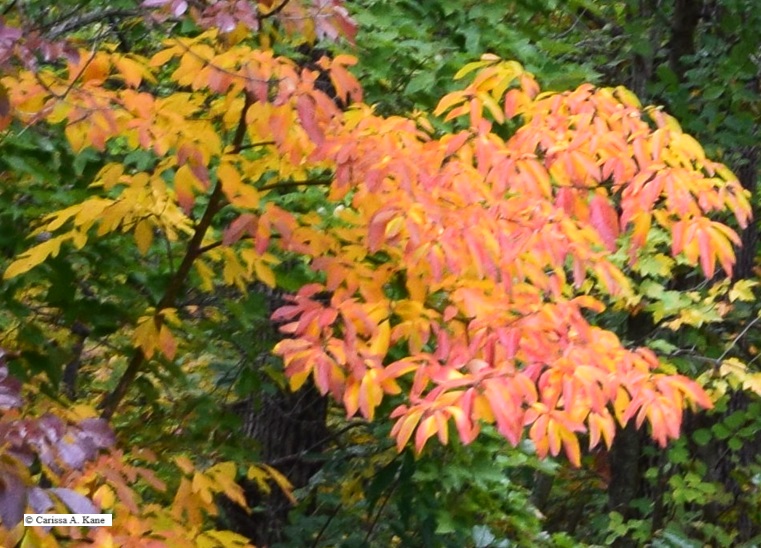
Leaning into Fall, the trees embrace the Essence of their nature. Season after season, year after year, who’s to say on time, or in time? Either way, waiting without edge, trusting in the beauty of Your time as you gently reveal the colors, so many colors, of Your way.
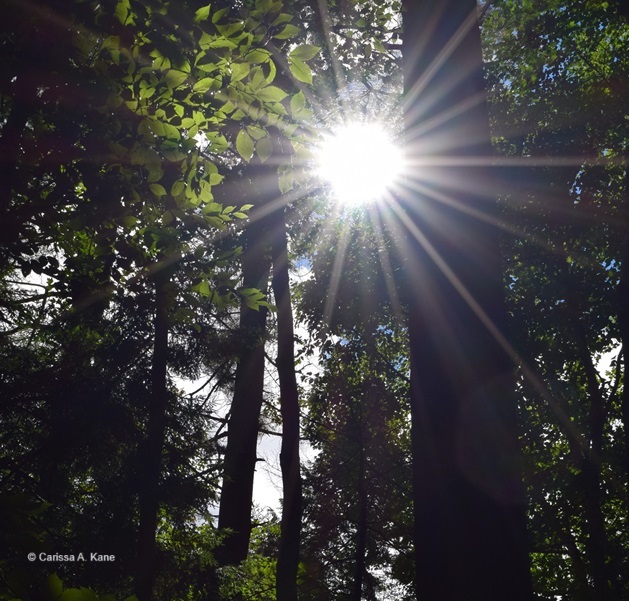
Beacon calling out to one and all alike, remember: life is but a spectrum, at its fullest and shining bright, when casting out the shadows, fears, and doubts. Your light so much stronger than the decay, rising up and out from far below.
It’s time to recognize again who we really are. So much alike, created to be different, but not with indifference or carrying any shades of hate. Loved into existence, the vision of Your eye. Side by side, each and every one of us are vessels of Your grace, and we all have a place.
Holy God, Most High Creator, hold us all together, unite us in Your heart… in our hearts.
Shine like lights in the world as you hold on to the word of life. – Phil 2:15d, 16a
From one thing to another A shade, or some truth survives. Perhaps hidden from plain view, But nonetheless existing, If only to be seen, picked, From underneath the rubble, Intertwined and wrapped around, Trying to conceal or blur, The hard lines and soft edges, Leading one to discovery. Aiming, always aiming high, To the place where feelings go To wash away thoughts unkind. Resting in the heart of One, Meeting up, then stepping out, Similar but not the same. Grateful for Your peace and love, Amazing, so amazing, What can happen thru Your eyes. Though the winds may shift and change, The soul carries on its way, Steady in One who remains.
The Lord is my shepherd; I shall not want. – Psalm 23:1
Questions upon questions. Sitting still, or idly sitting? With, or at, each other? Whether picking, picked, or chosen, The answer is the same. Apples of God’s eye. Desire of desires.
Fruit bearing fruit, Fruit bearing with fruit. A breath of fresh air, A dose of patience, Perseverance too. From the heart of One To another, then another.
All searching for some peace, While time is fast escaping. All in One, One in all, History that is shared, Spirits called together. Even when far apart, Destiny is waiting.
It was not you who chose me, but I who chose you and appointed you to go and bear fruit that will remain, so that whatever you ask the Father in my name he may give you. This I command you: love one another. – John 15:16-17
On a recent trip into the city, memories of daily travel into the office by commuter rail came to mind. In particular, the schedules and the frequency of trains, or lack thereof, depending on what the workday had to offer and when it ended up being time to go home. During that time, there were a number of trains between 4:45pm and around 6:30pm on the line that I needed to take, so if I missed one, I could just hop on the next without much of a wait. However, if I was delayed at work past 6:15, and not able to run fast enough to make it to the platform and onto the 6:30 train before it started pulling out, the wait for the next train was substantial.
Thinking back on those times, I remember running for that last rush hour train and seeing other people do the same, sometimes making it, and sometimes times not. Then there were those occasional times of choosing not to make a mad dash for it, but rather to slow down, letting go of any notion of getting onto the train in those last moments before it pulled away. On those days, it was interesting how the station gradually transformed from being so crowded and noisy to a quieter, more spacious, easy-going place as it moved past the hours known for their rush. It was also easier to appreciate, once foregoing the push to move quickly, hop on, grab a seat, and get outbound.
It seems like a lot of life can be focused on being outbound and moving on to the next thing. Society just keeps pushing for more and more, and with greater speed, seemingly unaware of what is being lost or left behind. This constant hustle often leads to losing sight of what’s personal and meaningful, diminishing the time and patience that allows for potential to be seen and nurtured, and forgetting that “best” is most often brought out in one another by that which is rooted in a higher purpose—that which is mutually beneficial.
In the First Reading of the Twenty-fifth Sunday in Ordinary Time it is written,
“Seek the Lord while he may be found, call upon him while he is near.” – Isaiah 55:6
In this busy, challenging world in which we live, what’s it like to turn this verse around and to contemplate the Lord seeking you, and calling your name with a desire to draw near to you? Where are the places that you invite or allow the Lord to find you and to be close to you? Where are the places where perhaps you don’t?
In verse 18 of Psalm 145, we read, “The Lord is near to all who call upon him, to all who call upon him in truth.” And in the Second Reading, we read part of St. Paul’s letter to the Philippians, where he relates his desire to be Christ-centered (“Christ will be magnified in my body, whether by life or by death.” – Phil 1:20c). For it is in the Lord, and in living out the ways of the Lord, that he not only finds purpose and meaning, but also becomes an extension of God’s grace to others, encouraging them to also strive toward that which is greater than.
How are you inspired in relationships? Where do you find purpose, meaning, and mutual, generative benefit? In what ways do you desire to deepen your relationship with God, and others?
In the Gospel reading, Jesus shares the parable of the workers in the vineyard (Matthew 20:1-16) where the focus is on the desire and willingness to join in and work in the vineyard, rather than who got there first, who worked the longest, or any other credentials. This passage is a great reminder that with God, it’s never too late, nor too early, patience is abundant, potential is appreciated, and there’s always room for those who desire a place in the vineyard and come willing to do the work. With God, you can’t miss, not just because the time is always right, but also because the schedule is flexible, as well as forgiving.
Jesus told his disciples this parable: “The kingdom of heaven is like a landowner who went out at dawn to hire laborers for his vineyard. After agreeing with them for the usual daily wage, he sent them into his vineyard. Going out about nine o’clock, the landowner saw others standing idle in the marketplace, and he said to them, ‘You too go into my vineyard, and I will give you what is just.’ So they went off. And he went out again around noon, and around three o’clock, and did likewise. Going out about five o’clock, the landowner found others standing around, and said to them, ‘Why do you stand here idle all day?’ They answered, ‘Because no one has hired us.’ He said to them, ‘You too go into my vineyard.’ When it was evening the owner of the vineyard said to his foreman, ‘Summon the laborers and give them their pay, beginning with the last and ending with the first.’ When those who had started about five o’clock came, each received the usual daily wage. So when the first came, they thought that they would receive more, but each of them also got the usual wage. And on receiving it they grumbled against the landowner, saying, ‘These last ones worked only one hour, and you have made them equal to us, who bore the day’s burden and the heat.’ He said to one of them in reply, ‘My friend, I am not cheating you. Did you not agree with me for the usual daily wage? Take what is yours and go. What if I wish to give this last one the same as you? Or am I not free to do as I wish with my own money? Are you envious because I am generous?’ Thus, the last will be first, and the first will be last.” – Matthew 20:1-16
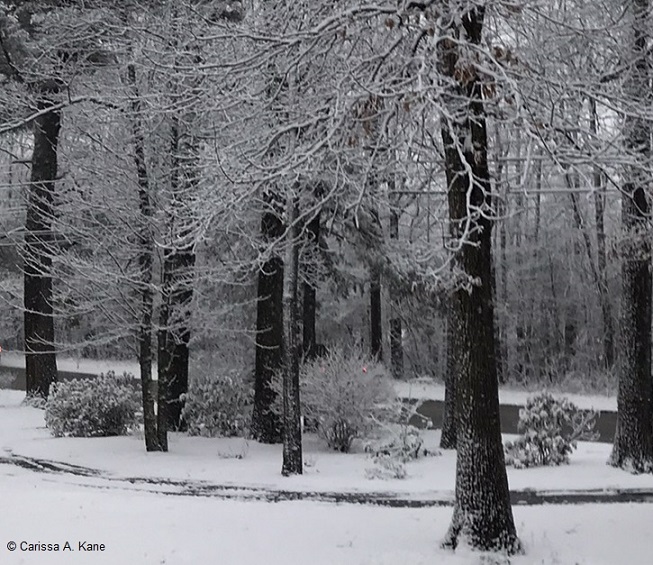
Covered with snow, the landscape so quiet, so still, so beautiful. The branches and shrubs become as if carefully wrapped, insulated from the elements, as well as by the elements. Becoming part of what’s on the outside pushing inward? Or, perhaps, it’s the outside becoming part of what’s inside and underneath, pushing outward? How will they lean, where will they fall, maybe, just maybe, they will stand upright, if anything at all.
A clean heart create for me, God; renew within me a steadfast spirit. – Ps 51:12
The Gospel for the First Sunday of Lent (Mt 4:1-11), is an account of the temptation of Jesus. We all experience variations of temptation throughout our lives. We all have weaknesses or tendencies that can lead us astray or take us away from being at or near our best, most genuine selves.
Looking to the example of Jesus, we can see his response to temptation, is first and foremost, to be aware and recognize it. Then second, to respond by remembering, and not only naming, but also reclaiming God as the source of all wellbeing. Jesus keeps God at the center throughout, and God’s grace enables him to overcome each temptation.
How can one apply this to real life experience in today’s world?
We can start by being aware and recognizing that temptation works in different ways. Sometimes it tries to move us toward “absolute” or limited views and the choices that flow from them, while at other times, temptation seeks to blur the lines between choices so that the best choice is left behind for the choice that seems good enough. Temptation tries, and keeps trying to find whatever hook will sink, to snag and pull one toward a more self-centered space and making a choice from there, instead of making it from a God-centered space where the choice is generative and beneficial beyond what one can surmise.
In the Gospel passage of the temptation of Jesus, Jesus shows us how to lean on the grace of God, and how to patiently endure to overcome temptation by living with God at the center—always in our hearts and minds. He reminds us that what has been written, holds true now, as well as forever.
One does not live on bread alone, but on every word that comes forth from the mouth of God. – Dt 8:3
He will command his angels concerning you and with their hands they will support you, lest you dash your foot against a stone. – Ps 91:11-12
You shall not put the Lord, your God, to the test. – Dt 6:16
The Lord, your God, shall you worship and him alone shall you serve. – Dt 6:13
Reflecting on each of Jesus’s responses above, what comes to mind in terms of your own experience of God’s grace in the face of a struggle or challenge you faced? Recall how God was present to you, and how you were, or became present to God? Share with God what that experience was like, and what it means to you today. What inspiration or insight might God want that experience to reveal to you today?
Literally, the second the light turns green, horns are honking. Sometimes, it is from cars two or three deep in line! Imagine if instead of cars on the roads, it was just people, single file, moving on foot. Stop or go to the rhythm of the traffic lights. Perhaps it would be more like the game musical chairs than the one named “Simon Says,” but in today’s world, likely more dangerous, and certainly far more intense.
While in situations like driving, signs of impatience can be much easier to spot, at other times it can be harder to see when patience is absent or slipping away. The second reading for the Third Sunday of Advent (Jas 5:7-10), begins with, “Be patient, brothers and sisters.” It seems so fitting that during one of the busiest times of the year for many people, these verses in the Letter of James contain a form of the word, and urges patience four times, once each in three out of the four verses. And, as for the one verse that doesn’t use the word, it calls us to ponder one of the ways that human beings tend to handle displeasure with one another (“Do not complain, brothers, about one another, that you may not be judged.” – v.9).
Think of a recent experience where you were on the receiving end of your own or someone else’s impatience or displeasure. What happened? And what judgments were involved?
Now, think of a recent experience where you were the one responding with impatience or displeasure. What was going on? And what opinions or beliefs were involved?
In each situation, how might an increase of your own patience have improved the situation or the aftermath of it?
When pausing to think of recent experiences where patience was lacking or displeasure arose, on someone else’s part or on your part, which experience was easier to recall? Which experience came to mind more quickly?
It can be tempting to see patience in terms of something someone has or does not have. However, like any other attribute, it’s possible for it to exist in some situations and not in others. This is important because oftentimes it can be easy to think, “I’m patient,” or “I’m…” this or that based on a small sampling of situations that one’s ego might readily serve up to “pass the test” and move us along from further introspection and possibly attaining additional growth and greater freedom; things that are impossible without honestly looking across and considering the spectrum of one’s life experiences.
An Advent Prayer: Lord, help me to allow you to direct the pace of each day. Through my stopping and going, and all that may occur between, may my actions and responses reflect grace and genuine patience and understanding that flows from you, regardless of what I may or may not receive in return. And help me to continue to look to you, that you may grant me the grace to notice and appreciate the beauty and goodness of all creation, and the heart and soul of those I encounter each day.
Be patient, brothers and sisters, until the coming of the Lord. See how the farmer waits for the precious fruit of the earth, being patient with it until it receives the early and the late rains. You too must be patient. Make your hearts firm, because the coming of the Lord is at hand. Do not complain, brothers and sisters, about one another, that you may not be judged. Behold, the Judge is standing before the gates. Take as an example of hardship and patience, brothers and sisters, the prophets who spoke in the name of the Lord. – James 5:7-10











 HopeThatFloats
You must be logged in to post a comment.