The world, And its inhabitants, Who are abundantly “living,” Something else. In a shell, On a hill, Away from it all. Yet, Life, Forgotten, Trampled, and hidden. Nothing else. Something else.
Create a clean heart in me, O God; Renew within me a steadfast spirit. – Psalm 51:12
During a time when much around the world seems off kilter and unbalanced, Advent waiting proceeds. And, as it does, a place where hearts come together shines bright. Spirit builds in the air, as angels sing, “Come! Come meet me at the giving tree!”
Tomorrow, December 6th, is the Feast of St. Nicholas. Often associated with gifts, and most especially charity, Nicholas and his designated day is one of the places where East meets West. Both Eastern and Western churches honor Nicholas.
So, in this year of many surprises, shocks, and great unknowns, as we continue to journey and navigate through the times in which we live, it seems so fitting that the patron saint of travelers, born one thousand seven hundred fifty years ago (in the year 270), is also one whose spirit of charity is known throughout the world, and whose name means, “victory of the people.”
For it truly is, in giving, hearts unite, and we receive. May God grant peace on Earth as we pray, St. Nicholas—victory of the people—pray for us.
Do not ignore this one fact, beloved, that with the Lord one day is like a thousand years and a thousand years like one day. The Lord does not delay his promise, as some regard “delay,” but he is patient with you, not wishing that any should perish but that all should come to repentance. But the day of the Lord will come like a thief, and then the heavens will pass away with a mighty roar and the elements will be dissolved by fire, and the earth and everything done on it will be found out. Since everything is to be dissolved in this way, what sort of persons ought you to be, conducting yourselves in holiness and devotion, waiting for and hastening the coming of the day of God, because of which the heavens will be dissolved in flames and the elements melted by fire. But according to his promise we await new heavens and a new earth in which righteousness dwells. Therefore, beloved, since you await these things, be eager to be found without spot or blemish before him, at peace. – 2 Pt 3:8-14
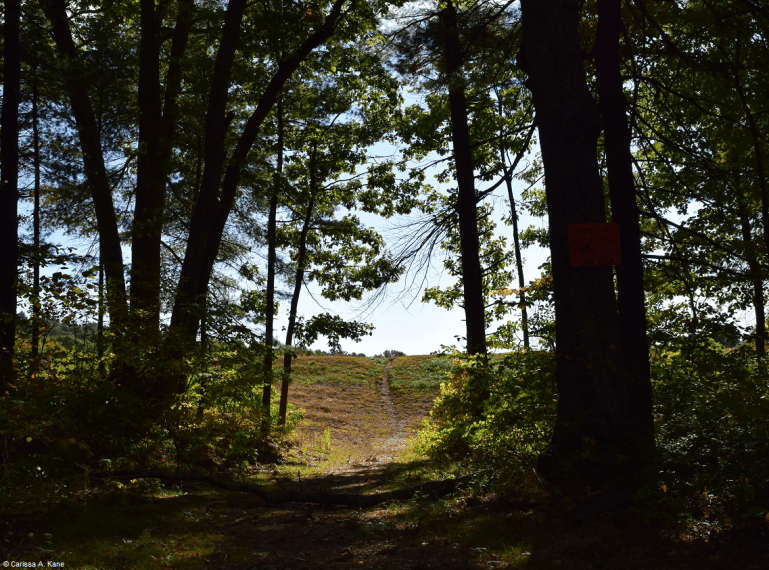
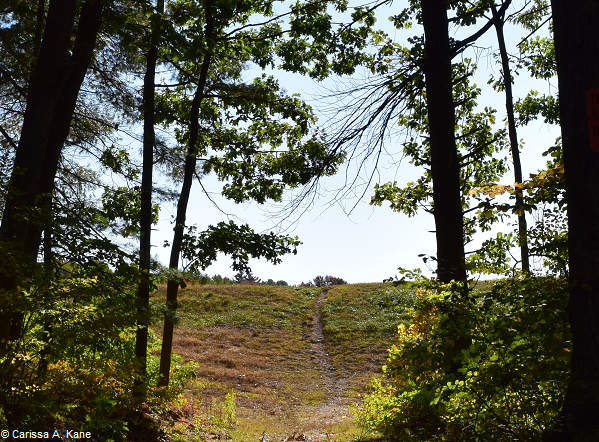
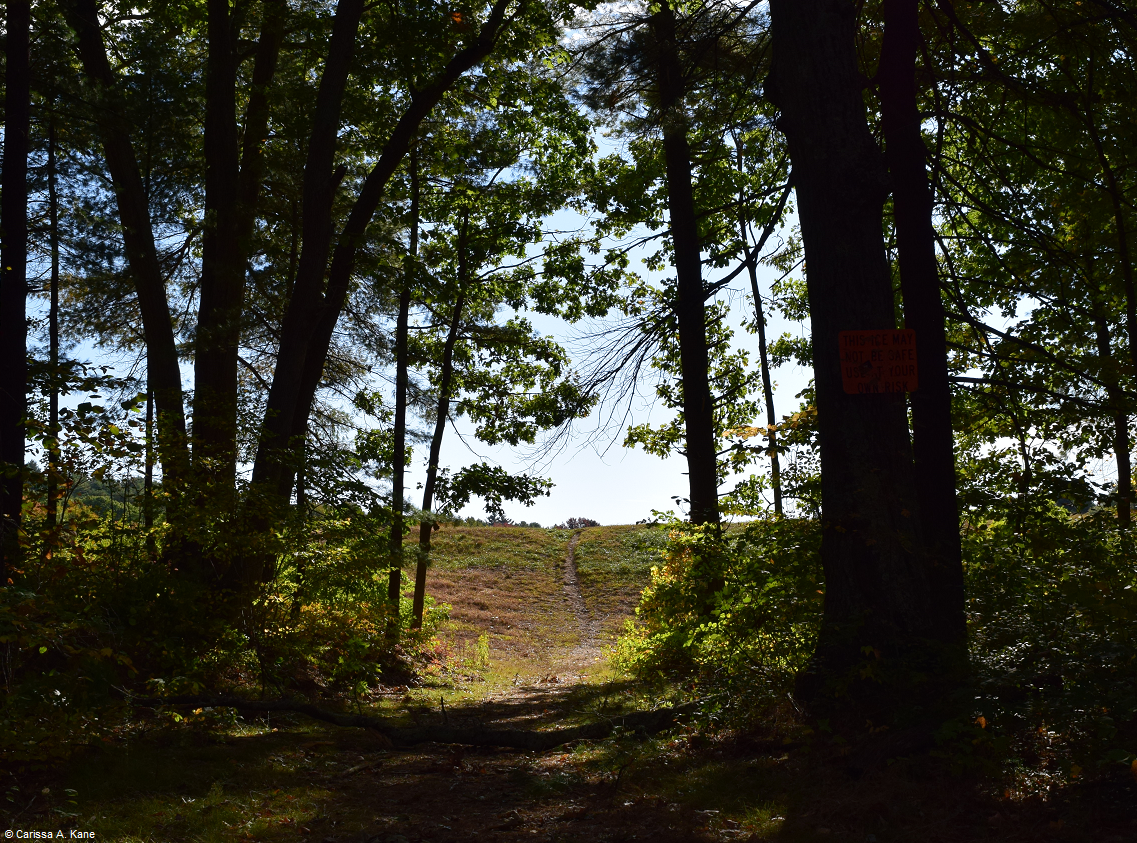
Entering the wooded path to explore a new place, it seems easy to regard myself as a guest. As such, I am perhaps more mindful (or respectful), and probably more open to appreciating in some way, what lies before me. So often in nature, whether the outdoor or indoor (human kind), the tendency is to see or to remember with greater ease, the extremes. However, in actuality, the majority of what transpires is in between. And in those rare times, when it isn’t, still, nothing is lost, or without value, for the faithful guest who travels with an honest, open heart.
“If God created shadows it was to better emphasise the light.” ― Pope Saint John XXIII
When it comes down to it, although it may be preferred to be the host, across the board and back, the greater good is most often served in the moments of realizing, that we are indeed, the guest.
I shall live in the house of the Lord all the days of my life. – Psalm 23
From “the greater good” search results of some fellow guests during my lifetime, Presidents 37 through 45…
Remember, always give your best. Never get discouraged. Never be petty. Always remember, others may hate you. But those who hate you don’t win unless you hate them. And then you destroy yourself. – Richard Nixon
I have always believed that most people are mostly good, most of the time. I have never mistaken moderation for weakness, nor civility for surrender. As far as I’m concerned, there are no enemies in politics – just temporary opponents who might vote with you on the next Roll Call. – Gerald Ford
We have a tendency to condemn people who are different from us, to define their sins as paramount and our own sinfulness as being insignificant. – Jimmy Carter
Peace is not absence of conflict, it is the ability to handle conflict by peaceful means. – Ronald Reagan
I take as my guide the hope of a saint: In crucial things, unity; in important things, diversity; in all things, generosity. – George H.W. Bush
We all do better when we work together. Our differences do matter, but our common humanity matters more. – Bill Clinton
Use power to help people. For we are given power not to advance our own purposes nor to make a great show in the world, nor a name. There is but one just use of power and it is to serve people. – George W. Bush
All of us share this world for but a brief moment in time. The question is whether we spend that time focused on what pushes us apart, or whether we commit ourselves to an effort — a sustained effort — to find common ground, to focus on the future we seek for our children, and to respect the dignity of all human beings. – Barack Obama
When you open your heart to patriotism, there is no room for prejudice. The Bible tells us, ‘How good and pleasant it is when God’s people live together in unity.’ – Donald Trump
“If God created shadows it was to better emphasise the light.” ― Pope Saint John XXIII
As autumn makes her entrance, bursts of color begin to appear where once green was all around. Noticing an especially colorful section for so early in the season, I also see a gap within it… something missing… branches gone or somehow lost along the way.
As I look, I wonder. What could they have been? What would they have been? How the rest of the scenery is affected by their absence, also crosses my mind.
More than 204,000 people in the United States of America have died from COVID-19 thus far. That is approximately 21% of the 989,000 brothers and sisters across the world who have died from the virus. In the 196 recognized countries, almost 1 Million people have died since this pandemic began. While this is a statistic, it is far greater than a number(s).
What do we know about our brothers and sisters who have succumbed to this illness? The truth is, we know that they represented a wide range of age groups; came from various backgrounds, and political and religious affiliations; and studied or worked in all different kinds of occupations, to name just a few things. We also know, for sure, that they were not all advanced in age, nor did they all have pre-existing health conditions. Some, in fact, were closer to what would be considered the first half of life, physically fit, and/or not considered to be at a higher risk.
More important than all of that, they were fellow human beings. They were not just a number. They were living, breathing human beings, whose lives are not to be readily written off as dispensable to serve the interests of any one person or people in particular claiming to be “for” Life. Those who have died, loved, and were loved, and now, they are missed, leaving a gap… an emptiness, most especially for those who knew them best.
More than 204,000, and counting, brothers and sisters in the United States of America. More than 989,000, and counting, brothers and sisters worldwide. What could they have been? What would they have been? How is rest of the world affected by their absence?
Will we be driven further apart by lies, deception, and reckless disregard for life, or will we see what is truly going on, honor the lives of those who have died, and finally, come together?
Brothers and sisters: If there is any encouragement in Christ, any solace in love, any participation in the Spirit, any compassion and mercy, complete my joy by being of the same mind, with the same love, united in heart, thinking one thing. Do nothing out of selfishness or out of vainglory; rather, humbly regard others as more important than yourselves, each looking out not for his own interests, but also for those of others. Have in you the same attitude that is also in Christ Jesus. – Phil 2:1-5
A couple of summers ago, while visiting family, we decided to go out for ice cream. As we opened the back door of the mini-van, immediately, and with great enthusiasm, the dog jumped in, and was ready to go. Unfortunately, the dog could not come with us, and needed to be escorted back out of the vehicle. As disappointed as he seemed though, when we got back to the house, his excitement upon our reuniting was as if his disappointment or hopes dashed prior to our departure, had never occurred.
It is interesting how dogs, act and react, especially when they are excited. Perhaps, jumping and bouncing, running back and forth, and/or wagging their tails furiously at the approach of a favorite treat or as a loved one returns home. Then there are the other times, when they might plant their paws and growl, preparing to resist, attack, or defend against something non-preferred, or a threat perceived. Regardless of the situation though, what is often most striking is the capacity of dogs to love without abandon.
Moving from wagging tails to wagging fingers, there is the human frailty that causes hearts to bruise, egos to rouse, and hurt to linger. This, all the while, the silent plea, “Come now. Come down off your high horse,” echoes deep within. But, which will win?
Sometimes, it’s time to stop stopping. Stop standing still. When stubborn, yet again, the wagging, it begins. There it is. Getting in the way, determined to carry on, refusing to give in.
At what cost?
So many things, taking up space, too tightly held. How can the space between us do anything, but swell? Wider it becomes… bigger… stronger… bolder it grows. Drifting… fading… falling, tell me, what is so appalling?
One can’t help but wonder, when will this nonsense stop? When will we heed the warning that echoes deep within, “Come now. Come down off your high horse.”?
I give you a new commandment, says the Lord: love one another as I have loved you. – John 13:34
You do not have to be good. You do not have to walk on your knees for a hundred miles through the desert repenting. You only have to let the soft animal of your body love what it loves. Tell me about despair, yours, and I will tell you mine. Meanwhile the world goes on. Meanwhile the sun and the clear pebbles of the rain are moving across the landscapes, over the prairies and the deep trees, the mountains and the rivers. Meanwhile the wild geese, high in the clean blue air, are heading home again. Whoever you are, no matter how lonely, the world offers itself to your imagination, calls to you like the wild geese, harsh and exciting – over and over announcing your place in the family of things. — Mary Oliver, Wild Geese
Memories make their mark in different ways and in varying degrees. One indelibly etched in my mind is that of being told, “I may not know and see everything, but God does.” Hearing these words as a child, no matter how they were intended, was not of any comfort at all, but rather intimidating, or better put, scary. Who was this God that was all-knowing and all-seeing? And, more importantly, where was this God?
It is interesting how, without personal experience and proper or complete context, what we hear and see can become the source of misunderstanding, unrest, and/or perhaps become crippling in ways that may not be so apparent. This is why it is so important to take what we hear and see from others and look at it more closely, contemplating what we hear and see for ourselves, and taking it to heart in the context of all the pieces involved, what we experience, and what we come to know and sense through the process.
In the Gospel according to John, in the story of the woman at the well (John 4:5-42), the woman said of Jesus, “He told me everything I have done.” Then it is written:
When the Samaritans came to him,
they invited him to stay with them;
and he stayed there two days.
Many more began to believe in Jesus because of his word,
and they said to the woman,
“We no longer believe because of your word;
for we have heard for ourselves,
and we know that this is truly the savior of the world.” – (John 4:39-42).
Though the Samaritans had heard about Jesus from the woman at the well, they also needed to hear Jesus for themselves. In such a fast-paced world, where time seems to slip away so often, it can be tempting to rely solely on others, or to forego taking the time or making the effort to hear Jesus for ourselves. However, it is only in doing so, that the answers to “who” and “where” God is, are revealed; truth becomes known, the ways of love and justice become visible, and both are etched more deeply into mind and heart.
Lord, as we walk through each day, help us to take all that we experience, the joyful, as well as the difficult and challenging, into prayer, and help us to make room to hear you. Help us to let go of the old and out-worn, and to embrace You, and Your ways, with grateful hearts, so that our lives may be examples of your glory in all things.
Beginning in the early years of life, one comes to see that seating can be tricky, sometimes even turning contentious. From a very young age, many children are introduced to musical chairs. To be first (often synonymous with best) and beat out others in securing a coveted seat, of which there are too few, is the goal of the game. If you do not get a seat, you’re out of the game—eliminated.
Across the years as well as across various different areas of life, securing a “good” seat seemingly remains a key to many things. Whether one is attending an event related to school, sports, dinner, entertainment, travel, the celebration of milestones, etc., it seems human nature to aim for a seat with a prime view. In the Gospel according to Luke (chapter 14: 7-14), Jesus encourages us to refrain from this way of being and not to take the coveted seat, or hold it for those who are held in esteem or known to us.
Rather than aiming to obtain a particular spot, or slide into a position, we are to trust that what is passed up or given away, if it is truly for us, will come back to us. In addition, Jesus instructs us to be gracious, making room physically, as well as in our hearts and minds, for others. Calling us to look at and examine our reservations. What are the spots being held back or blocked off? What is preventing seating for all?
He told a parable to those who had been invited,
noticing how they were choosing the places of honor at the table.
“When you are invited by someone to a wedding banquet,
do not recline at table in the place of honor.
A more distinguished guest than you may have been invited by him,
and the host who invited both of you may approach you and say,
‘Give your place to this man,’
and then you would proceed with embarrassment
to take the lowest place.
Rather, when you are invited,
go and take the lowest place
so that when the host comes to you he may say,
‘My friend, move up to a higher position.’
Then you will enjoy the esteem of your companions at the table.
For every one who exalts himself will be humbled,
but the one who humbles himself will be exalted.”
Then he said to the host who invited him,
“When you hold a lunch or a dinner,
do not invite your friends or your brothers
or your relatives or your wealthy neighbors,
in case they may invite you back and you have repayment.
Rather, when you hold a banquet,
invite the poor, the crippled, the lame, the blind;
blessed indeed will you be because of their inability to repay you.
For you will be repaid at the resurrection of the righteous.” – Luke 14:7-14
Over the years, I have been fortunate to witness as well as to experience, on many occasions, the care, kindness, and concern of neighbors. While the word “neighbor” may conjure the image of those living in closest proximity, in actuality, regardless of location, preferences, opinions, etc. any fellow human being or living thing is neighbor. Thinking of both those next door and those far away, through countless occurrences and interactions, it seems that, certainly, one of the greatest gifts to come with each heart is the ability to feel compassion and express mercy. However, whether or not one is locked-in and striving to live from this God-given capacity, allowing it to influence thoughts, words, and actions, is another thing.
In the story of the Good Samaritan (Luke 10), the one who may have been least expected to do so, the Samaritan, is the only one to rise to the occasion, allowing the Spirit to lead him. He stops at the sight of the victim, placing emphasis on his fellow human being (his neighbor) who is in need. He does the proper thing, rather than the easiest or most convenient thing. He seeks not revenge, nor to add insult to injury, but to lessen the blemish made by the robber, also a neighbor. In doing so, he does his part to let the light of God within him grow and shine, and in turn, he is helping, through the grace of God, to keep the one that seeks to cast down humanity at bay.
There is not a flower that opens, not a seed that falls into the ground, and not an ear of wheat that nods on the end of its stalk in the wind that does not preach and proclaim the greatness and the mercy of God to the whole world. – Thomas Merton
There was a scholar of the law who stood up to test Jesus and said, “Teacher, what must I do to inherit eternal life?” Jesus said to him, “What is written in the law? How do you read it?” He said in reply, “You shall love the Lord, your God, with all your heart, with all your being, with all your strength, and with all your mind, and your neighbor as yourself.” He replied to him, “You have answered correctly; do this and you will live.”
But because he wished to justify himself, he said to Jesus, “And who is my neighbor?” Jesus replied, “A man fell victim to robbers as he went down from Jerusalem to Jericho. They stripped and beat him and went off leaving him half-dead. A priest happened to be going down that road, but when he saw him, he passed by on the opposite side. Likewise a Levite came to the place, and when he saw him, he passed by on the opposite side. But a Samaritan traveler who came upon him was moved with compassion at the sight. He approached the victim, poured oil and wine over his wounds and bandaged them. Then he lifted him up on his own animal, took him to an inn, and cared for him. The next day he took out two silver coins and gave them to the innkeeper with the instruction, ‘Take care of him. If you spend more than what I have given you, I shall repay you on my way back.’ Which of these three, in your opinion, was neighbor to the robbers’ victim?” He answered, “The one who treated him with mercy.” Jesus said to him, “Go and do likewise.” – Luke 10:25-37
As we walked along the cliff, the terrain shifted from paved pathways to ones constructed out of giant rocks along the shoreline. The further we walked, the numbers of those walking became less as the path became trickier to navigate with the level rocks becoming sparse. Taking heed of the signs to be cautious, we forged on, determined not only to get to the other side, but also to take time to enjoy the sites along the way.
Most striking on this particular day, were the tidal pools that we came across. The water seemed so crystal clear—transparent. At the same time, though, it was teeming with living organisms, some visible to the naked eye, some surely not.
Each pool seemed to contain a world of its own. As a child, I remember a field trip where we explored and studied tidal pools. It was fascinating to see various components of the entire ocean in one relatively small area. I remember a classmate spotting a tiny shrimp in one of the pools. It is amazing what one can see when going slower and looking around more carefully.
Surveying the tidal pools, as intact as they seem, they inevitably change with each tide. While they may resemble what was there from the previous tide, they are not the same. Yet, day in and day out, or tide in and tide out, each pool continues to hold its bounty—life, beauty, and all that is intriguing in various different shapes, colors, and forms—as sacred for as long as it remains, or until the tide reclaims it.
That is something to strive for… something to emulate.
“Father, they are your gift to me.
I wish that where I am they also may be with me,
that they may see my glory that you gave me,
because you loved me before the foundation of the world.
Righteous Father, the world also does not know you,
but I know you, and they know that you sent me.
I made known to them your name and I will make it known,
that the love with which you loved me
may be in them and I in them.” – John 17:24-26
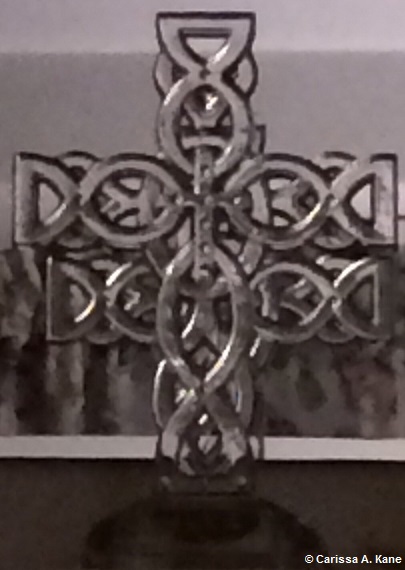
The intricate pattern of the cross and its reflection in the mirror called out, as if to say, there are many sides, some smooth… some sharp… some in between, to each and everything under the sun. Also, there are many directions. However, at the center, there is always Truth. The question is whether or not there is a desire to see it. Is there a desire to acknowledge and dwell with it in the presence of all that surrounds it? Is time and space allowed for coming to the place of knowledge from which life truly springs regardless of circumstances?
On the evening of that first day of the week, when the doors were locked, where the disciples were, for fear of the Jews, Jesus came and stood in their midst and said to them, “Peace be with you.” When he had said this, he showed them his hands and his side. The disciples rejoiced when they saw the Lord. Jesus said to them again, “Peace be with you. As the Father has sent me, so I send you.” And when he had said this, he breathed on them and said to them, “Receive the Holy Spirit. Whose sins you forgive are forgiven them, and whose sins you retain are retained.”
Thomas, called Didymus, one of the Twelve, was not with them when Jesus came. So the other disciples said to him, “We have seen the Lord.” But he said to them, “Unless I see the mark of the nails in his hands and put my finger into the nailmarks and put my hand into his side, I will not believe.”
Now a week later his disciples were again inside and Thomas was with them. Jesus came, although the doors were locked, and stood in their midst and said, “Peace be with you.” Then he said to Thomas, “Put your finger here and see my hands, and bring your hand and put it into my side, and do not be unbelieving, but believe.” Thomas answered and said to him, “My Lord and my God!” Jesus said to him, “Have you come to believe because you have seen me? Blessed are those who have not seen and have believed.”
Now Jesus did many other signs in the presence of his disciples that are not written in this book. But these are written that you may come to believe that Jesus is the Christ, the Son of God, and that through this belief you may have life in his name. – John 20:19-31












 HopeThatFloats
You must be logged in to post a comment.