Considering All Things Under The Sun…

Bound south on a highway,
But still looking up,
Such a beautiful bridge,
Sleek and strong,
Yet even it can’t contain the sky.
From arc to bow and then its arch,
A towering touché, but still,
Not missing a pace,
It trusts and holds in place,
Still, it knows its place.

Continuing south, only now on a byway,
Only now, looking out,
Such a beautiful scene.
Ocean all around,
Deep and dark blue,
Carrying sparkles of light.
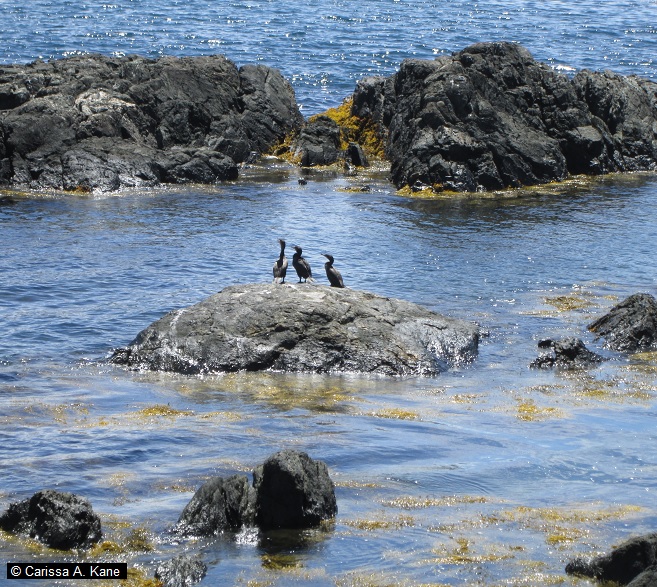
Then, a group of rocks
Hanging out in the seaweed
As it sways with each movement.
There’s a smaller one in the middle
On which three creatures steadily wait.
Still looking out and
Taking in a magnificent sight,
So peaceful and quiet,
Inside and out.
Next, I see them looking up.
Another touché, but still,
Not missing a pace,
They trust and hold in place,
Still, they know their place.

Take my yoke upon you and learn from me, for I am meek and humble of heart; and you will find rest for yourselves. – Mt 11:29

All the Way…

The Prophet Isaiah foretold of John the Baptist, the voice crying out in the desert, urging people to make themselves ready to receive the Lord. And while it is true that earthly life can be viewed as a process of preparing for eternal life, it is so much more than a checklist based upon human understanding. So, while it may be tempting to repeat the sounding joy by clinging to what one knows during the season of Advent, no preparation would be complete without moving beyond our own ideas about it and allowing ourselves some time to steep in the love of God more deeply, and then to be led by it.

The way of the Lord has already been prepared. Not just for the Lord, but also for all those who wish to claim and proclaim their inheritance as God’s people. We must remember that we’re not called to be like John the Baptist. We’re called to be like Jesus. How does, and how can, God help our individual ways to greater reflect the beauty and goodness of the Way? And are we willing to go there?

In the fifteenth year of the reign of Tiberius Caesar,
when Pontius Pilate was governor of Judea,
and Herod was tetrarch of Galilee,
and his brother Philip tetrarch of the region
of Ituraea and Trachonitis,
and Lysanias was tetrarch of Abilene,
during the high priesthood of Annas and Caiaphas,
the word of God came to John the son of Zechariah in the desert.
John went throughout the whole region of the Jordan,
proclaiming a baptism of repentance for the forgiveness of sins,
as it is written in the book of the words of the prophet Isaiah:
A voice of one crying out in the desert:
“Prepare the way of the Lord,
make straight his paths.
Every valley shall be filled
and every mountain and hill shall be made low.
The winding roads shall be made straight,
and the rough ways made smooth,
and all flesh shall see the salvation of God.” – Luke 3:1-6

The Light of Faith…

In chapter 18 (verses 33-37) of the Gospel according to John, Pilate asks Jesus who he is and what has done, and Jesus’ answer, as always, is all about truth. And that’s what faith is really all about—Truth and learning not only to recognize it, but also to listen to, and be led by it. In the verses that follow this passage, Pilate knows the Truth—Jesus has done no wrong, but he does not choose to listen and allow himself to be led by it.

On the Feast of Christ the King, this passage presents a great opportunity for prayer and reflection on who we are and what we do as followers of our Lord Jesus Christ. Both collectively and individually, as we approach the season of Advent and the Nativity of Christ our Lord, in what ways do the things we do and the presence of heart and mind with which we do them, reflect the goodness of God? And to what extent are they the result of truly listening and being led by Grace?

Amid one’s hopes and dreams and into the flow of reality, how do the choices of yesterday, infused with faith and the grace of God, inform and shape those of tomorrow?

So Pilate went back into the praetorium
and summoned Jesus and said to him,
“Are you the King of the Jews?”
Jesus answered, “Do you say this on your own
or have others told you about me?”
Pilate answered, “I am not a Jew, am I?
Your own nation and the chief priests handed you over to me.
What have you done?”
Jesus answered, “My kingdom does not belong to this world.
If my kingdom did belong to this world,
my attendants would be fighting
to keep me from being handed over to the Jews.
But as it is, my kingdom is not here.”
So Pilate said to him, “Then you are a king?”
Jesus answered, “You say I am a king.
For this I was born and for this I came into the world,
to testify to the truth.
Everyone who belongs to the truth listens to my voice.” – John 18:33-37

Figuring it out…

Jesus tells his disciples, “Learn a lesson from the fig tree. When its branch becomes tender and sprouts leaves, you know that summer is near” (Mark 13:28). Yet, just two chapters earlier, Jesus cursed a fig tree causing it to wither:

“Seeing from a distance a fig tree, he went over to see if he could find anything on it. When he reached it he found nothing but leaves; it was not the time for figs. And he said to it in reply, ‘May no one ever eat of your fruit again!’ And his disciples heard it. … Early in the morning, as they were walking along, they saw the fig tree withered to its roots. Peter remembered and said to him, ‘Rabbi, look! The fig tree that you cursed has withered.’ Jesus said to them in reply, ‘Have faith in God.’” (Mark 11:13-14, 20-22).

Looking at these two passages and particularly at the fig tree, it may seem like Jesus is contradicting himself. However, looking at the whole picture, notice how Jesus shifts the focus from the tangible fig tree to looking beyond it and pointing to faith.  

Maybe the real lesson that Jesus wants us to learn is that there are no hard and fast rules other than loving God, yourself, and your neighbor, and that this occurs best when we are not so entrenched in one way or another. That is, when we are able to be present to the moment, openminded, and willing to be guided by God, even when the direction in which we might feel compelled may not make sense in the world’s eyes and may not be fully understood by ourselves or others.

Perhaps the season is neither here nor there, but never-ending, the invitation ever-present, and more than anything, the task always at hand, is to focus on Jesus and ask for the grace to be “tender and sprout leaves.”

Jesus said to his disciples:
“In those days after that tribulation
the sun will be darkened,
and the moon will not give its light,
and the stars will be falling from the sky,
and the powers in the heavens will be shaken.

“And then they will see ‘the Son of Man coming in the clouds’
with great power and glory,
and then he will send out the angels
and gather his elect from the four winds,
from the end of the earth to the end of the sky.

“Learn a lesson from the fig tree.
When its branch becomes tender and sprouts leaves,
you know that summer is near.
In the same way, when you see these things happening,
know that he is near, at the gates.
Amen, I say to you,
this generation will not pass away
until all these things have taken place.
Heaven and earth will pass away,
but my words will not pass away.

“But of that day or hour, no one knows,
neither the angels in heaven, nor the Son, but only the Father.” – Mark 13:24-32

The Widow’s Might…

It can be easy to envision the poor widow putting her coins into the treasury, knowing the value to be considered far less than others had contributed. One might even draw a picture that perhaps includes elements representing shame, grief, loss, loneliness, and so on, overcome by giving all she had (“her whole livelihood”) and Jesus celebrating her for that. Then, from that picture, one might possibly be drawn toward a singular conclusion about verses 41-44 of chapter 12 in the Gospel according to Mark as a call to examine one’s level of charity.

It’s interesting though to reflect further on this passage. There are no words attributed to the widow, and no mention of a personal encounter between her and Jesus. The passage starts with an observation by Jesus that turns into a teaching directly to his disciples, not the poor widow, or anyone else who was putting money into the treasury. It is about more than coins and goes beyond levels of giving, extending to something greater.

Going back to the beginning of the Poor Widow’s Contribution, in verse 41, it is written, “Jesus sat down opposite the treasury and observed how the crowd put money into the treasury.” There are no interactions with those who are giving. Rather, Jesus takes in what is transpiring.

He sees the difference between the way the poor widow and the crowd, especially those with greater possessions (“Many rich people put in large sums.”), are carrying themselves. He then draws his disciples close, reveals what he sees, and tries to help them to see it as well. Jesus’s teaching, as always, is about showing the Way and helping those who follow him to become more aware, see more clearly, make better choices, and live more authentically.

Jesus wants the disciples, and us, to see that what the poor widow has given, she has given from “her whole livelihood”—her heart. This is the source of the widow’s might and is where our strength comes from as well. It is where the Lord resides.  

I will place my law within them, and write it upon their hearts; I will be their God, and they shall be my people. – Jeremiah 31:33

By giving the two coins, the widow is giving her heart to the Lord, not allowing herself to be defined by her possessions, the opinions of others, or worldly cares, but instead sacrificing and letting them go, and listening to the law within her—placing trust for her well-being, first and foremost, in the Lord.

How can we look past the coins, and do the same?

In the course of his teaching Jesus said to the crowds,
“Beware of the scribes, who like to go around in long robes
and accept greetings in the marketplaces,
seats of honor in synagogues,
and places of honor at banquets.
They devour the houses of widows and, as a pretext
recite lengthy prayers.
They will receive a very severe condemnation.”

Jesus sat down opposite the treasury
and observed how the crowd put money into the treasury.
Many rich people put in large sums.
A poor widow also came and put in two small coins worth a few cents.
Calling his disciples to himself, he said to them,
“Amen, I say to you, this poor widow put in more
than all the other contributors to the treasury.
For they have all contributed from their surplus wealth,
but she, from her poverty, has contributed all she had,
her whole livelihood.” – Mark 12:38-44

Quieting the Murmur…

Depending upon one’s experiences, certain words can bring to mind a particular image or situation. Hearing or seeing the word, “murmur,” many people might think of the human heart and the condition of a heart murmur, speaking in a low volume as in under one’s breath, or perhaps a hushed conversation between a number of people within a larger setting. Interestingly, in any of these cases, the murmur, or anything else that may be transpiring, can be of no significance, or the opposite. And, as always, the only way to know more certainly is by tuning in more closely.

While searching to discover what’s going on may seem pretty basic or obvious, human nature often leads us toward conjecture, murmuring amongst ourselves rather than seeking the source directly and looking for the answers or understanding there.

In the Gospel according to John, chapter 6, verses 41-51, the people are in disbelief, and maybe confused about Jesus’s statement that he is the bread of life that has come down to earth from heaven. Filled with questions, and likely doubt, with a limited knowledge of who Jesus really is, they are quietly speaking amongst themselves. They are looking for answers from each other, even though none of them understand what was said or what Jesus meant by it. What might this passage, and what follows from it, look like if instead of asking each other, the people asked Jesus directly about his statements, and took careful notice of his response together with his actions?

Moving forward to the way that Jesus responds to the hushed voices going on around him, regarding him, it is as if Jesus is simply saying, “Stop,” to the gossip and speculation. He does not enter into the grumbling. He does not succumb to it, and the questions the people were asking each other instead of engaging directly with Jesus, go unanswered, while Jesus continues to focus on Truth, and giving voice to it. After all, the fact of the matter is that more often than not, it really is as simple as continually asking Jesus for help in seeing something for what it is, saying, “Stop,” to nonsense, understanding and embracing what is of genuine importance, and listening, so as to recognize when and how to be moved.

The Jews murmured about Jesus because he said,
“I am the bread that came down from heaven,”
and they said,
“Is this not Jesus, the son of Joseph?
Do we not know his father and mother?
Then how can he say,
‘I have come down from heaven’?”
Jesus answered and said to them,
“Stop murmuring among yourselves.
No one can come to me unless the Father who sent me draw him,
and I will raise him on the last day.
It is written in the prophets:
They shall all be taught by God.
Everyone who listens to my Father and learns from him comes to me.
Not that anyone has seen the Father
except the one who is from God;
he has seen the Father.
Amen, amen, I say to you,
whoever believes has eternal life.
I am the bread of life.
Your ancestors ate the manna in the desert, but they died;
this is the bread that comes down from heaven
so that one may eat it and not die.
I am the living bread that came down from heaven;
whoever eats this bread will live forever;
and the bread that I will give is my flesh for the life of the world.”

– John 6:41-51

More than a recipe…

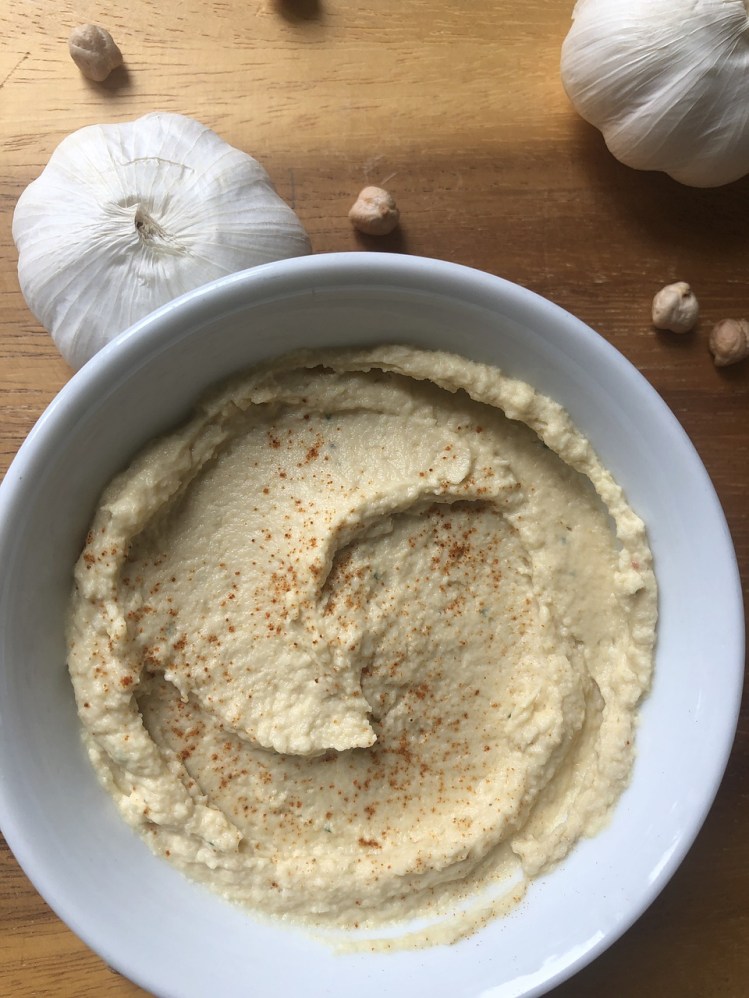
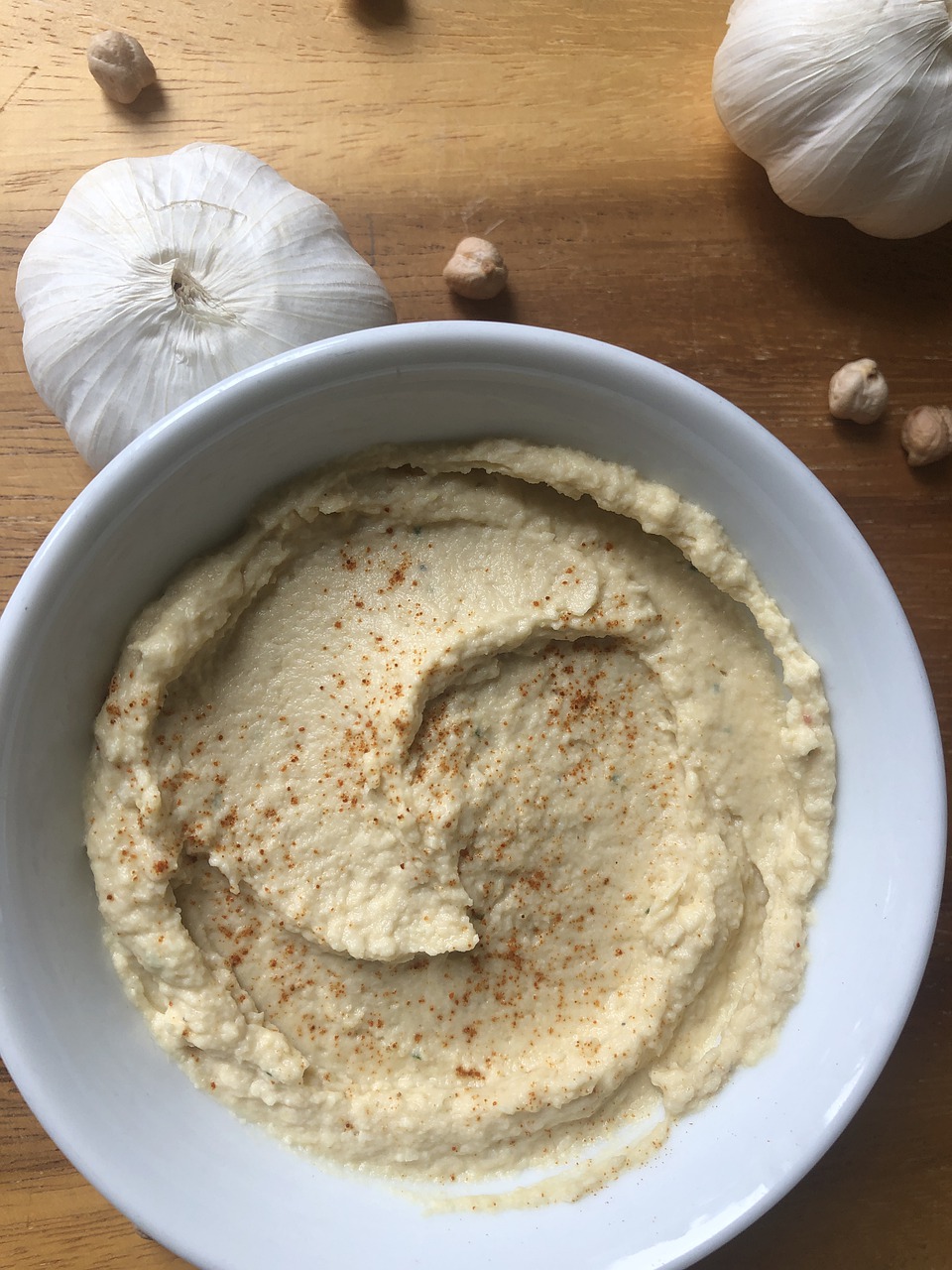
I did not learn to make hummus, with just the “right” amount of fresh garlic, salt, and lemon juice by eating it, reading a recipe, or watching my mother make it over, and over again. Rather, I learned by taking what I saw, remembering what I had tasted, and trying to make it myself, over, and over again. After all, the most helpful way to learn is by ongoing, active observance, repetition, participation, reflection, and openness to growth.

While experience is key, it is interesting that oftentimes as experience increases, awareness to room for improvement can lessen, or even disappear. With that, it may be more than tempting to take moments and situations for granted, rote, or with a “nothing new here” spirit. However, even the process of washing, rinsing, and repeating, holds newness and opportunity with each turn.

In the Gospel according to John, a week later, when the disciples were still locked in the room, Jesus appeared again (Jn 20:26). What was it like for the disciples who had seen the risen Jesus the first time he had appeared? Was it just a been there, done that, repeat for them, or were they able to experience the second appearance in a new or deeper way?

What was the attitude in the room? Were the disciples who had previously seen Jesus able to receive this visitation as being as much for them as it was for Thomas? To whom was Jesus speaking when he said to Thomas, “Have you come to believe because you have seen me?”

In the Gospel according to Mark, chapter 16, verse 11, it is written that when Mary Magdalene told the disciples that the risen Jesus had appeared to her outside the tomb, they did not believe without seeing either. Did the disciples remember this, when Thomas said, “Unless I see the mark of the nails in his hands and put my finger into the nailmarks and put my hand into his side, I will not believe.”(Jn 20:27)?

What did Thomas think, when Jesus said to him, “Have you come to believe because you have seen me? Blessed are those who have not seen and have believed.” (John 20:29)? What did he feel? Perhaps, he felt bad that he did not believe what he had been told by the other disciples. Or, perhaps Thomas felt joy that Jesus heard his need, and responded to it, allowing him to experience the risen Jesus himself.

After all, whether making hummus , dealing with faith, or anything else for which there may be “recipes” or popular thought, there is always more than what is on the page, for “Experience is the teacher of all things” (attributed to Julius Ceasar).

In all times, but most especially in those that are challenging, we must consider experience, both our own and that of others. What has it been like? Do we remember the times and places where we have doubted, questioned, or disagreed, and, do we extend the same courtesy, patience, peace, and understanding that Jesus extends to us, to others?

On the evening of that first day of the week,
when the doors were locked, where the disciples were,
for fear of the Jews,
Jesus came and stood in their midst
and said to them, “Peace be with you.”
When he had said this, he showed them his hands and his side.
The disciples rejoiced when they saw the Lord.
Jesus said to them again, “Peace be with you.
As the Father has sent me, so I send you.”
And when he had said this, he breathed on them and said to them,
“Receive the Holy Spirit.
Whose sins you forgive are forgiven them,
and whose sins you retain are retained.”
Thomas, called Didymus, one of the Twelve,
was not with them when Jesus came.
So the other disciples said to him, “We have seen the Lord.”
But he said to them,
“Unless I see the mark of the nails in his hands
and put my finger into the nailmarks
and put my hand into his side, I will not believe.”
Now a week later his disciples were again inside
and Thomas was with them.
Jesus came, although the doors were locked,
and stood in their midst and said, “Peace be with you.”
Then he said to Thomas, “Put your finger here and see my hands,
and bring your hand and put it into my side,
and do not be unbelieving, but believe.”
Thomas answered and said to him, “My Lord and my God!”
Jesus said to him, “Have you come to believe because you have seen me?
Blessed are those who have not seen and have believed.”
Now Jesus did many other signs in the presence of his disciples
that are not written in this book.
But these are written that you may come to believe
that Jesus is the Christ, the Son of God,
and that through this belief you may have life in his name. – John 20:19-31

How Often…

How often devotion becomes tangled up, and chained, to this or that, but mostly misdirection.    

Sidetracked, razor-focused, tunneling toward the goal.

How often the depth and scope of perspective shrinks toward misperception.

Moving forward… if today… if tomorrow… wait, can’t wait.

Closer in…

Look at yesterday.

Listen to today.

Learn for tomorrow.

No sight to be seen, no sound to be heard… so many, so much lost in the shadows of “light.”

Closing in…

Widen. Stop, human striving toward human understanding of perfection… imperfection!

Yes, be committed… be faithful, but underneath it all, hold onto God—justice for all.

Keep it real, keep it honest.

Be sure to know, check and see, from minute to hour, from day to year, to what, and to whom, allegiance is professing.

How often what we have is greater than nothing, and everything else that is more, is empty.

And, remember, in the end and in between, bow to no one, but bend to the One, and only One, whose Essence is within us.

How often the lost become truly found, while the “found” become lost in notions from afar.

Act Naturally…

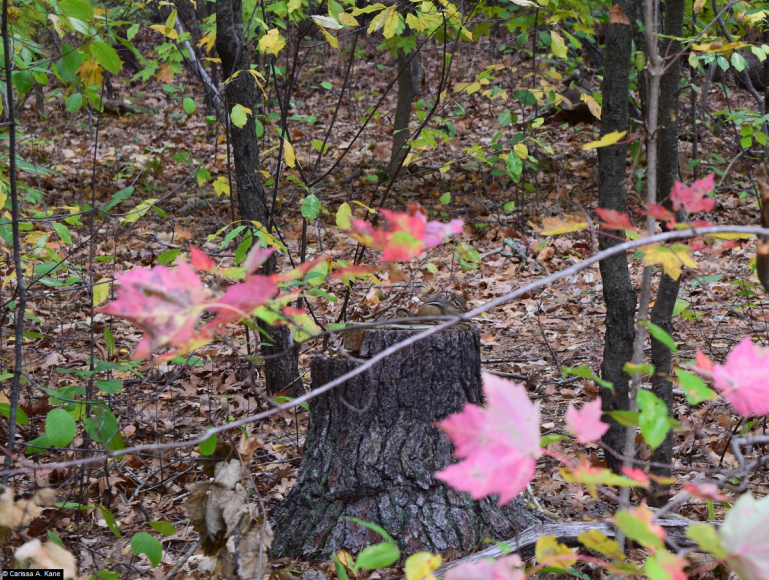
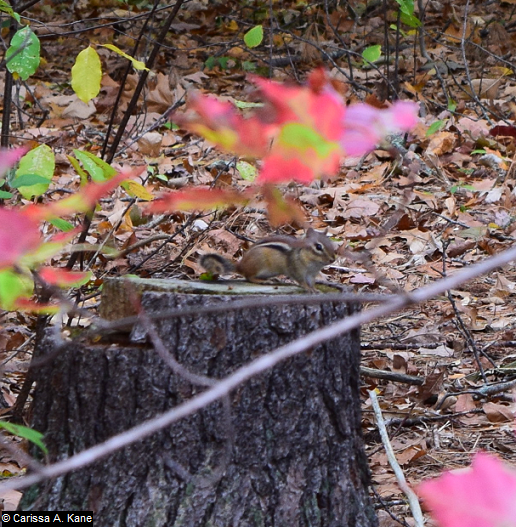
John Muir shared the thought that in every walk with nature, one receives far more than one seeks. Pausing to look at some of the changing leaves and noticing the contrast between them and those already on the ground, I came across another scene. A chipmunk, also pausing, long enough to possibly be considered a companion in an otherwise seemingly empty stretch of woods. A brief, but amusing and uplifting experience, perhaps captured best, for both creatures on this day, in the words of another naturalist, Henry David Thoreau, who wrote, “I took a walk in the woods and came out taller than the trees.”   

Reading chapter 22 in the Gospel according to Matthew, the section that contains verses 15-22 starts with, “Then the Pharisees went off and plotted…” The words and the image they conjure, are such a stark contrast to that of my experience in nature, earlier in the day. What a difference a spirit of inclusion, acceptance, respect, and mutual existence might have made back then. What a difference it might make now.

Nature is all around us, and we are part of it. Yet, all this time gone by, still, we fight it. All these years later, still, we resist joining together. Perhaps, one by one, we might learn to be companions to each other, and the plotting will end. Then, maybe… we might see, how foolish we have been.

If we surrendered to earth’s intelligence, we could rise up rooted like trees.
– Rainer Maria Rilke

The Pharisees went off
and plotted how they might entrap Jesus in speech.
They sent their disciples to him, with the Herodians, saying,
“Teacher, we know that you are a truthful man
and that you teach the way of God in accordance with the truth.
And you are not concerned with anyone’s opinion,
for you do not regard a person’s status.
Tell us, then, what is your opinion:
Is it lawful to pay the census tax to Caesar or not?”
Knowing their malice, Jesus said,
“Why are you testing me, you hypocrites?
Show me the coin that pays the census tax.”
Then they handed him the Roman coin.
He said to them, “Whose image is this and whose inscription?”
They replied, “Caesar’s.”
At that he said to them,
“Then repay to Caesar what belongs to Caesar
and to God what belongs to God.” – Matthew 22:15-22

Musical inspiration: The King of Love My Shepherd Is

Wag This Way…

A couple of summers ago, while visiting family, we decided to go out for ice cream. As we opened the back door of the mini-van, immediately, and with great enthusiasm, the dog jumped in, and was ready to go. Unfortunately, the dog could not come with us, and needed to be escorted back out of the vehicle. As disappointed as he seemed though, when we got back to the house, his excitement upon our reuniting was as if his disappointment or hopes dashed prior to our departure, had never occurred.   

It is interesting how dogs, act and react, especially when they are excited. Perhaps, jumping and bouncing, running back and forth, and/or wagging their tails furiously at the approach of a favorite treat or as a loved one returns home. Then there are the other times, when they might plant their paws and growl, preparing to resist, attack, or defend against something non-preferred, or a threat perceived. Regardless of the situation though, what is often most striking is the capacity of dogs to love without abandon.

Moving from wagging tails to wagging fingers, there is the human frailty that causes hearts to bruise, egos to rouse, and hurt to linger. This, all the while, the silent plea, “Come now. Come down off your high horse,” echoes deep within. But, which will win?

Sometimes, it’s time to stop stopping. Stop standing still. When stubborn, yet again, the wagging, it begins. There it is. Getting in the way, determined to carry on, refusing to give in.

At what cost?

So many things, taking up space, too tightly held. How can the space between us do anything, but swell? Wider it becomes… bigger… stronger… bolder it grows. Drifting… fading… falling, tell me, what is so appalling?

One can’t help but wonder, when will this nonsense stop? When will we heed the warning that echoes deep within, “Come now. Come down off your high horse.”?

I give you a new commandment, says the Lord: love one another as I have loved you. – John 13:34  

You do not have to be good.
You do not have to walk on your knees
for a hundred miles through the desert repenting.
You only have to let the soft animal of your body
love what it loves.
Tell me about despair, yours, and I will tell you mine.
Meanwhile the world goes on.
Meanwhile the sun and the clear pebbles of the rain
are moving across the landscapes,
over the prairies and the deep trees,
the mountains and the rivers.
Meanwhile the wild geese, high in the clean blue air,
are heading home again.
Whoever you are, no matter how lonely,
the world offers itself to your imagination,
calls to you like the wild geese, harsh and exciting –
over and over announcing your place
in the family of things.
                        — Mary Oliver, Wild Geese