Under The Influence…

It seems that human nature tends toward comparison and judgment along with practices that help one to “find their place” and obtain some level of comfort. However, although these skills might be helpful in deciphering and navigating the world around us, they can also lead to complacency, and a sedentary or fixed way of seeing and being. The readings for the Solemnity of Christ the King offer an opportunity to reflect upon choices, judgments, and viewpoints, and to consider by what or whom they are influenced. Or, in other words, to contemplate who is leading you.     

In the First Reading (Ezekiel 34:11-12, 15-17), the deep level of care and protective nature of God is expressed.

“Thus says the Lord God: I myself will look after and tend my sheep.” (v. 11).

The passage continues to describe God’s desire to rescue, find, and heal as well as God’s promise to make judgments and course correct those who are wrong or have gone astray.

How do you feel about this notion? What’s it like to leave the judgment and course correction to God? Are there areas in which it is more of a challenge than others? Spend some time in prayer asking for guidance around replacing judgments that veer away from God’s desire for you and for a clearer vision of what role God desires for you.

In the Responsorial Psalm (Psalm 23:1-3,5-6), we stay with the image of the Shepherd who takes care of and provides for his sheep. The psalmist writes of the Lord as refreshing their soul, guiding them in right paths, and blessing them so that “goodness and kindness follow” them. The psalmist then says, “I shall dwell in the house of the Lord for years to come” (v. 6).

What do you think they mean? What do you imagine that would be like? How would it feel? In what places or situations have you experienced similar feelings?  

“The Lord is my shepherd; there is nothing I shall want.” (v. 1).

In what ways do you feel inspired when you imagine God’s loving presence permeating all experiences and capable of extending beyond all that might otherwise be a barrier?

Looking to the Second Reading (1 Corinthians 15:20-26, 28), St. Paul writes about Christ the King who helps us to life by helping us to overcome death, in its various forms, while at the same time leaving the ultimate judgment to God.  

“then comes the end, when he hands over the kingdom to his God and Father, when he has destroyed every sovereignty and every authority and power. For he must reign until he has put all his enemies under his feet. The last enemy to be destroyed is death. When everything is subjected to him, then the Son himself will also be subjected to the one who subjected everything to him, so that God may be all in all.” (v. 24-26, 28).   

What happens when you think about Jesus, to whom God subjected all things, handing the kingdom back to God (v. 24) and subjecting Himself to God? What’s it like for you to let go of something that you have obtained or been given? Where is God in that decision or process?

Now turning to the Gospel (Matthew 25:31-46), Jesus talks to his disciples about the final judgment and separation between sheep (the righteous) and goats. Notice how the criteria that Jesus describes are all things that can be done to take care of and protect others.

“For I was hungry and you gave me food, I was thirsty and you gave me drink, a stranger and you welcomed me, naked and you clothed me, ill and you cared for me, in prison and you visited me.” (v. 35-36).

There is always more than just “I,” “me,” and “mine,” and part of striving for the Kingdom of God is not only to know this, but also to live in a way that shows respect, dignity, appreciation, and care for others. Also, it’s not about being perfect or being able to amass a long list of service to others, but rather about focusing efforts on being in service of God by surrendering one’s heart and mind to being under the influence, united with, and led by God.
The Lord is my shepherd; there is nothing I shall want. – Ps 23:1


It Takes Everyone…

Reading Scripture it’s not too hard to envision the Pharisees and scribes as having a persona of lofty authoritarians who are learned, serious, and on the surface appearing to be so proper. Yet, Jesus points out that their actions do not align with their words. In the Gospel for the Thirty-first Sunday in Ordinary Time, Jesus tells the crowd and the disciples to observe and do as the Pharisees and scribes say, but do not act as they do. Do not hold down or seek to elevate yourself above others. Jesus then goes on to say, “you have but one teacher, and you are all brothers.” You have but one Father, but one master, Christ, and that the greater glory is not in being served or glorifying yourself, but rather in being of service to others, and therefore of service to God.

Reflecting on this Gospel and considering other Scripture passages as well, it may seem obvious that the Pharisees and scribes were not about what they proclaimed. Perhaps they fell victim to the notion that they had already arrived, were afraid of losing what they had attained, or some other thing that shrunk their hearts and made them sterner with others, and lax in their own prayer and practices, making them less likely to be inspired by God and more likely to be misguided and led astray.

Despite this, the actions of the Pharisees and scribes don’t make them worthless or deserving of being canceled. We can hold them accountable but must remember they are still part of God’s creation. They also need love, mercy, and prayers.

Jesus says to observe and listen to what they say. Maybe he’s reminding us that God can still work through them. Their transgressions are not bigger than God.

Praying with this passage brought to mind an instance from grade school, in my 2nd grade classroom, where being orderly was of the utmost importance to the teacher, most especially when it came to the inside of a student’s desk. All the students knew what was expected, and it seemed that all of us really tried to meet this expectation. However, there were a couple of students who had a very hard time with being organized. So, one day, the teacher was walking around the classroom, teaching a lesson, and without warning, flipped and dumped out the contents of this student’s desk, startling everyone, to say the least, and sending books, paper, pencils, and so on, all over the place. The student was then yelled at for being so disorganized, the teacher turned the desk back upright, and told the student to pick everything up, and put it back in the desk, neatly. The student, who was normally quiet, shrunk even more, their cheeks turned red, and tears were coming down their face as they began doing as they were told. The rest of us 7- and 8-year-olds, just sat there horrified. None of us dared to try to help the student for fear of what would happen if we did. It’s interesting how fear can interfere. It’s also interesting how judgment can be too.

When I think about this instance, in the light of this Gospel, I wonder, what was the point, or the lesson being taught that day? What made it so important that the inside of our desks be orderly, to the extent that a student who was trying their best and just being themself, be demeaned like that, and the room be made so disorderly, in efforts to obtain order? However, faith also calls me to hold and look at the entire picture, including before and beyond that instance and to recall that I also had what one would call a lot of positive experiences in that classroom.

Looking at the Pharisees and scribes, Jesus points out a disconnect not only between their words and their actions, but also in their hearts. He cautions the crowd, and us, to not be fooled or distracted toward self-serving ways. To not rely on external things, such as possessions or positions of authority, to gain good graces or a particular outcome, but rather to rely on the grace and guidance of God. Jesus is saying, if we’re going to be led by anybody or anything, or if we’re going to follow anybody or anything, first and foremost, let it be God.

But there’s more… humility.

When we think about this Gospel passage, it can be tempting to cast stones at the Pharisees and the scribes, thinking of ourselves as perhaps being far removed from them, especially in the “us” and “them”, divided times I which we live. Yet, in our certainty and in our knowing, we too can become susceptible to an attitude or posture that interferes and creates static, making us less receptive to being led by God, more likely for other things to come before, or in place of God, and making us less loving, compassionate, and forgiving.

It’s unlikely that the Pharisees and scribes set out to fall into a haze, becoming less aware, open, or able to continue learning through experiences, and blocked, at least at that time, from continually drawing closer to God. However, in certainties and in knowing about what ought to be, it can be easy to become closed off to what is, and the open, honest dialogue that helps us to know when we are moving toward a will that is not in alignment with God, and that is of disservice, rather than what is best.

“Humility is an attitude of honesty with God, oneself, and of all reality. It enables us to be at peace in the presence of our powerlessness and to rest in the forgetfulness of self.” – Thomas Keating

Jesus spoke to the crowds and to his disciples, saying,
“The scribes and the Pharisees
have taken their seat on the chair of Moses.
Therefore, do and observe all things whatsoever they tell you,
but do not follow their example.
For they preach but they do not practice.
They tie up heavy burdens hard to carry
and lay them on people’s shoulders,
but they will not lift a finger to move them.
All their works are performed to be seen.
They widen their phylacteries and lengthen their tassels.
They love places of honor at banquets, seats of honor in synagogues,
greetings in marketplaces, and the salutation ‘Rabbi.’
As for you, do not be called ‘Rabbi.’
You have but one teacher, and you are all brothers.
Call no one on earth your father;
you have but one Father in heaven.
Do not be called ‘Master’;
you have but one master, the Christ.
The greatest among you must be your servant.
Whoever exalts himself will be humbled;
but whoever humbles himself will be exalted.” – Matthew 23:1-12

Out of Bounds…

In the Letter to the Romans, St. Paul writes, “Do not conform yourselves to this age but be transformed by the renewal of your mind, that you may discern what is the will of God, what is good and pleasing and perfect.” (Romans 12:2). Although he was writing to people of a different time than us, how appropriate this instruction or advice is for any age. After all, looking around and considering all of creation, there’s not only a broad spectrum of living things, but also cycles or seasons of change that occur across each category, and all created in the image of the Creator. With all of this, it’s not too hard to imagine God as being far more dynamic than any one generation, society, or age might deem.

Still though, it can be easy to move through a task, a day, or more with “a place for everything and everything in its place” mindset, whether as an individual or within a group or an organization. Perhaps St. Paul is reminding us not to get hung up on making things fit into our existing notions, to the extent that we leave no room to perceive the new things that God is doing or trying to teach us (Is 43:19). After all, how can God reveal to us, even a portion of insight to God’s will or a shimmer of the expanse and depth of God’s love, if one has already made up their mind and is so fixed and unwilling to consider something other?

This is not to say that one should never hold fast to a value or notion, but rather to be cautious of excluding possibilities outside of the ones already recognized or held.

In the Gospel for the Twenty-second Sunday in Ordinary Time, Jesus says to Peter, “Get behind me, Satan! You are an obstacle to me. You are thinking not as God does, but as human beings do.” (Matthew 16:23). He says this because Peter’s response comes out of his own understanding and is not based on listening to and considering what was said or communicating with Jesus.

When Jesus reveals that he will be killed, it does not fit the narrative of Peter’s notion of what’s to come of the Anointed One. The influence of Peter’s response is not of God. It is rigid, does not consider what the Anointed One has said, and leaves no room for possibilities outside of what Peter “knows”.

Again, looking around and considering all of creation, there is change, there is fluidity. God is not rigid. And, having been created in God’s image, humankind is not meant to be rigid either. To hold fast? Yes, but first and foremost to God. This is so that everything else not only falls into place in a way that is most fitting, but also in a way that is blessed and does not serve to block the flow of God’s grace from extending in ways beyond our own understanding.

Jesus began to show his disciples
that he must go to Jerusalem and suffer greatly
from the elders, the chief priests, and the scribes,
and be killed and on the third day be raised.
Then Peter took Jesus aside and began to rebuke him,
“God forbid, Lord! No such thing shall ever happen to you.”
He turned and said to Peter,
“Get behind me, Satan! You are an obstacle to me.
You are thinking not as God does, but as human beings do.”


Then Jesus said to his disciples,
“Whoever wishes to come after me must deny himself,
take up his cross, and follow me.
For whoever wishes to save his life will lose it,
but whoever loses his life for my sake will find it.
What profit would there be for one to gain the whole world
and forfeit his life?
Or what can one give in exchange for his life?
For the Son of Man will come with his angels in his Father’s glory,
and then he will repay all according to his conduct.” – Matthew 16:21-27

What Is…

As the leaves made their way to each other,
Stretching out from the branches that held them up,
Creating a barrier, distorting all that lay behind,
The air among them became thick, and hazy too.
It’s true what’s lost is found, but so too,
Is it true that some things are better lost,
Or rather not found but overcome.
Not all things that return are welcome,
Nor should they be.
What binds One and all together, that’s what is Supreme.
Enlightening to the soul,
Expanding hearts and minds,
Extending a will that is free,
Created to stand up and do more than just survive.
Yes, the meek shall inherit the earth,
But not by turning eyes from the blind,
As they pounce and plunder,
Putting down and shutting out,
Igniting fires that are not Divine.
What is True, what is Just,
Brings together and raises up,
Working things out to what is best.
These are the tests of our times.
Never mind what’s yours, what’s mine.
What is True, what is Just,
Beckons one and all.
It shall not shrink… it shall not sink.
These are the tests of our times.

Whoever finds his life will lose it, and whoever loses his life for my sake will find it. – Mt 10:39

Love Illuminates…

Stepping out on an overcast night, part of the sky is aglow. It’s as if the moon, in its fullest state, is straining to be seen through the clouds. When, in actuality, the moon, in its fullest state, authentic as can be, is not held back by the clouds. Neither are we.

In chapter 5 of the Gospel According to Matthew, it is written, “Jesus said to his disciples: ‘I tell you, unless your righteousness surpasses that of the scribes and Pharisees, you will not enter the kingdom of heaven.’” (v. 20).

While the scribes and Pharisees were learned and appeared to be fastidious in their commitment to God and practice of the laws, many of them were missing the most important piece of the law. That is, the need to serve with love, compassion, and mercy. Without these components, an oath becomes empty words, the law loses its integrity, and hearts become self-righteous rather than righteous.

Jesus brings fulfillment through his authenticity. He doesn’t just talk about the Way, but he also lives it, inviting us to join him, and enabling us to strive toward love, compassion, and mercy, in all we do, while also being accountable. And when we accept the invitation, at the end of the day, not even the clouds or darkness hold us back.

“Love makes your soul crawl out from its hiding place.” ― Zora Neale Hurston


Jesus said to his disciples:
“Do not think that I have come to abolish the law or the prophets.
I have come not to abolish but to fulfill.
Amen, I say to you, until heaven and earth pass away,
not the smallest letter or the smallest part of a letter
will pass from the law,
until all things have taken place.
Therefore, whoever breaks one of the least of these commandments
and teaches others to do so
will be called least in the kingdom of heaven.
But whoever obeys and teaches these commandments
will be called greatest in the kingdom of heaven.
I tell you, unless your righteousness surpasses
that of the scribes and Pharisees,
you will not enter the kingdom of heaven.

“You have heard that it was said to your ancestors,
You shall not kill; and whoever kills will be liable to judgment.
But I say to you,
whoever is angry with his brother
will be liable to judgment;
and whoever says to his brother, ‘Raqa,’
will be answerable to the Sanhedrin;
and whoever says, ‘You fool,’
will be liable to fiery Gehenna.
Therefore, if you bring your gift to the altar,
and there recall that your brother
has anything against you,
leave your gift there at the altar,
go first and be reconciled with your brother,
and then come and offer your gift.
Settle with your opponent quickly while on the way to court.
Otherwise your opponent will hand you over to the judge,
and the judge will hand you over to the guard,
and you will be thrown into prison.
Amen, I say to you,
you will not be released until you have paid the last penny.

“You have heard that it was said,
You shall not commit adultery.
But I say to you,
everyone who looks at a woman with lust
has already committed adultery with her in his heart.
If your right eye causes you to sin,
tear it out and throw it away.
It is better for you to lose one of your members
than to have your whole body thrown into Gehenna.
And if your right hand causes you to sin,
cut it off and throw it away.
It is better for you to lose one of your members
than to have your whole body go into Gehenna.

“It was also said,
Whoever divorces his wife must give her a bill of divorce.
But I say to you,
whoever divorces his wife – unless the marriage is unlawful –
causes her to commit adultery,
and whoever marries a divorced woman commits adultery.

“Again you have heard that it was said to your ancestors,
Do not take a false oath,
but make good to the Lord all that you vow.
But I say to you, do not swear at all;
not by heaven, for it is God’s throne;
nor by the earth, for it is his footstool;
nor by Jerusalem, for it is the city of the great King.
Do not swear by your head,
for you cannot make a single hair white or black.
Let your ‘Yes’ mean ‘Yes,’ and your ‘No’ mean ‘No.’
Anything more is from the evil one.”

– Matthew 5:17-37
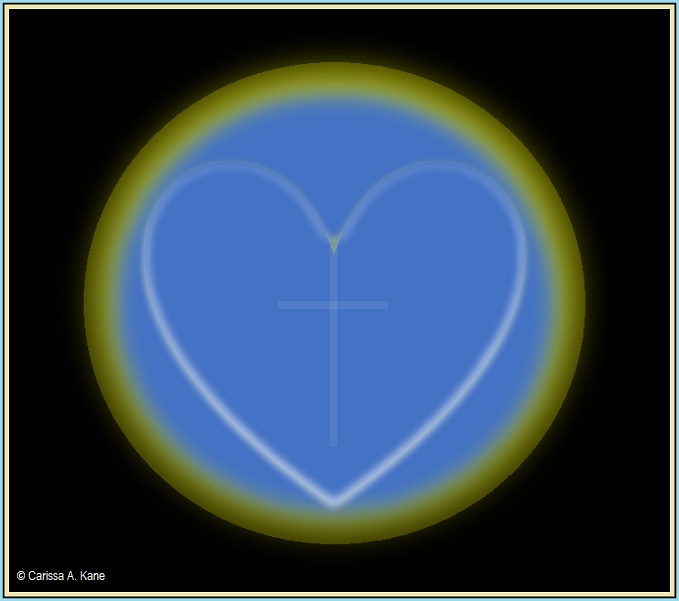
Gold circle representing the world filled with sky blue color and a white heart with a white cross in the center.

In the Wrapping…

The first reading for the Fifth Sunday in Ordinary Time speaks of helping those in need as the way to overcome darkness. The Lord says through the prophet Isaiah, “If you remove from your midst oppression, false accusation and malicious speech; if you bestow your bread on the hungry and satisfy the afflicted; then light shall rise for you in the darkness, and the gloom shall become for you like midday.” (Is 58:9b-10). Perhaps this can be seen as an invitation to greater unity through the exercise of mercy and compassion. Think about a time when you were shown mercy and compassion. What was that experience like? How did it impact you? Oftentimes, in showing mercy and compassion, a greater sense of unity is born and the light within each of us shines brighter with Life, making the darkness in the world, what it really is, “less than.”

In the First Letter to the Corinthians, St. Paul writes, “…my message and my proclamation were not with persuasive words of wisdom, but with a demonstration of Spirit and power, so that your faith might rest not on human wisdom but on the power of God.” (1 Cor 2:4-5). It’s human nature to want to understand and to make logical conclusions. It’s just the way we are. However, when the determination to meet this need to know or to make sense of happenings becomes more driven by human motivation, the results tend to run narrow, and create vision like that of being in a tunnel. It is then, that our understanding becomes warped and more of an obstacle than an aid to seeing the “greater than” that exists in each situation. Instead, it leads to a hardening of both one’s mind and heart, and an approach that pulls one away from living with authenticity and integrity and making choices in the light of truth and justice.

In the Book of the Prophet Jeremiah, we read, “… I will place my law within them, and write it upon their hearts; I will be their God, and they shall be my people.” (Jer 31:33).

In striving to make choices that are truly beneficial—ones that embrace love, peace, and justice for oneself as well as others—balance is necessary, and the starting place for that is in one’s heart. It is only in our hearts that we can begin to understand in a way that will lead us to what is best. It is only in our hearts that Jesus, the light of the world, shows us the way that is truly just. And it is only through our hearts that our motivation becomes purer, our minds move toward a broader way of being, and we can genuinely shine before others, giving glory to God (Mt 5:16).

So, when I can’t understand, show indifference or disdain, begin to make assumptions, can’t give the benefit of the doubt, and can’t wrap my head around something, perhaps it’s because, first, I need to be wrapping my heart around it.

Light shines through the darkness for the upright;
they are gracious and merciful and just.
Well for them who are gracious and lend,
who conduct their affairs with justice. – Psalm 112:4-5

Signs and Wonder…

Approaching the intersection of two busy streets, cones and temporary stop signs come into view, and then fallen lines disrupting service to the traffic lights that normally direct cars safely from one side to the other. It’s interesting how in driving or using other forms of transportation, one not only learns to look for signs, but also to be guided by them in reaching destinations safely.

Similarly, as one journeys through life, guidance comes, and prayers are often answered through signs, coming in various forms of interaction with God and others. Sometimes, in both times of light and times of darkness, whether personal or societal, it can be easy to miss signs, lose sight of, or take for granted, experiences of grace. The scripture readings throughout Advent and Christmas, remind us of God’s faithfulness and guiding presence, especially to Mary and Joseph, leading up to and beyond the birth of Jesus.

Through allowing or inviting God to be the source of their path and the sustenance of their hope, Mary and Joseph were not only drawn into their God-given purpose, but they were also led all the way through to its fulfillment… teaching us that the path can be difficult, the road uncertain, but that there can also be great joy when we embrace the spirit of Christmas—a heart full of light, and hope in the Lord.

All the ends of the earth have seen the saving power of God. – Psalm 98:3c

A Christmas Prayer: Lord, help me to remember your faithfulness, and to be open to the signs and guidance you place along my path. Turn my gaze always toward you, Emmanuel, as the source of all hope, that my heart may faithfully embrace the spirit of Christmas all year long, leading me to notice and appreciate the beauty and goodness of all creation, and the heart and soul of those I encounter each day.

At Our Best…

The readings for the Thirty-third Sunday in Ordinary Time extend an opportunity to think about one’s relationship with Jesus and reflect on how justice and perseverance come into play. In the first reading (Mal 3:19-20a), we read the phrase, “the sun of justice with its healing rays.” How have you experienced the healing rays of justice? In what ways do you impart the fruits of that healing in your daily life?

In the responsorial psalm (Ps 98:5-6, 7-8, 9), we read:

Let the rivers clap their hands,
the mountains shout with them for joy,
Before the Lord who comes,
who comes to govern the earth,
To govern the world with justice
and the peoples with fairness. – Psalm 98:8-9

Envision something that recently brought you joy and excitement. How did it impact the people and the environment around you? Was everyone happy? Was anyone affected in a way that was not beneficial? Where do sense Jesus was in this situation?

Now, let’s take a step back. Consider this: What is your understanding and experience of justice and fairness? Can you think of some examples of the two? Do they include situations where there may be no personal benefit involved? How is your understanding and application of justice and fairness influenced by the example of Jesus’s life, death, and resurrection, and the many parables he told?

In the second reading (2Thes 3:7-12), St. Paul reminds the Thessalonians of how he, Silvanus, and Timothy have behaved and urges them to do likewise.

Brothers and sisters:
You know how one must imitate us.
For we did not act in a disorderly way among you,
nor did we eat food received free from anyone.
On the contrary, in toil and drudgery, night and day
we worked, so as not to burden any of you.
Not that we do not have the right.
Rather, we wanted to present ourselves as a model for you,
so that you might imitate us.
In fact, when we were with you,
we instructed you that if anyone was unwilling to work,
neither should that one eat.
We hear that some are conducting themselves among you in a
disorderly way,
by not keeping busy but minding the business of others.
Such people we instruct and urge in the Lord Jesus Christ to work quietly
and to eat their own food. – 2Thes 3:7-12

As you contemplate St. Paul’s words to the Thessalonians calling on them to focus on their work and to persevere in faith so as not to become idle and then “disorderly,” by getting caught up or interfering in the business of others, what strikes you most? With the current state of many things in the world, what insight(s) can you draw from this passage? In what ways do you experience Jesus in the places that have been capturing your focus these days?

Looking to the Gospel passage (Lk 21:5-19 included below), Jesus speaks of what’s to come, understood as the end of days. He essentially tells those who are listening, do not fall prey to being distracted by the signs and chaos around you, and do not be worried about how to respond or react, but rather, stay focused on me, and I will help you to know what to say… what to do. The passage closes with Jesus saying, “By your perseverance you will secure your lives.” How do you know the difference between being driven by the perseverance of faith in Jesus and being driven by your own sheer will masked as perseverance of faith in Jesus?

The Gospel verses taken together, tell us that the answers are not predetermined or black and white, but are all encompassing, pure, and speak to the uniqueness of each moment that can often escape the human mind and heart. Jesus, through his abundant love and wisdom, knows the importance, and all the implications of each moment, far better than anyone else could ever know. So, when we stay focused on Jesus with a desire to follow him, we can overcome any obstacles in ways that imitate the example of Jesus and honor the glory of God. And in doing so, we receive the grace we need to meet each moment.

What’s it like to envision justice and perseverance of faith in Jesus as a call of discipleship to surrender to Jesus in each moment, remembering his example, no matter what the moment holds, with a willingness to evolve, allowing room for movement? How might this influence the things you celebrate, and the things you don’t?

“Power at its best is love implementing the demands of justice, and justice at its best is power correcting everything that stands against love.” – Martin Luther King, Jr.

While some people were speaking about
how the temple was adorned with costly stones and votive offerings,
Jesus said, “All that you see here–
the days will come when there will not be left
a stone upon another stone that will not be thrown down.”

Then they asked him,
“Teacher, when will this happen?
And what sign will there be when all these things are about to happen?”
He answered,
“See that you not be deceived,
for many will come in my name, saying,
‘I am he,’ and ‘The time has come.’
Do not follow them!
When you hear of wars and insurrections,
do not be terrified; for such things must happen first,
but it will not immediately be the end.”
Then he said to them,
“Nation will rise against nation, and kingdom against kingdom.
There will be powerful earthquakes, famines, and plagues
from place to place;
and awesome sights and mighty signs will come from the sky.

“Before all this happens, however,
they will seize and persecute you,
they will hand you over to the synagogues and to prisons,
and they will have you led before kings and governors
because of my name.
It will lead to your giving testimony.
Remember, you are not to prepare your defense beforehand,
for I myself shall give you a wisdom in speaking
that all your adversaries will be powerless to resist or refute.
You will even be handed over by parents, brothers, relatives, and friends,
and they will put some of you to death.
You will be hated by all because of my name,
but not a hair on your head will be destroyed.
By your perseverance you will secure your lives.” – Lk 21:5-19

Reclaim…

Reading the responsorial psalm for Palm Sunday and the response, “My God, my God, why have you abandoned me?” (Psalm 22:2) my mind is immediately filled with thoughts of the dear, innocent people of Ukraine whose lives have been taken, trampled upon, and upended, most recently over the course of the past several weeks, as well as for the dear, innocent people throughout the world who each day suffer such cruel and unjust treatment at the hands of others. It’s hard to comprehend how, with all the advances humankind has made in the past 2,000 years, the same hatred that slithered its way into the hearts and minds of those who sought to crucify Jesus, still exists, and that acts of such cruelty and utter disregard for humanity are still carried out.

It’s hard to understand, but perhaps that’s the point. It’s not understandable. What we are witnessing is the devastation that comes in situations where the heart of the matter—we are One—is lost; overruled by greed, hatred, lust for power, and indifference. Yet, at the same time, we are witnessing the heart of the matter—we are One—rising up, calling out… alive and well in the spirit of unity seen in those who stand up, reach out, sacrifice, and stand together.

The Passion of the Lord is about reclamation and answering that call.

Reflecting on the Passion of the Lord in the Gospel according to Luke (chapters 22-23), how do you bring your thoughts and feelings about all that is happening in the world today to God? Where do you meet Jesus? In what ways do you accompany Jesus in his Passion? And how do you draw inspiration and strength from the journey?

Trust in Remembering…

Sitting with the readings for the second Sunday of Lent, like an old friend, the word “Trust” enters the room with a warm smile and as if to say, “Remember me… remember when…” So much of life is about trust and so often, it seems to come down to whom or what one trusts, to what degree, how that trust is received, and the impact or consequences of its handling.

As human beings, we share in a perfectly, imperfect nature, as we navigate life in, and surrounded by, a competitive, material world. It can be tempting to think or feel, even if subconsciously, that there is something we can do about anything happening around us at any time; that a level of control is always within our grasp. We may even look to capture the things that we, as human beings, think will help us to have that control. Yet, the only control we ever really have, and the only victory ever really won, is in choices that we make to trust in God’s ways and to let go, or shed the impulse or notion that any one interest outranks everyone’s interest.

In the ninth chapter of the Gospel according to Luke, Peter, John, and James ascend the mountain with Jesus and share in the experience of his transfiguration. In the passage prior to this one, while explaining what it means to be a disciple, Jesus says, “What profit is there for one to gain the whole world yet lose or forfeit himself?” (Lk 9:25). Looking at the circumstances in the world today, one can clearly see that there is no profit in profiteering, only loss for everyone.

Think about what it must have been like for Peter, John, and James to hear Jesus’ words about discipleship and then to witness his transfiguration seeing him stand alongside the prophets, Moses and Elijah.

Looking to today’s world, when it seems there is nothing to do, or there is no good way to stop what is already in motion, perhaps the best place to start is to forget control, then pause to go back and remember the beginning. Jesus took Peter, James, and John up the mountain to pray. One can only wonder, what was in their hearts as they placed their trust in Jesus and followed him up that mountain. One can only wonder how they received what happened and what they carried in their hearts on the way down, and thereafter.

How does your trust in Jesus shape your choices, create unity, express love, and spread goodwill? Connecting with Jesus as an old friend greeting you with a warm smile, how would you proceed from the phrase, “Remember me… remember when…?”

Share with Jesus what you carry in your heart as you reflect on the world we live in, and the journey you are on within it.

Jesus took Peter, John, and James
and went up the mountain to pray.
While he was praying his face changed in appearance
and his clothing became dazzling white.
And behold, two men were conversing with him, Moses and Elijah,
who appeared in glory and spoke of his exodus
that he was going to accomplish in Jerusalem.
Peter and his companions had been overcome by sleep,
but becoming fully awake,
they saw his glory and the two men standing with him.
As they were about to part from him, Peter said to Jesus,
“Master, it is good that we are here;
let us make three tents,
one for you, one for Moses, and one for Elijah.”
But he did not know what he was saying.
While he was still speaking,
a cloud came and cast a shadow over them,
and they became frightened when they entered the cloud.
Then from the cloud came a voice that said,
“This is my chosen Son; listen to him.”
After the voice had spoken, Jesus was found alone.
They fell silent and did not at that time
tell anyone what they had seen. – Lk 9:28b-36