Looking out across the way, noticing the strokes with which nature paints the scene before my eyes, I am captivated. The variations of color and light both hold their own and come together. A symphony embracing one another, yet at the same time providing the contrast that makes it fully come alive. Ripples in the sky, and ripples down below. With all that is going on, it’s interesting how all these differences join to form a work of beauty, instead of tearing at each other, or falling all apart.
For in one Spirit we were all baptized into one body, whether Jews or Greeks, slaves or free persons, and we were all given to drink of one Spirit. – 1 Cor 12:13
There was darkness all around. Not a sound, but that of waves gently breaking, making their way across the sand and rocks, back and forth, to and from. Not a sight, until the sun began its approach, gradually awakening the sky, before peeking up over the horizon.
Then what a sight. Silhouette or shadow? May be solo, but not alone. Freely flying, but in a line, parallel, heart of purpose and direction. Gliding, steady, peaceful, true in its presence… in its likeness… Silhouette.
“I saw no temple in the city, for its temple is the Lord God almighty and the Lamb. The city had no need of sun or moon to shine on it, for the glory of God gave it light, and its lamp was the Lamb.” – Rev 21:22-23
On the Fourth Sunday of Easter, we read about the experience of Paul and Barnabas touching the hearts of the Gentiles (perhaps seen as the outsiders) while enraging those considering themselves more as chosen, but of a different persuasion. Things seem to get off to a good start, but then the atmosphere changes. However, despite the change to an overwhelmingly inhospitable environment, the disciples hold firm to the Way even as they are being thrown out of Antioch. We read, “So they shook the dust from their feet in protest against them, and went to Iconium” (Acts 13:51).
It’s interesting that Paul and Barnabas left Antioch, a city whose name means, “resistant, holding out against” and went on to Iconium, which means “City of the Image,” where they were more well-received, at least for a little while, before being led on to other territories. As with Jesus, with the disciples, there is always room for choice; they do not practice coercion.
We also read in this section of Scripture, “The disciples were filled with joy and the Holy Spirit” (Acts 13:51-52). What a combination! What’s it like to consider this disposition on the heels of them being expelled from Antioch? In what ways do you see the influence of Jesus, the Good Shepherd, in the reactions and responses of Paul and Barnabas, and their willingness to be led by the will of God, which is not rigid, and they cannot, and do not, know ahead of time?
In the Gospel according to John, Jesus says:
“My sheep hear my voice; I know them, and they follow me. I give them eternal life, and they shall never perish. No one can take them out of my hand. My Father, who has given them to me, is greater than all, and no one can take them out of the Father’s hand. The Father and I are one.” – Jn 10:27-30
Contemplating the Gospel as the living Word of God, if someone told you a story about an inhospitable experience, perhaps one that caused them to pick up and leave, how would you receive what they shared? What if their experience occurred in a place where your experience was more, or only, positive? How open would you be to giving an honest look to the situation? And what would you be most interested in learning about their experience?
Keeping in mind, we are all created in God’s image, and we all belong to the sheepfold, how do you accept the invitation to trust that the same God who loves you, loves them, and that the same God who guides you, guides them, even if their choices and experiences may not be the same as yours?
In what ways, are your responses to people and situations a reflection of the Good Shepherd, and a heart that is filled with joy and the Holy Spirit?
Paul and Barnabas continued on from Perga and reached Antioch in Pisidia. On the sabbath they entered the synagogue and took their seats. Many Jews and worshipers who were converts to Judaism followed Paul and Barnabas, who spoke to them and urged them to remain faithful to the grace of God.
On the following sabbath almost the whole city gathered to hear the word of the Lord. When the Jews saw the crowds, they were filled with jealousy and with violent abuse contradicted what Paul said. Both Paul and Barnabas spoke out boldly and said, “It was necessary that the word of God be spoken to you first, but since you reject it and condemn yourselves as unworthy of eternal life, we now turn to the Gentiles. For so the Lord has commanded us, I have made you a light to the Gentiles, that you may be an instrument of salvation to the ends of the earth.”
The Gentiles were delighted when they heard this and glorified the word of the Lord. All who were destined for eternal life came to believe, and the word of the Lord continued to spread through the whole region. The Jews, however, incited the women of prominence who were worshipers and the leading men of the city, stirred up a persecution against Paul and Barnabas, and expelled them from their territory. So they shook the dust from their feet in protest against them, and went to Iconium. The disciples were filled with joy and the Holy Spirit. – Acts 13:14, 43-52
Sitting with the readings for the second Sunday of Lent, like an old friend, the word “Trust” enters the room with a warm smile and as if to say, “Remember me… remember when…” So much of life is about trust and so often, it seems to come down to whom or what one trusts, to what degree, how that trust is received, and the impact or consequences of its handling.
As human beings, we share in a perfectly, imperfect nature, as we navigate life in, and surrounded by, a competitive, material world. It can be tempting to think or feel, even if subconsciously, that there is something we can do about anything happening around us at any time; that a level of control is always within our grasp. We may even look to capture the things that we, as human beings, think will help us to have that control. Yet, the only control we ever really have, and the only victory ever really won, is in choices that we make to trust in God’s ways and to let go, or shed the impulse or notion that any one interest outranks everyone’s interest.
In the ninth chapter of the Gospel according to Luke, Peter, John, and James ascend the mountain with Jesus and share in the experience of his transfiguration. In the passage prior to this one, while explaining what it means to be a disciple, Jesus says, “What profit is there for one to gain the whole world yet lose or forfeit himself?” (Lk 9:25). Looking at the circumstances in the world today, one can clearly see that there is no profit in profiteering, only loss for everyone.
Think about what it must have been like for Peter, John, and James to hear Jesus’ words about discipleship and then to witness his transfiguration seeing him stand alongside the prophets, Moses and Elijah.
Looking to today’s world, when it seems there is nothing to do, or there is no good way to stop what is already in motion, perhaps the best place to start is to forget control, then pause to go back and remember the beginning. Jesus took Peter, James, and John up the mountain to pray. One can only wonder, what was in their hearts as they placed their trust in Jesus and followed him up that mountain. One can only wonder how they received what happened and what they carried in their hearts on the way down, and thereafter.
How does your trust in Jesus shape your choices, create unity, express love, and spread goodwill? Connecting with Jesus as an old friend greeting you with a warm smile, how would you proceed from the phrase, “Remember me… remember when…?”
Share with Jesus what you carry in your heart as you reflect on the world we live in, and the journey you are on within it.
Jesus took Peter, John, and James and went up the mountain to pray. While he was praying his face changed in appearance and his clothing became dazzling white. And behold, two men were conversing with him, Moses and Elijah, who appeared in glory and spoke of his exodus that he was going to accomplish in Jerusalem. Peter and his companions had been overcome by sleep, but becoming fully awake, they saw his glory and the two men standing with him. As they were about to part from him, Peter said to Jesus, “Master, it is good that we are here; let us make three tents, one for you, one for Moses, and one for Elijah.” But he did not know what he was saying. While he was still speaking, a cloud came and cast a shadow over them, and they became frightened when they entered the cloud. Then from the cloud came a voice that said, “This is my chosen Son; listen to him.” After the voice had spoken, Jesus was found alone. They fell silent and did not at that time tell anyone what they had seen. – Lk 9:28b-36
According to the ancient Greek philosopher Plato, “No one is more hated than he who speaks the truth.” This certainly seems the case for Jesus in chapter 4, verses 21-30 of the Gospel according to Luke. In fact, Jesus expands upon this observation. Not only does the truth and those who speak it, tend to garner disdain or be less than popular, but this is kicked up a notch, often occurring with greater intensity and less receptivity, the closer to home one is.
In this passage, Jesus gives two examples for his fellow Nazoreans to ponder. First, there is the widow in Sidon. What is it that led Elijah to her and her son, saving them from a sure death during the great famine? Second, there is Naaman the Syrian, who was cleansed of leprosy. How is it that Elisha was sent to Naaman rather than one of his own people suffering from leprosy?
After taking great offense at Jesus’ words (“No prophet is accepted in his native place”) and examples, the crowd seeks to extinguish him. One can only wonder if anyone in the crowd was able to step back and further consider the situation and what had transpired. Were they able to remove themselves from the sting of the truth long enough to recognize that their anger was misdirected, and to move toward healing and greater peace?
In today’s volatile and often chaotic world, it can be easy to choose a side or make a judgment and cling to it. However, oftentimes, in doing so, it can also be easy to become rigid, and to lose sight and insight into what really matters. Not only that, but also to possibly overlook Grace, which is always revealing itself in ever-changing and evolving ways.
In chapter 4 of the Gospel according to Luke, Jesus was inviting the people of Nazareth toward greater faith and into a new way of being. He is calling us in the same way today, reminding us that we cannot receive God, who made the earth and all that inhabits it, if we are not willing to change and receive the grace of a still greater way.
For true life does not occur where the air is stale and stagnant, and where all cannot breathe, but rather where it is new, fresh, and flowing free.
Jesus began speaking in the synagogue, saying: “Today this Scripture passage is fulfilled in your hearing.” And all spoke highly of him and were amazed at the gracious words that came from his mouth. They also asked, “Isn’t this the son of Joseph?” He said to them, “Surely you will quote me this proverb, ‘Physician, cure yourself,’ and say, ‘Do here in your native place the things that we heard were done in Capernaum.’” And he said, “Amen, I say to you, no prophet is accepted in his own native place. Indeed, I tell you, there were many widows in Israel in the days of Elijah when the sky was closed for three and a half years and a severe famine spread over the entire land. It was to none of these that Elijah was sent, but only to a widow in Zarephath in the land of Sidon. Again, there were many lepers in Israel during the time of Elisha the prophet; yet not one of them was cleansed, but only Naaman the Syrian.” When the people in the synagogue heard this, they were all filled with fury. They rose up, drove him out of the town, and led him to the brow of the hill on which their town had been built, to hurl him down headlong. But Jesus passed through the midst of them and went away. – Luke 4:21-30
“The heart’s affections are divided like the branches of the cedar tree; if the tree loses one strong branch, it will suffer but it does not die. It will pour all its vitality into the next branch so that it will grow and fill the empty place.” – Khalil Gibran
The cedar trees of Lebanon are known for characteristics such as their strength, beauty, and fragrance. They are also named in various Bible passages. In Psalm 29, they are referred to amid verses that describe the voice of God. However, in these verses, they are not described in terms of their beauty, fragrance, or formidable strength, but rather in terms that focus on and describe the strength of God’s voice.
The voice of the Lord is over the waters; the God of glory thunders, the Lord, over the mighty waters. The voice of the Lord is power; the voice of the Lord is splendor. The voice of the Lord cracks the cedars; the Lord splinters the cedars of Lebanon… – Psalm 29:3-5
What’s striking here though, is that the nature of God’s voice, or God’s will, is much more than the power to crack and splinter the magnificent cedar tree. Not only does God break through and penetrate the tree, or whatever it may be, but as described in the verse that follows,
Makes Lebanon leap like a calf, and Sirion like a young bull. – Psalm 29:6
God opens and escorts the way to joy and newness (or fullness) of life, making it possible for something greater and more meaningful to come to the surface. And in this process, although there may be suffering, there is not death, for what is born of God is eternal.
In this new year, on the Feast of the Baptism of the Lord, as God’s beloved, striving to listen to the voice of God in turbulent times, let us pray for the wisdom and strength to follow the example of Jesus, with a desire to be led by the grace of God, and to learn how to rise from the splinters of all that is broken.
When the kindness and generous love of God our savior appeared, not because of any righteous deeds we had done but because of his mercy, He saved us through the bath of rebirth and renewal by the Holy Spirit, whom he richly poured out on us through Jesus Christ our savior, so that we might be justified by his grace and become heirs in hope of eternal life. – Titus 3:4-7
In chapter 18 (verses 33-37) of the Gospel according to John, Pilate asks Jesus who he is and what has done, and Jesus’ answer, as always, is all about truth. And that’s what faith is really all about—Truth and learning not only to recognize it, but also to listen to, and be led by it. In the verses that follow this passage, Pilate knows the Truth—Jesus has done no wrong, but he does not choose to listen and allow himself to be led by it.
On the Feast of Christ the King, this passage presents a great opportunity for prayer and reflection on who we are and what we do as followers of our Lord Jesus Christ. Both collectively and individually, as we approach the season of Advent and the Nativity of Christ our Lord, in what ways do the things we do and the presence of heart and mind with which we do them, reflect the goodness of God? And to what extent are they the result of truly listening and being led by Grace?
Amid one’s hopes and dreams and into the flow of reality, how do the choices of yesterday, infused with faith and the grace of God, inform and shape those of tomorrow?
So Pilate went back into the praetorium and summoned Jesus and said to him, “Are you the King of the Jews?” Jesus answered, “Do you say this on your own or have others told you about me?” Pilate answered, “I am not a Jew, am I? Your own nation and the chief priests handed you over to me. What have you done?” Jesus answered, “My kingdom does not belong to this world. If my kingdom did belong to this world, my attendants would be fighting to keep me from being handed over to the Jews. But as it is, my kingdom is not here.” So Pilate said to him, “Then you are a king?” Jesus answered, “You say I am a king. For this I was born and for this I came into the world, to testify to the truth. Everyone who belongs to the truth listens to my voice.” – John 18:33-37
Jesus tells his disciples, “Learn a lesson from the fig tree. When its branch becomes tender and sprouts leaves, you know that summer is near” (Mark 13:28). Yet, just two chapters earlier, Jesus cursed a fig tree causing it to wither:
“Seeing from a distance a fig tree, he went over to see if he could find anything on it. When he reached it he found nothing but leaves; it was not the time for figs. And he said to it in reply, ‘May no one ever eat of your fruit again!’ And his disciples heard it. … Early in the morning, as they were walking along, they saw the fig tree withered to its roots. Peter remembered and said to him, ‘Rabbi, look! The fig tree that you cursed has withered.’ Jesus said to them in reply, ‘Have faith in God.’” (Mark 11:13-14, 20-22).
Looking at these two passages and particularly at the fig tree, it may seem like Jesus is contradicting himself. However, looking at the whole picture, notice how Jesus shifts the focus from the tangible fig tree to looking beyond it and pointing to faith.
Maybe the real lesson that Jesus wants us to learn is that there are no hard and fast rules other than loving God, yourself, and your neighbor, and that this occurs best when we are not so entrenched in one way or another. That is, when we are able to be present to the moment, openminded, and willing to be guided by God, even when the direction in which we might feel compelled may not make sense in the world’s eyes and may not be fully understood by ourselves or others.
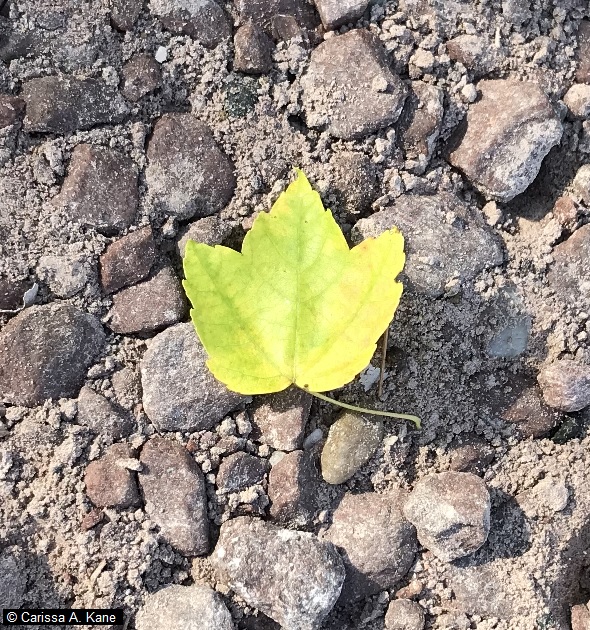
Perhaps the season is neither here nor there, but never-ending, the invitation ever-present, and more than anything, the task always at hand, is to focus on Jesus and ask for the grace to be “tender and sprout leaves.”
Jesus said to his disciples: “In those days after that tribulation the sun will be darkened, and the moon will not give its light, and the stars will be falling from the sky, and the powers in the heavens will be shaken.
“And then they will see ‘the Son of Man coming in the clouds’ with great power and glory, and then he will send out the angels and gather his elect from the four winds, from the end of the earth to the end of the sky.
“Learn a lesson from the fig tree. When its branch becomes tender and sprouts leaves, you know that summer is near. In the same way, when you see these things happening, know that he is near, at the gates. Amen, I say to you, this generation will not pass away until all these things have taken place. Heaven and earth will pass away, but my words will not pass away.
“But of that day or hour, no one knows, neither the angels in heaven, nor the Son, but only the Father.” – Mark 13:24-32
It can be easy to envision the poor widow putting her coins into the treasury, knowing the value to be considered far less than others had contributed. One might even draw a picture that perhaps includes elements representing shame, grief, loss, loneliness, and so on, overcome by giving all she had (“her whole livelihood”) and Jesus celebrating her for that. Then, from that picture, one might possibly be drawn toward a singular conclusion about verses 41-44 of chapter 12 in the Gospel according to Mark as a call to examine one’s level of charity.
It’s interesting though to reflect further on this passage. There are no words attributed to the widow, and no mention of a personal encounter between her and Jesus. The passage starts with an observation by Jesus that turns into a teaching directly to his disciples, not the poor widow, or anyone else who was putting money into the treasury. It is about more than coins and goes beyond levels of giving, extending to something greater.
Going back to the beginning of the Poor Widow’s Contribution, in verse 41, it is written, “Jesus sat down opposite the treasury and observed how the crowd put money into the treasury.” There are no interactions with those who are giving. Rather, Jesus takes in what is transpiring.
He sees the difference between the way the poor widow and the crowd, especially those with greater possessions (“Many rich people put in large sums.”), are carrying themselves. He then draws his disciples close, reveals what he sees, and tries to help them to see it as well. Jesus’s teaching, as always, is about showing the Way and helping those who follow him to become more aware, see more clearly, make better choices, and live more authentically.
Jesus wants the disciples, and us, to see that what the poor widow has given, she has given from “her whole livelihood”—her heart. This is the source of the widow’s might and is where our strength comes from as well. It is where the Lord resides.
I will place my law within them, and write it upon their hearts; I will be their God, and they shall be my people. – Jeremiah 31:33
By giving the two coins, the widow is giving her heart to the Lord, not allowing herself to be defined by her possessions, the opinions of others, or worldly cares, but instead sacrificing and letting them go, and listening to the law within her—placing trust for her well-being, first and foremost, in the Lord.
How can we look past the coins, and do the same?
In the course of his teaching Jesus said to the crowds, “Beware of the scribes, who like to go around in long robes and accept greetings in the marketplaces, seats of honor in synagogues, and places of honor at banquets. They devour the houses of widows and, as a pretext recite lengthy prayers. They will receive a very severe condemnation.”
Jesus sat down opposite the treasury and observed how the crowd put money into the treasury. Many rich people put in large sums. A poor widow also came and put in two small coins worth a few cents. Calling his disciples to himself, he said to them, “Amen, I say to you, this poor widow put in more than all the other contributors to the treasury. For they have all contributed from their surplus wealth, but she, from her poverty, has contributed all she had, her whole livelihood.” – Mark 12:38-44
The path began at a clearing, steps molded into the landscape, a way ahead with little unknown. It was easy to proceed. However, once those steps reached their end, the terrain gradually became less friendly… less inviting. Continuing deeper in, the area overcome with overgrowth, the air overcome with temptation. Push ahead with determination or turn back in trepidation. Perhaps, another way, take stock, retreat into the moment, and explore. Look inside and ponder, “What are you looking for?”
In the Gospel according to Mark, chapter 10, verse 51, Jesus asks Bartimaeus, “What do you want me to do for you?” He doesn’t presume what Bartimaeus, the blind man, wants from him, even though it may seem obvious. He gives Bartimaeus the opportunity to engage with him and to give voice to his desire.
In the moments leading up to this encounter, Bartimaeus is in the midst of a crowd and cannot see who or what is around him, so he doesn’t know where Jesus is. Despite this, he has heard that Jesus is there, and he begins calling out to him, “Jesus, son of David, have pity on me” (verse 47). The people around him are trying to get him to stop calling out to Jesus, but Bartimaeus is not distracted by them. He stays focused on what he is looking for—his vision, and he knows that only Jesus can heal and restore it.
In today’s hazy world, overcome with overgrowth, temptation in the air, and distractions all around, Jesus is present, wanting to heal and restore vision, and not only to make the path clear for all, but also to be the path for all. Jesus is waiting, even in less friendly, less inviting spaces, wanting us to tell him about it, and wanting to hear the response to, “What do you want me to do for you?”
As Jesus was leaving Jericho with his disciples and a sizable crowd, Bartimaeus, a blind man, the son of Timaeus, sat by the roadside begging. On hearing that it was Jesus of Nazareth, he began to cry out and say, “Jesus, son of David, have pity on me.” And many rebuked him, telling him to be silent. But he kept calling out all the more, “Son of David, have pity on me.” Jesus stopped and said, “Call him.” So they called the blind man, saying to him, “Take courage; get up, Jesus is calling you.” He threw aside his cloak, sprang up, and came to Jesus. Jesus said to him in reply, “What do you want me to do for you?” The blind man replied to him, “Master, I want to see.” Jesus told him, “Go your way; your faith has saved you.” Immediately he received his sight and followed him on the way. – Mark 10:46-52














 HopeThatFloats
You must be logged in to post a comment.