In the perpetual quest So quietly pursued, Rising up and reaching out. Catching to the eye, Inviting to the soul, A symbol and a sign, Whether seen by one or not.
Aspiring to something greater. Ascending from the earth, Leaving worms to worm it out. So simple, yet so not.
Seeking to be found, Finding what is sought, Staying true, ever knowing, Not so much is all that deep. Not so much is lasting.
The earth is crying, Tearing everywhere, Calling out for something real. Not just some trick or worse, Not a passing trend or racket.
And authenticity, if it’s true, Can’t be bought.
May the eyes of your hearts be enlightened, that you may know what is the hope that belongs to God’s call. (Ephesians 1:18)
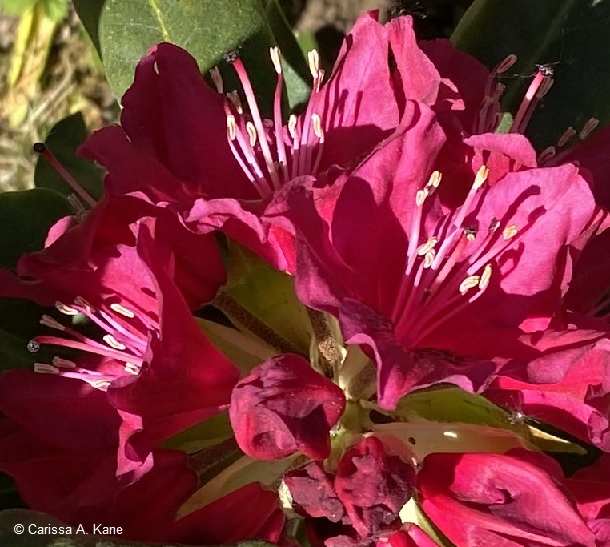
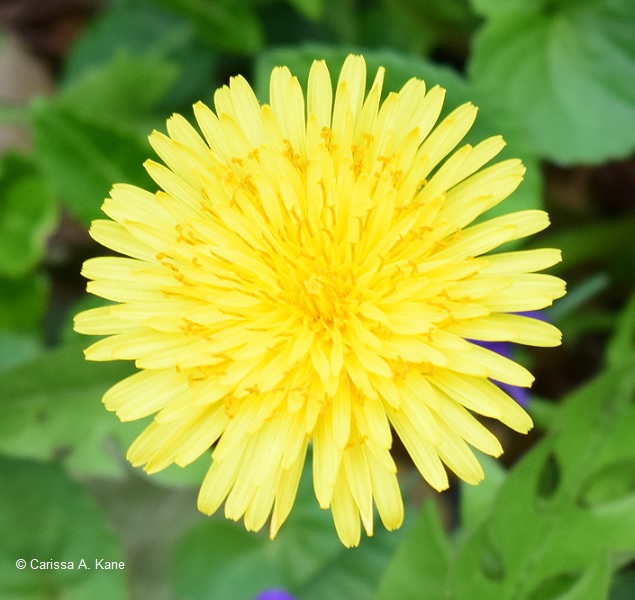
Upon first sight a threat, A battle to be had, A thing to put to rest. Yet, drawing closer A picture to behold. Golden, like the rule, If only it were practiced. So many points to reflect upon, Held together at the center And spreading out, As if to say, I have so many ways, I am full of life, But still have room to grow. Here for now, as if forever, as I am, But please know better, All is ever changing. Working toward the air, Poetry in motion, To be blown about, And all around, Making waves, Albeit gentle, From one life to another. Eternal presence, Dwelling for the masses, Extending hope And willing for your freedom. Not to be distorted, Or held hostage for your needs, But rather carried with great mercy, And my love, The example of compassion.
The Lord is my shepherd; there is nothing I shall want. – Psalm 23:1
Meet me at the Intersection. You know the place. The one where our wills meet, And where differences are laid aside. The one where hearts meld for all.
Meet me at the Intersection. You know the place. The one where face to face, Our guards recline and fears subside, As we recall the beauty of our Oneness.
Meet me at the Intersection. You know the place. The one, and only One, Where we help each other, And the choices made, Regardless of their ilk, Shine with greater Glory.
Meet me at the Intersection. You know the place. The one where we walk, hand in hand, And there is no wedge between us. Where we recall, together is our destiny.
Meet me at the Intersection, You know the place. For there is no other way, But the Way—open, just, and free, As life, in all its Glory, rises to its fullness.
When Jesus and the disciples drew near Jerusalem and came to Bethphage on the Mount of Olives, Jesus sent two disciples, saying to them, “Go into the village opposite you, and immediately you will find an ass tethered, and a colt with her. Untie them and bring them here to me. And if anyone should say anything to you, reply, ‘The master has need of them.’ Then he will send them at once.” This happened so that what had been spoken through the prophet might be fulfilled: Say to daughter Zion, “Behold, your king comes to you, meek and riding on an ass, and on a colt, the foal of a beast of burden.” The disciples went and did as Jesus had ordered them. They brought the ass and the colt and laid their cloaks over them, and he sat upon them. The very large crowd spread their cloaks on the road, while others cut branches from the trees and strewed them on the road. The crowds preceding him and those following kept crying out and saying: “Hosanna to the Son of David; blessed is he who comes in the name of the Lord; hosanna in the highest.” And when he entered Jerusalem the whole city was shaken and asked, “Who is this?” And the crowds replied, “This is Jesus the prophet, from Nazareth in Galilee.” – Matthew 21:1-11
Sitting in the audience as the story continues to unfold, there is a scene where one character calls out, asking, will you love me either way? Do you care if I win, or if I lose? Then comes the response, something along the lines of, to be honest, I don’t really care about those kinds of things.
Thinking about this exchange, it’s interesting how importance is assigned and judgments are made that are often based upon our (society’s) lack of understanding. And, in the process, these “ideals” often stir up false notions of what is good, righteous, and true, and even worse, they often fuel fear, in the competition to keep or attain the imaginary security living up to them brings.
The scripture readings for the Fourth Sunday of Lent show how these false ideals can lead to fear and judgment and get in the way of actual goodness, righteousness, and truth.
In the first reading (1 Samuel 16:1-13), we learn how David, the youngest of Jesse’s sons, was chosen by God to be anointed by Samuel. Upon encountering Jesse and his sons, Samuel’s assumption is that the one to be anointed will have certain characteristics that could be judged at first sight. However, it is written, “God does not see as a mortal, who sees the appearance. The Lord looks into the heart.” (v. 7b). It turns out that the last, and least likely to be judged as the chosen one, is in fact, chosen, and for qualities that cannot be readily seen.
As we go through life, we are constantly subject to judgment based on external values (clothing, education, mode of transportation, location of and type of housing, etc.). We are constantly being marketed to and pulled toward someone else’s notion of how to be and someone else’s definition of success. We also hear so much about first impressions. None of these things, however, really inform anyone of the most important feature of humankind—the heart, or the most important voice—that of the Creator. They are almost always based upon the external, and often look past qualities that convey deeper meaning, value, and purpose.
In Psalm 23, verses 1-6, it is written, “The Lord guides me along the way of righteousness.” (v. 3b). These words encourage us to trust, like David, that the path of righteousness is made known to us through God. If we were to look solely at man-made ideas about what’s important and how to live, depending on where we were and who we were surrounded by, we might be okay, but even if we were, the person or people leading us, would still be susceptible to falling away from what is good, just, and true. So, it’s important to have a relationship with God and to entrust oneself to the One who really knows the way that is best, and whose focus is the well-being of all hearts and souls.
St. Paul expands on this notion in the Letter to the Ephesians (Ephesians 5:8-14), when he writes, “For you were once darkness, but now you are light in the Lord. Live as children of light, for light produces every kind of goodness and righteousness and truth.” (v. 8-9).
When we look to the Gospel According to John (chapter 9, verses 1-41), we see the Pharisees, on the surface, defending the faith. However, what they are really defending is a way of operating that breeds fear and judgment and seeks to confine, control, and conform God’s ways to their ways. How do we know this?
Looking at the actions and responses of the Pharisees, we can see how they treat the blind man who was healed, his parents, and Jesus. Their hearts are closed. At one point, they say to the blind man who can now see (because of Jesus), “You were born totally in sin, and are you trying to teach us?” (v. 34). After saying this, they removed the man from their presence. All for answering them truthfully, when he was interrogated for a second time and said, “This is what is so amazing, that you do not know where he is from, yet he opened my eyes. We know that God does not listen to sinners, but if one is devout and does his will, he listens to him. It is unheard of that anyone ever opened the eyes of a person born blind. If this man were not from God, he would not be able to do anything.” (v. 30-33).
During this Season of Lent, it’s a great time to reflect on our words and actions, and with this Sunday’s Scripture passages, an even better time to consider how fear and judgment come into play in what we see and how we respond.
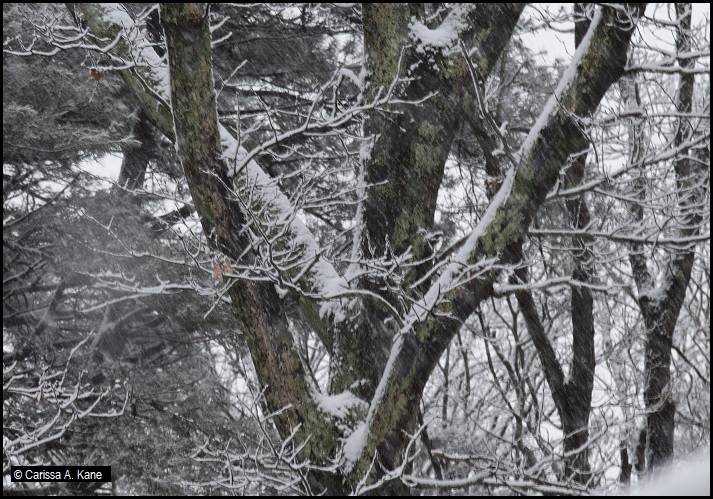
Covered with snow, the landscape so quiet, so still, so beautiful. The branches and shrubs become as if carefully wrapped, insulated from the elements, as well as by the elements. Becoming part of what’s on the outside pushing inward? Or, perhaps, it’s the outside becoming part of what’s inside and underneath, pushing outward? How will they lean, where will they fall, maybe, just maybe, they will stand upright, if anything at all.
A clean heart create for me, God; renew within me a steadfast spirit. – Ps 51:12
The Gospel for the First Sunday of Lent (Mt 4:1-11), is an account of the temptation of Jesus. We all experience variations of temptation throughout our lives. We all have weaknesses or tendencies that can lead us astray or take us away from being at or near our best, most genuine selves.
Looking to the example of Jesus, we can see his response to temptation, is first and foremost, to be aware and recognize it. Then second, to respond by remembering, and not only naming, but also reclaiming God as the source of all wellbeing. Jesus keeps God at the center throughout, and God’s grace enables him to overcome each temptation.
How can one apply this to real life experience in today’s world?
We can start by being aware and recognizing that temptation works in different ways. Sometimes it tries to move us toward “absolute” or limited views and the choices that flow from them, while at other times, temptation seeks to blur the lines between choices so that the best choice is left behind for the choice that seems good enough. Temptation tries, and keeps trying to find whatever hook will sink, to snag and pull one toward a more self-centered space and making a choice from there, instead of making it from a God-centered space where the choice is generative and beneficial beyond what one can surmise.
In the Gospel passage of the temptation of Jesus, Jesus shows us how to lean on the grace of God, and how to patiently endure to overcome temptation by living with God at the center—always in our hearts and minds. He reminds us that what has been written, holds true now, as well as forever.
One does not live on bread alone, but on every word that comes forth from the mouth of God. – Dt 8:3
He will command his angels concerning you and with their hands they will support you, lest you dash your foot against a stone. – Ps 91:11-12
You shall not put the Lord, your God, to the test. – Dt 6:16
The Lord, your God, shall you worship and him alone shall you serve. – Dt 6:13
Reflecting on each of Jesus’s responses above, what comes to mind in terms of your own experience of God’s grace in the face of a struggle or challenge you faced? Recall how God was present to you, and how you were, or became present to God? Share with God what that experience was like, and what it means to you today. What inspiration or insight might God want that experience to reveal to you today?
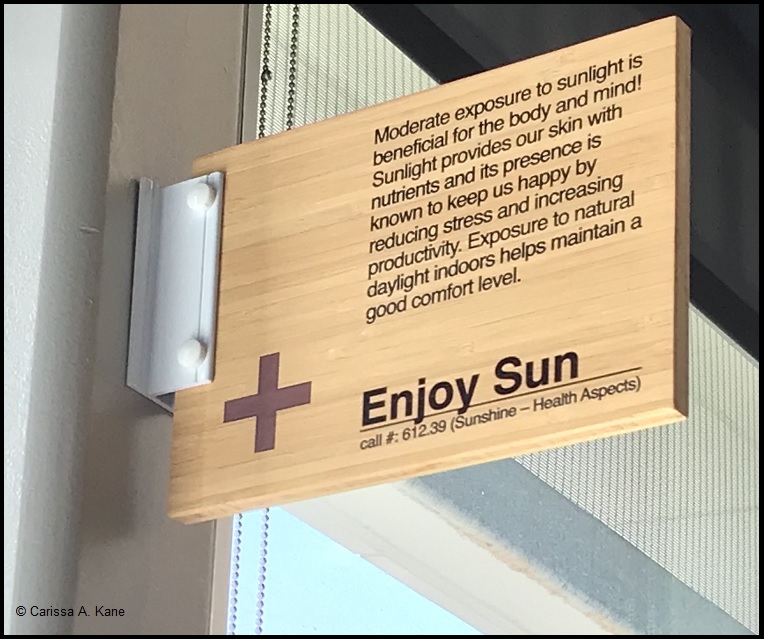
Standing up to take a break, stretch a little, and take a few steps around before returning to work in a temporary workspace for the day, the sign pictured below came into view. I read it and looked around some more. Taking in the environment and noticing more fully the ambience created by the natural light, gratitude and appreciation arose for the light and the souls who not only thought to share these interesting facts about sunlight and its benefits, but who also acted to shed the light, both in word and experience.
Oftentimes in the course of a day or week, we can be quick to move from task to task, and perhaps we miss the sign, put off the call, or rush through or past it, on the way to something else. Yet, much of the time, that thing, whatever it may be, that has a greater hold on our attention, robs us, “like a thief in the night,” of being present in a moment or for an opportunity to experience that which enlivens the soul, helps us to look beyond our own, often limited, schedules, scopes, or agendas, and reminds us of what’s really important—our connectedness, how we respect and appreciate each other—differences and all—and how we share our time and what we have, as blessings from Above.
From a young age, one is often taught to pay attention to the weather. When you hear thunder, go inside as rain, wind, and lightning may be near or approaching, if not already there. If there are heavy winds and/or lightning, stay inside and away from the windows, and so on. When there’s snow or sleet, beware of the road conditions—stay home. Most of what is taught about stormy weather is about actively retreating or staying put for one’s own well-being. Yet, sometimes, these efforts can instill fear and anxiety as the motivators for one’s actions.
Considering the state of, or conditions in the world today, the feeling or thought that we are in stormy times, both literally and figuratively, is palpable for so many. At times, it can lead one to retreat or stay put, shrinking, or turning away from active participation in the larger world. And while a certain amount of self-preservation can be good, withdrawal serves one and all best, not only when it is temporary, but also when one is intentional in how that time away is spent, and the choices and actions that result from it.
So, while the times may be stormy, perhaps the storm is perfect. Perfect for taking a step back and noticing for what one’s heart beats. Perfect for contemplating where one is, and where one is moved to be. Perfect for retreating to prayer and reflecting on what the world needs, one’s openness to the invitations of Grace that await, whether amid the storm, on its edges, or in an entirely different relation, and one’s desire to become more aware of what active participation in this stormy world might mean on a personal level, as well as how these storms can be overcome by being held as a meeting place for Jesus.
We often think or speak of the calm after the storm, and it often seems easier to appreciate the beauty of the sun after a rainstorm, or the snow-covered trees when removed from the threat and possible dangers of the driving winds and snow. However, Jesus tells us that he is with us always. Thus, the calm never ceases. It’s up to us though, to nurture our deepest, truest desires, to strive to invite peace into each situation, and to choose to not only look for, but to also navigate in, with, and through Grace. In doing so, we stay connected, our retreating or staying put remains temporary, and brings forth fruit that is lasting. Fruit that is ordained by God, bringing us back into the fold, with greater life, and as unconquered hearts whose actions flow from, and glorify God, and all creation.
Give me, O Lord, a steadfast heart, which no unworthy affection may drag downwards; give me an unconquered heart, which no tribulation can wear out; give me an upright heart, which no unworthy purpose may tempt aside. Bestow on me also, O Lord my God, understanding to know you, diligence to seek you, wisdom to find you, and faithfulness that may finally embrace you, through Jesus Christ our Lord. Amen. – St. Thomas Aquinas
When Jesus saw the crowds, he went up the mountain, and after he had sat down, his disciples came to him. He began to teach them, saying: “Blessed are the poor in spirit, for theirs is the kingdom of heaven. Blessed are they who mourn, for they will be comforted. Blessed are the meek, for they will inherit the land. Blessed are they who hunger and thirst for righteousness, for they will be satisfied. Blessed are the merciful, for they will be shown mercy. Blessed are the clean of heart, for they will see God. Blessed are the peacemakers, for they will be called children of God. Blessed are they who are persecuted for the sake of righteousness, for theirs is the kingdom of heaven. Blessed are you when they insult you and persecute you and utter every kind of evil against you falsely because of me. Rejoice and be glad, for your reward will be great in heaven. Thus they persecuted the prophets who were before you.” – Mt 5:1-12
In the process of growing up, a sense of right and wrong forms within. It’s based upon lessons learned, whether explicitly taught to one or gleaned from experiences. This sense is accompanied by the development of principles as well as the assignment of value to people, places, and things. Oftentimes this process is impacted not only by one’s immediate environment, but also by one’s community, the broader society, and perhaps, the happenings throughout the world as well. It’s human nature, after all, to derive meaning and to be affected by one’s surroundings and the people, places, and things, to which one is exposed. Hence the saying that one is known by one’s companions.
In chapter one of the First Letter of Saint Paul to the Corinthians, Paul is imploring the Corinthians to be united in the Lord rather than torn apart by their differences. How poignant for the times we live in today. The wisdom of this Bible passage speaks to us today just as the letter of St. Paul did to the Corinthians. Warning them, and us, that continuing on a path with such great division, serves only to unravel us, and that it is only through unity that we can overcome such a fate. So how do we move toward greater unity?
Most importantly, as St. Paul suggests, we need to return to the truth. Underneath all that divides us, and at the core of all that we are, and all that we can be, is the fact that our meaning and purpose comes from something far greater than any one person or group could ever encompass. We need to recognize when we are being pulled away and distracted from this truth, and to remove ourselves from partaking in any movements that seek to undermine honesty and integrity, in any way. The “win at all costs” mentality that seems so pervasive and accepted in society, needs to be challenged.
This is what St. Paul is talking about when he writes about there being rivalries and urges the people to stop thinking of themselves as belonging solely to one identity over another. This is what causes the great divide, and serves to scatter us, undoing the power and potential of unity.
When we move through the influence of our Oneness, see our differences as being ordained by God, and use them as the bond of perfection that they can be, we are able to come together in ways that value, serve, and work to benefit all of creation, and that give glory to God. When we trust the longings of true love and follow the example of Jesus, pride, prejudice, status, and exclusivity fall away and the unity that results brings greater—lasting—meaning and purpose to our lives than we could ever achieve on our own or within any segment of society seeking its own good over the good of all.
Paul writes, “For Christ did not send me to baptize but to preach the gospel, and not with the wisdom of human eloquence, so that the cross of Christ might not be emptied of its meaning.”
“The wisdom of human eloquence” would encourage one to find and stay with those around whom one feels most comfortable and identifies most closely. St. Paul is saying, don’t be fooled. He is saying, seek to be in the company of the Lord. Identify, first and foremost, with the Lord, so that you may experience redemption and your life may have direction and meaning that extend beyond the narrow confines of human understanding.
Reflect and pray:
When you contemplate the company you keep, what are some of the values or meaning you derive from your relationship with God and others? Where, and in what ways, do you experience unity?
As you go about your day or your week, what kind of companion are you?
How do expectations come into play with regards to your ability for companionship? And in what ways do you see the Lord as companioning you and vice versa?
When you reflect on the notion of an invitation to be a companion of the Lord awaiting you in all circumstances, what is your reaction or response?
I urge you, brothers and sisters, in the name of our Lord Jesus Christ, that all of you agree in what you say, and that there be no divisions among you, but that you be united in the same mind and in the same purpose. For it has been reported to me about you, my brothers and sisters, by Chloe’s people, that there are rivalries among you. I mean that each of you is saying, “I belong to Paul,” or “I belong to Apollos,” or “I belong to Cephas,” or “I belong to Christ.” Is Christ divided? Was Paul crucified for you? Or were you baptized in the name of Paul? For Christ did not send me to baptize but to preach the gospel, and not with the wisdom of human eloquence, so that the cross of Christ might not be emptied of its meaning. – 1 Cor 1:10-13, 17
Into the night and all day too, The glow of lights sprinkled here and there, but really, almost everywhere. This peace, this joy, ever present, Sometimes noticed more than others, Sometimes not at all, Nevertheless, a presence always there. The heart, holding all together, Ups and downs, yeas and nays, Judgments, and lessons learned. Steady in the flow of life, Brave but never brazen. Standard bearer, but more, Usher of truth and light. There through it all, From year to year, And age to age.
Holy Spirit, help us turn the page, As the bells ring, And a new year begins, Renew our listening, Renew our resolve. Show us love, Show us kindness. Bring us peace, Bring us newness. Help us to work with Grace, To change what we need to change, And to carry hope, wherever we go. Help us, bit by bit, to turn our world around.
May God be gracious to us and bless us; may God’s face shine upon us. – Psalm 67:2









 HopeThatFloats
You must be logged in to post a comment.