On Schedule…

On a recent trip into the city, memories of daily travel into the office by commuter rail came to mind. In particular, the schedules and the frequency of trains, or lack thereof, depending on what the workday had to offer and when it ended up being time to go home. During that time, there were a number of trains between 4:45pm and around 6:30pm on the line that I needed to take, so if I missed one, I could just hop on the next without much of a wait. However, if I was delayed at work past 6:15, and not able to run fast enough to make it to the platform and onto the 6:30 train before it started pulling out, the wait for the next train was substantial.

Thinking back on those times, I remember running for that last rush hour train and seeing other people do the same, sometimes making it, and sometimes times not. Then there were those occasional times of choosing not to make a mad dash for it, but rather to slow down, letting go of any notion of getting onto the train in those last moments before it pulled away. On those days, it was interesting how the station gradually transformed from being so crowded and noisy to a quieter, more spacious, easy-going place as it moved past the hours known for their rush. It was also easier to appreciate, once foregoing the push to move quickly, hop on, grab a seat, and get outbound.

It seems like a lot of life can be focused on being outbound and moving on to the next thing. Society just keeps pushing for more and more, and with greater speed, seemingly unaware of what is being lost or left behind. This constant hustle often leads to losing sight of what’s personal and meaningful, diminishing the time and patience that allows for potential to be seen and nurtured, and forgetting that “best” is most often brought out in one another by that which is rooted in a higher purpose—that which is mutually beneficial.         

In the First Reading of the Twenty-fifth Sunday in Ordinary Time it is written,

“Seek the Lord while he may be found, call upon him while he is near.” – Isaiah 55:6

In this busy, challenging world in which we live, what’s it like to turn this verse around and to contemplate the Lord seeking you, and calling your name with a desire to draw near to you? Where are the places that you invite or allow the Lord to find you and to be close to you? Where are the places where perhaps you don’t?

In verse 18 of Psalm 145, we read, “The Lord is near to all who call upon him, to all who call upon him in truth.” And in the Second Reading, we read part of St. Paul’s letter to the Philippians, where he relates his desire to be Christ-centered (“Christ will be magnified in my body, whether by life or by death.” – Phil 1:20c). For it is in the Lord, and in living out the ways of the Lord, that he not only finds purpose and meaning, but also becomes an extension of God’s grace to others, encouraging them to also strive toward that which is greater than.    

How are you inspired in relationships? Where do you find purpose, meaning, and mutual, generative benefit? In what ways do you desire to deepen your relationship with God, and others?

In the Gospel reading, Jesus shares the parable of the workers in the vineyard (Matthew 20:1-16) where the focus is on the desire and willingness to join in and work in the vineyard, rather than who got there first, who worked the longest, or any other credentials. This passage is a great reminder that with God, it’s never too late, nor too early, patience is abundant, potential is appreciated, and there’s always room for those who desire a place in the vineyard and come willing to do the work. With God, you can’t miss, not just because the time is always right, but also because the schedule is flexible, as well as forgiving.

Jesus told his disciples this parable:
“The kingdom of heaven is like a landowner
who went out at dawn to hire laborers for his vineyard.
After agreeing with them for the usual daily wage,
he sent them into his vineyard.
Going out about nine o’clock,
the landowner saw others standing idle in the marketplace,
and he said to them, ‘You too go into my vineyard,
and I will give you what is just.’
So they went off.
And he went out again around noon,
and around three o’clock, and did likewise.
Going out about five o’clock,
the landowner found others standing around, and said to them,
‘Why do you stand here idle all day?’
They answered, ‘Because no one has hired us.’
He said to them, ‘You too go into my vineyard.’
When it was evening the owner of the vineyard said to his foreman,
‘Summon the laborers and give them their pay,
beginning with the last and ending with the first.’
When those who had started about five o’clock came,
each received the usual daily wage.
So when the first came, they thought that they would receive more,
but each of them also got the usual wage.
And on receiving it they grumbled against the landowner, saying,
‘These last ones worked only one hour,
and you have made them equal to us,
who bore the day’s burden and the heat.’
He said to one of them in reply,
‘My friend, I am not cheating you.
Did you not agree with me for the usual daily wage?
Take what is yours and go.
What if I wish to give this last one the same as you?
Or am I not free to do as I wish with my own money?
Are you envious because I am generous?’
Thus, the last will be first, and the first will be last.” – Matthew 20:1-16
Exponentially…

As summer heads toward a close, schools reopen, and traffic picks up in the Northern Hemisphere, time can be more challenging to come by as busyness seeks to prevail. Like “a thief in the night” it can swiftly sneak away the quiet, still moments that seem to come more easily during the days of summer. Yet, despite a likely fuller schedule and a quicker pace all around, peace within remains, patiently waiting to connect… waiting to be heard.  

In the Twenty-third Sunday of Ordinary Time, the Responsorial Psalm is “If today you hear God’s voice, harden not your hearts.” (Psalm 95:8). What does that really mean? While it can be difficult to think of oneself as having a heart that is hardened, maybe there’s another way to consider this.

St. Thomas of Villanova said, “I cannot see without light: yet if I shut my eyes in the midst of the noon-day light, the fault is in me, not in the sun.” Although today’s world tends toward pointing fingers, and finding fault may be tempting, perhaps the key here is in exploring what one sees.

What are the situations and places where one is more prone to looking past what’s in plain sight, readily drawing a conclusion, or closing one’s eyes, rather than opening them wider and acknowledging all there is to see or consider? These are the places that hold an invitation to prayer and discovery. These are the places where a heart might be less open to God (hardened) and God’s ways of love, mercy, compassion, peace, hope, integrity, and more. These are the places where one can grow closer to God, living more fully in a way that encompasses a desire for goodness for all and operates to extend love and the flow of God’s grace.

“For where two or three are gathered together in my name, there am I in the midst of them.” – Mt 18:20

Out of Bounds…

In the Letter to the Romans, St. Paul writes, “Do not conform yourselves to this age but be transformed by the renewal of your mind, that you may discern what is the will of God, what is good and pleasing and perfect.” (Romans 12:2). Although he was writing to people of a different time than us, how appropriate this instruction or advice is for any age. After all, looking around and considering all of creation, there’s not only a broad spectrum of living things, but also cycles or seasons of change that occur across each category, and all created in the image of the Creator. With all of this, it’s not too hard to imagine God as being far more dynamic than any one generation, society, or age might deem.

Still though, it can be easy to move through a task, a day, or more with “a place for everything and everything in its place” mindset, whether as an individual or within a group or an organization. Perhaps St. Paul is reminding us not to get hung up on making things fit into our existing notions, to the extent that we leave no room to perceive the new things that God is doing or trying to teach us (Is 43:19). After all, how can God reveal to us, even a portion of insight to God’s will or a shimmer of the expanse and depth of God’s love, if one has already made up their mind and is so fixed and unwilling to consider something other?

This is not to say that one should never hold fast to a value or notion, but rather to be cautious of excluding possibilities outside of the ones already recognized or held.

In the Gospel for the Twenty-second Sunday in Ordinary Time, Jesus says to Peter, “Get behind me, Satan! You are an obstacle to me. You are thinking not as God does, but as human beings do.” (Matthew 16:23). He says this because Peter’s response comes out of his own understanding and is not based on listening to and considering what was said or communicating with Jesus.

When Jesus reveals that he will be killed, it does not fit the narrative of Peter’s notion of what’s to come of the Anointed One. The influence of Peter’s response is not of God. It is rigid, does not consider what the Anointed One has said, and leaves no room for possibilities outside of what Peter “knows”.

Again, looking around and considering all of creation, there is change, there is fluidity. God is not rigid. And, having been created in God’s image, humankind is not meant to be rigid either. To hold fast? Yes, but first and foremost to God. This is so that everything else not only falls into place in a way that is most fitting, but also in a way that is blessed and does not serve to block the flow of God’s grace from extending in ways beyond our own understanding.

Jesus began to show his disciples
that he must go to Jerusalem and suffer greatly
from the elders, the chief priests, and the scribes,
and be killed and on the third day be raised.
Then Peter took Jesus aside and began to rebuke him,
“God forbid, Lord! No such thing shall ever happen to you.”
He turned and said to Peter,
“Get behind me, Satan! You are an obstacle to me.
You are thinking not as God does, but as human beings do.”


Then Jesus said to his disciples,
“Whoever wishes to come after me must deny himself,
take up his cross, and follow me.
For whoever wishes to save his life will lose it,
but whoever loses his life for my sake will find it.
What profit would there be for one to gain the whole world
and forfeit his life?
Or what can one give in exchange for his life?
For the Son of Man will come with his angels in his Father’s glory,
and then he will repay all according to his conduct.” – Matthew 16:21-27

Stepping Up, Stepping Out…

Having stood next to the falls of Niagara and experiencing with awe the rainbows and mists as well as their thunderous rage, even in a controlled setting, the words of Dr. Seuss, “So be sure when you step, Step with care and great tact. And remember that life’s A Great Balancing Act…”, came to mind upon seeing the painting below.

Imagining the amount of focus, control, and awareness crossing the falls step by step on a wire, once again the word “awe” best captures the impression.

Sitting with the readings for the Twentieth Sunday in Ordinary Time, these same words “focus”, “control”, and “awareness” provide an opportunity for further reflection on relationship with God. In the first reading (Is 56:1, 6-7), we are reminded of what one can control—“Observe what is right, do what is just;” (v. 1)—one’s own actions; what one’s focus ought to be—joining, ministering, loving, serving the Lord (v. 6); and an awareness through which we ought to live—”For my house shall be called a house of prayer for all peoples.” (v. 7)—striving toward the same kind of faithfulness to love and equity with which God bestows upon us.

In the responsorial Psalm (Ps 67:2-3,5,6,8), the psalmist cries out, “O God, let all the nations praise you!” (v. 4). The verses resonate or echo the desire to live up to and embrace what the Lord has said through the Prophet Isaiah in the first reading. They call for inclusivity and equity among God’s people—all those who observe what is right and do what is just, join, minister, love, and serve.

With the Letter of St. Paul to the Romans, St. Paul reminds us that love and mercy go hand in hand. This is especially important to consider when forming opinions and discerning choices.

Brothers and sisters:
I am speaking to you Gentiles.
Inasmuch as I am the apostle to the Gentiles,
I glory in my ministry in order to make my race jealous
and thus save some of them.
For if their rejection is the reconciliation of the world,
what will their acceptance be but life from the dead?

For the gifts and the call of God are irrevocable.
Just as you once disobeyed God
but have now received mercy because of their disobedience,
so they have now disobeyed in order that,
by virtue of the mercy shown to you,
they too may now receive mercy.
For God delivered all to disobedience,
that he might have mercy upon all. –  Rom 11:13-15, 29-32

It is the grace of mercy that calls one to exercise an understanding heart, and the grace of love and mercy together that move one toward what is just.

In the Gospel according to Matthew (Mt 15:21-28), the story of the Canaanite woman, provides an example of the grace of God in response to an authentic desire for what is good and just. The Canaanite woman believes that Jesus can heal her daughter and does not allow the fact that she is not Jewish or that Jesus initially seems to turn her away, to dissuade her from seeking that healing and engaging in dialogue not only to ask for what her faith has led her to believe, but also to ask a question that ends up revealing Jesus ministry as being for all people. The woman and Jesus, like God the Father throughout many Bible passages, show an openness to dialogue, propensity toward flexibility with a fixed focus on love and mercy, self-control through respect and consideration in truly listening to each other, and an awareness that flows from a relationship or interactions where all parties have an authentic desire for what is good and just.

Looking again to the tightrope walker, how do they keep their balance? The one pictured above is holding a pole with both hands and using it to maintain their center of gravity, and therefore their balance. At this time in your life, how are you holding onto God, and God onto you? In what ways is God your center of gravity, helping you to focus, exhibit self-control, and have awareness for what is good and just? In what areas do you need God more as your center of gravity? What are some of the ways in which faith has helped you maintain your balance in terms of living and striving to live in a way that exemplifies mercy and love of God, neighbor, and self?

“Thus understanding and love, that is, the knowledge of and delight in the truth, are, as it were, the two arms of the soul, with which it embraces and comprehends with all the saints the length and breath, the height and depth, that is the eternity, the love, the goodness, and the wisdom of God.” – St. Bernard of Clairvaux

At that time, Jesus withdrew to the region of Tyre and Sidon.
And behold, a Canaanite woman of that district came and called out,
“Have pity on me, Lord, Son of David!
My daughter is tormented by a demon.”
But Jesus did not say a word in answer to her.
Jesus’ disciples came and asked him,
“Send her away, for she keeps calling out after us.”
He said in reply,
“I was sent only to the lost sheep of the house of Israel.”
But the woman came and did Jesus homage, saying, “Lord, help me.”
He said in reply,
“It is not right to take the food of the children
and throw it to the dogs.”
She said, “Please, Lord, for even the dogs eat the scraps
that fall from the table of their masters.”
Then Jesus said to her in reply,
“O woman, great is your faith!
Let it be done for you as you wish.”
And the woman’s daughter was healed from that hour. – Mt 15:21-28

What’s Inside…

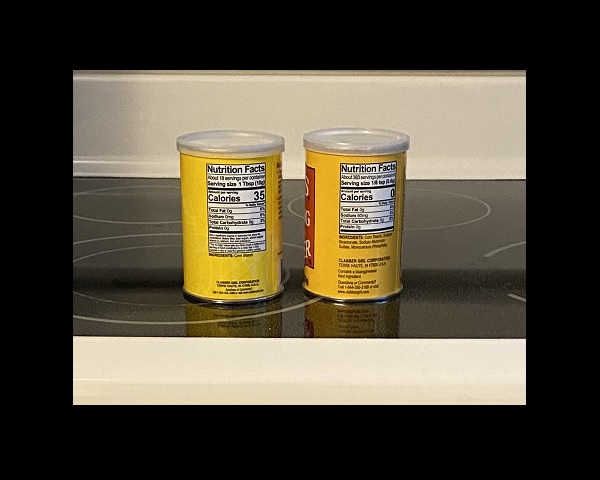
Opening the oven door as the kitchen timer worked its way toward zero seconds, an unanticipated outcome awaited. The bread inside, although cooked through, was not quite what was expected. Shocked at its stature and the rather dense outcome, and wondering what happened, I revisited all that went into its making. First, I envisioned all the steps, and then opened cabinet doors to look again at some of the baking ingredients, but nothing stood out.

Upon thinking some more, and feeling certain that baking powder was added, I thought perhaps it was expired and had lost its potency. Then, there it was. In the process of re-examining, the problem was revealed. It wasn’t baking powder after all that was used. The canister had the same shape, height, color, and text, but rather than containing baking powder, it held cornstarch. And although the bread tasted almost the same as any other banana bread that was made, its consistency and body was not at all the same.

Contemplating the Gospel passage for the Sixteenth Sunday in Ordinary Time (Matthew 13:24-43) and reflecting on Jesus’ words as he tells the parables of weeds among wheat, the mustard seed, and the yeast, one is reminded of the importance of what goes into things. Or, in other words, what makes them up or influences them. Are there hidden ingredients? What’s the intent, the source, or motivation, and what, ultimately, is being sought?

So how does one really know what’s what with so much that is conflicting and competing in the midst of what can be confusing and misleading times? How does one distinguish between what things look like and what they really are, and decipher what’s happening around them and how it might be influencing them?

Prior to the Gospel, in this week’s readings, we read:

“The Spirit comes to the aid of our weakness;
for we do not know how to pray as we ought,
but the Spirit himself intercedes with inexpressible groanings.
And the one who searches hearts
knows what is the intention of the Spirit,
because he intercedes for the holy ones
according to God’s will.”—Romans 8:26-27

To discover what’s real, or what’s true, one must not only be willing to take a good look inside and out, but also be willing to look again, and then some more, searching with a heart that is sincere and an openness to the possibility that what looked like baking powder might not have ever been baking powder at all.

What Is…

As the leaves made their way to each other,
Stretching out from the branches that held them up,
Creating a barrier, distorting all that lay behind,
The air among them became thick, and hazy too.
It’s true what’s lost is found, but so too,
Is it true that some things are better lost,
Or rather not found but overcome.
Not all things that return are welcome,
Nor should they be.
What binds One and all together, that’s what is Supreme.
Enlightening to the soul,
Expanding hearts and minds,
Extending a will that is free,
Created to stand up and do more than just survive.
Yes, the meek shall inherit the earth,
But not by turning eyes from the blind,
As they pounce and plunder,
Putting down and shutting out,
Igniting fires that are not Divine.
What is True, what is Just,
Brings together and raises up,
Working things out to what is best.
These are the tests of our times.
Never mind what’s yours, what’s mine.
What is True, what is Just,
Beckons one and all.
It shall not shrink… it shall not sink.
These are the tests of our times.

Whoever finds his life will lose it, and whoever loses his life for my sake will find it. – Mt 10:39

Familiarity…

What is it that turns the less familiar or unknown into something to be wary of? What is it that stirs up friction, creates angst, and seeks to build fortresses around what is “known” and against what is new or different? While familiarity can be a good thing, it can also get in the way of better things.

At times, what is known can pull at strings, hoping to stretch nerves thin, to direct hearts and minds to narrow ends, and to fill wide, open space with falsehoods. Yes, what’s familiar and comfortable can and will, at times, masquerade around as one beneficial thing or another, while really playing on deep seated or hidden worries, and selling deception as truth.

In the Gospel passage for the 12th Sunday in Ordinary Time (Matthew 10:26-33), Jesus says, “Fear no one…,” “Do not be afraid…,” “Do not be afraid…” As you think about your day-to-day life, envision yourself looking around and listening. Take notice. What do you see and hear? What thoughts and feelings are evoked? And, more importantly, where, or to whom, does it lead you?

“God made Truth with many doors to welcome every believer who knocks on them.” – Khalil Gibran

This is why it’s so important to take time to pause for prayer and to reflect on not only the direction in which one is travelling, but also to notice who or what is prompting or leading one’s movement.

Throughout Scripture we see God engaging with creation in a way that shows flexibility, mercy, forgiveness, and a give and take that always leaves room for growth of heart and mind, and thus, greater understanding that includes reason, but also often extends beyond it. We also see free will, and the twists and turns and outcomes, often unexpected by the human mind, that flow from it. We see many examples of people acting, reacting, and responding out of fear that sells itself as die-hard commitment to tradition, or presents itself as self-preservation, pride, greed, jealousy, and more. There are also many examples of people rising above the circumstances, in ways alternative to the times in which they lived. And through it all, we see, time and again, God’s flexibility through unwavering love, patience, compassion, forgiveness, integrity, and understanding.

What’s an image from Scripture that comes to mind when you think about interactions between God and a person or group of people? Go to a passage that includes one of the interactions, read it, and then spend some time reflecting on it. What are you most drawn to in the passage? What qualities of God touch your heart most deeply? What is God revealing to you and wanting you to know at this moment?

What’s it like to think that maybe everything you’ve ever known is just a fraction of every good thing that awaits you on the other side of resistance to the unfamiliar?

As It Always Does…

The trees, becoming more life like
As they continue to grow deeper
Into their shades of spring,
Fill the air with hope,
And instill a sense of trust.
Not a sign of exactly what’s to come,
But still a sign that’s telling.
The sun will rise,
As it always does.
The sun will set,
As it always does.
Everything else?
All that lies between?
That will come and go,
As it always does.
Leaving behind the hope of days to come,
And the soul keeping faith,
Despite not knowing,
As it always does.

Jesus said to his disciples: “Do not let your hearts be troubled. You have faith in God; have faith also in me.” (Jn 14:1).

The Reason for Hope…

Today, March 25th, is the Solemnity of the Annunciation of the Lord. The readings for this day, are a reminder, “God is with us” (Isaiah 8:10), “for nothing will be impossible for God.” (Luke 1:37), and guidance to contemplate relationship with God. An opportunity to consider how one responds to the call of the ever present God of love, mercy, and redemption. What happens at the thought of “I come to do your will.” (Psalm 40:8a, 9a; Hebrews 10:7b, 9a), or Mary’s response of “Behold, I am the handmaid of the Lord.” (Luke 1:38)?

Spending time with the road traveled by the Prophet Isaiah, the Psalmist, Mary, and St. Paul, one can draw inspiration, perhaps more easily, because we know, or we can read about the ways in which God was with them and enabled them to fulfill the path that was theirs, in the face of trials and tribulations.   

In the first reading for the Fifth Sunday of Lent, it is written, “I will put my spirit in you that you may live, and I will settle you upon your land; thus you shall know that I am the Lord. I have promised, and I will do it, says the Lord.” (Ezekiel 37:14).

The verses that follow this passage, are referred to as the joining of the two sticks. That is, God’s intention or call… God’s will for the tribes of Juda and Joseph to come together and for the people to be united.

“Thus says the Lord God: I will soon take the Israelites from among the nations to which they have gone and gather them from all around to bring them back to their land. I will make them one nation in the land, upon the mountains of Israel, and there shall be one king for them all. They shall never again be two nations, never again be divided into two kingdoms.” – Ezekiel 37:21-22

Thinking about this in terms of the division in families, communities, and the world at large today, in what ways do you see the Spirit of God shining through in your life, your community, and the world?

With the Lord there is mercy and fullness of redemption. – Psalm 130:7

Where do you experience love, mercy, and unity? And how do you desire to be an agent or a partner in not only carrying, but also sharing the essence of these attributes of God?

Looking around and sitting with personal challenges and the state of the world today can be daunting at times. There is much that is awry and issues that can seem insurmountable. With these realities it can be tempting to not look around or to not focus much attention or thought on the problems that exist. However, not ignoring what’s going on, is part of what it means to carry the cross—to live in reality, whatever it may be, praying and proceeding with hope that is eternal, and that resides in and seeks to be guided by God, for whom nothing is impossible.      

As St. Paul writes, “If the Spirit of the one who raised Jesus from the dead dwells in you, the one who raised Christ from the dead will give life to your mortal bodies also, through his Spirit dwelling in you.” (Romans 8:11). How do you desire the Spirit of the Lord to be present to you at this moment? In what areas do you desire greater light and life?  

In lots of ways, the times we are experiencing lend themselves to the deception that we are dealing with the impossible and that throwing the towel in, or walking away is the answer. Yet, faith beckons one to pause and to notice. Who or what is deeming the situation a lost cause? What is the source? Is it a human summation? From what spirit does it come?

In chapter 11 of the Gospel According to John, verses 1-45, we read about the raising of Lazarus. In order to go to the home of his good friends, Mary, Martha, and the now deceased Lazarus, Jesus must return to the town where people have tried to stone him, more than once. In addition, by the time Jesus arrives there, it has been four days since Lazarus’ lifeless body was placed in the tomb. Many would deem this situation hopeless or impossible. Why does Jesus go back to the place where he is mocked, and people are seeking his demise? Why does Jesus even attempt to raise Lazarus who is clearly beyond resuscitation?

Because Jesus is Life! He is full of love and mercy, the embodiment of God, and death, in any of its forms, cannot and will not defeat Him, or those who belong to Him. For it is through Him, that all things are possible.      

Now a man was ill, Lazarus from Bethany,
the village of Mary and her sister Martha.
Mary was the one who had anointed the Lord with perfumed oil
and dried his feet with her hair;
it was her brother Lazarus who was ill.
So the sisters sent word to him saying,
“Master, the one you love is ill.”
When Jesus heard this he said,
“This illness is not to end in death,
but is for the glory of God,
that the Son of God may be glorified through it.”
Now Jesus loved Martha and her sister and Lazarus.
So when he heard that he was ill,
he remained for two days in the place where he was.
Then after this he said to his disciples,
“Let us go back to Judea.”
The disciples said to him,
“Rabbi, the Jews were just trying to stone you,
and you want to go back there?”
Jesus answered,
“Are there not twelve hours in a day?
If one walks during the day, he does not stumble,
because he sees the light of this world.
But if one walks at night, he stumbles,
because the light is not in him.”
He said this, and then told them,
“Our friend Lazarus is asleep,
but I am going to awaken him.”
So the disciples said to him,
“Master, if he is asleep, he will be saved.”
But Jesus was talking about his death,
while they thought that he meant ordinary sleep.
So then Jesus said to them clearly,
“Lazarus has died.
And I am glad for you that I was not there,
that you may believe.
Let us go to him.”
So Thomas, called Didymus, said to his fellow disciples,
“Let us also go to die with him.”
When Jesus arrived, he found that Lazarus
had already been in the tomb for four days.
Now Bethany was near Jerusalem, only about two miles away.
And many of the Jews had come to Martha and Mary
to comfort them about their brother.
When Martha heard that Jesus was coming,
she went to meet him;
but Mary sat at home.
Martha said to Jesus,
“Lord, if you had been here,
my brother would not have died.
But even now I know that whatever you ask of God,
God will give you.”
Jesus said to her,
“Your brother will rise.”
Martha said to him,
“I know he will rise,
in the resurrection on the last day.”
Jesus told her,
“I am the resurrection and the life;
whoever believes in me, even if he dies, will live,
and everyone who lives and believes in me will never die.
Do you believe this?”
She said to him, “Yes, Lord.
I have come to believe that you are the Christ, the Son of God,
the one who is coming into the world.”
When she had said this,
she went and called her sister Mary secretly, saying,
“The teacher is here and is asking for you.”
As soon as she heard this,
she rose quickly and went to him.
For Jesus had not yet come into the village,
but was still where Martha had met him.
So when the Jews who were with her in the house comforting her
saw Mary get up quickly and go out,
they followed her,
presuming that she was going to the tomb to weep there.
When Mary came to where Jesus was and saw him,
she fell at his feet and said to him,
“Lord, if you had been here,
my brother would not have died.”
When Jesus saw her weeping and the Jews who had come with her weeping,
he became perturbed and deeply troubled, and said,
“Where have you laid him?”
They said to him, “Sir, come and see.”
And Jesus wept.
So the Jews said, “See how he loved him.”
But some of them said,
“Could not the one who opened the eyes of the blind man
have done something so that this man would not have died?”
So Jesus, perturbed again, came to the tomb.
It was a cave, and a stone lay across it.
Jesus said, “Take away the stone.”
Martha, the dead man’s sister, said to him,
“Lord, by now there will be a stench;
he has been dead for four days.”
Jesus said to her,
“Did I not tell you that if you believe
you will see the glory of God?”
So they took away the stone.
And Jesus raised his eyes and said,
“Father, I thank you for hearing me.
I know that you always hear me;
but because of the crowd here I have said this,
that they may believe that you sent me.”
And when he had said this,
He cried out in a loud voice,
“Lazarus, come out!”
The dead man came out,
tied hand and foot with burial bands,
and his face was wrapped in a cloth.
So Jesus said to them,
“Untie him and let him go.”
Now many of the Jews who had come to Mary
and seen what he had done began to believe in him. – John 11:1-45

Be Thou My Vision…

Sitting in the audience as the story continues to unfold, there is a scene where one character calls out, asking, will you love me either way? Do you care if I win, or if I lose? Then comes the response, something along the lines of, to be honest, I don’t really care about those kinds of things.

Thinking about this exchange, it’s interesting how importance is assigned and judgments are made that are often based upon our (society’s) lack of understanding. And, in the process, these “ideals” often stir up false notions of what is good, righteous, and true, and even worse, they often fuel fear, in the competition to keep or attain the imaginary security living up to them brings.

The scripture readings for the Fourth Sunday of Lent show how these false ideals can lead to fear and judgment and get in the way of actual goodness, righteousness, and truth.

In the first reading (1 Samuel 16:1-13), we learn how David, the youngest of Jesse’s sons, was chosen by God to be anointed by Samuel. Upon encountering Jesse and his sons, Samuel’s assumption is that the one to be anointed will have certain characteristics that could be judged at first sight. However, it is written, “God does not see as a mortal, who sees the appearance. The Lord looks into the heart.” (v. 7b). It turns out that the last, and least likely to be judged as the chosen one, is in fact, chosen, and for qualities that cannot be readily seen.

As we go through life, we are constantly subject to judgment based on external values (clothing, education, mode of transportation, location of and type of housing, etc.). We are constantly being marketed to and pulled toward someone else’s notion of how to be and someone else’s definition of success. We also hear so much about first impressions.
None of these things, however, really inform anyone of the most important feature of humankind—the heart, or the most important voice—that of the Creator. They are almost always based upon the external, and often look past qualities that convey deeper meaning, value, and purpose.

In Psalm 23, verses 1-6, it is written, “The Lord guides me along the way of righteousness.” (v. 3b). These words encourage us to trust, like David, that the path of righteousness is made known to us through God. If we were to look solely at man-made ideas about what’s important and how to live, depending on where we were and who we were surrounded by, we might be okay, but even if we were, the person or people leading us, would still be susceptible to falling away from what is good, just, and true. So, it’s important to have a relationship with God and to entrust oneself to the One who really knows the way that is best, and whose focus is the well-being of all hearts and souls.

St. Paul expands on this notion in the Letter to the Ephesians (Ephesians 5:8-14), when he writes, “For you were once darkness, but now you are light in the Lord. Live as children of light, for light produces every kind of goodness and righteousness and truth.” (v. 8-9).

When we look to the Gospel According to John (chapter 9, verses 1-41), we see the Pharisees, on the surface, defending the faith. However, what they are really defending is a way of operating that breeds fear and judgment and seeks to confine, control, and conform God’s ways to their ways. How do we know this?

Looking at the actions and responses of the Pharisees, we can see how they treat the blind man who was healed, his parents, and Jesus. Their hearts are closed. At one point, they say to the blind man who can now see (because of Jesus), “You were born totally in sin, and are you trying to teach us?” (v. 34). After saying this, they removed the man from their presence. All for answering them truthfully, when he was interrogated for a second time and said, “This is what is so amazing, that you do not know where he is from, yet he opened my eyes. We know that God does not listen to sinners, but if one is devout and does his will, he listens to him. It is unheard of that anyone ever opened the eyes of a person born blind. If this man were not from God, he would not be able to do anything.” (v. 30-33).

During this Season of Lent, it’s a great time to reflect on our words and actions, and with this Sunday’s Scripture passages, an even better time to consider how fear and judgment come into play in what we see and how we respond.

Be Thou My Vision, performed by Audrey Assad