In the First Reading for the Solemnity of the Holy Trinity (Deuteronomy 4:32-34, 39-40), Moses reminds the people of how God has been present to them in Egypt and the magnitude of what God has done for them. He then implores them to use these experiences to remain focused on God as well as God’s ways thru adherence to God’s statutes and commandments. There can be a tendency to think of statutes and commandments as confining, but when taken into consideration along with the bigger picture of God’s dedication and love for all of creation, they can be seen as providing concrete ways to create unity and exercise respect and dignity with a goal of freedom and protection for one and all.
With God there is always more than one side. The relationship is mutual and considers all parties. There are statutes and commandments, but there are also God’s actions, not just telling humanity how to be, but also leading the way and showing us by example. The verses in the Psalm (Ps 33:4-5, 6, 9, 18-19, 20, 22) describe the Lord’s words, actions, and persona as: upright, trustworthy, just, right, kind, effective, protective, and helpful. These attributes are also infused in the statutes and commandments. They are extended to us by God and in turn we are to extend them to each other.
In the Second Reading (Romans 8:14-17), St. Paul reminds us of our part in the Trinity. As “children of God” and “Joint heirs with Christ” we are not to be enslaved by fear, but rather to live in and be led by the Spirit of God. The passage begins with a salutation of “Brothers and Sisters.” This is not an uncommon greeting. Readings from the letters of St. Paul often begin with a salutation of “Brothers and Sisters,” perhaps to continually express the overall desire and focus on the goal of unity with the Lord and one and another. Imagine starting all your communications with “Brothers and Sisters” or adding “Brothers and Sisters” to communications you receive. How might that shape what you write/say and how you receive what is written/said to you?
Moving on to the Gospel passage known as the Commissioning of the Disciples (Matthew 28:16-20), the disciples, who have gone to Galilee as instructed by Jesus, encounter the risen Jesus. It is written, “they worshipped, but they doubted.” (verse 17). What’s it like to think that despite the existence of doubt, they were still seen as worthy, encountered Jesus, and were given the opportunity to serve as Jesus’ disciples? When situations arise, it can be tempting to give rise to doubt or to fall into a one thing or another, or all or nothing mindset. However, with the Lord, all are worthy, there are often many ways and different degrees to serve, and faith always triumphs over doubt.
Overall, the Solemnity of the Most Holy Trinity presents an opportunity to acknowledge, contemplate, and celebrate how one experiences the Father and the Son and the Holy Spirit. When you consider each aspect of the Trinity, what characteristics or attributes come to mind? How have you experienced these in your life and how has your prayer been influenced by them? In what ways are you inspired by the Holy Trinity individually and in your relationships? How might the Trinity influence you to overcome uncertainty or division and work toward unity, to better communicate or deepen relationships, or in any related discernment?
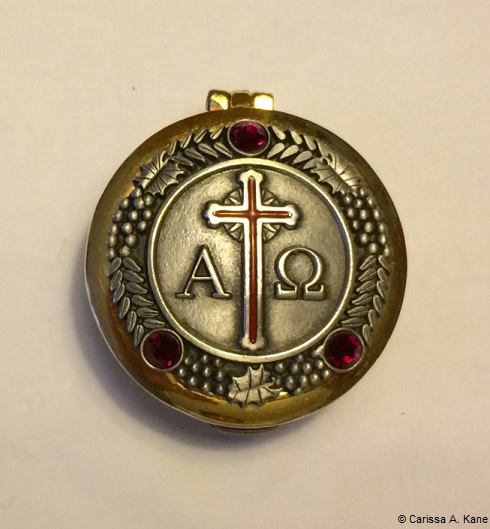
“I am the Alpha and the Omega,” says the Lord God, “the one who is and who was and who is to come, the almighty.” – Revelation 1:8
In a year where the Fourth Sunday of Advent falls on the same day as Christmas Eve (with the Christmas Vigil Mass), and in a world where it seems that there is a constant push toward an absolute one way or the other, but rarely a celebration of a little here, a little there, or somewhere in between, there lies a reminder of a better way.
Each year the Season of Advent is thought of as a period of waiting and Christmas as a period of celebrating the arrival of Jesus Christ, our Savior. And while we remember and participate in rituals each year, it can be easy to overlook the essence of these practices and to get lost in the ways in which we have come to proceed through them. With this, the opportunity to fully receive what is Divinely offered can become less.
Oftentimes, the greatest desire that many of us hold is the desire for peace (inner peace, peace within families/communities, world peace, etc.). And it is not uncommon to move, knowingly or not, toward external things or activities and attach a sense of peace to them, rather than to the joy they might bring to us as well as the real source of that joy and the peace that accompanies it—the Spirit of God.
Keeping in mind that peace is not possible without an openness to coexistence and unity, in what ways is your heart and mind open to peace? What strengths/challenges do you experience with regards to coexistence and unity in various situations? Where does this come up in your prayer life, and how is your sense of peace affected?
In a few days, when the Fourth Sunday of Advent and Christmas Eve (with the celebration of the Christmas Vigil Mass) share the day, envision it as an invitation to unity and, through it, peace. Take some time to reflect on the notion that what you desire is what you need, and what you are waiting for is already, in a sense, here. Then take some time to celebrate the goodness of the Lord.
Forever I will sing the goodness of the Lord. – Psalm 89:2A
Leaning into Fall, the trees embrace the Essence of their nature. Season after season, year after year, who’s to say on time, or in time? Either way, waiting without edge, trusting in the beauty of Your time as you gently reveal the colors, so many colors, of Your way.
Beacon calling out to one and all alike, remember: life is but a spectrum, at its fullest and shining bright, when casting out the shadows, fears, and doubts. Your light so much stronger than the decay, rising up and out from far below.
It’s time to recognize again who we really are. So much alike, created to be different, but not with indifference or carrying any shades of hate. Loved into existence, the vision of Your eye. Side by side, each and every one of us are vessels of Your grace, and we all have a place.
Holy God, Most High Creator, hold us all together, unite us in Your heart… in our hearts.
Shine like lights in the world as you hold on to the word of life. – Phil 2:15d, 16a
Questions upon questions. Sitting still, or idly sitting? With, or at, each other? Whether picking, picked, or chosen, The answer is the same. Apples of God’s eye. Desire of desires.
Fruit bearing fruit, Fruit bearing with fruit. A breath of fresh air, A dose of patience, Perseverance too. From the heart of One To another, then another.
All searching for some peace, While time is fast escaping. All in One, One in all, History that is shared, Spirits called together. Even when far apart, Destiny is waiting.
It was not you who chose me, but I who chose you and appointed you to go and bear fruit that will remain, so that whatever you ask the Father in my name he may give you. This I command you: love one another. – John 15:16-17
Do you recall being in a group of people, partaking in an experience, whatever it might have been, and having anything that might normally serve to create a wedge or cause a disturbance, fade away? What was that like?
Oftentimes, when such experiences occur, it’s because there is a shared focus and desire that outweighs all the things that might otherwise interfere and distract individuals away from being influenced by the Spirit that moves them toward embracing what is mutually beneficial to all. In other words, it happens when one lets go and detaches from being driven by what is more immediately self-serving or earthly. This then leaves room to be led by the Spirit.
In chapter 2 of the Acts of the Apostle’s, it is written,
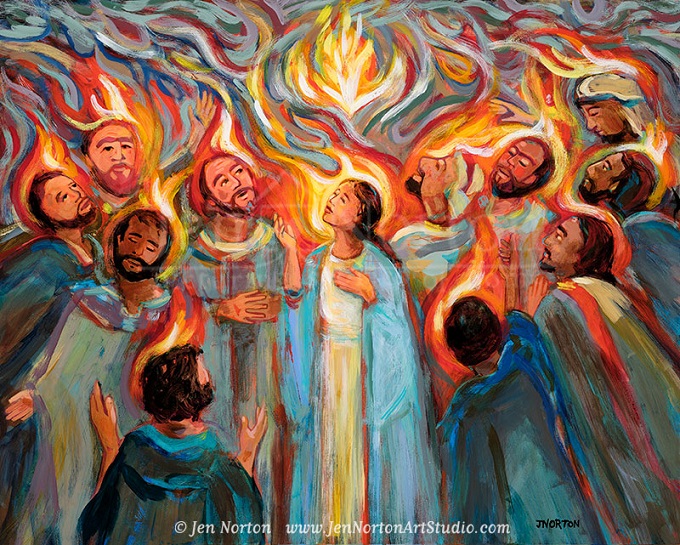
And they were all filled with the Holy Spirit and began to speak in different tongues, as the Spirit enabled them to proclaim.
Now there were devout Jews from every nation under heaven staying in Jerusalem. At this sound, they gathered in a large crowd, but they were confused because each one heard them speaking in his own language. They were astounded, and in amazement they asked, “Are not all these people who are speaking Galileans? Then how does each of us hear them in his native language?” – Acts 2:4-8
This is an example of the Spirit breaking down barriers that would seek to prevent the Good News from being shared, lived, and spread across the face of the earth. Reading on, we learn more about the many different places from which the crowd came. Undoubtedly, they also had different ideas on how to live and how to go about doing things.
We are Parthians, Medes, and Elamites, inhabitants of Mesopotamia, Judea and Cappadocia, Pontus and Asia, Phrygia and Pamphylia, Egypt and the districts of Libya near Cyrene, as well as travelers from Rome, both Jews and converts to Judaism, Cretans and Arabs, yet we hear them speaking in our own tongues of the mighty acts of God.” – Acts 2:9-11
What’s it like to contemplate the way that the Spirit enabled the disciples of Jesus, who were, for all intents and purposes, more alike than not, to communicate with those who spoke different languages and were foreign to them?
Notice how the Spirit enabled the disciples, and further defined the notion of discipleship, to become more diverse while at the same time bringing about greater unity. Also consider the posture of the disciples. In chapter 1 of the Acts of the Apostles, we read that they, “devoted themselves with one accord to prayer” and we see that play out in the choice of Matthias to join them (v. 15-26) as well as in their choices going forward. Again, they are united in prayer with hearts that desire to be led to “do the right thing” (what is good and just) more so than choosing based on personal preference or bias. This is what happens when there is a genuine striving to do what is best.
On this Pentecost, in a world that continues to face such great division and strife, the words of Thomas Merton seem so appropriate, “My dear brothers and sisters, we are already one. But we imagine we are not. And what we have to recover is our original unity. What we have to be, is what we are.”
Take some time to meditate on these words. Pray with what comes to mind and how your heart is moved. What does the Spirit want to show you?
When you send forth your spirit, they are created, and you renew the face of the earth. – Ps 104:30
Today, April 22, 2023, as we head into the 3rd Sunday of Easter, we celebrate Earth Day. The earth has been around for over 4.5 billion years, and Earth day? It has been celebrated for 53 years—since 1970.
Despite the comparatively young age of Earth Day, an appreciation for, and the call to honor and preserve the beauty of our planet, nature, and all creation has been ongoing for a far greater time than has been documented. In fact, it’s part of the plan, and path of life. Yet, as with many things, it can become a battle ground… a place for sides to be formed, to rise up against each other, to hold firm, to lose sight, and to stall any attempts at dialogue and resolution, never mind love and mercy.
In the readings for the 3rd Sunday of Easter (Acts 2:14, 22-23; Ps 16:1-2,5, 7-8, 9-10, 11; 1 Pt 1:17-21, and Lk 24:13-35), there lies an invitation to connect more strongly with the path of life as being bigger, and sweeping more broadly, than the circle in which any one individual, or group, travels. So often when we think we know, we don’t. The issues at hand are always more than what we can see, and the way that any one individual may or may not be affected, cannot be used to color the experience of all of humankind. How, after all, is it possible to be open to Divinity, without being open to possibilities?
Turning to Scripture, it seems that those who sought to crucify Jesus, were so sure that he was a threat. It’s clear that His ways were not in line enough with theirs and one can imagine how that might jeopardize their sense of identity, authority, power, and control. We can see how their ability to move in ways that embraced and imbued love, truth, justice, and mercy was hindered by their inability to recognize that they were seeing and acting through their own, limited understanding. There was no room for God on the path to which they were so deeply committed, and this led to them receiving and reacting in fear and seeking even greater control, rather than responding with love.
On the other hand, Jesus, who reacted with love and was inspired by God, could not be held down, even by death.
This man, delivered up by the set plan and foreknowledge of God, you killed, using lawless men to crucify him. But God raised him up, releasing him from the throes of death, because it was impossible for him to be held by it. For David says of him: I saw the Lord ever before me, with him at my right hand I shall not be disturbed. Therefore my heart has been glad and my tongue has exulted; my flesh, too, will dwell in hope, because you will not abandon my soul to the netherworld, nor will you suffer your holy one to see corruption. You have made known to me the paths of life; you will fill me with joy in your presence. – Acts 2:23-28
This is the message of our faith, and the model that we are to follow. Our faith and hope is to be placed in God, and doing so, our words and actions will reflect the Way of God. The Way where our eyes are opened and our hearts burn with desire to be in the service of Love, wherever it leads.
On the road to Emmaus, the two disciples requested of Jesus, “Stay with us” (Lk 24:29).
In our striving, we must do the same, and like the disciples, we must also leave room for the breaking of bread and having hearts that are open to receive, with the love of Jesus, whatever may be revealed.
“You cannot get through a single day without having an impact on the world around you. What you do makes a difference, and you have to decide what kind of difference you want to make.” – Jane Goodall
Meet me at the Intersection. You know the place. The one where our wills meet, And where differences are laid aside. The one where hearts meld for all.
Meet me at the Intersection. You know the place. The one where face to face, Our guards recline and fears subside, As we recall the beauty of our Oneness.
Meet me at the Intersection. You know the place. The one, and only One, Where we help each other, And the choices made, Regardless of their ilk, Shine with greater Glory.
Meet me at the Intersection. You know the place. The one where we walk, hand in hand, And there is no wedge between us. Where we recall, together is our destiny.
Meet me at the Intersection, You know the place. For there is no other way, But the Way—open, just, and free, As life, in all its Glory, rises to its fullness.
When Jesus and the disciples drew near Jerusalem and came to Bethphage on the Mount of Olives, Jesus sent two disciples, saying to them, “Go into the village opposite you, and immediately you will find an ass tethered, and a colt with her. Untie them and bring them here to me. And if anyone should say anything to you, reply, ‘The master has need of them.’ Then he will send them at once.” This happened so that what had been spoken through the prophet might be fulfilled: Say to daughter Zion, “Behold, your king comes to you, meek and riding on an ass, and on a colt, the foal of a beast of burden.” The disciples went and did as Jesus had ordered them. They brought the ass and the colt and laid their cloaks over them, and he sat upon them. The very large crowd spread their cloaks on the road, while others cut branches from the trees and strewed them on the road. The crowds preceding him and those following kept crying out and saying: “Hosanna to the Son of David; blessed is he who comes in the name of the Lord; hosanna in the highest.” And when he entered Jerusalem the whole city was shaken and asked, “Who is this?” And the crowds replied, “This is Jesus the prophet, from Nazareth in Galilee.” – Matthew 21:1-11
Today, March 25th, is the Solemnity of the Annunciation of the Lord. The readings for this day, are a reminder, “God is with us” (Isaiah 8:10), “for nothing will be impossible for God.” (Luke 1:37), and guidance to contemplate relationship with God. An opportunity to consider how one responds to the call of the ever present God of love, mercy, and redemption. What happens at the thought of “I come to do your will.” (Psalm 40:8a, 9a; Hebrews 10:7b, 9a), or Mary’s response of “Behold, I am the handmaid of the Lord.” (Luke 1:38)?
Spending time with the road traveled by the Prophet Isaiah, the Psalmist, Mary, and St. Paul, one can draw inspiration, perhaps more easily, because we know, or we can read about the ways in which God was with them and enabled them to fulfill the path that was theirs, in the face of trials and tribulations.
In the first reading for the Fifth Sunday of Lent, it is written, “I will put my spirit in you that you may live, and I will settle you upon your land; thus you shall know that I am the Lord. I have promised, and I will do it, says the Lord.” (Ezekiel 37:14).
The verses that follow this passage, are referred to as the joining of the two sticks. That is, God’s intention or call… God’s will for the tribes of Juda and Joseph to come together and for the people to be united.
“Thus says the Lord God: I will soon take the Israelites from among the nations to which they have gone and gather them from all around to bring them back to their land. I will make them one nation in the land, upon the mountains of Israel, and there shall be one king for them all. They shall never again be two nations, never again be divided into two kingdoms.” – Ezekiel 37:21-22
Thinking about this in terms of the division in families, communities, and the world at large today, in what ways do you see the Spirit of God shining through in your life, your community, and the world?
With the Lord there is mercy and fullness of redemption. – Psalm 130:7
Where do you experience love, mercy, and unity? And how do you desire to be an agent or a partner in not only carrying, but also sharing the essence of these attributes of God?
Looking around and sitting with personal challenges and the state of the world today can be daunting at times. There is much that is awry and issues that can seem insurmountable. With these realities it can be tempting to not look around or to not focus much attention or thought on the problems that exist. However, not ignoring what’s going on, is part of what it means to carry the cross—to live in reality, whatever it may be, praying and proceeding with hope that is eternal, and that resides in and seeks to be guided by God, for whom nothing is impossible.
As St. Paul writes, “If the Spirit of the one who raised Jesus from the dead dwells in you, the one who raised Christ from the dead will give life to your mortal bodies also, through his Spirit dwelling in you.” (Romans 8:11). How do you desire the Spirit of the Lord to be present to you at this moment? In what areas do you desire greater light and life?
In lots of ways, the times we are experiencing lend themselves to the deception that we are dealing with the impossible and that throwing the towel in, or walking away is the answer. Yet, faith beckons one to pause and to notice. Who or what is deeming the situation a lost cause? What is the source? Is it a human summation? From what spirit does it come?
In chapter 11 of the Gospel According to John, verses 1-45, we read about the raising of Lazarus. In order to go to the home of his good friends, Mary, Martha, and the now deceased Lazarus, Jesus must return to the town where people have tried to stone him, more than once. In addition, by the time Jesus arrives there, it has been four days since Lazarus’ lifeless body was placed in the tomb. Many would deem this situation hopeless or impossible. Why does Jesus go back to the place where he is mocked, and people are seeking his demise? Why does Jesus even attempt to raise Lazarus who is clearly beyond resuscitation?
Because Jesus is Life! He is full of love and mercy, the embodiment of God, and death, in any of its forms, cannot and will not defeat Him, or those who belong to Him. For it is through Him, that all things are possible.
Now a man was ill, Lazarus from Bethany, the village of Mary and her sister Martha. Mary was the one who had anointed the Lord with perfumed oil and dried his feet with her hair; it was her brother Lazarus who was ill. So the sisters sent word to him saying, “Master, the one you love is ill.” When Jesus heard this he said, “This illness is not to end in death, but is for the glory of God, that the Son of God may be glorified through it.” Now Jesus loved Martha and her sister and Lazarus. So when he heard that he was ill, he remained for two days in the place where he was. Then after this he said to his disciples, “Let us go back to Judea.” The disciples said to him, “Rabbi, the Jews were just trying to stone you, and you want to go back there?” Jesus answered, “Are there not twelve hours in a day? If one walks during the day, he does not stumble, because he sees the light of this world. But if one walks at night, he stumbles, because the light is not in him.” He said this, and then told them, “Our friend Lazarus is asleep, but I am going to awaken him.” So the disciples said to him, “Master, if he is asleep, he will be saved.” But Jesus was talking about his death, while they thought that he meant ordinary sleep. So then Jesus said to them clearly, “Lazarus has died. And I am glad for you that I was not there, that you may believe. Let us go to him.” So Thomas, called Didymus, said to his fellow disciples, “Let us also go to die with him.” When Jesus arrived, he found that Lazarus had already been in the tomb for four days. Now Bethany was near Jerusalem, only about two miles away. And many of the Jews had come to Martha and Mary to comfort them about their brother. When Martha heard that Jesus was coming, she went to meet him; but Mary sat at home. Martha said to Jesus, “Lord, if you had been here, my brother would not have died. But even now I know that whatever you ask of God, God will give you.” Jesus said to her, “Your brother will rise.” Martha said to him, “I know he will rise, in the resurrection on the last day.” Jesus told her, “I am the resurrection and the life; whoever believes in me, even if he dies, will live, and everyone who lives and believes in me will never die. Do you believe this?” She said to him, “Yes, Lord. I have come to believe that you are the Christ, the Son of God, the one who is coming into the world.” When she had said this, she went and called her sister Mary secretly, saying, “The teacher is here and is asking for you.” As soon as she heard this, she rose quickly and went to him. For Jesus had not yet come into the village, but was still where Martha had met him. So when the Jews who were with her in the house comforting her saw Mary get up quickly and go out, they followed her, presuming that she was going to the tomb to weep there. When Mary came to where Jesus was and saw him, she fell at his feet and said to him, “Lord, if you had been here, my brother would not have died.” When Jesus saw her weeping and the Jews who had come with her weeping, he became perturbed and deeply troubled, and said, “Where have you laid him?” They said to him, “Sir, come and see.” And Jesus wept. So the Jews said, “See how he loved him.” But some of them said, “Could not the one who opened the eyes of the blind man have done something so that this man would not have died?” So Jesus, perturbed again, came to the tomb. It was a cave, and a stone lay across it. Jesus said, “Take away the stone.” Martha, the dead man’s sister, said to him, “Lord, by now there will be a stench; he has been dead for four days.” Jesus said to her, “Did I not tell you that if you believe you will see the glory of God?” So they took away the stone. And Jesus raised his eyes and said, “Father, I thank you for hearing me. I know that you always hear me; but because of the crowd here I have said this, that they may believe that you sent me.” And when he had said this, He cried out in a loud voice, “Lazarus, come out!” The dead man came out, tied hand and foot with burial bands, and his face was wrapped in a cloth. So Jesus said to them, “Untie him and let him go.” Now many of the Jews who had come to Mary and seen what he had done began to believe in him. – John 11:1-45
The first reading for the Fifth Sunday in Ordinary Time speaks of helping those in need as the way to overcome darkness. The Lord says through the prophet Isaiah, “If you remove from your midst oppression, false accusation and malicious speech; if you bestow your bread on the hungry and satisfy the afflicted; then light shall rise for you in the darkness, and the gloom shall become for you like midday.” (Is 58:9b-10). Perhaps this can be seen as an invitation to greater unity through the exercise of mercy and compassion. Think about a time when you were shown mercy and compassion. What was that experience like? How did it impact you? Oftentimes, in showing mercy and compassion, a greater sense of unity is born and the light within each of us shines brighter with Life, making the darkness in the world, what it really is, “less than.”
In the First Letter to the Corinthians, St. Paul writes, “…my message and my proclamation were not with persuasive words of wisdom, but with a demonstration of Spirit and power, so that your faith might rest not on human wisdom but on the power of God.” (1 Cor 2:4-5). It’s human nature to want to understand and to make logical conclusions. It’s just the way we are. However, when the determination to meet this need to know or to make sense of happenings becomes more driven by human motivation, the results tend to run narrow, and create vision like that of being in a tunnel. It is then, that our understanding becomes warped and more of an obstacle than an aid to seeing the “greater than” that exists in each situation. Instead, it leads to a hardening of both one’s mind and heart, and an approach that pulls one away from living with authenticity and integrity and making choices in the light of truth and justice.
In the Book of the Prophet Jeremiah, we read, “… I will place my law within them, and write it upon their hearts; I will be their God, and they shall be my people.” (Jer 31:33).
In striving to make choices that are truly beneficial—ones that embrace love, peace, and justice for oneself as well as others—balance is necessary, and the starting place for that is in one’s heart. It is only in our hearts that we can begin to understand in a way that will lead us to what is best. It is only in our hearts that Jesus, the light of the world, shows us the way that is truly just. And it is only through our hearts that our motivation becomes purer, our minds move toward a broader way of being, and we can genuinely shine before others, giving glory to God (Mt 5:16).
So, when I can’t understand, show indifference or disdain, begin to make assumptions, can’t give the benefit of the doubt, and can’t wrap my head around something, perhaps it’s because, first, I need to be wrapping my heart around it.
Light shines through the darkness for the upright; they are gracious and merciful and just. Well for them who are gracious and lend, who conduct their affairs with justice. – Psalm 112:4-5
In the process of growing up, a sense of right and wrong forms within. It’s based upon lessons learned, whether explicitly taught to one or gleaned from experiences. This sense is accompanied by the development of principles as well as the assignment of value to people, places, and things. Oftentimes this process is impacted not only by one’s immediate environment, but also by one’s community, the broader society, and perhaps, the happenings throughout the world as well. It’s human nature, after all, to derive meaning and to be affected by one’s surroundings and the people, places, and things, to which one is exposed. Hence the saying that one is known by one’s companions.
In chapter one of the First Letter of Saint Paul to the Corinthians, Paul is imploring the Corinthians to be united in the Lord rather than torn apart by their differences. How poignant for the times we live in today. The wisdom of this Bible passage speaks to us today just as the letter of St. Paul did to the Corinthians. Warning them, and us, that continuing on a path with such great division, serves only to unravel us, and that it is only through unity that we can overcome such a fate. So how do we move toward greater unity?
Most importantly, as St. Paul suggests, we need to return to the truth. Underneath all that divides us, and at the core of all that we are, and all that we can be, is the fact that our meaning and purpose comes from something far greater than any one person or group could ever encompass. We need to recognize when we are being pulled away and distracted from this truth, and to remove ourselves from partaking in any movements that seek to undermine honesty and integrity, in any way. The “win at all costs” mentality that seems so pervasive and accepted in society, needs to be challenged.
This is what St. Paul is talking about when he writes about there being rivalries and urges the people to stop thinking of themselves as belonging solely to one identity over another. This is what causes the great divide, and serves to scatter us, undoing the power and potential of unity.
When we move through the influence of our Oneness, see our differences as being ordained by God, and use them as the bond of perfection that they can be, we are able to come together in ways that value, serve, and work to benefit all of creation, and that give glory to God. When we trust the longings of true love and follow the example of Jesus, pride, prejudice, status, and exclusivity fall away and the unity that results brings greater—lasting—meaning and purpose to our lives than we could ever achieve on our own or within any segment of society seeking its own good over the good of all.
Paul writes, “For Christ did not send me to baptize but to preach the gospel, and not with the wisdom of human eloquence, so that the cross of Christ might not be emptied of its meaning.”
“The wisdom of human eloquence” would encourage one to find and stay with those around whom one feels most comfortable and identifies most closely. St. Paul is saying, don’t be fooled. He is saying, seek to be in the company of the Lord. Identify, first and foremost, with the Lord, so that you may experience redemption and your life may have direction and meaning that extend beyond the narrow confines of human understanding.
Reflect and pray:
When you contemplate the company you keep, what are some of the values or meaning you derive from your relationship with God and others? Where, and in what ways, do you experience unity?
As you go about your day or your week, what kind of companion are you?
How do expectations come into play with regards to your ability for companionship? And in what ways do you see the Lord as companioning you and vice versa?
When you reflect on the notion of an invitation to be a companion of the Lord awaiting you in all circumstances, what is your reaction or response?
I urge you, brothers and sisters, in the name of our Lord Jesus Christ, that all of you agree in what you say, and that there be no divisions among you, but that you be united in the same mind and in the same purpose. For it has been reported to me about you, my brothers and sisters, by Chloe’s people, that there are rivalries among you. I mean that each of you is saying, “I belong to Paul,” or “I belong to Apollos,” or “I belong to Cephas,” or “I belong to Christ.” Is Christ divided? Was Paul crucified for you? Or were you baptized in the name of Paul? For Christ did not send me to baptize but to preach the gospel, and not with the wisdom of human eloquence, so that the cross of Christ might not be emptied of its meaning. – 1 Cor 1:10-13, 17














 HopeThatFloats
You must be logged in to post a comment.