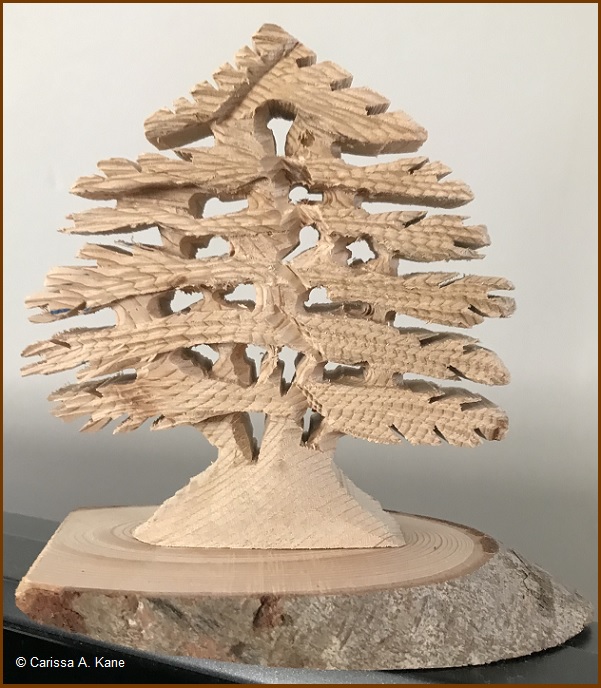
The Widow’s Might…

It can be easy to envision the poor widow putting her coins into the treasury, knowing the value to be considered far less than others had contributed. One might even draw a picture that perhaps includes elements representing shame, grief, loss, loneliness, and so on, overcome by giving all she had (“her whole livelihood”) and Jesus celebrating her for that. Then, from that picture, one might possibly be drawn toward a singular conclusion about verses 41-44 of chapter 12 in the Gospel according to Mark as a call to examine one’s level of charity.

It’s interesting though to reflect further on this passage. There are no words attributed to the widow, and no mention of a personal encounter between her and Jesus. The passage starts with an observation by Jesus that turns into a teaching directly to his disciples, not the poor widow, or anyone else who was putting money into the treasury. It is about more than coins and goes beyond levels of giving, extending to something greater.

Going back to the beginning of the Poor Widow’s Contribution, in verse 41, it is written, “Jesus sat down opposite the treasury and observed how the crowd put money into the treasury.” There are no interactions with those who are giving. Rather, Jesus takes in what is transpiring.

He sees the difference between the way the poor widow and the crowd, especially those with greater possessions (“Many rich people put in large sums.”), are carrying themselves. He then draws his disciples close, reveals what he sees, and tries to help them to see it as well. Jesus’s teaching, as always, is about showing the Way and helping those who follow him to become more aware, see more clearly, make better choices, and live more authentically.

Jesus wants the disciples, and us, to see that what the poor widow has given, she has given from “her whole livelihood”—her heart. This is the source of the widow’s might and is where our strength comes from as well. It is where the Lord resides.  

I will place my law within them, and write it upon their hearts; I will be their God, and they shall be my people. – Jeremiah 31:33

By giving the two coins, the widow is giving her heart to the Lord, not allowing herself to be defined by her possessions, the opinions of others, or worldly cares, but instead sacrificing and letting them go, and listening to the law within her—placing trust for her well-being, first and foremost, in the Lord.

How can we look past the coins, and do the same?

In the course of his teaching Jesus said to the crowds,
“Beware of the scribes, who like to go around in long robes
and accept greetings in the marketplaces,
seats of honor in synagogues,
and places of honor at banquets.
They devour the houses of widows and, as a pretext
recite lengthy prayers.
They will receive a very severe condemnation.”

Jesus sat down opposite the treasury
and observed how the crowd put money into the treasury.
Many rich people put in large sums.
A poor widow also came and put in two small coins worth a few cents.
Calling his disciples to himself, he said to them,
“Amen, I say to you, this poor widow put in more
than all the other contributors to the treasury.
For they have all contributed from their surplus wealth,
but she, from her poverty, has contributed all she had,
her whole livelihood.” – Mark 12:38-44

Leaning In…

Henri Nouwen wrote, “Self-knowledge and self-love are the fruit of knowing and loving God. You can see better then what is intended by the great commandment to “love the Lord your God with all your heart, with all your soul, and with all your mind, and to love your neighbor as yourself.” Laying our hearts totally open to God leads to a love of ourselves that enables us to give wholehearted love to our fellow human beings. In the seclusion of our hearts we learn to know the hidden presence of God; and with that spiritual knowledge we can lead a loving life.”

In other words, authentic love starts within, builds and grows through self-discovery and conscious connection to God. It is by this process that hearts are moved toward love in the way they exist and what they exude to the outside world.

In chapter 12 of the Gospel according to Mark, we see an example of interactions similar to those that are so prevalent these days. It is very clear that there are two sides with two very different objectives. What’s going on in the hearts and minds of each side? What’s the priority?

The chapter starts with Jesus telling the Parable of the Tenants—tenant farmers who refuse to pay the owner of the vineyard and beat and/or kill the people sent to collect the owner’s due. They even kill the vineyard owner’s son—they do not recognize him. Knowing that Jesus is calling them out in the telling of this parable, the Pharisees, scribes, and elders want to arrest him.

What makes them so quick to become so defensive? Did they stop to look inside and invite God into the process before labeling Jesus as the enemy and beginning to determine a course of action? What makes them so offended by Jesus’ words and actions?

As the chapter continues, Pharisees and Herodians, and then Sadducees are sent to question Jesus about taxes (should they pay Caesar or not? – verses 13-17) and about resurrection (how is the law of marriage applied for the widower of seven brothers and with no descendants? – verses 18-27). And Jesus’ nature continues to shine through as he continues to speak truth, conveying and citing the Word of God in his replies. He does not get rattled or fall for the attempts to manipulate him.

“Repay to Caesar what belongs to Caesar and to God what belongs to God” (verse 17).

“When they rise from the dead, they neither marry nor are given in marriage, but they are like the angels in heaven. As for the dead being raised, have you not read in the Book of Moses, in the passage about the bush, how God told him, ‘I am the God of Abraham, [the] God of Isaac, and [the] God of Jacob’? He is not God of the dead but of the living. You are greatly misled” (verses 25-27).

Despite knowing, not speculating, but actually knowing what they are trying to do, Jesus does not become defensive or aggressive, or try to avoid them and their questions—he has nothing to hide. He simply answers the questions truthfully, shedding light and putting focus on the real issue—the motives behind behavior. This leads to the question always worth asking, “In all honesty, who or what is being served, and how?” In this case, and in any day and age, lack of integrity and inability to recognize, and live in, truth is not of service to God, or anyone for that matter.

This brings us to the verses of chapter 12 referred to as “The Greatest Commandment”:

One of the scribes came to Jesus and asked him,
“Which is the first of all the commandments?”
Jesus replied, “The first is this:
Hear, O Israel!
The Lord our God is Lord alone!
You shall love the Lord your God with all your heart,
with all your soul,
with all your mind,
and with all your strength.
The second is this:
You shall love your neighbor as yourself.
There is no other commandment greater than these.”
The scribe said to him, “Well said, teacher.
You are right in saying,
‘He is One and there is no other than he.’
And ‘to love him with all your heart,
with all your understanding,
with all your strength,
and to love your neighbor as yourself’
is worth more than all burnt offerings and sacrifices.”
And when Jesus saw that he answered with understanding,
he said to him,
“You are not far from the kingdom of God.”
And no one dared to ask him any more questions. – Mark 12:28-34

Loving God with all of one’s being followed by loving one’s neighbor as oneself is to be the object of one’s striving day in and day out. As any human being can attest, this can be challenging and sometimes a downright struggle, and when left to our own devices it’s impossible. However, when we look at chapter 12 of the Gospel according to Mark, we can see in Jesus’ example of facing adversity with peace, honesty, and integrity, how a close relationship with God broadens the horizon, opening hearts and minds to the true meaning of Scripture, influencing speech and action, and revealing truth to all who are willing to embrace and engage in it over everything else (ambitions, possessions, self-interest, etc.).

With Jesus, the invitation is always open, and it doesn’t matter what you bring to the table, so much as a desire for what is true, what you are willing to let go of in order to learn, and the spirit with which you carry it out into the world.

A Clear Path…

The path began at a clearing, steps molded into the landscape, a way ahead with little unknown. It was easy to proceed. However, once those steps reached their end, the terrain gradually became less friendly… less inviting. Continuing deeper in, the area overcome with overgrowth, the air overcome with temptation. Push ahead with determination or turn back in trepidation. Perhaps, another way, take stock, retreat into the moment, and explore. Look inside and ponder, “What are you looking for?”

In the Gospel according to Mark, chapter 10, verse 51, Jesus asks Bartimaeus, “What do you want me to do for you?” He doesn’t presume what Bartimaeus, the blind man, wants from him, even though it may seem obvious. He gives Bartimaeus the opportunity to engage with him and to give voice to his desire.

In the moments leading up to this encounter, Bartimaeus is in the midst of a crowd and cannot see who or what is around him, so he doesn’t know where Jesus is. Despite this, he has heard that Jesus is there, and he begins calling out to him, “Jesus, son of David, have pity on me” (verse 47). The people around him are trying to get him to stop calling out to Jesus, but Bartimaeus is not distracted by them. He stays focused on what he is looking for—his vision, and he knows that only Jesus can heal and restore it.

In today’s hazy world, overcome with overgrowth, temptation in the air, and distractions all around, Jesus is present, wanting to heal and restore vision, and not only to make the path clear for all, but also to be the path for all. Jesus is waiting, even in less friendly, less inviting spaces, wanting us to tell him about it, and wanting to hear the response to, “What do you want me to do for you?”

As Jesus was leaving Jericho with his disciples and a sizable crowd,
Bartimaeus, a blind man, the son of Timaeus,
sat by the roadside begging.
On hearing that it was Jesus of Nazareth,
he began to cry out and say,
“Jesus, son of David, have pity on me.”
And many rebuked him, telling him to be silent.
But he kept calling out all the more,
“Son of David, have pity on me.”
Jesus stopped and said, “Call him.”
So they called the blind man, saying to him,
“Take courage; get up, Jesus is calling you.”
He threw aside his cloak, sprang up, and came to Jesus.
Jesus said to him in reply, “What do you want me to do for you?”
The blind man replied to him, “Master, I want to see.”
Jesus told him, “Go your way; your faith has saved you.”
Immediately he received his sight
and followed him on the way. – Mark 10:46-52             

Always in Time…

On a breezy autumn day,
the sun shimmers across the water
and the clouds
steadily make their way
from one side of the sky to the other.
The trees, they stand their ground,
their leaves have yet to fall.
I guess it’s not their time.

Yet, ripples on the pond
and clouds up in the sky,
both quietly passing by.
Always in time.
Always in time.

The wind, it moves the clouds
and water all around,
and yes,
even those leaves clinging to trees.
Always in time.
Always in time.

Some willing more than others.
Taking direction,
or making a stand.
Always in time.
Always in time.

Likewise, the Spirit in its stirring,
its moving of hearts and souls,
here and there along the way.
Always in time.
Always in time.

Always in Time… May your mercy, Lord, be upon us; as we put our hope in you. – Psalm 33:22

Work of Our Hands…

It’s said that the owl’s wisdom lies in its waiting, watching, and listening. In its patient, persistent process, its senses are fine-tuned, making it easier to recognize and distinguish between and among things. The owl’s very own nature leads and nurtures the animal, teaching it to tap more deeply into what it genuinely needs to survive and thrive.

This in-born nature that helps the owl to be at its best, also resides within all living things. And when tuned into, exercised, and held onto, it helps all living things to operate at their best, most authentic self. For human beings especially, the task at hand is to sort through and root out all that interferes with this natural, God-given ability.

In the Book of Wisdom, King Solomon shares:

“I prayed, and prudence was given me; I pleaded, and the spirit of wisdom came to me” – Wisdom 7:7.

While this is a great example of “ask and you shall receive,” it is also an example of the gift of humility. Oftentimes, it is humility that opens the door to wisdom. King Solomon humbled himself, he “prayed” and “pleaded” for wisdom, a gift that no amount of money in the world could buy. Throughout the Bible, and throughout history, there is no wisdom, without humility. For it is a gift that can only be received at the time and place where an open, willing, and humble heart meets the humility of God—unconditional love.

So how does one move toward this place? For starters, perhaps by praying for the grace to become more aware. Kahlil Gibran wrote, “Wisdom stands at the turn in the road and calls upon us publicly, but we consider it false and despise its adherents.”

Thinking about current day events, where do you see wisdom? In what places do you meet unconditional love… truth and peace together?      

Looking back to history, Psalm 90 begins:

“A prayer of Moses, the man of God. Lord, you have been our refuge through all generations. Before the mountains were born, the earth and the world brought forth, from eternity to eternity you are God” (verses 1-2).

Wisdom draws Moses’ heart to give voice to God’s faithfulness, and seek God’s help, “Teach us to count our days aright, that we may gain wisdom of heart,” (verse 12), mercy, “Make us glad as many days as you humbled us, for as many years as we have seen trouble,” (verse 15), and grace, “May the favor of the Lord our God be ours. Prosper the work of our hands! Prosper the work of our hands!” (verse 17).     

When you reflect on the work of your hands, what aspects of God (loving, patient, gentle, kind, honest, peaceful, faithful, life-giving, etc.) resonate in them? When you look at the world around you and the things in which you choose to participate, which ones bring you closer to the image of God, Love, in which you were created? In what ways do you feel inspired by the humility and generative nature of God, for whom all things are possible?

Establish the Work of Our Hands – https://youtu.be/5V2_cs8gTIw?t=9 – the Porter’s Gate (feat. Aaron Keyes and Urban Doxology)

If You don’t build it, we labor in vain,
Without Your Spirit, we stand with no strength.
I know my life is passing away,
but the works of Your hands
are what will remain.
Let the favor of the Lord rest upon us…

O Lord, establish the work of our hands!

Teach us to number the length of our days,
Pour out Your power, we’ll pour out Your praise.
Teach us to run, to finish the race,
for only what’s done in love will remain.
Let the favor of the Lord
rest upon us…

O Lord, establish the work of our hands!

Al – le – lu – ia, al – le – luia, al – le – luia

© 2017 Hymns From the Porter's Gate (ASCAP) and Porter's Gate
Publications (SESAC). All rights reserved and administered by
Fair Trade Music Publishing c/o essentialmusicpublishing.com.

Trust in God’s Reach…

At first it may seem that Eldad and Medad are just the names of two of the elders mentioned in chapter 11, verses 25-29 of the Book of Numbers. However, while it may be tempting to readily move past them and keep reading on the way to the Gospel for the 26th Sunday in Ordinary Time, it’s worth pausing to consider this scene some more.

While all the other elders are gathered at the tent to receive the spirit of the Lord and begin to prophesy, Eldad and Medad are back at the camp. Despite not being at the “right place, at the right time,” at least not physically, they are still included by God, the Spirit is bestowed upon them, and they begin to prophesy.

This is key. Eldad and Medad receive the spirit and prophesy right where they are, giving testimony to the fact that the grace of God is not limited and that there is more than one way, more than one place, to be gathered before the Lord. Reflect on this truth: regardless of where we are, all of us are always within reach of God’s grace. What’s significant… what matters most, is whether we are open to receiving the grace of God, however it is presented.

Continuing to look more closely at this passage, Eldad, whose name means “Love of God”, and Medad, whose name means “Love,” have been called. Their names are known to God. All that is required of them, and us, is not to meet the expectations of others, or to hurry up over to the meeting place to join their fellow elders, but rather, to simply be where they are and be willing to be whom they were created to be. That is, to not only embrace their gifts with an open heart and mind, but also to allow themselves to be inspired by the Spirit of the Lord as to how to use and share them.

Eldad and Medad numbered among many. It’s not only interesting, but also a simple imperative by which to live—Love of God, Love.

The Lord came down in the cloud and spoke to Moses.
Taking some of the spirit that was on Moses,
the Lord bestowed it on the seventy elders;
and as the spirit came to rest on them, they prophesied.

Now two men, one named Eldad and the other Medad,
were not in the gathering but had been left in the camp.
They too had been on the list, but had not gone out to the tent;
yet the spirit came to rest on them also,
and they prophesied in the camp.
So, when a young man quickly told Moses,
“Eldad and Medad are prophesying in the camp, “
Joshua, son of Nun, who from his youth had been Moses’ aide, said,
“Moses, my lord, stop them.”
But Moses answered him,
“Are you jealous for my sake?
Would that all the people of the Lord were prophets!
Would that the Lord might bestow his spirit on them all!” – Numbers 11:25-29

What Ranks…

Stature… status… standing… are just a few of the words that the readings for the 25th Sunday in Ordinary Time bring to the forefront as being of great disservice to one and all.

In the Book of Wisdom, the competition is highlighted, and the plot is foreshadowed—how to be rid of the one who is Justice and Mercy—Jesus.

The wicked say:
    Let us beset the just one, because he is obnoxious to us;
        he sets himself against our doings,
    reproaches us for transgressions of the law
        and charges us with violations of our training.
    Let us see whether his words be true;
        let us find out what will happen to him.
    For if the just one be the son of God, God will defend him
        and deliver him from the hand of his foes.
    With revilement and torture let us put the just one to the test
        that we may have proof of his gentleness
        and try his patience.
    Let us condemn him to a shameful death;
        for according to his own words, God will take care of him. – Wisdom 2:12, 17-20

We all have moments where we disagree with, or feel offended by others, but where is the line that crosses over toward wicked? Perhaps, more importantly, what is it that leads one to feel that another human being is so intolerable, especially (in Jesus’s case) for being true to God and serving Love in both words and actions?

In the second reading, the Letter of James presents the dangers of being drawn into focusing on stature, status, and standing. It is a warning that ill-conceived competition is what wreaks havoc. The author makes a call, or a plea, to look more closely at the ways in which human beings are driven apart and put up against each other instead of being led by grace toward community, communion, and the greater glory of God.

Beloved:
Where jealousy and selfish ambition exist,
there is disorder and every foul practice. 
But the wisdom from above is first of all pure,
then peaceable, gentle, compliant,
full of mercy and good fruits,
without inconstancy or insincerity. 
And the fruit of righteousness is sown in peace
for those who cultivate peace.

Where do the wars
and where do the conflicts among you come from? 
Is it not from your passions
that make war within your members? 
You covet but do not possess. 
You kill and envy but you cannot obtain;
you fight and wage war. 
You do not possess because you do not ask. 
You ask but do not receive,
because you ask wrongly, to spend it on your passions. –  James 3:16-4:3

Finally, in chapter nine of the Gospel according to Mark, the exclamation point! Jesus proclaims that human striving is not to be the rising in stature, status, and standing, but in fact, the opposite. That is, to embrace our fellow human beings in both our words and actions… making room, lending a hand, and beholding all that’s in one’s spirit as a child, the channel of God’s love and kindness.

Jesus and his disciples left from there and began a journey through Galilee,
but he did not wish anyone to know about it. 
He was teaching his disciples and telling them,
“The Son of Man is to be handed over to men
and they will kill him,
and three days after his death the Son of Man will rise.” 
But they did not understand the saying,
and they were afraid to question him.

They came to Capernaum and, once inside the house,
he began to ask them,
“What were you arguing about on the way?” 
But they remained silent.
They had been discussing among themselves on the way
who was the greatest. 
Then he sat down, called the Twelve, and said to them,
“If anyone wishes to be first,
he shall be the last of all and the servant of all.” 
Taking a child, he placed it in their midst,
and putting his arms around it, he said to them,
“Whoever receives one child such as this in my name, receives me;
and whoever receives me,
receives not me but the One who sent me.” – Mark 9:30-37

Thinking about the great divides in all that’s going on around the world today, so much seems to be created from the tunnel vision that comes with primarily focusing on protecting one’s perceived stature, status, and/or standing. However, just as over 2,000 years ago, the biggest threat and obstacle one must ever overcome, is oneself.

Seek to be led by Justice and Mercy, serve and trust in the grace and glory of God, and remember always, “The Lord upholds my life” (Psalm 54:6b).

But for the Light…

With the vast array of devastation caused by wildfires on the left side of the United States and hurricane Ida and resulting treacherous weather throughout the right side of the United States, not to mention ongoing multi-faceted struggles around the entire world, it can be easy to fall prey to a sense of doom, regardless of whether one is experiencing dire need, a direct impact, on the fringes of such impact, or farther removed.

On what is a dreary day, on the feast of St. Teresa of Calcutta, it is good to remember that despite the darkness, God is with us amid all these trials and tribulations. Leading the way, before one might even know it. Providing light and love. Lifting spirits, opening minds, increasing the will to help, and strengthening the bond of human hearts toward one another.

Say to the fearful of heart:
Be strong, do not fear!
Here is your God,
he comes with vindication;
With divine recompense
he comes to save you.

– Isaiah 35:4

“There is a light in this world, a healing spirit more powerful than any darkness we may encounter. We sometimes lose sight of this force when there is suffering, too much pain. Then suddenly, the spirit will emerge through the lives of ordinary people who hear a call and answer in extraordinary ways.”

– St. Teresa of Calcutta

Serve Love…

I remember as a young student feeling fascinated as I learned all about the human heart, its functions and their importance. I was most amazed by the strength of the heart and its capacity, pumping 2,000 gallons of blood each day throughout the body. It wouldn’t be until years later that my amazement would become even greater in coming to understand the heart’s greatest asset—the rhythm, steady and strong, seeking to draw one closer, revealing God, and yearning not only to keep the connection of love, peace, and healing going, but also to help it to thrive without bounds. As the 13th century Persian poet, Rumi, wrote, “Love is the bridge between you and everything.”

In chapter 7 of the Gospel according to Mark, Jesus says to the Pharisees,

“Well did Isaiah prophesy about you hypocrites, as it is written:

    This people honors me with their lips,

        but their hearts are far from me;

    in vain do they worship me,

        teaching as doctrines human precepts.

You disregard God’s commandment but cling to human tradition.” (Mk 7:6-8)

Jesus is calling on them to be honest… to look more closely and to see that their hearts are not leading them in union with God. Their love has become misplaced. It is self-serving and focused on what is earthly rather than what is truly, right and just. Their words and actions do not come together to reflect the beauty of God’s goodness—the law that is placed in every heart—dignity, care, and love of all who are placed alongside us whether in location, heart, or mind.  

This same love is what the author of the Letter of James is calling people to when he writes,

“Know this, my dear brothers: everyone should be quick to hear, slow to speak, slow to wrath,

for the wrath of a man does not accomplish the righteousness of God.

Therefore, put away all filth and evil excess and humbly welcome the word that has been planted in you and is able to save your souls.

Be doers of the word and not hearers only, deluding yourselves.” – Jas 1:19-22

No matter where one might be, or the circumstances that exist, Love is the only true hope there is. And while there may be many things that seem beyond reach, or out of control, Love is the anchor that holds us altogether, moves us into action, and brings peace, or peace of mind, strength, truth and justice, never growing cold.

The Ups and Downs of Our Terrain…

With the starting point blanketed in fog, one couldn’t help but wonder whether it would be worthwhile to venture out any further on this day. Yet, despite the limited visibility we carried on, coming across pockets that offered clearer vision—spots and places once hidden, where we could pause and gather our bearings. And as for the silence encompassing the mist all around, while at first eerie, with time becoming rather comforting, inspiring a sense of adventure and greater insight as we moved along the contours, crossed plateaus, and entered the ups and downs of our terrain.

Always a spot to rest, or safely step, provided when needed most.

Always a way around, over, or simply through, provided when needed most.

Always at the right time, in the right place, and in the right way, provided when needed most.

Interesting how most needs are met, in trusting, while moving toward, and searching for, what is truly needed.

He replied, “Rather, blessed are those who hear the word of God and observe it.” – Luke 11:28