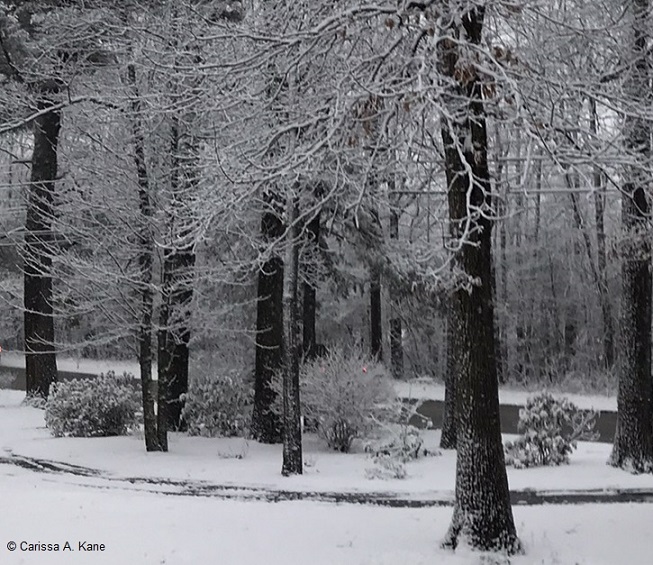
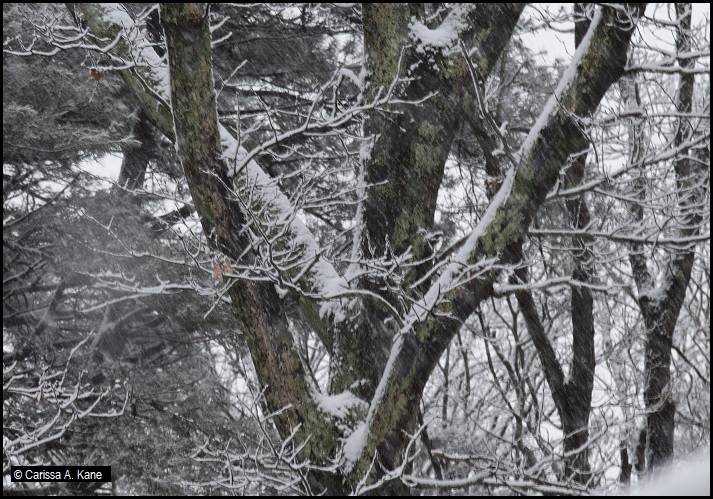
Covered with snow, the landscape so quiet, so still, so beautiful. The branches and shrubs become as if carefully wrapped, insulated from the elements, as well as by the elements. Becoming part of what’s on the outside pushing inward? Or, perhaps, it’s the outside becoming part of what’s inside and underneath, pushing outward? How will they lean, where will they fall, maybe, just maybe, they will stand upright, if anything at all.
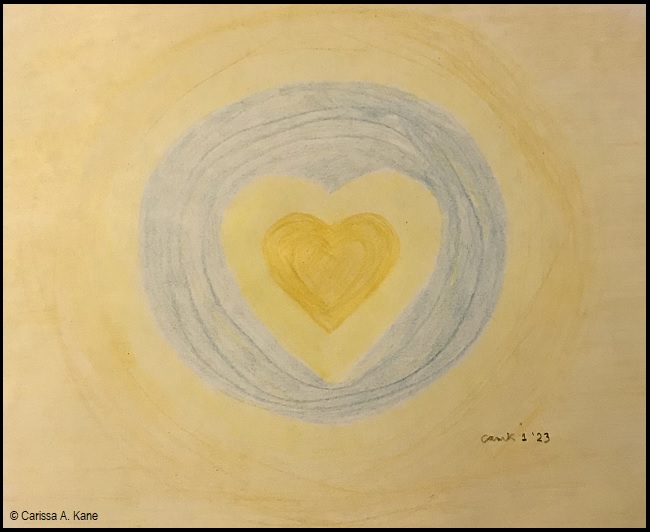
A clean heart create for me, God; renew within me a steadfast spirit. – Ps 51:12
The Gospel for the First Sunday of Lent (Mt 4:1-11), is an account of the temptation of Jesus. We all experience variations of temptation throughout our lives. We all have weaknesses or tendencies that can lead us astray or take us away from being at or near our best, most genuine selves.
Looking to the example of Jesus, we can see his response to temptation, is first and foremost, to be aware and recognize it. Then second, to respond by remembering, and not only naming, but also reclaiming God as the source of all wellbeing. Jesus keeps God at the center throughout, and God’s grace enables him to overcome each temptation.
How can one apply this to real life experience in today’s world?
We can start by being aware and recognizing that temptation works in different ways. Sometimes it tries to move us toward “absolute” or limited views and the choices that flow from them, while at other times, temptation seeks to blur the lines between choices so that the best choice is left behind for the choice that seems good enough. Temptation tries, and keeps trying to find whatever hook will sink, to snag and pull one toward a more self-centered space and making a choice from there, instead of making it from a God-centered space where the choice is generative and beneficial beyond what one can surmise.
In the Gospel passage of the temptation of Jesus, Jesus shows us how to lean on the grace of God, and how to patiently endure to overcome temptation by living with God at the center—always in our hearts and minds. He reminds us that what has been written, holds true now, as well as forever.
One does not live on bread alone, but on every word that comes forth from the mouth of God. – Dt 8:3
He will command his angels concerning you and with their hands they will support you, lest you dash your foot against a stone. – Ps 91:11-12
You shall not put the Lord, your God, to the test. – Dt 6:16
The Lord, your God, shall you worship and him alone shall you serve. – Dt 6:13
Reflecting on each of Jesus’s responses above, what comes to mind in terms of your own experience of God’s grace in the face of a struggle or challenge you faced? Recall how God was present to you, and how you were, or became present to God? Share with God what that experience was like, and what it means to you today. What inspiration or insight might God want that experience to reveal to you today?
From a young age, one is often taught to pay attention to the weather. When you hear thunder, go inside as rain, wind, and lightning may be near or approaching, if not already there. If there are heavy winds and/or lightning, stay inside and away from the windows, and so on. When there’s snow or sleet, beware of the road conditions—stay home. Most of what is taught about stormy weather is about actively retreating or staying put for one’s own well-being. Yet, sometimes, these efforts can instill fear and anxiety as the motivators for one’s actions.
Considering the state of, or conditions in the world today, the feeling or thought that we are in stormy times, both literally and figuratively, is palpable for so many. At times, it can lead one to retreat or stay put, shrinking, or turning away from active participation in the larger world. And while a certain amount of self-preservation can be good, withdrawal serves one and all best, not only when it is temporary, but also when one is intentional in how that time away is spent, and the choices and actions that result from it.
So, while the times may be stormy, perhaps the storm is perfect. Perfect for taking a step back and noticing for what one’s heart beats. Perfect for contemplating where one is, and where one is moved to be. Perfect for retreating to prayer and reflecting on what the world needs, one’s openness to the invitations of Grace that await, whether amid the storm, on its edges, or in an entirely different relation, and one’s desire to become more aware of what active participation in this stormy world might mean on a personal level, as well as how these storms can be overcome by being held as a meeting place for Jesus.
We often think or speak of the calm after the storm, and it often seems easier to appreciate the beauty of the sun after a rainstorm, or the snow-covered trees when removed from the threat and possible dangers of the driving winds and snow. However, Jesus tells us that he is with us always. Thus, the calm never ceases. It’s up to us though, to nurture our deepest, truest desires, to strive to invite peace into each situation, and to choose to not only look for, but to also navigate in, with, and through Grace. In doing so, we stay connected, our retreating or staying put remains temporary, and brings forth fruit that is lasting. Fruit that is ordained by God, bringing us back into the fold, with greater life, and as unconquered hearts whose actions flow from, and glorify God, and all creation.
Give me, O Lord, a steadfast heart, which no unworthy affection may drag downwards; give me an unconquered heart, which no tribulation can wear out; give me an upright heart, which no unworthy purpose may tempt aside. Bestow on me also, O Lord my God, understanding to know you, diligence to seek you, wisdom to find you, and faithfulness that may finally embrace you, through Jesus Christ our Lord. Amen. – St. Thomas Aquinas
When Jesus saw the crowds, he went up the mountain, and after he had sat down, his disciples came to him. He began to teach them, saying: “Blessed are the poor in spirit, for theirs is the kingdom of heaven. Blessed are they who mourn, for they will be comforted. Blessed are the meek, for they will inherit the land. Blessed are they who hunger and thirst for righteousness, for they will be satisfied. Blessed are the merciful, for they will be shown mercy. Blessed are the clean of heart, for they will see God. Blessed are the peacemakers, for they will be called children of God. Blessed are they who are persecuted for the sake of righteousness, for theirs is the kingdom of heaven. Blessed are you when they insult you and persecute you and utter every kind of evil against you falsely because of me. Rejoice and be glad, for your reward will be great in heaven. Thus they persecuted the prophets who were before you.” – Mt 5:1-12
Pieces, everything comes in pieces. Our coming and our going, Who we are and what we do, Hours, minutes, seconds of each day. Sometimes, taken as a whole, Might we miss or gloss over gold, The little things as not worth the time of day? Though precious is each moment, Taken alone and on its own, Might we miss or gloss over gold, The broader view as just another day? Pieces, broken down and shared, Everything is pieces, Of a picture big and small, Glossy gold and full of glimpses, Captured best holding one another, Drawing strength and beauty altogether, Being grateful for it all.
“Everything that is in the heavens, on earth, and under the earth is penetrated with connectedness, penetrated with relatedness.” – Hildegard Von Bingen
An Advent Prayer: Lord, help me to hold the pieces of my life together, big and small, easy and challenging and all that falls between, with great love and care, trusting that it is really You, the King of Glory (Ps 24:10b), who holds them all… who holds us all. And help me to continue to look to you, that you may grant me the grace to notice and appreciate the beauty and goodness of all creation, and the heart and soul of those I encounter each day.
In the quiet stillness, A peace easy to remember, Flowing from what was, What is, and what shall always be. It is in a gentle whisper, Sometimes a sturdy breeze, Raining down, then kicking up, All sorts of memories. The beckon of a beacon, Remaining steady in its yearning. Always right on center, In both time and space, Calling back the mind That tends to wander, Calling for a time To pause, sit and ponder. Although clock is moving, And pledges have been made, This is not a race. Think about the prayer, The way things are, What has passed, And may never be again. Yet hope does not fade, Sometimes it saunters to a linger. A soft and warming glow, But held in place, Infused with cherished memories. Some say only time will tell, Yet faith knows or better senses, Only truth will tell. Your deep abiding love, The only trust worth trusting. For, ever is it known, That all is well or on its way, But only in remembrance Of your ever-present grace.
Lord, show us the light of your face! – Psalm 4:7b
It’s said that only 10% of the energy received from the sun by a plant or tree (a.k.a. a producer) is transferred to the consumer of that plant or tree, and as one moves up the chain, although 10% keeps getting passed along to the next level, the amount of energy becomes less. This means that the further away from the original source one is, more consumption or effort is necessary to achieve or capture the same amount of energy that the plant or tree receives as a producer. As for the 90% of the energy that is retained by producers, it is used for growth and reproduction as well as some of it simply escaping as heat into the atmosphere.
It’s intriguing to think about only 1/10th of the energy received from the original source, the sun, as being passed along from the 1st level to the next, and only 1/10th of that lesser amount going to the next level, and so on. Yet, despite this comparatively small portion shrinking at each level, life not only goes on, but also evolves. It calls to mind last Sunday’s Gospel when in response to the disciples asking for an increase in faith Jesus said, “If you have faith the size of a mustard seed, you would say to [this] mulberry tree, ‘Be uprooted and planted in the sea,’ and it would obey you.” (Lk 17:5-6). It also leads to this Sunday’s readings and a key component of faith.
Although the way of the world might urge one and all to seek what is big, bold, or grand, and to make it known, the readings for the Twenty-eighth Sunday in Ordinary Time (shown below) offer an opportunity to contemplate humility. In the first reading (2 Kgs 5:14-17), Naaman, a successful and celebrated commander of King Aram’s army, is cured of leprosy by submerging himself in the Jordan seven times at the direction of the prophet Elisha. Yet, it is only by taking time to go back and look behind the scenes at the prior verses of this passage, that one can see or be reminded that it was at the urging of servants that Naaman made his way to Elisha, eventually overcame his notions and resistance to listening to the prophet, entered the waters of the Jordan, and was healed. Had Naaman dismissed his servants’ perspectives without consideration and continued to be bound up by his judgments, preferences, and ideas about the unexpected and less than grand actions Elisha instructed him to take, the healing would not have been possible. It’s important to consider humility as requiring an openness to considerations that originate and/or extend beyond oneself.
Turning to the second reading (2 Tim 2:8-13), St. Paul continues to exhort and encourage Timothy, to draw strength from the truth, keeping and carrying on the faith. While St. Paul is recognized for the tendency to be long on words, his point is always focused on the glory of God and eternal life. In this passage he writes, “Remember Jesus Christ, raised from the dead, a descendant of David: such is my gospel, for which I am suffering, even to the point of chains, like a criminal. But the word of God is not chained.” (v. 8-9). What’s it like to reflect on this vision or belief that, even though forces that seek to hold back, limit, or impose restraints on God-given freedom exist, the word of God, and therefore God, remains unchained and is not held back. How do you invite or allow the ever-unchained God into your times of challenge to comfort, sustain, and empower you? What’s it like to embrace or re-embrace, “I can’t, but God can,” and experience humility in this way?
Now, moving on to the Gospel According to Luke (Lk 17:11-19), we come back to a passage involving not 1, but 10 lepers. Jesus meets them as he is making his way to Jerusalem. They all call out to Jesus, asking for pity and they all listen when he tells them, “Go show yourselves to the priests.” (v. 14). However, only one of them becomes aware that he has been healed and goes back to Jesus to express gratitude. Jesus asks where the other 9 who were cleansed are, and goes on to tell the leper who returned, and whom he identifies as a foreigner, that his faith has saved him.” As you think about this passage, what is your first thought or feeling? What strikes you most?
It can be effortless to jump to a place of judgment either toward the one who returned or the 9 who did not. What happens though when you look again and shift your attention in this passage solely to Jesus? As you continue to reflect on this week’s readings, notice where you tend to look for or to celebrate examples of humility in your life? Share your observations with Jesus?
Humility beckons us away from focusing too much on thinking about who or where we are and draws us toward truth and unity. We are called not to shrink, but to open our hearts to all, to seek God (the Source) in all things, remembering to strive to embrace what is eternal while living within the limited reality of this world. Humility is not only letting God be God, but also asking for the grace to relinquish what we can, trust that we are more than what’s measurable, and that what’s left is and will be enough.
First Reading: Naaman went down and plunged into the Jordan seven times at the word of Elisha, the man of God. His flesh became again like the flesh of a little child, and he was clean of his leprosy.
Naaman returned with his whole retinue to the man of God. On his arrival he stood before Elisha and said, “Now I know that there is no God in all the earth, except in Israel. Please accept a gift from your servant.”
Elisha replied, “As the Lord lives whom I serve, I will not take it;” and despite Naaman’s urging, he still refused. Naaman said: “If you will not accept, please let me, your servant, have two mule-loads of earth, for I will no longer offer holocaust or sacrifice to any other god except to the Lord.” – 2 Kgs 5:14-17
Second Reading: Beloved: Remember Jesus Christ, raised from the dead, a descendant of David: such is my gospel, for which I am suffering, even to the point of chains, like a criminal. But the word of God is not chained. Therefore, I bear with everything for the sake of those who are chosen, so that they too may obtain the salvation that is in Christ Jesus, together with eternal glory. This saying is trustworthy: If we have died with him we shall also live with him; if we persevere we shall also reign with him. But if we deny him he will deny us. If we are unfaithful he remains faithful, for he cannot deny himself. – 2 Tm 2:8-13
Gospel Reading: As Jesus continued his journey to Jerusalem, he traveled through Samaria and Galilee. As he was entering a village, ten lepers met him. They stood at a distance from him and raised their voices, saying, “Jesus, Master! Have pity on us!” And when he saw them, he said, “Go show yourselves to the priests.” As they were going they were cleansed. And one of them, realizing he had been healed, returned, glorifying God in a loud voice; and he fell at the feet of Jesus and thanked him. He was a Samaritan. Jesus said in reply, “Ten were cleansed, were they not? Where are the other nine? Has none but this foreigner returned to give thanks to God?” Then he said to him, “Stand up and go; your faith has saved you.” – Lk 17:11-19
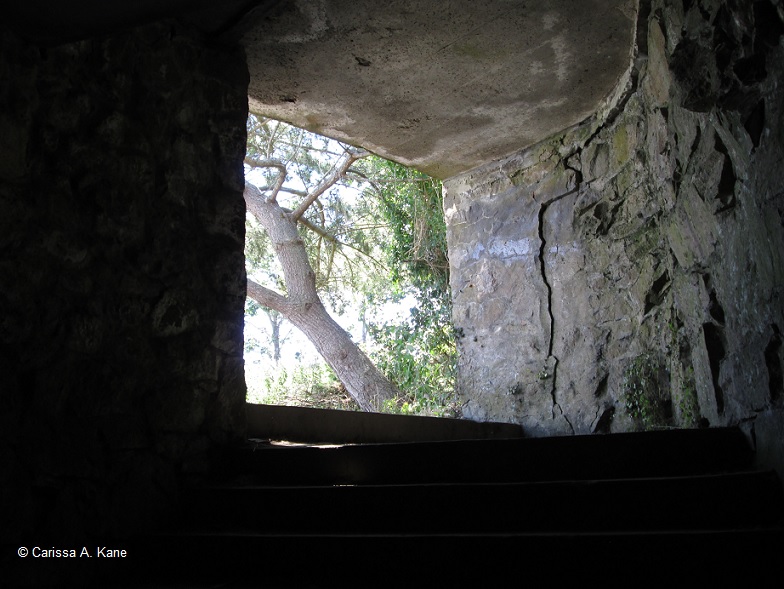
Heading out to somewhere that was new to us, we carried an excitement along the way. After quite some time on foot and feeling a little weary, we unexpectedly came to a tunnel. We had no idea how long it was or what was involved in getting through it. On top of that, all we could see was that it was pitch black inside. However, knowing it was part of the route and using one of the tools we had, a cellphone flashlight, we proceeded step by step, shining the light so we could see, and making our way through each curve until eventually we saw light coming from the opening on the other side.
However, if we didn’t have a flashlight, or a tool, to help us navigate through the darkness, I’m not sure we would have gone through that tunnel. Instead, we probably would’ve found a way around it or turned around and headed back to where we began. And, while finding a way around an obstacle or avoiding it, may be harmless in some cases, in others it is not. Sometimes the measures one may take to circumnavigate or escape a situation, may also lead to compromising, in one way or another, the well-being of oneself and/or others.
Considering the readings for the Twenty-seventh Sunday in Ordinary Time, they provide advice, wisdom, and encouragement to strive to serve God, not man, and to trust in God’s plan and in God’s ways. This is important no matter the time or place, but most especially in troubling or challenging times and environments.
If the knowledge that there is light at the end of the tunnel, and a way to make it through darkness, was enough to sustain courage, integrity, and faithfulness on its own, humankind would not fall prey to the shortcuts, traps, and tricks along the way. Faith is the tool that holds the keys and keeps one and all together; hearts, souls, and minds. It enables one “to be more than,” infused with grace, driven by truth and trust to face challenges, and find and follow the way through darkness; oftentimes leading one to discover a depth they never knew existed within them.
Take some time to read the Scripture passages from the Twenty-seventh Sunday in Ordinary Time (Hab 1:2-3; 2:2-4, Ps 95:1-2, 6-7, 8-9, 2 Tm 1:6-8, 13-14, and Lk 17:5-10 – shown below). Contemplate them in relation to today’s world. What are your concerns? What are some of the phrases or images that inspire you? Allow your heart and mind to draw together. Invite Jesus into the process and see what happens.
How long, O Lord? I cry for help but you do not listen! I cry out to you, “Violence!” but you do not intervene. Why do you let me see ruin; why must I look at misery? Destruction and violence are before me; there is strife, and clamorous discord. Then the Lord answered me and said: Write down the vision clearly upon the tablets, so that one can read it readily. For the vision still has its time, presses on to fulfillment, and will not disappoint; if it delays, wait for it, it will surely come, it will not be late. The rash one has no integrity; but the just one, because of his faith, shall live. – Hab 1:2-3; 2:2-4
R. If today you hear his voice, harden not your hearts. Come, let us sing joyfully to the Lord; let us acclaim the Rock of our salvation. Let us come into his presence with thanksgiving; let us joyfully sing psalms to him. R. If today you hear his voice, harden not your hearts. Come, let us bow down in worship; let us kneel before the Lord who made us. For he is our God, and we are the people he shepherds, the flock he guides. R. If today you hear his voice, harden not your hearts. Oh, that today you would hear his voice: “Harden not your hearts as at Meribah, as in the day of Massah in the desert, Where your fathers tempted me; they tested me though they had seen my works.” R. If today you hear his voice, harden not your hearts. – Ps 95:1-2, 6-7, 8-9
Beloved: I remind you, to stir into flame the gift of God that you have through the imposition of my hands. For God did not give us a spirit of cowardice but rather of power and love and self-control. So do not be ashamed of your testimony to our Lord, nor of me, a prisoner for his sake; but bear your share of hardship for the gospel with the strength that comes from God. Take as your norm the sound words that you heard from me, in the faith and love that are in Christ Jesus. Guard this rich trust with the help of the Holy Spirit that dwells within us. – 2 Tm 1:6-8, 13-14
The apostles said to the Lord, “Increase our faith.” The Lord replied, “If you have faith the size of a mustard seed, you would say to this mulberry tree, ‘Be uprooted and planted in the sea,’ and it would obey you. “Who among you would say to your servant who has just come in from plowing or tending sheep in the field, ‘Come here immediately and take your place at table’? Would he not rather say to him, ‘Prepare something for me to eat. Put on your apron and wait on me while I eat and drink. You may eat and drink when I am finished’? Is he grateful to that servant because he did what was commanded? So should it be with you. When you have done all you have been commanded, say, ‘We are unprofitable servants; we have done what we were obliged to do.'” – Lk 17:5-10
Bound south on a highway, But still looking up, Such a beautiful bridge, Sleek and strong, Yet even it can’t contain the sky. From arc to bow and then its arch, A towering touché, but still, Not missing a pace, It trusts and holds in place, Still, it knows its place.
Continuing south, only now on a byway, Only now, looking out, Such a beautiful scene. Ocean all around, Deep and dark blue, Carrying sparkles of light. Then, a group of rocks Hanging out in the seaweed As it sways with each movement. There’s a smaller one in the middle On which three creatures steadily wait. Still looking out and Taking in a magnificent sight, So peaceful and quiet, Inside and out. Next, I see them looking up. Another touché, but still, Not missing a pace, They trust and hold in place, Still, they know their place.
Take my yoke upon you and learn from me, for I am meek and humble of heart; and you will find rest for yourselves. – Mt 11:29
All of life, Carried in the waves. What’s new is old, And tried and true. It’s poetry in motion. Rising, falling, floating, Running, if not rolling, Always on the move. A little here, A little there, All around, and everywhere.
All of life, Carried in the waves, And held together by Perfection.
Therefore, do not worry about tomorrow, for tomorrow will worry about itself. Each day has enough trouble of its own. – Mt 6:34
Sitting with the readings for the second Sunday of Lent, like an old friend, the word “Trust” enters the room with a warm smile and as if to say, “Remember me… remember when…” So much of life is about trust and so often, it seems to come down to whom or what one trusts, to what degree, how that trust is received, and the impact or consequences of its handling.
As human beings, we share in a perfectly, imperfect nature, as we navigate life in, and surrounded by, a competitive, material world. It can be tempting to think or feel, even if subconsciously, that there is something we can do about anything happening around us at any time; that a level of control is always within our grasp. We may even look to capture the things that we, as human beings, think will help us to have that control. Yet, the only control we ever really have, and the only victory ever really won, is in choices that we make to trust in God’s ways and to let go, or shed the impulse or notion that any one interest outranks everyone’s interest.
In the ninth chapter of the Gospel according to Luke, Peter, John, and James ascend the mountain with Jesus and share in the experience of his transfiguration. In the passage prior to this one, while explaining what it means to be a disciple, Jesus says, “What profit is there for one to gain the whole world yet lose or forfeit himself?” (Lk 9:25). Looking at the circumstances in the world today, one can clearly see that there is no profit in profiteering, only loss for everyone.
Think about what it must have been like for Peter, John, and James to hear Jesus’ words about discipleship and then to witness his transfiguration seeing him stand alongside the prophets, Moses and Elijah.
Looking to today’s world, when it seems there is nothing to do, or there is no good way to stop what is already in motion, perhaps the best place to start is to forget control, then pause to go back and remember the beginning. Jesus took Peter, James, and John up the mountain to pray. One can only wonder, what was in their hearts as they placed their trust in Jesus and followed him up that mountain. One can only wonder how they received what happened and what they carried in their hearts on the way down, and thereafter.
How does your trust in Jesus shape your choices, create unity, express love, and spread goodwill? Connecting with Jesus as an old friend greeting you with a warm smile, how would you proceed from the phrase, “Remember me… remember when…?”
Share with Jesus what you carry in your heart as you reflect on the world we live in, and the journey you are on within it.
Jesus took Peter, John, and James and went up the mountain to pray. While he was praying his face changed in appearance and his clothing became dazzling white. And behold, two men were conversing with him, Moses and Elijah, who appeared in glory and spoke of his exodus that he was going to accomplish in Jerusalem. Peter and his companions had been overcome by sleep, but becoming fully awake, they saw his glory and the two men standing with him. As they were about to part from him, Peter said to Jesus, “Master, it is good that we are here; let us make three tents, one for you, one for Moses, and one for Elijah.” But he did not know what he was saying. While he was still speaking, a cloud came and cast a shadow over them, and they became frightened when they entered the cloud. Then from the cloud came a voice that said, “This is my chosen Son; listen to him.” After the voice had spoken, Jesus was found alone. They fell silent and did not at that time tell anyone what they had seen. – Lk 9:28b-36















 HopeThatFloats
You must be logged in to post a comment.