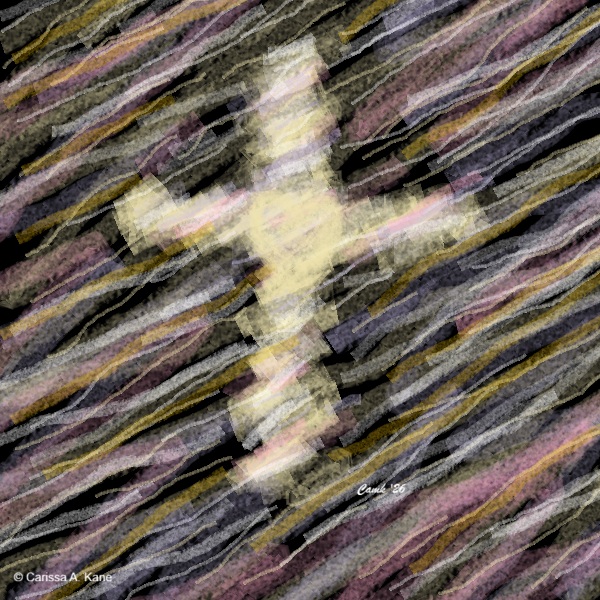
It’s human nature to try to assign meaning to the things that happen in life. We all have experiences that can leave us wondering, “What was that all about?”. They are situations or encounters that may or may not eventually become more fully known or revealed. However, oftentimes, instead of waiting for that moment to come, where everything comes together and starts to make sense, we rush ahead making our own sense of it.
In those times of “What was that all about?”, temptation seeks to make the situation neatly fit into our own understanding or way of looking at things. That is, the temptation is to see what one wants to see through the lens through which one chooses to see it, rather than allowing time for the grace of God to open the eyes of one’s heart.
In the Second Reading for the Third Sunday in Ordinary Time (1 Corinthians 1:10-13, 17), St. Paul writes:
“For Christ did not send me to baptize but to preach the gospel,
and not with the wisdom of human eloquence,
so that the cross of Christ might not be emptied of its meaning.” – 1 Corinthians 1:17
What words or images come to mind when you consider the meaning of the cross of Christ, and what values do they imply?
How are you influenced by, and how do you remain mindful of, the meaning and those values as you go about each day?
In what ways do you leave room for the possibility that there’s more that you need to consider regarding a situation? How might you rely upon the grace of God more fully?
In the verses that proceed the one above, St. Paul appeals to the church of God—the people—in Corinth not to succumb to temptation, which seeks to separate them and pit them against each other. He starts off by imploring them to be united:
“I urge you, brothers and sisters, in the name of our Lord Jesus Christ,
that all of you agree in what you say,
and that there be no divisions among you,
but that you be united in the same mind and in the same purpose.” – 1 Corinthians 1:10-11
St. Paul’s audience is the early Christian community in Corinth. Surely, they had more than just a few disagreements! Don’t people almost always though? Despite this, people always also have much in common.
Take some time to contemplate areas of disagreement that you may have with family, friends, and/or others. After naming the point(s) of contention, think about at least one thing you have in common and that you both value. How might that become, or continue to be, a source of unity? Pray with the desire that enters your heart as you consider this.
In the Gospel passage for this Sunday (Matthew 4:12-23), in part, it is written:
As he was walking by the Sea of Galilee, he saw two brothers,
Simon who is called Peter, and his brother Andrew,
casting a net into the sea; they were fishermen.
He said to them,
“Come after me, and I will make you fishers of men.”
At once they left their nets and followed him.
He walked along from there and saw two other brothers,
James, the son of Zebedee, and his brother John.
They were in a boat, with their father Zebedee, mending their nets.
He called them, and immediately they left their boat and their father
and followed him.
He went around all of Galilee,
teaching in their synagogues, proclaiming the gospel of the kingdom,
and curing every disease and illness among the people. – v. 18-23.
Notice how Jesus called two sets of brothers. Chances are that within each set as well as taken all together, the brothers, didn’t see eye to eye on everything. However, they were all called, and they all left something behind or had to let go of something.
Simon (Peter) and his brother, Andrew, James and his brother, John, certainly must have had their differences, but they all made the individual choice to place their focus on following Jesus, who taught in the synagogues, proclaimed the Gospel, and “cured every disease and illness among the people.” They embraced the Way. And in doing so, they were able to draw closer to God, they were strengthened through their differences, and they stayed united rather than becoming divided.
The Lord is my light and my salvation; whom should I fear?
The Lord is my life’s refuge; of whom should I be afraid? – Psalm 27:1
 HopeThatFloats
You must be logged in to post a comment.