To be
Radically, yet gently,
Influenced by, and
Utterly, without doubt,
Moved to, and in, the light of
Peace, love, and
Healing
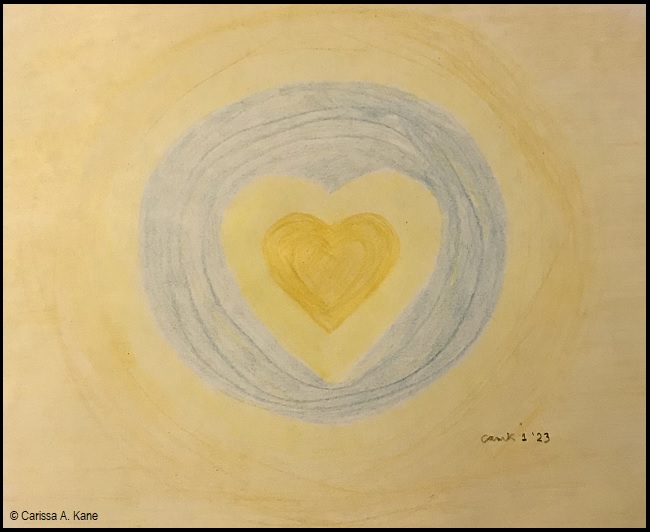
“…I will make you a light to the nations, that my salvation may reach to the ends of the earth.” – Is 49:6

To be
Radically, yet gently,
Influenced by, and
Utterly, without doubt,
Moved to, and in, the light of
Peace, love, and
Healing
“…I will make you a light to the nations, that my salvation may reach to the ends of the earth.” – Is 49:6

It’s said that the owl’s wisdom lies in its waiting, watching, and listening. In its patient, persistent process, its senses are fine-tuned, making it easier to recognize and distinguish between and among things. The owl’s very own nature leads and nurtures the animal, teaching it to tap more deeply into what it genuinely needs to survive and thrive.
This in-born nature that helps the owl to be at its best, also resides within all living things. And when tuned into, exercised, and held onto, it helps all living things to operate at their best, most authentic self. For human beings especially, the task at hand is to sort through and root out all that interferes with this natural, God-given ability.
In the Book of Wisdom, King Solomon shares:
“I prayed, and prudence was given me; I pleaded, and the spirit of wisdom came to me” – Wisdom 7:7.
While this is a great example of “ask and you shall receive,” it is also an example of the gift of humility. Oftentimes, it is humility that opens the door to wisdom. King Solomon humbled himself, he “prayed” and “pleaded” for wisdom, a gift that no amount of money in the world could buy. Throughout the Bible, and throughout history, there is no wisdom, without humility. For it is a gift that can only be received at the time and place where an open, willing, and humble heart meets the humility of God—unconditional love.
So how does one move toward this place? For starters, perhaps by praying for the grace to become more aware. Kahlil Gibran wrote, “Wisdom stands at the turn in the road and calls upon us publicly, but we consider it false and despise its adherents.”
Thinking about current day events, where do you see wisdom? In what places do you meet unconditional love… truth and peace together?
Looking back to history, Psalm 90 begins:
“A prayer of Moses, the man of God. Lord, you have been our refuge through all generations. Before the mountains were born, the earth and the world brought forth, from eternity to eternity you are God” (verses 1-2).
Wisdom draws Moses’ heart to give voice to God’s faithfulness, and seek God’s help, “Teach us to count our days aright, that we may gain wisdom of heart,” (verse 12), mercy, “Make us glad as many days as you humbled us, for as many years as we have seen trouble,” (verse 15), and grace, “May the favor of the Lord our God be ours. Prosper the work of our hands! Prosper the work of our hands!” (verse 17).
When you reflect on the work of your hands, what aspects of God (loving, patient, gentle, kind, honest, peaceful, faithful, life-giving, etc.) resonate in them? When you look at the world around you and the things in which you choose to participate, which ones bring you closer to the image of God, Love, in which you were created? In what ways do you feel inspired by the humility and generative nature of God, for whom all things are possible?
Establish the Work of Our Hands – https://youtu.be/5V2_cs8gTIw?t=9 – the Porter’s Gate (feat. Aaron Keyes and Urban Doxology)
If You don’t build it, we labor in vain,
Without Your Spirit, we stand with no strength.
I know my life is passing away,
but the works of Your hands
are what will remain.
Let the favor of the Lord rest upon us…
O Lord, establish the work of our hands!
O Lord, establish the work of our hands!
Teach us to number the length of our days,
Pour out Your power, we’ll pour out Your praise.
Teach us to run, to finish the race,
for only what’s done in love will remain.
Let the favor of the Lord
rest upon us…
O Lord, establish the work of our hands!
O Lord, establish the work of our hands!
Al – le – lu – ia, al – le – luia, al – le – luia
Al – le – lu – ia, al – le – luia, al – le – luia
© 2017 Hymns From the Porter's Gate (ASCAP) and Porter's Gate
Publications (SESAC). All rights reserved and administered by
Fair Trade Music Publishing c/o essentialmusicpublishing.com.
In the last chapter of the Book of Joshua (Jos 24), Joshua, who succeeded Moses, is nearing death when he gathers the tribes of Israel and speaks the words of the Lord. First, the Lord helps the people to remember the truth of their journey together and God’s presence throughout. Then, the ageless choice, just as poignant today as back in Joshua’s times and prior, is offered: “…choose today whom you will serve…” (Jos 24:15).
Oftentimes the way of society tends toward reaching heights higher than, obtaining more than, and being waited upon or served as if elevated in position. And in that striving and the push to achieve, there are all sorts of temptations moving in and out, and throughout, trying to slide into place without notice, shifting motivation away from what might truly be good. Then, there is also the voice of reason—Truth, seeking balance, calling for heart and soul to live and breathe in all that drives the choices being made, actions being taken, and the spirit in which they are carried out.
So how does one proceed with so many competing interests? More simply, slowing down with prayerful moments that lead to the choosing in each, and every, day.
This past Wednesday was the feast day of Alberto Hurtado Cruchaga, S.J. He was born in 1901 and lived in Chile, becoming a Jesuit priest who served the poor and worked for social justice until his death in 1952. The following prayer is his prayer. It seeks integrity, hope, and faith in God and reminds one of Truth—all things are possible with God.
Prayer of St. Alberto Hurtado Cruchaga, S.J.
Lord, help me to speak the truth in front of the strong
and not say lies to gain the applause of the weak.
If you give me fortune, don’t take happiness away from me.
If you give me strength, don’t take reason away from me.
If you give me success, don’t take humility away from me.
If you give me humility, don’t take dignity away from me.
Help me always see the other side of the medal.
Do not let me blame others of treason
for not thinking like me.
Teach me to love people as myself
and to judge myself as others.
Do not let me fall into pride if I triumph
nor in despair if I fail.
Rather, remind me that failure
is the experience which precedes triumph.
Teach me that forgiving is the grandest for the strong
and that revenge is the primitive sign of the weak.
If you take away my fortune, leave me with hope.
If you take away success, leave me with the strength
to triumph from the defeat.
If I fail people, give me the courage to ask pardon.
If the people fail me, give me the courage to forgive.
Lord, if I forget You, don’t forget me.


Looking across the room and then glancing down, I see ridges all around—like a welling up of paths. Whether taken in patches or one by one, they give the appearance of being well-traveled in some spots and lightly, or not at all in others. It is not unlike the journey of coming and going throughout the years.

So many paths not only along the way, but also sometimes in it. Then, in the ways we travel, we often weave, and as we do, some paths seem steadier, tried and true, and we visit them with greater frequency. While other paths, are traversed less often, sometimes only at a gentle coaxing from within or a push from expectations on the outside pressing in. And finally, there are the paths that are perhaps averted altogether. For good, or not?
There are a great number of ways as we go. Each has its own enticements. However, to stay on a track worth trekking, one needs the help of inspiration. Shifting gears and tuning into motivation, influence has a multitude of sources. They are, more or less, good or bad, better or worse, and more, but it’s always wise to explore them, to discover what’s really at the core.
In looking underneath the surface, discernment is waiting to be used. While hope is the light that moves us, discernment, when it’s true, is earnest, and looks to help us as we choose. We slip and slide when we lose focus, and quite often, wisdom escapes us. But motivation stores the details of one’s heart and is always within reach. It brings forth words and actions, and influences replies. It’s where God is calling to us to love, but often gets denied.
This is what John the Baptist proclaimed:
“One mightier than I is coming after me.
I am not worthy to stoop and loosen the thongs of his sandals.
I have baptized you with water;
he will baptize you with the Holy Spirit.”It happened in those days that Jesus came from Nazareth of Galilee
and was baptized in the Jordan by John.
On coming up out of the water he saw the heavens being torn open
and the Spirit, like a dove, descending upon him.
And a voice came from the heavens,
“You are my beloved Son; with you I am well pleased.” – Mk 1:7-11

Sitting in traffic, stuck in place, with many miles to go. Looking ahead, nothing but motionless vehicles, varying in size and height. Looking back, more of the same, but to the right, reassurance.

Sometimes, when life, or the happenings around us, are less than picturesque, it can be alluring to dream of being anywhere, but “here,” and in any time, but “now.” Similarly, the opposite, nowhere but “here” and no time but “now,” can hold true, when all seems as good as it can possibly be.
After Jesus is transfigured, Peter says, “Lord, it is good that we are here. If you wish, I will make three tents here, one for you, one for Moses, and one for Elijah” (Matthew 17:4). It seems so clear to Peter that the moment is here and the time is now. However, further down the line, when things take a turn and become more and more difficult and challenging… when Jesus is arrested, put on trial, condemned, crucified, and dies, does anyone see the moment and time as being here and now, as well?
Yes. Jesus does, and so can we.
Oftentimes the most significant, meaningful moments, the ones that speak volumes, revealing who we really are, and the depth of our being, are the ones right in front of us. Whether the times are considered to be good or bad matters not. Here and now is the right place and the right time to be motivated by love, joy, peace, patience, kindness, goodness, faithfulness, gentleness, and self-control. Here and now is always the right place and time to follow Jesus’ example, and to be led by God.
Jesus took Peter, James, and John his brother,
and led them up a high mountain by themselves.
And he was transfigured before them;
his face shone like the sun
and his clothes became white as light.
And behold, Moses and Elijah appeared to them,
conversing with him.
Then Peter said to Jesus in reply,
“Lord, it is good that we are here.
If you wish, I will make three tents here,
one for you, one for Moses, and one for Elijah.”
While he was still speaking, behold,
a bright cloud cast a shadow over them,
then from the cloud came a voice that said,
“This is my beloved Son, with whom I am well pleased;
listen to him.”
When the disciples heard this, they fell prostrate
and were very much afraid.
But Jesus came and touched them, saying,
“Rise, and do not be afraid.”
And when the disciples raised their eyes,
they saw no one else but Jesus alone.
As they were coming down from the mountain,
Jesus charged them,
“Do not tell the vision to anyone
until the Son of Man has been raised from the dead.” – Matthew 17:1-9

Yes, every coin has two sides, and two sides only. Unlike coins, although people, stories, and situations also have more than one side, this does not mean that there are only two sides to matters regarding them. There are often more sides than there is the time that is taken to try to see them.
In the Gospel according to Matthew, the master of temptation seeks opportunities to blur the lines, create confusion, and make it more difficult to see clearly the choice that is, in fact, best for the time at hand.
At that time Jesus was led by the Spirit into the desert
to be tempted by the devil.
He fasted for forty days and forty nights,
and afterwards he was hungry.
The tempter approached and said to him,
“If you are the Son of God,
command that these stones become loaves of bread.”
He said in reply,
“It is written:
One does not live on bread alone,
but on every word that comes forth
from the mouth of God.”Then the devil took him to the holy city,
and made him stand on the parapet of the temple,
and said to him, “If you are the Son of God, throw yourself down.
For it is written:
He will command his angels concerning you
and with their hands they will support you,
lest you dash your foot against a stone.”
Jesus answered him,
“Again it is written,
You shall not put the Lord, your God, to the test.”Then the devil took him up to a very high mountain,
and showed him all the kingdoms of the world in their magnificence,
and he said to him, “All these I shall give to you,
if you will prostrate yourself and worship me.”
At this, Jesus said to him,
“Get away, Satan!
It is written:
The Lord, your God, shall you worship
and him alone shall you serve.”Then the devil left him and, behold,
angels came and ministered to him. – Matthew 4:1-11
The trick that Jesus so masterfully avoids is the temptation to see what the devil presents to him in a two-dimensional way and thus respond or react based on that, rather than on a view or understanding that is multi-dimensional. That is, Jesus does not allow his view to be constricted by the fact that he is tired or hungry, or anything else. If he did, he would be lead to fall for the devil’s ploys, and then move toward making a choice(s) that at the root would solely benefit or be centered on himself, and meeting his personal needs at the expense of the greater good.
This passage provides a great example of the ways that are not of God, and that can go undetected and create interference. Temptation seeks to entice and distract us into living in a “going through the motions” kind of way or to distract us from being mindful and intentional. The more we partake of something, whatever it might be, the more likely it is to become rote, possibly lose meaning, and gradually remove us from the goodness of the original purpose and motivation. The devil counts on this, waiting for weakness to arrive. Notice how Jesus is pressed and tempted after being in the desert for 40 days, not right from the start of his stay or even mid-way through, but when he was physically at his weakest and likely to be less aware… when there was a potential opening for temptation to seep in.
During the season of Lent, as well as all year through, temptation seeks to draw us into seeing any, and all things as two-dimensional. Remember, though, as the saying goes, “The road to hell is paved with good intentions.” And, just because something is good, it does not mean it is always the best choice, for everyone, all the time. Only God can be the judge of that.

At the beginning of the second chapter of the Book of the prophet Isaiah, it is written that the people of all nations shall strive together toward the house of the Lord, saying:
“Come, let us climb the Lord’s mountain,
to the house of the God of Jacob,
that we may be instructed in God’s ways,
and we may walk in God’s paths.” (verse 3)
In the Gospel according to Matthew, chapter 24, verses 37-44, in speaking to the disciples about being prepared for the day of the Lord, Jesus says,
“Two men will be out in the field;
one will be taken, and one will be left.
Two women will be grinding at the mill;
one will be taken, and one will be left” (verses 40-41).
On the surface, to the human eye, or mind, there is no discernible difference between the one who is taken and the one who is left in this passage. And, in the end, only God truly knows.
However, Jesus seems to be making the point that it does not matter what one does. It does not matter whether one “falls in line” (or out), but rather the reason for doing so, or not, is what matters. That is, what is in one’s heart? What is one preparing, or preparing for? And, who is really being served, and how so?
Returning to the prophet Isaiah, it is clear, many nations and many people. Also, many are the ways and the paths of God. Again, only God truly knows. Yet, while the exact time and place, and what lies ahead, may be a mystery, the heart that seeks is always connected, helping one to be awake to the pulse of the Spirit.
There is no need to look for God here or there. He is no farther away than the door of your own heart. – Meister Eckhart

Jesus said to his disciples:
“As it was in the days of Noah,
so it will be at the coming of the Son of Man.
In those days before the flood,
they were eating and drinking,
marrying and giving in marriage,
up to the day that Noah entered the ark.
They did not know until the flood came and carried them all away.
So will it be also at the coming of the Son of Man.
Two men will be out in the field;
one will be taken, and one will be left.
Two women will be grinding at the mill;
one will be taken, and one will be left.
Therefore, stay awake!
For you do not know on which day your Lord will come.
Be sure of this: if the master of the house
had known the hour of night when the thief was coming,
he would have stayed awake
and not let his house be broken into.
So too, you also must be prepared,
for at an hour you do not expect, the Son of Man will come.” – Matthew 24:37-44

There is the saying, “Silence is golden,” yet we know this is not always the case. Oftentimes silence can cast a shadow, creating division and unrest, perhaps worse than words of ill will. Martin Luther King, Jr. said, “In the end, we will remember not the words of our enemies, but the silence of our friends.”
As with so many things, there are appropriate times and places for silence, as well as ones for speaking out and making noise. While the times and places may vary, what is to be held back and what is to be spoken is best done prayerfully, with an open heart and mind.
In Psalm 95, it is written, “If today you hear God’s voice, harden not your hearts.” It is easy for our minds to conjure up an image or description of a hardened heart. Surely, a person with a hardened heart is easy to spot… angry, grumpy, bitter, frowning, self-righteous, etc. However, a hardened heart is also, among other things, one that is superficial, looks the other way in the face of wrongs, or causes one to remain silent at a time that calls for speaking out. A hardened heart, at its root is self-serving and self-interested. It cannot be judged solely by appearance, and if being honest, we all have times in our lives or instances where, whether we realize it or not, a part of our heart, is in fact, hardened.
We are all called to live authentically in both word and deed. Throughout our lives, we are called to face challenges when the temptation might be to recoil from them. This is something that is only possible with a pliable heart… one that is intent on listening to the Voice that truly matters.
“If today you hear God’s voice, harden not your hearts.”

When I was a young child, I first heard the Hans Christian Andersen story, “The Emperor’s New Clothes.” As the fairy tale was read aloud, I remember listening with great interest and a desire to know what was going to happen. I wondered how so many people could ignore what they saw for themselves.
The people knew that there were no “new” clothes, yet they were afraid to speak the truth, and so they lied when asked their opinion, pretending to marvel at the “brilliant” clothes created by two conmen. This charade continued and was embraced by nearly everyone until a child spoke the truth aloud.
It is clear from the story that the people recognized that there were no clothes to see, but the men “making” the clothes had preyed on the emperor’s weakness, a penchant for fine clothing. Once they caught his attention, they also promised something that the emperor did not possess, but wanted—knowledge of who was fit for their position and who was not.
The emperor fell for the scam, and because he did, his people, out of fear, went along with it too. After a child states the truth, the emperor continues to carry on as if he is wearing the most fabulous clothing as he walks down the street, when in fact he is wearing no clothing. The reader also learns that the emperor does this despite fearing that the child and those who have joined with him are correct. The emperor clings to pretense.
Looking back at the story, the conmen presented themselves as skilled weavers, using what they witnessed to take advantage of the emperor and his subjects. They did not come to town in the name of anything resembling goodness. The emperor presented himself as someone who was wise and “better than.” He used his wealth and appearance to try to impress as well as using what he thought was the skill of others to try to uphold this image. No one under the king wanted to be viewed as unfit so they presented themselves as seeing what was not present—the emperor’s clothes. Then there is the child, the one who presents her/himself with no pretenses, giving voice to the truth.
During this time of year when there is much talk and effort around presents, perhaps a question(s) worth asking is, “How do I present myself? And what is operating behind it?”
Blessed is he who comes in the name of the Lord. – Mark 11:9



During the winter months, some animals hibernate, some migrate, and others adapt. All animals, whether of the hibernating, migrating or adapting kind, need to prepare for the change of seasons. What remains constant year-round, though, is the need for energy. Even the hibernating animals need energy throughout their deep sleep.
On what is a very cold day, on which a deep sleep can be very tempting, as I catch up with news from throughout the week, I find myself pondering the things that are written (and spoken). From where do these things come? What is the source?
It is written… (Luke 4).
As I reflect on the happenings of the week, I wonder, “Written by whom?” and “For what purpose?” Not only that but, “What led to ‘it’ being written?” There are so many questions one could ask and so many possible ways of answering them, but at the end of the day, the most important questions seem to be, “Who is being served by the questions? Who is being served by the answers? How is that which is written being used?”
Filled with the Holy Spirit, Jesus returned from the Jordan
and was led by the Spirit into the desert for forty days,
to be tempted by the devil.
He ate nothing during those days,
and when they were over he was hungry.
The devil said to him,
“If you are the Son of God, command this stone to become bread.”
Jesus answered him,
“It is written, One does not live on bread alone.”
Then he took him up and showed him
all the kingdoms of the world in a single instant.
The devil said to him,
“I shall give to you all this power and glory;
for it has been handed over to me,
and I may give it to whomever I wish.
All this will be yours, if you worship me.”
Jesus said to him in reply,
“It is written: You shall worship the Lord, your God,
and him alone shall you serve.”
Then he led him to Jerusalem,
made him stand on the parapet of the temple, and said to him,
“If you are the Son of God,
throw yourself down from here, for it is written:
He will command his angels concerning you, to guard you,
and:
With their hands they will support you,
lest you dash your foot against a stone.”
Jesus said to him in reply,
“It also says,
You shall not put the Lord, your God, to the test.”
When the devil had finished every temptation,
he departed from him for a time. – Luke 4:1-13
 HopeThatFloats
You must be logged in to post a comment.