In the Fabric…

It’s challenging, to say the least, to live in a world where tangible assets not only overwhelmingly drive motivation, but also speculation and modes of operation. And even more than that, status and materialism push humankind toward pursuits that are often so far removed from the stirrings and movements of grace that seek to connect and strengthen hearts.

St. Ignatius of Loyola wrote, “For it is not knowing much, but realizing and relishing things interiorly, that contents and satisfies the soul.” Yet, as suggested in Ecclesiastes, the human condition is such that we continue to toil under the sun to know more, do more, win more, and so on. But for what kind of gain? and at what cost?

Here is one who has labored with wisdom and knowledge and skill,
and yet to another who has not labored over it,
he must leave property.
This also is vanity and a great misfortune.
For what profit comes to man from all the toil and anxiety of heart
with which he has labored under the sun?
All his days sorrow and grief are his occupation;
even at night his mind is not at rest.
This also is vanity. – Ecc 2:21-23

Looking around, or tuning in to the pulse of society, one can only wonder, with that beat, what kind of “more” will ever be enough? And in the process, what happens to the hearts involved? There’s ebb and flow of course, but in what ways and to what degree do they drift? And at what point does the unfamiliar become all too familiar?

Turning to Psalm 95, the psalmist writes, “If today you hear God’s voice, harden not your hearts.” Before that, a call to turn back to the One who knows.

Teach us to number our days aright,
that we may gain wisdom of heart. – Ps 90:12

Remember, ask and you shall receive. However, as always, there’s choice in how one responds.

St. Paul urges us forward, let go of that which binds one to the earth and drags one down. Instead, be grounded to, as well as through, that which is elevated and fulfilling in a far greater way.

If then you were raised with Christ, seek what is above, where Christ is seated at the right hand of God.
Think of what is above, not of what is on earth. – Col 3:1-2

Be true… be not only baptized into Christ, but also put on Christ. Think about it. How does the heart and mind of Christ infuse your soul? How does it influence choices as you face challenges and navigate this world?

In the Gospel according to Luke (chapter 12:13-21), Jesus tells the parable of the rich man who had such a surplus at harvest that he replaced his barns with even bigger ones so he could essentially rest on his laurels and live off all that he had store up. While this parable can lead one to reflect on possessions and sharing or helping others from what one has, it can also be a catalyst to considering more closely how one’s pursuits affect the fabric of one’s being. Aside from the tangible, from what has one’s heart moved away? To what has one’s heart moved toward? And most importantly, where is God in all of that?

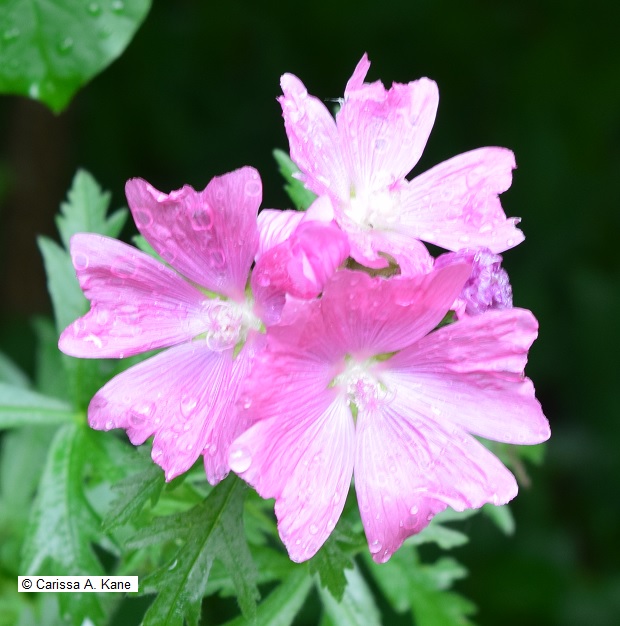
Peace Dwells Within…

That which was spoken long ago,

Holds true still, even in this day and age.

Peace, it dwells within,

And cannot come from that which is external.

Listen to Paul, who once was murderous Saul,

Filled with conviction,

Really hate, disguised as a passion he thought was right.

The Lord opened his heart,

Corrected his vision,

And led him to turn from his ways.

His conviction remained.

His passion transformed,

From one that was steal.

Redeemed one might say,

By the Way that is true,

By the One who is always waiting,

For the other to come around.

Peace is about embracing possibilities,

Seeking Grace and gratitude,

Being open to ways that differ,

And accepting differences,

Without surrendering to them.

Peace comes in discovery

As well as in re-discovery,

In going out into the world,

Remembering in whose image all are created,

Holding true to oneself,

And allowing others to do the same.

Peace, it dwells within,

But its effects go well beyond.

And let the peace of Christ control your hearts, the peace into which you were also called in one body. And be thankful. – Col 3:15

I Believe…

I believe that sometimes society seems to be hanging by a thread, but that’s not all I believe…

I believe that God creates similarities, differences, and various dimensions intentionally, rather than carbon copies, or only one kind or way of being.

I believe freedom resides within and is a gift from God entrusted to each, to do with as one wills—as in free will.

I believe that it’s up to each to choose for themselves that which affects, most especially, oneself.

I believe and, also trust, that God has more wisdom than all of us together, seeing things we cannot see and understanding in ways which humans simply cannot.

I believe that to love like Jesus is to love like God—with great depth and breadth, yet personal and unique onto each of us as if we were the only one.

I believe that where hearts and minds are open to the Spirit that is Holy, unity and diversity not only live, but also thrive.

I believe that true victory does not rob others from choosing for themselves, and that what some may celebrate as a “win,” God does not.

I believe the compassion and mercy of God is all encompassing, and that clearly humankind’s is often not.

Most of all, I believe that the greater glory belongs to God, all of “this” will fade away, and that ultimately, through the hearts that are willing, God’s unifying way of love, compassion, and mercy prevails.

I believe that sometimes society seems to be hanging by a thread, but maybe sometimes that’s what we need to be.

And Mary kept all these things, reflecting on them in her heart. – Luke 2:19

In Whose Likeness…

There was darkness all around. Not a sound, but that of waves gently breaking, making their way across the sand and rocks, back and forth, to and from. Not a sight, until the sun began its approach, gradually awakening the sky, before peeking up over the horizon.

Then what a sight. Silhouette or shadow? May be solo, but not alone. Freely flying, but in a line, parallel, heart of purpose and direction. Gliding, steady, peaceful, true in its presence… in its likeness… Silhouette.

“I saw no temple in the city, for its temple is the Lord God almighty and the Lamb. The city had no need of sun or moon to shine on it, for the glory of God gave it light, and its lamp was the Lamb.” – Rev 21:22-23

Where We Will…

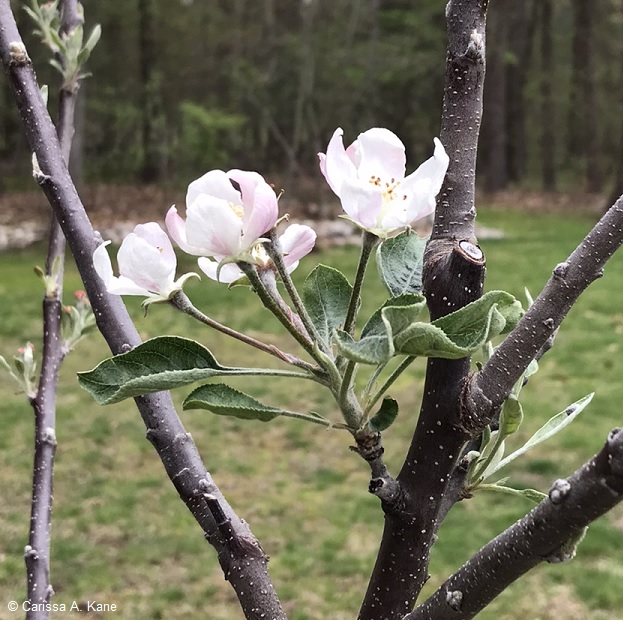
Watching as the branches fill in, flowers blossom, pollen wafts through the air, and Spring burgeons and unfolds, there is a sense of awe. In the Book of Revelation, it is written, “The One who sat on the throne said, ‘Behold, I make all things new.’” (Rev 21:5a). Not some things, or only certain things, but all things. Thinking about this, I cannot help but consider this concept further and ask, “Am I open to all things being made new by God?”

The flowers grow and open, pretty much wherever they are planted. And certainly, there are some conditions necessary for their maturity and well-being—light, water, nutrients, and some level of protection from harsher elements and realities. However, the things vital to their growth can be found or seep in even in unexpected places, and overall, flowers grow where they will.

In chapter 14, verses 21-27, of the Acts of the Apostles, we continue to learn of the experiences of Paul and Barnabas as they travel on, inspired by their discipleship desire. Their journey leads them back to Antioch, the place of resistance from where they were expelled in chapter 13.

It is written:

“From there they sailed to Antioch,
where they had been commended to the grace of God
for the work they had now accomplished.
And when they arrived, they called the church together
and reported what God had done with them
and how he had opened the door of faith to the Gentiles.” – (verses 26-27)

Imagine. God called them to something more, launching something new from the very place that was not open to receiving them at the time. It turns out God had somewhere else in mind for them. How did they react or respond?

Paul and Barnabas were willing to let go of their notions and allow themselves to be led to other territories where they not only experienced what God had in mind, but also deepened their faith. Eventually, they were led back to Antioch, where, because of God who makes all things new, they were able to meet resistance with something more, something stronger, faithful witness to the Glory of God.

So just as flowers grow where they will, so too Paul and Barnabas… so too us. If we are open to it.

“Behold, I make all things new.” – Rev 21:5a

Leave Room…

On the Fourth Sunday of Easter, we read about the experience of Paul and Barnabas touching the hearts of the Gentiles (perhaps seen as the outsiders) while enraging those considering themselves more as chosen, but of a different persuasion. Things seem to get off to a good start, but then the atmosphere changes. However, despite the change to an overwhelmingly inhospitable environment, the disciples hold firm to the Way even as they are being thrown out of Antioch. We read, “So they shook the dust from their feet in protest against them, and went to Iconium” (Acts 13:51).

It’s interesting that Paul and Barnabas left Antioch, a city whose name means, “resistant, holding out against” and went on to Iconium, which means “City of the Image,” where they were more well-received, at least for a little while, before being led on to other territories. As with Jesus, with the disciples, there is always room for choice; they do not practice coercion.

We also read in this section of Scripture, “The disciples were filled with joy and the Holy Spirit” (Acts 13:51-52). What a combination! What’s it like to consider this disposition on the heels of them being expelled from Antioch? In what ways do you see the influence of Jesus, the Good Shepherd, in the reactions and responses of Paul and Barnabas, and their willingness to be led by the will of God, which is not rigid, and they cannot, and do not, know ahead of time?

In the Gospel according to John, Jesus says:

“My sheep hear my voice;
I know them, and they follow me.
I give them eternal life, and they shall never perish.
No one can take them out of my hand.
My Father, who has given them to me, is greater than all,
and no one can take them out of the Father’s hand.
The Father and I are one.” – Jn 10:27-30

Contemplating the Gospel as the living Word of God, if someone told you a story about an inhospitable experience, perhaps one that caused them to pick up and leave, how would you receive what they shared? What if their experience occurred in a place where your experience was more, or only, positive? How open would you be to giving an honest look to the situation? And what would you be most interested in learning about their experience?

Keeping in mind, we are all created in God’s image, and we all belong to the sheepfold, how do you accept the invitation to trust that the same God who loves you, loves them, and that the same God who guides you, guides them, even if their choices and experiences may not be the same as yours?

In what ways, are your responses to people and situations a reflection of the Good Shepherd, and a heart that is filled with joy and the Holy Spirit?

Paul and Barnabas continued on from Perga
and reached Antioch in Pisidia.
On the sabbath they entered the synagogue and took their seats.
Many Jews and worshipers who were converts to Judaism
followed Paul and Barnabas, who spoke to them
and urged them to remain faithful to the grace of God.

On the following sabbath almost the whole city gathered
to hear the word of the Lord.
When the Jews saw the crowds, they were filled with jealousy
and with violent abuse contradicted what Paul said.
Both Paul and Barnabas spoke out boldly and said,
“It was necessary that the word of God be spoken to you first,
but since you reject it
and condemn yourselves as unworthy of eternal life,
we now turn to the Gentiles.
For so the Lord has commanded us,
I have made you a light to the Gentiles,
that you may be an instrument of salvation
to the ends of the earth.”

The Gentiles were delighted when they heard this
and glorified the word of the Lord.
All who were destined for eternal life came to believe,
and the word of the Lord continued to spread
through the whole region.
The Jews, however, incited the women of prominence who were worshipers
and the leading men of the city,
stirred up a persecution against Paul and Barnabas,
and expelled them from their territory.
So they shook the dust from their feet in protest against them,
and went to Iconium.
The disciples were filled with joy and the Holy Spirit. – Acts 13:14, 43-52

Victory

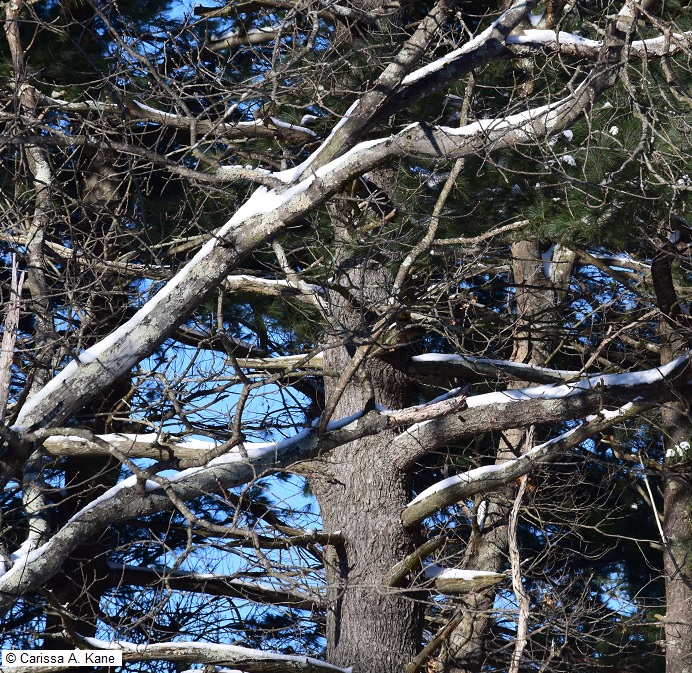
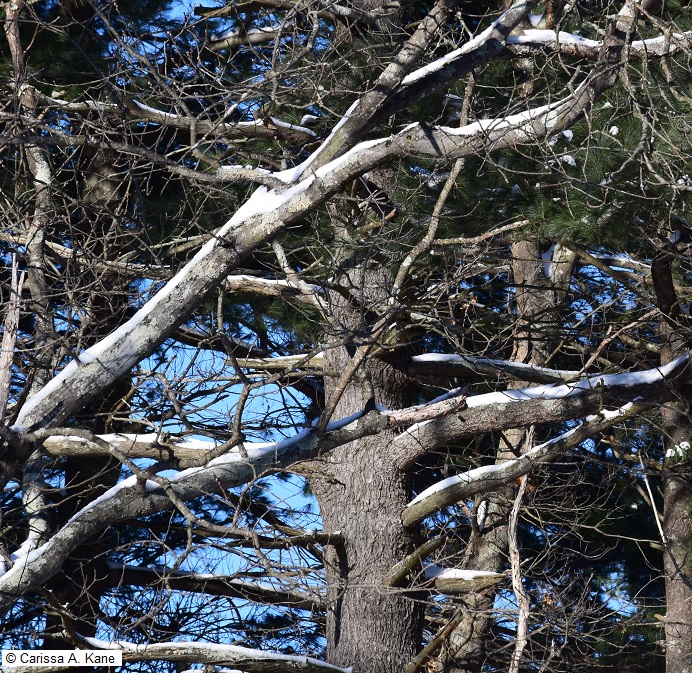
Looking out the window,
branches all around.
Open arms holding up the snow,
or the snow resting on open arms?
Both clinging to each other,
or one melting into the other?
Does it really matter?
Still, looking out the window.
Still, branches upon branches.
Some sturdier than others,
some swaying more than others.
Does it really matter?
More looking out the window,
at those branches and that snow.
Through it all, they just keep gently staying.
Perhaps, that’s all that really matters.

Shine like lights in the world as you hold on to the word of life. – Phil 2:15d,16a

Clearly…

In chapter 13, verse 34 of the Gospel according to John, Jesus says, “I give you a new commandment: love one another. As I have loved you, so you also should love one another.” And, throughout the Gospels, there are many examples of Jesus’ love shown through his words, actions, reactions, and responses. Yet, to love as Jesus loved, can be very challenging, and maybe even feel impossible at times.

However, in the First Letter to the Corinthians (15:45-49), St. Paul really puts the focus on the keys to unlocking the ability to love as Jesus did. In comparing the first Adam to the last Adam (Jesus), St. Paul puts a reminder out there to not get caught up in the things of the world. The things that are material or mainly have to do with personal gain, in the end, will be immaterial. Furthermore, like with Adam and Eve, these things have a way of distorting our vision and pulling us away from the spirit of God.

So, too, it is written, the first man, Adam, became a living being,
the last Adam a life-giving spirit.
But the spiritual was not first;
rather the natural and then the spiritual.
The first man was from the earth, earthly;
the second man, from heaven.
As was the earthly one, so also are the earthly,
and as is the heavenly one, so also are the heavenly.
Just as we have borne the image of the earthly one,
we shall also bear the image of the heavenly one. – 1 Corinthians 15:45-49

St. Paul is saying, remember the truth of who you are, and stay connected to it. There is no loving as Jesus did, without being able to embrace the grace of God in whose image we are created. There is no loving as Jesus did, without the spirit of God helping us to strip away the human inclination toward the world’s view of any situation or thing. It is only through the grace of God, that we can be authentic, operating in the image of God that we are, seeing beyond the haze to what really matters, and then proceeding to receive and respond to the world around us from the place that is eternal.

“To be yourself in a world that is constantly trying to make you something else is the greatest accomplishment.” – Ralph Waldo Emerson

Hope and Nurture…

As the minutes pass and the hours turn toward Valentine’s Day, flowers, cards, candies, and more are scooped up and distributed as gifts from one heart to another. So many thoughts and sentiments, varying degrees of affection and dedication expressed through things symbolizing love and care. What a great time to think about relationships, objects reflecting one’s dedication, and how, underneath it all, perhaps sometimes lost, is the Divine. After all, how else might one consider, or be reminded, that there’s more than me, myself, and I, and my concerns?

Broadening the scope, throughout the history of humankind, it would be fair to say that lasting relationships are built upon the ability to be present, a movement of the heart, and a sense of connection and trust. The capacity for each, placed in every being from inception and created to be held as well as extended—a full circle, inclusive kind of thing between and among the Creator and the created. Beautiful, and rightly so, when rightly exercised. However, when those elements disintegrate, for whatever reasons, relationships crack and crumble. And frequently it seems, sides are formed, heels are dug in, and maybe even enemies declared. What for? And, what’s the source of that?

Still though, despite any disturbances or folly along the way, there is always what is Divine. It is the place where faith resides, truth is revealed, and all is known. The place where H is for Hope in God, the One and Only, where love is what truly matters and is nurtured, and where everything else can be put aside, and laid to rest.

As the minutes pass and the hours turn toward Valentine’s Day, take time to remember and to be inspired by the hope and love of God, and the ways in which it is extended not only in and through you, but also to you. How can you nurture it, and be nurtured by it?

We are all meant to be mothers of God. What good is it to me if this eternal birth of the divine Son takes place unceasingly, but does not take place within myself? And, what good is it to me if Mary is full of grace if I am not also full of grace? What good is it to me for the Creator to give birth to his Son if I do not also give birth to him in my time and my culture? This, then, is the fullness of time: When the Son of Man is begotten in us. – Meister Eckhart

Where Do You Dwell?

While the outside world has so much to offer, sometimes it can feel like too much, making the idea of hiding away in the seclusion of a hermitage or something similar of greater appeal than it might be otherwise. Today, January 15th, is the feast of St. Paul the Hermit who was born and lived in Egypt until he died around the age of 112. Referred to as the “First Hermit,” little information is known of him.

However, what seems of most importance is known. That is, how St. Paul the Hermit became a hermit and how humankind came to know about him. Originally, at the age of 15 and an orphan, he went into a cave seeking refuge during the persecution of Christians, in the year 250 A.D., by Roman Emperor Decius. His intention was to come out of hiding and return home once the persecutions ended.

But, over the course of his time away from humankind, St. Paul found peace as well as a calling to remain in the desert living a solitary life of prayer as a hermit. So how did this information about St. Paul the Hermit come to be known? St. Anthony of Egypt is said to have come across St. Paul along his own journey toward Truth and self-discovery.

It’s interesting how St. Paul the Hermit was called to a life of seclusion, yet still, God called another, St. Anthony, to give witness to his life and death as holy. It’s also intriguing that St. Anthony was led to St. Paul the Hermit in the process of entertaining thoughts of himself as the most enduring hermit in existence… until he met St. Paul.

In the First Letter of St. Paul to the Corinthians, chapter 12, verses 4-11, St. Paul the Apostle writes about different kinds of spiritual gifts, different forms of service, and different workings that are dispersed to all, individually, but by the same God who creates them, and the same Spirit who brings them to fruition. With God, no one gift, or creation, is above the other, differentiation is by design, all are loved into existence, all are created for unity, and all are equally important.

So, while St. Paul the Hermit and St. Anthony of Egypt had similar callings and different paths, like us, humility is what leads them to a better place.

In everything, it is only through the grace of God that we can lay down human notions; truly understand, appreciate, take care of, and celebrate one another; and thus, partake in the unity—the heart of God– that is Creation.