Truth in the Midst…

According to the ancient Greek philosopher Plato, “No one is more hated than he who speaks the truth.” This certainly seems the case for Jesus in chapter 4, verses 21-30 of the Gospel according to Luke. In fact, Jesus expands upon this observation. Not only does the truth and those who speak it, tend to garner disdain or be less than popular, but this is kicked up a notch, often occurring with greater intensity and less receptivity, the closer to home one is.

In this passage, Jesus gives two examples for his fellow Nazoreans to ponder. First, there is the widow in Sidon. What is it that led Elijah to her and her son, saving them from a sure death during the great famine? Second, there is Naaman the Syrian, who was cleansed of leprosy. How is it that Elisha was sent to Naaman rather than one of his own people suffering from leprosy?

After taking great offense at Jesus’ words (“No prophet is accepted in his native place”) and examples, the crowd seeks to extinguish him. One can only wonder if anyone in the crowd was able to step back and further consider the situation and what had transpired. Were they able to remove themselves from the sting of the truth long enough to recognize that their anger was misdirected, and to move toward healing and greater peace?

In today’s volatile and often chaotic world, it can be easy to choose a side or make a judgment and cling to it. However, oftentimes, in doing so, it can also be easy to become rigid, and to lose sight and insight into what really matters. Not only that, but also to possibly overlook Grace, which is always revealing itself in ever-changing and evolving ways.

In chapter 4 of the Gospel according to Luke, Jesus was inviting the people of Nazareth toward greater faith and into a new way of being. He is calling us in the same way today, reminding us that we cannot receive God, who made the earth and all that inhabits it, if we are not willing to change and receive the grace of a still greater way.

For true life does not occur where the air is stale and stagnant, and where all cannot breathe, but rather where it is new, fresh, and flowing free.

Jesus began speaking in the synagogue, saying:
“Today this Scripture passage is fulfilled in your hearing.”
And all spoke highly of him
and were amazed at the gracious words that came from his mouth.
They also asked, “Isn’t this the son of Joseph?”
He said to them, “Surely you will quote me this proverb,
‘Physician, cure yourself,’ and say,
‘Do here in your native place
the things that we heard were done in Capernaum.’”
And he said, “Amen, I say to you,
no prophet is accepted in his own native place.
Indeed, I tell you,
there were many widows in Israel in the days of Elijah
when the sky was closed for three and a half years
and a severe famine spread over the entire land.
It was to none of these that Elijah was sent,
but only to a widow in Zarephath in the land of Sidon.
Again, there were many lepers in Israel
during the time of Elisha the prophet;
yet not one of them was cleansed, but only Naaman the Syrian.”
When the people in the synagogue heard this,
they were all filled with fury.
They rose up, drove him out of the town,
and led him to the brow of the hill
on which their town had been built,
to hurl him down headlong.
But Jesus passed through the midst of them and went away. – Luke 4:21-30

All the Way…

The Prophet Isaiah foretold of John the Baptist, the voice crying out in the desert, urging people to make themselves ready to receive the Lord. And while it is true that earthly life can be viewed as a process of preparing for eternal life, it is so much more than a checklist based upon human understanding. So, while it may be tempting to repeat the sounding joy by clinging to what one knows during the season of Advent, no preparation would be complete without moving beyond our own ideas about it and allowing ourselves some time to steep in the love of God more deeply, and then to be led by it.

The way of the Lord has already been prepared. Not just for the Lord, but also for all those who wish to claim and proclaim their inheritance as God’s people. We must remember that we’re not called to be like John the Baptist. We’re called to be like Jesus. How does, and how can, God help our individual ways to greater reflect the beauty and goodness of the Way? And are we willing to go there?

In the fifteenth year of the reign of Tiberius Caesar,
when Pontius Pilate was governor of Judea,
and Herod was tetrarch of Galilee,
and his brother Philip tetrarch of the region
of Ituraea and Trachonitis,
and Lysanias was tetrarch of Abilene,
during the high priesthood of Annas and Caiaphas,
the word of God came to John the son of Zechariah in the desert.
John went throughout the whole region of the Jordan,
proclaiming a baptism of repentance for the forgiveness of sins,
as it is written in the book of the words of the prophet Isaiah:
A voice of one crying out in the desert:
“Prepare the way of the Lord,
make straight his paths.
Every valley shall be filled
and every mountain and hill shall be made low.
The winding roads shall be made straight,
and the rough ways made smooth,
and all flesh shall see the salvation of God.” – Luke 3:1-6

Love Lifts Up and Over, If You Let It…

In the First Letter of John, chapter 4, verse 12, it is written:

No one has ever seen God. Yet, if we love one another, God remains in us, and his love is brought to perfection in us. – 1 John 4:12

While it may be true that no one has ever seen God, Love and the goodness of God can be experienced daily, in any number of ways and through an unlimited number of people, places, and things. Think about a situation that recently brought peace, joy, laughter, gratitude, etc. into your heart. In what direction did you feel motivated as a result?

Think about who and what you love, in both the past and now. In what ways do you feel inspired as you reflect on this?

Tomorrow, October 4, is the feast day of St. Francis of Assisi. He was born Giovanni di Pietro di Bernardone and is perhaps most widely known for the Prayer of Saint Francis (and inspirational song) – “Make me a channel of your peace/Where there is hatred, let me bring your love…” as well as for being a lover of animals and the inspiration behind the practice of the blessing of animals.

Being born into a wealthy family, St. Francis’ life began in financial and material security. However, rather than a life focused on increasing or holding onto the guarantees that would come with money (status, power, and influence), he chose a journey far more challenging, but one that would lead toward the riches and rewards of a spiritual life—peace.

St. Francis wrote, “It was easy to love God in all that was beautiful. The lessons of deeper knowledge, though, instructed me to embrace God in all things.”

As you imagine embracing God (Love) in all things, what situations come to mind? Where are the places that are easy to carry and exude the love of God that resides within you? Where are the places that present a challenge, causing the light of God within you to diminish, and love to be held back or rebuked?

In the Gospel according to Mark, it is written:

And people were bringing children to him that he might touch them,
but the disciples rebuked them.
When Jesus saw this he became indignant and said to them,
“Let the children come to me;
do not prevent them,

for the kingdom of God belongs to such as these.
Amen, I say to you,
whoever does not accept the kingdom of God like a child
will not enter it.”
Then he embraced them and blessed them,
placing his hands on them. – Mark 10:13-16

Jesus’s example is one of embracing the moment, and all that it holds, with love despite the responses, reactions, or expectations of his disciples and others. With Jesus, everyone is invited… there is room in his heart for everyone.

Now imagine the situations that are easy for you to embrace with love and those that are not, as both belonging to the kingdom of God. What is that like?

Continuing to reflect on these situations, what is most important to you, and how or where does that fit in with your faith as you strive to live by it? Share your thoughts and feelings on this with Jesus. What invitation might Jesus be extending to you?

Above all the grace and the gifts that Christ gives to his beloved is that of overcoming self. – St. Francis of Assisi

Trust in God’s Reach…

At first it may seem that Eldad and Medad are just the names of two of the elders mentioned in chapter 11, verses 25-29 of the Book of Numbers. However, while it may be tempting to readily move past them and keep reading on the way to the Gospel for the 26th Sunday in Ordinary Time, it’s worth pausing to consider this scene some more.

While all the other elders are gathered at the tent to receive the spirit of the Lord and begin to prophesy, Eldad and Medad are back at the camp. Despite not being at the “right place, at the right time,” at least not physically, they are still included by God, the Spirit is bestowed upon them, and they begin to prophesy.

This is key. Eldad and Medad receive the spirit and prophesy right where they are, giving testimony to the fact that the grace of God is not limited and that there is more than one way, more than one place, to be gathered before the Lord. Reflect on this truth: regardless of where we are, all of us are always within reach of God’s grace. What’s significant… what matters most, is whether we are open to receiving the grace of God, however it is presented.

Continuing to look more closely at this passage, Eldad, whose name means “Love of God”, and Medad, whose name means “Love,” have been called. Their names are known to God. All that is required of them, and us, is not to meet the expectations of others, or to hurry up over to the meeting place to join their fellow elders, but rather, to simply be where they are and be willing to be whom they were created to be. That is, to not only embrace their gifts with an open heart and mind, but also to allow themselves to be inspired by the Spirit of the Lord as to how to use and share them.

Eldad and Medad numbered among many. It’s not only interesting, but also a simple imperative by which to live—Love of God, Love.

The Lord came down in the cloud and spoke to Moses.
Taking some of the spirit that was on Moses,
the Lord bestowed it on the seventy elders;
and as the spirit came to rest on them, they prophesied.

Now two men, one named Eldad and the other Medad,
were not in the gathering but had been left in the camp.
They too had been on the list, but had not gone out to the tent;
yet the spirit came to rest on them also,
and they prophesied in the camp.
So, when a young man quickly told Moses,
“Eldad and Medad are prophesying in the camp, “
Joshua, son of Nun, who from his youth had been Moses’ aide, said,
“Moses, my lord, stop them.”
But Moses answered him,
“Are you jealous for my sake?
Would that all the people of the Lord were prophets!
Would that the Lord might bestow his spirit on them all!” – Numbers 11:25-29

The Next Chapter…

So what happened to Jonah? What did he do after delivering the message to “shape up” to the Ninevites?

First, he witnessed them take heed and repent. Next, he witnessed God shower them with mercy (Jonah 3:1-10). And then, in the next chapter, chapter 4, Jonah walked away, angry at God’s forgiveness and understanding of those “wicked” people of Nineveh. Why?

Jonah’s mind had already been made up about the Ninevites. That’s why he initially tried to run away from the mission God gave him (Jonah, chapter 2). Unsuccessful, though, and after being spewed from the belly of the fish, he ended up going to Nineveh to deliver God’s message to the people. And, exactly as Jonah expects, God ends up forgiving the Ninevites.

It’s interesting how God accepts the actions of the people of Nineveh as acknowledgement of their wrong doing, while Jonah, who had already determined the Ninevites did not deserve another chance, hardened his heart toward them and could not see or receive the spirit of their actions as a desire to make amends. That’s okay though, because as the story continues, we see more about God’s ways. Despite his lack of understanding or missing desire for mercy to extend to the Ninevites, God does not abandon Jonah either. Rather, God continues the conversation and keeps seeking to reach Jonah and his heart, the same as with the Ninevites.

The Book of Jonah reveals the story of a prophet whose name means “dove” in Hebrew. In a time when a desire for peace seems so great, for so many, it is important to remember that God’s embrace, and longing for ongoing, personal relationship with all creation, extends to all.  Yes, all!

God accepts those who accept and receive God, even when human beings can’t or won’t. Thank God! There are no exceptions, and only God can ever truly know what is in someone else’s heart.

But this greatly displeased Jonah, and he became angry.

He prayed to the Lord, “O Lord, is this not what I said while I was still in my own country? This is why I fled at first toward Tarshish. I knew that you are a gracious and merciful God, slow to anger, abounding in kindness, repenting of punishment.

So now, Lord, please take my life from me; for it is better for me to die than to live.”

But the Lord asked, “Are you right to be angry?”

Jonah then left the city for a place to the east of it, where he built himself a hut and waited under it in the shade, to see what would happen to the city.

Then the Lord God provided a gourd plant. And when it grew up over Jonah’s head, giving shade that relieved him of any discomfort, Jonah was greatly delighted with the plant.

But the next morning at dawn God provided a worm that attacked the plant, so that it withered.

And when the sun arose, God provided a scorching east wind; and the sun beat upon Jonah’s head till he became faint. Then he wished for death, saying, “It is better for me to die than to live.”

But God said to Jonah, “Do you have a right to be angry over the gourd plant?” Jonah answered, “I have a right to be angry—angry enough to die.”

Then the Lord said, “You are concerned over the gourd plant which cost you no effort and which you did not grow; it came up in one night and in one night it perished.

And should I not be concerned over the great city of Nineveh, in which there are more than a hundred and twenty thousand persons who cannot know their right hand from their left, not to mention all the animals?”

– Jonah 4:1-11

Swept…

The snow swept its way into town yesterday. It was hanging onto leaves where it could, perhaps overwhelming branches here and there, and weighing some down—secure, and even to the ground. For others, it seemed, the flakes of snow could not take hold—still blessed though. All around, snow laden leaves… branches, and tints of orange and yellow along with evergreens remained. Some standing, some kneeling, some sitting, some laying down, all in various forms of surrender. Peace… Joy… Light… Life… Grace in every stage.

Grace, the ultimate presentation, always there for the taking, greatest help in decision making.

When Jesus saw the crowds, he went up the mountain,
and after he had sat down, his disciples came to him.
He began to teach them, saying:
“Blessed are the poor in spirit,
for theirs is the Kingdom of heaven.
Blessed are they who mourn,
for they will be comforted.
Blessed are the meek,
for they will inherit the land.
Blessed are they who hunger and thirst for righteousness,
for they will be satisfied.
Blessed are the merciful,
for they will be shown mercy.
Blessed are the clean of heart,
for they will see God.
Blessed are the peacemakers,
for they will be called children of God.
Blessed are they who are persecuted for the sake of righteousness,
for theirs is the Kingdom of heaven.
Blessed are you when they insult you and persecute you
and utter every kind of evil against you falsely because of me.
Rejoice and be glad,
for your reward will be great in heaven.” – Matthew 5:1-12

Receive the Light…

After completing a loop around the central portion of the park, we chose to bear right, stepping off the smoother cement walkways and onto the leaf covered dirt pathways. As we continued moving forward, venturing further along the way, we came across an evergreen tree, nestled between the ones that were bare. Its branches were decorated with a sprinkling of colorful, shiny ornaments. A pleasant surprise, making us glad we had stepped in that direction, going forth another way, different than what we first intended.

OChristmasTree

In a world filled with so many choices, what a blessing that no matter which path one might choose or be led unto, there is often something bright to be discovered, and always, there is the Light of God. It shines in each moment of each day… whether from above through signs of wonder… from within through hopes and dreams, and all that one may envision… or from the words, actions, and examples of others.

However, in the midst of Light, shining since the beginning of time, how dark the world must have seemed, when Mary and Joseph were turned away, struggling to find a place to birth their child. And, how dark the world must have seemed when Joseph and Mary fled Bethlehem with the infant Jesus. How dark the world can seem at times today.

Yet, despite the darkness, nothing can stop the birth of Jesus and the fulfillment of God’s plan for each of us. Nothing can take away the Light one chooses to receive.

The grace of God shines forth with love and honor, opening doors, making space, creating outlets… building up goodness in so many ways.

God is light, and in him there is no darkness at all. – 1 John 1:5

Shine

Brothers and sisters:
Put on, as God’s chosen ones, holy and beloved,
heartfelt compassion, kindness, humility, gentleness, and patience,
bearing with one another and forgiving one another,
if one has a grievance against another;
as the Lord has forgiven you, so must you also do.
And over all these put on love,
that is, the bond of perfection.
And let the peace of Christ control your hearts,
the peace into which you were also called in one body.
And be thankful.
Let the word of Christ dwell in you richly,
as in all wisdom you teach and admonish one another,
singing psalms, hymns, and spiritual songs
with gratitude in your hearts to God.
And whatever you do, in word or in deed,
do everything in the name of the Lord Jesus,
giving thanks to God the Father through him.   – Colossians 3:12-17

Light that Works Wonders…

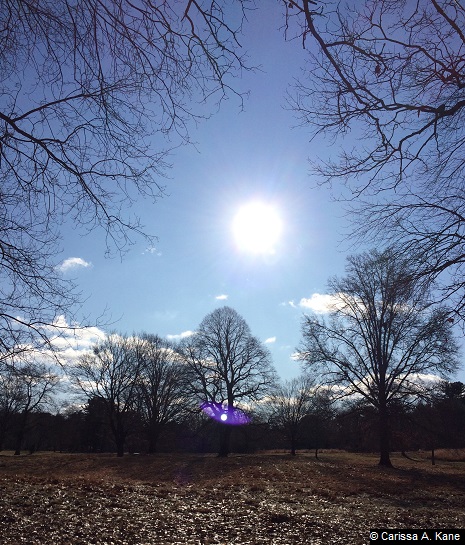
Throughout the ages people in various cultures around the world have discovered and used what is found in nature as remedies for one ailment or another. A star among these natural medicinal resources is the sun. The light provided by the sun has been known to disinfect, heal wounds, straighten curved bones, lift moods, and more, in addition to aiding our sight as we make our way throughout each day.

At the opposite end of the day, there is the moon and stars, which also provide light and a sense of direction throughout the night. When combined, the light from the sun, the moon, and the stars, radiant and powerful as they may be, are but a portion of the light of God.

No longer shall the sun
be your light by day,
Nor shall the brightness of the moon
give you light by night;
Rather, the Lord will be your light forever,
your God will be your glory. – Isaiah 60:19

In creation, the Source is always greater than the sum of its parts. That is what faith is all about. It is trusting that God, and the grace of God, is ever present. It is believing despite not having all the answers. It is embracing each moment, making the sacrifice, taking the risk, seeking what is just, and living from the heart that knows, anything is possible through God.

If the sun and various other natural elements in creation can be the cause of an abundance of healing, then how much more magnificent, that which can occur through the hands of our Creator.

In all situations, in every place, and at all times, seek the Light, soak it in, and through the grace of God, take courage, transform, and be the Light.

Light2

Along the Way…

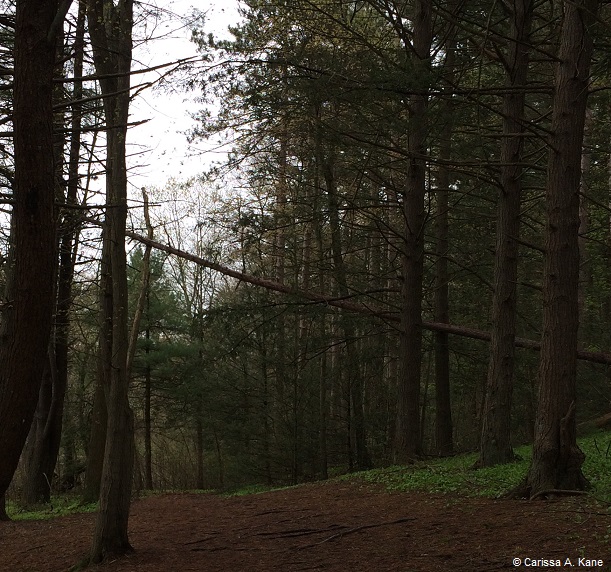
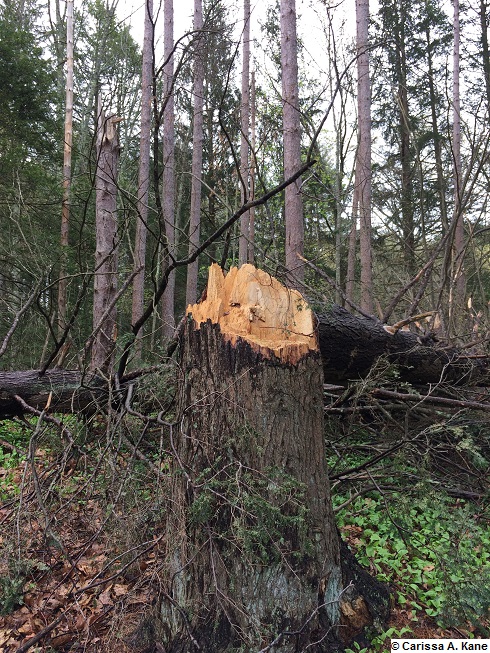
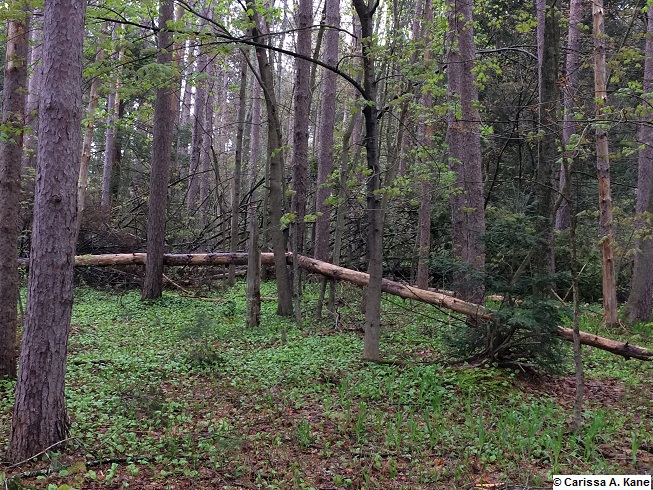
Upon entering the wooded path, the trees stood tall and proud. However, in between and all along the way, there were remnants of once healthy, strong trees, now leaning…

Leaning

Fallen…

Fallen.jpg

Bent…

Bent

And broken.

Broken

Yet, all around the storm driven violence, new life infused from the richness of the soil… the richness of its Source.

Despite devastation, and in the midst of it, there remains Shelter…

Shelter

Guidance…

Guide

And the healing presence of Light, to be held, as well as reflected…

Reflect

The Lord is good:
the kindness of the Lord endures forever,
and the Lord’s faithfulness, lasts through every generation. – Psalm 100:5

On the Other Side…

Waiting and thinking, I looked around and then straight ahead. Just beyond the sidewalk there was a chain looped through poles in the ground, creating an understanding to refrain from treading across the grass. Then, beyond that, there was a robin. It was also on pause and taking in things. Although both planted on ground… on earth, from the pavement, the robin was on the other side.

So many situations in life can involve, or evolve into, being on one side or the other. Yet faith calls us to strive to show compassion, mercy, and understanding to all. Faith calls us to unity despite any differences we may have.  Yet, so often, the human experience creeps toward unrest and disharmony rather than one of recognizing, appreciating, or celebrating the many different faces through which our Oneness remains.

Jesus said to the Pharisees and scribes, “Let the one among you who is without sin be the first to throw a stone at her.” We are reminded as we read or listen to this passage about the woman caught in adultery (John 8:1-11), it is not for us to judge and condemn others. We are shown Jesus correcting the leaders of that time who are abusing their authority. Alongside this, we also see Jesus’ mercy in how he responds to the woman.

As we proceed through life, none of us get it “right” all the time. We trip… we fall… we stumble at times. That is what humans do. It is not what is important though. What matters is whether we are open to the invitation, and able to consider the possibility that in some situations we may not be so different from what is on the other side. In doing so, we can see common ground, and through the grace of God, it leads to mercy, compassion, and understanding.

When looking to the other side, what do you see? How do you see the other side in yourself, and yourself in the other side?

Robin

Jesus went to the Mount of Olives.
But early in the morning he arrived again in the temple area,
and all the people started coming to him,
and he sat down and taught them.
Then the scribes and the Pharisees brought a woman
who had been caught in adultery
and made her stand in the middle.
They said to him,
“Teacher, this woman was caught
in the very act of committing adultery.
Now in the law, Moses commanded us to stone such women.
So what do you say?”
They said this to test him,
so that they could have some charge to bring against him.
Jesus bent down and began to write on the ground with his finger.
But when they continued asking him,
he straightened up and said to them,
“Let the one among you who is without sin
be the first to throw a stone at her.”
Again he bent down and wrote on the ground.
And in response, they went away one by one,
beginning with the elders.
So he was left alone with the woman before him.
Then Jesus straightened up and said to her,
“Woman, where are they?
Has no one condemned you?”
She replied, “No one, sir.”
Then Jesus said, “Neither do I condemn you.
Go, and from now on do not sin any more.” – John 8:1-11