With the vast array of devastation caused by wildfires on the left side of the United States and hurricane Ida and resulting treacherous weather throughout the right side of the United States, not to mention ongoing multi-faceted struggles around the entire world, it can be easy to fall prey to a sense of doom, regardless of whether one is experiencing dire need, a direct impact, on the fringes of such impact, or farther removed.
On what is a dreary day, on the feast of St. Teresa of Calcutta, it is good to remember that despite the darkness, God is with us amid all these trials and tribulations. Leading the way, before one might even know it. Providing light and love. Lifting spirits, opening minds, increasing the will to help, and strengthening the bond of human hearts toward one another.
Say to the fearful of heart: Be strong, do not fear! Here is your God, he comes with vindication; With divine recompense he comes to save you.
– Isaiah 35:4
“There is a light in this world, a healing spirit more powerful than any darkness we may encounter. We sometimes lose sight of this force when there is suffering, too much pain. Then suddenly, the spirit will emerge through the lives of ordinary people who hear a call and answer in extraordinary ways.”
I remember as a young student feeling fascinated as I learned all about the human heart, its functions and their importance. I was most amazed by the strength of the heart and its capacity, pumping 2,000 gallons of blood each day throughout the body. It wouldn’t be until years later that my amazement would become even greater in coming to understand the heart’s greatest asset—the rhythm, steady and strong, seeking to draw one closer, revealing God, and yearning not only to keep the connection of love, peace, and healing going, but also to help it to thrive without bounds. As the 13th century Persian poet, Rumi, wrote, “Love is the bridge between you and everything.”
In chapter 7 of the Gospel according to Mark, Jesus says to the Pharisees,
“Well did Isaiah prophesy about you hypocrites, as it is written:
This people honors me with their lips,
but their hearts are far from me;
in vain do they worship me,
teaching as doctrines human precepts.
You disregard God’s commandment but cling to human tradition.” (Mk 7:6-8)
Jesus is calling on them to be honest… to look more closely and to see that their hearts are not leading them in union with God. Their love has become misplaced. It is self-serving and focused on what is earthly rather than what is truly, right and just. Their words and actions do not come together to reflect the beauty of God’s goodness—the law that is placed in every heart—dignity, care, and love of all who are placed alongside us whether in location, heart, or mind.
This same love is what the author of the Letter of James is calling people to when he writes,
“Know this, my dear brothers: everyone should be quick to hear, slow to speak, slow to wrath,
for the wrath of a man does not accomplish the righteousness of God.
Therefore, put away all filth and evil excess and humbly welcome the word that has been planted in you and is able to save your souls.
Be doers of the word and not hearers only, deluding yourselves.” – Jas 1:19-22
No matter where one might be, or the circumstances that exist, Love is the only true hope there is. And while there may be many things that seem beyond reach, or out of control, Love is the anchor that holds us altogether, moves us into action, and brings peace, or peace of mind, strength, truth and justice, never growing cold.
In the last chapter of the Book of Joshua (Jos 24), Joshua, who succeeded Moses, is nearing death when he gathers the tribes of Israel and speaks the words of the Lord. First, the Lord helps the people to remember the truth of their journey together and God’s presence throughout. Then, the ageless choice, just as poignant today as back in Joshua’s times and prior, is offered: “…choose today whom you will serve…” (Jos 24:15).
Oftentimes the way of society tends toward reaching heights higher than, obtaining more than, and being waited upon or served as if elevated in position. And in that striving and the push to achieve, there are all sorts of temptations moving in and out, and throughout, trying to slide into place without notice, shifting motivation away from what might truly be good. Then, there is also the voice of reason—Truth, seeking balance, calling for heart and soul to live and breathe in all that drives the choices being made, actions being taken, and the spirit in which they are carried out.
So how does one proceed with so many competing interests? More simply, slowing down with prayerful moments that lead to the choosing in each, and every, day.
This past Wednesday was the feast day of Alberto Hurtado Cruchaga, S.J. He was born in 1901 and lived in Chile, becoming a Jesuit priest who served the poor and worked for social justice until his death in 1952. The following prayer is his prayer. It seeks integrity, hope, and faith in God and reminds one of Truth—all things are possible with God.
Prayer of St. Alberto Hurtado Cruchaga, S.J.
Lord, help me to speak the truth in front of the strong and not say lies to gain the applause of the weak.
If you give me fortune, don’t take happiness away from me. If you give me strength, don’t take reason away from me. If you give me success, don’t take humility away from me. If you give me humility, don’t take dignity away from me.
Help me always see the other side of the medal. Do not let me blame others of treason for not thinking like me. Teach me to love people as myself and to judge myself as others.
Do not let me fall into pride if I triumph nor in despair if I fail. Rather, remind me that failure is the experience which precedes triumph.
Teach me that forgiving is the grandest for the strong and that revenge is the primitive sign of the weak.
If you take away my fortune, leave me with hope. If you take away success, leave me with the strength to triumph from the defeat.
If I fail people, give me the courage to ask pardon. If the people fail me, give me the courage to forgive. Lord, if I forget You, don’t forget me.
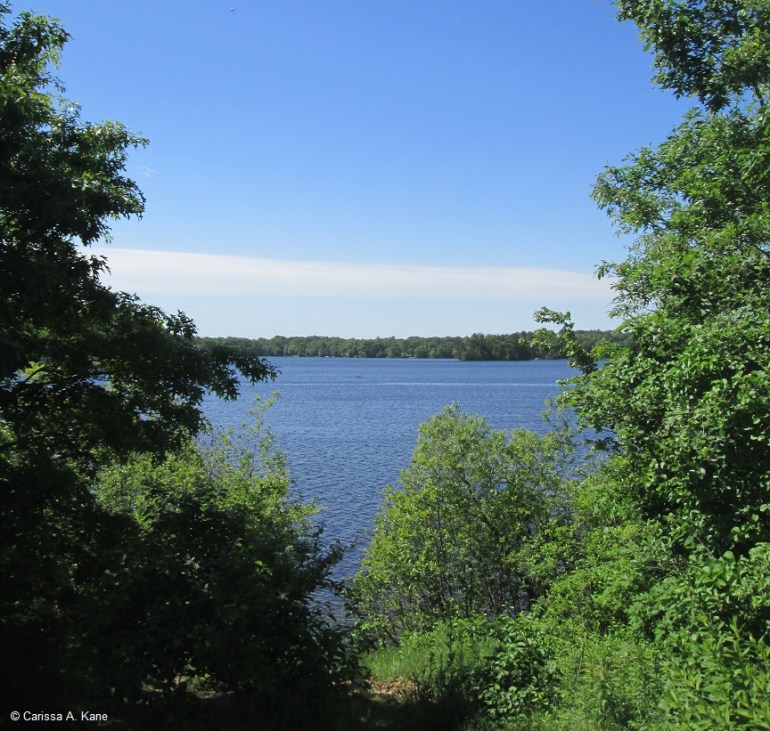
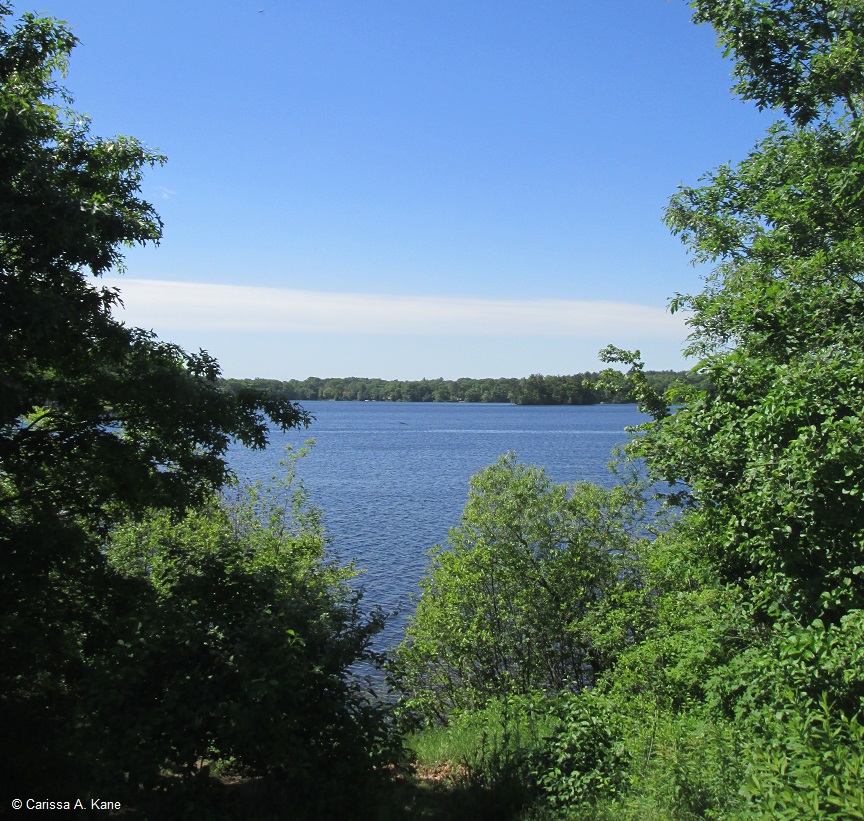
Pulling into an open lot along a scenic road, initially it seemed as though there was no place from which to view the water. Bushes and trees were all around, as if a fortress blocking the way to the water gently waving behind it. However, stepping out into the fresh air, with each movement closer, possibilities arose, until at last, nearer still and despite any preconceived notions, a path, narrow as could be, but still present, a way through appeared.
Oftentimes, there is much more than one might see or think there to be, yet it can be tempting to refrain from asking, disregard the invitation, and instead turn back, embrace presumptions from afar, and choose a side, rather than trusting that call, choosing to discover (ask and receive), allowing paths to appear and Truth to become known.
In the passage below, what resonates most with you at this moment? Which person(s) do you identify with and in what ways? How do you desire to be, and to live? Where is God in that desire?
The whole Israelite community grumbled against Moses and Aaron. The Israelites said to them, “Would that we had died at the Lord’s hand in the land of Egypt, as we sat by our fleshpots and ate our fill of bread! But you had to lead us into this desert to make the whole community die of famine!”
Then the Lord said to Moses, “I will now rain down bread from heaven for you. Each day the people are to go out and gather their daily portion; thus will I test them, to see whether they follow my instructions or not.
On the sixth day, however, when they prepare what they bring in, let it be twice as much as they gather on the other days. So Moses and Aaron told all the Israelites, “At evening you will know that it was the Lord who brought you out of the land of Egypt; and in the morning you will see the glory of the Lord, when he hears your grumbling against him. But who are we that you should grumble against us?”
And Moses said, “When the Lord gives you meat to eat in the evening and in the morning your fill of bread, and hears the grumbling you utter against him, who then are we? Your grumbling is not against us, but against the Lord.”
Then Moses said to Aaron, “Tell the whole Israelite community: Approach the Lord, for he has heard your grumbling.” But while Aaron was speaking to the whole Israelite community, they turned in the direction of the wilderness, and there the glory of the Lord appeared in the cloud!
The Lord said to Moses: “I have heard the grumbling of the Israelites. Tell them: In the evening twilight you shall eat flesh, and in the morning you shall have your fill of bread, so that you may know that I, the Lord, am your God.”
In the evening quail came up and covered the camp. In the morning a dew lay all about the camp, and when the dew evaporated, there on the surface of the desert were fine flakes like hoarfrost on the ground. On seeing it, the Israelites asked one another, “What is this?” for they did not know what it was. But Moses told them, “This is the bread that the Lord has given you to eat.” – Exodus 16:2-15
From childhood, the name Anthony has evoked two thoughts more prominently than others, spaghetti day and help in finding what has been lost— “St. Anthony, please come around: something is lost, and it cannot be found,” or the less formal, “Tony, Tony, look around. Something’s lost and must be found!”
Today, June 13th, is the feast day of St. Anthony of Padua whose life in words and actions is an inspiring example of participation in the Kingdom of God, here on earth, and everlasting. Anthony accepted the invitation, sought union with the Lord, and allowed himself to be led, leaving behind a path that guaranteed him earthly wealth and power. It seems so appropriate that the name Anthony means fortunate… blessed… praiseworthy… priceless. Words that create an image of abundance, and that one can also imagine applying to the Kingdom of God.
In the Book of the Prophet Ezekiel, it is written:
Thus says the Lord God: I, too, will take from the crest of the cedar, from its topmost branches tear off a tender shoot, and plant it on a high and lofty mountain; on the mountain heights of Israel I will plant it. It shall put forth branches and bear fruit, and become a majestic cedar. Birds of every kind shall dwell beneath it, every winged thing in the shade of its boughs. And all the trees of the field shall know that I, the Lord, bring low the high tree, lift high the lowly tree, wither up the green tree, and make the withered tree bloom. As I, the Lord, have spoken, so will I do. – Ez 17:22-24
Reading this passage, listening to the words and phrases within it, and considering the example of St. Anthony, one is reminded that just as the Lord stooped down, becoming one of, and with us, we also, are called to abandon lofty ideals, places, and practices. While the world, and all that is passing, might seek to grip and hold us down, God seeks to meet us on ground level, and elevate us to that which is eternal. In what ways, might this Divine invitation be accepted more fully?
“The creator of the heavens obeys a carpenter; the God of eternal glory listens to a poor virgin. Has anyone ever witnessed anything comparable to this? Let the philosopher no longer disdain from listening to the common laborer; the wise, to the simple; the educated, to the illiterate; a child of a prince, to a peasant.” – St. Anthony of Padua
Inside seeking shelter on a very stormy day, I hear the wind howling… beckoning, come and see.
Looking out the window, great and mighty power, the surge before my eyes.
The wind, it whips and stirs. The waves, they’re in a frenzy, crashing down on all, in the way or not.
Rain, it’s driven sideways. I wonder if it minds.
Then, the birds. Something else. Just being birds, but more. Unphased by all the bother. Flying high, swooping low, drifting, diving, floating, gliding, in the winds that blow.
Beauty in the chaos. Stillness in the storm.
Trusting, not resisting.
All, it will be well.
Listening, not withdrawing, but drawing from within.
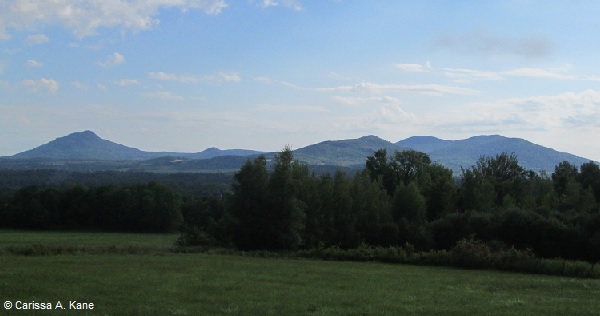
Driving through a countryside, a few years ago, on a quiet summer day, we started to come across farm after farm sprinkled with round bales of hay. Not seeing much activity, we continued the journey, enjoying being surrounded by the scenery and its peace.
Then, after some time, we came to a place where the farmland, still wide open and stretching far ahead, seemed to suddenly meet the mountains. It seemed both so out of place and so appropriate at the same time. A beautiful sight to behold and, having never traveled this road before, completely unexpected.
Taking in our surroundings, I started to wonder what it was like at the foot of that mountain that seemed so way off in the distance. What might be waiting there, or on the other side?
While I may have been tempted to stay where I was and speculate from afar, maybe even labeling what was there—obstacle or challenge… perfect match… gift unclaimed… perhaps, none, some, or all, of the above, it was the beauty that lies within, connecting to the beauty directly before my eyes, that drew me in, reaching into my soul, and calling to me… remember.
What lies behind us and what lies in front of us pales in comparison to what lies within us. – Ralph Waldo Emerson
On the last and greatest day of the feast, Jesus stood up and exclaimed, “Let anyone who thirsts come to me and drink. As Scripture says:
Rivers of living water will flow from within him who believes in me.”
He said this in reference to the Spirit that those who came to believe in him were to receive. There was, of course, no Spirit yet, because Jesus had not yet been glorified. – John 7:37-39
In a few weeks, my oldest child will be turning the page toward a new chapter in his life, as he graduates. So many years have passed and so much has transpired since his birth, yet it’s still hard to believe that this milestone is already here. As I think about the journey as a parent, I recall moments of feeling joy and pride as well as moments of feeling fear and uncertainty. What an awesome responsibility… what an awesome privilege. But then, isn’t that what love is all about? Being present, holding on, lifting up, letting go, and along the way, being drawn toward the balance that lies between?
In the Gospel according to John, Jesus says:
“As the Father loves me, so I also love you. Remain in my love.” (15:9)
How do we do that?
We remain in love, by choosing to live in Love. When we choose to be present to each other and creation, we are also choosing to be present to God, and God’s love for us. This is the source of joy, and it can only be complete when it is shared and flowing freely among us. So often though, things get in the way, distracting us, and pulling us apart from each other, as well as from God.
When we remain in God’s love though, we can see things for what they are more readily, and withhold the judgment that seeks to lead us against one another rather than bring us together. What an awesome responsibility… what an awesome privilege. But then, isn’t that what love is all about? Being present, holding on, lifting up, letting go, and along the way, being drawn toward the balance that lies between?
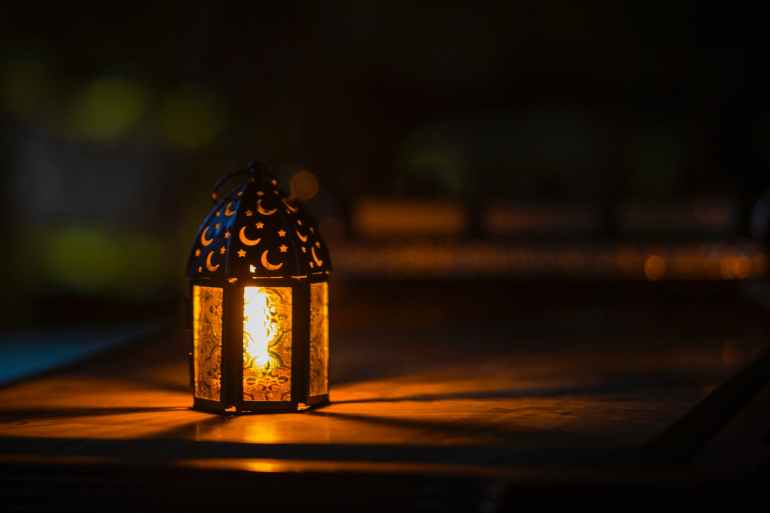
Be a lamp, or a lifeboat, or a ladder. Help someone’s soul heal. Walk out of your house like a shepherd.” — Rumi
One evening, a long time ago, as a teenager, I was travelling by car with a few friends, when the driver had to jam on the brakes, to avoid an accident. Prior to that moment, there was lots of chatter going on as we drove. However, as the car swerved to stay on the road, narrowly missed a sign that had been to the right of the car, but was now on the left side, and finally screeched to a halt, the noise ceased. In those seconds, it was as if we had shifted into slow motion and were transported into a vacuum, void of all sound. Hearts pounding, we just sat there, recognizing the potential disaster we had escaped. Then, after catching our breaths, we drove on, continuing in silence all the way home. None of us spoke about what had happened.
Throughout life, sometimes events can suddenly thunder into presence of mind, body, and soul. They can do so in such a powerful way that all that is left behind is silence. In chapter 9 of the Gospel according to Mark, the Transfiguration of Jesus is described as both an awesome and frightening experience for the apostles, Peter, James, and John. What transpired, was completely unexpected. In verse 6, Jesus is described as somewhat speechless in terms of how to respond to his companions—“He hardly knew what to say, they were so terrified.”
Clearly, this event shook the apostles; stopping them in their tracks, and reshaping the manner in which they would receive and respond to what was to come, whether consciously or subconsciously. While it seems fitting that the occurrence would happen on a mountain top, what happened would have been a life altering experience, regardless of where it took place or how it was understood at the time. In the Transfiguration of Jesus, eyes were wide open and seeds were firmly planted.
Oftentimes, the Divine is overlooked, dismissed, forgotten, or left behind simply because it’s easier, more convenient, or perhaps preferred, to believe and hold onto experiences that happen where and how one might expect them to occur. Yet, God is not deterred. On that evening so long ago, I remember being shaken and stirred. I also remember the deafening silence all the way home. And in that, the memory etched… to return, here and there. Only with time, and a lot of it, could I see that God was with us that night.
How patient God is! A reminder of the opportunity that openness to the wisdom of each moment, whether it is here and now, in the past, or yet to come, brings. No matter the locale or the emotions an experience evokes, God is with us, with a desire to take hold, to call us forward, and to help us remember as we do, the wisdom that is all around us.
Jesus took Peter, James, and John and led them up a high mountain apart by themselves. And he was transfigured before them, and his clothes became dazzling white, such as no fuller on earth could bleach them. Then Elijah appeared to them along with Moses, and they were conversing with Jesus. Then Peter said to Jesus in reply, “Rabbi, it is good that we are here! Let us make three tents: one for you, one for Moses, and one for Elijah.” He hardly knew what to say, they were so terrified. Then a cloud came, casting a shadow over them; from the cloud came a voice, “This is my beloved Son. Listen to him.” Suddenly, looking around, they no longer saw anyone but Jesus alone with them.
As they were coming down from the mountain, he charged them not to relate what they had seen to anyone, except when the Son of Man had risen from the dead. So they kept the matter to themselves, questioning what rising from the dead meant. – Mk 9:2-10
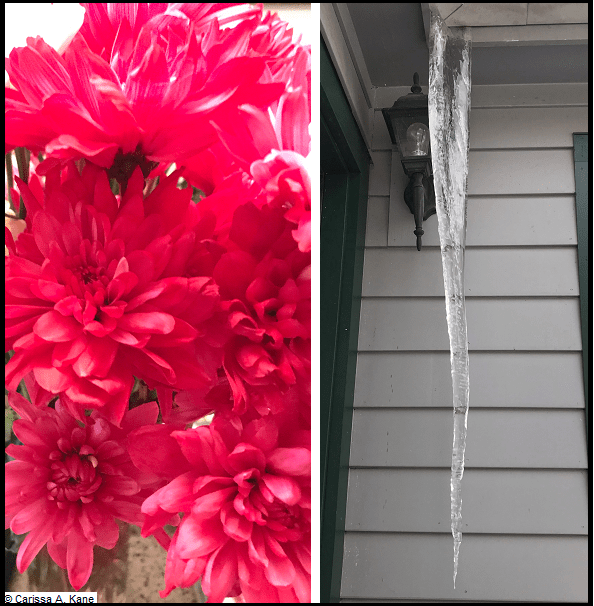
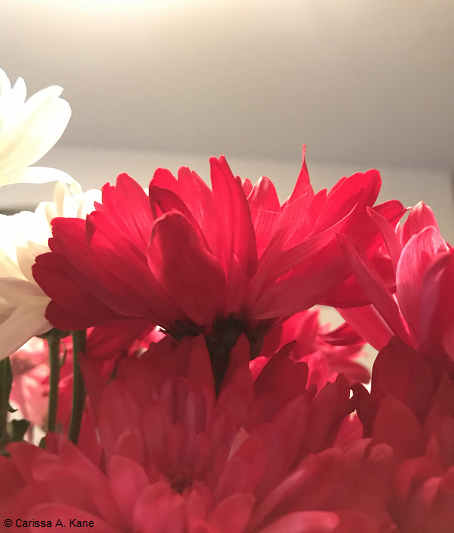
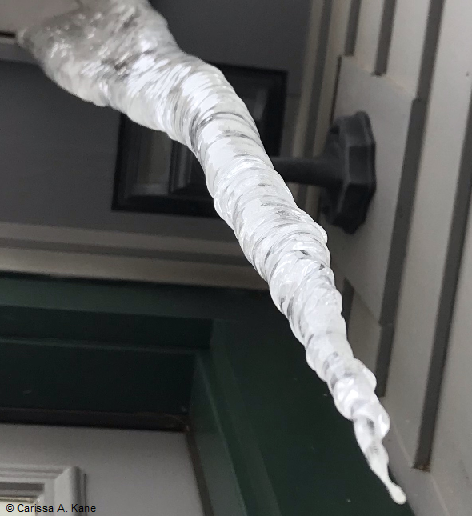
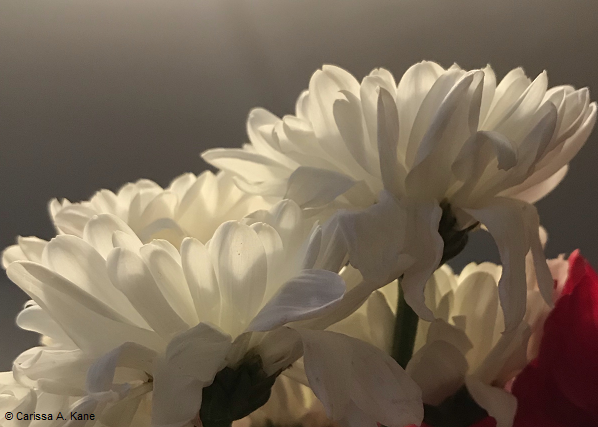
Flowers and an icicle do not seem to fit together, and yet, they do, or they did yesterday. From a distance, each called attention in its own manner, a splash and depth of color and a long, glass-like spear.
Up close, and from numerous angles, with the light, and contrasted against the background, the delicate nature of each made prominent. There were so many petals, all the same composition, with similar shapes, and tips with greater variation, but coming together as one in each flower.
Then, the icicle, seemingly one big, smooth flow of water, many molecules, frozen… stuck in time. Yet, stepping nearer, not so plain and clear, layers, twists, and turns coming together to create it.
The beauty of nature in all its various forms comes into presence, like life… like love… like God, in both the expected and unexpected ways.
Embracing the moment, quietly, silently, gratefully, and allowing it to saturate one’s being, is the beginning of knowing, exercising, and extending Love. It is true that Love is timeless, and for the times, but in order to carry on toward fruition, Love must be experienced and embodied. For one can only put forth that which resides within. This is why time, and the way in which it is used, or not, is of the essence.
In the midst of whatever season one might find oneself, the benefit of using, spending, making, or taking time to rest in the love of God, wherever and however it suits one best, is never wasted.
Love takes off the masks we fear we cannot live without and know we cannot live within. — James Baldwin











You must be logged in to post a comment.