“Christ is risen from the dead, and by His death He has trampled upon death, and has given live to those, who are in the tombs.” – the Troparion of Pascha
Taking it on the level, as only You, Lord, can do. Giving what humanity, can only aspire to grasp.
Falling down, then getting up, pushed time upon time again. Light of Life into darkness, You brought life—heart, mind, and soul.
Impostors come, and they go, but Your Spirit, Lord, remains. Waiting our reception, Lord, not for one, but for the many.
After ministering to many people in Capernaum, Jesus sets out for a deserted place, yet the crowds search for, and find him. They don’t want him to leave. However, he explains that he must go because his ministry and proclamation of the Kingdom of God must extend to other villages and towns. After witnessing and hearing his preaching, and all the healings, how do you imagine the people of Capernaum took this news? Do you think they were skeptical or upset at the idea of other people, from a different village or town, and who perhaps they considered as outsiders, being the recipients of Jesus’s preaching and healing, too?
What’s it like when you consider Jesus’s mission as one that extends to all people, regardless of who they are or from where they come?
The Gospel for the Fifth Sunday in Ordinary Time (Luke 5:1-11), begins with Jesus having moved on to Judea and then Lake Gennesaret. It is written:
“While the crowd was pressing in on Jesus and listening to the word of God, he was standing by the Lake of Gennesaret.” – Luke 5:1.
Take some time to put yourself in the crowd. As you draw in toward Jesus and listen to the word of God, what comes into your mind, and how is your heart stirred? What prayer arises within you?
As the Gospel passage continues, Jesus gets into Simon’s boat and asks him to push away from the shore. This is not so that he can leave the crowd that has been closing in on him. Rather, it is so that he can continue to minister, teaching them from the boat.
Envision yourself on the shore with Jesus and then in the boat a short distance from the shore. What’s different when you’re in the crowd versus when you’re in the boat? What might Jesus want you to learn from his actions in this situation? What words does Jesus have for you and the crowd?
When Jesus’s preaching to the crowd ends, it is written:
“…he said to Simon, ‘Put out into deep water and lower your nets for a catch.’ Simon said in reply, ‘Master, we have worked hard all night and have caught nothing, but at your command I will lower the nets.’ When they had done this, they caught a great number of fish and their nets were tearing. They signaled to their partners in the other boat to come to help them. They came and filled both boats so that the boats were in danger of sinking. When Simon Peter saw this, he fell at the knees of Jesus and said, ‘Depart from me, Lord, for I am a sinful man.’ For astonishment at the catch of fish they had made seized him and all those with him, and likewise James and John, the sons of Zebedee, who were partners of Simon. Jesus said to Simon, ‘Do not be afraid; from now on you will be catching men.’ When they brought their boats to the shore, they left everything and followed him.” – Luke 5:4-11
After working hard all night to no avail, Peter does as Jesus asks. He goes back out into the deep part of the sea, and with Jesus by his side, where there was nothing, now there is an abundance, so much so that his nets and the boats can hardly hold it. However, for this to be possible, Peter had to first leave behind and let go of what he had already come to know—he was out all night and there were no fish to be caught—and rather than holding onto defeat or being discouraged, he had to put his hope, faith, and trust in Jesus.
Recall a time when you experienced a challenge, difficulty, or drought of some kind and how faith and Jesus’s presence helped you? What were your prayers like during that time? In what ways did you avail yourself, or help yourself, to be open to listening to and being present to Jesus? Thinking of that time, how can you relate to Peter in this Gospel passage?
Turning to today, think about a situation you’re currently facing. How are you inspired as you continue to seek and draw nearer to Jesus?
“On the day I cried out, you answered; you strengthened my spirit.” – Psalm 138:3
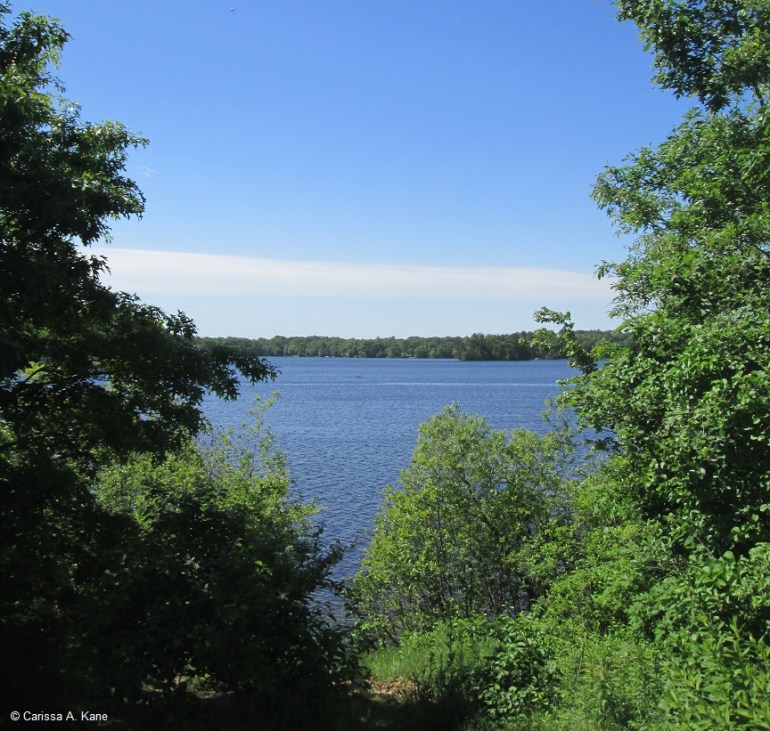
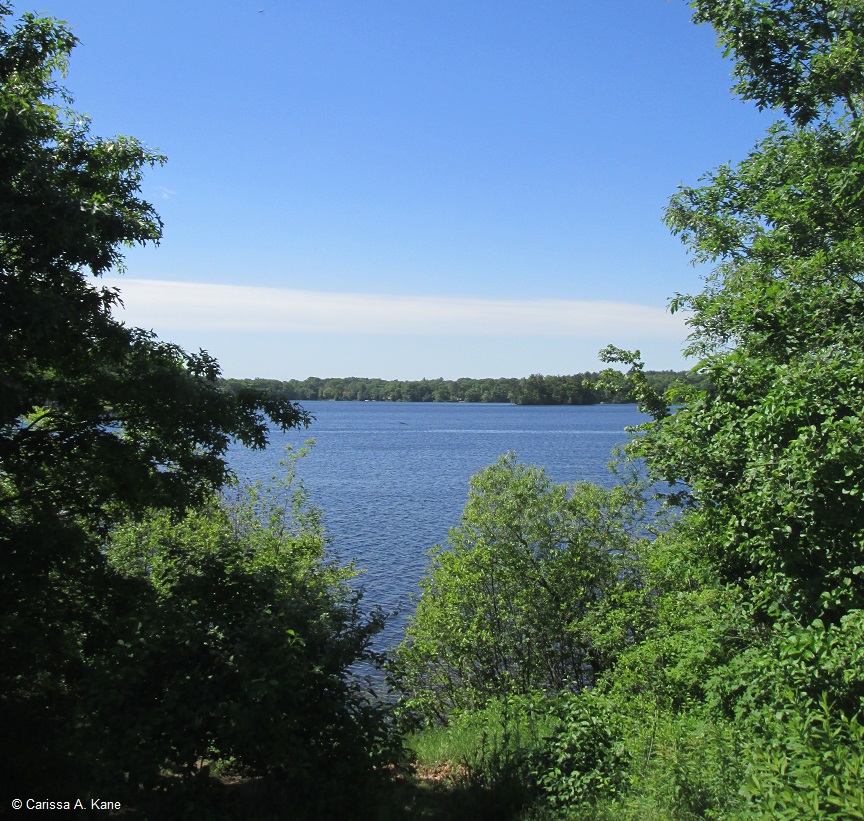
Pulling into an open lot along a scenic road, initially it seemed as though there was no place from which to view the water. Bushes and trees were all around, as if a fortress blocking the way to the water gently waving behind it. However, stepping out into the fresh air, with each movement closer, possibilities arose, until at last, nearer still and despite any preconceived notions, a path, narrow as could be, but still present, a way through appeared.
Oftentimes, there is much more than one might see or think there to be, yet it can be tempting to refrain from asking, disregard the invitation, and instead turn back, embrace presumptions from afar, and choose a side, rather than trusting that call, choosing to discover (ask and receive), allowing paths to appear and Truth to become known.
In the passage below, what resonates most with you at this moment? Which person(s) do you identify with and in what ways? How do you desire to be, and to live? Where is God in that desire?
The whole Israelite community grumbled against Moses and Aaron. The Israelites said to them, “Would that we had died at the Lord’s hand in the land of Egypt, as we sat by our fleshpots and ate our fill of bread! But you had to lead us into this desert to make the whole community die of famine!”
Then the Lord said to Moses, “I will now rain down bread from heaven for you. Each day the people are to go out and gather their daily portion; thus will I test them, to see whether they follow my instructions or not.
On the sixth day, however, when they prepare what they bring in, let it be twice as much as they gather on the other days. So Moses and Aaron told all the Israelites, “At evening you will know that it was the Lord who brought you out of the land of Egypt; and in the morning you will see the glory of the Lord, when he hears your grumbling against him. But who are we that you should grumble against us?”
And Moses said, “When the Lord gives you meat to eat in the evening and in the morning your fill of bread, and hears the grumbling you utter against him, who then are we? Your grumbling is not against us, but against the Lord.”
Then Moses said to Aaron, “Tell the whole Israelite community: Approach the Lord, for he has heard your grumbling.” But while Aaron was speaking to the whole Israelite community, they turned in the direction of the wilderness, and there the glory of the Lord appeared in the cloud!
The Lord said to Moses: “I have heard the grumbling of the Israelites. Tell them: In the evening twilight you shall eat flesh, and in the morning you shall have your fill of bread, so that you may know that I, the Lord, am your God.”
In the evening quail came up and covered the camp. In the morning a dew lay all about the camp, and when the dew evaporated, there on the surface of the desert were fine flakes like hoarfrost on the ground. On seeing it, the Israelites asked one another, “What is this?” for they did not know what it was. But Moses told them, “This is the bread that the Lord has given you to eat.” – Exodus 16:2-15
Challenged to see beyond this dreadful thing, the ups and downs around it, and the many other “less than” that exist, as we attempt to rise to the occasion, buds continue to bloom and trees begin to fill in as leaves start to grow. Eggs hatch, and first steps, or first swims, carry on. And as babies become toddlers, the continuum of childhood through adulthood is undisturbed… not deterred, as we all grow, in ways that may differ, or sometimes be the same.
In the face of COVID-19, the precious and the chosen remain, both in this life, and in eternal life. Amid days, leading to months of uncertainty at the hands of this pandemic, lie the new and the renewed at the hands of the Almighty, through the hearts of humanity… and all things living.
“As it was in the beginning, is now, and ever shall be, world without end. Amen.” Glory be to God.
O Me! O Life! – by Walt Whitman
Oh me! Oh life! of the questions of these recurring,
Of the endless trains of the faithless, of cities fill’d with the foolish,
Of myself forever reproaching myself, (for who more foolish than I, and who more faithless?)
Of eyes that vainly crave the light, of the objects mean, of the struggle ever renew’d,
Of the poor results of all, of the plodding and sordid crowds I see around me,
Of the empty and useless years of the rest, with the rest me intertwined,
The question, O me! so sad, recurring—What good amid these, O me, O life?
Answer.
That you are here—that life exists and identity,
That the powerful play goes on, and you may contribute a verse.
As rays of light penetrate the darkness, so to the love of each. And, through the shine and glow of the heart and soul, we know, our God is with us.
Having been at the foot of the cross, witnessing the crucifixion of Jesus, it seems likely that Mary Magdalene would have been overcome with emotion, confusion, and a sense of loss, to say the least. The circumstances in which she found herself had to be unexpected and vastly different than anything she could have imagined.
Yet, Mary of Magdala, held on. She did not become motionless or stuck in despair. Despite however she may have felt after the death of Jesus, and the magnitude of those feelings, she got up and went to the tomb in the days that followed.
Sometimes, like Mary of Magdala, we have to lift ourselves up, and do something. We have to listen to the Voice within, and “go out.”
Sometimes, we have to put ourselves out there, bearing our souls to each other, listening and sharing, trying something new or in a different way… connecting in ways that show we care, at whatever distance we may be.
Oftentimes, we must overcome doubt and fear, in order to experience the joy of being risen.
Oftentimes, when we lift ourselves, we lift others too.
On this Easter, and always, may the love of God, the sacrifice of Jesus, and the example of many, inspire all toward life everlasting.
On the first day of the week,
Mary of Magdala came to the tomb early in the morning,
while it was still dark,
and saw the stone removed from the tomb.
So she ran and went to Simon Peter
and to the other disciple whom Jesus loved, and told them,
“They have taken the Lord from the tomb,
and we don’t know where they put him.”
So Peter and the other disciple went out and came to the tomb.
They both ran, but the other disciple ran faster than Peter
and arrived at the tomb first;
he bent down and saw the burial cloths there, but did not go in.
When Simon Peter arrived after him,
he went into the tomb and saw the burial cloths there,
and the cloth that had covered his head,
not with the burial cloths but rolled up in a separate place.
Then the other disciple also went in,
the one who had arrived at the tomb first,
and he saw and believed.
For they did not yet understand the Scripture
that he had to rise from the dead. – John 20:1-9
Yesterday morning, I was thinking about how up until a few weeks ago, it had been quite some time since I found myself in a position where it was mostly better and necessary for me to stay home than to go out. I found myself remembering days when my children were not in school yet, or days when they were unexpectedly home from school. There was one day in particular that came to mind. I remember it so vividly.
It was a sunny, slightly breezy spring day. I was noticing the color of the sky and feeling the warmth of the sun and the gentle blowing of the wind on my face as I walked along the walkway toward the parking lot where my car was parked. I had just come around the side of a building, and as I did, I saw a familiar face. We exchanged a smile and greeting, and then had a brief conversation.
In the course of sharing how nice it was to start the day, quietly, being where we were, I mentioned feeling frustrated that sometimes, due to the unforeseen and unexpected, I could not be there. Then, I’ll never forget the way, Joe, the older gentleman I was speaking with responded. His words were so comforting and enlightening as he shared the belief that in the sacrifice of Communion to answer the call of motherhood, or any call in the service of others, was in fact, also the reception of Communion. Since that bright and sunny day, not being able to go somewhere I wanted to go or do something I wanted to do has been less frustrating. Now, as I think about my late friend’s words, it is so much easier to open my hands, and let go.
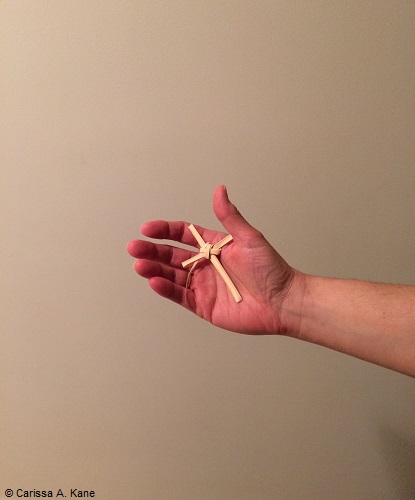
All we ever really hold in the palm of our hands, is our will. And that, is always best when we turn it over to God. Only then, are we truly free. Only then, do we arise.
Jesus advanced a little and fell prostrate in prayer, saying, “My Father, if it is possible, let this cup pass from me; yet, not as I will, but as you will.” – Matthew 26:39
In the garden of our Savior, no flower grows unseen;
His kindness rains like water on every humble seed.
No simple act of mercy escapes His watchful eye —
for there is One who loves me: His hand is over mine.
In the kingdom of the heavens, no suff’ring is unknown;
each tear that falls is holy, each breaking heart a throne.
There is a song of beauty on ev’ry weeping eye —
for there is One who loves me: His heart, it breaks with mine.
Oh, the deeds forgotten; oh, the works unseen,
every drink of water flowing graciously,
every tender mercy, You’re making glorious.
This You have asked us: do little things with great love,
little things with great love.
At the table of our Savior, no mouth will go unfed;
His children in the shadows stream in and raise their heads.
Oh give us ears to hear them and give us eyes that see —
for there is One who loves them: I am His hands and feet.
On a big lake, slouched down at one end of a small canoe-like boat, the joy of my childhood anticipation and enthusiasm at the opportunity for me and one of my sisters to accompany a relative who was going fishing had been rapidly replaced by shaky nerves almost immediately upon embarking from the shore. I was 9 or 10 years old at the time, and although it was so long ago, I vividly remember the experience.
It was early one muggy summer evening and, outside of bugs sporadically buzzing around, there seemed to be no movement in the air. The area around the lake was blanketed in the browns and greens of the many trees that encircled it. The sky seemed as if being slowing drained of its light as the day progressed toward an end. And the lake, when glancing across to the other side, seemed as still as the air.
I could not fathom why the boat was rocking and swaying the way it was when there seemed to be so much at rest around it. I remember feeling like I could not wait to get back to land. My relative was standing and fishing, and my sister was sitting more upright than I. She was searching for any signs of life on and in the water. As she described what she saw over the edge of the boat, I would periodically straighten up enough to get a brief glimpse of what she was talking about before sliding back down into what seemed a safer position.
Then, at one point my sister excitedly said, “Look at that!” To which I reacted, without thought. I sat upright and both of us looked and leaned in the same direction, shifting the weight inside the boat. Luckily the boat did not tip, but the incident did provide a heart racing moment for all of us in the boat, and undoubtedly for the inhabitants of the water in close proximity to it.
As much of a jolt as the experience of almost tipping the boat was, it was also life-altering for the better. The rock and sway of the boat, that had been almost unbearable from the time we had departed from the shore, somehow was not so bothersome any more. And it was as if the fear of being anything other than tucked in or sheltered inside the boat, was tossed out, during those uncertain moments of rapidly rocking back and forth from the sudden shift of weight.
From that point onward, my sister and I both sat upright, together. Taking in, talking, sharing, and discovering the wonder of all that was over the edge of the boat, and all around us. The time passed and as it began to get darker outside, we returned to the shoreline, made our way back to the car, and eventually home.
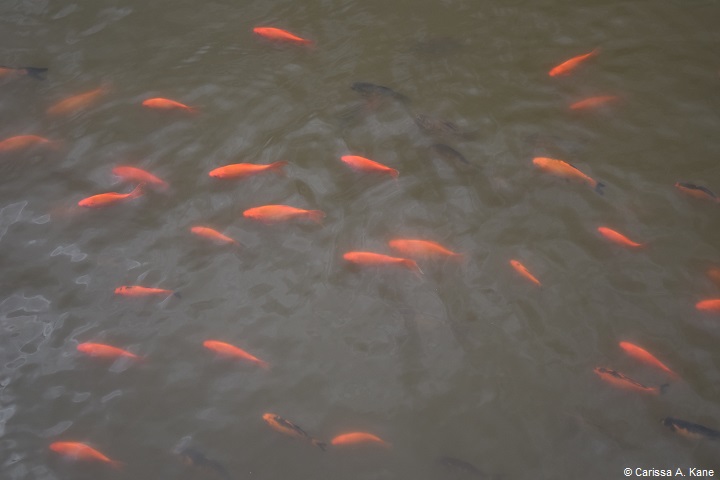
My sister and I did not have our own nets, fishing line, rods, and bait, as we sat in the boat, on the lake, fishing that day. However, we had all we needed—we had each other, and we had God. In a time when there are great efforts being made to “Fish for people” (or to evangelize), sometimes, it’s a matter of rocking the boat, in order to wake up and find the fish.
While the crowd was pressing in on Jesus and listening to the word of God, he was standing by the Lake of Gennesaret. He saw two boats there alongside the lake; the fishermen had disembarked and were washing their nets. Getting into one of the boats, the one belonging to Simon, he asked him to put out a short distance from the shore. Then he sat down and taught the crowds from the boat. After he had finished speaking, he said to Simon, “Put out into deep water and lower your nets for a catch.” Simon said in reply, “Master, we have worked hard all night and have caught nothing, but at your command I will lower the nets.” When they had done this, they caught a great number of fish and their nets were tearing. They signaled to their partners in the other boat to come to help them. They came and filled both boats so that the boats were in danger of sinking. When Simon Peter saw this, he fell at the knees of Jesus and said, “Depart from me, Lord, for I am a sinful man.” For astonishment at the catch of fish they had made seized him and all those with him, and likewise James and John, the sons of Zebedee, who were partners of Simon. Jesus said to Simon, “Do not be afraid; from now on you will be catching men.” When they brought their boats to the shore, they left everything and followed him. – Luke 5:1-11
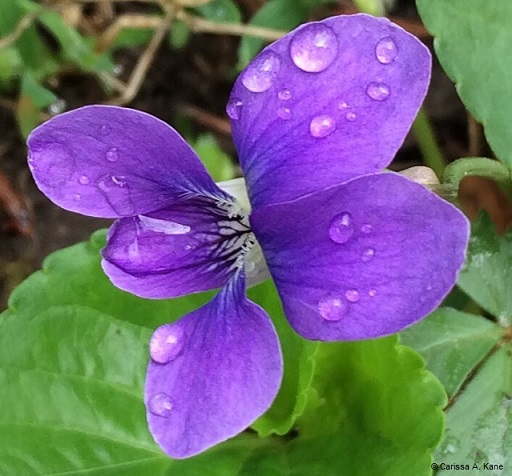
The drops of water lay so gently on the flower’s petals, leaving no evidence of the heavy downpours in the hours before.
Currently, in the state of Hawaii, there are rumblings underground through which lava is flowing. Where there was no evidence of faulty ground visible to the eye, where once perhaps there was what seemed steady, tolerable or even glamorous, now there is disruption. However, depending not on where one stands, but on how one stands, the ground, though it may be cracked and shaking, remains intact.
When Peter and his fellow Apostles were carrying on after Jesus’ death and resurrection, the ground was shaky. The future was unknown, yet they remained intact. They were able to proceed despite differences, disputes, and disruptions. They remained rooted even when the ground was moving.
The Apostles stood firm in their love of God. This was the manner in which they lived—how they stood, wherever they stood. Their love of God and desire to be faithful to God, impassioned them. It opened their hearts and minds, enflaming their spirits and their willingness to listen and to be guided by the Holy Spirit, despite their prior understanding or personal thoughts on the way things should be.
When Peter entered, Cornelius met him and, falling at his feet, paid him homage. Peter, however, raised him up, saying, “Get up. I myself am also a human being.”
Then Peter proceeded to speak and said, “In truth, I see that God shows no partiality. Rather, in every nation whoever fears him and acts uprightly is acceptable to him.”
While Peter was still speaking these things, the Holy Spirit fell upon all who were listening to the word. The circumcised believers who had accompanied Peter were astounded that the gift of the Holy Spirit should have been poured out on the Gentiles also, for they could hear them speaking in tongues and glorifying God.
Then Peter responded, “Can anyone withhold the water for baptizing these people, who have received the Holy Spirit even as we have?” He ordered them to be baptized in the name of Jesus Christ.
– Acts 10:25-26, 34-35, 44-48
While the Apostles lived so very long ago, the way they lived… how they stood, is much more than history. It is like drops of water on a flower petal, waiting on the edges of every experience. It is Wisdom for the ages.
“It is at the edge of a petal that love waits.” – William Carlos Williams
In times when violence and injustice seem so prevalent, one can become disheartened, disappointed, and/or a number of other words that could aptly describe the different levels and ways that the human spirit can be affected. Disturbing news comes at us and is thrown in our faces over and over through various forms of media. Amongst all the mayhem that seems to abound, it can be challenging to see or to be aware that God is continually sowing, and bringing to life, seeds of love, hope, and faith.
When Peter, James, and John accompanied Jesus up the mountain (Mk 9:2-10), they had no idea what was in store for them. They did not know what they would encounter as they journeyed or when they reached their destination, or what would happen afterward. They did, however, have faith… a faith that led them to recognize and to walk with the Lord. In doing so, they were not alone. God also gave them each other to lean on and to help along the way. Similarly, God gives us each other.
Together there is so much we can overcome and achieve. Together, the face of God shines more brightly and can be seen in and through each of us. To seek God’s face is to seek the best in each and every face… in each and every situation… to trust that God is with us as we walk up the mountain and back down, or through the valley, into the woods, and out the other side.
“Of you my heart has spoken: Seek his face. It is your face, O Lord, that I seek; hide not your face from me.” – Cf. Psalm 27 (26):8-9






 HopeThatFloats
You must be logged in to post a comment.