Bound south on a highway, But still looking up, Such a beautiful bridge, Sleek and strong, Yet even it can’t contain the sky. From arc to bow and then its arch, A towering touché, but still, Not missing a pace, It trusts and holds in place, Still, it knows its place.
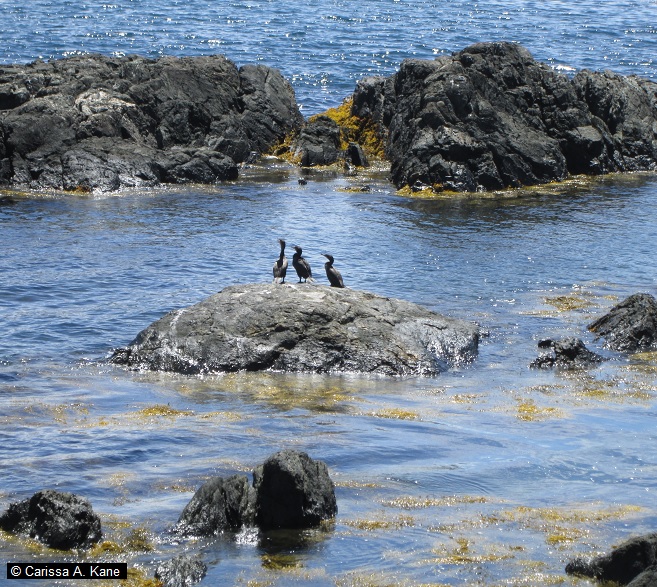
Continuing south, only now on a byway, Only now, looking out, Such a beautiful scene. Ocean all around, Deep and dark blue, Carrying sparkles of light. Then, a group of rocks Hanging out in the seaweed As it sways with each movement. There’s a smaller one in the middle On which three creatures steadily wait. Still looking out and Taking in a magnificent sight, So peaceful and quiet, Inside and out. Next, I see them looking up. Another touché, but still, Not missing a pace, They trust and hold in place, Still, they know their place.
Take my yoke upon you and learn from me, for I am meek and humble of heart; and you will find rest for yourselves. – Mt 11:29
Walking along the pace is brisk in some places and much slower and methodical at others. The path so concrete, laid out as clear as day, but then seemingly disappearing, leaving those travelling it to take stock… to figure the way forward that safely, or maybe wisely, fits them best. Yet, sometimes the “where I am” and “where I want to be” do not meet, or maybe just not yet.
A process that makes time, and the taking of it, not only a good thing, but also a necessary thing. Overall, a journey building upon itself before coming to the end of the trek, or this one, on this plane, at least, and landing on stable ground, or rather learning to be steady on whatever the ground may be.
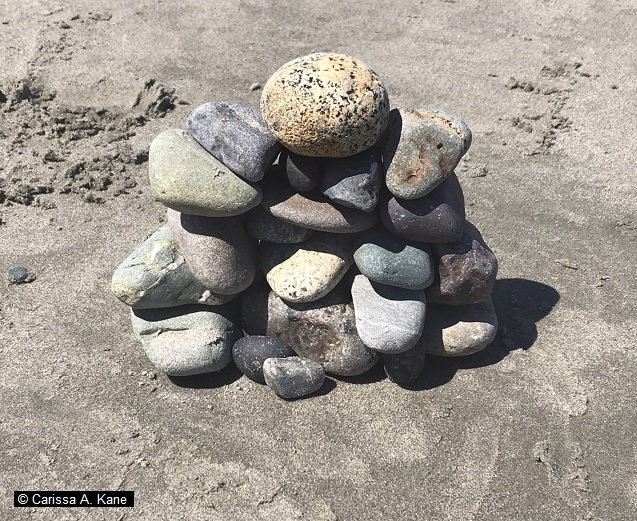
While some building may call for a single column as if marking the way, some calls are for branching out, and lending support. Still rising, tall and strong, a new look on a familiar way, always moving, continuing the journey, sometimes quick, slower at others, maybe even coming to a pause, but ultimately, always moving toward, if not with, greater depth.
Make straight paths for your feet, that what is lame may not be dislocated but healed. – Heb 12:13
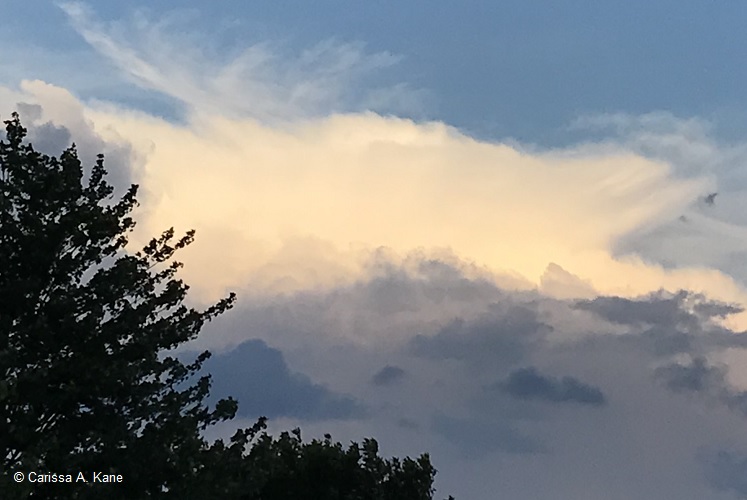
With current day events, we hear and see a great deal about witnesses and influence or power. Yet, oftentimes, information can be skewed or lacking in merit, but still repeated and passed along as fact. This isn’t a new problem, though. Perhaps it is more rampant, but nonetheless it has always been the case that for any situation, it is best when sifted through more than once and held in context, but also alongside openness to truth, no matter what, and a desire to earnestly look at the entire picture. This cannot be done with a battlefield attitude or a mindset of “me against you” or “us against them.”
In chapter twelve of the letter to the Hebrews, St. Paul encourages the people as brothers and sisters, which is the way that he usually refers to the intended recipients of his letters and preaching, to let go of the things that hold them back, and to take comfort, draw strength, and be inspired by the example and sacrifice of Jesus Christ, as Lord and Savior. He starts out this passage reminding his audience of who they really are—brothers and sisters. Then, another reminder when he writes, “Since we are surrounded by so great a cloud of witnesses…” It’s interesting to pause there and not only sit with that image, but also reflect upon it in a personal way. Who is in your cloud of witnesses? How have they influenced you? And you them? Also, what is behind that influence?
Brothers and sisters: Since we are surrounded by so great a cloud of witnesses, let us rid ourselves of every burden and sin that clings to us and persevere in running the race that lies before us while keeping our eyes fixed on Jesus, the leader and perfecter of faith. – Hebrews 12:1-2
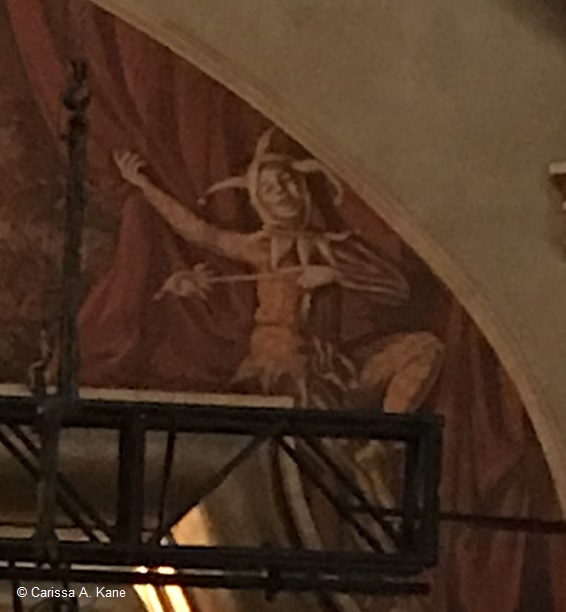
Waiting for the show to begin, But maybe it never stopped. Still, wondering what the next scene may hold, And noticing how the stage is set. Then, up high and to the right, Along the border, Sidelined and on the corner, A character, in all honesty, Sitting there, also waiting, To tell the story, And to make it known, Whether funny or not, The truth behind and around, As well as within it.
God made Truth with many doors to welcome every believer who knocks on them. – Kahlil Gibran
Scanning the area around me, I come across a sign. It marks a trail that cuts through, or rather that is cut through by a lot for parking cars. Noticing how small the trail marker is, I walk closer to see it more clearly. It’s interesting how sometimes signs just seem to pop up, or not. Yet, I am reminded that whether it has been noticed or not, this sign has been here for quite some time. Somehow though, perhaps depending on what one comes looking for and with what type of disposition or intention, it’s understandable how it might go unnoticed. Yet, not to worry, there are other signs too. More places along the path, sprinkled all throughout. Quietly waiting… and waiting, until the moment is ripe, then drawing in what once was looking, but now is seeking, and ready to be guided.
Yes, it is true, “What you seek is seeking you.” –Rumi. However, it can be missed when one is persistent in a fruitless direction. Sometimes one must learn to let go of what they’re holding onto, to find that which awaits them. Thank goodness, there’s more than one marker.
“And I tell you, ask and you will receive; seek and you will find; knock and the door will be opened to you. For everyone who asks, receives; and the one who seeks, finds; and to the one who knocks, the door will be opened.” – Luke 11:9-10
Recently, I took a trip to roam. Yet, I found myself surrounded by lots of moving pieces and it was hard not to get caught up in the pace around me. In a crowded space, quick not being quick enough, too many I’s to dot, too many T’s to cross, and seemingly no time or place for pause. But then, oftentimes there isn’t, until the room for it is made.
“The inspiration you seek is already within you. Be silent and listen.” – Rumi
How tempting it can be sometimes to fall into place and do as others do, or conversely, step out of line and walk away. However, what often gets lost is the balance that allows for the ground that is known as middle. It is the place where things are less extreme, grips and grasps are loosened, and real freedom is experienced. Not beholden to what is less than, the middle is the place that gives permission for mind and heart to meet, and for the soul to connect. And only then, in action there is peace.
“…it is something very near to you, already in your mouths and in your hearts; you have only to carry it out.” – Dt 30:14
I believe that sometimes society seems to be hanging by a thread, but that’s not all I believe…
I believe that God creates similarities, differences, and various dimensions intentionally, rather than carbon copies, or only one kind or way of being.
I believe freedom resides within and is a gift from God entrusted to each, to do with as one wills—as in free will.
I believe that it’s up to each to choose for themselves that which affects, most especially, oneself.
I believe and, also trust, that God has more wisdom than all of us together, seeing things we cannot see and understanding in ways which humans simply cannot.
I believe that to love like Jesus is to love like God—with great depth and breadth, yet personal and unique onto each of us as if we were the only one.
I believe that where hearts and minds are open to the Spirit that is Holy, unity and diversity not only live, but also thrive.
I believe that true victory does not rob others from choosing for themselves, and that what some may celebrate as a “win,” God does not.
I believe the compassion and mercy of God is all encompassing, and that clearly humankind’s is often not.
Most of all, I believe that the greater glory belongs to God, all of “this” will fade away, and that ultimately, through the hearts that are willing, God’s unifying way of love, compassion, and mercy prevails.
I believe that sometimes society seems to be hanging by a thread, but maybe sometimes that’s what we need to be.
And Mary kept all these things, reflecting on them in her heart. – Luke 2:19
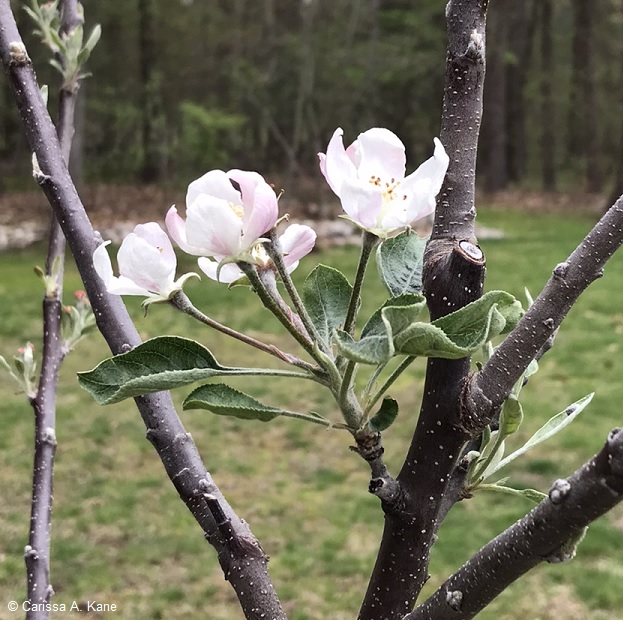
Watching as the branches fill in, flowers blossom, pollen wafts through the air, and Spring burgeons and unfolds, there is a sense of awe. In the Book of Revelation, it is written, “The One who sat on the throne said, ‘Behold, I make all things new.’” (Rev 21:5a). Not some things, or only certain things, but all things. Thinking about this, I cannot help but consider this concept further and ask, “Am I open to all things being made new by God?”
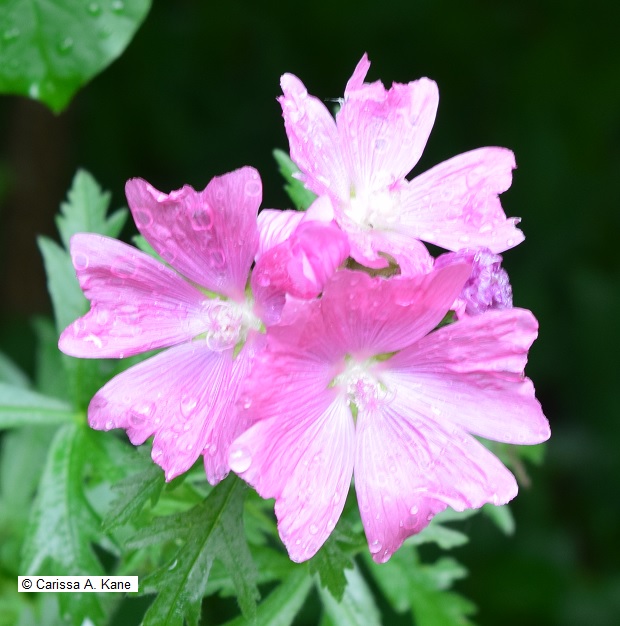
The flowers grow and open, pretty much wherever they are planted. And certainly, there are some conditions necessary for their maturity and well-being—light, water, nutrients, and some level of protection from harsher elements and realities. However, the things vital to their growth can be found or seep in even in unexpected places, and overall, flowers grow where they will.
In chapter 14, verses 21-27, of the Acts of the Apostles, we continue to learn of the experiences of Paul and Barnabas as they travel on, inspired by their discipleship desire. Their journey leads them back to Antioch, the place of resistance from where they were expelled in chapter 13.
It is written:
“From there they sailed to Antioch, where they had been commended to the grace of God for the work they had now accomplished. And when they arrived, they called the church together and reported what God had done with them and how he had opened the door of faith to the Gentiles.” – (verses 26-27)
Imagine. God called them to something more, launching something new from the very place that was not open to receiving them at the time. It turns out God had somewhere else in mind for them. How did they react or respond?
Paul and Barnabas were willing to let go of their notions and allow themselves to be led to other territories where they not only experienced what God had in mind, but also deepened their faith. Eventually, they were led back to Antioch, where, because of God who makes all things new, they were able to meet resistance with something more, something stronger, faithful witness to the Glory of God.
So just as flowers grow where they will, so too Paul and Barnabas… so too us. If we are open to it.
On the Fourth Sunday of Easter, we read about the experience of Paul and Barnabas touching the hearts of the Gentiles (perhaps seen as the outsiders) while enraging those considering themselves more as chosen, but of a different persuasion. Things seem to get off to a good start, but then the atmosphere changes. However, despite the change to an overwhelmingly inhospitable environment, the disciples hold firm to the Way even as they are being thrown out of Antioch. We read, “So they shook the dust from their feet in protest against them, and went to Iconium” (Acts 13:51).
It’s interesting that Paul and Barnabas left Antioch, a city whose name means, “resistant, holding out against” and went on to Iconium, which means “City of the Image,” where they were more well-received, at least for a little while, before being led on to other territories. As with Jesus, with the disciples, there is always room for choice; they do not practice coercion.
We also read in this section of Scripture, “The disciples were filled with joy and the Holy Spirit” (Acts 13:51-52). What a combination! What’s it like to consider this disposition on the heels of them being expelled from Antioch? In what ways do you see the influence of Jesus, the Good Shepherd, in the reactions and responses of Paul and Barnabas, and their willingness to be led by the will of God, which is not rigid, and they cannot, and do not, know ahead of time?
In the Gospel according to John, Jesus says:
“My sheep hear my voice; I know them, and they follow me. I give them eternal life, and they shall never perish. No one can take them out of my hand. My Father, who has given them to me, is greater than all, and no one can take them out of the Father’s hand. The Father and I are one.” – Jn 10:27-30
Contemplating the Gospel as the living Word of God, if someone told you a story about an inhospitable experience, perhaps one that caused them to pick up and leave, how would you receive what they shared? What if their experience occurred in a place where your experience was more, or only, positive? How open would you be to giving an honest look to the situation? And what would you be most interested in learning about their experience?
Keeping in mind, we are all created in God’s image, and we all belong to the sheepfold, how do you accept the invitation to trust that the same God who loves you, loves them, and that the same God who guides you, guides them, even if their choices and experiences may not be the same as yours?
In what ways, are your responses to people and situations a reflection of the Good Shepherd, and a heart that is filled with joy and the Holy Spirit?
Paul and Barnabas continued on from Perga and reached Antioch in Pisidia. On the sabbath they entered the synagogue and took their seats. Many Jews and worshipers who were converts to Judaism followed Paul and Barnabas, who spoke to them and urged them to remain faithful to the grace of God.
On the following sabbath almost the whole city gathered to hear the word of the Lord. When the Jews saw the crowds, they were filled with jealousy and with violent abuse contradicted what Paul said. Both Paul and Barnabas spoke out boldly and said, “It was necessary that the word of God be spoken to you first, but since you reject it and condemn yourselves as unworthy of eternal life, we now turn to the Gentiles. For so the Lord has commanded us, I have made you a light to the Gentiles, that you may be an instrument of salvation to the ends of the earth.”
The Gentiles were delighted when they heard this and glorified the word of the Lord. All who were destined for eternal life came to believe, and the word of the Lord continued to spread through the whole region. The Jews, however, incited the women of prominence who were worshipers and the leading men of the city, stirred up a persecution against Paul and Barnabas, and expelled them from their territory. So they shook the dust from their feet in protest against them, and went to Iconium. The disciples were filled with joy and the Holy Spirit. – Acts 13:14, 43-52










 HopeThatFloats
You must be logged in to post a comment.