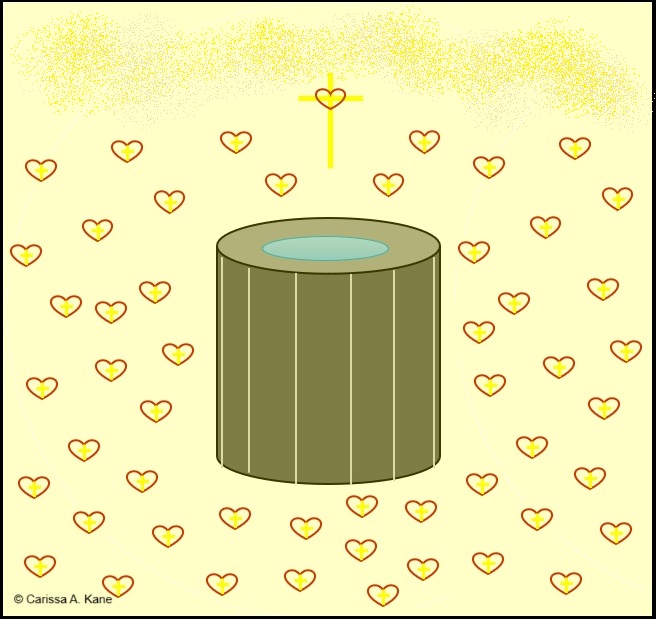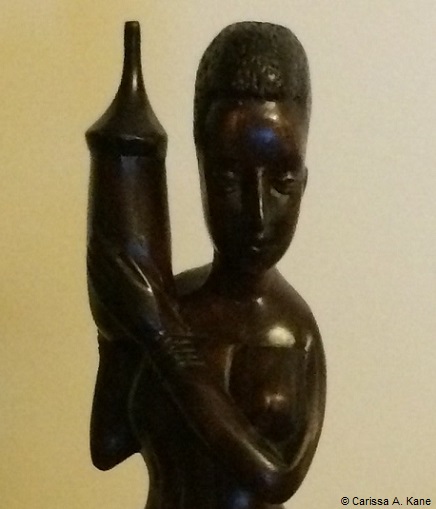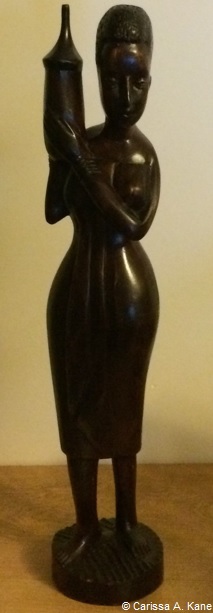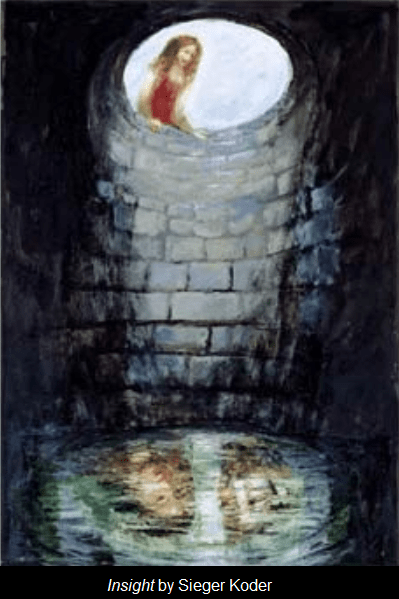
Hearts at the well; Jesus

When Hearts Are Best…

The response to the Psalm for the Third Sunday of Lent is, “If today you hear his voice, harden not your hearts.” (Psalm 95:8). In last Sunday’s second reading (Philippian’s 3:17-4:1), St. Paul encourages discipleship with a focus on the Lord and the goal of citizenship in heaven, and instructs us to “Stand firm in the Lord.” (Phil 4:1). What happens when you reflect on the Lord’s nature as being both firm and kindhearted at the same time?

Continuing to think about the Lord’s characteristics, Let’s turn to the Gospel passage, the Samaritan Woman (John 4:5-42 – included below). Through the ebb and flow of their conversation, what touches your heart most about Jesus, the Samaritan woman, and their interaction? In what places do you sense firmness? And kindness? How do the two characteristics work together, and what do they bring about?

Next, take some time to consider a situation(s) you are currently facing. In what ways are your faith experience and your beliefs working? Do they expand your heart, or constrict it? How do they fit with “stand firm in the Lord” and “harden not your heart,” coming together for what is best. Invite Jesus to join you in prayer and to share His insights and guidance as you ponder this further.

Hearts at the well; Jesus

Jesus came to a town of Samaria called Sychar,
near the plot of land that Jacob had given to his son Joseph.
Jacob’s well was there.
Jesus, tired from his journey, sat down there at the well.
It was about noon.

A woman of Samaria came to draw water.
Jesus said to her,
“Give me a drink.”
His disciples had gone into the town to buy food.
The Samaritan woman said to him,
“How can you, a Jew, ask me, a Samaritan woman, for a drink?”
—For Jews use nothing in common with Samaritans.—
Jesus answered and said to her,
“If you knew the gift of God
and who is saying to you, ‘Give me a drink, ‘
you would have asked him
and he would have given you living water.”
The woman said to him,
“Sir, you do not even have a bucket and the cistern is deep;
where then can you get this living water?
Are you greater than our father Jacob,
who gave us this cistern and drank from it himself
with his children and his flocks?”
Jesus answered and said to her,
“Everyone who drinks this water will be thirsty again;
but whoever drinks the water I shall give will never thirst;
the water I shall give will become in him
a spring of water welling up to eternal life.”
The woman said to him,
“Sir, give me this water, so that I may not be thirsty
or have to keep coming here to draw water.”

Jesus said to her,
“Go call your husband and come back.”
The woman answered and said to him,
“I do not have a husband.”
Jesus answered her,
“You are right in saying, ‘I do not have a husband.’
For you have had five husbands,
and the one you have now is not your husband.
What you have said is true.”
The woman said to him,
“Sir, I can see that you are a prophet.
Our ancestors worshiped on this mountain;
but you people say that the place to worship is in Jerusalem.”
Jesus said to her,
“Believe me, woman, the hour is coming
when you will worship the Father
neither on this mountain nor in Jerusalem.
You people worship what you do not understand;
we worship what we understand,
because salvation is from the Jews.
But the hour is coming, and is now here,
when true worshipers will worship the Father in Spirit and truth;
and indeed the Father seeks such people to worship him.
God is Spirit, and those who worship him
must worship in Spirit and truth.”
The woman said to him,
“I know that the Messiah is coming, the one called the Christ;
when he comes, he will tell us everything.”
Jesus said to her,
“I am he, the one speaking with you.”

At that moment his disciples returned,
and were amazed that he was talking with a woman,
but still no one said, “What are you looking for?”
or “Why are you talking with her?”
The woman left her water jar
and went into the town and said to the people,
“Come see a man who told me everything I have done.
Could he possibly be the Christ?”
They went out of the town and came to him.
Meanwhile, the disciples urged him, “Rabbi, eat.”
But he said to them,
“I have food to eat of which you do not know.”
So the disciples said to one another,
“Could someone have brought him something to eat?”
Jesus said to them,
“My food is to do the will of the one who sent me
and to finish his work.
Do you not say, ‘In four months the harvest will be here’?
I tell you, look up and see the fields ripe for the harvest.
The reaper is already receiving payment
and gathering crops for eternal life,
so that the sower and reaper can rejoice together.
For here the saying is verified that ‘One sows and another reaps.’
I sent you to reap what you have not worked for;
others have done the work,
and you are sharing the fruits of their work.”
Many of the Samaritans of that town began to believe in him
because of the word of the woman who testified,
“He told me everything I have done.”
When the Samaritans came to him,
they invited him to stay with them;
and he stayed there two days.
Many more began to believe in him because of his word,
and they said to the woman,
“We no longer believe because of your word;
for we have heard for ourselves,
and we know that this is truly the savior of the world.” – John 4:5-42

What Would You Believe?

Believe it or not, it seems easier to believe that which is tangible. Thus, the saying, “I’ll believe it when I see it!” Yet, in reality, what one believes actually comes from within. Belief is born out of that which echoes the perceived experience of one’s heart and mind.

As perception changes, the things that resonate and to which one is receptive change too. As a result, internally, one is moved to also change, hopefully for the better. Thus the words of Maya Angelou, “Do the best you can until you know better. Then when you know better, do better.”

This is really what human nature is all about—we are created to continually evolve—called to conversion each and every day. It is important to remember that when it comes to love, and what is truly good, honorable, and just, there is always room for growth! How much? That’s up to the individual—again it comes back to perception.

During Lent and throughout the year, the practicing, and living out, of what one believes, can, and often does, take so many forms. After all, faith is living… breathing… active. It is not intended to be stale, or fixed in place or time, but to be celebrated with body, heart, and mind. Not to be carried along, but to carry us through and to broaden the depth with which we see God, ourselves, and other, as one.

Seek, and you will find what brings you closer. It’s not about “should” or “if,” but rather what is. The journey is yours and God’s together. Trust, and you will discover.

Jesus came to a town of Samaria called Sychar,
near the plot of land that Jacob had given to his son Joseph.
Jacob’s well was there.
Jesus, tired from his journey, sat down there at the well.
It was about noon.

A woman of Samaria came to draw water.
Jesus said to her,
“Give me a drink.”
His disciples had gone into the town to buy food.
The Samaritan woman said to him,
“How can you, a Jew, ask me, a Samaritan woman, for a drink?”
—For Jews use nothing in common with Samaritans.—
Jesus answered and said to her,
“If you knew the gift of God
and who is saying to you, ‘Give me a drink, ‘
you would have asked him
and he would have given you living water.”
The woman said to him,
“Sir, you do not even have a bucket and the cistern is deep;
where then can you get this living water?
Are you greater than our father Jacob,
who gave us this cistern and drank from it himself
with his children and his flocks?”
Jesus answered and said to her,
“Everyone who drinks this water will be thirsty again;
but whoever drinks the water I shall give will never thirst;
the water I shall give will become in him
a spring of water welling up to eternal life.”
The woman said to him,
“Sir, give me this water, so that I may not be thirsty
or have to keep coming here to draw water.”

Jesus said to her,
“Go call your husband and come back.”
The woman answered and said to him,
“I do not have a husband.”
Jesus answered her,
“You are right in saying, ‘I do not have a husband.’
For you have had five husbands,
and the one you have now is not your husband.
What you have said is true.”
The woman said to him,
“Sir, I can see that you are a prophet.
Our ancestors worshiped on this mountain;
but you people say that the place to worship is in Jerusalem.”
Jesus said to her,
“Believe me, woman, the hour is coming
when you will worship the Father
neither on this mountain nor in Jerusalem.
You people worship what you do not understand;
we worship what we understand,
because salvation is from the Jews.
But the hour is coming, and is now here,
when true worshipers will worship the Father in Spirit and truth;
and indeed the Father seeks such people to worship him.
God is Spirit, and those who worship him
must worship in Spirit and truth.”
The woman said to him,
“I know that the Messiah is coming, the one called the Christ;
when he comes, he will tell us everything.”
Jesus said to her,
“I am he, the one speaking with you.”

At that moment his disciples returned,
and were amazed that he was talking with a woman,
but still no one said, “What are you looking for?”
or “Why are you talking with her?”
The woman left her water jar
and went into the town and said to the people,
“Come see a man who told me everything I have done.
Could he possibly be the Christ?”
They went out of the town and came to him.
Meanwhile, the disciples urged him, “Rabbi, eat.”
But he said to them,
“I have food to eat of which you do not know.”
So the disciples said to one another,
“Could someone have brought him something to eat?”
Jesus said to them,
“My food is to do the will of the one who sent me
and to finish his work.
Do you not say, ‘In four months the harvest will be here’?
I tell you, look up and see the fields ripe for the harvest.
The reaper is already receiving payment
and gathering crops for eternal life,
so that the sower and reaper can rejoice together.
For here the saying is verified that ‘One sows and another reaps.’
I sent you to reap what you have not worked for;
others have done the work,
and you are sharing the fruits of their work.”

Many of the Samaritans of that town began to believe in him
because of the word of the woman who testified,
“He told me everything I have done.”
When the Samaritans came to him,
they invited him to stay with them;
and he stayed there two days.
Many more began to believe in him because of his word,
and they said to the woman,
“We no longer believe because of your word;
for we have heard for ourselves,
and we know that this is truly the savior of the world.” – John 4:5-42

The “Well” in Well-being…

Memories make their mark in different ways and in varying degrees. One indelibly etched in my mind is that of being told, “I may not know and see everything, but God does.” Hearing these words as a child, no matter how they were intended, was not of any comfort at all, but rather intimidating, or better put, scary. Who was this God that was all-knowing and all-seeing? And, more importantly, where was this God?

It is interesting how, without personal experience and proper or complete context, what we hear and see can become the source of misunderstanding, unrest, and/or perhaps become crippling in ways that may not be so apparent. This is why it is so important to take what we hear and see from others and look at it more closely, contemplating what we hear and see for ourselves, and taking it to heart in the context of all the pieces involved, what we experience, and what we come to know and sense through the process.

In the Gospel according to John, in the story of the woman at the well (John 4:5-42), the woman said of Jesus, “He told me everything I have done.” Then it is written:

When the Samaritans came to him,
they invited him to stay with them;
and he stayed there two days.
Many more began to believe in Jesus because of his word,
and they said to the woman,
“We no longer believe because of your word;
for we have heard for ourselves,
and we know that this is truly the savior of the world.”
– (John 4:39-42).

Though the Samaritans had heard about Jesus from the woman at the well, they also needed to hear Jesus for themselves. In such a fast-paced world, where time seems to slip away so often, it can be tempting to rely solely on others, or to forego taking the time or making the effort to hear Jesus for ourselves. However, it is only in doing so, that the answers to “who” and “where” God is, are revealed; truth becomes known, the ways of love and justice become visible, and both are etched more deeply into mind and heart.

Lord, as we walk through each day, help us to take all that we experience, the joyful, as well as the difficult and challenging, into prayer, and help us to make room to hear you. Help us to let go of the old and out-worn, and to embrace You, and Your ways, with grateful hearts, so that our lives may be examples of your glory in all things.

For this, we pray… Lord, hear our prayer.

WAW