On a breezy autumn day, the sun shimmers across the water and the clouds steadily make their way from one side of the sky to the other. The trees, they stand their ground, their leaves have yet to fall. I guess it’s not their time.
Yet, ripples on the pond and clouds up in the sky, both quietly passing by. Always in time. Always in time.
The wind, it moves the clouds and water all around, and yes, even those leaves clinging to trees. Always in time. Always in time.
Some willing more than others. Taking direction, or making a stand. Always in time. Always in time.
Likewise, the Spirit in its stirring, its moving of hearts and souls, here and there along the way. Always in time. Always in time.
Always in Time… May your mercy, Lord, be upon us; as we put our hope in you. – Psalm 33:22
It’s said that the owl’s wisdom lies in its waiting, watching, and listening. In its patient, persistent process, its senses are fine-tuned, making it easier to recognize and distinguish between and among things. The owl’s very own nature leads and nurtures the animal, teaching it to tap more deeply into what it genuinely needs to survive and thrive.
This in-born nature that helps the owl to be at its best, also resides within all living things. And when tuned into, exercised, and held onto, it helps all living things to operate at their best, most authentic self. For human beings especially, the task at hand is to sort through and root out all that interferes with this natural, God-given ability.
In the Book of Wisdom, King Solomon shares:
“I prayed, and prudence was given me; I pleaded, and the spirit of wisdom came to me” – Wisdom 7:7.
While this is a great example of “ask and you shall receive,” it is also an example of the gift of humility. Oftentimes, it is humility that opens the door to wisdom. King Solomon humbled himself, he “prayed” and “pleaded” for wisdom, a gift that no amount of money in the world could buy. Throughout the Bible, and throughout history, there is no wisdom, without humility. For it is a gift that can only be received at the time and place where an open, willing, and humble heart meets the humility of God—unconditional love.
So how does one move toward this place? For starters, perhaps by praying for the grace to become more aware. Kahlil Gibran wrote, “Wisdom stands at the turn in the road and calls upon us publicly, but we consider it false and despise its adherents.”
Thinking about current day events, where do you see wisdom? In what places do you meet unconditional love… truth and peace together?
Looking back to history, Psalm 90 begins:
“A prayer of Moses, the man of God. Lord, you have been our refuge through all generations. Before the mountains were born, the earth and the world brought forth, from eternity to eternity you are God” (verses 1-2).
Wisdom draws Moses’ heart to give voice to God’s faithfulness, and seek God’s help, “Teach us to count our days aright, that we may gain wisdom of heart,” (verse 12), mercy, “Make us glad as many days as you humbled us, for as many years as we have seen trouble,” (verse 15), and grace, “May the favor of the Lord our God be ours. Prosper the work of our hands! Prosper the work of our hands!” (verse 17).
When you reflect on the work of your hands, what aspects of God (loving, patient, gentle, kind, honest, peaceful, faithful, life-giving, etc.) resonate in them? When you look at the world around you and the things in which you choose to participate, which ones bring you closer to the image of God, Love, in which you were created? In what ways do you feel inspired by the humility and generative nature of God, for whom all things are possible?
If You don’t build it, we labor in vain, Without Your Spirit, we stand with no strength. I know my life is passing away, but the works of Your hands are what will remain. Let the favor of the Lord rest upon us…
O Lord, establish the work of our hands! O Lord, establish the work of our hands!
Teach us to number the length of our days, Pour out Your power, we’ll pour out Your praise. Teach us to run, to finish the race, for only what’s done in love will remain. Let the favor of the Lord rest upon us…
O Lord, establish the work of our hands! O Lord, establish the work of our hands!
Al – le – lu – ia, al – le – luia, al – le – luia Al – le – lu – ia, al – le – luia, al – le – luia
In the First Letter of John, chapter 4, verse 12, it is written:
No one has ever seen God. Yet, if we love one another, God remains in us, and his love is brought to perfection in us. – 1 John 4:12
While it may be true that no one has ever seen God, Love and the goodness of God can be experienced daily, in any number of ways and through an unlimited number of people, places, and things. Think about a situation that recently brought peace, joy, laughter, gratitude, etc. into your heart. In what direction did you feel motivated as a result?
Think about who and what you love, in both the past and now. In what ways do you feel inspired as you reflect on this?
Tomorrow, October 4, is the feast day of St. Francis of Assisi. He was born Giovanni di Pietro di Bernardone and is perhaps most widely known for the Prayer of Saint Francis (and inspirational song) – “Make me a channel of your peace/Where there is hatred, let me bring your love…” as well as for being a lover of animals and the inspiration behind the practice of the blessing of animals.
Being born into a wealthy family, St. Francis’ life began in financial and material security. However, rather than a life focused on increasing or holding onto the guarantees that would come with money (status, power, and influence), he chose a journey far more challenging, but one that would lead toward the riches and rewards of a spiritual life—peace.
St. Francis wrote, “It was easy to love God in all that was beautiful. The lessons of deeper knowledge, though, instructed me to embrace God in all things.”
As you imagine embracing God (Love) in all things, what situations come to mind? Where are the places that are easy to carry and exude the love of God that resides within you? Where are the places that present a challenge, causing the light of God within you to diminish, and love to be held back or rebuked?
In the Gospel according to Mark, it is written:
And people were bringing children to him that he might touch them, but the disciples rebuked them. When Jesus saw this he became indignant and said to them, “Let the children come to me; do not prevent them, for the kingdom of God belongs to such as these. Amen, I say to you, whoever does not accept the kingdom of God like a child will not enter it.” Then he embraced them and blessed them, placing his hands on them. – Mark 10:13-16
Jesus’s example is one of embracing the moment, and all that it holds, with love despite the responses, reactions, or expectations of his disciples and others. With Jesus, everyone is invited… there is room in his heart for everyone.
Now imagine the situations that are easy for you to embrace with love and those that are not, as both belonging to the kingdom of God. What is that like?
Continuing to reflect on these situations, what is most important to you, and how or where does that fit in with your faith as you strive to live by it? Share your thoughts and feelings on this with Jesus. What invitation might Jesus be extending to you?
Above all the grace and the gifts that Christ gives to his beloved is that of overcoming self. – St. Francis of Assisi
Depending upon one’s experiences, certain words can bring to mind a particular image or situation. Hearing or seeing the word, “murmur,” many people might think of the human heart and the condition of a heart murmur, speaking in a low volume as in under one’s breath, or perhaps a hushed conversation between a number of people within a larger setting. Interestingly, in any of these cases, the murmur, or anything else that may be transpiring, can be of no significance, or the opposite. And, as always, the only way to know more certainly is by tuning in more closely.
While searching to discover what’s going on may seem pretty basic or obvious, human nature often leads us toward conjecture, murmuring amongst ourselves rather than seeking the source directly and looking for the answers or understanding there.
In the Gospel according to John, chapter 6, verses 41-51, the people are in disbelief, and maybe confused about Jesus’s statement that he is the bread of life that has come down to earth from heaven. Filled with questions, and likely doubt, with a limited knowledge of who Jesus really is, they are quietly speaking amongst themselves. They are looking for answers from each other, even though none of them understand what was said or what Jesus meant by it. What might this passage, and what follows from it, look like if instead of asking each other, the people asked Jesus directly about his statements, and took careful notice of his response together with his actions?
Moving forward to the way that Jesus responds to the hushed voices going on around him, regarding him, it is as if Jesus is simply saying, “Stop,” to the gossip and speculation. He does not enter into the grumbling. He does not succumb to it, and the questions the people were asking each other instead of engaging directly with Jesus, go unanswered, while Jesus continues to focus on Truth, and giving voice to it. After all, the fact of the matter is that more often than not, it really is as simple as continually asking Jesus for help in seeing something for what it is, saying, “Stop,” to nonsense, understanding and embracing what is of genuine importance, and listening, so as to recognize when and how to be moved.
The Jews murmured about Jesus because he said, “I am the bread that came down from heaven,” and they said, “Is this not Jesus, the son of Joseph? Do we not know his father and mother? Then how can he say, ‘I have come down from heaven’?” Jesus answered and said to them, “Stop murmuring among yourselves. No one can come to me unless the Father who sent me draw him, and I will raise him on the last day. It is written in the prophets: They shall all be taught by God. Everyone who listens to my Father and learns from him comes to me. Not that anyone has seen the Father except the one who is from God; he has seen the Father. Amen, amen, I say to you, whoever believes has eternal life. I am the bread of life. Your ancestors ate the manna in the desert, but they died; this is the bread that comes down from heaven so that one may eat it and not die. I am the living bread that came down from heaven; whoever eats this bread will live forever; and the bread that I will give is my flesh for the life of the world.”
In chapter 5 of the Gospel according to Mark, the saving power of Jesus is revealed in the healing of the man with unclean spirits (the Gerasene demoniac), the woman who had been hemorrhaging for 12 years, and the daughter of Jairus, a synagogue official. In all three cases, Jesus acts differently than what is expected, in that he is not afraid to meet and embrace those who have met misfortune, and are viewed as less than, and he does not treat anyone or anything as a lost cause or beyond repair. Because of this, even though what he has to offer is beneficial, to those who are married to one way of being he is seen as someone to be weary of and who is dangerous.
When Jesus heals the demoniac, sending the unclean spirits into a herd of swine who then head over the bank and into the sea where they meet their demise, folks become afraid. They cannot see the miracle in the healing that has taken place and ask him to leave. He does get in the boat and depart back to the other side. However, he also remains. The man he healed takes heed in Jesus’s instructions to him. In staying behind, Jesus is with him, and the man gives witness to what the Lord has done for him.
When the hemorrhaging woman touches his cloak, Jesus, who is on the way to heal the synagogue official’s daughter, stops, and takes time not only to seek and find the woman he has just healed, but also to engage with her. Despite fear, the woman comes forward to own, or to claim, the truth. In doing so, she is met, not with a critical, harsh, or condescending response, but rather with affirmation. She believed in Jesus and was willing to take a leap and trust in the healing that she sensed he could bring, when she dared to reached out to touch his garment as he passed by. With Jesus, there is no such thing as too little, too late, not worthwhile, or not enough time.
When it is announced that the synagogue official’s daughter is dead, and that he is no longer needed, Jesus does not turn away. He tells the girl’s father, “Do not be afraid. Just have faith.” (v. 36). Despite the news and being ridiculed by others, Jesus proceeds to their house and wakes the girl up. With Jesus, nothing is impossible.
As a Christian, one is called to follow Jesus, embracing the Way, and striving, through the grace of God, to live it. As challenging, uncomfortable, or unpopular as it may be, oftentimes, this requires change and evolution. Sometimes it may mean the opposite or a variation of the new ways and examples happening in the world, and at other times, it may mean the opposite or a variation of the old ways. Either way, the constant is Love, and the question is whether we trust God enough to let Love be the author.
It’s an incredible mystery of God’s love that the more you know how deeply you are loved, the more you will see how deeply your sisters and your brothers in the human family are loved. – Henri Nouwen
Have you ever had the experience of trying to purchase a one-quarter section of watermelon at a grocery store or market, only to have it ring up as a whole watermelon? Despite its popularity, the one-quarter section is, to this day, not found in the “look up” section of the check-out screens, at least not where I am. It is as if the scanner gods will not have the purchase of anything less than an entire watermelon.
While this may seem trivial, it appears that people were becoming more unhappy and customer service was becoming overrun. Over time it became clear that the system wasn’t working, and a change(s) was necessary. The issue was legitimate and needed to be addressed, so some stores posted notices advising customers of the code to enter or added stickers with bar codes to the plastic wrap on the quartered sections of watermelon. Finally, steps were taken to try to ensure customers were not being overcharged and hindered as they tried to pay for their groceries and continue with their day.
So, what does this have to do with faith? Well, in chapter 5, verses 14-17 of the Second Letter of St. Paul to the Corinthians, St. Paul starts by talking about being driven by the love of Christ. This was the same person, Paul of Tarsus, who was once driven by the love of rules and laws, thinking he was serving God by persecuting early Christians because their way was different. Imagine, Paul of Tarsus could have kept doing things his way instead of answering the call to conversion, embracing the Way—Jesus, and eventually becoming St. Paul.
Thank God he was open to change!
Brothers and sisters: once we have come to the conviction that one died for all; therefore, all have died. He indeed died for all, so that those who live might no longer live for themselves but for him who for their sake died and was raised.
Consequently, from now on we regard no one according to the flesh; even if we once knew Christ according to the flesh, yet now we know him so no longer. So whoever is in Christ is a new creation: the old things have passed away; behold, new things have come. – 2 Cor 5:14-17
From childhood, the name Anthony has evoked two thoughts more prominently than others, spaghetti day and help in finding what has been lost— “St. Anthony, please come around: something is lost, and it cannot be found,” or the less formal, “Tony, Tony, look around. Something’s lost and must be found!”
Today, June 13th, is the feast day of St. Anthony of Padua whose life in words and actions is an inspiring example of participation in the Kingdom of God, here on earth, and everlasting. Anthony accepted the invitation, sought union with the Lord, and allowed himself to be led, leaving behind a path that guaranteed him earthly wealth and power. It seems so appropriate that the name Anthony means fortunate… blessed… praiseworthy… priceless. Words that create an image of abundance, and that one can also imagine applying to the Kingdom of God.
In the Book of the Prophet Ezekiel, it is written:
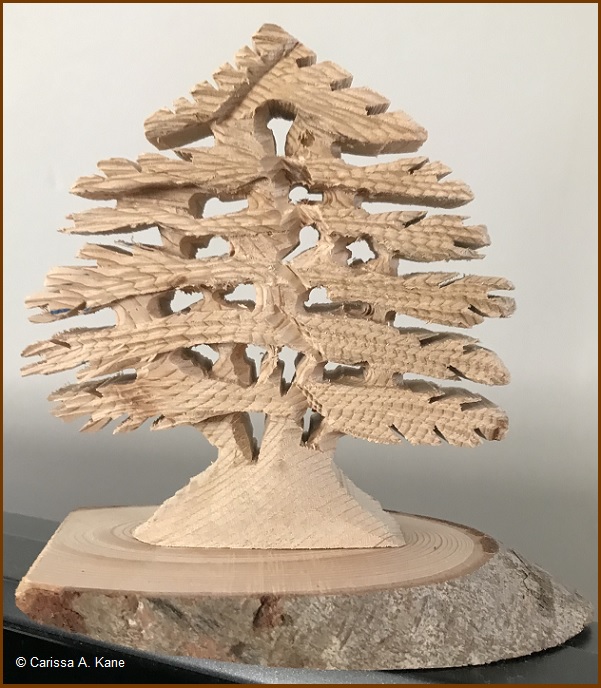
Thus says the Lord God: I, too, will take from the crest of the cedar, from its topmost branches tear off a tender shoot, and plant it on a high and lofty mountain; on the mountain heights of Israel I will plant it. It shall put forth branches and bear fruit, and become a majestic cedar. Birds of every kind shall dwell beneath it, every winged thing in the shade of its boughs. And all the trees of the field shall know that I, the Lord, bring low the high tree, lift high the lowly tree, wither up the green tree, and make the withered tree bloom. As I, the Lord, have spoken, so will I do. – Ez 17:22-24
Reading this passage, listening to the words and phrases within it, and considering the example of St. Anthony, one is reminded that just as the Lord stooped down, becoming one of, and with us, we also, are called to abandon lofty ideals, places, and practices. While the world, and all that is passing, might seek to grip and hold us down, God seeks to meet us on ground level, and elevate us to that which is eternal. In what ways, might this Divine invitation be accepted more fully?
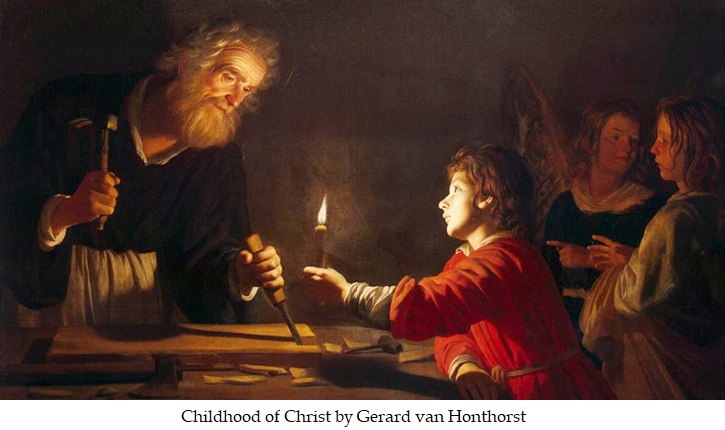
“The creator of the heavens obeys a carpenter; the God of eternal glory listens to a poor virgin. Has anyone ever witnessed anything comparable to this? Let the philosopher no longer disdain from listening to the common laborer; the wise, to the simple; the educated, to the illiterate; a child of a prince, to a peasant.” – St. Anthony of Padua
In a few weeks, my oldest child will be turning the page toward a new chapter in his life, as he graduates. So many years have passed and so much has transpired since his birth, yet it’s still hard to believe that this milestone is already here. As I think about the journey as a parent, I recall moments of feeling joy and pride as well as moments of feeling fear and uncertainty. What an awesome responsibility… what an awesome privilege. But then, isn’t that what love is all about? Being present, holding on, lifting up, letting go, and along the way, being drawn toward the balance that lies between?
In the Gospel according to John, Jesus says:
“As the Father loves me, so I also love you. Remain in my love.” (15:9)
How do we do that?
We remain in love, by choosing to live in Love. When we choose to be present to each other and creation, we are also choosing to be present to God, and God’s love for us. This is the source of joy, and it can only be complete when it is shared and flowing freely among us. So often though, things get in the way, distracting us, and pulling us apart from each other, as well as from God.
When we remain in God’s love though, we can see things for what they are more readily, and withhold the judgment that seeks to lead us against one another rather than bring us together. What an awesome responsibility… what an awesome privilege. But then, isn’t that what love is all about? Being present, holding on, lifting up, letting go, and along the way, being drawn toward the balance that lies between?
Be a lamp, or a lifeboat, or a ladder. Help someone’s soul heal. Walk out of your house like a shepherd.” — Rumi
Perhaps one of the most beautiful and mesmerizing things about the ocean is its motion. Despite its unrelenting, constant movement, and the change and transition that it brings about for anyone or anything within it, it is found, more often than not, to be soothing or healing. Yet, in any other arena, on land, in the air, or in our lives, it seems fair to say that the movement of the ocean would be considered chaos, and be an unsettling presence.
In the Book of Revelation, it is written, “The One who was seated on the throne said: ‘Behold, I make all things new…'” (21:5). This verse is a great reminder that God is not static, but rather like the ocean, always encouraging change and seeking balance—the greater good.
In such volatile times, it is worth the exploration to see the things that are as opposed to the things that used to be. Where there is little or no true change, there is always room to do better… to do more than just look. To act, rather than to sit, stuck at the place that is only the beginning.
“Not everything that is faced can be changed, but nothing can be changed until it is faced.” – James Baldwin
They started out a neatly organized bouquet of tulips, bulbs closed and standing upright in a vase, but with time, each came into its own. Still tulips though, and called by name, no matter the style or type of display. Some still upright. Some bending, turning, twisting, as if being called toward something else altogether, but again, all still called by name—side by side—together.
More than humane… a compelling lesson for humanity. Nothing new… it is as it has always been. In opening up, reaching out, and stretching toward another… letting go of “other,” change is made. What is true and meaningful, is more than comprehension. When the peace within one’s heart, reaches out, it permeates from soul to soul, and only then, is it about becoming.
Just as he said to the disciples who met him on the road to Emmaus, Jesus says to us, “You are witnesses of these things.” (Luke 24:48). As followers of Jesus, what did they do with that?
Fast forward to today… As disciples of Jesus, what do we do with all to which we have become witnesses? How do we stand with both the crucified and risen Jesus?
When he saw the crowds, he went up the mountain, and after he had sat down, his disciples came to him. He began to teach them, saying:
“Blessed are the poor in spirit, for theirs is the kingdom of heaven.
Blessed are they who mourn, for they will be comforted.
Blessed are the meek, for they will inherit the land.
Blessed are they who hunger and thirst for righteousness, for they will be satisfied.
Blessed are the merciful, for they will be shown mercy.
Blessed are the clean of heart, for they will see God.
Blessed are the peacemakers, for they will be called children of God.
Blessed are they who are persecuted for the sake of righteousness, for theirs is the kingdom of heaven.
Blessed are you when they insult you and persecute you and utter every kind of evil against you [falsely] because of me.
Rejoice and be glad, for your reward will be great in heaven. Thus they persecuted the prophets who were before you.
You must be logged in to post a comment.