Out of Bounds…

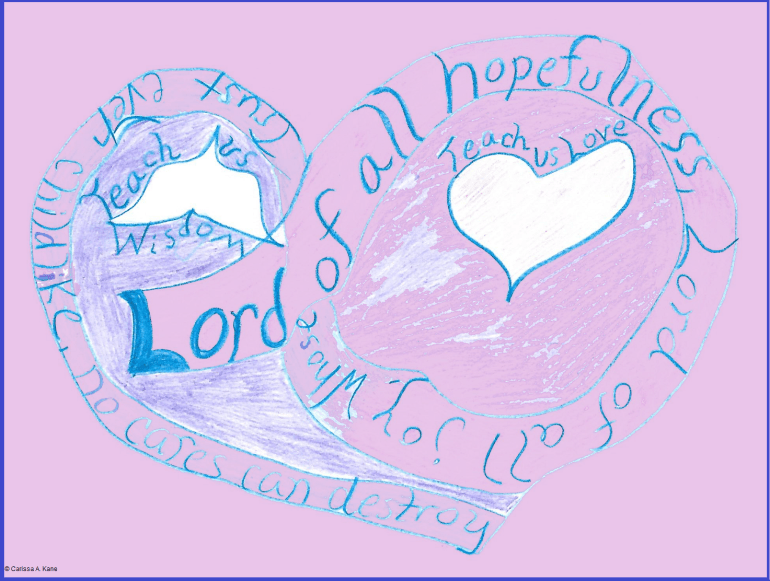
In the Letter to the Romans, St. Paul writes, “Do not conform yourselves to this age but be transformed by the renewal of your mind, that you may discern what is the will of God, what is good and pleasing and perfect.” (Romans 12:2). Although he was writing to people of a different time than us, how appropriate this instruction or advice is for any age. After all, looking around and considering all of creation, there’s not only a broad spectrum of living things, but also cycles or seasons of change that occur across each category, and all created in the image of the Creator. With all of this, it’s not too hard to imagine God as being far more dynamic than any one generation, society, or age might deem.

Still though, it can be easy to move through a task, a day, or more with “a place for everything and everything in its place” mindset, whether as an individual or within a group or an organization. Perhaps St. Paul is reminding us not to get hung up on making things fit into our existing notions, to the extent that we leave no room to perceive the new things that God is doing or trying to teach us (Is 43:19). After all, how can God reveal to us, even a portion of insight to God’s will or a shimmer of the expanse and depth of God’s love, if one has already made up their mind and is so fixed and unwilling to consider something other?

This is not to say that one should never hold fast to a value or notion, but rather to be cautious of excluding possibilities outside of the ones already recognized or held.

In the Gospel for the Twenty-second Sunday in Ordinary Time, Jesus says to Peter, “Get behind me, Satan! You are an obstacle to me. You are thinking not as God does, but as human beings do.” (Matthew 16:23). He says this because Peter’s response comes out of his own understanding and is not based on listening to and considering what was said or communicating with Jesus.

When Jesus reveals that he will be killed, it does not fit the narrative of Peter’s notion of what’s to come of the Anointed One. The influence of Peter’s response is not of God. It is rigid, does not consider what the Anointed One has said, and leaves no room for possibilities outside of what Peter “knows”.

Again, looking around and considering all of creation, there is change, there is fluidity. God is not rigid. And, having been created in God’s image, humankind is not meant to be rigid either. To hold fast? Yes, but first and foremost to God. This is so that everything else not only falls into place in a way that is most fitting, but also in a way that is blessed and does not serve to block the flow of God’s grace from extending in ways beyond our own understanding.

Jesus began to show his disciples
that he must go to Jerusalem and suffer greatly
from the elders, the chief priests, and the scribes,
and be killed and on the third day be raised.
Then Peter took Jesus aside and began to rebuke him,
“God forbid, Lord! No such thing shall ever happen to you.”
He turned and said to Peter,
“Get behind me, Satan! You are an obstacle to me.
You are thinking not as God does, but as human beings do.”


Then Jesus said to his disciples,
“Whoever wishes to come after me must deny himself,
take up his cross, and follow me.
For whoever wishes to save his life will lose it,
but whoever loses his life for my sake will find it.
What profit would there be for one to gain the whole world
and forfeit his life?
Or what can one give in exchange for his life?
For the Son of Man will come with his angels in his Father’s glory,
and then he will repay all according to his conduct.” – Matthew 16:21-27
Conversion…

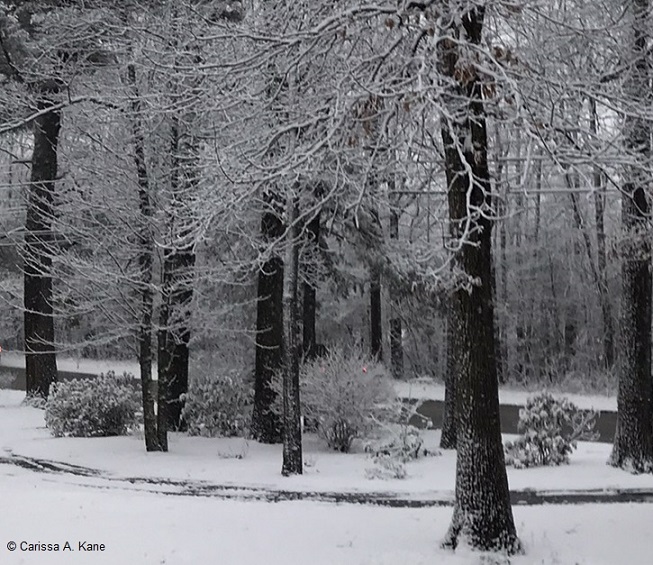
Covered with snow, the landscape so quiet, so still, so beautiful. The branches and shrubs become as if carefully wrapped, insulated from the elements, as well as by the elements. Becoming part of what’s on the outside pushing inward? Or, perhaps, it’s the outside becoming part of what’s inside and underneath, pushing outward? How will they lean, where will they fall, maybe, just maybe, they will stand upright, if anything at all.

A clean heart create for me, God; renew within me a steadfast spirit. – Ps 51:12

The Gospel for the First Sunday of Lent (Mt 4:1-11), is an account of the temptation of Jesus. We all experience variations of temptation throughout our lives. We all have weaknesses or tendencies that can lead us astray or take us away from being at or near our best, most genuine selves.

Looking to the example of Jesus, we can see his response to temptation, is first and foremost, to be aware and recognize it. Then second, to respond by remembering, and not only naming, but also reclaiming God as the source of all wellbeing. Jesus keeps God at the center throughout, and God’s grace enables him to overcome each temptation.

How can one apply this to real life experience in today’s world?

We can start by being aware and recognizing that temptation works in different ways. Sometimes it tries to move us toward “absolute” or limited views and the choices that flow from them, while at other times, temptation seeks to blur the lines between choices so that the best choice is left behind for the choice that seems good enough. Temptation tries, and keeps trying to find whatever hook will sink, to snag and pull one toward a more self-centered space and making a choice from there, instead of making it from a God-centered space where the choice is generative and beneficial beyond what one can surmise.

In the Gospel passage of the temptation of Jesus, Jesus shows us how to lean on the grace of God, and how to patiently endure to overcome temptation by living with God at the center—always in our hearts and minds. He reminds us that what has been written, holds true now, as well as forever.

One does not live on bread alone,
but on every word that comes forth
from the mouth of God. – Dt 8:3

He will command his angels concerning you
and with their hands they will support you,
lest you dash your foot against a stone. – Ps 91:11-12

You shall not put the Lord, your God, to the test. – Dt 6:16

The Lord, your God, shall you worship
and him alone shall you serve. – Dt 6:13

Reflecting on each of Jesus’s responses above, what comes to mind in terms of your own experience of God’s grace in the face of a struggle or challenge you faced? Recall how God was present to you, and how you were, or became present to God? Share with God what that experience was like, and what it means to you today. What inspiration or insight might God want that experience to reveal to you today?

Unto the Ages…

Some days the clouds rise upward, an example of striving and reaching higher, as if believing in the best, for the best. Knowing better, doing better. On others though, they seem to drift across the sky, as if allowing themselves to be carried along in a somewhat orderly, but carefree kind of way. Maybe that’s good too.

There are also days when the clouds seem to sit in place, still as can be. Then there are ones where they seem to vanish entirely, leaving only a shade of blue or gray behind. Although perhaps tempting to toss these kinds of days, where the clouds seem less than what they can be, aside, they also hold a message or way of being that can be very much in need.

At the end of a week that saw the passing of Queen Elizabeth II, who signified an age and a large part of the history around the world, on the same day as the Feast of the Nativity of the Blessed Virgin Mary, and that leads into the anniversary of the September 11, 2001 attacks and tragic events, impacting so many around the world, the readings for the Twenty-fourth Sunday in Ordinary Time (Ex 32:7-11, 13-14; Ps 51:3-4, 12-13, 17, 19; 1 Tm 1:12-17; and Lk 15:1-32), remind us about the truth of how relevant and valued we are to God and each other.

With a heart and mind drawn to history, let’s focus on the first reading and the passage in the Book of Exodus in which Moses implores God to refrain from taking wrath against the Israelites who are falling away and have been worshipping false idols. We can see that Moses intercedes on their behalf by speaking the truth of their shared history with God and calling for that to take precedence. This is something he keeps returning to and keeps trying to remind others about, along the journey. Moses remembers aloud God’s promise of life—a long line of descendants—and a place to live—land as a perpetual heritage—to Abraham, Isaac, and Israel. This is not to say that the people who have gone astray can or should do whatever they want, but rather to highlight the importance and necessity of commitment to each other and God as well as for faithfulness to include interceding on behalf of others for what is truly good and just. It’s a real sense of “you are our God… we are your people… together, we belong to you and each other.”

God listens to Moses, considers what he has to say, and turns away from the wrath he had intended to do. Through it all, the key is that Moses holds onto the truth, we are all relevant and valued—and refuses to be separated from the Israelites or from God. It’s all about the attitude toward relationship and unity. A great example of how One can make a difference.

So, the question that repeats itself throughout the ages, regardless of what’s happening in the clouds or the landscape all around me is… Is my desire to be united with God and others greater than my desire for the things that ultimately serve mostly or only me? And, in what ways do I believe in and commit to the best, for the best?

The Lord said to Moses,
“Go down at once to your people,
whom you brought out of the land of Egypt,
for they have become depraved.
They have soon turned aside from the way I pointed out to them,
making for themselves a molten calf and worshiping it,
sacrificing to it and crying out,
‘This is your God, O Israel,
who brought you out of the land of Egypt!’
“I see how stiff-necked this people is, ” continued the Lord to Moses.
Let me alone, then,
that my wrath may blaze up against them to consume them.
Then I will make of you a great nation.”

But Moses implored the Lord, his God, saying,
“Why, O Lord, should your wrath blaze up against your own people,
whom you brought out of the land of Egypt
with such great power and with so strong a hand?
Remember your servants Abraham, Isaac, and Israel,
and how you swore to them by your own self, saying,
‘I will make your descendants as numerous as the stars in the sky;
and all this land that I promised,
I will give your descendants as their perpetual heritage.'”
So the Lord relented in the punishment
he had threatened to inflict on his people. – Ex 32:7-11, 13-14

But for the Light…

With the vast array of devastation caused by wildfires on the left side of the United States and hurricane Ida and resulting treacherous weather throughout the right side of the United States, not to mention ongoing multi-faceted struggles around the entire world, it can be easy to fall prey to a sense of doom, regardless of whether one is experiencing dire need, a direct impact, on the fringes of such impact, or farther removed.

On what is a dreary day, on the feast of St. Teresa of Calcutta, it is good to remember that despite the darkness, God is with us amid all these trials and tribulations. Leading the way, before one might even know it. Providing light and love. Lifting spirits, opening minds, increasing the will to help, and strengthening the bond of human hearts toward one another.

Say to the fearful of heart:
Be strong, do not fear!
Here is your God,
he comes with vindication;
With divine recompense
he comes to save you.

– Isaiah 35:4

“There is a light in this world, a healing spirit more powerful than any darkness we may encounter. We sometimes lose sight of this force when there is suffering, too much pain. Then suddenly, the spirit will emerge through the lives of ordinary people who hear a call and answer in extraordinary ways.”

– St. Teresa of Calcutta

The Giving Tree…

During a time when much around the world seems off kilter and unbalanced, Advent waiting proceeds. And, as it does, a place where hearts come together shines bright. Spirit builds in the air, as angels sing, “Come! Come meet me at the giving tree!”

Tomorrow, December 6th, is the Feast of St. Nicholas. Often associated with gifts, and most especially charity, Nicholas and his designated day is one of the places where East meets West. Both Eastern and Western churches honor Nicholas.

So, in this year of many surprises, shocks, and great unknowns, as we continue to journey and navigate through the times in which we live, it seems so fitting that the patron saint of travelers, born one thousand seven hundred fifty years ago (in the year 270), is also one whose spirit of charity is known throughout the world, and whose name means, “victory of the people.”

For it truly is, in giving, hearts unite, and we receive. May God grant peace on Earth as we pray, St. Nicholas—victory of the people—pray for us.  

Do not ignore this one fact, beloved,
that with the Lord one day is like a thousand years
and a thousand years like one day.
The Lord does not delay his promise, as some regard “delay,”
but he is patient with you,
not wishing that any should perish
but that all should come to repentance.
But the day of the Lord will come like a thief,
and then the heavens will pass away with a mighty roar
and the elements will be dissolved by fire,
and the earth and everything done on it will be found out.
Since everything is to be dissolved in this way,
what sort of persons ought you to be,
conducting yourselves in holiness and devotion,
waiting for and hastening the coming of the day of God,
because of which the heavens will be dissolved in flames
and the elements melted by fire.
But according to his promise
we await new heavens and a new earth
in which righteousness dwells.
Therefore, beloved, since you await these things,
be eager to be found without spot or blemish before him, at peace. – 2 Pt 3:8-14

Deep Within…

As we trudge through November, moving steadily toward the end of what has been a tumultuous, pandemic ridden year, we enter into the season of Advent, a time of waiting and watching. What will come of this year? At a time when many of the measures of society appear to be unsettled or at all-time lows, what will be birthed? And, what will be unearthed in the weeks and months that lay ahead?

So much of this past year has turned into waiting and watching across a wide variety of areas (health, employment, housing, food security, finances, education, politics, etc.). Overall, at points along the way, waiting and watching have become like a couple of guests whose stay, long past welcome, has become exhausting.

Stretched beyond thin though, is often the best or most appropriate time to stay strong, listen, and hold on. For it is the precise time in which we are called to remain hopeful and to remember, it is not what is on the outside that matters most, but rather that which comes from within.

Jesus said to his disciples:
“Be watchful! Be alert!
You do not know when the time will come.
It is like a man traveling abroad.
He leaves home and places his servants in charge,
each with his own work,
and orders the gatekeeper to be on the watch.
Watch, therefore;
you do not know when the Lord of the house is coming,
whether in the evening, or at midnight,
or at cockcrow, or in the morning.
May he not come suddenly and find you sleeping.
What I say to you, I say to all: ‘Watch!’” – Mark 13:33-37

Weight or Wait…

Over the past week, childhood memories of not being old enough to do whatever it might have been that older siblings or kids in the neighborhood were doing have surfaced in attempts to be understanding while navigating and responding to the “why?” of age being a determining factor to the negative.  What is it that can make waiting such a chore? What is it that can make the waiting that comes with life feel more like weight bearing down upon or holding one back than like a time that is on the way and simply has not yet arrived?

It can be difficult at times to take the long view or to see “the waiting” as a friend, creating space and readying one for what is to come. Perhaps sometimes, in the waiting, we are being waited upon. Maybe looked to, to open up or to make a move rather than being mostly on one side of the equation or the other. Oftentimes in waiting, one realization or another comes along, lessening the load and shifting the balance back to peace.

Peace

Truly, the Lord is waiting to be gracious to you,
truly, the Lord shall rise to show you mercy;
For the Lord is a God of justice:
happy are all who wait for the Lord! – Isaiah 30:18

Cloaked in Courage…

A long time ago, there was a woman with an illness for which there seemed to be no cure. She tried everything she could possibly try within the realm of conventional or traditional practices. However, the only changes were negative as both the condition of her health, and her wealth, continued to suffer.

After being through so much over the course of many years, the woman was moved to try something not only different, but also bold and new. It would take courage, especially given the times in which she lived and her status in society. It would also require a great leap of faith. However, as nervous or afraid as she might have felt, when she considered all things, deep down she knew that trying more of the same, would only lead to further suffering. She came to see that she needed to do something different, so she did, and it made all the difference.

Oftentimes, steadfastness can be confused with, or perhaps too tightly associated with, choices that are “conventional” or “traditional.” Yet, when looking through the eyes of faith and one’s experience along with tradition, and Scripture, God’s steadfastness is not stagnant, nor is it ever tied to the “rules” of the time, space, or place in which one might find themselves.

In many ways, and as seen through all of Scripture, including the life and ministry of Jesus, God is always present as well as constantly evolving. At the same time, God calls each of us to evolve, too.

The woman who suffered with hemorrhages for twelve years certainly had faith. We can also surmise that she had been praying all that time too in addition to seeking medical help. However, her healing only came when she listened deep within, took courage, did the unconventional, and touched the cloak of Jesus.

There was a woman afflicted with hemorrhages for twelve years.
She had suffered greatly at the hands of many doctors
and had spent all that she had.
Yet she was not helped but only grew worse.
She had heard about Jesus and came up behind him in the crowd
and touched his cloak.
She said, “If I but touch his clothes, I shall be cured.”
Immediately her flow of blood dried up.
She felt in her body that she was healed of her affliction.
Jesus, aware at once that power had gone out from him,
turned around in the crowd and asked, “Who has touched my clothes?”
But his disciples said to Jesus,
“You see how the crowd is pressing upon you,
and yet you ask, ‘Who touched me?'”
And he looked around to see who had done it.
The woman, realizing what had happened to her,
approached in fear and trembling.
She fell down before Jesus and told him the whole truth.
He said to her, “Daughter, your faith has saved you.
Go in peace and be cured of your affliction.” – Mark 5: 25-34,