The Gradual…

Some days seem to arrive so suddenly, despite all the moments along the way building and leading up to them. Occasions can seem so far away, distant, or perhaps remote in possibility, but then in a blink of an eye, there they are, upon us.

Looking back, quite often we can see that there was a gradual unfolding. Bit by bit, being led, pushing back, falling into, twisting and turning, moving toward, and perhaps eventually all out embracing the process in the making. And, almost always, right before our very eyes, like the rising and setting of the sun, or the movement of the wind and drifting of the clouds.

Purpose and meaning, and yes, a point, even in the midst, or lack, of human understanding.

In the Gospel according to Mark, after the preparation and celebration of the Passover, on the day that would become known as the Lord’s supper, we read:

“Then, after singing a hymn, they went out to the Mount of Olives” (Mk 14:26).

To sing a song of thanksgiving to God would have been a very normal and traditional thing to do in bringing the Passover meal to a close. Yet what was revealed during the Lord’s supper and what was about to transpire, was not so traditional. Here is a look at it:

Jesus tells the disciples, “…one of you will betray me…” (14:18) leading to angst within each of them as they take turns asking, “Surely it is not I?” (14:19), he introduces and enters a new covenant where he, the Savior, is the sacrificial lamb (14:22-24), and then Jesus tells them, “I shall not drink again the fruit of the vine until the day when I drink it new in the kingdom of God” (14:25).

Imagine what it must have been like for the disciples as they experienced this, then sang a hymn of thanksgiving and praise, and prepared to go out to the Mount of Olives. They probably did not understand, or fully grasp, what had happened during the Passover meal.

Imagine also being told by Jesus, “All of you will have your faith shaken, for it is written: ‘I will strike the shepherd, and the sheep will be dispersed.’ But after I have been raised up, I shall go before you to Galilee.” (14:27-28). Yes, they were foretold the things that would happen, but still, they did not know the circumstances they were about to step into—the Agony in the Garden.

However, the disciples did know that they were with the Lord, and that the Lord was with them. They also had the experience of being in Jesus’ presence and a tradition of faith that had carried them throughout their lives, led them to the Lord’s supper, and would lead them through the moments that were ahead. Overall, one might say, all these things combined is what enabled them to trust, perhaps without even knowing that was what they were doing, as they left the Passover meal and stepped out, heading toward the Mount of Olives, and landing in the garden, and all that awaited them.

“I will take the cup of salvation, and call on the name of the Lord.” – Psalm 116:13

Shelter in the storm, and out…

Inside seeking shelter on a very stormy day, I hear the wind howling… beckoning, come and see.

Looking out the window, great and mighty power, the surge before my eyes.

The wind, it whips and stirs. The waves, they’re in a frenzy, crashing down on all, in the way or not.

Rain, it’s driven sideways. I wonder if it minds.

Then, the birds. Something else. Just being birds, but more. Unphased by all the bother. Flying high, swooping low, drifting, diving, floating, gliding, in the winds that blow.

Beauty in the chaos. Stillness in the storm.

Trusting, not resisting.

All, it will be well.

Listening, not withdrawing, but drawing from within.

Knowing, sensing, feeling, it is—the One who is.

All, it is well.

At the Foot of the Mountain…

Driving through a countryside, a few years ago, on a quiet summer day, we started to come across farm after farm sprinkled with round bales of hay. Not seeing much activity, we continued the journey, enjoying being surrounded by the scenery and its peace.

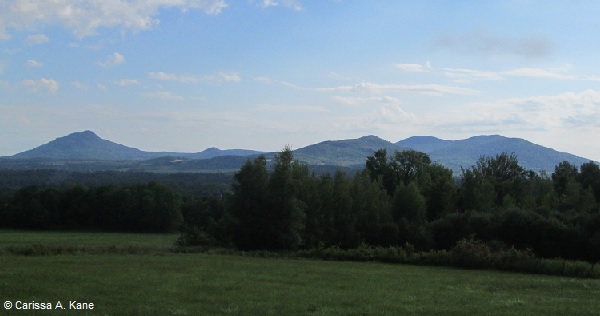
Then, after some time, we came to a place where the farmland, still wide open and stretching far ahead, seemed to suddenly meet the mountains. It seemed both so out of place and so appropriate at the same time. A beautiful sight to behold and, having never traveled this road before, completely unexpected.

Taking in our surroundings, I started to wonder what it was like at the foot of that mountain that seemed so way off in the distance. What might be waiting there, or on the other side?

While I may have been tempted to stay where I was and speculate from afar, maybe even labeling what was there—obstacle or challenge… perfect match… gift unclaimed… perhaps, none, some, or all, of the above, it was the beauty that lies within, connecting to the beauty directly before my eyes, that drew me in, reaching into my soul, and calling to me… remember.

What lies behind us and what lies in front of us pales in comparison to what lies within us. – Ralph Waldo Emerson 

On the last and greatest day of the feast,
Jesus stood up and exclaimed,
“Let anyone who thirsts come to me and drink.
As Scripture says:

Rivers of living water will flow from within him who believes in me.”

He said this in reference to the Spirit
that those who came to believe in him were to receive.
There was, of course, no Spirit yet,
because Jesus had not yet been glorified. – John 7:37-39

Remain…

In a few weeks, my oldest child will be turning the page toward a new chapter in his life, as he graduates. So many years have passed and so much has transpired since his birth, yet it’s still hard to believe that this milestone is already here. As I think about the journey as a parent, I recall moments of feeling joy and pride as well as moments of feeling fear and uncertainty. What an awesome responsibility… what an awesome privilege. But then, isn’t that what love is all about? Being present, holding on, lifting up, letting go, and along the way, being drawn toward the balance that lies between?   

In the Gospel according to John, Jesus says:

“As the Father loves me, so I also love you. Remain in my love.” (15:9)

How do we do that?

We remain in love, by choosing to live in Love. When we choose to be present to each other and creation, we are also choosing to be present to God, and God’s love for us. This is the source of joy, and it can only be complete when it is shared and flowing freely among us. So often though, things get in the way, distracting us, and pulling us apart from each other, as well as from God.

When we remain in God’s love though, we can see things for what they are more readily, and withhold the judgment that seeks to lead us against one another rather than bring us together. What an awesome responsibility… what an awesome privilege. But then, isn’t that what love is all about? Being present, holding on, lifting up, letting go, and along the way, being drawn toward the balance that lies between?

Be a lamp, or a lifeboat, or a ladder. Help someone’s soul heal. Walk out of your house like a shepherd.” — Rumi

Stuck at the Edge…

Perhaps one of the most beautiful and mesmerizing things about the ocean is its motion. Despite its unrelenting, constant movement, and the change and transition that it brings about for anyone or anything within it, it is found, more often than not, to be soothing or healing. Yet, in any other arena, on land, in the air, or in our lives, it seems fair to say that the movement of the ocean would be considered chaos, and be an unsettling presence.

In the Book of Revelation, it is written, “The One who was seated on the throne said: ‘Behold, I make all things new…'” (21:5). This verse is a great reminder that God is not static, but rather like the ocean, always encouraging change and seeking balance—the greater good.

In such volatile times, it is worth the exploration to see the things that are as opposed to the things that used to be.  Where there is little or no true change, there is always room to do better… to do more than just look. To act, rather than to sit, stuck at the place that is only the beginning.   

“Not everything that is faced can be changed, but nothing can be changed until it is faced.” – James Baldwin 

Reach…

They started out a neatly organized bouquet of tulips, bulbs closed and standing upright in a vase, but with time, each came into its own. Still tulips though, and called by name, no matter the style or type of display. Some still upright. Some bending, turning, twisting, as if being called toward something else altogether, but again, all still called by name—side by side—together.

More than humane… a compelling lesson for humanity. Nothing new… it is as it has always been. In opening up, reaching out, and stretching toward another… letting go of “other,” change is made. What is true and meaningful, is more than comprehension. When the peace within one’s heart, reaches out, it permeates from soul to soul, and only then, is it about becoming.

Just as he said to the disciples who met him on the road to Emmaus, Jesus says to us, “You are witnesses of these things.” (Luke 24:48). As followers of Jesus, what did they do with that?

Fast forward to today… As disciples of Jesus, what do we do with all to which we have become witnesses? How do we stand with both the crucified and risen Jesus?

When he saw the crowds, he went up the mountain, and after he had sat down, his disciples came to him.
He began to teach them, saying:

“Blessed are the poor in spirit,
for theirs is the kingdom of heaven.

Blessed are they who mourn,
for they will be comforted.

Blessed are the meek,
for they will inherit the land.

Blessed are they who hunger and thirst for righteousness,
for they will be satisfied.

Blessed are the merciful,
for they will be shown mercy.

Blessed are the clean of heart,
for they will see God.

Blessed are the peacemakers,
for they will be called children of God.

Blessed are they who are persecuted for the sake of righteousness,
for theirs is the kingdom of heaven.

Blessed are you when they insult you and persecute you and utter every kind of evil against you [falsely] because of me.

Rejoice and be glad, for your reward will be great in heaven.
Thus they persecuted the prophets who were before you.

– Matthew 5:1-12

How Often…

How often devotion becomes tangled up, and chained, to this or that, but mostly misdirection.    

Sidetracked, razor-focused, tunneling toward the goal.

How often the depth and scope of perspective shrinks toward misperception.

Moving forward… if today… if tomorrow… wait, can’t wait.

Closer in…

Look at yesterday.

Listen to today.

Learn for tomorrow.

No sight to be seen, no sound to be heard… so many, so much lost in the shadows of “light.”

Closing in…

Widen. Stop, human striving toward human understanding of perfection… imperfection!

Yes, be committed… be faithful, but underneath it all, hold onto God—justice for all.

Keep it real, keep it honest.

Be sure to know, check and see, from minute to hour, from day to year, to what, and to whom, allegiance is professing.

How often what we have is greater than nothing, and everything else that is more, is empty.

And, remember, in the end and in between, bow to no one, but bend to the One, and only One, whose Essence is within us.

How often the lost become truly found, while the “found” become lost in notions from afar.

The Next Chapter…

So what happened to Jonah? What did he do after delivering the message to “shape up” to the Ninevites?

First, he witnessed them take heed and repent. Next, he witnessed God shower them with mercy (Jonah 3:1-10). And then, in the next chapter, chapter 4, Jonah walked away, angry at God’s forgiveness and understanding of those “wicked” people of Nineveh. Why?

Jonah’s mind had already been made up about the Ninevites. That’s why he initially tried to run away from the mission God gave him (Jonah, chapter 2). Unsuccessful, though, and after being spewed from the belly of the fish, he ended up going to Nineveh to deliver God’s message to the people. And, exactly as Jonah expects, God ends up forgiving the Ninevites.

It’s interesting how God accepts the actions of the people of Nineveh as acknowledgement of their wrong doing, while Jonah, who had already determined the Ninevites did not deserve another chance, hardened his heart toward them and could not see or receive the spirit of their actions as a desire to make amends. That’s okay though, because as the story continues, we see more about God’s ways. Despite his lack of understanding or missing desire for mercy to extend to the Ninevites, God does not abandon Jonah either. Rather, God continues the conversation and keeps seeking to reach Jonah and his heart, the same as with the Ninevites.

The Book of Jonah reveals the story of a prophet whose name means “dove” in Hebrew. In a time when a desire for peace seems so great, for so many, it is important to remember that God’s embrace, and longing for ongoing, personal relationship with all creation, extends to all.  Yes, all!

God accepts those who accept and receive God, even when human beings can’t or won’t. Thank God! There are no exceptions, and only God can ever truly know what is in someone else’s heart.

But this greatly displeased Jonah, and he became angry.

He prayed to the Lord, “O Lord, is this not what I said while I was still in my own country? This is why I fled at first toward Tarshish. I knew that you are a gracious and merciful God, slow to anger, abounding in kindness, repenting of punishment.

So now, Lord, please take my life from me; for it is better for me to die than to live.”

But the Lord asked, “Are you right to be angry?”

Jonah then left the city for a place to the east of it, where he built himself a hut and waited under it in the shade, to see what would happen to the city.

Then the Lord God provided a gourd plant. And when it grew up over Jonah’s head, giving shade that relieved him of any discomfort, Jonah was greatly delighted with the plant.

But the next morning at dawn God provided a worm that attacked the plant, so that it withered.

And when the sun arose, God provided a scorching east wind; and the sun beat upon Jonah’s head till he became faint. Then he wished for death, saying, “It is better for me to die than to live.”

But God said to Jonah, “Do you have a right to be angry over the gourd plant?” Jonah answered, “I have a right to be angry—angry enough to die.”

Then the Lord said, “You are concerned over the gourd plant which cost you no effort and which you did not grow; it came up in one night and in one night it perished.

And should I not be concerned over the great city of Nineveh, in which there are more than a hundred and twenty thousand persons who cannot know their right hand from their left, not to mention all the animals?”

– Jonah 4:1-11

Give Us This Day…

In a couple of days, it will be the shortest day of the year for some people and the longest day of the year for others. On December 21st, in the Northern Hemisphere it will be the Winter Solstice and daylight hours will be fewer than any other day in the year, and at the same time, in the Southern Hemisphere, it will be the Summer Solstice and daylight hours will be greater than any other day in the year. Other than in a geography class, long and far ago, I cannot say that I have ever really thought much about that prior to today. Yet, as I do, I think about how remarkable it is that no matter where one stands, and no matter how experiences may vary, far and wide, the promise is forever, and the parts, although they matter… they are never greater than the Whole.

The angel Gabriel was sent from God
to a town of Galilee called Nazareth,
to a virgin betrothed to a man named Joseph,
of the house of David,
and the virgin’s name was Mary.
And coming to her, he said,
“Hail, full of grace! The Lord is with you.”
But she was greatly troubled at what was said
and pondered what sort of greeting this might be.
Then the angel said to her,
“Do not be afraid, Mary,
for you have found favor with God.
“Behold, you will conceive in your womb and bear a son,
and you shall name him Jesus.
He will be great and will be called Son of the Most High,
and the Lord God will give him the throne of David his father,
and he will rule over the house of Jacob forever,
and of his kingdom there will be no end.”
But Mary said to the angel,
“How can this be,
since I have no relations with a man?”
And the angel said to her in reply,
“The Holy Spirit will come upon you,
and the power of the Most High will overshadow you.
Therefore the child to be born
will be called holy, the Son of God.
And behold, Elizabeth, your relative,
has also conceived a son in her old age,
and this is the sixth month for her who was called barren;
for nothing will be impossible for God.”
Mary said, “Behold, I am the handmaid of the Lord.
May it be done to me according to your word.”
Then the angel departed from her. – Luke 1:26-38

The Giving Tree…

During a time when much around the world seems off kilter and unbalanced, Advent waiting proceeds. And, as it does, a place where hearts come together shines bright. Spirit builds in the air, as angels sing, “Come! Come meet me at the giving tree!”

Tomorrow, December 6th, is the Feast of St. Nicholas. Often associated with gifts, and most especially charity, Nicholas and his designated day is one of the places where East meets West. Both Eastern and Western churches honor Nicholas.

So, in this year of many surprises, shocks, and great unknowns, as we continue to journey and navigate through the times in which we live, it seems so fitting that the patron saint of travelers, born one thousand seven hundred fifty years ago (in the year 270), is also one whose spirit of charity is known throughout the world, and whose name means, “victory of the people.”

For it truly is, in giving, hearts unite, and we receive. May God grant peace on Earth as we pray, St. Nicholas—victory of the people—pray for us.  

Do not ignore this one fact, beloved,
that with the Lord one day is like a thousand years
and a thousand years like one day.
The Lord does not delay his promise, as some regard “delay,”
but he is patient with you,
not wishing that any should perish
but that all should come to repentance.
But the day of the Lord will come like a thief,
and then the heavens will pass away with a mighty roar
and the elements will be dissolved by fire,
and the earth and everything done on it will be found out.
Since everything is to be dissolved in this way,
what sort of persons ought you to be,
conducting yourselves in holiness and devotion,
waiting for and hastening the coming of the day of God,
because of which the heavens will be dissolved in flames
and the elements melted by fire.
But according to his promise
we await new heavens and a new earth
in which righteousness dwells.
Therefore, beloved, since you await these things,
be eager to be found without spot or blemish before him, at peace. – 2 Pt 3:8-14