If you had to describe Easter in one word, what word would you use? While there is a plethora of words that could be chosen, what words speak more profoundly to you today, and what one word would be most fitting to encapsulate the life, death, and resurrection of Jesus?
Reflecting on the Triduum, with all the words, images, and actions that take place from Holy Thursday thru the Easter Vigil, the word authenticity seems apropos. Jesus taught by example and told his disciples what was going to happen, and then it did happen. His words and actions were true from start to finish. However, Jesus was not alone in his authenticity (be who you are, do as you are).
Looking more intently at the words and actions of some of the other individuals closest to Jesus, one might come to see that they were also being themselves during those moments. For example, Judas succumbed to betraying Jesus through his real-life weakness, identifying more strongly with money and power than anything else at that time. Then there’s Peter denying Jesus three times. This is not a reflection of his sincerity and desire to follow Jesus, but rather just part of where he was and what he was capable of at that time. Many of the other disciples, ran and hid after Jesus was arrested. Some did not. For example, the many women who followed Jesus, and John who witnessed the crucifixion by Mary’s side.
Think about these individuals as fellow human beings who were at the same time and place in history, while having different experiences, internal dispositions, and outward responses to the same events. In what ways do you see the beauty of God’s mercy and love shine through loud and clear? What’s it like to know that regardless of shortcomings or strengths, Jesus loved and accepted them all, seeing their value as beloved and part of creation?
Oftentimes, we can look to label words, decisions, or actions as right or wrong. However, in the process, we neglect to see what we are forfeiting. Jesus, by seeing us for who we are, accepting us where we are, and loving us as we are, not only touches our hearts and enlightens our minds, but also moves us toward resurrection, turning authenticity into Alleluia.
Going about each day, there are many words that we speak and things that we do. What are the things said or done with purpose, and what kind? What do our words and actions mean to us, what inspires them, and how do they reflect eternal life to the world around us?
Give thanks to the LORD, for he is good, his mercy endures forever. – Psalm 118:1
Behold God beholding you… and smiling. – Anthony de Mello, SJ
Pausing to take a deep breath and take in a beautiful day, as I survey my surroundings, I take joy in a ladybug who comes into view, also exploring. Interested, I move closer to get a better view. There it is. Moving along, wings closed, orange with spots of black, yellow head, eyes, antennae, and legs; many parts, one body.
As I watch, I am amused by its way—steady… patient… gentle, but also driven—purposeful. Different, yet underneath it all, the same. A reminder to remember, everyone… everything, is heading somewhere, here and now, and eventually, as well as ultimately.
In the Gospel acclamation for the 14th Sunday in Ordinary Time, it is written, “The Spirit of the Lord is upon me, because he has anointed me to bring glad tidings to the poor” (Lk 4:18). If you had to re-write this sentence, applying it to yourself, what is it that the Lord has anointed or wants to anoint you for?
Moving on to the Gospel according to Mark, in chapter 6, verses 1-6, we read about Jesus essentially being shut out in his hometown area. It appears he is seen through a very narrow lens and because of this he is not welcome, encouraged, or accepted for who he truly is in the present. There is a lack of openness to the value he brings to the table, and he is limited in what he can accomplish.
It is important to remember that Jesus’s inability to be effective has nothing to do with Jesus. It is the result of the closed-minded, closed-hearted resistance he meets. A meaningful encounter cannot happen in the conditions that exist, and so, he must move on.
Perhaps one of the things Jesus is asking us in this passage is to examine the conditions that exist within our own hearts and minds. If, for example, we had to take our words and actions throughout the course of the day and insert them, one by one, at the end of the phrase, “The Spirit of the Lord is upon me, because he has anointed me to,” how would they fit in with Christianity?
In praying with this passage, as you hold dear the desire to honor the Lord whose Spirit is upon you, and who not only anoints you, but also delights in you, what invitation(s) is awaiting?
Jesus departed from there and came to his native place, accompanied by his disciples. When the sabbath came he began to teach in the synagogue, and many who heard him were astonished. They said, “Where did this man get all this? What kind of wisdom has been given him? What mighty deeds are wrought by his hands! Is he not the carpenter, the son of Mary, and the brother of James and Joses and Judas and Simon? And are not his sisters here with us?” And they took offense at him. Jesus said to them, “A prophet is not without honor except in his native place and among his own kin and in his own house.” So he was not able to perform any mighty deed there, apart from curing a few sick people by laying his hands on them. He was amazed at their lack of faith. – Mark 6:1-6
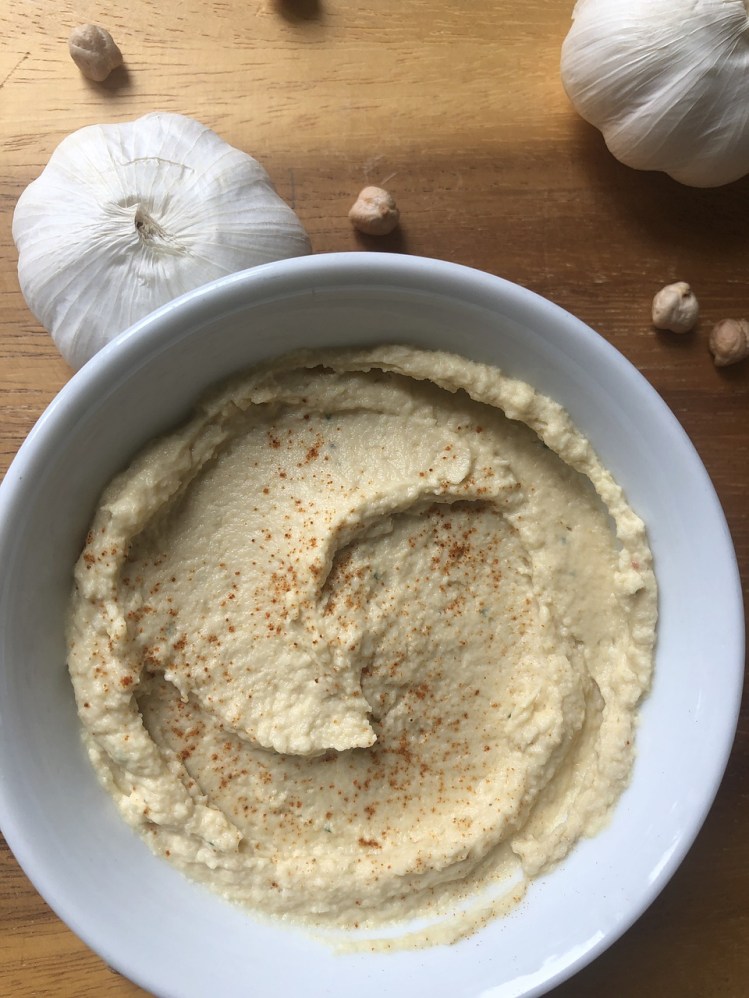
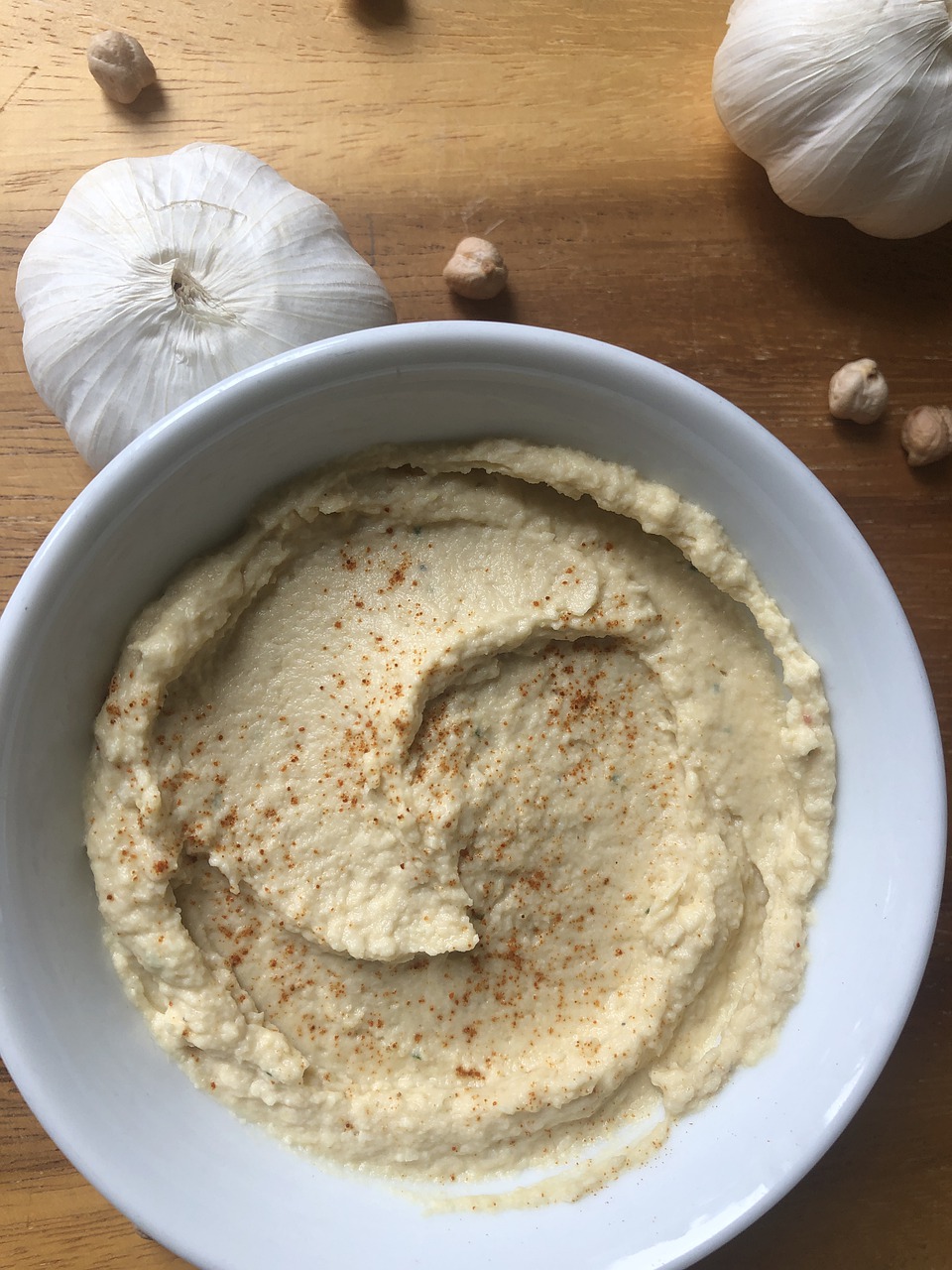
I did not learn to make hummus, with just the “right” amount of fresh garlic, salt, and lemon juice by eating it, reading a recipe, or watching my mother make it over, and over again. Rather, I learned by taking what I saw, remembering what I had tasted, and trying to make it myself, over, and over again. After all, the most helpful way to learn is by ongoing, active observance, repetition, participation, reflection, and openness to growth.
While experience is key, it is interesting that oftentimes as experience increases, awareness to room for improvement can lessen, or even disappear. With that, it may be more than tempting to take moments and situations for granted, rote, or with a “nothing new here” spirit. However, even the process of washing, rinsing, and repeating, holds newness and opportunity with each turn.
In the Gospel according to John, a week later, when the disciples were still locked in the room, Jesus appeared again (Jn 20:26). What was it like for the disciples who had seen the risen Jesus the first time he had appeared? Was it just a been there, done that, repeat for them, or were they able to experience the second appearance in a new or deeper way?
What was the attitude in the room? Were the disciples who had previously seen Jesus able to receive this visitation as being as much for them as it was for Thomas? To whom was Jesus speaking when he said to Thomas, “Have you come to believe because you have seen me?”
In the Gospel according to Mark, chapter 16, verse 11, it is written that when Mary Magdalene told the disciples that the risen Jesus had appeared to her outside the tomb, they did not believe without seeing either. Did the disciples remember this, when Thomas said, “Unless I see the mark of the nails in his hands and put my finger into the nailmarks and put my hand into his side, I will not believe.”(Jn 20:27)?
What did Thomas think, when Jesus said to him, “Have you come to believe because you have seen me? Blessed are those who have not seen and have believed.” (John 20:29)? What did he feel? Perhaps, he felt bad that he did not believe what he had been told by the other disciples. Or, perhaps Thomas felt joy that Jesus heard his need, and responded to it, allowing him to experience the risen Jesus himself.
After all, whether making hummus , dealing with faith, or anything else for which there may be “recipes” or popular thought, there is always more than what is on the page, for “Experience is the teacher of all things” (attributed to Julius Ceasar).
In all times, but most especially in those that are challenging, we must consider experience, both our own and that of others. What has it been like? Do we remember the times and places where we have doubted, questioned, or disagreed, and, do we extend the same courtesy, patience, peace, and understanding that Jesus extends to us, to others?
On the evening of that first day of the week, when the doors were locked, where the disciples were, for fear of the Jews, Jesus came and stood in their midst and said to them, “Peace be with you.” When he had said this, he showed them his hands and his side. The disciples rejoiced when they saw the Lord. Jesus said to them again, “Peace be with you. As the Father has sent me, so I send you.” And when he had said this, he breathed on them and said to them, “Receive the Holy Spirit. Whose sins you forgive are forgiven them, and whose sins you retain are retained.” Thomas, called Didymus, one of the Twelve, was not with them when Jesus came. So the other disciples said to him, “We have seen the Lord.” But he said to them, “Unless I see the mark of the nails in his hands and put my finger into the nailmarks and put my hand into his side, I will not believe.” Now a week later his disciples were again inside and Thomas was with them. Jesus came, although the doors were locked, and stood in their midst and said, “Peace be with you.” Then he said to Thomas, “Put your finger here and see my hands, and bring your hand and put it into my side, and do not be unbelieving, but believe.” Thomas answered and said to him, “My Lord and my God!” Jesus said to him, “Have you come to believe because you have seen me? Blessed are those who have not seen and have believed.” Now Jesus did many other signs in the presence of his disciples that are not written in this book. But these are written that you may come to believe that Jesus is the Christ, the Son of God, and that through this belief you may have life in his name. – John 20:19-31
So what happened to Jonah? What did he do after delivering the message to “shape up” to the Ninevites?
First, he witnessed them take heed and repent. Next, he witnessed God shower them with mercy (Jonah 3:1-10). And then, in the next chapter, chapter 4, Jonah walked away, angry at God’s forgiveness and understanding of those “wicked” people of Nineveh. Why?
Jonah’s mind had already been made up about the Ninevites. That’s why he initially tried to run away from the mission God gave him (Jonah, chapter 2). Unsuccessful, though, and after being spewed from the belly of the fish, he ended up going to Nineveh to deliver God’s message to the people. And, exactly as Jonah expects, God ends up forgiving the Ninevites.
It’s interesting how God accepts the actions of the people of Nineveh as acknowledgement of their wrong doing, while Jonah, who had already determined the Ninevites did not deserve another chance, hardened his heart toward them and could not see or receive the spirit of their actions as a desire to make amends. That’s okay though, because as the story continues, we see more about God’s ways. Despite his lack of understanding or missing desire for mercy to extend to the Ninevites, God does not abandon Jonah either. Rather, God continues the conversation and keeps seeking to reach Jonah and his heart, the same as with the Ninevites.
The Book of Jonah reveals the story of a prophet whose name means “dove” in Hebrew. In a time when a desire for peace seems so great, for so many, it is important to remember that God’s embrace, and longing for ongoing, personal relationship with all creation, extends to all. Yes, all!
God accepts those who accept and receive God, even when human beings can’t or won’t. Thank God! There are no exceptions, and only God can ever truly know what is in someone else’s heart.
But this greatly displeased Jonah, and he became angry.
He prayed to the Lord, “O Lord, is this not what I said while I was still in my own country? This is why I fled at first toward Tarshish. I knew that you are a gracious and merciful God, slow to anger, abounding in kindness, repenting of punishment.
So now, Lord, please take my life from me; for it is better for me to die than to live.”
But the Lord asked, “Are you right to be angry?”
Jonah then left the city for a place to the east of it, where he built himself a hut and waited under it in the shade, to see what would happen to the city.
Then the Lord God provided a gourd plant. And when it grew up over Jonah’s head, giving shade that relieved him of any discomfort, Jonah was greatly delighted with the plant.
But the next morning at dawn God provided a worm that attacked the plant, so that it withered.
And when the sun arose, God provided a scorching east wind; and the sun beat upon Jonah’s head till he became faint. Then he wished for death, saying, “It is better for me to die than to live.”
But God said to Jonah, “Do you have a right to be angry over the gourd plant?” Jonah answered, “I have a right to be angry—angry enough to die.”
Then the Lord said, “You are concerned over the gourd plant which cost you no effort and which you did not grow; it came up in one night and in one night it perished.
And should I not be concerned over the great city of Nineveh, in which there are more than a hundred and twenty thousand persons who cannot know their right hand from their left, not to mention all the animals?”
Stepping out and looking up, the night time sky awakens me. Alongside the darkness, the clouds, visible above and behind the tree tops, create a contrast that draws me in. Between them and the sky that is speckled with the light of stars from far away, the scene is even more compelling. There are so many dimensions, and on this night, as opposed to one where the clouds leave no room for the stars, all seem to bring something to the picture in a way that works together and makes it whole.
So much of what’s good and honorable in the world, is not unlike this scene. That is, the parts not only brought together, but also taking care to make room at the table, and in our hearts, for each other. Coming back to the night time sky on this evening, taking in its different parts once more, I imagine each of them embodying, “Here am I, Lord; I come to do your will” (Psalm 40). For although we are different, we are very much the same. And, our well-being and the picture that we make is collective—always tied together.
As Martin Luther King, Jr. Day approaches, thank you Rev. Dr. Martin Luther King, Jr. for standing up and speaking out, for your words and the actions that flowed with them, and most of all, for the spirit with which you shared them with the world.
“In a real sense all life is inter-related. All men are caught in an inescapable network of mutuality, tied in a single garment of destiny. Whatever affects one directly, affects all indirectly. I can never be what I ought to be until you are what you ought to be, and you can never be what you ought to be until I am what I ought to be… This is the inter-related structure of reality.” – Rev. Dr. Martin Luther King, Jr.
Walking along a path in a local town forest, I stop as I approach a swampy stretch and see a beautiful mix of colors on the land across the way. The trees and brush on either side in front of me seem to provide a frame. Depending on the angle, or perhaps the time of day, or maybe even, the mood drifting through the air, they are a welcome addition gradually drawing me in to the beauty just beyond. Or, are they a distraction… a tangled mess standing in the way?
It’s interesting the way that so much in life seems to do with frames. Thinking literally of frames, I recall the first time I had to pick a frame for a pair of eyeglasses. I was 12 at the time, and desperately not wanting to need eyeglasses. But the fact was that I did need them.
So, after an eye exam and trying on a number of frames, different styles, colors, and types, I came upon “the one.” It was unmistakable within seconds of placing them on my face. From there, the transition was smooth; I could see clearly. Since that time, I have gone through a number of frames, of different styles, colors, and types, throughout the years. And, in all that time, the single most important thing about my glasses has been, not the frame, but the lenses. Without them, everything is blurry.
When the Pharisees heard that Jesus had silenced the Sadducees, they gathered together, and one of them, a scholar of the law tested him by asking, “Teacher, which commandment in the law is the greatest?” He said to him, “You shall love the Lord, your God, with all your heart, with all your soul, and with all your mind. This is the greatest and the first commandment. The second is like it: You shall love your neighbor as yourself. The whole law and the prophets depend on these two commandments.”
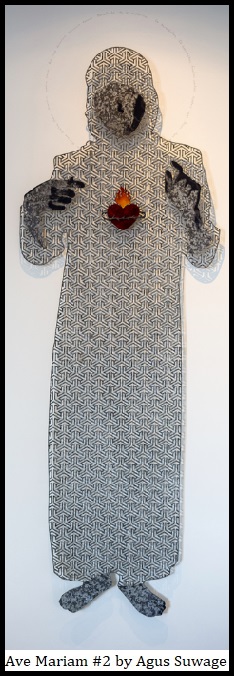
In ordinary times, it seems many things fly by, or slip away, unnoticed or forgotten. This week, thinking about summer fast approaching and revisiting memories of summer days gone by, a visit to a university art museum came to mind. When going to a museum there is often a feeling of enthusiasm and openness to seeing many different types and styles of art from various cultures and periods throughout history, all in the same place at the same time.
When reminiscing about this museum visit, what rose to the surface was a piece of art titled, Ave Mariam #2, by the artist Agus Suwage. I remember being struck by how different it was than any other rendering I had seen before. I also recall seeing it from a far, not knowing who it was supposed to be or who the artist might have been. What stood out, and drew me in closer, was the heart. As I moved forward, it was as if my heart, the heart of the subject, and the heart of the artist joined together, becoming one.
The past few months have been very different than many could have ever dreamed. For many, plans, hopes, or dreams erased as lessons gone by, removed from a board. Yet, in what can feel like a long, strange flow of time, where division, deceit, and animosity are overflowing, among all the grief, it seems much has been, and remains, to be gained. It is as if the Universe is screaming… pleading, “Unity!”
While most schools around here are finished with, or finishing up, the academic year, it seems we are back in school. These are “Museum days.” If only the spirit that permeates the inside of the museum encountered such willing participants outside as well. There is so much to take in. There is still so much to learn, so much diversity to appreciate, and so many hearts to come together, to be uplifted and inspired toward the peace that greater awareness and authenticity create.
Lord, help us, Your body, to be moved by the Holy Spirit to partake in Your goodness in all our encounters and endeavors, for the glory of God. Mary, Mother of God, pray for us.
Consult not your fears but your hopes and your dreams. Think not about your frustrations, but about your unfulfilled potential. Concern yourself not with what you tried and failed in, but with what it is still possible for you to do. – Angelo Giuseppe Roncalli
In the fall of 1881, Angelo Giuseppe Roncalli was born in Northern Italy. He was the fourth of thirteen children in a family that worked fields for a landlord. They were sharecroppers.
It is probably fair to state that it was unlikely anyone, including Angelo Roncalli, would have imagined his life would inspire great change throughout the world, but it did. In the fall of 1958, he was elected Pope, taking the name John XXIII. His papacy, beginning a few years shy of his 80th birthday, was predicted to be a sort of “filling the gap.” In fact, many in the church’s upper echelon of leadership were expecting him to do very little while they were looking to line things up for the “right” successor upon his passing. However, Pope John XXIII continued with the same passion and Spirit-driven action that he had shown throughout his life.
St. John XXIII did, to the surprise and probably the dismay of many, much work during his papacy to encourage and steer the church toward greater integrity by emphasizing Truth, trying to live out the teachings of Jesus, and embodying a spirit of peace and unity. He called for change in the portrayal of Jesus’ death as the fault of the Jews and stopped the perpetuation of the term “faithless” with regards to our Jewish brothers and sisters. He sought to bring together the leaders of the United States and Russia in an attempt to help lessen animosities and work toward peace. He also called for the Second Vatican Council which led to numerous changes in the church, again trying to create a church more in line with the philosophy of Jesus.
While some of his words and actions may be disputed, as with any human being, he had a heart that desired and was devoted to peace and unity. Much of what he wrote, spoke, and did, came out of this place. It was his source of inspiration—the Spirit in which he lived.
Unfortunately, many do not experience church as a place of peace and unity, never mind a place of Truth. Despite this, how fortunate that the Spirit of God has depth and width broader than what the human mind can measure. How fortunate that spiritual nourishment and relationship with God are not bound and tied to any earthly thing, but rather expressed through those who are faithful, no matter where they may be.
We were all made in God’s image, and thus, we are all Godly alike. – Angelo Giuseppe Roncalli (a.k.a. Good Pope John and then St. John XXIII)
Humankind was created as God’s reflection:
in the divine image God created them;
female and male, God made them. – Genesis 1:27
For after all, the best thing one can do when it is raining, is to let it rain. – Henry Wadsworth Longfellow
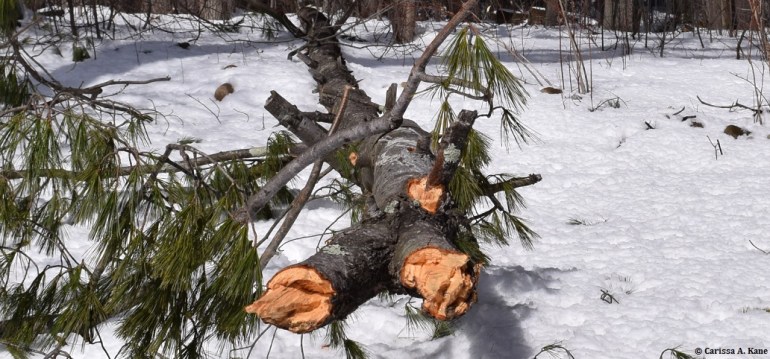
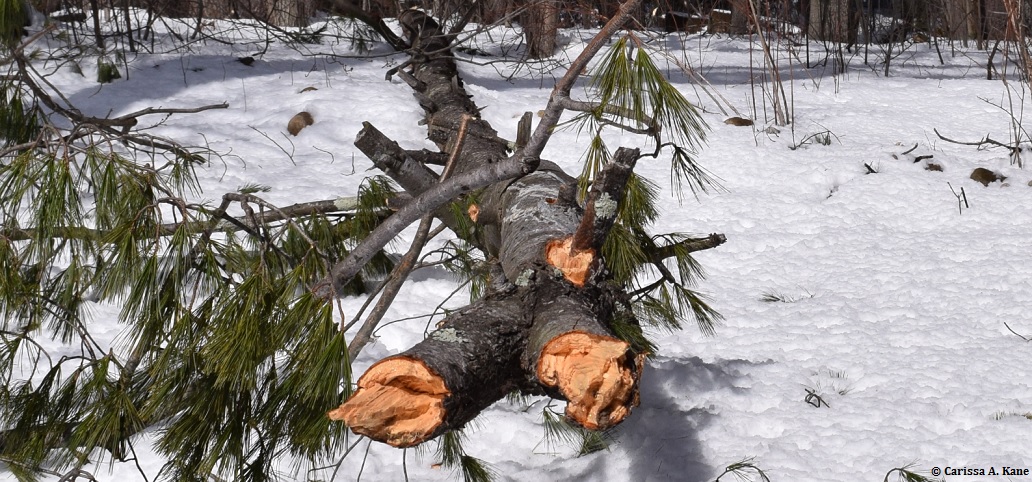
Throughout the past few days as I have been out and about, I have seen a great number of damaged trees from recent storms. Among many branches, there have been toppled trees, exposing the underside of the root systems that used to hold them upright. Then there have been trees leaning and resting upon the trunk or branches of a nearby tree. Finally, I have seen trees where the trunk simply snapped, leaving an inside view of what seems to be sturdy, living wood. Clearly, the root systems of these snapped trees were healthy; otherwise, the trees would have toppled.
However, even if a tree trunk is in perfect health, its root system is top notch, and the ground around it is not over-saturated, it can still withstand only so much force before succumbing to it. In fact, scientific studies have shown that once wind gusts reach 94 miles per hour, healthy trees with good ground conditions begin to snap and/or topple. Now, thankfully, the storms that blew through the area I live in did not have wind gusts that high. For these snapped trees, it is likely that there was some sort of imperfection, even if slight, causing weakness in their trunks. With time, culminating with the recent storms, it led to their downfall—through no fault of their own.
Taking in the view of these fallen trees, I cannot help but think that there is so much more to them than wood on the ground. At times it can be tempting to think that strong, healthy roots—a strong foundation—is the cure all. However, these broken trees are a good reminder that very few things are set in stone; also that black and white always make a shade of gray, whether we like it or not.
It is not very different with faith. There is so much more to it than any formula could ever capture. Whether high up in the sky or on the ground, there is always so much more than what meets the eye.
I will place my law within them and write it upon their hearts;
I will be their God, and they shall be my people.
No longer will they have need to teach their friends and relatives
how to know the LORD.
All, from least to greatest, shall know me, says the LORD,
for I will forgive their evildoing and remember their sin no more.








 HopeThatFloats
You must be logged in to post a comment.