The Hospitality of Love…

Without question, the story of the Prodigal Son shows the mercy of God and the challenge of forgiving trespasses, both our own and those of others. In addition, this parable also offers insight into the importance of a hospitable heart—a heart that is welcoming and gracious to all. This is what caused all those who drew near or reached out to Jesus, to do so. Likewise, this is what led the son who was lost to come back home.

“Coming to his senses he thought, ‘How many of my father’s hired workers have more than enough food to eat…” (Luke 15:17). Having lost everything that he thought was going to make him happy and experiencing a very inhospitable environment, the lost son recalls the truth of what the environment was like at his father’s house. He humbles himself and sets out to return home, owning the ways in which he has failed and letting go of all that might lead him to stay away.

When he does so, he encounters neither judgment nor criticism. In addition, his status as son and birthright as heir await him. He encounters open arms running to embrace and welcome him home—a heart overjoyed by his presence. Once again, he experiences true hospitality, which draws him right back into the fold.

Whether there is one or one million and one… or more, God is all in, and for all, always. Cause for rejoicing! What a great example!

May love be the gardener of your years
bringing forth from your grounding in God
a harvest of wholeness and peace,
a bounty of courage and compassion.

May your soul tower with the strength of cedars;
your heart pound with the power of the sea.
May joy rise in you like the mountains
and may it be a blessing you share with those you love,
who this day make merry
then in you, the great love of God
has found a home on earth.

– A Lebanese Blessing by Jeannette Abi-Bader, HM
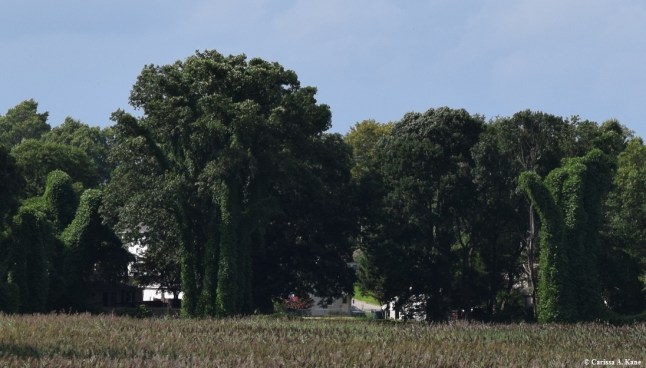
ProdigalSon_Field


Tax collectors and sinners were all drawing near to listen to Jesus,
but the Pharisees and scribes began to complain, saying,
“This man welcomes sinners and eats with them.”
So to them Jesus addressed this parable:
“A man had two sons, and the younger son said to his father,
‘Father give me the share of your estate that should come to me.’

So the father divided the property between them.
After a few days, the younger son collected all his belongings
and set off to a distant country
where he squandered his inheritance on a life of dissipation.
When he had freely spent everything,
a severe famine struck that country,
and he found himself in dire need.
So he hired himself out to one of the local citizens
who sent him to his farm to tend the swine.
And he longed to eat his fill of the pods on which the swine fed,
but nobody gave him any.
Coming to his senses he thought,
‘How many of my father’s hired workers
have more than enough food to eat,
but here am I, dying from hunger.
I shall get up and go to my father and I shall say to him,
“Father, I have sinned against heaven and against you.
I no longer deserve to be called your son;
treat me as you would treat one of your hired workers.”’
So he got up and went back to his father.
While he was still a long way off,
his father caught sight of him, and was filled with compassion.
He ran to his son, embraced him and kissed him.
His son said to him,
‘Father, I have sinned against heaven and against you;
I no longer deserve to be called your son.’
But his father ordered his servants,
‘Quickly bring the finest robe and put it on him;
put a ring on his finger and sandals on his feet.
Take the fattened calf and slaughter it.
Then let us celebrate with a feast,
because this son of mine was dead, and has come to life again;
he was lost, and has been found.’
Then the celebration began.
Now the older son had been out in the field
and, on his way back, as he neared the house,
he heard the sound of music and dancing.
He called one of the servants and asked what this might mean.
The servant said to him,
‘Your brother has returned
and your father has slaughtered the fattened calf
because he has him back safe and sound.’
He became angry,
and when he refused to enter the house,
his father came out and pleaded with him.
He said to his father in reply,
‘Look, all these years I served you
and not once did I disobey your orders;
yet you never gave me even a young goat to feast on with my friends.
But when your son returns
who swallowed up your property with prostitutes,
for him you slaughter the fattened calf.’
He said to him,
‘My son, you are here with me always;
everything I have is yours.
But now we must celebrate and rejoice,
because your brother was dead and has come to life again;
he was lost and has been found.’” – Luke 15:1-3, 11-32


Awaken to the Light…

A few nights ago I had fallen asleep while other household members were still up and about. Suddenly though, I was awake again. Someone had turned on the hallway light, which extended its reach into the room where I was sleeping. And while the light was rather intrusive that night, more often than not, the light is exactly what we need.

According to the Gospel of Luke, Peter, John, and James accompanied Jesus up the mountain to pray, but at some point, the three disciples were “overcome by sleep” (Luke 9:32). During their sleep, Jesus is not only joined by the prophets Moses and Elijah, engaging in discussion with them, but also becomes transfigured, his appearance changing and his clothing giving off great light.

Peter, John and James, awoken seemingly by the intense light, witness Jesus’ transfiguration and the presence of the prophets alongside him. This is shortly followed by a cloud that envelops them, creating both darkness and fear. Yet it was in this cloud and undoubtedly their confusion about what was going on, that God speaks to them, shedding light by revealing the truth as well as providing instruction—“This is my chosen Son; listen to him” (Luke 9:35).   

While the disciples cannot account for what happened while they were sleeping, now that they are awake they do have a responsibility with regards to what they had witnessed. At the time appointed by Jesus (Matthew 17:9; Mark 9:9), they will give voice to what they saw and experienced that day on the mountain.

As we go through life, we all have moments where we experience or witness the glory of God. We also have moments where we witness the opposite of that. Whichever it may be, we are always called to testify and give witness to the truth.

The Light always wakes us up, but it is up to us how we respond.

ThePath_Akiane
In order to choose the right path we do not have to figure out the wrong one— we just need to follow the light. – The Path by Akiane Kramarik

Jesus took Peter, John, and James
and went up the mountain to pray.
While he was praying his face changed in appearance
and his clothing became dazzling white.
And behold, two men were conversing with him, Moses and Elijah,
who appeared in glory and spoke of his exodus
that he was going to accomplish in Jerusalem.
Peter and his companions had been overcome by sleep,
but becoming fully awake,
they saw his glory and the two men standing with him.
As they were about to part from him, Peter said to Jesus,
“Master, it is good that we are here;
let us make three tents,
one for you, one for Moses, and one for Elijah.”
But he did not know what he was saying.
While he was still speaking,
a cloud came and cast a shadow over them,
and they became frightened when they entered the cloud.
Then from the cloud came a voice that said,
“This is my chosen Son; listen to him.”
After the voice had spoken, Jesus was found alone.
They fell silent and did not at that time
tell anyone what they had seen.  – Luke 9:28B-36

Waiting to Arrive…

Looking out at the thin ice in the quiet stillness of early morning, I think, “How fragile life is.” As I sit and watch, I feel tired… stretched thin. Until this moment, it has been so busy… too busy.

I survey the area. It seems motionless. I think, “The time is now.” Everyone…everything must wait.

While time continues to tick, I linger, allowing more than just a chance to be still and listen. With each minute that passes, I feel a calm and steady strength growing from deep within. How resilient Life is.

ThinIce

My eyes are ever upon the LORD, who frees my feet from the snare. – Psalm 25:15

Lady Luck…

As I proceeded toward the steps and the front door, I could see something… a bug, moving on the frame around the door. With each step, I could see it more clearly. I was thinking, “It couldn’t be, it’s too cold,” but as I got closer to the front door, I saw that in fact it was a ladybug. What a pleasant surprise, in stark contrast to the spotting of the brown stink bugs that are common this time of year.

As I watched the ladybug crawling around for a few moments, I could not help but smile. Although it was a small thing, on a rather chilly day, this friendlier, more palpable kind of bug brought a sense of wonder and joy to me as the weather progresses toward winter where I live.

What a great way to prepare to enter the house. What a great way to prepare to enter any place for that matter. To go forth thinking… feeling… remembering the truth of what it means to be begotten by God. That is blessed!

Gifts and blessings come in packages of all types and sizes. Look for and welcome the unexpected. Receive all that each moment brings. Strive to remain faithful regardless of circumstances. Trust that what God has in store is always the best.

You will show me the path to life,
fullness of joys in your presence,
the delights at your right hand forever. – Psalm 16:11

LadyBug

The Point of Letting Go…

“The jar of flour did not go empty, nor the jug of oil run dry…” (1 Kings 17:16). Why? Because the Lord ordained it to be so.

In those days, Elijah the prophet went to Zarephath.
As he arrived at the entrance of the city,
a widow was gathering sticks there; he called out to her,
“Please bring me a small cupful of water to drink.”
She left to get it, and he called out after her,
“Please bring along a bit of bread.”
She answered, “As the LORD, your God, lives,
I have nothing baked; there is only a handful of flour in my jar
and a little oil in my jug.
Just now I was collecting a couple of sticks,
to go in and prepare something for myself and my son;
when we have eaten it, we shall die.”
Elijah said to her, “Do not be afraid.
Go and do as you propose.
But first make me a little cake and bring it to me.
Then you can prepare something for yourself and your son.
For the LORD, the God of Israel, says,
‘The jar of flour shall not go empty,
nor the jug of oil run dry,
until the day when the LORD sends rain upon the earth.'”
She left and did as Elijah had said.
She was able to eat for a year, and he and her son as well;
the jar of flour did not go empty,
nor the jug of oil run dry,
as the LORD had foretold through Elijah.

– 1 Kings 17:10-16

God sent Elijah to the widow and her son during a period of famine. God’s plan, always, is to provide sustenance for those who are receptive to it. Oftentimes in order to receive the grace that God has in store, one must let go of something that is “other.” More often than not, it involves changing; adjusting, fine-tuning, or altogether shedding that which we may have resigned ourselves to holding onto.

Certainly, it would have been easy as well as justifiable for the widow at Zarephath to hold onto the last of her flour and oil rather than to share any portion of it with Elijah, the stranger in her midst. At first, it seems to be her intention to do just that. However, she listens to the prophet’s words and trusts the way in which they resonate with her.

Although the prophet, and the widow and her son are different, the same God leads each of them. It is in cooperation with God that they recognize this in each other, and in doing so, become one with the grace waiting to be bestowed upon them.

God calls and sends Elijah to a new place. The same God helps the widow to let go of what little she has, instead of clinging to it, and to trust that it will be enough for all… and it is.

YellowFall2

Tapestry…

Just a few months ago it would have been hard to imagine such a pattern or striking array of color replacing the multitude of green leaves that seemed to be all around. And while the scene seemed so rich back then, it seems even more so now. Though the leaves will be falling soon, with the addition of greater diversity, they paint a splendid picture that brings a sense of joy along with hope and promise.

It is amazing how it can be so easy to appreciate the contrast, depth, and value provided by the many differences found in and among nature. That same beauty exists in a wide array through the variety found in humanity, yet oftentimes it is not seen as such. Whether it be difference in appearance, opinion, or fact, there is always a pearl to be discovered, something of great value to be learned.

Sometimes we can work together and other times we need to work apart, going in different directions. What we end up becoming or what we feel moved to do may look very different. When it is all said and done though, like the leaves on the trees, our uniqueness brought together creates the picture that is priceless, but only when we remain rooted in the Source.

Love the LORD, your God,
with all your heart,
and with all your soul,
and with all your strength. – Deuteronomy 6:5

AutumnLeaves

In the Way…

In the end, it is usually only one thing that gets in the way, time, and time again.

Throughout chapter ten of the Gospel according to Mark, one thing after another seems to be in the way. There are the Pharisees who see Jesus as being in the way and the disciples who see the people trying to bring the children to Jesus as being in the way. Then, the rich man’s possessions are in the way and the status of the disciples is in the way (when James and John ask to sit at the right and left of Jesus). Finally, there is Bartimaeus, the blind man, seen as being in the way by many in the crowd.

So what is the one thing that in the end is really in the way?

The answer starts, like many things, back at the beginning. In the first section of chapter ten, Jesus speaks about hardness of heart. To varying degrees, whether or not we are able to see and acknowledge it, none of us has a heart that is exempt from hardness. We all have moments, where our words, actions, or inclinations can be rigid and cold rather than pliable and warm.

Throughout the Bible, there are countless times when hardness of a heart(s) in one way or another prevents choices that are in union with God and one another. It can be difficult to recognize when hardness of heart is present or starts to build. However, like Bartimaeus, whether or not we may be in the way of others, we need not be afraid to set our hearts on the Lord, and let our guard down to cry out and say, “Master, I want to see.”

Mercy

As Jesus was leaving Jericho with his disciples and a sizable crowd,
Bartimaeus, a blind man, the son of Timaeus,
sat by the roadside begging.
On hearing that it was Jesus of Nazareth,
he began to cry out and say,
“Jesus, son of David, have pity on me.”
And many rebuked him, telling him to be silent.
But he kept calling out all the more,
“Son of David, have pity on me.”
Jesus stopped and said, “Call him.”
So they called the blind man, saying to him,
“Take courage; get up, Jesus is calling you.”
He threw aside his cloak, sprang up, and came to Jesus.
Jesus said to him in reply, “What do you want me to do for you?”
The blind man replied to him, “Master, I want to see.”
Jesus told him, “Go your way; your faith has saved you.”
Immediately he received his sight
and followed him on the way.

– Mark 10:46-52

Bigger than the Shadows…

Observing the valley and the mountain across the way from the top of a ridgeline, the magnificence of the landscape, despite shadows cast by some of the clouds, was undeniable. We found ourselves in awe of the vastness and beauty all around us. It was so much so, that neither the clouds nor the fog that rolled in or the passing rain shower could dull our spirits or lessen the sense of appreciation and joy in our hearts. Recalling the experience, if I had to name it or add a caption, it would simply be, “The Glory of God: Always Bigger than the Shadows.” How true.

In the Gospel of Mark, the Pharisees and scribes ask Jesus, “Why do your disciples not follow the tradition of the elders but instead eat a meal with unclean hands” (Mark 7:5)? Jesus sees the shadows for what they are and responds by shedding light and guiding people to Truth.

As Jesus replies to the Pharisees and scribes, he tells them, “You nullify the word of God in favor of your tradition that you have handed on. And you do many such things” (Mark 7:13). Then he turns his attention back to the people. It is written, “He summoned the crowd again and said to them, ‘Hear me, all of you, and understand. Nothing that enters one from outside can defile that person; but the things that come out from within are what defile.’”

While the shadows may attempt to obscure or distort the view, the truth is always revealed to those whose hearts honestly desire and work to see and live within Truth, as they make their way.

“God of might, giver of every good gift, put into our hearts the love of your name, so that, by deepening our sense of reverence, you may nurture in us what is good, and by your watchful care, keep safe what you have nurtured.” (Collect for September 2, 2018)

Shadow

Now when the Pharisees with some scribes who had come from Jerusalem gathered around him, they observed that some of his disciples ate their meals with unclean, that is, unwashed, hands.

(For the Pharisees and, in fact, all Jews, do not eat without carefully washing their hands, keeping the tradition of the elders. And on coming from the marketplace they do not eat without purifying themselves. And there are many other things that they have traditionally observed, the purification of cups and jugs and kettles [and beds].)

So the Pharisees and scribes questioned him, “Why do your disciples not follow the tradition of the elders but instead eat a meal with unclean hands?”

He responded, “Well did Isaiah prophesy about you hypocrites, as it is written:

‘This people honors me with their lips,
but their hearts are far from me;
In vain do they worship me,
teaching as doctrines human precepts.’

You disregard God’s commandment but cling to human tradition.”

He went on to say, “How well you have set aside the commandment of God in order to uphold your tradition!

For Moses said, ‘Honor your father and your mother,’ and ‘Whoever curses father or mother shall die.’

Yet you say, ‘If a person says to father or mother, “Any support you might have had from me is qorban”’ (meaning, dedicated to God), you allow him to do nothing more for his father or mother.

You nullify the word of God in favor of your tradition that you have handed on. And you do many such things.”

He summoned the crowd again and said to them, “Hear me, all of you, and understand. Nothing that enters one from outside can defile that person; but the things that come out from within are what defile.”

When he got home away from the crowd his disciples questioned him about the parable.

He said to them, “Are even you likewise without understanding? Do you not realize that everything that goes into a person from outside cannot defile, since it enters not the heart but the stomach and passes out into the latrine?” (Thus he declared all foods clean.)

“But what comes out of a person, that is what defiles. From within people, from their hearts, come evil thoughts, unchastity, theft, murder, adultery, greed, malice, deceit, licentiousness, envy, blasphemy, arrogance, folly. All these evils come from within and they defile.” – Mark 7:1-23

Through the Tunnel…

As we drove into the darkness of the tunnel, the bright, sunny day behind us, I lifted my sunglasses, resting them on top of my head. Now what had been too dark, was still dim compared to before, but bright enough to see with the lights along the inside walls. We traveled forward, staying strictly within one lane, continuing at a steady pace, and eventually we could see sunlight once more as we neared the other end of the tunnel and the road opened up before us.

Sometimes, among the mountains, hills, and valleys of life, there are the plateaus, pitfalls, and tunnels too. Through it all though, the grace of God lives and breathes. It seeps into each and every crevice, pours into spaces that are wide, washes over and takes root wherever there is a soul willing to give into it… ready to succumb.

The goodness of God exists from beginning to end, in every place, and at all times.

1_HarborTunnelVision

2_SunriseBaltimore

3_Broccoli

4_Butterfly2

5_Doe

6_FerrisWheel

7_Flowers

8_ManMadeNature

9_Shenandoah2

10_Woodchuck

11_Carousel

12_DrivingByPotomac

13_PurplePrickly

14_Shenandoah5

15_Shenandoah

16_SunsetCanobie

Cloaked in Courage…

A long time ago, there was a woman with an illness for which there seemed to be no cure. She tried everything she could possibly try within the realm of conventional or traditional practices. However, the only changes were negative as both the condition of her health, and her wealth, continued to suffer.

After being through so much over the course of many years, the woman was moved to try something not only different, but also bold and new. It would take courage, especially given the times in which she lived and her status in society. It would also require a great leap of faith. However, as nervous or afraid as she might have felt, when she considered all things, deep down she knew that trying more of the same, would only lead to further suffering. She came to see that she needed to do something different, so she did, and it made all the difference.

Oftentimes, steadfastness can be confused with, or perhaps too tightly associated with, choices that are “conventional” or “traditional.” Yet, when looking through the eyes of faith and one’s experience along with tradition, and Scripture, God’s steadfastness is not stagnant, nor is it ever tied to the “rules” of the time, space, or place in which one might find themselves.

In many ways, and as seen through all of Scripture, including the life and ministry of Jesus, God is always present as well as constantly evolving. At the same time, God calls each of us to evolve, too.

The woman who suffered with hemorrhages for twelve years certainly had faith. We can also surmise that she had been praying all that time too in addition to seeking medical help. However, her healing only came when she listened deep within, took courage, did the unconventional, and touched the cloak of Jesus.

There was a woman afflicted with hemorrhages for twelve years.
She had suffered greatly at the hands of many doctors
and had spent all that she had.
Yet she was not helped but only grew worse.
She had heard about Jesus and came up behind him in the crowd
and touched his cloak.
She said, “If I but touch his clothes, I shall be cured.”
Immediately her flow of blood dried up.
She felt in her body that she was healed of her affliction.
Jesus, aware at once that power had gone out from him,
turned around in the crowd and asked, “Who has touched my clothes?”
But his disciples said to Jesus,
“You see how the crowd is pressing upon you,
and yet you ask, ‘Who touched me?'”
And he looked around to see who had done it.
The woman, realizing what had happened to her,
approached in fear and trembling.
She fell down before Jesus and told him the whole truth.
He said to her, “Daughter, your faith has saved you.
Go in peace and be cured of your affliction.” – Mark 5: 25-34,