Every Tree… Known by Its Fruit

Have you ever stopped to consider the wide array of fruits and vegetables around the world and the richness in color and nutrients that they offer, not to mention the satisfaction they can bring to one’s palate?

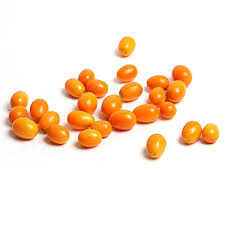
Earlier in the week I had a kumquat for the first time. Not knowing exactly what to expect, I found it to be interesting and surprising in both texture and taste. Its outward appearance (shape, feel and size) was similar to a grape tomato but of a yellow-orange color and more firm. Upon chewing, it was full of a very citrusy flavor like a tangerine only with greater tartness and fewer seeds. The experience was not at all what I thought it might be like—a mild tasting fruit. It was new and very different than anything I had tasted before.

While I have seen kumquats in grocery stores many times, I had never gravitated toward them or been curious enough to try them. In fact, had it not been for the story and the excitement with which an acquaintance offered me one as she explained how she came to buy them, just a day or two before, for the first time herself, they would still be foreign and unknown by me.

Thinking about the experience, it is intriguing how the kumquat, such a little thing originating half way across the world from where I live, could pack such a powerful experience… powerful enough to create a sense of “wow!” and a desire to share the news with others for both my acquaintance and myself.

Perhaps, even more compelling, the fact that the Cantonese name for “kumquat,” pronounced gām-gwāt, means “golden orange” or “golden tangerine.” The name definitely gives an indication of what to expect in terms of citrus flavor and if you see a kumquat tree it looks very much like a tangerine tree, however, in looking at the outside of this little fruit it looks nothing like what a tangerine is supposed to look like. The shape is different, it is smaller (or at least what I had was), and the skin is not peeled. Despite this, the kumquat certainly tastes like a tangerine, and, if what is on the inside truly counts, then that is all that matters.

In everyday life, as we go about our business, we all bear fruit. There are many different ways in which we do so and just as many kinds of fruit. Sometimes we can jump to conclusions, assess people and/or situations, or make assumptions, based on what appears to be rather than looking at what truly is. We must be aware. We must remember substance.

Jesus said to his disciples:
“A good tree does not bear rotten fruit,
nor does a rotten tree bear good fruit.
For every tree is known by its own fruit.
For people do not pick figs from thornbushes,
nor do they gather grapes from brambles.
A good person out of the store of goodness in his heart produces good,
but an evil person out of a store of evil produces evil;
for from the fullness of the heart the mouth speaks.
– Luke 6:43-45
Kumquats

The Great Wide Open…

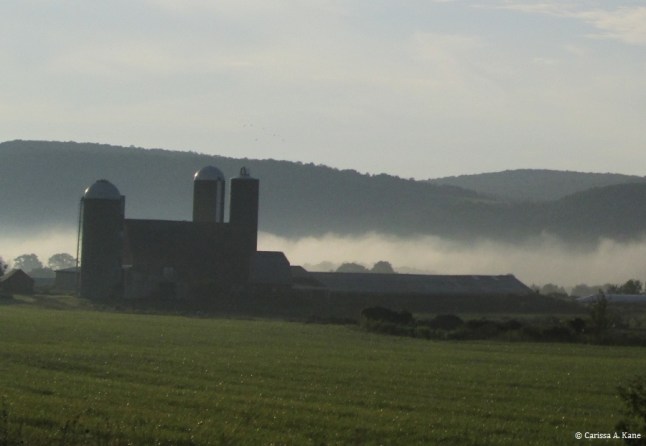
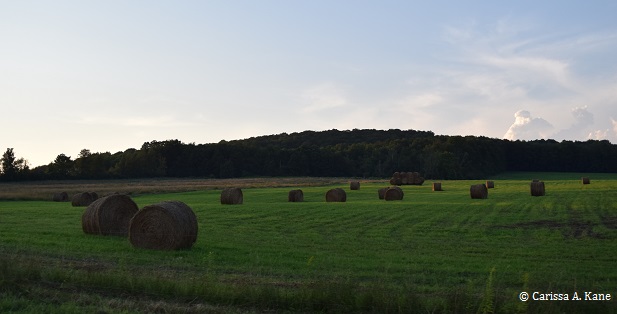
In passing by and at times being surrounded by farmland over the past few months, the beauty and vastness of the countryside has been striking. Against the occasional backdrop of mountains and the many fields of crops and shades of green, there has been much to take in and a great sense of freedom and openness to be felt. There have also been the more confining structures one would expect to see, such as barns, fences and silos. These structures serve to protect what is within and in doing so they create boundaries and barriers. Of them, perhaps the silo, into which one cannot readily see, is the most compelling.

FarmSilos

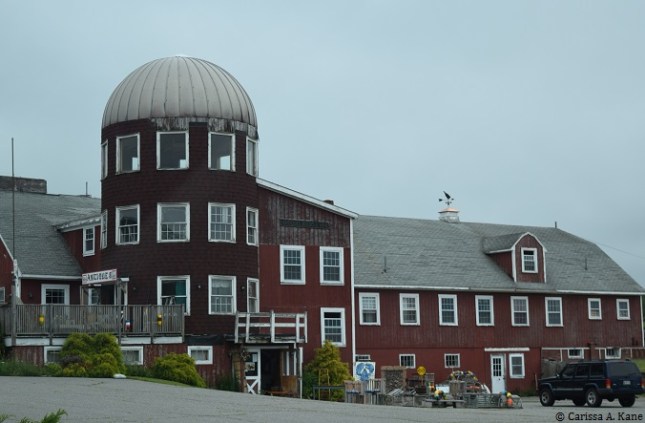
A farm silo functions as a holding place for storing grains. It is a strong, tall, rounded container with generally no openings for the elements, including light, to penetrate. Its purpose is to prevent the grain inside from becoming compromised or spoiled. A silo does a great job of protecting grain and is both necessary and good. However, personally or in an organization… figuratively, a silo is bad news. It seeks to control the environment in ways that both compromise and spoil forward progress. It also holds back the spirit of integrity and ingenuity necessary to flourish and genuinely thrive.

As we go through life, we all come across situations, organizations and/or people through whom we experience a silo effect—having helpful information withheld, being undermined, being shut out, pushed away or alienated. Often we can easily point to or name such cases. However, it can be more difficult to see or name the instances where we may be helping to foster that experience or effect… allowing it to continue… perhaps even creating or contributing to the creation of even more silos.

The way of the world puts emphasis on acquiring and storing up things, status, reputation, chips on one’s shoulders, etc. Ultimately, they can, and often do, bring us down or cause us to be less than what we truly are. It can be difficult to recognize, yet alone to resist being swept up or carried away by this mentality, or even fighting against it. It can keep us from doing and from being… from living out our deepest, purest desires in a way that is encouraging and uplifting to others as well as ourselves. We can be led astray, fooled, or lulled over time by that which masquerades around providing a false sense of reality as well as security. We can be lured and led away from being a place of growth and harvest to a place of storage.

“You are confined only by the walls you build yourself.” – Andrew Murphy

From time to time, it is important to pause, to let the Light not only in but also to fully penetrate one’s soul, and to ask, am I a vessel or have I become a silo?

StoreHouses

Wonderland…

In the 1800s, Charles Lutwidge Dodson was born, lived, and died in England. He was a writer, photographer, mathematician, logician and more. He was also an Anglican deacon. However, he became best known as the author of Alice’s Adventures in Wonderland and Through the Looking Glass. His pen name was Lewis Carroll.

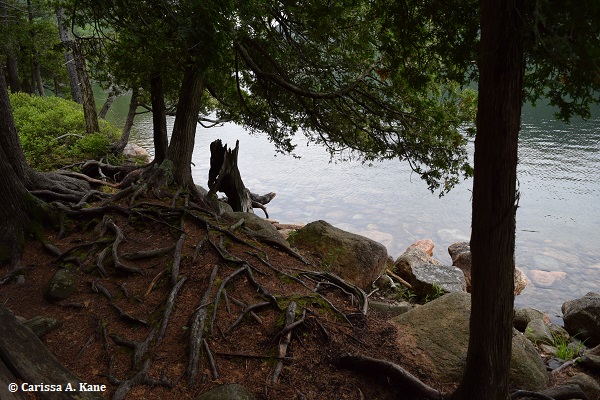
Through the years, there have been a number of misconceptions and myths about Lewis Carroll. Through it all though, and while he has been deceased over a century, his words and works have remained as popular as ever. His writing is captivating and thought provoking. In both his well-known fictional works and in letters to friends there is depth… there is truth… there are roots.

Lewis Carroll wrote, “One of the deep secrets of life is that all that is really worth doing is what we do for others.” In other words, there is something greater than “myself.” While it is important to be the best I can be, it is even more important to know, and to be rooted in, why, and for whom, I am striving to be the best I can be. Is it for myself or is it for the greater good? What is it that is truly in my heart as I go along?

Jesus said, “… Some (seed) fell on rocky ground, where it had little soil. It sprang up at once because the soil was not deep, and when the sun rose it was scorched, and it withered for lack of roots” (Matthew 13:5-6).

We all need roots in order to be faithful and true as we stand, and withstand, whatever comes our way. However, roots cannot grow and take hold where there is not fertile soil.

We are not the seed. We are the soil. The seed is the image of God in which we are created. It can only grow and flourish when we use our free will to nurture it. It is our calling to provide an environment that allows the seed to catch root and grow. This happens through the grace of God.

Most often, when we truly turn our will over to God, we find ourselves growing in our capacity to experience life with a joy and love that reaches out and touches others. Maybe that is God’s way of saying, “Nurture the soil, and leave the rest up to me.”

Roots_Wonderland

In the Desert…

I remember as a child spelling d-e-s-e-r-t, desert, the treat following dinner. I also remember receiving my paper back from the teacher with a red “x” and a second “s” added in the word. A common error for a young child, I am sure. It is funny how some things make a lasting impression and how over time it can be much easier to laugh at things that perhaps once did not seem so funny or amusing. This is one of the gifts that comes with perspective though.

When Jesus was led into the desert, he faced temptation. However, despite his weakened state, he did not lose perspective. He remained focused on who he was and what he knew to be true. He was able to see temptation for what it was and to say, “Get away, Satan!” We are called to do the same.

In today’s world one could say that the desert of temptation has grown exponentially. Oftentimes where one might expect to find solace or solidarity and goodwill, there is none. Despite this, one must carry on and, like Jesus, hold fast to God, the One in whose image all are created. In seeking and striving to do so with all one’s mind, heart and soul, there is comfort and strength, knowledge and wisdom, and yes, even in the desert of temptation, there is peace.

At that time Jesus was led by the Spirit into the desert
to be tempted by the devil.
He fasted for forty days and forty nights,
and afterwards he was hungry.
The tempter approached and said to him,
“If you are the Son of God,
command that these stones become loaves of bread.”
He said in reply,
“It is written:
One does not live on bread alone,
but on every word that comes forth
from the mouth of God. (Deuteronomy 8:3)”

Then the devil took him to the holy city,
and made him stand on the parapet of the temple,
and said to him, “If you are the Son of God, throw yourself down.
For it is written:
He will command his angels concerning you
and with their hands they will support you,
lest you dash your foot against a stone. (Psalm 91:11-12)”
Jesus answered him,
“Again it is written,
You shall not put the Lord, your God, to the test. (Deuteronomy 6:16)”
Then the devil took him up to a very high mountain,
and showed him all the kingdoms of the world in their magnificence,
and he said to him, “All these I shall give to you,
if you will prostrate yourself and worship me.”
At this, Jesus said to him,
“Get away, Satan!
It is written:
The Lord, your God, shall you worship
and him alone shall you serve. (Deuteronomy 6:13)

Then the devil left him and, behold,
angels came and ministered to him.

Matthew 4:1-11

Blossoming Day by Day…

“Where flowers bloom, so does hope” – Lady Bird Johnson

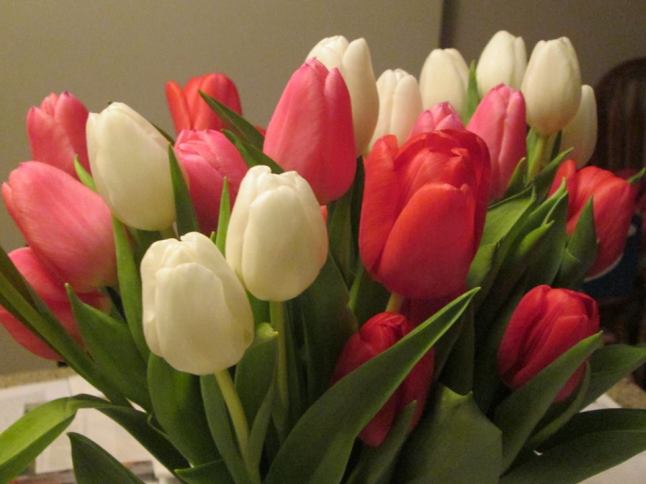
About a week ago, I received a gift of flowers—pink, red and white tulips. When I first opened the box in which they were delivered, the tulips were cold and the petals closed like a clenched fist, but still beautiful. After cutting the end of each stem at an angle, I placed the tulips in a glass vase with plant food and some water. I continued to add water as needed and in the warmth of my home, the petals loosened over the course of the week. Each flower transitioned from being fully closed to being in a state of full bloom; different then when they first arrived…even more beautiful.

Thinking back over the course of the past week, it strikes me that the tulips needed much more water in the first day or two than they did in the days beyond that. I remember at times looking at the flowers and the vase, and feeling surprised that more water was needed again. In fact, I think I added water 2-3 times in those first couple of days.

As I sit facing what are now fully opened tulips, I think about the work required to get to this point. I needed to continue to add water to the vase while the flowers needed to continue to take the water in. There was collaboration. Both things needed to occur in order for the tulips to fully open.

Overall, one might say that the environment needed to be conducive to growth. That is, there needed to be give and take, and room for change…inside (the vase) as well as outside. It is not really all that much different from human relationships. When the environment is conducive, it is much easier to work together, to give and take, and to allow room for change in a manner in which all may flourish.

TulipsFeb