Ready. Set. Open!

“You can’t shake hands with a clenched fist.” – Indira Ghandi

Not only can you NOT shake hands with a clenched fist but there are also many other things you cannot do with a clenched fist. Perhaps from a more positive perspective…with a clenched fist, I can do very few productive and life-giving things. In fact, one could say that there is very little I can do with a clenched fist that I can truly feel good about.

When I imagine a clenched fist, what comes to mind first is fighting. Quickly behind that are the image of a wall and the idea of a stronghold of determination…determination to defend, hold on to and preserve at all costs. At some point I have to ask myself what am I defending and at what cost, not only to myself, but also to those around me, and those on the other side of the table?

Another question, who am I serving? Am I fighting to defend or to hold on to a universal truth or value? Or, am I fighting to maintain the illusion that I am in control? If it is the latter, I am pretty much slamming the door in the face of openness and all the possibilities that may lie ahead. What could be! If only that fist would open and that wall be taken down.

In the movie based on Roald Dahl’s book, Matilda, the father says to Matilda, “Listen, you little wiseacre: I’m smart, you’re dumb; I’m big, you’re little; I’m right, you’re wrong, and there’s nothing you can do about it.” What a great example of the attitude behind a clenched fist!

It is sad to experience and to think about how much is lost or destroyed as a result of clenched fists; the potential that is never seen, never given a chance to develop. It is disappointing when that which a group or an individual has to offer, when their gifts and what makes them special, creates a barrier to meaningful work and the development of mutually beneficial relationships; when it causes division or angst instead of unity and acceptance and an environment where the greater good is the focus.

With clenched fists, nobody wins. There can only be peace and unity, working together and building up, and authentic collaboration where there is an open fist…open hands…open minds and open hearts. Where there is a willingness to let go, to lay aside what is comfortable and what is “known,” and to come to the table with a desire to learn from that which is new and different, to accept others as they are and to give them, and ourselves, the room (love, encouragement, patience, kindness, compassion, mercy, and forgiveness) to grow.

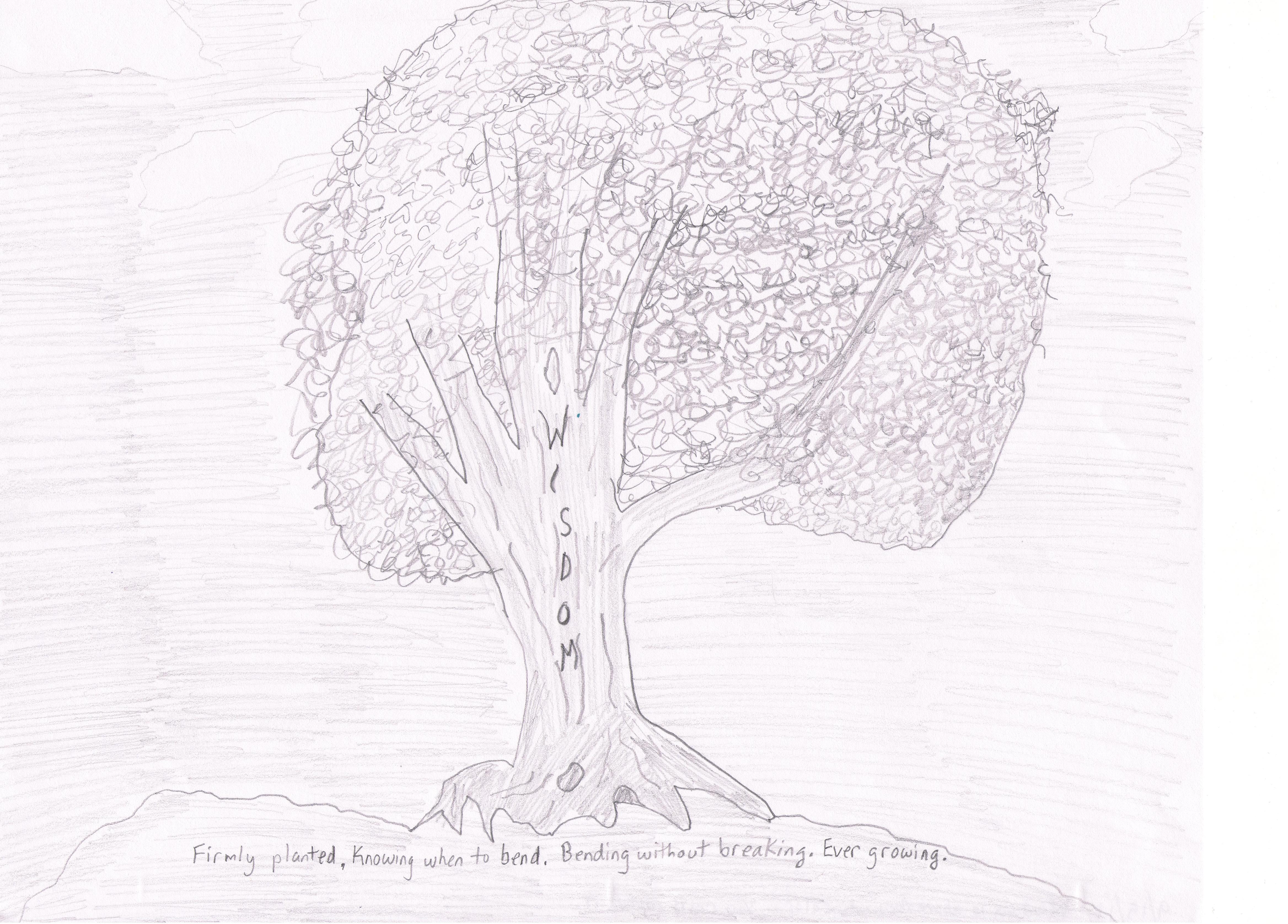
Wisdom9192011

What Would “I” See If I Was Blind

Picture the commotion and busyness of a commuter rail or train station during high traffic hours; perhaps the beginning of the day, lunchtime, or early evening. Now imagine what it might be like if you sat on the ground and closed your eyes as people continued about their business. What would it be like to hear all the noise around you and maybe even to have people bumping into you or falling over you as they went about their way?

Personally, I don’t think I would be able to keep my eyes closed. What if I had no choice though?

As I reflect on the story of Bartimaeus, the blind beggar in the Gospel according to Mark (chapter 10, verses 46-52), I find it interesting how Bartimaeus, a blind man and a beggar, who is probably not a sight for sore eyes, can recognize the truth and see more clearly than those who have their sight.

I wonder, even though I have my sight, are there people or things that I choose not to see or that I readily look past or dismiss as not being important? What would it be like if I looked more closely and gave them further consideration?

I imagine the crowd, or at least a good number of them, is used to seeing Bartimaeus begging at the roadside and has probably learned to look past him. Maybe the only reason they notice him today is because he is louder or more assertive than usual. They don’t see today as being any different in terms of Bartimaeus’ role. He’s the blind beggar to them, and he could never be, or do, anything else.

Jesus doesn’t look past Bartimaeus though. Jesus isn’t dismissive of him the way the crowd is. To Jesus, Bartimaeus is much more than his blindness. And to Bartimaeus, Jesus is much more than a teacher, or a miracle worker. He is his Savior. Bartimaeus knows it in his heart and soul even before his sight is restored.

So even though Bartimaeus cannot see where Jesus is and people around him are trying to shut him up, he is not distracted from the truth. Bartimaeus wants to see and he knows that Jesus can help him to see. He is persistent and holds on to his desire (to see Jesus, who is the Truth, the Life, the Light and the Way).

Jesus hears Bartimaeus and beckons him. Bartimaeus listens and responds. He still can’t see where Jesus is at this point, but his faith has enabled him to see…to know…to believe who Jesus is.

Next, Jesus asks Bartimaeus, “What do you want me to do for you?” Jesus doesn’t make any assumptions about Bartimaeus, the way the crowd does. He allows Bartimaeus to be who he is and to express in his own words and in his own way, what it is that he desires of Jesus. There is freedom within the relationship, thru and thru. How wonderful!?!

This is something we see time and again throughout the Gospels. Jesus doesn’t force himself on others, but he does avail himself, and all He embodies (love, mercy, compassion, forgiveness, and more) to those who are downtrodden, to those who call out to Him, and to those who approach Him, bearing their heart and soul, with faith, and with an openness. Jesus meets them, and us, where we are, up close and personal. Without judgment, without reservation, and He gives us the freedom to be who we are. Wanting to be a source of hope and promise, strength and courage. Encouraging us and helping us to face and to get through, or at times to completely overcome, whatever the obstacle, whatever the hurdle, whatever the challenge we have.

How can we do the same for others? What gets in the way?

https://www.youtube.com/watch?v=BbihOyKIvi8

What to do???

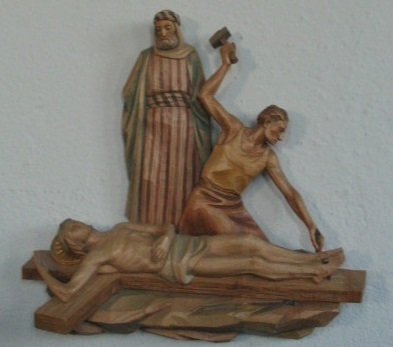
One day about a year or two ago, my attention was captured by a ceramic piece. The thing that struck me about the image portrayed was the soldier who was nailing Jesus to the Cross. This man looked as if he was nailing two pieces of wood together; intent on doing the job. Although I had seen this ceramic piece many times before, I had never given any thought to the soldier in this scene.

On this particular day though, I couldn’t help but wonder about who this man was and how he could do such a thing. I thought, “How horrible! How could anyone do that to another human being?” Then the more I sat there and looked at this piece, a number of questions came to mind. Was this job of the man’s choosing or was he forced into it? What was his life experience and what led him to this particular moment? I imagined his heart had to be hardened in order to do the job he was doing. Was he devoid of all feeling of concern for others, though? Did he have a family? Was he loved? And did he love others?

As I sat there, after some time, I found myself thinking about some of the stories in the news and of current day perpetrators of violence. What happened to them along the way? Were they not also created in God’s image? What had they experienced that led them to embrace such ways?

This week, I find myself asking similar questions. I wonder how any person(s) could justify treating another person in such a way; beheading them or burning them alive. I wonder what happened to these people, and those leading them, that they have arrived at a place where their hearts allow them to perpetrate such acts?

I wonder…Are they so caught up in “the cause” that they have been blinded to the atrocity of their actions? Are they willingly committing these acts? Have they been coerced or misled? Or forced through fear for their own lives and those of their loved ones to join “the cause”? How did they get to this point? What has their experience been? In what kind of environment did they grown up and live?

When we look at the world today, there’s so much violence and wrongdoing that occurs. It’s upsetting and it can be all too easy to write off the perpetrators, dismissing them as lowly scum; hateful and vile. However, when we do this, we are playing into evil’s hand.

I know some might say, “Who cares!?!” thinking that the perpetrators deserve no consideration. However, I find that in asking these questions, I’m able to hold on to the truth of the matter. The perpetrators are human beings too. We all come into the world the same way; a clean slate…created in God’s image…capable of all that is good. Something or someone must have changed that for them, at one time or repeatedly. It is with these questions and this realization that I am able to feel compassion more than anger and disgust.

And, it is only then, that my heart is moved to pray for the perpetrators. For, while I may not be able to change the actions of others, nothing is impossible for God.

Please join me in praying…

For the victims of violence and terrorism, and for those who have embraced hatred and violence, that God may soften their hearts and change their ways, we pray to the Lord…

030b